




Екипи с персонализирани екипи: Практическо ръководство за отбори, клубове и организации
Дата на публикуване:2026-09-07 Категория:НОВИНИ Брой посещения:674
Introduction
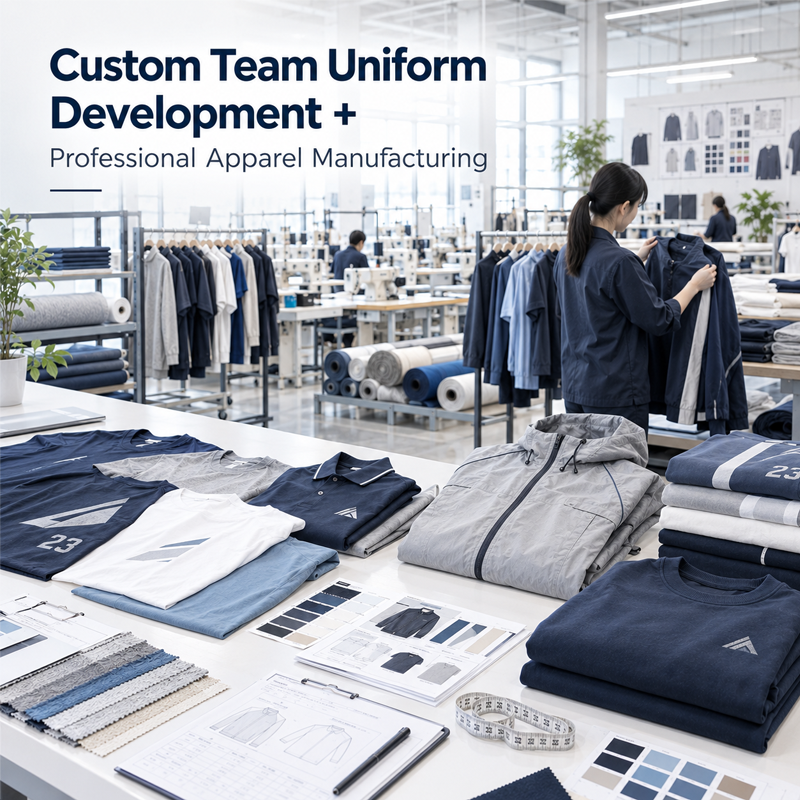
Custom team uniforms are more than matching clothing. For sports teams, school groups, clubs, companies, and community organizations, uniforms can create a consistent visual identity while providing practical performance for the people wearing them.
However, developing custom team uniforms involves more decisions than simply choosing a color and adding a logo. Fabric selection, garment construction, sizing, customization methods, sample approval, quantity planning, and quality control can all affect the final result.
For teams working with an apparel manufacturer, understanding the production process can make communication easier and help prevent costly mistakes.
This guide explains the key considerations when developing custom team uniforms from the initial concept to bulk production.
1. What Are Custom Team Uniforms?
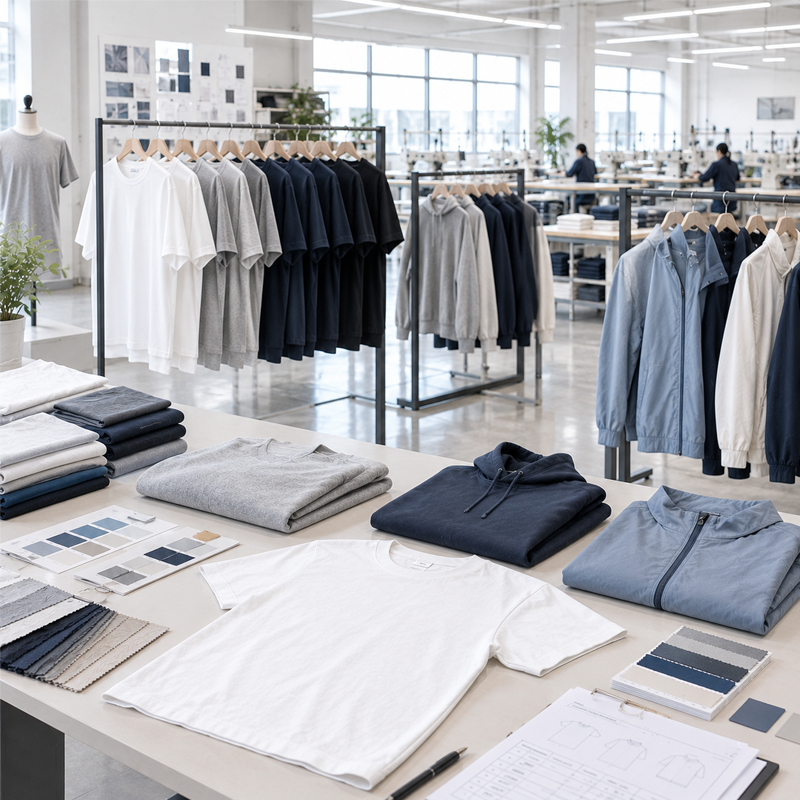
Custom team uniforms are garments developed specifically for a particular team, organization, club, school, or group.
Depending on the application, a uniform program may include:
- Team jerseys
- T-shirts
- Polo shirts
- Hoodies
- Sweatshirts
- Jackets
- Shorts
- Training tops
- Warm-up garments
- Outdoor teamwear
The exact product combination depends on how the uniforms will be used.
A sports team may prioritize mobility and moisture management, while a corporate team may place more emphasis on appearance and durability. A school or club may need garments that can withstand frequent washing and repeated use.
Therefore, customization should begin with the actual requirements of the group rather than with decoration alone.
2. Why Do Teams Choose Custom Uniforms?
The most obvious benefit is visual consistency.
When members wear coordinated garments, a team can immediately present a more organized and recognizable appearance.
Custom team uniforms can also help with:
Team Identity
Colors, graphics, names, numbers, and other design elements can create a recognizable team image.
Group Recognition
Uniforms make it easier to identify team members during events, competitions, training sessions, or group activities.
Professional Appearance
A well-developed uniform can make a sports club, school team, or organization look more organized and established.
Brand Visibility
For corporate teams or sponsored organizations, uniforms can also provide space for logos and other approved branding elements.
Member Experience
Comfortable and well-fitting garments are more likely to be worn regularly and positively perceived by team members.
3. Start With the Intended Use
Before selecting fabric or decoration, define how the uniforms will actually be used.
Ask several basic questions:
- Will the garments be used indoors or outdoors?
- Will members wear them during physical activity?
- How frequently will they be washed?
- Will they be used throughout different seasons?
- Do users need a relaxed or athletic fit?
- Is stretch important?
- Does the garment need protection from wind or light weather?
- Will the same uniform be used by different age groups?
These questions directly influence product development.
For example, a lightweight training shirt may require different fabric characteristics from an outdoor team jacket.
A good manufacturer should be able to discuss these requirements before recommending a specific construction.
4. Choosing the Right Fabric
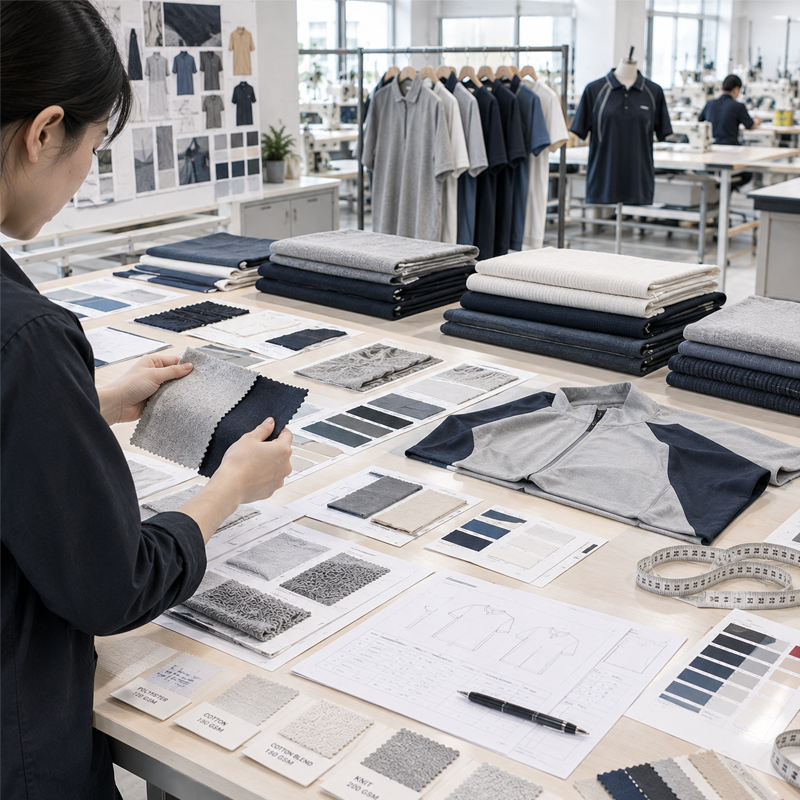
Fabric selection is one of the most important decisions in custom team uniforms.
Different activities require different textile characteristics.
Polyester
Polyester is commonly considered for sports and active applications because of its durability and suitability for various performance constructions.
Cotton
Cotton can provide a familiar hand feel and comfortable everyday wear, making it suitable for casual team T-shirts and lifestyle uniforms.
Cotton Blends
Blended fabrics can balance comfort, durability, appearance, and performance depending on the selected composition.
Knitted Fabrics
Knitted fabrics can be suitable for T-shirts, sweatshirts, hoodies, and other casual or active garments.
Woven Fabrics
Woven materials can be useful for jackets, overshirts, outerwear, and structured uniform styles.
The right choice depends on the garment, target price, expected usage, and design requirements.
5. Fit and Construction Matter
A team uniform may look good on a design sheet but still perform poorly if the fit is not properly developed.
Important construction details include:
- Shoulder width
- Sleeve length
- Body length
- Neck construction
- Cuff construction
- Hem finishing
- Pocket placement
- Seam construction
- Ease and movement
- Size grading
For active uniforms, movement should be considered during development.
A garment that looks appropriate while standing may feel restrictive when the wearer is running, stretching, or performing other activities.
This is why sample testing should be part of the development process.
6. Customization Options
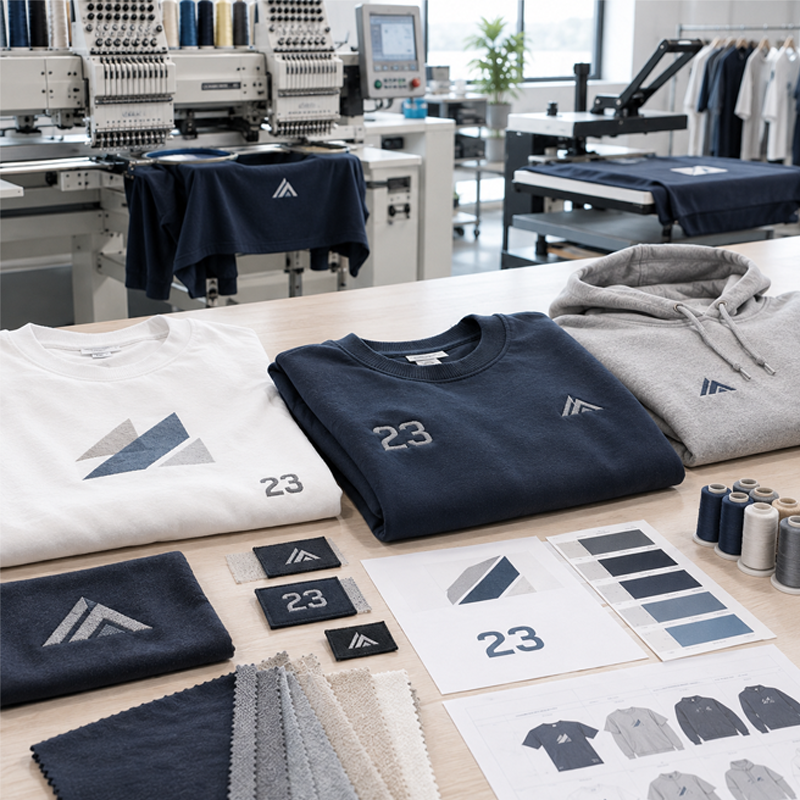
Customization can transform a basic garment into a recognizable team uniform.
Common options include:
Screen Printing
Suitable for many graphic applications, particularly larger artwork areas.
Embroidery
Often used for logos, names, badges, and other smaller decorative elements.
Heat Transfer
Can be considered for names, numbers, and selected graphic applications.
Sublimation
Often used for sports garments requiring highly detailed or all-over graphics.
Woven or Sewn Labels
Useful when a team requires a more traditional garment-label appearance.
The appropriate technique depends on fabric type, artwork, quantity, durability requirements, and budget.
7. Why a Pre-Production Sample Matters
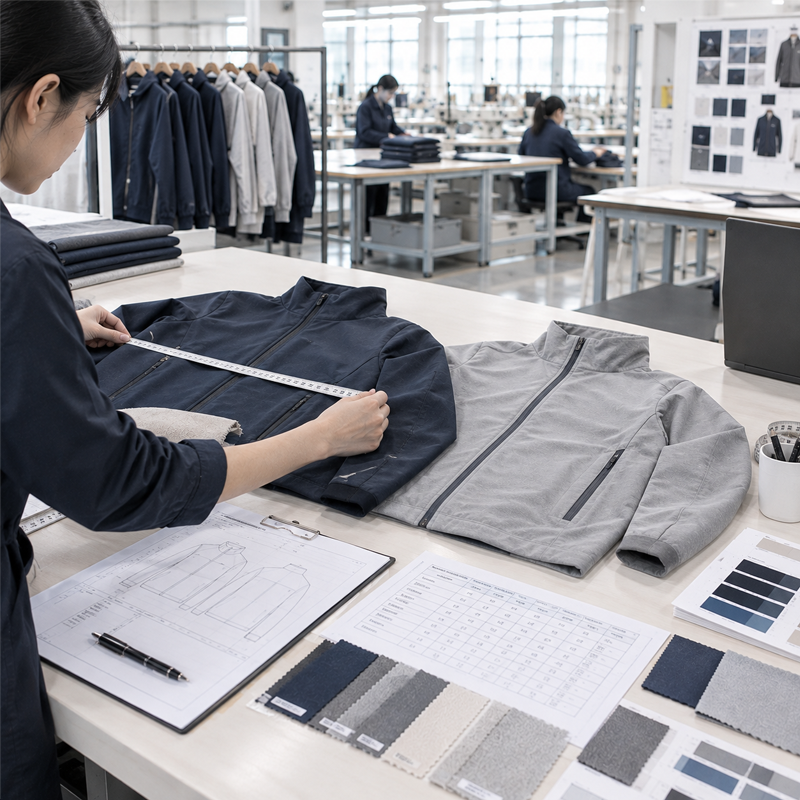
One of the most important stages in custom team uniforms is sample approval.
A sample allows the team or organization to physically evaluate the product before bulk production begins.
The sample should be checked for:
- Overall appearance
- Fabric hand feel
- Цвят
- Подходящ
- Измервания
- Logo position
- Printing or embroidery
- Sewing quality
- Облицовки
- Етикети
- Packaging requirements
If changes are needed, they should ideally be completed before the bulk order is released.
For team orders involving many sizes and colors, this step becomes particularly important.
8. Managing Team Sizes
Size planning can be more complicated than it first appears.
A team order may contain multiple sizes such as:
XS → S → M → L → XL → 2XL
Some organizations may also require children's sizes.
Before production, create a detailed size breakdown rather than estimating quantities informally.
For example:
| Size | Брой |
|---|---|
| S | 15 |
| M | 25 |
| L | 30 |
| XL | 20 |
| 2XL | 10 |
The actual distribution should be based on confirmed participant requirements.
This reduces the risk of excess inventory in unpopular sizes.
9. Color Planning for Team Uniforms
Color is often one of the most recognizable elements of a team uniform.
When developing colors, consider:
- Official team colors
- Pantone references when applicable
- Fabric behavior
- Printing compatibility
- Embroidery thread colors
- Color consistency between materials
- Repeat-order requirements
It is useful to approve colors against physical fabric samples whenever possible.
Digital artwork can look different from the final textile result because screens, fabrics, inks, and production processes reproduce colors differently.
10. Understanding MOQ and Order Quantity
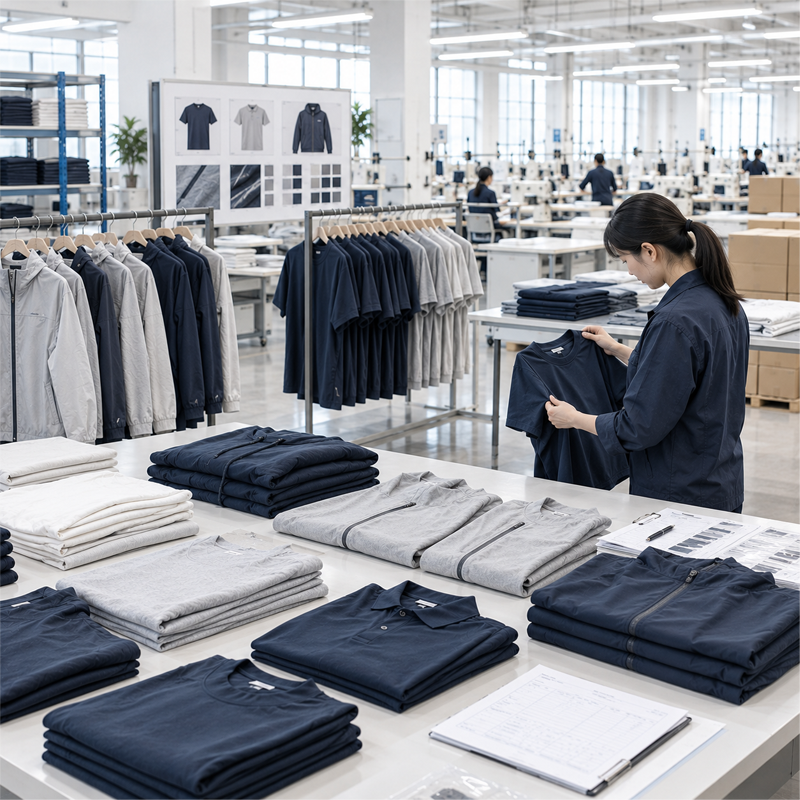
Manufacturers may have minimum order quantities, commonly referred to as MOQ.
For custom team uniforms, MOQ can depend on:
- Garment type
- Тъкан
- Цвят
- Customization method
- Производствен процес
- Factory requirements
Teams should confirm MOQ before finalizing the design.
For smaller organizations, it can sometimes be more practical to simplify the number of fabric colors or garment variations rather than creating many low-volume production runs.
11. Quality Control for Custom Team Uniforms
Quality control should cover more than just the finished appearance.
A structured inspection can evaluate:
Тъкан
Check composition, color, weight, appearance, and consistency.
Измервания
Verify key garment measurements against the approved specification.
Sewing
Inspect seams, stitching, hems, cuffs, and other construction details.
Decoration
Check logo position, artwork clarity, embroidery quality, color, and adhesion where applicable.
Garment Appearance
Look for stains, defects, loose threads, distortion, or other visible issues.
Опаковка
Confirm size labels, quantities, folding, individual packaging, and carton information.
These checks help reduce problems when hundreds or thousands of garments are delivered.
12. What Should You Send to a Manufacturer?
A clear specification package can make the development process much more efficient.
Useful materials include:
- Design drawings
- Reference images
- Logo files
- Artwork files
- Цветови референции
- Таблици с размери
- Fabric preferences
- Decoration requirements
- Label requirements
- Packaging instructions
- Expected quantity
- Target delivery date
The more clearly the requirements are communicated, the easier it is for the manufacturer to evaluate feasibility and prepare a quotation.
13. How to Choose a Custom Team Uniform Manufacturer
When comparing manufacturers, do not focus only on the lowest unit price.
Consider the manufacturer's ability to manage the complete development process.
Important questions include:
- Can they develop custom garments?
- Can they provide samples?
- What fabrics can they source or produce?
- What customization methods do they support?
- How do they manage quality control?
- Can they handle the required quantity?
- What is their typical production lead time?
- Can they communicate clearly in English?
- Can they support repeat orders?
- Can they provide production information before bulk manufacturing?
A reliable manufacturing partner should make the process easier rather than simply provide a low quotation.
14. Custom Team Uniforms for Different Organizations
Custom uniforms are not limited to professional sports.
They can be developed for:
- Sports clubs
- School teams
- Running groups
- Cycling teams
- Fitness organizations
- Corporate teams
- Community groups
- Event staff
- Outdoor clubs
- Youth organizations
Each application can require a different balance between performance, appearance, durability, and cost.
Understanding the end user should therefore come before selecting the final garment specification.
15. Why Manufacturing Experience Matters
Custom team uniforms often combine several requirements within one order.
A single project may involve:
- Multiple sizes
- Multiple colors
- Different decoration locations
- Individual names
- Numbers
- Team logos
- Different garment styles
This creates additional production complexity.
An experienced apparel manufacturer can help organize specifications, sampling, production, inspection, and packing so that the order remains consistent.
For growing teams, establishing a standardized specification can also make future repeat orders easier.
16. How KALAIBEN Supports Apparel Manufacturing
KALAIBEN is an integrated industry and trade company specializing in woven and knitted garments, with its headquarters in Quanzhou, Fujian, and a production operation in Nancheng County, Jiangxi. The company profile describes its main products as knitted and woven casual garments and outdoor sportswear.
The company profile states that the Jiangxi production base covers approximately 30 acres with a construction area of about 26,000 square meters and more than 380 employees, with annual garment production capacity described at approximately 700,000–1,000,000 pieces.
Its production capabilities therefore provide a useful foundation for brands and organizations that need custom apparel development across different garment categories.
For a specific team uniform project, requirements such as fabric, construction, decoration, quantity, and delivery schedule should be evaluated individually.
Заключение
Developing custom team uniforms is a process that combines design, textile selection, garment construction, customization, sizing, sampling, production, and quality control.
The best results usually come from defining the intended use first and then developing the garment around real user requirements.
Whether the project is for a sports club, school, company, or community organization, a clear specification and reliable manufacturing process can make custom uniforms more consistent, comfortable, and practical.
For organizations planning a custom uniform program, starting with a detailed design brief and pre-production sample is one of the most effective ways to reduce production risks.











