




Výrobce oděvů „vše pod jednou střechou“: Kompletní průvodce pro oděvní značky
Datum zveřejnění:2026-09-04 Kategorie:NOVINKY Počet zobrazení:518
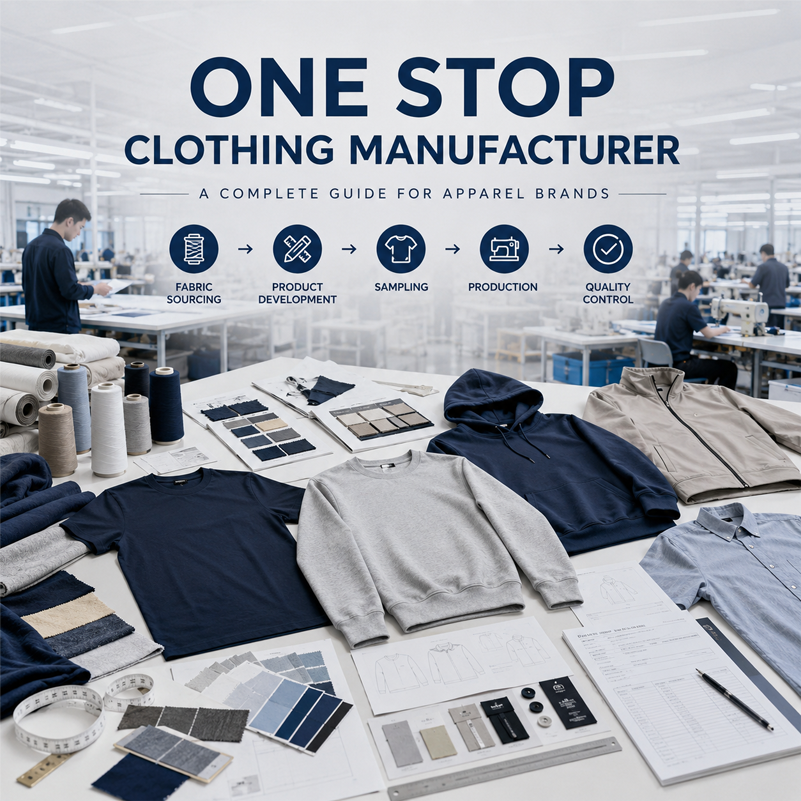
Úvod
Building an apparel collection often involves more than simply finding a factory to sew garments. Brands may need fabric sourcing, garment development, pattern making, sampling, printing or embroidery, bulk production, quality control, and packing.
Working with different suppliers for every stage can create additional communication, coordination, and quality-control challenges.
This is where a one stop clothing manufacturer can provide a more integrated approach.
Instead of managing multiple suppliers independently, brands can work with one manufacturing partner that coordinates several stages of the apparel development and production process.
For startups, growing brands, wholesalers, and established apparel businesses, this model can make product development more organized and easier to manage.
1. What Is a One Stop Clothing Manufacturer?
A one stop clothing manufacturer is a manufacturing partner that can support multiple stages of apparel development and production through one coordinated service.
Depending on the manufacturer's capabilities, services may include:
- Fabric sourcing
- Vývoj produktů
- Pattern development
- Sample making
- Fabric cutting
- Šití
- Printing
- Embroidery
- Dokončovací práce
- Quality inspection
- Balení
The main advantage is not simply having many services. It is having these processes connected through one manufacturing workflow.
For an apparel brand, this can reduce the need to coordinate every production stage with separate suppliers.
2. Why Do Apparel Brands Choose One Stop Manufacturing?
Managing apparel production through multiple suppliers can create communication gaps.
For example, a brand may source fabric from one company, develop samples with another, arrange printing through a third supplier, and then send everything to a separate factory for production.
Each additional supplier can introduce another communication point.
A one stop clothing manufacturer can simplify this structure by coordinating more stages through one production partner.
This can be particularly useful when the brand needs to maintain consistency between:
- Fabric specifications
- Barvy
- Rozměry
- Stavebnictví
- Decoration
- Sample approval
- Bulk production
The goal is a more connected development process.
3. What Services Can a One Stop Manufacturer Provide?
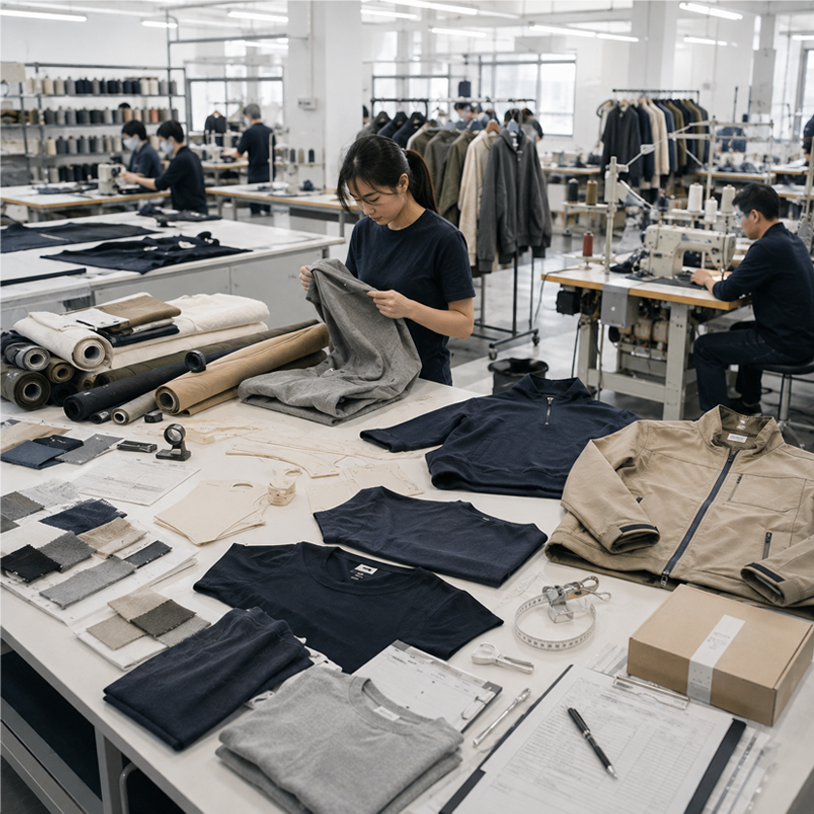
The exact service range varies between manufacturers, so brands should always confirm capabilities before placing an order.
A typical integrated apparel workflow may include:
Fabric Sourcing
The manufacturer helps identify fabrics based on the required weight, composition, construction, texture, color, and intended use.
Vývoj produktů
The brand's concept can be translated into technical specifications and production requirements.
Odběr vzorků
Samples allow the brand to evaluate fit, fabric, construction, colors, and details before bulk production.
Decoration
Depending on capabilities, customization may include screen printing, embroidery, labels, patches, or other garment decoration methods.
Bulk Production
Once the sample is approved, the manufacturer moves the product into the production process.
Quality Control
Garments can be checked during and after production for construction, measurements, appearance, and other agreed requirements.
Packing and Delivery Preparation
Finished garments can then be inspected, packed, and prepared for shipment.
4. One Stop Manufacturing vs. Multiple Suppliers
Both approaches can work, but they create different management requirements.
With multiple suppliers, a brand may have greater flexibility to select specialized companies for individual processes.
However, the brand also needs to coordinate:
- Supplier communication
- Material transfers
- Výrobní plány
- Quality requirements
- Sample revisions
- Delivery timing
With an integrated manufacturer, more of these activities can be coordinated through one production partner.
The most suitable model depends on the brand's product complexity, volume, internal team, and manufacturing requirements.
5. Is One Stop Manufacturing Suitable for Startups?
A one stop manufacturer can be useful for startups because new brands often have limited manufacturing experience and small internal teams.
Instead of managing several specialized suppliers, a startup can communicate its product requirements to one manufacturing partner.
For example, a new brand developing a sweatshirt collection may need:
- Výběr látky
- Color confirmation
- Pattern development
- Sample production
- Print development
- Sample approval
- Bulk manufacturing
- Quality inspection
- Balení
Having these stages coordinated can make the development process easier to understand and manage.
However, startups should still evaluate each manufacturer's actual capabilities instead of assuming that every “one stop” supplier provides the same level of service.
6. How Does the One Stop Clothing Manufacturing Process Work?
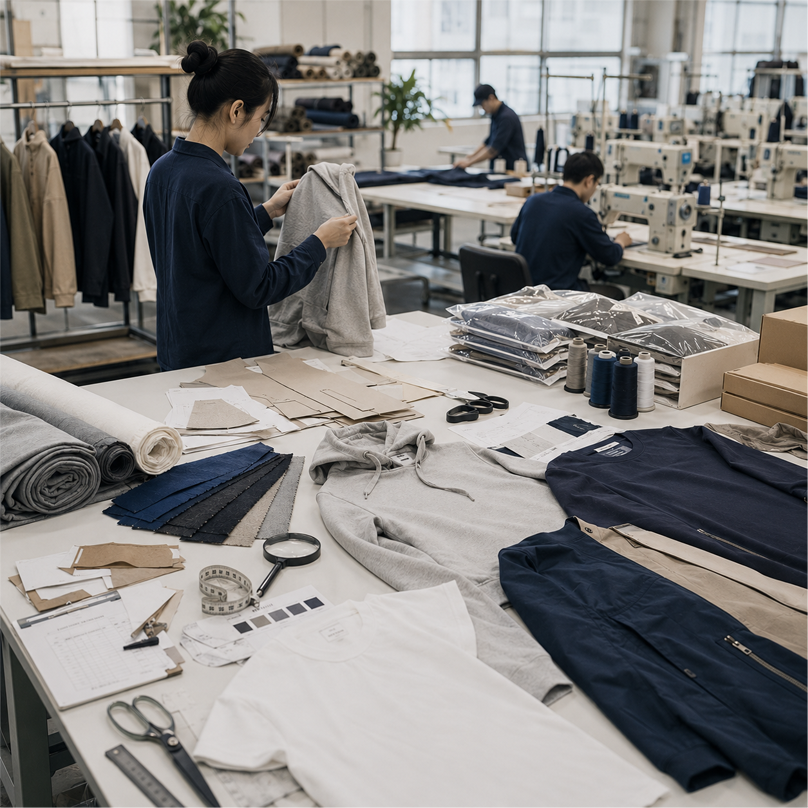
A typical workflow can be divided into several stages.
Step 1: Product Brief
The brand provides information about the product, target market, style, materials, colors, sizes, and expected quantities.
Step 2: Material and Construction Review
The manufacturer reviews fabric requirements, garment construction, trims, and decoration requirements.
Step 3: Sample Development
Initial samples are created for evaluation.
Step 4: Sample Revision
The brand provides feedback on fit, measurements, fabric, color, construction, or design details.
Step 5: Sample Approval
Once the specifications are confirmed, the approved sample becomes an important production reference.
Step 6: Bulk Production
The manufacturer organizes production according to the approved specifications.
Step 7: Quality Control
Finished garments are inspected against the agreed requirements.
Step 8: Packing and Delivery
Approved garments are packed and prepared for shipment.
This connected workflow is one of the main reasons brands consider a one stop manufacturing partner.
7. What Should You Ask a One Stop Manufacturer?
Before choosing a manufacturing partner, ask specific questions about the actual services included.
Useful questions include:
- What products do you manufacture?
- Which fabrics can you source?
- Do you provide sample development?
- Can you handle printing or embroidery?
- Jaké je vaše minimální objednané množství (MOQ)?
- How are samples approved?
- How is quality controlled?
- What production capacity do you have?
- How do you manage production schedules?
- Which markets do you currently serve?
The important point is to understand what the manufacturer actually handles, rather than relying only on the phrase “one stop.”
8. Why Sample Development Still Matters
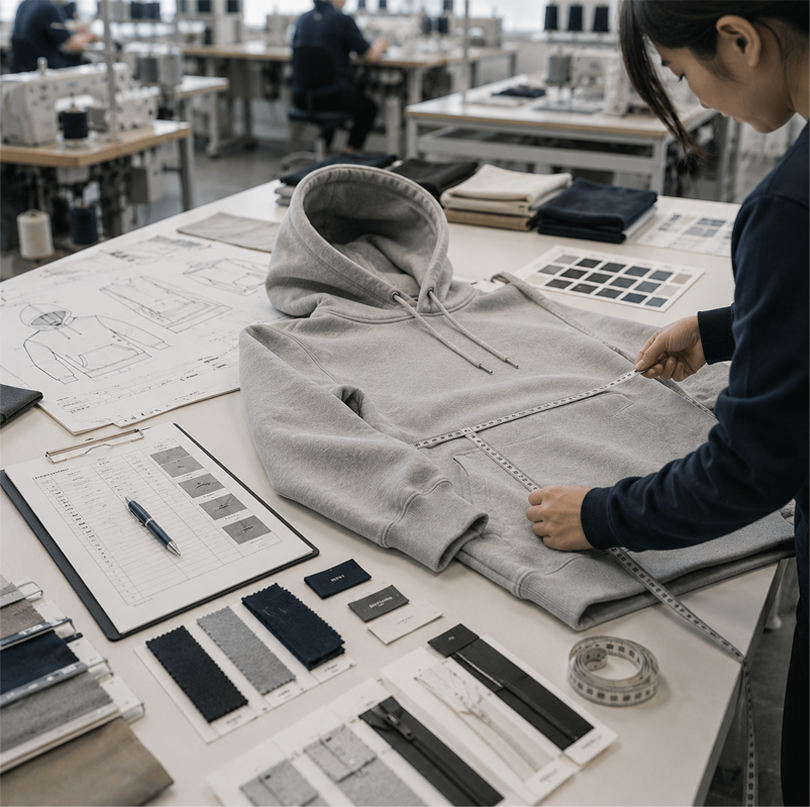
A one stop manufacturer does not eliminate the need for sampling.
Samples remain one of the most important stages in apparel development.
A sample allows a brand to evaluate:
- Vhodné
- Rozměry
- Látka
- Stavebnictví
- Šití
- Barva
- Decoration
- Celkový vzhled
If changes are required, they should be communicated and confirmed before bulk production.
A well-controlled sample approval process can reduce misunderstandings later in production.
9. Quality Control in One Stop Manufacturing
Quality control should be considered throughout the manufacturing process, not only after production is completed.
Depending on the product, quality checks may include:
- Fabric quality
- Color consistency
- Rozměry oděvů
- Šití
- Seams
- Decoration
- Štítky
- Dokončovací práce
- Balení
The brand and manufacturer should establish clear quality expectations before production begins.
Written specifications, approved samples, and clear communication can make quality control more consistent.
10. What Makes a Good One Stop Clothing Manufacturer?
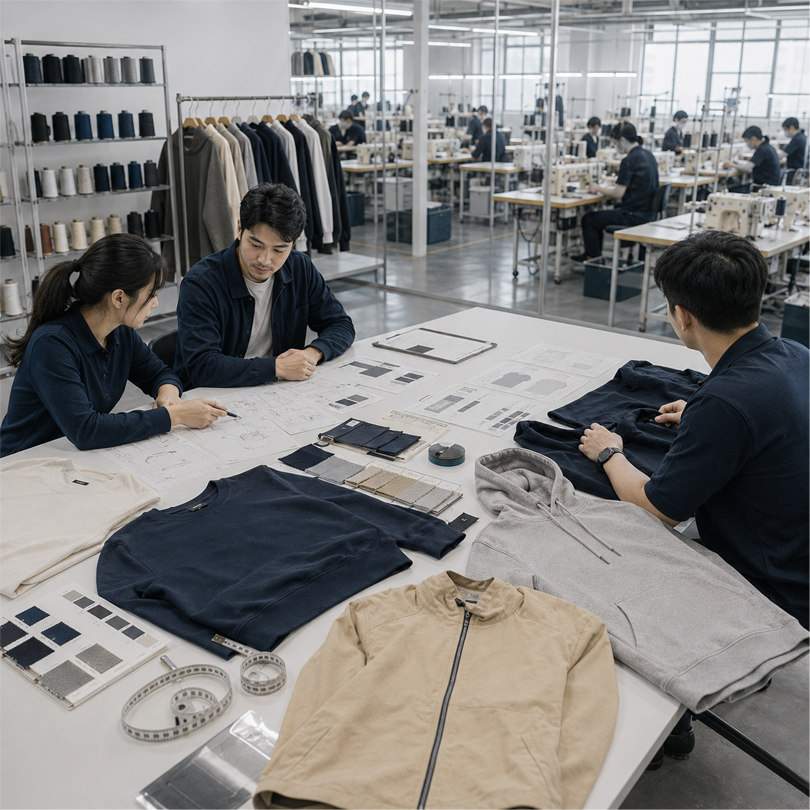
A strong one stop manufacturing partner should offer more than a long list of services.
Look for a manufacturer with:
Relevant Product Experience
The manufacturer should understand the types of garments your brand plans to produce.
Connected Production Capabilities
Different production stages should work together rather than operate as disconnected services.
Clear Communication
Questions, revisions, approvals, and production updates should be communicated clearly.
Reliable Sampling
The manufacturer should have a structured approach to sample development and revision.
Quality Management
Quality requirements should be discussed before production rather than after problems appear.
Production Capability
The manufacturer should have the capacity and organization needed for your expected order volume.
11. When Should a Brand Choose a One Stop Manufacturer?
This model can be especially useful when a brand wants to simplify supplier management.
It may be suitable for:
- Startup apparel brands
- Growing fashion brands
- Private label businesses
- Wholesale clothing businesses
- Outdoor apparel brands
- Casualwear brands
- Brands developing multiple garment styles
For businesses developing several products at once, having a centralized manufacturing partner can make communication and production coordination more manageable.
12. Questions to Clarify Before Starting Production
Before moving forward, confirm:
Product: What garments can the manufacturer produce?
Materials: What fabrics and trims can be sourced?
Sampling: How does the sample approval process work?
Customization: Which printing, embroidery, labeling, or other decoration services are available?
MOQ: What minimum quantities apply?
Production: What is the expected production timeline?
Quality: What inspection process is used?
Communication: Who will manage your order?
Shipping: How are finished goods prepared for delivery?
The clearer these points are, the easier it is to establish a workable production relationship.
Závěr
A one stop clothing manufacturer can simplify apparel production by connecting multiple stages of development and manufacturing through one coordinated partner.
For brands, the main value is not simply convenience. It is the ability to create a more organized workflow from product development and material selection to sampling, production, quality control, and delivery.
However, “one stop” should never be treated as a guarantee of quality.
Brands should still evaluate manufacturing experience, product capabilities, sampling procedures, MOQ, quality management, communication, and production capacity before choosing a partner.
The right manufacturer is one that can provide the capabilities your brand actually needs and maintain clear coordination throughout the production process.











