




Κατασκευαστής ενδυμάτων στην Κίνα: Πώς να βρείτε και να συνεργαστείτε με το κατάλληλο εργοστάσιο
Ημερομηνία δημοσίευσης:2026-09-01 Κατηγορία:ΝΕΑ Αριθμός προβολών:457
Introduction
For a growing clothing brand, finding the right clothing manufacturer in China can be an important step in building a reliable supply chain.
China offers a large and diverse apparel manufacturing industry, but this also means that manufacturers differ considerably in their product categories, production processes, MOQ, quality systems, and capabilities.
A good factory for one brand may not be the right factory for another.
The key is to match your product requirements with the manufacturer's actual capabilities.
This guide provides a practical process for researching, evaluating, and working with a clothing manufacturer in China.
1. Start by Defining Your Clothing Project
Before contacting manufacturers, prepare a basic product brief.
Your brief should include:
- Product type
- Ύφασμα
- Χρώμα
- Size
- Μετρήσεις
- Design details
- Δημιουργία εμπορικής ταυτότητας
- Estimated quantity
- Συσκευασία
- Target production schedule
For example, instead of simply saying:
"We need a fleece jacket."
Provide more information about the fabric, construction, color, size range, zipper, pockets, logo, and estimated quantity.
Specific information allows a manufacturer to evaluate your project more accurately.
2. Search by Product Category
One of the easiest ways to narrow down potential manufacturers is to search according to product specialization.
Για παράδειγμα:
Καθημερινή ενδυμασία
Look for manufacturers with experience in:
- T-shirts
- Sweatshirts
- Hoodies
- Casual jackets
Outdoor Apparel
Look for experience with:
- Fleece
- Vests
- Μπουφάν
- Outdoor sportswear
Children's Clothing
Look for manufacturers familiar with children's garment construction and sizing.
The more closely the factory's experience matches your product, the easier it may be to communicate development and production requirements.
3. Review the Manufacturer's Actual Capabilities
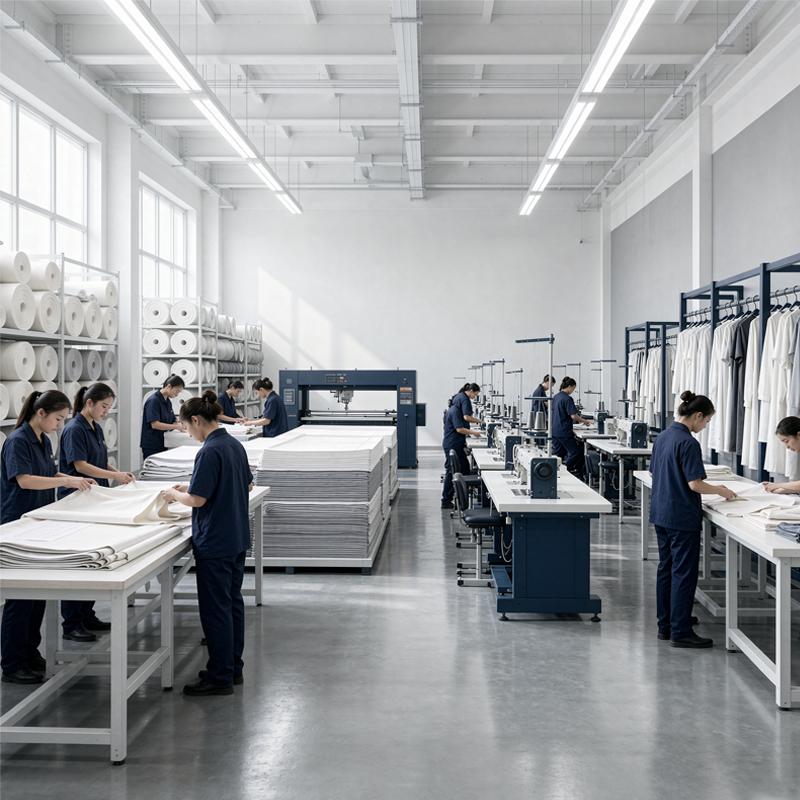
Do not evaluate a manufacturer only from its website or catalog.
Ask specific questions about:
- Production categories
- Fabric capabilities
- Δειγματοληψία
- Ελάχιστη ποσότητα παραγγελίας (MOQ)
- Production lines
- Έλεγχος ποιότητας
- Συσκευασία
- Εμπειρία στον τομέα των εξαγωγών
KALAIBEN's company information identifies knitted and woven casual garments and outdoor sportswear as its main product categories.
The company also operates knitted fabric production equipment including single-side, double-side, terry, fleece, and rib machines.
These details provide a more useful picture of manufacturing capabilities than simply looking at product photographs.
4. Ask for Product References
When evaluating a manufacturer, ask what types of garments it regularly produces.
Useful questions include:
- Έχετε κατασκευάσει παρόμοια ενδύματα;
- Do you work with similar fabrics?
- Can you develop the required construction?
- Can you provide relevant samples?
- Can you support the expected quantity?
The goal is not simply to find a factory with a long product list.
The goal is to determine whether the manufacturer has relevant experience for your specific project.
5. Discuss Fabric Before Confirming Production
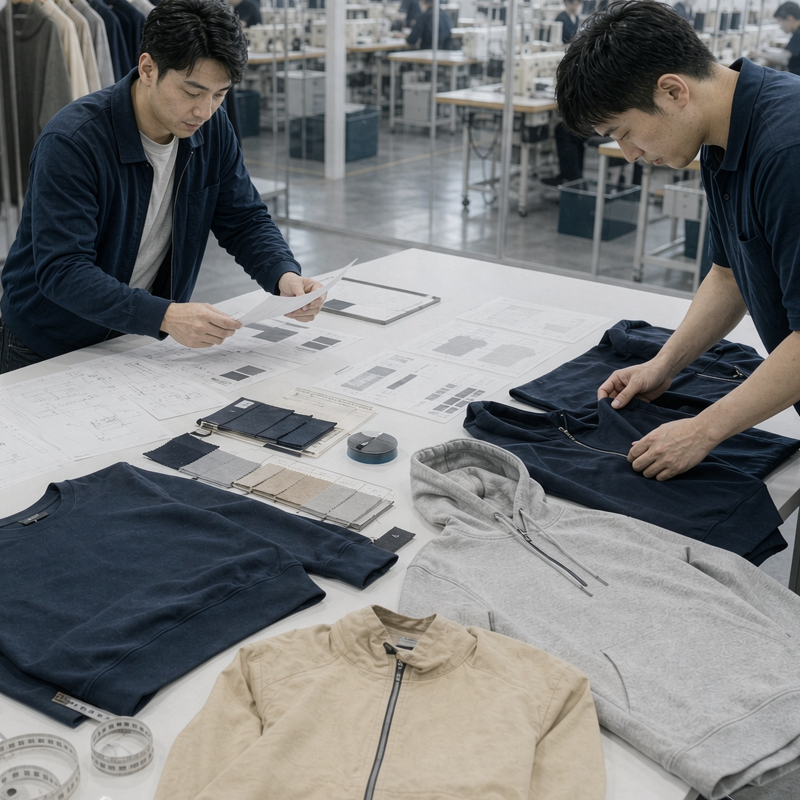
Fabric should be discussed early.
Επιβεβαίωση:
- Composition
- GSM
- Κατασκευή
- Χρώμα
- Hand feel
- Performance requirements
For knitted garments, the fabric structure can significantly affect the final product.
KALAIBEN's textile operation includes machinery for single-side, double-side, terry, fleece, and rib fabrics.
This makes fabric discussion an important part of the company's manufacturing background.
6. Request a Sample
Never rely entirely on photographs when developing a new garment.
Request a physical sample when appropriate.
Evaluate:
Εμφάνιση
Does the garment look like the intended design?
Κατάλληλο
Do measurements match the size specification?
Ύφασμα
Does the material have the required weight and feel?
Κατασκευή
Are seams and garment details correct?
Δημιουργία εμπορικής ταυτότητας
Are logos and labels correct?
The sample should become the physical reference for the approved product.
7. Clarify MOQ and Pricing
Once the manufacturer understands your product, discuss MOQ and pricing.
Ask for clarification about:
- MOQ per style
- MOQ per color
- Sample costs
- Production pricing
- Custom fabric requirements
- Additional customization costs
Do not compare quotations based only on the final unit price.
Instead, compare the complete production conditions.
8. Understand the Factory's Production Process
A clothing factory may have multiple production stages.
For Jiangxi KALAIBEN, the 2025 BSCI report identifies production activities including:
Cutting → Sewing → Ironing → Inspection → Packing.
For a buyer, understanding these stages can help when setting quality checkpoints.
Για παράδειγμα:
Before cutting: confirm fabric and production specifications.
During sewing: monitor garment construction.
During finishing: check appearance.
During inspection: verify measurements and workmanship.
Before packing: confirm final product and packaging requirements.
9. Check Production Scale
Production scale is important, especially for brands expecting future growth.
KALAIBEN's company profile states that its Jiangxi production base covers approximately 30 acres, with a construction area of approximately 26,000㎡, and that the company has more than 380 employees.
The profile also states annual garment production of approximately 700,000–1,000,000 pieces.
For buyers, however, production capacity should always be considered alongside the manufacturer's actual product specialization and the requirements of the individual order.
10. Evaluate Quality Management
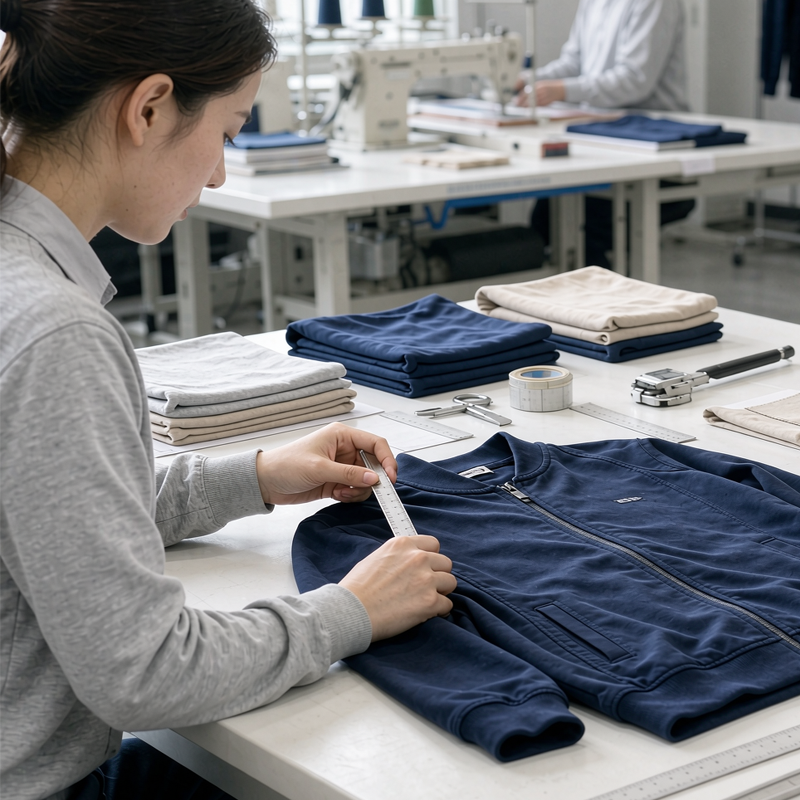
Before production begins, define what "acceptable quality" means.
Your specifications may include:
- Measurement tolerance
- Σύνθεση υφάσματος
- Βάρος υφάσματος
- Χρώμα
- Ραφή
- Logo placement
- Ετικέτες
- Συσκευασία
A clear specification can reduce misunderstandings during production.
The 2025 BSCI report also documents a manufacturing audit of Jiangxi KALAIBEN, with the audit covering areas including production activities and workplace practices.
When evaluating any manufacturer, brands should review current documentation and assess the supplier against their own sourcing and compliance requirements.
11. Communication Matters in China Apparel Sourcing
International buyers often communicate with manufacturers remotely.
Therefore, communication should be part of the supplier evaluation.
Pay attention to whether the manufacturer can clearly discuss:
- Προδιαγραφές υφάσματος
- Διαστάσεις ενδυμάτων
- Δείγματα
- Corrections
- Ελάχιστη ποσότητα παραγγελίας (MOQ)
- Προγράμματα παραγωγής
- Απαιτήσεις ποιότητας
- Συσκευασία
A manufacturer that understands the product requirements clearly can help reduce unnecessary back-and-forth during development.
12. Plan the Relationship Beyond the First Order
The first production order should not be the only consideration.
A successful clothing business may need the same factory to support:
First Order → Repeat Order → New Colors → New Styles → New Collections
Before choosing a manufacturer, consider whether the supplier has the capabilities to support this progression.
Long-term manufacturing relationships can become more valuable as product specifications become established.
Why KALAIBEN Is a Potential Manufacturing Partner in China
KALAIBEN is an integrated textile and garment company headquartered in Quanzhou, Fujian, with a Jiangxi production operation. Its company information states that the business focuses on knitted and woven casual garments and outdoor sportswear.
The company also operates knitted fabric production equipment covering several fabric structures, including fleece and rib.
Its Jiangxi garment operation's documented production activities include cutting, sewing, ironing, inspection, and packing.
For brands looking for a clothing manufacturer in China, these capabilities provide a basis for discussing apparel projects involving knitted or woven casualwear and outdoor-related garments.
A Simple Checklist for Choosing a Clothing Manufacturer in China
Before making a decision, check:
Προϊόν
Does the factory make your type of clothing?
Ύφασμα
Can it meet your fabric requirements?
Δείγμα
Can it develop and revise samples?
Ελάχιστη ποσότητα παραγγελίας (MOQ)
Does the MOQ fit your business?
Ποιότητα
Are quality expectations clearly defined?
Παραγωγή
Does production capacity match your requirements?
Επικοινωνία
Can the manufacturer communicate clearly?
Future
Can it potentially support repeat orders and future collections?
Common Mistakes When Finding a Chinese Clothing Manufacturer
Choosing a Factory Based Only on Online Photos
Product photographs do not provide enough information about manufacturing capabilities.
Comparing Only Unit Prices
MOQ, fabric, quality, sampling, packaging, and logistics can all affect the total cost.
Sending an Incomplete Product Brief
Insufficient information can make quotations difficult to compare.
Skipping Sample Approval
Always confirm the actual product before bulk production.
Failing to Discuss Future Orders
Think about what happens if your product becomes successful.
FAQ
How can I find a clothing manufacturer in China?
Define your product first, then search for manufacturers with relevant product and fabric experience. Compare MOQ, sampling, quality, production capabilities, and communication.
How do I know if a Chinese clothing factory is reliable?
Review its product experience, production capabilities, samples, quality processes, documentation, communication, and ability to meet your specific requirements.
What should I send to a clothing manufacturer?
Send product references, fabric specifications, size charts, colors, quantities, branding requirements, and packaging information.
Is MOQ important when choosing a manufacturer?
Yes. MOQ affects inventory planning and production economics, especially for startups and growing brands.
Can a clothing manufacturer in China support long-term production?
Potentially, depending on the manufacturer's capabilities and your product requirements. Discuss repeat orders and future production needs before establishing cooperation.
Συμπέρασμα
Η εύρεση του κατάλληλου clothing manufacturer in China is a process of matching your product requirements with the right manufacturing capabilities.
Instead of choosing a supplier based on price alone, evaluate:
Product Experience + Fabric + Sampling + MOQ + Quality + Production + Communication + Long-Term Support
KALAIBEN's integrated textile and garment operations, product focus on knitted and woven casualwear and outdoor sportswear, and documented garment production processes provide a foundation for international brands to discuss apparel manufacturing projects.
If you are looking for a clothing manufacturer in China, send KALAIBEN your product reference, fabric requirements, estimated quantity, and customization details to discuss your project.











