




Custom Embroidery Services: A Practical Guide for Clothing Brands
Ημερομηνία δημοσίευσης:2026-09-02 Κατηγορία:ΝΕΑ Αριθμός προβολών:669
Introduction
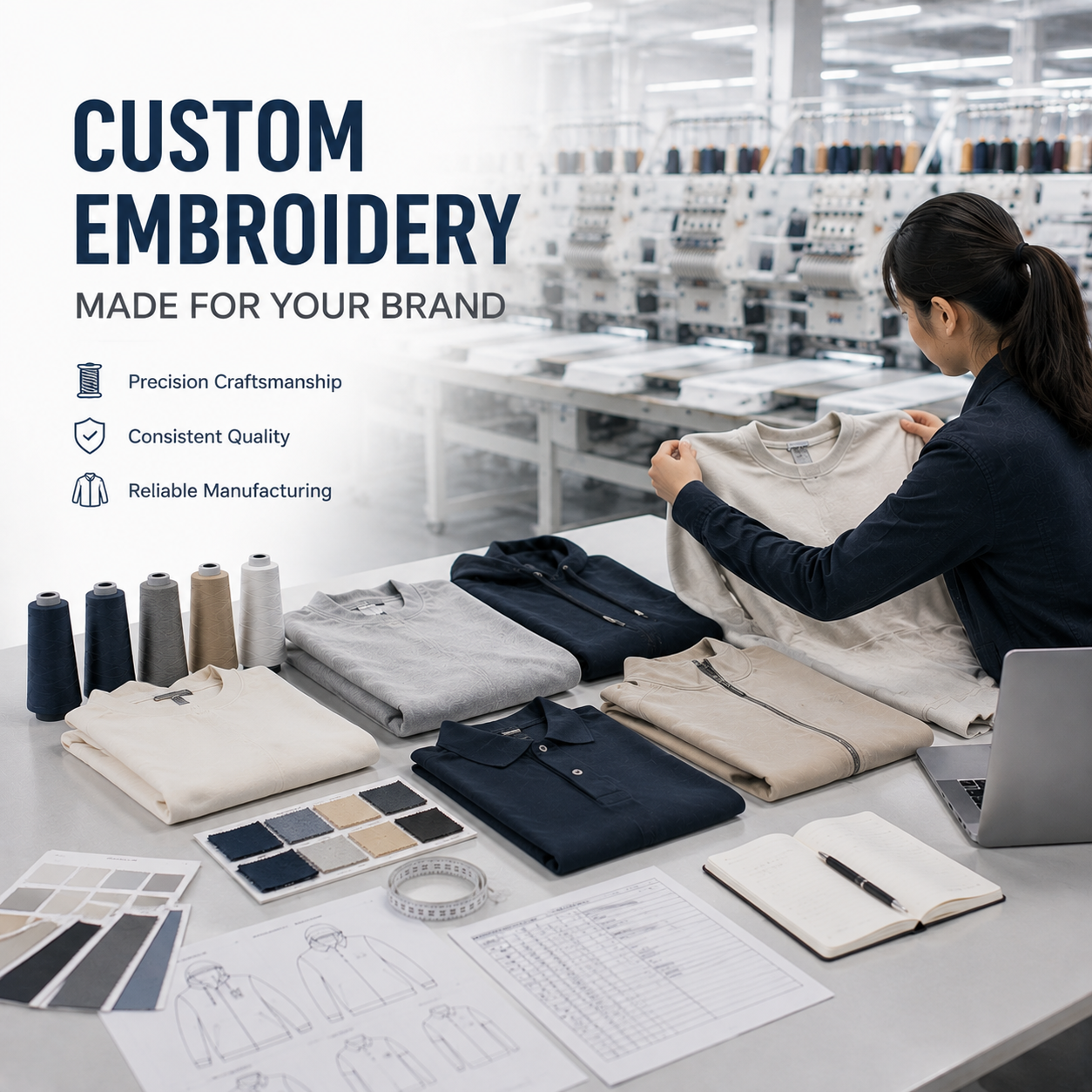
Embroidery is one of the most recognizable ways for a clothing brand to add a custom identity to garments. A small embroidered logo on a hoodie, a detailed design on a jacket, or a branded patch on a cap can make a simple garment feel more distinctive and professional.
For brands developing custom apparel, however, choosing custom embroidery services is about more than simply adding a logo.
The embroidery method, thread selection, artwork, stitch density, garment fabric, placement, and sample approval can all affect the final result.
This guide explains how custom embroidery works, what brands should consider before production, and how to evaluate an embroidery service when working with a clothing manufacturer.
1. What Are Custom Embroidery Services?
Custom embroidery services involve stitching a logo, graphic, lettering, emblem, or other artwork directly onto a garment or fabric component.
Unlike printed graphics, embroidery creates a raised, textured surface. This physical texture can give garments a more premium and durable appearance.
Custom embroidery is commonly used for:
- Brand logos
- Company names
- Team apparel
- Workwear
- School uniforms
- Streetwear
- Hoodies and sweatshirts
- Jackets and outerwear
- Caps and accessories
- Decorative garment details
The final result depends heavily on the relationship between the artwork and the garment itself.
A design that looks excellent on a computer screen may need adjustments before it can be converted into embroidery.
2. Why Do Clothing Brands Choose Embroidery?
One of the biggest advantages of embroidery is its visual and physical texture.
Printed graphics sit on the surface of the fabric, while embroidery becomes part of the garment's construction through stitching.
This makes embroidery particularly useful when a brand wants to create a strong visual identity without covering a large area of the garment.
Embroidery can create a premium appearance
A carefully embroidered logo can add structure and texture to an otherwise simple garment.
For example, a small logo on the chest of a sweatshirt can create a subtle branded look, while a larger embroidered graphic can become a major design feature.
Embroidery works well for branding
Because logos and short lettering can be highly recognizable when embroidered, the technique is widely used for corporate apparel, uniforms, casualwear and branded merchandise.
Embroidery can be highly versatile
Depending on the garment and design, embroidery can be placed on different areas, including:
- Left chest
- Right chest
- Sleeves
- Cuffs
- Front panels
- Back panels
- Pockets
- Collars
- Hats and accessories
The correct placement depends on garment construction, size and design requirements.
3. What Types of Garments Work Well With Embroidery?
Not every fabric behaves in exactly the same way during embroidery.
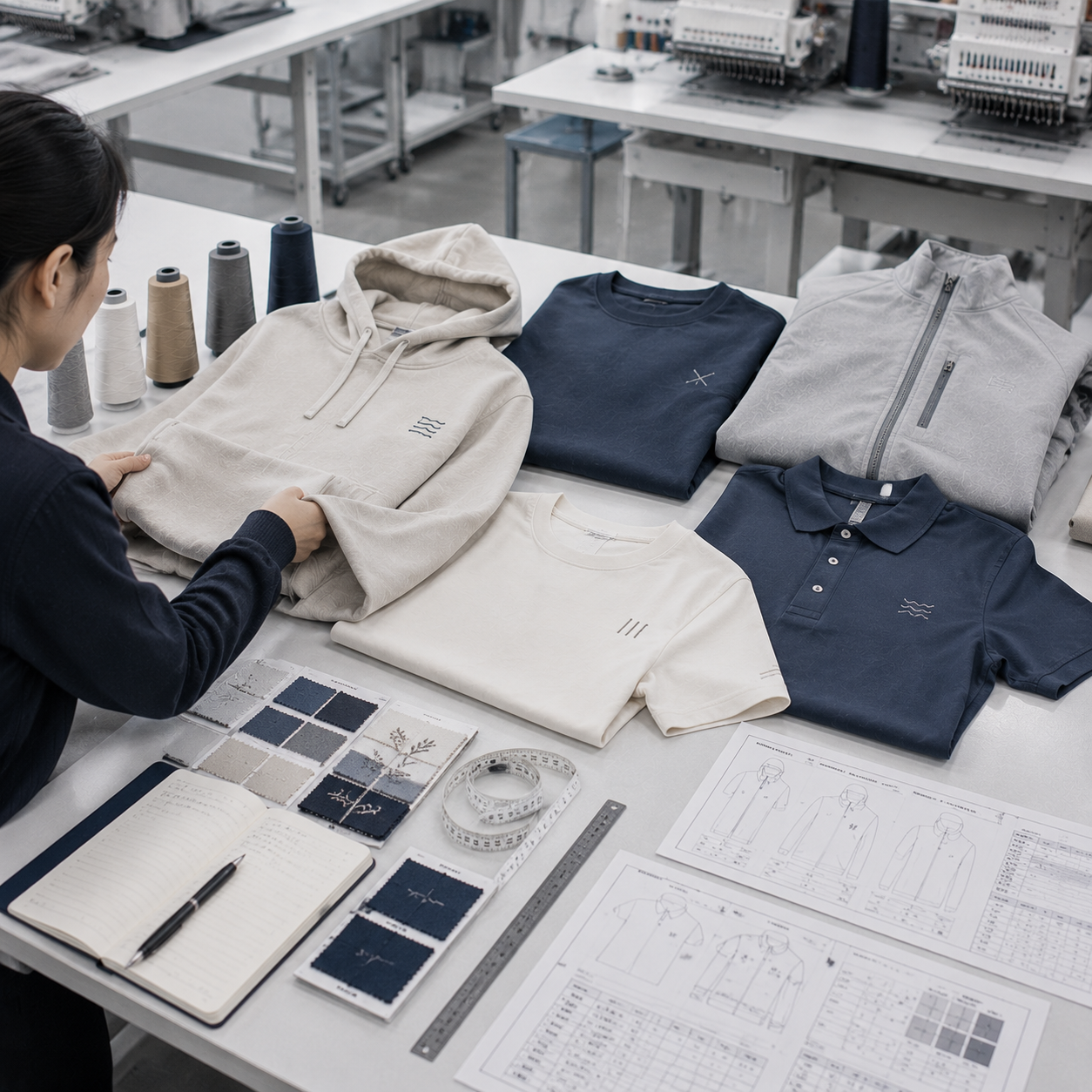
Generally, garments with enough structure and stability can provide a good foundation for embroidered designs.
Common examples include:
Hoodies and Sweatshirts
The heavier construction of many hoodies and sweatshirts can work well with embroidered logos and lettering.
This makes embroidery particularly popular for casualwear and streetwear collections.
Polo Shirts
Small chest embroidery is commonly used for company branding, uniforms and lifestyle apparel.
Μπουφάν
Embroidery can be used on chest panels, sleeves, back areas or other suitable sections of a jacket.
However, insulated, waterproof or highly technical fabrics may require additional consideration.
T-Shirts
T-shirts can also be embroidered, especially when the design is relatively small.
Because lightweight fabrics can be more sensitive to stitching tension and density, sample testing is important.
4. Choose the Right Embroidery Placement
Placement is one of the first decisions a brand should make.
A logo that looks balanced on a hoodie may not look the same when placed on a lightweight T-shirt or jacket.
Common placement options include:
Left Chest
A classic choice for logos and small brand marks.
Center Chest
Suitable when the embroidery itself is intended to become a stronger visual feature.
Sleeve
Useful for secondary branding, small graphics or text.
Back
A larger back embroidery can become a statement element, but the design and stitch density need to be considered carefully.
Pocket Area
Embroidery can be placed above or around pockets, but the construction underneath should be checked before production.
Before bulk manufacturing, brands should confirm the exact artwork size and position through a physical sample.
5. Prepare Artwork for Embroidery
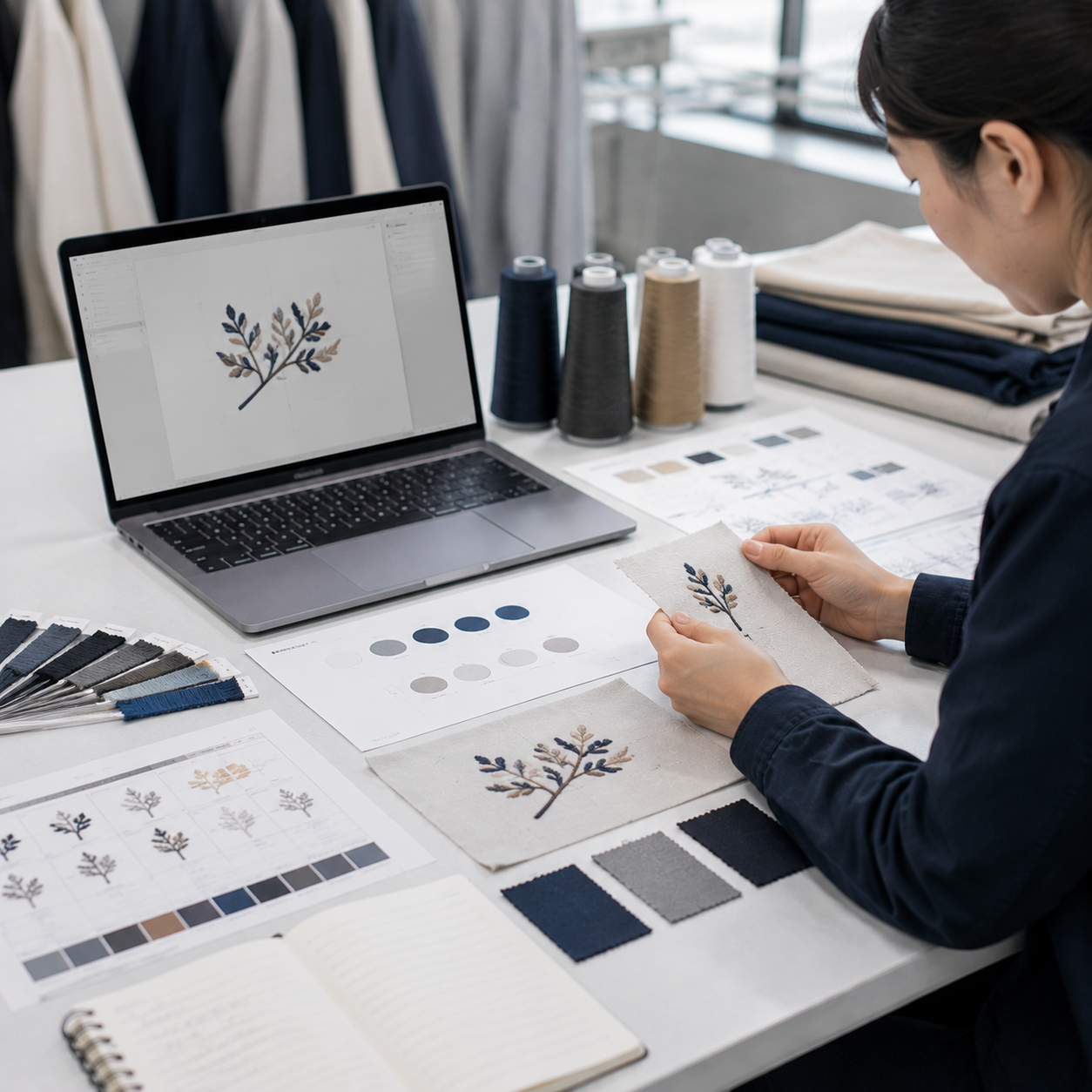
A common mistake is assuming that any digital image can immediately become an embroidery design.
Embroidery requires a different type of artwork preparation.
A manufacturer or embroidery specialist may need to convert the artwork into an embroidery-ready file through a process often called digitizing.
The design needs to be considered in terms of:
- Stitch direction
- Stitch density
- Thread colors
- Small details
- Letter size
- Outlines
- Layering
- Fabric structure
Very small text and extremely fine details may not translate well into stitches.
For this reason, brands should provide clean, high-resolution artwork and discuss the intended embroidery size before production.
6. Consider Thread Colors and Stitch Density
Thread selection can significantly affect the appearance of embroidery.
A design may contain many colors, but that does not always mean every color needs to be reproduced exactly.
The manufacturer and brand should confirm:
- Main thread colors
- Color matching requirements
- Number of thread colors
- Stitch density
- Outline treatment
- Filled areas
- Fine details
High stitch density can create a strong, substantial embroidery effect, but excessive stitching may affect lightweight fabrics.
The right balance depends on the garment, artwork and desired appearance.
7. Request an Embroidery Sample Before Bulk Production
Sampling is one of the most important steps when using custom embroidery services.
A digital preview can show the general design, but it cannot fully demonstrate how the embroidery will look and feel on the actual garment.
A physical sample allows the brand to check:
- Logo size
- Placement
- Thread color
- Stitch quality
- Detail definition
- Fabric interaction
- Overall appearance
If adjustments are necessary, they should be completed before bulk production begins.
This can help reduce the risk of receiving a large quantity of garments with an embroidery result that does not meet expectations.
8. Check Embroidery Quality Carefully
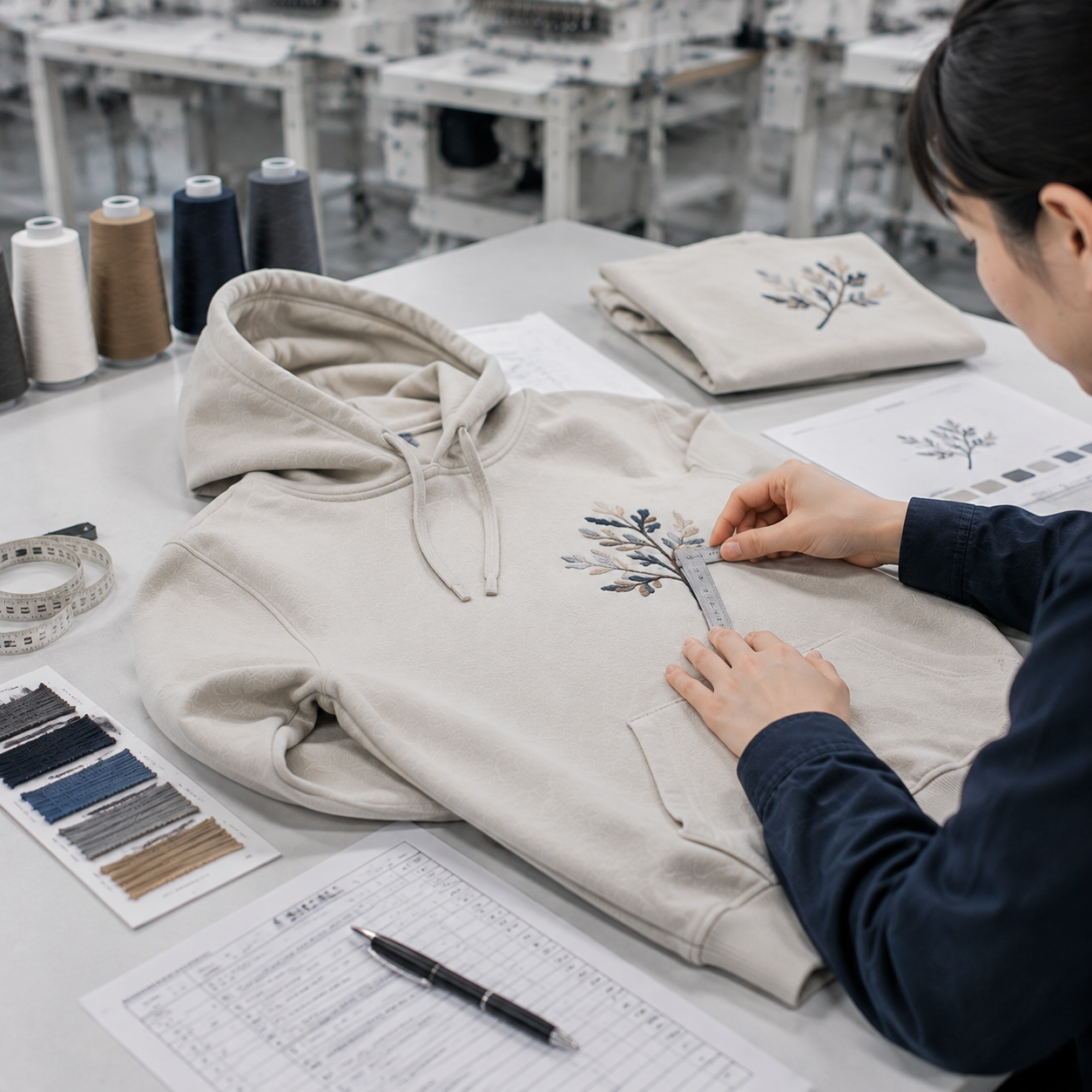
When reviewing an embroidered sample, look beyond the overall appearance.
Pay attention to the following details.
Stitch Consistency
Stitches should appear clean and reasonably consistent throughout the design.
Edges
The edges of letters, logos and shapes should be clearly defined rather than excessively uneven.
Thread Tension
Loose or excessively tight stitching can affect the appearance and durability of the design.
Backing
Depending on the garment and embroidery method, backing material may be used to stabilize the fabric during embroidery.
Placement
Measure the position against the approved specification rather than relying only on visual judgment.
A professional quality check should compare the physical sample with the approved artwork and specifications.
9. Embroidery vs. Screen Printing
Embroidery and screen printing can both be effective customization methods, but they create very different results.
| Χαρακτηριστικό | Κεντήματα | Screen Printing |
|---|---|---|
| Surface | Raised and textured | Flat graphic |
| Main effect | Premium, dimensional | Bold, graphic |
| Ιδανικό για | Logos, lettering, small graphics | Large graphics, illustrations |
| Fine detail | Limited by stitch size | Depends on artwork and printing process |
| Fabric feel | Textured | Generally smoother |
| Common use | Hoodies, polos, jackets | T-shirts, sweatshirts, promotional apparel |
The best choice depends on the brand's design, garment type and desired visual effect.
10. How to Choose a Custom Embroidery Service
When comparing manufacturers or suppliers, do not evaluate embroidery only by price.
Look at the complete development process.
Check Product Experience
Ask whether the manufacturer has experience working with the type of garments you are developing.
Review Samples
Always ask to see physical embroidery samples where possible.
Discuss Artwork Preparation
Confirm whether artwork digitizing and embroidery file preparation are included in the development process.
Ask About Placement
Make sure the manufacturer can work with your required embroidery positions and dimensions.
Confirm Quality Control
Ask how embroidery quality is checked before garments move into final production.
Discuss Communication
Clear communication is especially important when reviewing sample revisions and artwork changes.
11. What Should You Send to a Manufacturer?
A clear inquiry can make the development process much easier.
Your initial information should ideally include:
- Garment type
- Fabric preference
- Embroidery artwork
- Διαστάσεις έργου τέχνης
- Placement
- Thread color requirements
- Estimated order quantity
- Size range
- Target delivery schedule
- Εικόνες αναφοράς
The more clearly the requirements are defined, the easier it is for the manufacturer to evaluate the project.
12. Final Checklist for Custom Embroidery
Before approving bulk production, check:
- Artwork has been approved
- Embroidery size is confirmed
- Placement is confirmed
- Thread colors are approved
- Physical sample has been reviewed
- Stitch quality has been checked
- Fabric interaction looks correct
- Final specifications are documented
- Bulk production requirements are confirmed
Συμπέρασμα
Custom embroidery services can be an effective way to build a recognizable clothing brand identity.
The key is to treat embroidery as part of the product development process rather than as a simple final decoration.
From artwork preparation and placement to thread selection, sampling and quality control, every step can influence the final appearance.
For clothing brands, the best manufacturing partner is not simply the one that can add a logo. It is the one that can understand the garment, translate the artwork into an appropriate embroidery specification, develop a physical sample and maintain consistent quality during production.
If you are developing custom apparel, prepare your artwork, garment specifications and customization requirements before contacting a manufacturer. A clear brief creates a much stronger foundation for sampling and production.











