




Fabricantes de ropa para pequeñas empresas: cómo elegir al socio adecuado
Fecha de publicación:2026-08-28 Categoría:NOTICIAS Número de visitas:617
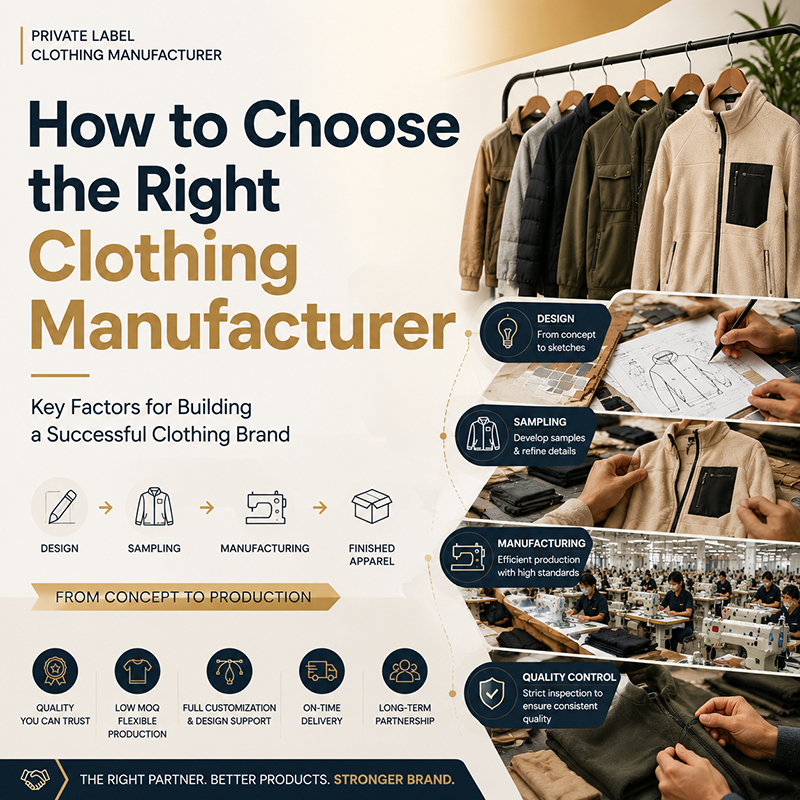
Introduction
Finding reliable clothing manufacturers for small businesses can be challenging.
Large clothing brands often have dedicated sourcing teams, large production volumes, and long-term supplier relationships. Small businesses usually have different needs. They may have smaller orders, limited budgets, fewer staff, and a greater need for flexible communication.
The right clothing manufacturer should therefore do more than simply offer a low price.
For a small business, a suitable manufacturing partner should be able to understand product requirements, provide appropriate production quantities, support sampling, maintain consistent quality, and communicate clearly throughout the production process.
This guide explains what small clothing businesses should consider when choosing a clothing manufacturer.
1. Understand What Your Business Actually Needs
Before contacting a manufacturer, define your production requirements.
Start with the basic questions:
- What products do you need?
- How many pieces do you need?
- How many colors will you produce?
- What sizes are required?
- What fabric do you want?
- Do you need custom labels?
- Do you need custom packaging?
- How often will you reorder?
A small business does not necessarily need the largest clothing factory available.
Instead, it needs a manufacturer whose capabilities match the business's production requirements.
For example, a business selling fleece jackets may need a manufacturer with experience in fleece fabrics, jackets, zippers, and outerwear construction rather than a supplier focused primarily on basic T-shirts.
2. Look Beyond the Unit Price
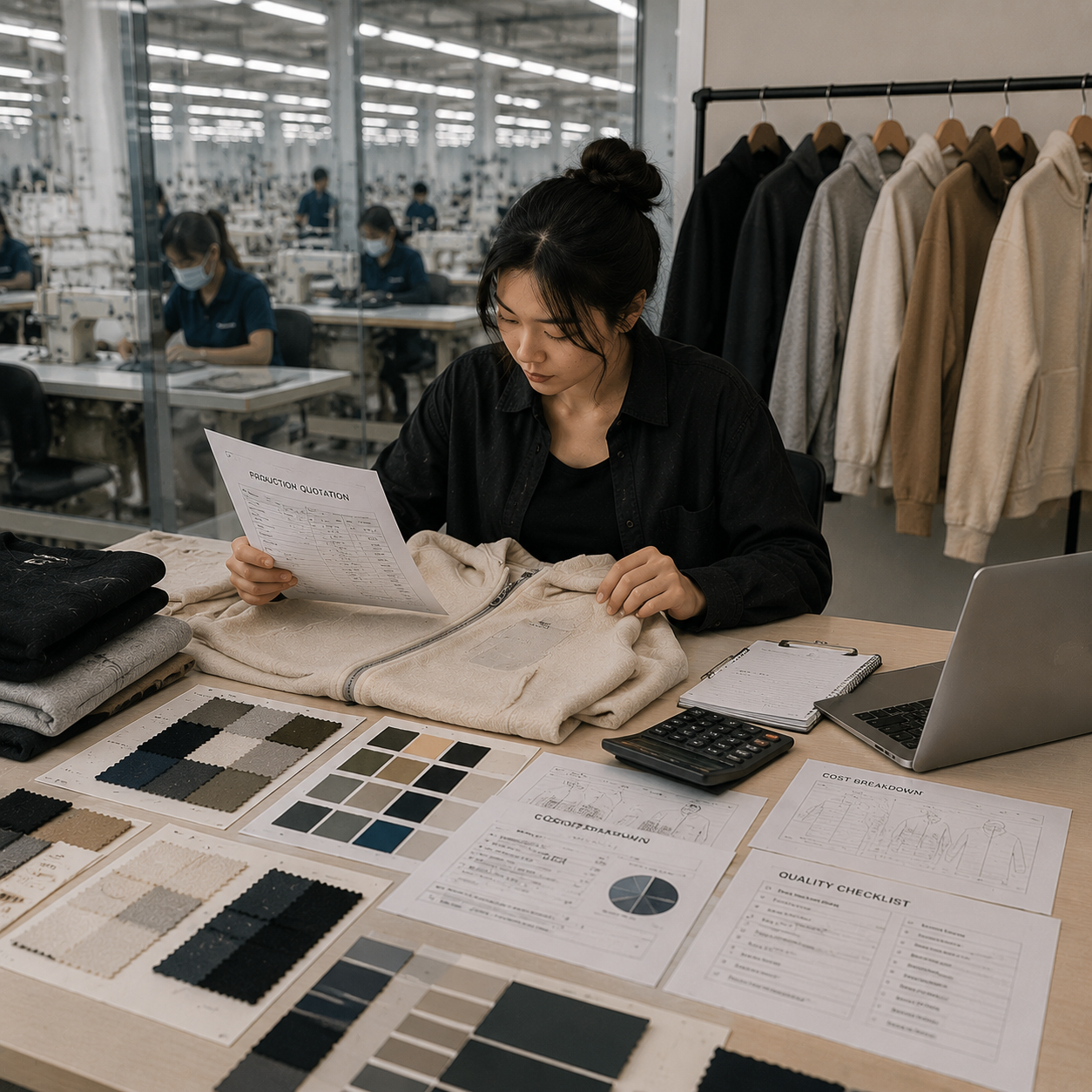
Price is important for a small business, but it should not be the only consideration.
The actual cost of a garment can include:
- Fabric
- Cutting
- Sewing
- Trims
- Labels
- Printing
- Embroidery
- Packaging
- Shipping
- Import-related costs
A manufacturer offering the lowest initial quotation may not always provide the lowest overall production cost.
For small businesses, consistency can also have a direct financial impact.
Poor-quality garments may result in:
- Returns
- Replacements
- Customer complaints
- Delayed launches
- Additional inspection costs
A slightly different factory price may therefore produce a better overall result when quality and reliability are considered.
3. Pay Attention to MOQ
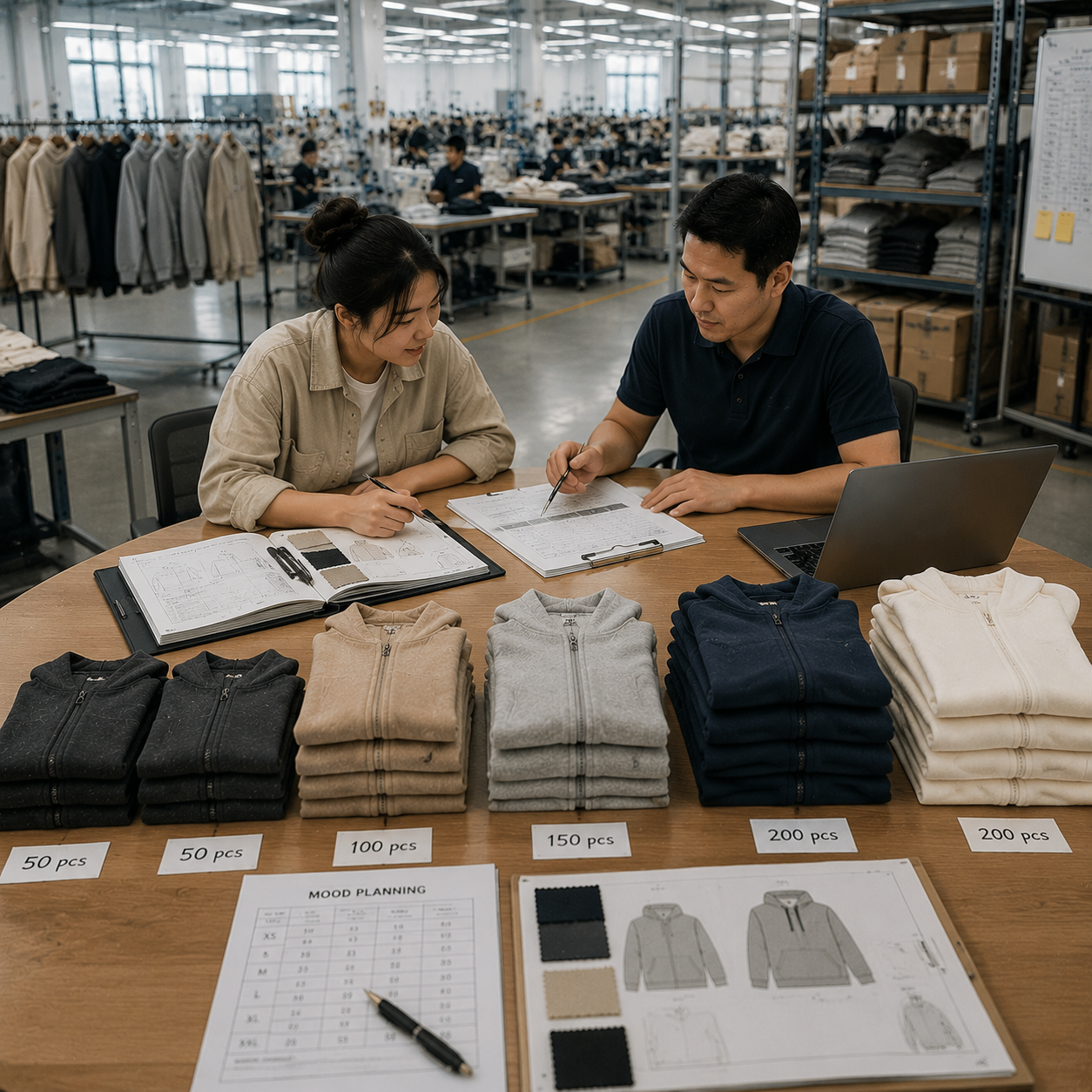
MOQ means Minimum Order Quantity.
This is particularly important for small businesses because inventory can tie up a significant amount of working capital.
Manufacturers may calculate MOQ differently.
For example, MOQ may be based on:
- Per style
- Per color
- Per size
- Total order quantity
Always ask the manufacturer to clarify how its MOQ is calculated.
A business should also consider whether the manufacturer can support repeat production after the first order.
The ideal production quantity is not simply the smallest possible order. It should be a quantity that makes production practical while remaining appropriate for the company's expected demand.
4. Ask for Samples Before Bulk Production
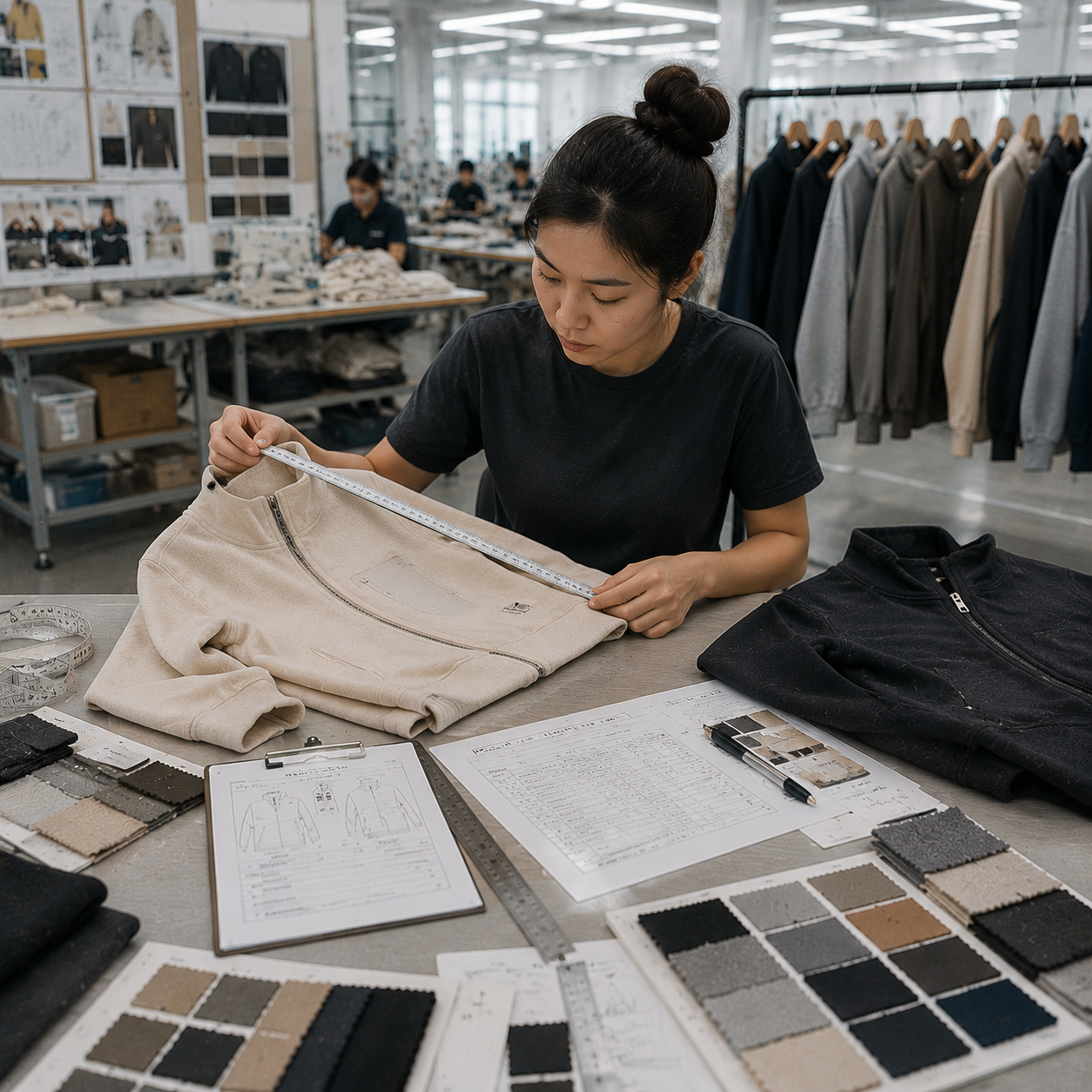
Samples are an important step for small clothing businesses.
A sample allows you to evaluate the actual garment before placing a larger order.
Pay attention to:
Fabric
Check the composition, weight, hand feel, and appearance.
Fit
Compare the measurements with your size specifications.
Construction
Look at seams, stitching, pockets, cuffs, collars, and other details.
Accesorios
Check zippers, buttons, labels, drawcords, and other components.
Branding
Confirm logo placement, labels, embroidery, printing, and other branding requirements.
If something needs to change, it is generally easier to make adjustments during the sample stage than after bulk production.
5. Choose a Manufacturer With Relevant Product Experience
A manufacturer's product experience matters.
Small businesses should look for manufacturers familiar with their specific product category.
Relevant categories may include:
- Ropa informal
- Outdoor clothing
- Ropa deportiva
- Fleece garments
- Jackets
- Vests
- Knitwear
- Woven garments
- Children's clothing
KALAIBEN's company profile describes its business as an integrated weaving and garment industry and trade company, with products including knitted and woven casual garments and outdoor sportswear. The company also develops its own BOWTAD children's brand and KALAIBEN adult casualwear brand.
This combination of textile and garment capabilities is relevant for businesses that need to discuss both fabric and finished garment requirements.
6. Consider Fabric Capabilities
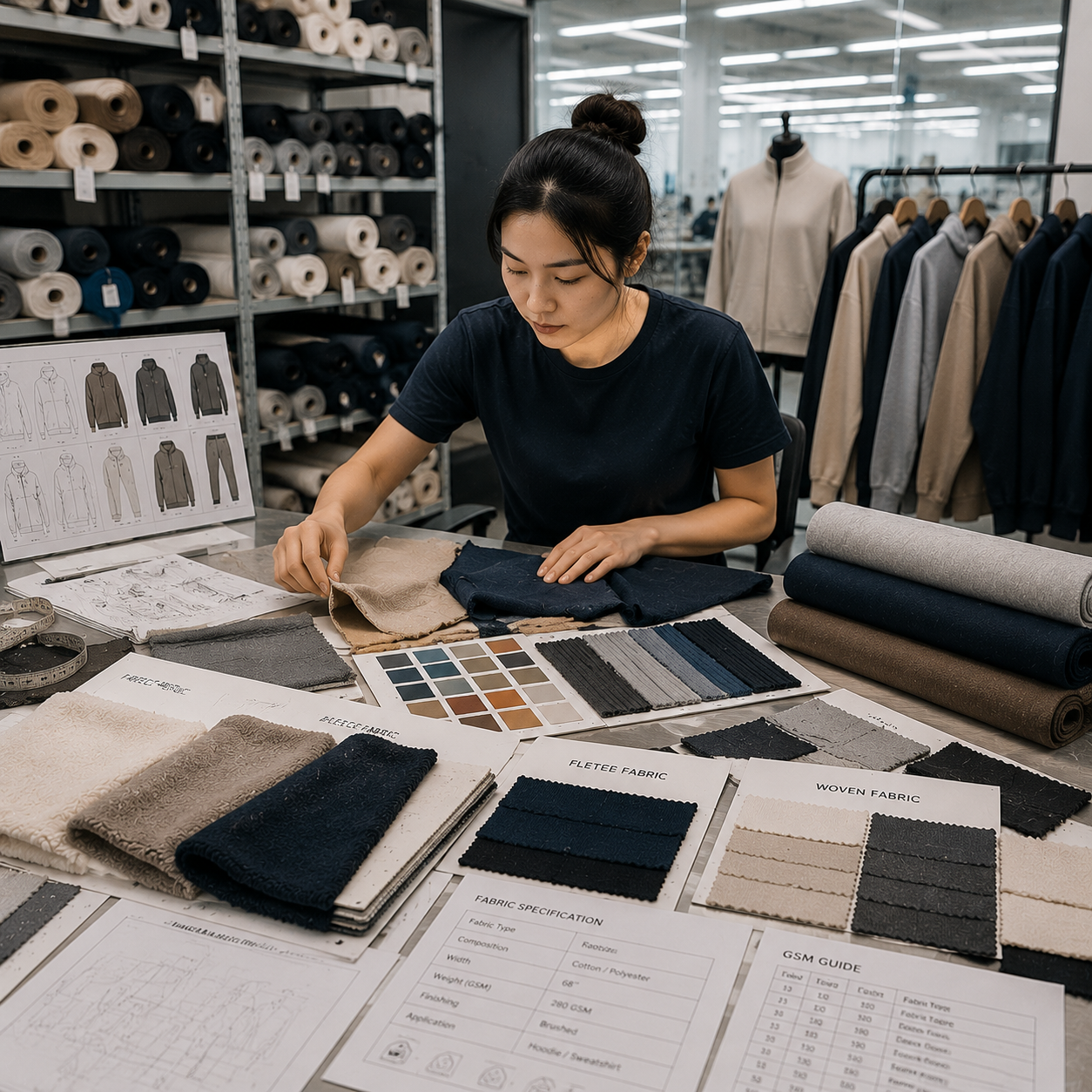
Fabric selection can significantly affect the final garment.
For example, two fleece jackets can look similar but have very different specifications.
Important fabric information can include:
- Fiber composition
- GSM
- Fabric construction
- Stretch
- Surface appearance
- Calidez
- Hand feel
- Color options
For small businesses, communicating these specifications clearly can help prevent misunderstandings during production.
Instead of saying:
"I need a warm fleece jacket."
It is better to specify:
"I need a polyester fleece fabric with a specific GSM, color, size range, and construction."
The more precise the specification, the easier it is for the manufacturer to produce the intended product.
7. Communication Is Part of the Manufacturing Service
Small businesses often do not have large sourcing departments.
This makes communication especially important.
A manufacturer should be able to discuss:
- Product specifications
- Samples
- Fabric
- MOQ
- Production schedules
- Quality requirements
- Packaging
- Shipping arrangements
Clear communication can reduce errors during product development and production.
For a growing business, having a manufacturer that already understands the product can also make repeat orders easier.
8. Think About Future Orders
Do not evaluate a manufacturer only based on your first order.
Ask yourself:
What happens if the product sells well?
Can the manufacturer:
- Produce the same style again?
- Maintain the same specifications?
- Handle increased quantities?
- Develop new colors?
- Develop additional products?
- Support future collections?
A good supplier relationship should be able to develop as the business grows.
9. Why KALAIBEN Can Work With Small Clothing Businesses
KALAIBEN operates as an integrated textile and garment company rather than only a trading business.
According to the company profile, its Jiangxi subsidiary covers approximately 30 mu, with a construction area of about 26,000㎡. The profile states that the garment factory has more than 380 employees and an annual garment production capacity of approximately 700,000–1,000,000 pieces.
The company also operates a knitting fabric production facility with equipment for different knitted fabric constructions.
For small businesses, this type of integrated capability can be useful when product development requires discussion of both fabric and garment production.
The goal is not simply to manufacture as many garments as possible.
The more important question is whether the manufacturer's product capabilities, MOQ, quality requirements, and communication process are suitable for the business.
10. Questions Small Businesses Should Ask a Manufacturer
Before placing an order, consider asking:
Producto
What types of garments do you manufacture?
Fabric
What fabric compositions and weights are available?
MOQ
What is the MOQ per style and color?
Samples
Can you develop samples before bulk production?
Quality
How are garments inspected before shipment?
Production
What information is required before production starts?
Repeat Orders
Can the same product specifications be maintained for future orders?
Lead Time
What is the estimated production schedule after approval?
These questions make it easier to compare different manufacturers objectively.
Common Mistakes Small Clothing Businesses Should Avoid
Choosing Only by Price
The lowest quotation does not always mean the lowest overall cost.
Ignoring MOQ
Excess inventory can put unnecessary pressure on cash flow.
Skipping Samples
A sample provides valuable information before bulk production.
Providing Incomplete Specifications
Unclear product information can create avoidable production problems.
Choosing a Supplier Without Considering Future Growth
A manufacturer should ideally be able to support future repeat orders and product development.
FAQ
What are the best clothing manufacturers for small businesses?
The right manufacturer depends on your product category, order quantity, fabric requirements, budget, and quality expectations. Small businesses should focus on finding a manufacturer whose capabilities match their actual production needs.
What MOQ should a small clothing business look for?
There is no universal MOQ. It depends on the product, fabric, color, manufacturing process, and supplier.
Can small businesses work directly with clothing manufacturers?
Yes. Many small businesses work directly with manufacturers when their product requirements and order quantities are suitable.
Should a small business order a large quantity to get a lower price?
Not necessarily. Lower unit costs need to be balanced against inventory risk and expected demand.
What information should I send to a clothing manufacturer?
Provide product images or sketches, fabric requirements, colors, size specifications, quantities, branding requirements, and packaging information when available.
Conclusion
Choosing the right clothing manufacturers for small businesses is about finding the right balance between product quality, MOQ, cost, communication, and production capability.
Small businesses do not necessarily need the biggest supplier.
They need a manufacturing partner that understands their products and can provide a practical path from sample development to bulk production and repeat orders.
For businesses developing casualwear, outdoor clothing, fleece garments, jackets, vests, and related apparel, KALAIBEN's integrated textile and garment capabilities provide a foundation for discussing both fabric and finished-product requirements.
Looking for a clothing manufacturer for your small business? Contact KALAIBEN to discuss your product requirements, fabrics, quantities, and production needs.











