




Fabricante de ropa con un pedido mínimo bajo: cómo pueden las startups lanzar su primera colección
Fecha de publicación:2026-09-15 Categoría:NOTICIAS Número de visitas:559
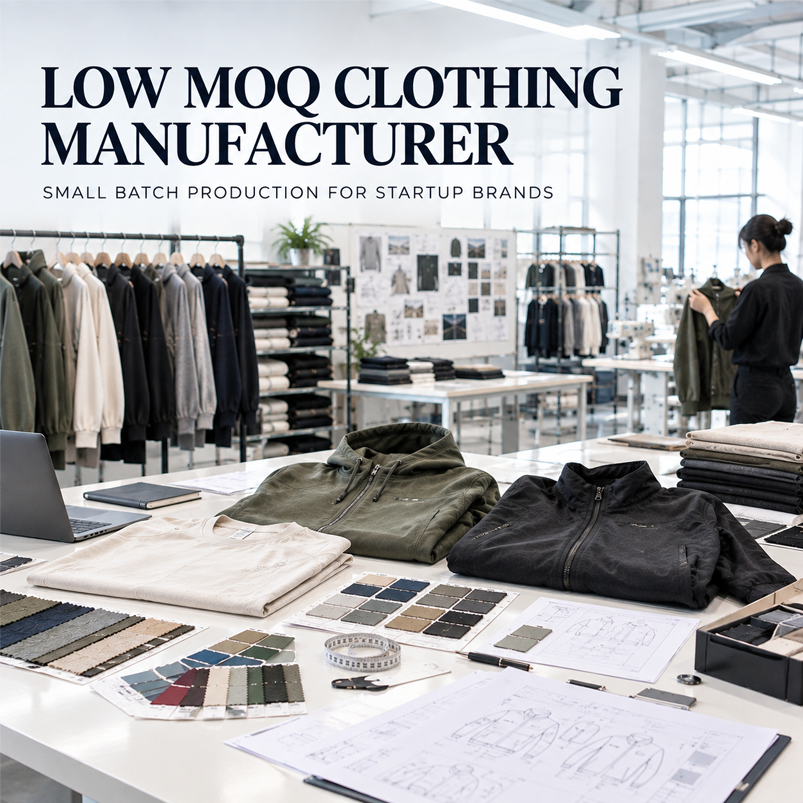
Finding the right low MOQ clothing manufacturer is one of the biggest challenges for new fashion brands. Traditional clothing production often requires large quantities, which can create high inventory pressure and financial risk. A flexible manufacturing partner allows startups, independent designers, and small brands to test products, collect customer feedback, and scale production gradually.
A low MOQ supplier is not only about producing fewer pieces. A professional manufacturer should also provide product development support, quality control, sampling services, and consistent production standards.
This guide explains how to choose the right small-batch clothing manufacturing partner for your brand.
1. What Is a Low MOQ Clothing Manufacturer?
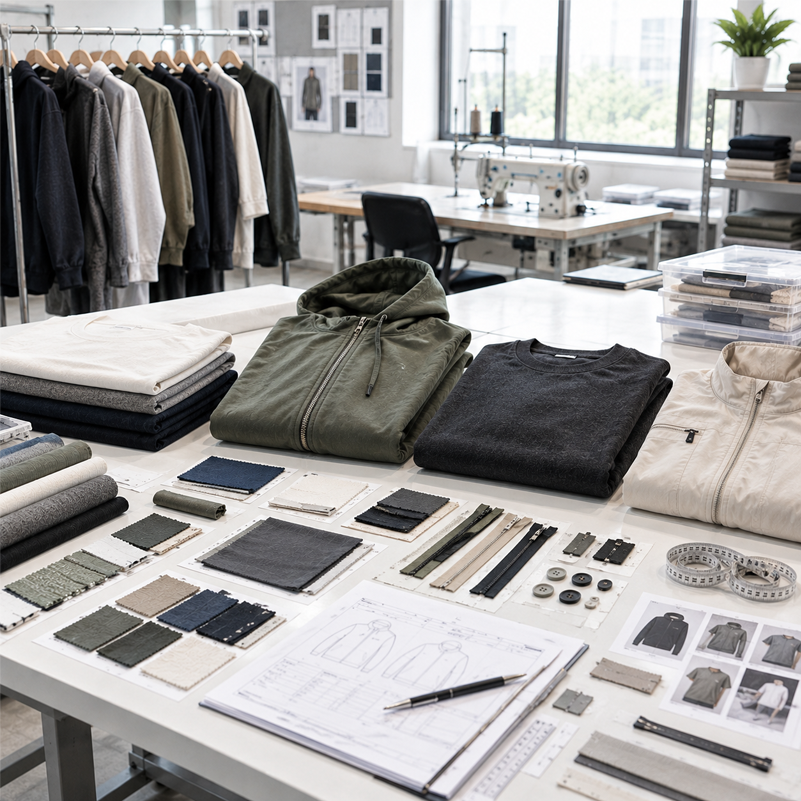
A low MOQ clothing manufacturer produces garments with a lower minimum order quantity compared with traditional large-scale factories.
MOQ means:
Minimum Order Quantity
It defines the smallest production quantity a factory accepts for an order.
Traditional factories may require hundreds or thousands of pieces per style. Low MOQ manufacturers focus on smaller production runs that help emerging brands enter the market with less risk.
Common low MOQ production models include:
- Small batch manufacturing
- Startup clothing production
- Private label production
- Custom apparel development
- Limited collection launches
- Market testing orders
Example
A new streetwear brand wants to launch its first hoodie collection.
A traditional factory may request:
- 500 pieces per color
- 3 colors
- Total 1,500 pieces
The brand needs a large investment before knowing if customers will buy.
A low MOQ manufacturer may allow:
- 100 pieces per color
- Smaller first launch
- Lower inventory risk
The brand can test demand before increasing production.
2. Why Do Startups Choose Low MOQ Clothing Manufacturers?
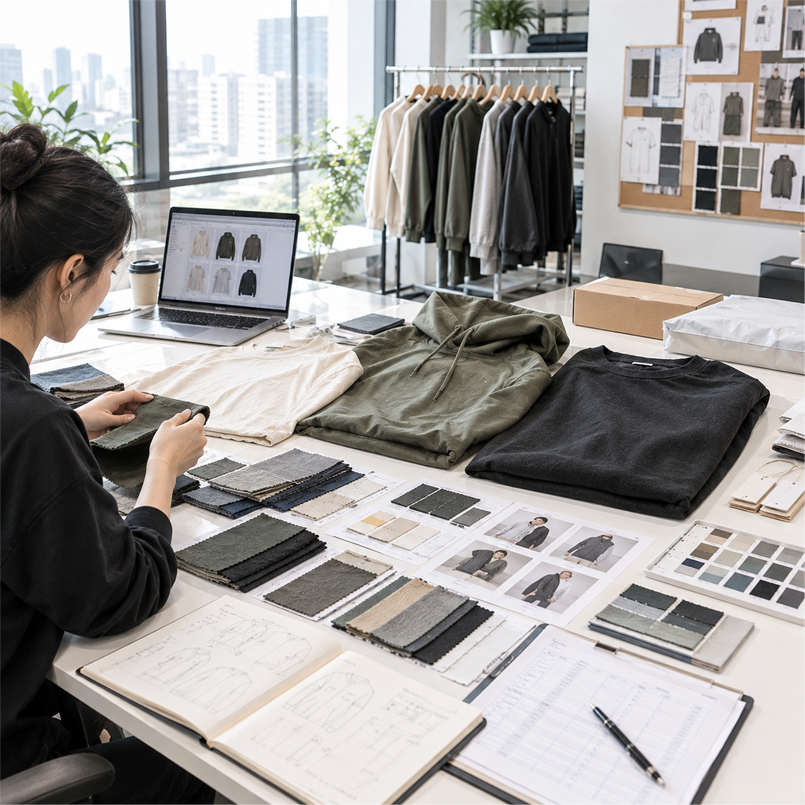
Many new brands fail because they invest too much money before understanding customer demand.
A low MOQ production model helps brands control risk.
Main advantages include:
- Lower initial investment
- Less inventory pressure
- Faster product testing
- Easier collection development
- More flexibility for design changes
- Better cash flow management
Example
A new fitness clothing brand plans its first collection.
Instead of producing:
- 10 styles
- 5 colors each
- Large quantities
The brand starts with:
- 2 key products
- Limited colors
- Small production quantities
After receiving customer feedback, the brand invests more into the best-selling styles.
This approach reduces unnecessary inventory.
3. Low MOQ Clothing Manufacturer vs Traditional Factory
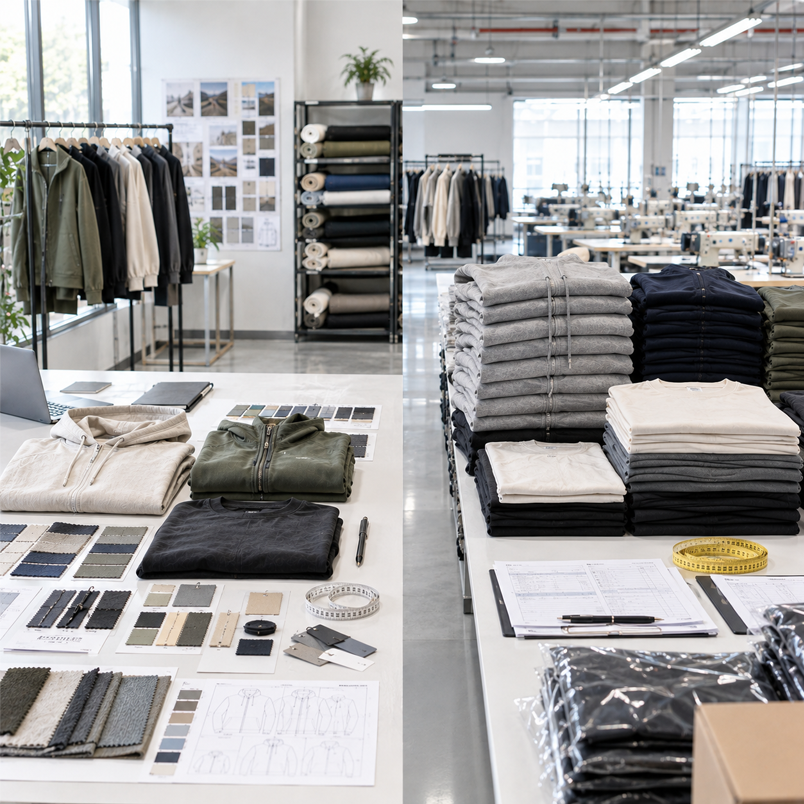
Not every factory works the same way.
The main difference is production flexibility.
| Factor | Traditional Clothing Factory | Low MOQ Clothing Manufacturer |
|---|---|---|
| Minimum order | Higher quantity | Smaller quantity |
| Ideal para | Large brands | Startups and growing brands |
| Inventory risk | Higher | Lower |
| Product testing | Difficult | Easier |
| Sampling support | Varies | Usually important |
| Custom development | Depends | Often included |
| Production flexibility | Limited | Higher |
A low MOQ supplier does not replace large-scale manufacturing.
It provides a different solution.
Large brands may optimize for production volume.
New brands often need flexibility first.
4. Small Batch Clothing Manufacturer: How Does It Work?
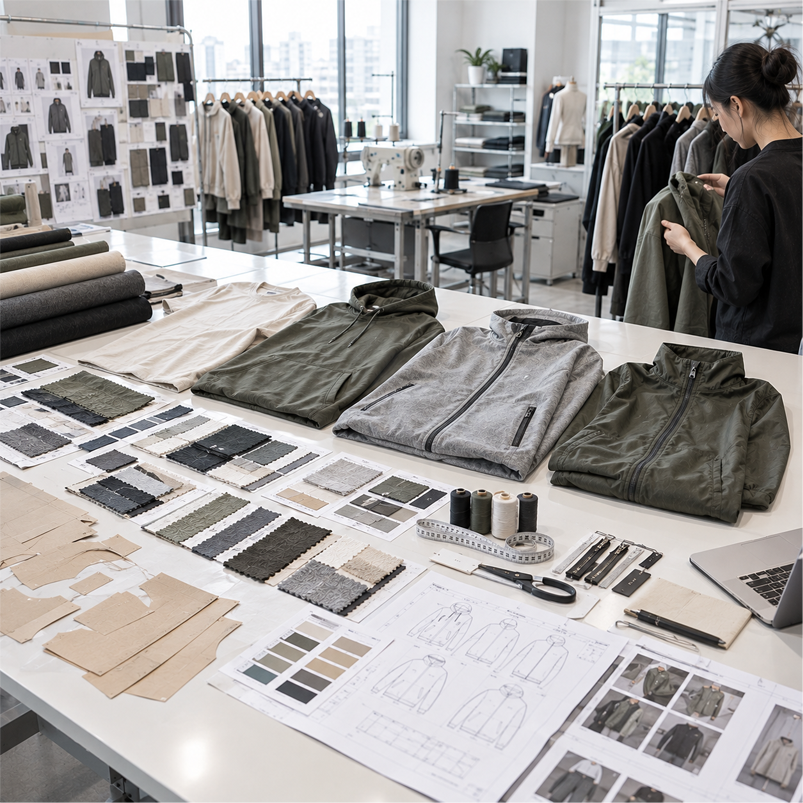
A small batch clothing manufacturer focuses on producing limited quantities while maintaining production standards.
A typical process includes:
4.1 Product Development
The brand provides:
- Design ideas
- Reference images
- Tech packs
- Fabric requirements
- Size information
The manufacturer reviews production feasibility.
4.2 Sample Production
Before bulk production, the supplier creates samples.
The brand checks:
- Fit
- Fabric
- Construction
- Measurements
- Appearance
4.3 Small Batch Production
After approval:
- Fabric is prepared
- Cutting begins
- Sewing starts
- Quality checks are completed
- Finished garments are packed
Example
A small fashion brand wants to launch a premium T-shirt.
The first production run focuses on:
- One style
- Two colors
- Limited quantity
After sales performance becomes clear, the brand increases future orders.
Small batch production supports this growth path.
5. Clothing Manufacturer for Startups: What Should New Brands Look For?
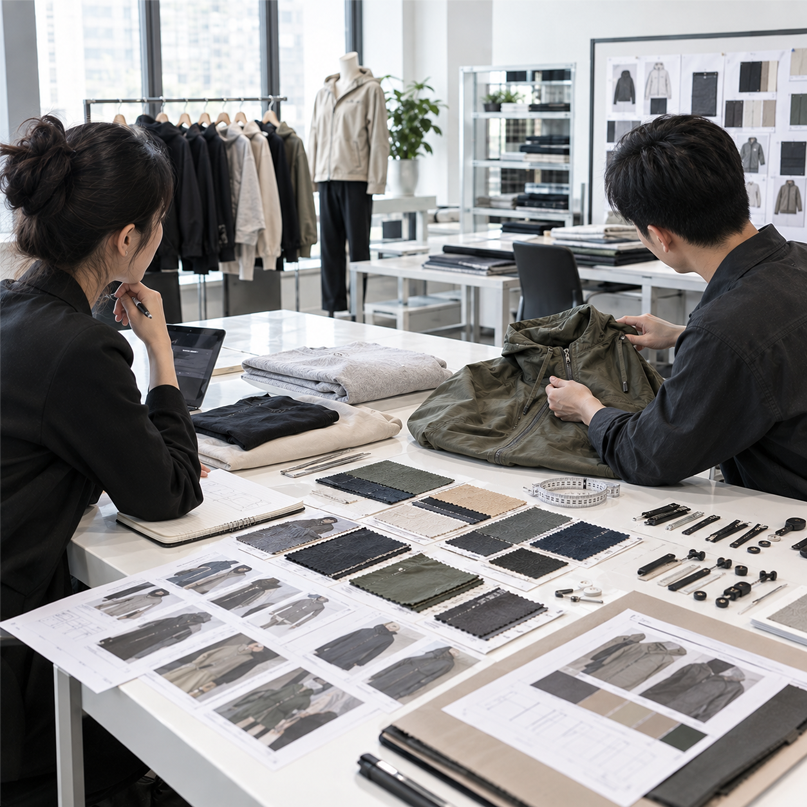
A clothing manufacturer for startups should provide more than production capacity.
New brands usually need guidance.
Important factors include:
- Product development experience
- Flexible MOQ
- Sample support
- Fabric sourcing ability
- Private label options
- Clear communication
- Quality control process
- Reorder support
Example
A first-time founder has a design idea but does not understand fabric selection.
A good manufacturing partner can explain:
- Which fabric matches the product position
- Which construction method works better
- Which details increase production cost
- Which choices affect durability
The manufacturer becomes a production advisor, not only a supplier.
6. How Low MOQ Production Reduces Inventory Risk
Inventory is one of the biggest challenges for new clothing brands.
Large production quantities create several risks:
- Unsold stock
- Storage costs
- Cash flow pressure
- Slow product turnover
Low MOQ production allows brands to validate demand first.
Example
Brand A produces:
5,000 jackets before launch.
After release, customers prefer another style.
The brand has thousands of unused jackets.
Brand B produces:
300 jackets first.
The product sells well.
The brand places a larger reorder.
Brand B reduces financial risk.
7. Custom Clothing Manufacturer With Low MOQ
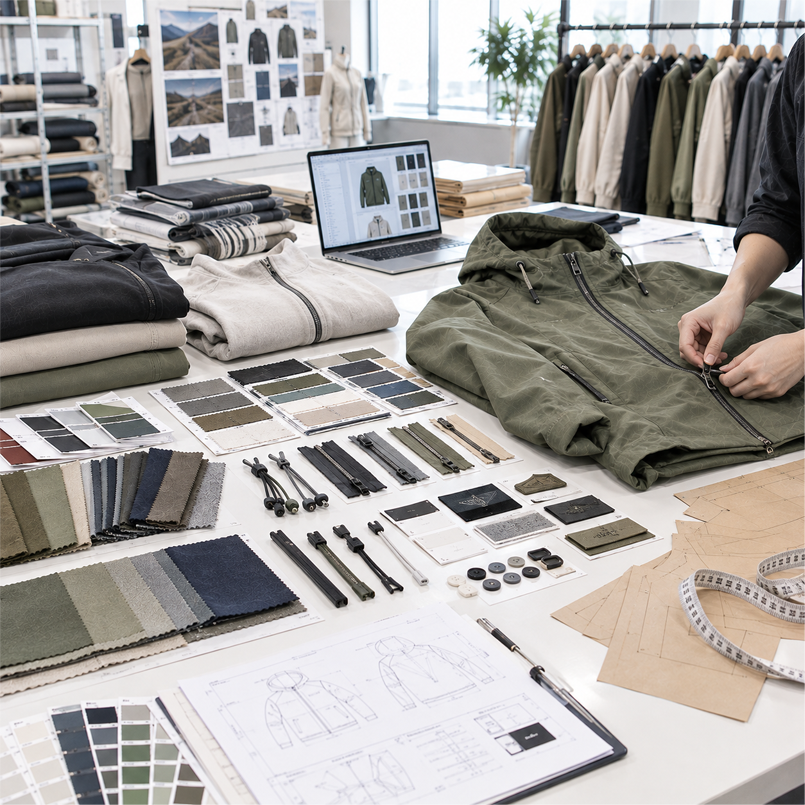
A custom clothing manufacturer with low MOQ should still support product customization.
Low quantity does not mean basic products only.
Possible customization includes:
- Fabric selection
- Garment color
- Fit adjustment
- Labels
- Hang tags
- Packaging
- Printing
- Embroidery
- Custom details
Example
A startup wants to create oversized hoodies.
The brand needs:
- Heavyweight fabric
- Custom fit
- Embroidered logo
- Private labels
A suitable low MOQ manufacturer should help develop these details before production.
8. Low MOQ Private Label Clothing Production
Many startups choose private label production because it allows them to build their own brand identity.
Private label services may include:
- Custom neck labels
- Size labels
- Hang tags
- Packaging
- Custom colors
- Product modifications
However, branding details should not replace product quality.
Customers remember:
- Fabric feel
- Fit
- Comfort
- Durability
- Overall experience
Example
A sweatshirt has beautiful packaging and labels.
But the fabric feels poor after washing.
Customers will judge the garment, not the packaging.
A strong private label manufacturer must control both branding and product quality.
9. How to Choose a Low MOQ Clothing Manufacturer
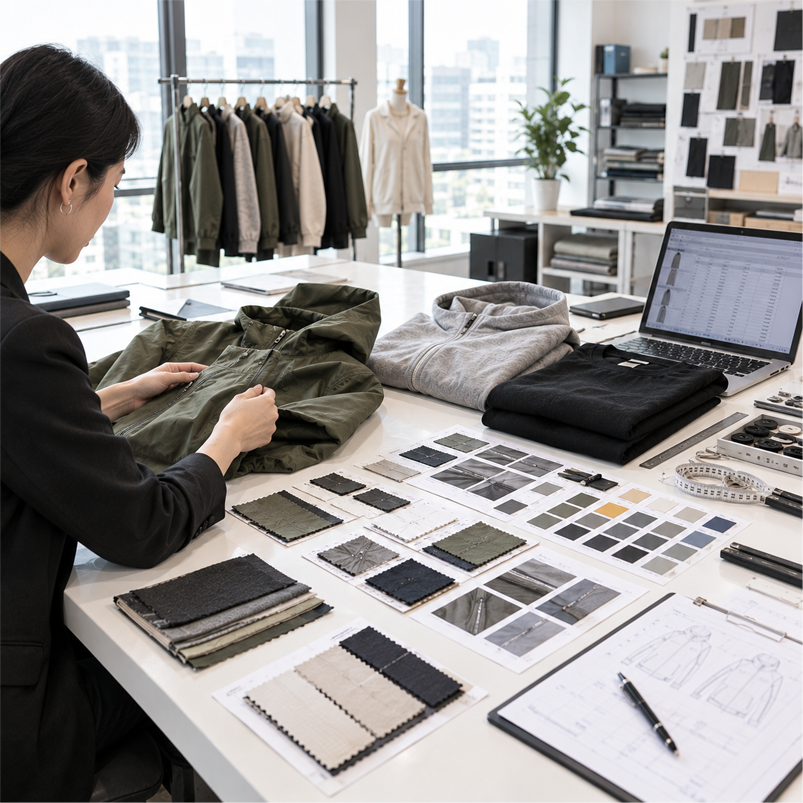
Do not select a supplier only because the MOQ is low.
Evaluate the complete manufacturing ability.
Check these areas:
Product Experience
Ask:
- What products do you produce?
- Have you worked with similar brands?
- Can you handle custom development?
Sampling Process
Check:
- Sample timeline
- Revision process
- Fit approval
- Pre-production sample
Quality Control
Review:
- Fabric inspection
- Measurement checks
- Sewing inspection
- Final inspection
Production Ability
Confirm:
- MOQ
- Lead time
- Capacity
- Reorder process
10. Questions to Ask a Low MOQ Clothing Manufacturer
Before starting production, ask:
Production Questions
- What is your minimum order quantity?
- Is MOQ calculated per style or color?
- Can different styles be combined?
- What products do you specialize in?
Development Questions
- Can you develop samples?
- Can you work from sketches?
- Can you review tech packs?
- How many sample revisions are available?
Quality Questions
- How do you check fabric quality?
- How do you control measurements?
- Do you inspect production before shipment?
Branding Questions
- Can you add custom labels?
- Can you provide packaging?
- Can you support private label production?
Clear questions help avoid misunderstandings.
11. Low MOQ Clothing Manufacturer Cost Factors
Low MOQ production usually has different pricing compared with large-volume manufacturing.
Cost depends on:
- Fabric choice
- Garment complexity
- Quantity
- Customization
- Sampling
- Printing
- Embroidery
- Packaging
| Cost Factor | Small MOQ Production | Large Production |
|---|---|---|
| Unit price | Usually higher | Usually lower |
| Inventory risk | Lower | Higher |
| Product testing | Easier | More difficult |
| Cash investment | Lower | Higher |
| Flexibility | Higher | Lower |
Example
A startup may pay slightly more per piece for a small order.
However, avoiding thousands of unsold garments may create better overall financial results.
The lowest unit price is not always the lowest business cost.
12. Low MOQ Clothing Manufacturer Comparison Checklist
Before choosing a supplier, compare:
| Evaluation Area | Supplier A | Supplier B | Supplier C |
|---|---|---|---|
| MOQ flexibility | |||
| Product experience | |||
| Sampling ability | |||
| Fabric options | |||
| Quality control | |||
| Private label support | |||
| Communication | |||
| Reorder ability |
A comparison system helps startups choose based on overall value.
13. How Startups Scale After Their First Low MOQ Order
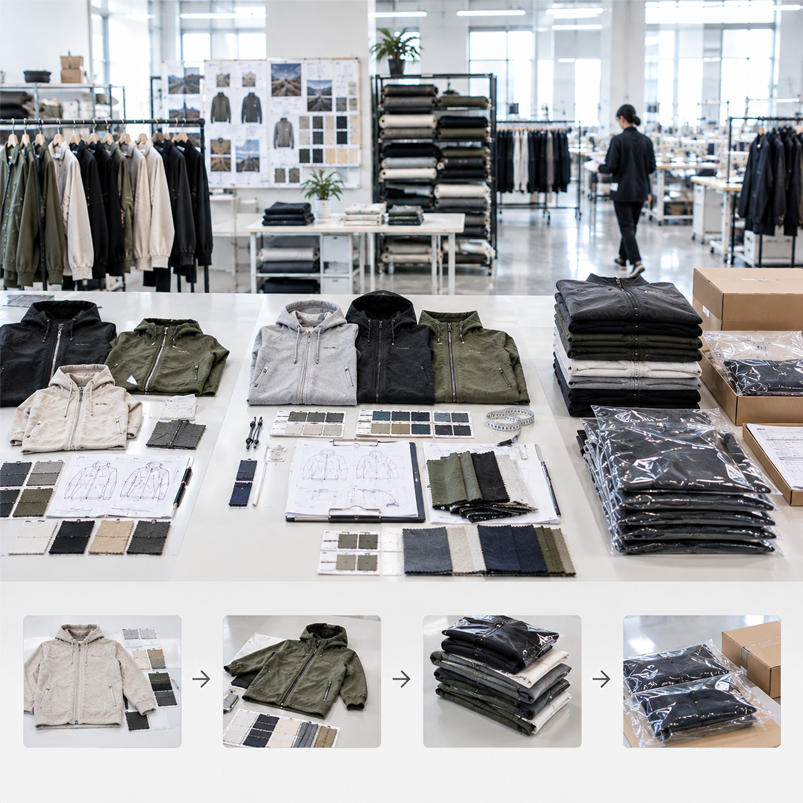
Low MOQ is often the beginning, not the final stage.
A typical growth path:
- Develop first sample
- Produce small test order
- Collect customer feedback
- Identify best sellers
- Increase production quantity
- Build repeat orders
Example
A brand starts with:
300 T-shirts.
After three months:
- One color becomes popular
- Customer reviews are positive
- Repeat orders increase
The brand then increases production to:
1,000–3,000 pieces.
The manufacturer becomes a long-term production partner.
14. Low MOQ Clothing Manufacturer Checklist for New Brands
Before placing your first order:
Producto
- Product category confirmed
- Fabric selected
- Size specification completed
- Design details confirmed
Development
- Sample approved
- Fit checked
- Production details confirmed
Manufacturing
- MOQ confirmed
- Lead time confirmed
- Quality process reviewed
- Packaging confirmed
Business
- Target market researched
- Inventory plan prepared
- Reorder strategy considered
15. Finding the Right Low MOQ Clothing Manufacturer
The right low MOQ clothing manufacturer helps brands start carefully and grow confidently.
A successful first production order is not only about quantity.
It depends on:
- Product quality
- Supplier communication
- Development support
- Production control
- Future scalability
For startup brands, a smaller first order can be a smarter business decision.
It allows you to test products, understand customers, improve designs, and invest more confidently when demand grows.
The best manufacturing partner is not simply the one accepting the smallest order.
It is the one that can support your brand from the first sample to future production growth.











