




Custom Logo Clothing Manufacturer: How to Choose the Right Partner
Date de publication :2026-10-12 Catégorie :ACTUALITÉS Nombre de visites :331
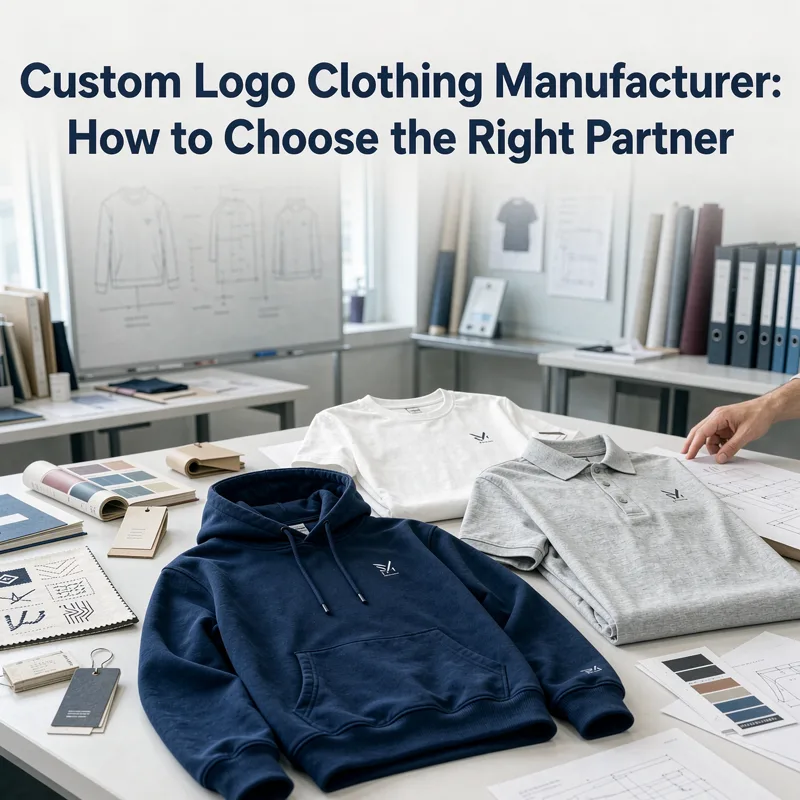
Custom Logo Clothing Manufacturer: How to Choose the Right Partner
Looking for a custom logo clothing manufacturer? Learn how to choose the right supplier for logo printing, embroidery, private labels, sampling, MOQ, quality control, and bulk production.
A custom logo clothing manufacturer does more than put a logo on a T-shirt.
For brands, the real challenge is finding a manufacturer that can match the right garment, logo application, fabric, colors, labels, and finishing while keeping the final product consistent in bulk production.
The right supplier should help you move from logo artwork and garment specifications to an approved sample and repeatable production.
1. What Is a Custom Logo Clothing Manufacturer?
A custom logo clothing manufacturer produces garments with branding and product specifications supplied by the buyer.
Depending on the project, customization can include:
- Logo printing
- Broderie
- Transfert de chaleur
- Étiquettes tissées
- Étiquettes de col
- Étiquettes volantes
- Couleurs personnalisées
- Choix du tissu
- Confection de vêtements
- Emballages sur mesure
Some manufacturers focus mainly on promotional logo apparel, while others provide full OEM or private-label production.
For an apparel brand, the second option is usually more useful when the garment itself also needs to be customized.
2. What Can You Customize Besides the Logo?
A common mistake is to focus only on the logo.
A professional custom clothing project can involve several layers.
2.1 The Garment
You may specify:
- Composition du tissu
- GSM
- Ajustement
- Dimensions
- Couleurs
- Collar
- Sleeves
- Poches
- Zippers
- Cuffs
- Détails de construction
2.2 The Logo
Common logo application methods include:
| Method | Idéal pour |
|---|---|
| Broderie | Polos, jackets, caps, workwear |
| Sérigraphie | Larger graphic designs |
| Transfert de chaleur | Detailed logos and smaller runs |
| Sublimation | Polyester sportswear |
| Étiquettes tissées | Fashion and private-label garments |
| Patches | Jackets, teamwear, casual apparel |
The best method depends on the fabric, artwork, quantity, position, and required appearance.
2.3 Brand Finishing
For a private-label product, you may also need:
- Étiquettes de col personnalisées
- Care labels
- Étiquettes volantes
- Emballages de marque
- Custom polybags
- Carton markings
These details help turn a generic garment into a finished branded product.
3. How Do You Choose the Right Logo Application?
The logo technique should match the garment rather than being selected only because it is inexpensive.
Broderie
Embroidery works well for logos that need a raised, durable appearance.
It is commonly used on polos, jackets, hoodies, caps, and workwear.
However, very small or highly detailed artwork may require adjustment.
Screen Printing
Screen printing is suitable for many T-shirts, sweatshirts, and larger graphic designs.
It can be cost-effective for higher quantities, especially when the artwork uses a limited number of colors.
Heat Transfer
Heat transfer can work well for detailed artwork, names, numbers, and smaller production runs.
The final result depends on the transfer material, garment fabric, temperature, and application process.
Sublimation
Sublimation is commonly used with suitable polyester fabrics.
It is useful when the design needs to cover a large surface area with detailed graphics.
4. What Should You Send to a Custom Logo Clothing Manufacturer?
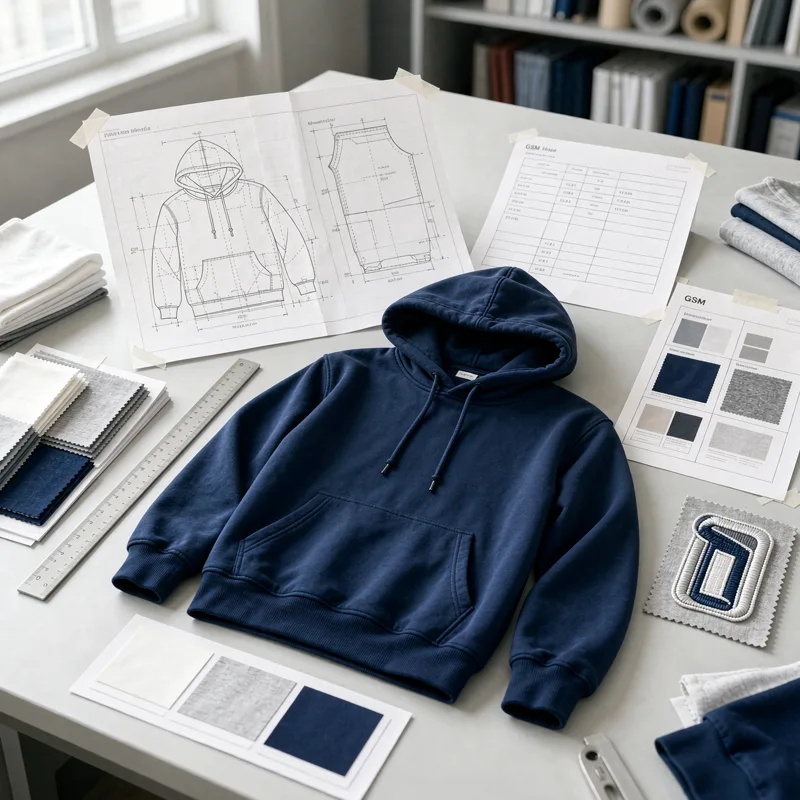
A clear production brief makes the quotation more accurate.
Include:
| Information | Exemple |
|---|---|
| Garment | Heavyweight hoodie |
| Tissu | Cotton/polyester fleece |
| GSM | 350 GSM |
| Couleur | Pantone or physical reference |
| Logo | AI, EPS, PDF or high-resolution artwork |
| Placement | Left chest |
| Technique | Broderie |
| Sizes | S–2XL |
| Quantité | 1,000 pcs |
| Étiquettes | Custom woven + care label |
| Emballage | Individual polybag |
If you already have a tech pack, send it.
If you only have a logo and a basic garment idea, explain what is still undecided.
A capable manufacturer can then identify the information needed before sampling.
5. Why Is the Sample So Important?
The logo file may look perfect on a computer screen but produce a different result on the actual garment.
A pre-production sample allows you to check:
- Logo size
- Logo position
- Thread or print color
- Couleur du vêtement
- Tissu
- Ajustement
- Couture
- Emplacement des étiquettes
- Aspect général
This is especially important when the logo is a major part of your brand identity.
Approve the physical result, not just the digital artwork.
6. How Should You Evaluate a Custom Logo Clothing Manufacturer?
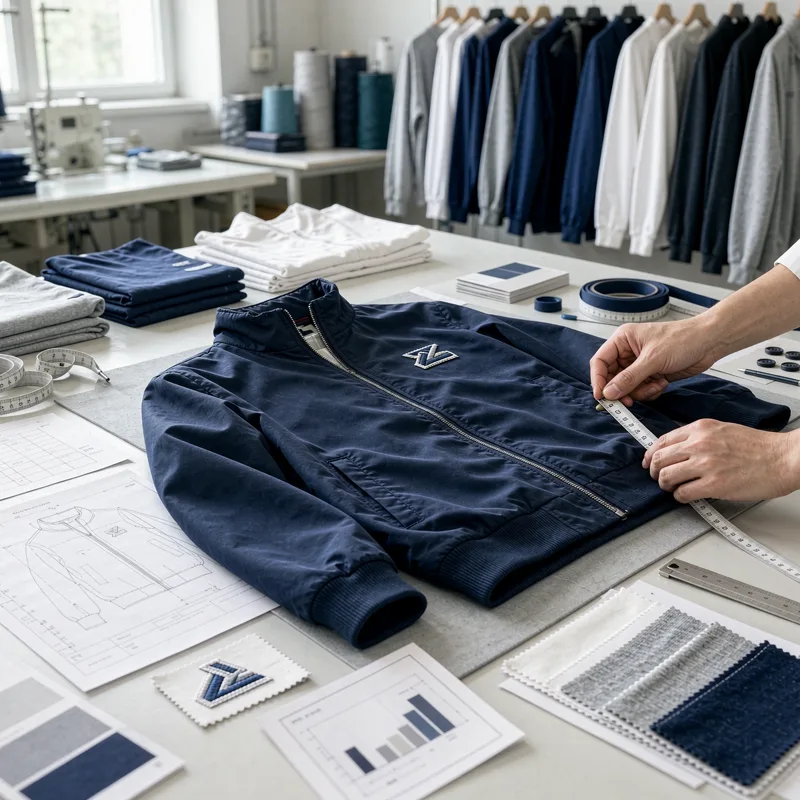
Look at the entire production process rather than the logo itself.
6.1 Garment Development
Can the manufacturer make the garment itself, or does it only decorate existing blanks?
If you need a fully custom product, ask about:
- Conception de motifs
- Approvisionnement en tissus
- Réalisation d'échantillons
- Size grading
- Construction sur mesure
6.2 Branding Capability
Ask which techniques are available and whether they are suitable for your garment.
The manufacturer should be able to explain why a particular technique is recommended.
6.3 Quality Control
Check whether the manufacturer controls:
- Tissu
- Dimensions
- Couleur du vêtement
- Logo position
- Logo quality
- Couture
- Étiquettes
- Emballage
A logo can be perfectly printed while the garment itself still has quality problems.
6.4 Production Consistency
The first sample may look excellent.
The more important question is whether the manufacturer can reproduce the same result across hundreds or thousands of pieces.
This is where production controls become important.
7. What Is the MOQ for Custom Logo Clothing?
There is no single MOQ for all custom logo clothing.
Current suppliers publish very different requirements. For example, JIUMU states that some custom logo projects can start around 25–50 pieces, while APTEX lists 1,000 pieces per color for its custom logo apparel production.
Marketplace listings also show examples around 100–200 pieces per color and style.
These figures are supplier-specific, not industry standards.
Your actual MOQ may depend on:
- Type de vêtement
- Tissu
- Couleur
- Logo technique
- Nombre de couleurs
- Étiquettes personnalisées
- Emballage
- Order quantity per style
So ask for the MOQ for your exact product, rather than relying on a general advertised number.
8. How Should You Compare Manufacturer Quotes?
Do not compare only the price of adding a logo.
Compare the complete product specification.
| Facteur | Ce qu'il faut vérifier |
|---|---|
| Garment | Fabric, GSM, fit |
| Logo | Technique and size |
| Couleurs | Garment and branding colors |
| Étiquettes | Woven, printed, care labels |
| Emballage | Polybags, tags, cartons |
| Quantité | Same volume and size ratio |
| Échantillonnage | Sample cost and revisions |
| QC | Inspection scope |
| Shipping | Delivery terms and destination |
For example, a $7.50 branded hoodie and a $8.20 branded hoodie may not be equivalent if they use different fabrics, logo techniques, labels, or packaging.
Always compare like-for-like specifications.
9. What Are Common Mistakes When Ordering Logo Clothing?
Using a Low-Resolution Logo
Poor artwork can limit the quality of printing or embroidery.
Provide vector artwork whenever possible.
Choosing the Logo Technique by Price
The cheapest method may not produce the appearance or durability your brand needs.
Ignoring Logo Placement
A few centimeters can change the visual balance of a garment.
Confirm placement and dimensions before production.
Approving Only a Digital Mockup
A digital preview cannot fully show fabric texture, embroidery thickness, print hand feel, or actual color.
Changing Specifications After Approval
Changing fabric, logo position, colors, or labels after production begins can cause additional costs and delays.
10. When Should You Choose OEM Instead of Simple Logo Customization?
This is an important distinction.
If you already have a standard blank T-shirt and only need your logo added, basic custom printing may be enough.
But if you need to control the garment itself, OEM is more suitable.
Choose OEM when you need:
- Création de vêtements sur mesure
- Specific fabric or GSM
- Custom fit
- Couleurs personnalisées
- Construction sur mesure
- Marques de distributeur
- Custom trims
- Emballages de marque
- Production en série
In other words:
Logo customization changes the branding. OEM can change the product itself.
11. What Should You Ask Before Placing an Order?
Before choosing a custom logo clothing manufacturer, ask:
- Can you customize the garment itself?
- Which logo techniques do you recommend for my fabric?
- Can you develop a physical sample?
- What is the MOQ per style and color?
- Can you produce custom labels and packaging?
- How do you control logo consistency during bulk production?
- What is the estimated production lead time?
- What is included in the quotation?
- What needs to be approved before bulk production?
- Can you support repeat orders with the same specifications?
The answers will tell you whether the supplier is a decorator, a sourcing company, or a true manufacturing partner.
12. From Logo Artwork to Finished Branded Clothing
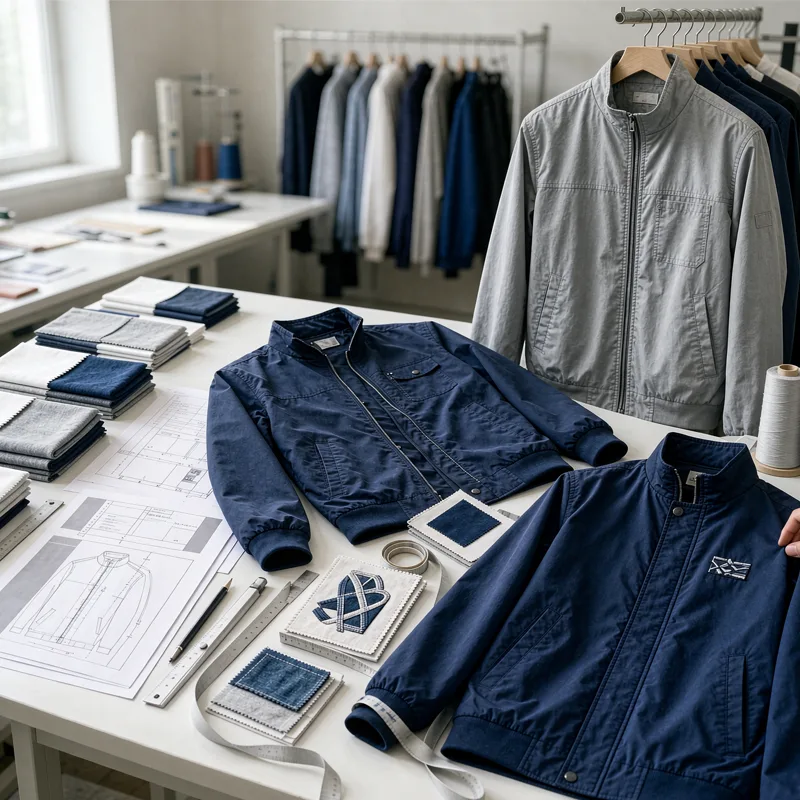
A successful custom logo clothing project starts with more than a logo file.
You need the right combination of garment, fabric, branding technique, placement, labels, packaging, sampling, and production control.
The safest process is:
Define the garment → Confirm materials → Select logo technique → Develop sample → Approve specifications → Start bulk production → Inspect → Ship
If you are preparing a branded apparel project, share your garment requirements, logo artwork, target quantity, and delivery window first.
For brands looking for a broader OEM apparel manufacturing solution, you can [explore KALAIBEN's apparel manufacturing capabilities] and use the information as a starting point for your production inquiry.











