




Clothing ODM China Factory: What Brands Should Check Before Choosing a Supplier
Közzététel ideje:2026-10-07 Kategória:HÍREK Látogatószám:407
Looking for a clothing ODM China factory? Learn how to evaluate product development, fabric sourcing, sampling, quality control, MOQ, and production capabilities before choosing a supplier.
Choosing a clothing ODM China factory is about more than finding a manufacturer that can make garments at a competitive price. A capable ODM partner should help turn a product idea, reference sample, or design direction into a production-ready garment.
For brands, the most important questions are simple: Can the factory develop the product correctly? Can it control quality during production? And can it reproduce the approved sample consistently?
1. What Does a Clothing ODM China Factory Actually Do?
An ODM clothing factory takes a more active role in product development than a traditional production-only supplier.
Depending on the project, an ODM manufacturer may support:
- Product development
- Pattern making
- Fabric sourcing
- Trim selection
- Sample development
- Fit adjustments
- Production preparation
- Quality control
- Bulk manufacturing
- Private labeling
The buyer may start with a complete design, a sketch, a reference garment, or simply a product concept.
The key point is development involvement.
If the factory only receives a finished pattern and approved materials and then sews the garments, that is closer to a cut-make-finish production model than full ODM development.
2. What Should You Look for in a China ODM Clothing Factory?
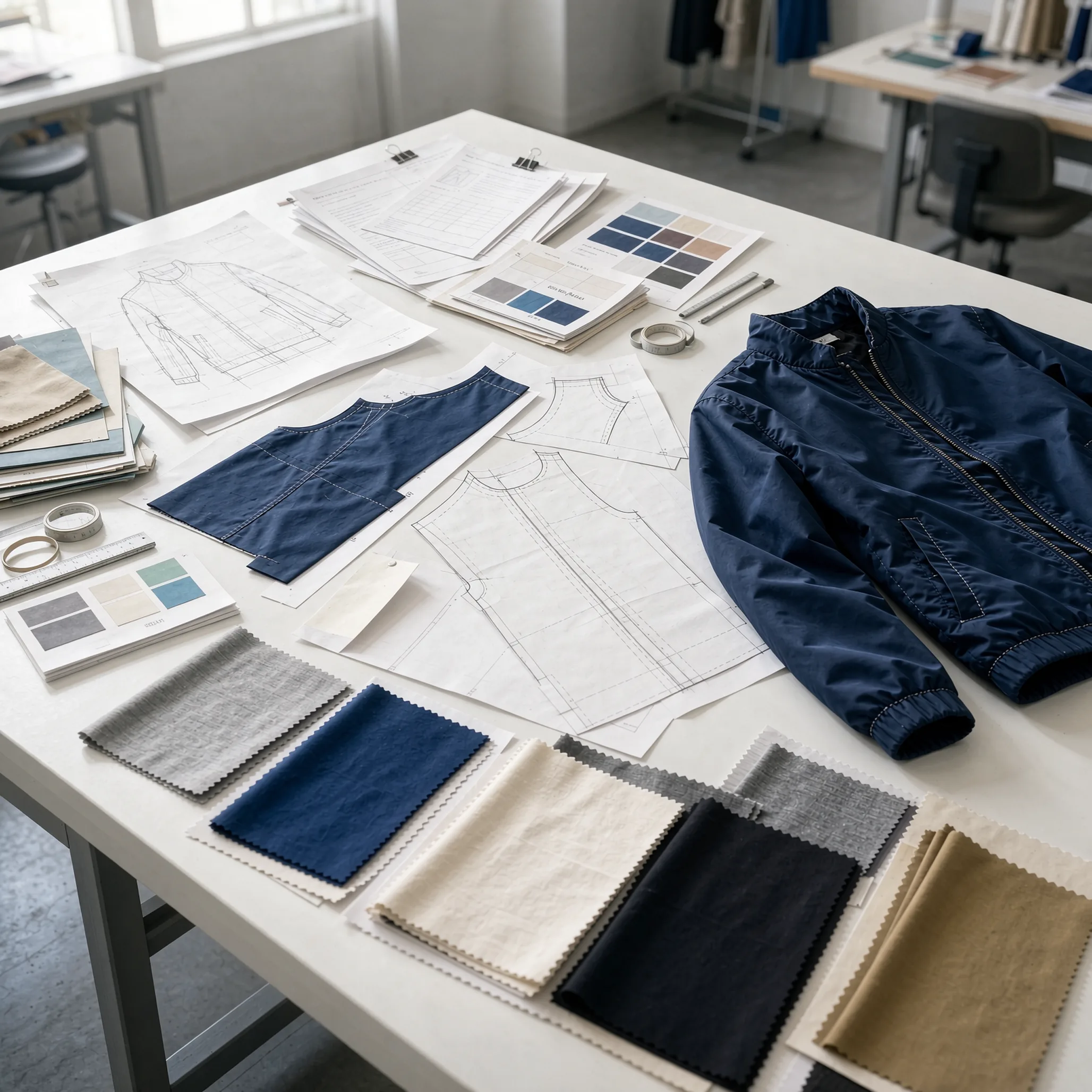
Do not start with the factory's product catalog.
Start with its development capability.
2.1 Can the Factory Work From Different Starting Points?
A useful ODM partner should be able to understand different types of product information.
For example:
Complete tech pack → technical review and sampling
Sketch → pattern development and sample creation
Reference garment → construction analysis and development
Product concept → material and construction discussion
This flexibility matters because not every brand has an in-house pattern maker or technical team.
Some China ODM manufacturers specifically position their services around development from reference photos, samples, or incomplete technical information.
2.2 Does the Factory Understand Materials?
Fabric selection is not simply a question of choosing the cheapest available material.
The fabric affects:
- Garment weight
- Hand feel
- Fit
- Durability
- Shrinkage
- Sewing performance
- Final cost
For example, a lightweight outdoor vest may look right with one fabric during sampling but fail to deliver the required durability in actual use.
An experienced ODM team should be able to explain this trade-off instead of simply accepting the buyer's first material choice.
3. Sampling Is Where ODM Capability Becomes Visible
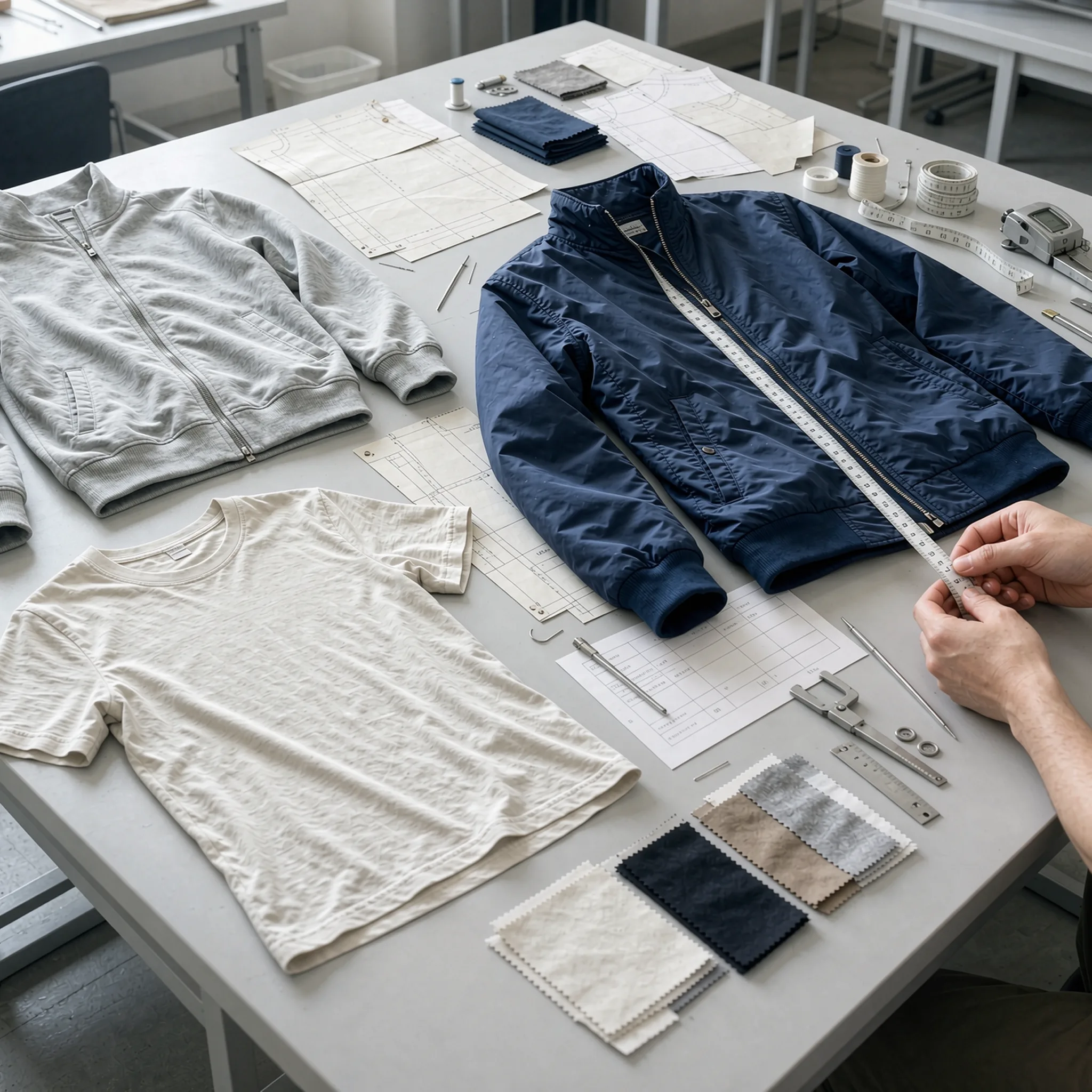
A factory can claim to provide ODM services, but the sample development process reveals much more.
A strong development process should identify problems with:
- Measurements
- Fit
- Fabric behavior
- Construction
- Pocket placement
- Collar or neckline shape
- Sleeve length
- Trims
- Stitching
The first sample is often a starting point rather than the final production standard.
This is normal.
What matters is whether the factory can identify the problem, make the required adjustment, and document the approved version.
4. Ask Who Is Responsible for Each Decision
This is one of the most useful questions when comparing China ODM factories.
Before production begins, clarify who is responsible for:
| Development Area | Questions to Ask |
|---|---|
| Pattern | Who creates and revises it? |
| Fabric | Who sources and approves it? |
| Fit | Who makes the technical adjustments? |
| Trims | Who confirms specifications? |
| Sample | How many revision rounds are included? |
| Quality | What is checked against the approved sample? |
| Production | Who controls specification changes? |
The practical difference between OEM and ODM often comes down to who carries the development responsibility. Some manufacturers explicitly separate full development from production-only services for this reason.
Getting these responsibilities clear early can prevent expensive misunderstandings later.
5. How to Test a Factory Before a Large ODM Order
You do not need to start with a large order.
A better approach is to evaluate the manufacturer's process through a development project.
Step 1: Send a Real Product Brief
Provide what you already have:
- Reference images
- Sketches
- Existing samples
- Product measurements
- Fabric preferences
- Target quantity
- Target market
- Target price
Do not worry if the information is incomplete.
A good ODM factory should tell you what is missing.
Step 2: Review the Factory's Questions
This is an underrated supplier-selection test.
A factory that asks about fabric composition, GSM, measurements, construction, intended use, or target price is showing technical engagement.
A supplier that only replies with:
“Send quantity and we give price.”
may be easier to contact, but it tells you little about its product development capability.
Step 3: Evaluate the Sample
Look beyond appearance.
Check:
- Measurements
- Fit
- Stitch quality
- Fabric consistency
- Construction
- Functional details
- Trims
- Finishing
The objective is not simply to receive a sample.
The objective is to see how the factory solves problems during development.
6. MOQ and Price Should Not Be Your First Filter
MOQ matters, especially for startup and growing brands.
But the lowest MOQ or lowest quotation does not automatically mean the best ODM partner.
Consider the complete project cost:
Sample development + revisions + materials + bulk production + QC + shipping + potential rework
A cheaper factory can become more expensive if unclear specifications lead to repeated samples or bulk-quality problems.
Alibaba's current marketplace listings also show how widely MOQ and pricing can vary among China-based ODM clothing suppliers, so a marketplace headline price should not be treated as a universal industry benchmark.
7. What Quality Control Should a China ODM Factory Have?
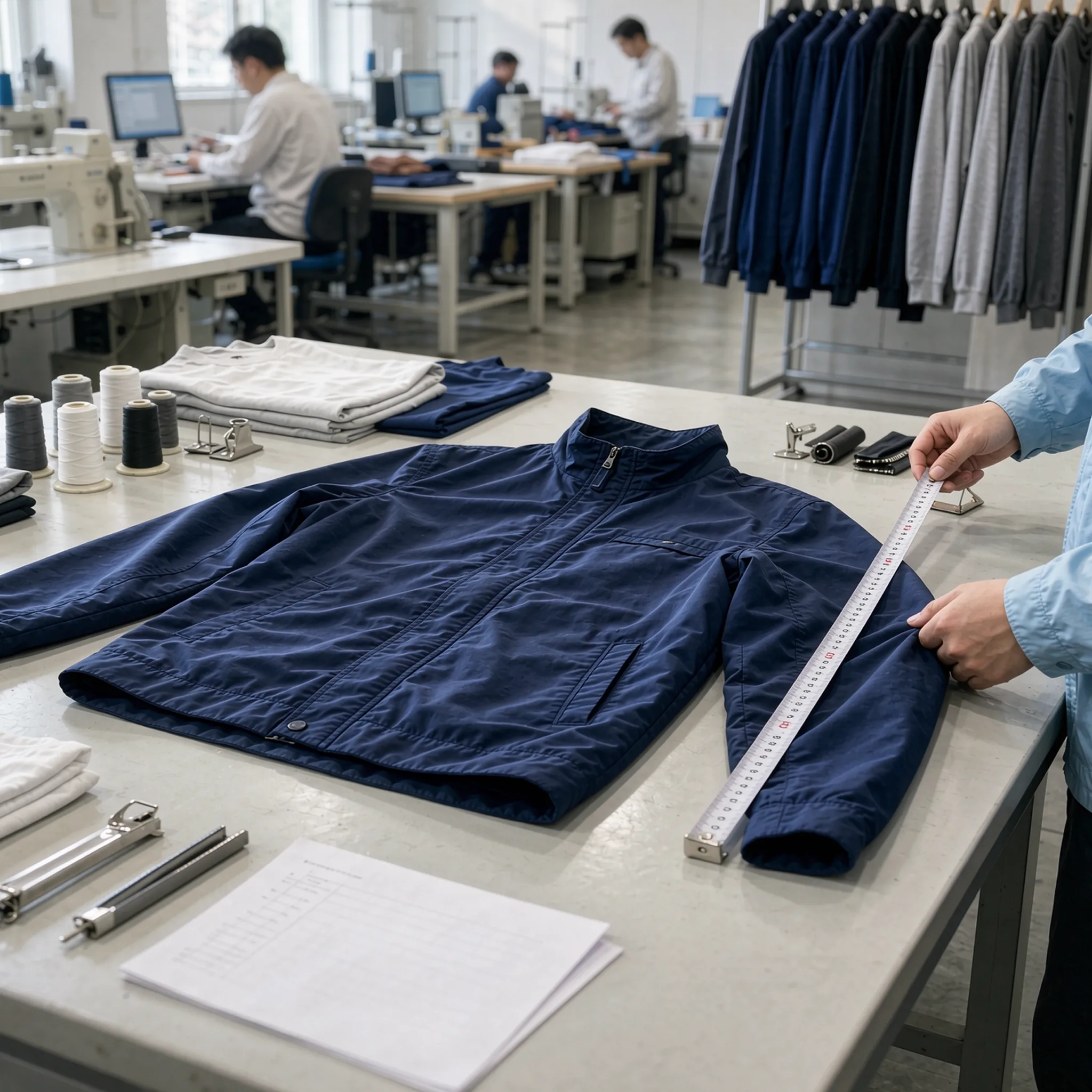
Quality should be controlled throughout production, not only when cartons are ready to ship.
A practical process can include:
Fabric inspection → Cutting → Sewing → Inline inspection → Finished garment inspection → Packing
The approved sample should remain the main reference.
For example, if the approved sample has a specific sleeve length, fabric weight, pocket position, and stitching construction, those details should be documented and checked during bulk production.
This becomes especially important when a brand plans to reorder the same style.
8. Can the Factory Support Your Brand After the First Order?
A good ODM relationship should not end when the first shipment leaves the factory.
For repeat development, the manufacturer should ideally retain clear information about:
- Approved patterns
- Fabric specifications
- Trim specifications
- Measurements
- Sample versions
- Color references
- Production requirements
This makes repeat orders and future modifications easier.
It also reduces the risk of recreating the product from memory.
9. When Is a China ODM Factory a Better Choice?
ODM is particularly useful when the brand has product direction but limited technical resources.
It can make sense if you:
- Have product ideas but no pattern maker
- Need help selecting materials
- Are entering a new apparel category
- Have reference garments rather than full tech packs
- Want one partner for development and production
- Need support turning concepts into production-ready products
If you already have a complete pattern, approved fabric, detailed specifications, and an experienced technical team, a production-focused OEM relationship may be more appropriate.
10. A Practical Checklist Before Choosing a China ODM Factory
Before moving forward, ask:
- Can you develop patterns from my references?
- Can you source the required fabric?
- Can you make development samples?
- How are fit revisions handled?
- Who owns each development decision?
- What is the MOQ?
- How is bulk quality checked?
- How are approved specifications documented?
- Can you support private labeling?
- Can you handle repeat production?
The answers will tell you much more about a factory's real ODM capability than a website claiming “OEM & ODM.”
11. What Should You Send for Your First Inquiry?
You do not need a perfect specification package to start.
Send:
Product: What garment are you developing?
Reference: Photos, sketches, samples, or existing products.
Materials: Preferred fabric, composition, GSM, or performance requirements if known.
Quantity: Estimated order volume and expected repeat orders.
Market: USA, Europe, outdoor, sportswear, casualwear, workwear, etc.
Branding: Labels, embroidery, printing, packaging, or other requirements.
Timeline: Target sample date and expected production date.
This gives the factory enough context to assess feasibility and identify the next technical steps.
12. Choose the Factory That Can Develop With You
The best clothing ODM China factory is not necessarily the one with the largest factory or the lowest quotation.
Look for a manufacturer that can understand your product, identify technical risks, develop a reliable sample, document the approved specifications, and reproduce the garment consistently in bulk.
That is the real value of ODM.
If you already have a product idea, reference sample, sketch, or technical package, the next step is to send those materials to the manufacturer and ask for a development and production assessment, rather than requesting only a unit price.











