




Custom Screen Printing Services: A Practical Guide for Clothing Brands
Közzététel ideje:2026-09-03 Kategória:HÍREK Látogatószám:650
Introduction
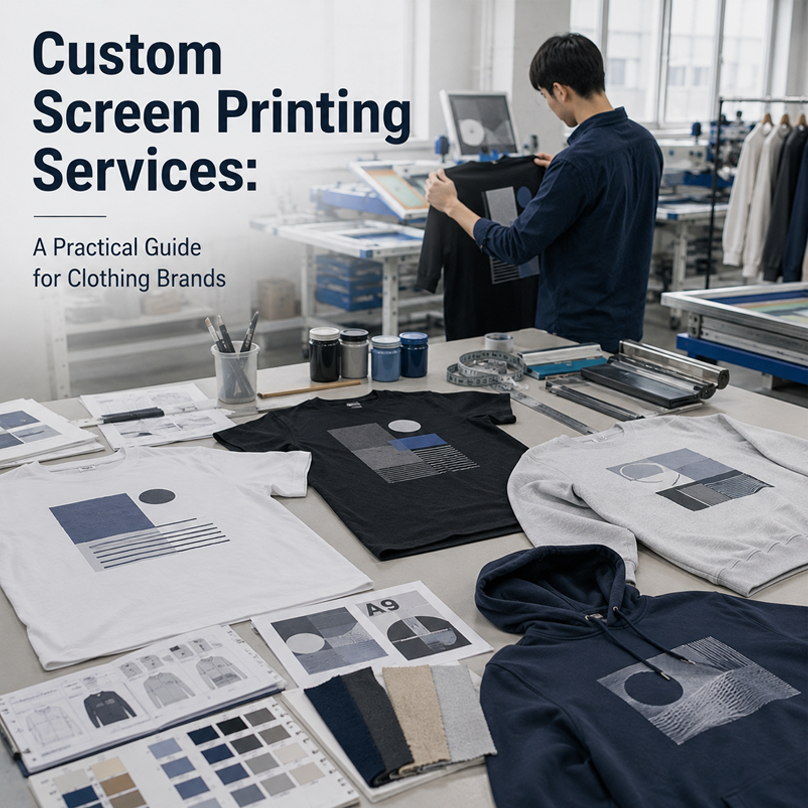
Screen printing remains one of the most widely used customization methods for apparel.
From graphic T-shirts and branded sweatshirts to team apparel and promotional clothing, screen printing can turn a simple garment into a strong visual statement.
But successful custom screen printing involves more than sending an image to a supplier.
Artwork preparation, print size, color selection, garment fabric, printing position, ink application and sample approval can all influence the final result.
For clothing brands, understanding these factors makes it easier to communicate with manufacturers and avoid common production problems.
This guide explains how custom screen printing services work and what brands should consider before moving from artwork to bulk production.
1. What Are Custom Screen Printing Services?
Custom screen printing is a garment decoration method in which ink is transferred onto fabric through a prepared screen.
Different screens are typically used for different colors in a design, allowing the artwork to be built layer by layer.
The technique is commonly used for:
- Graphic T-shirts
- Hoodies
- Sweatshirts
- Promotional apparel
- Team clothing
- Event apparel
- Streetwear
- Brand merchandise
- Workwear
The final appearance depends on the artwork, fabric, ink selection, print size, number of colors and production process.
2. Why Do Brands Choose Screen Printing?
Screen printing is popular because it can create bold, visually strong graphics on apparel.
Strong Graphic Impact
Large graphics can be printed across the chest, back or other suitable garment areas.
This makes screen printing useful for brands where artwork is a major part of the product identity.
Suitable for Different Garment Types
Screen printing can be considered for many common apparel categories, including T-shirts, sweatshirts and hoodies.
The exact result depends on the fabric and printing requirements.
Flexible Design Possibilities
Brands can create:
- Typography
- Illustrations
- Logos
- Graphic artwork
- Simple patterns
- Brand statements
The method can work especially well when the design requires a flat graphic appearance.
3. What Garments Work Well With Screen Printing?
The garment fabric is an important part of the printing process.
Cotton T-Shirts
Cotton T-shirts are commonly used for printed graphics because their surface can provide a suitable base for many printing applications.
Sweatshirts
Sweatshirts can carry larger graphics while maintaining a casual, substantial appearance.
Hoodies
Hoodies are frequently used for large front or back graphics.
However, seams, pockets, zippers and garment construction can affect available printing areas.
Blended Fabrics
Blended fabrics may behave differently from 100% cotton.
Before bulk production, brands should test the selected printing method on the actual garment fabric.
4. Choose the Right Print Placement
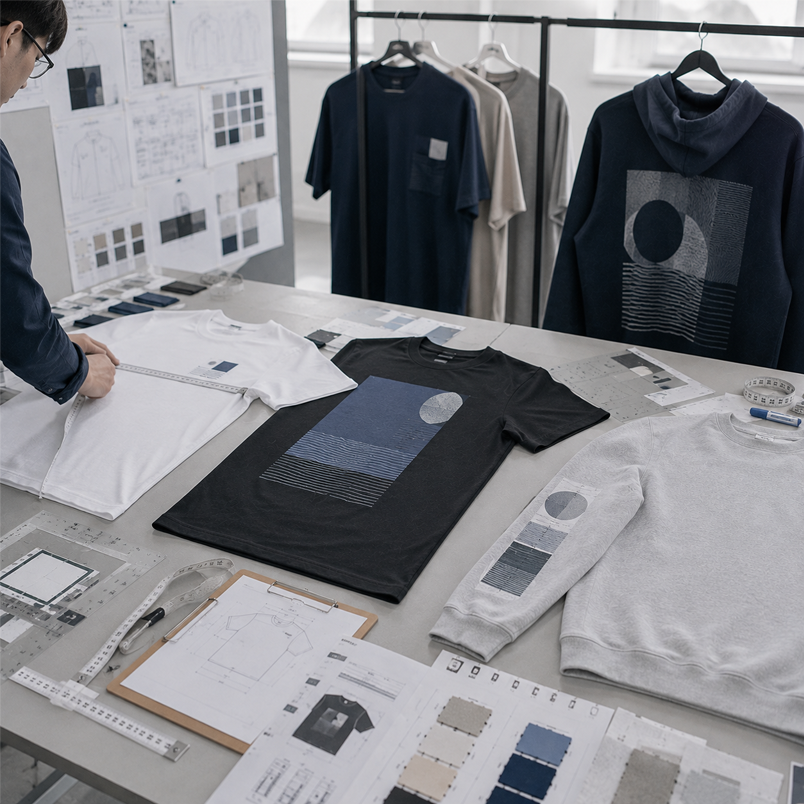
Print placement should be decided during product development rather than after the garment has already been finalized.
Common locations include:
Center Chest
A standard location for logos, typography and medium-sized graphics.
Full Front
Suitable for larger visual designs.
Back Print
A large back graphic can become the primary visual element of a streetwear or casualwear garment.
Sleeve Print
Useful for secondary branding, small graphics or decorative details.
Pocket Print
Small graphics can be placed on or above chest pockets, depending on garment construction.
When confirming placement, brands should specify both the print dimensions and its position relative to garment seams and edges.
5. Prepare Artwork for Screen Printing
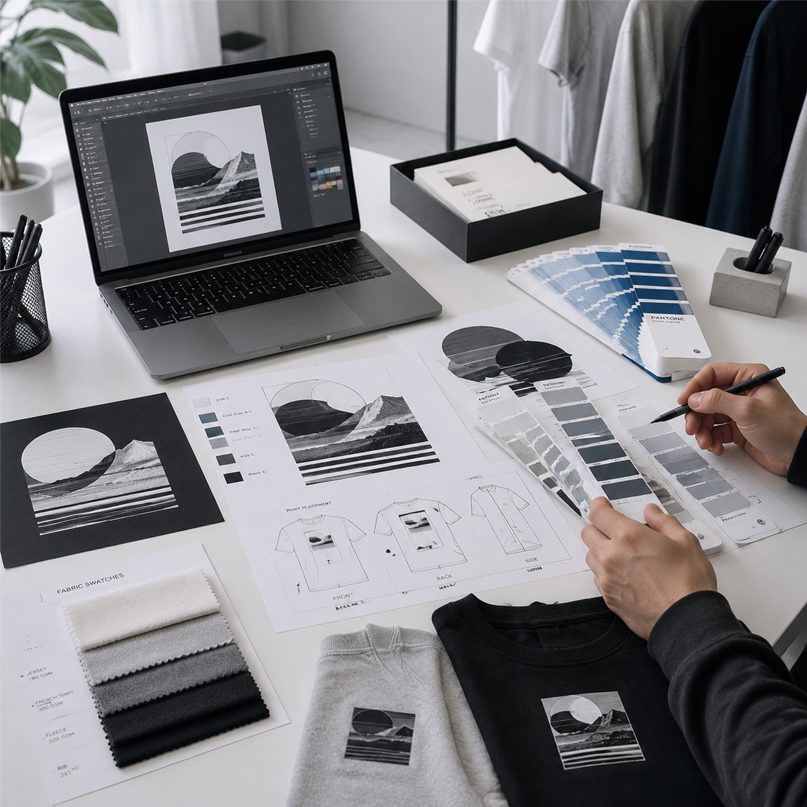
Artwork preparation is one of the most important steps in the printing process.
A design should be reviewed before production to determine:
- Number of colors
- Print dimensions
- Graphic positioning
- Fine details
- Transparency
- Layering
- Color separation
- Required artwork format
Complex artwork may require additional preparation before it can be converted into printing screens.
Small text and extremely fine lines should be reviewed carefully because not every detail will reproduce equally well on fabric.
A manufacturer should confirm the artwork requirements before sampling.
6. Understand Color Selection
Color can significantly affect the final appearance of a printed garment.
The same artwork may appear different depending on the garment's base color and the selected ink.
For example, a light graphic printed on a dark garment may require a different production approach from the same graphic printed on a white T-shirt.
Brands should confirm:
- Garment base color
- Print colors
- Number of print colors
- Desired color appearance
- Artwork specifications
- Sample approval requirements
Whenever color accuracy is important, a physical sample is preferable to relying only on a digital preview.
7. Consider Fabric and Print Interaction
The fabric surface can affect how a print looks and feels.
A smooth lightweight T-shirt and a textured fleece sweatshirt may produce different visual results even when the same artwork is used.
Important factors include:
- Fabric composition
- Fabric weight
- Surface texture
- Stretch
- Garment color
- Print size
- Print location
This is why experienced apparel development should consider the printing method at the same time as fabric selection.
8. Request a Printed Sample Before Bulk Production
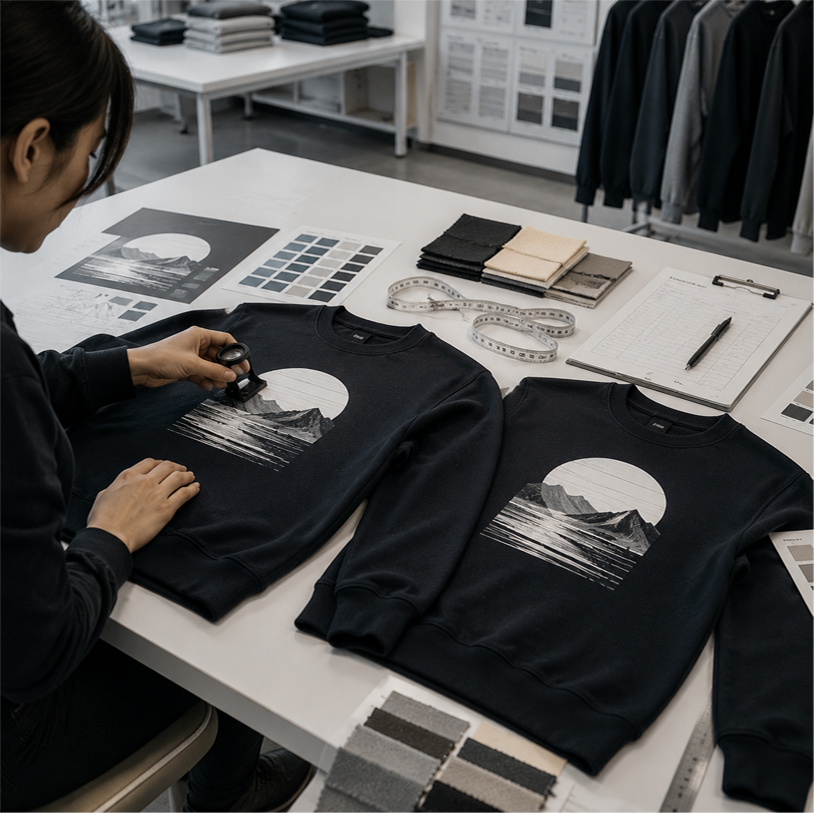
A printed sample gives the brand an opportunity to evaluate the actual result before committing to a larger order.
Review:
Print Position
Is the graphic correctly aligned?
Print Size
Does the physical size match the approved specification?
Color
Does the printed color meet expectations?
Graphic Definition
Are edges, lines and small details sufficiently clear?
Hand Feel
Does the print have the desired surface and feel?
Fabric Interaction
Does the print work naturally with the garment's fabric and construction?
If changes are required, they should be made during the sampling stage.
9. Common Screen Printing Problems to Watch For
A professional review should look for possible issues such as:
Uneven Print Coverage
Some areas may appear lighter or less consistent than others.
Incorrect Positioning
A graphic can look unbalanced if it is placed too high, low or off-center.
Color Differences
The final print may not match the expected color if the artwork and production specifications are not clearly controlled.
Poor Detail Reproduction
Very small elements may lose definition during printing.
Fabric Distortion
Stretching or textured fabrics can affect the appearance of a printed graphic.
The best way to identify these issues is to inspect an actual sample.
10. Screen Printing vs. Embroidery
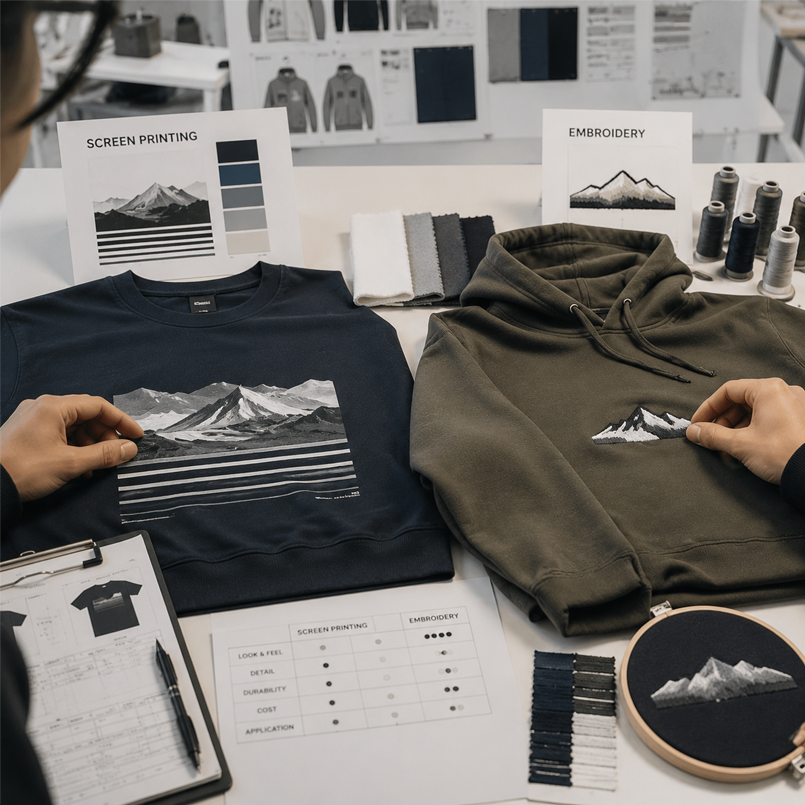
The two techniques create different visual effects.
| Feature | Screen Printing | Embroidery |
|---|---|---|
| Surface | Flat graphic | Raised texture |
| Visual effect | Bold and graphic | Dimensional and textured |
| Legalkalmasabb | Large graphics | Logos and lettering |
| Common garments | T-shirts, hoodies, sweatshirts | Hoodies, polos, jackets |
| Artwork focus | Graphic/color reproduction | Stitch structure |
| Fabric feel | Print layer | Thread texture |
Neither method is automatically better.
The right choice depends on the garment, artwork and brand aesthetic.
11. How to Choose a Screen Printing Service
When selecting a manufacturer for custom screen printing, consider the complete development process rather than only the quoted unit price.
Review Previous Work
Look at physical examples of similar garment types and printing applications.
Check Product Compatibility
Ask whether the manufacturer has experience printing on the fabric and garment category you are developing.
Discuss Artwork Requirements
Confirm what artwork files and specifications are required before sampling.
Ask About Sampling
A physical printed sample can provide much more useful information than a digital mockup.
Discuss Quality Control
Understand how print position, color, coverage and finished garments are inspected.
Confirm Production Communication
Clear communication about artwork revisions and approvals can reduce misunderstandings during production.
12. What Should You Prepare Before Contacting a Manufacturer?
A clear project brief should include:
- Garment type
- Fabric preference
- Garment color
- Artwork
- Print location
- Print dimensions
- Number of colors
- Estimated quantity
- Size range
- Target timeline
- Reference images
This information allows the manufacturer to understand the project before discussing sampling and production.
13. Final Screen Printing Checklist
Before approving bulk production, review:
- Artwork is finalized
- Print size is approved
- Print placement is confirmed
- Colors are confirmed
- Garment fabric is confirmed
- Physical sample has been reviewed
- Print quality has been checked
- Final specifications are documented
- Bulk production requirements are confirmed
Conclusion
Custom screen printing services can give clothing brands a flexible way to turn artwork into commercially usable apparel.
The quality of the finished product depends on more than the printing machine. Artwork preparation, fabric selection, print placement, color management, sampling and quality control all play important roles.
For a new clothing brand, the safest approach is to define the garment and artwork clearly, discuss the printing requirements with the manufacturer, request a physical sample and approve the final specifications before bulk production.
When the garment, artwork and printing method are developed together, screen printing can become a consistent part of a brand's product development process.











