




China Garment OEM: A Complete Guide to Custom Clothing Manufacturing in China
Tanggal penerbitan:2026-09-29 Kategori:BERITA Jumlah tampilan:668
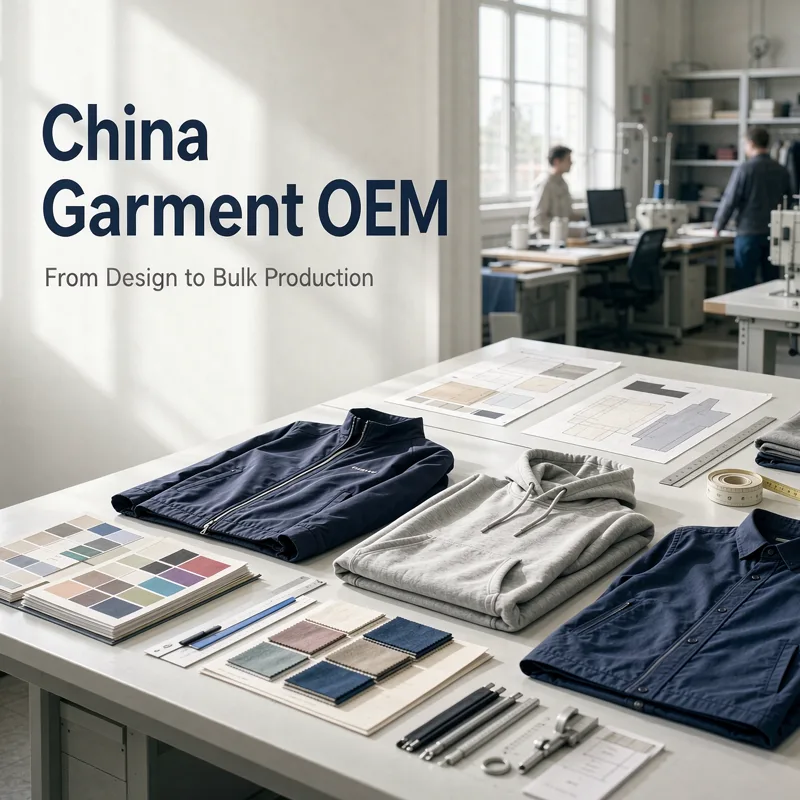
Looking for China garment OEM manufacturing? Learn how OEM works, from fabric sourcing and sampling to bulk production, QC, MOQ, and choosing the right factory.
If you already have a clothing design, tech pack, reference sample, or product idea, China garment OEM can turn that concept into a finished product under your brand. A professional OEM factory can support fabric sourcing, pattern development, sampling, customization, bulk production, labeling, packaging, and quality control.
But choosing an OEM factory is not simply about finding the lowest quotation.
The real question is whether the manufacturer can turn your specifications into a repeatable product with the right fit, materials, workmanship, quality, quantity, and delivery schedule.
This guide explains how China garment OEM works and what buyers should check before placing an order.
1. What Is China Garment OEM?
China garment OEM means a Chinese apparel manufacturer produces clothing based on a buyer's own designs, specifications, measurements, materials, branding, or approved samples.
The brand owns the product concept.
The factory provides the manufacturing capability.
A typical OEM project may include:
- Pengadaan kain
- Pattern making
- Pengembangan sampel
- Size grading
- Pemotongan
- Menjahit
- Pencetakan atau bordir
- Labels and hangtags
- Pemeriksaan kualitas
- Kemasan
- Produksi massal
For example, a sportswear brand may provide a jacket tech pack with measurements, fabric requirements, artwork, colors, and construction details.
The China garment OEM factory then develops the pattern, sources or confirms materials, produces samples, makes revisions, and moves the approved version into bulk production.
The factory is not simply selling an existing garment.
It is manufacturing a product to the buyer's specifications.
2. China Garment OEM vs ODM: What Is the Difference?
OEM and ODM are often used together, but they solve different problems.
| Faktor | OEM | ODM |
|---|---|---|
| Product concept | Buyer provides | Factory may provide |
| Design ownership | Usually buyer-led | Factory/design-led |
| Tech pack | Often available | May be developed during project |
| Pengembangan pola | Factory can support | Factory usually supports |
| Pengambilan sampel | Based on buyer specifications | Based on concept or factory design |
| Penyesuaian | Tinggi | High, depending on supplier |
| Paling cocok untuk | Established product concepts | Brands needing development support |
| Main advantage | Greater product control | Faster product development |
Example: OEM
A brand has already designed a fleece jacket.
It provides:
- Gambar teknis
- Measurement chart
- Fabric specification
- Referensi warna
- Zipper requirements
- Label artwork
The factory's job is to manufacture the garment according to those requirements.
Example: ODM
A startup knows it wants a lightweight outdoor jacket but does not have a complete technical package.
The manufacturer helps develop:
- Pemilihan kain
- Pattern
- Konstruksi
- Sample
- Product details
This makes ODM more development-focused.
For buyers with a complete design, OEM is usually the more direct manufacturing route.
For buyers with an incomplete concept, ODM support can reduce the amount of product development work they need to manage themselves.
3. How Does China Garment OEM Manufacturing Work?
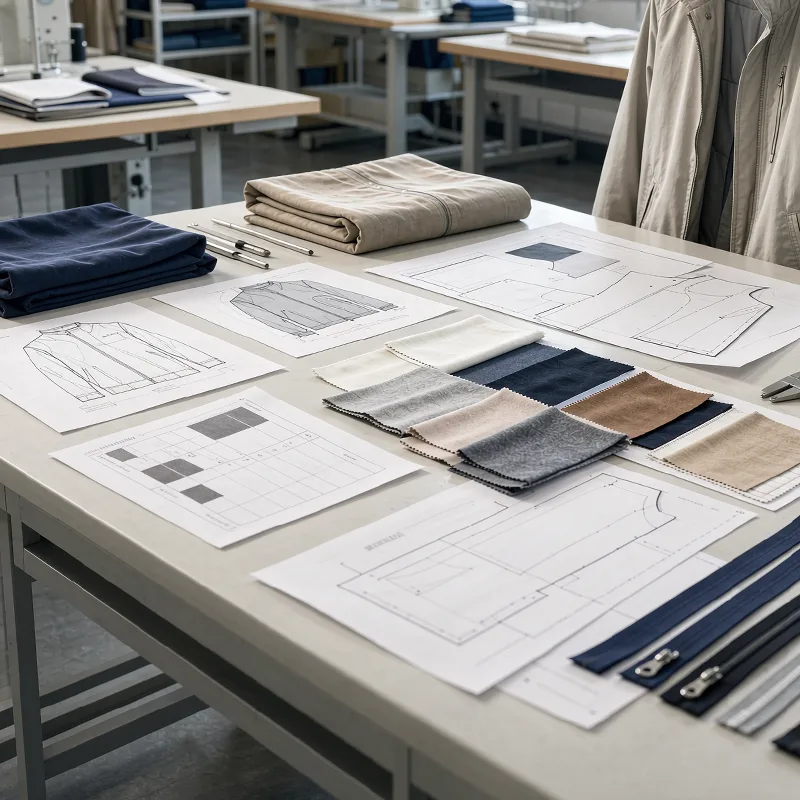
A professional OEM project normally moves through several stages.
3.1 Product Brief
The first step is defining the product.
A useful brief should include:
- Kategori produk
- Pasar sasaran
- Target customer
- Gambar referensi
- Pengukuran
- Kebutuhan kain
- Color requirements
- Jumlah
- Rentang ukuran
- Branding requirements
- Target delivery date
The more precise the brief, the easier it is for the factory to evaluate the project.
3.2 Fabric and Trim Sourcing
The factory confirms the main materials.
Depending on the garment, this may include:
- Main fabric
- Lining
- Rib
- Ritsleting
- Tombol
- Tali pengikat
- Elastis
- Label
- Label gantung
- Kemasan
Material selection affects more than appearance.
It can change:
- Berat pakaian
- Pas
- Cost
- Sewing difficulty
- Ketahanan
- Tekstur saat disentuh
- Production speed
For example, replacing a lightweight woven fabric with a heavier construction can change seam behavior and require pattern or workmanship adjustments.
3.3 Pattern Development
The pattern converts the product concept into production pieces.
This is one of the most important technical stages.
A pattern determines:
- Body shape
- Sleeve shape
- Collar construction
- Pocket position
- Seam placement
- Overall proportions
- Size grading
A good-looking sketch does not automatically produce a good-fitting garment.
The pattern must translate the design into something that can actually be cut and sewn.
3.4 Sample Development
The factory creates the first sample.
The buyer checks:
- Pas
- Pengukuran
- Kain
- Warna
- Konstruksi
- Hiasan
- Penjahitan
- Branding
- Overall appearance
This stage should not be treated as a formality.
It is the point where many production problems are cheapest to fix.
4. Why the Sample Stage Matters So Much
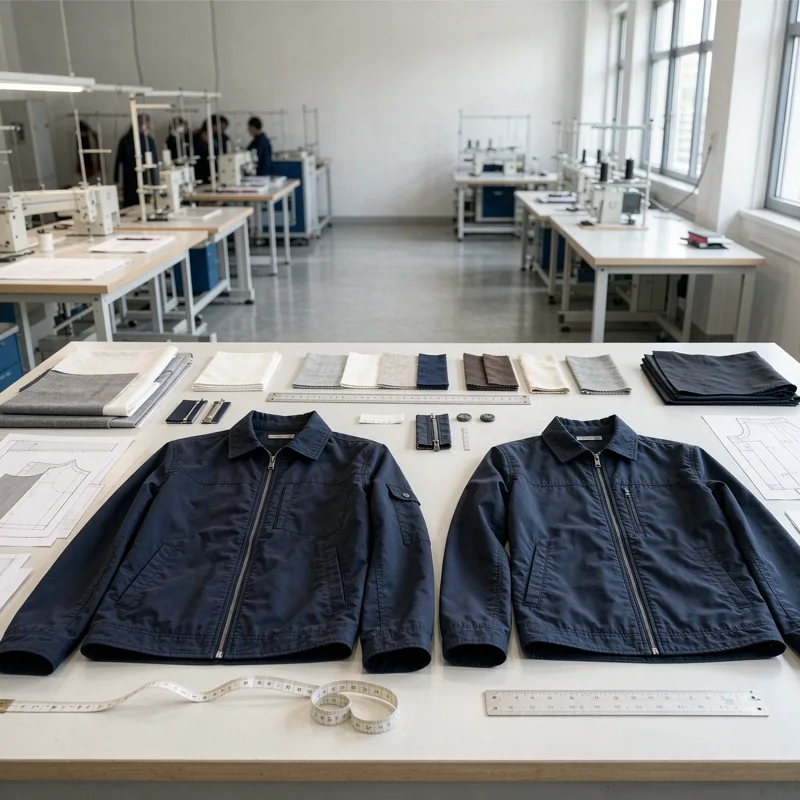
One of the most common mistakes in garment sourcing is approving a sample too quickly.
Imagine a brand orders 3,000 jackets.
The first sample has a sleeve that is 1.5 cm too long.
If the problem is discovered after bulk production, correcting it can mean:
- Rework
- Additional labor
- Delayed shipment
- Higher costs
- Customer complaints
If the same problem is identified during sample development, the pattern can be adjusted before bulk production.
This is why experienced buyers treat the approved sample as a production reference, not just a visual prototype.
Before bulk production, check:
| Sample Check | What to Verify |
|---|---|
| Pengukuran | Actual garment measurements |
| Pas | Body, sleeve, collar and length |
| Kain | Composition, weight and hand feel |
| Warna | Approved color standard |
| Konstruksi | Seams and joining methods |
| Hiasan | Zippers, buttons and accessories |
| Branding | Labels, logos and artwork |
| Penyelesaian | Pressing, washing and appearance |
| Kemasan | Folding, bags and cartons |
KALAIBEN's own manufacturing guidance also recommends approving samples before mass production so buyers can confirm design, fabric, measurements, workmanship, colors, and overall quality.
5. What Should You Send to a China Garment OEM Factory?
A buyer does not always need a perfect tech pack to start a conversation.
However, better information usually produces a better quotation.
Basic Information
At minimum, prepare:
- Product images or sketches
- Kategori produk
- Target quantity
- Rentang ukuran
- Preferred fabric
- Main colors
- Branding requirements
- Pasar sasaran
- Required delivery date
If You Have a Tech Pack
Send:
- Gambar teknis
- Measurement chart
- Bill of materials
- Komposisi kain
- Berat kain
- Construction details
- Karya seni
- Spesifikasi label
- Packaging instructions
If You Do Not Have a Tech Pack
You can still start with:
- Reference photos
- Existing garments
- Sketches
- Screenshots
- Fabric preferences
- Written descriptions
A capable manufacturer should be able to identify what additional information is required before development begins.
This is especially useful for new brands.
6. How Much Does China Garment OEM Cost?
There is no single standard China garment OEM price.
The final cost depends on the product.
Important cost variables include:
- Kain
- Berat kain
- Konstruksi pakaian
- Jumlah
- Number of colors
- Number of sizes
- Hiasan
- Pencetakan
- Sulaman
- Mencuci
- Label
- Kemasan
- Persyaratan pengambilan sampel
- Production complexity
For example, two hoodies may look similar in a product photo but have very different manufacturing costs.
One may use a standard fleece.
Another may use custom-developed fabric, special washing, premium trims, embroidery, and complex construction.
The second garment will require a different production budget.
A Better Way to Compare Quotations
Do not compare only the unit price.
Compare:
| Faktor Biaya | Pemasok A | Pemasok B |
|---|---|---|
| Main fabric specification | ✓ | ✓ |
| Berat kain | ✓ | ✓ |
| Trim specification | ✓ | ✓ |
| Sample included | ✓ | ✓ |
| Labeling | ✓ | ✓ |
| Kemasan | ✓ | ✓ |
| QC requirements | ✓ | ✓ |
| Production quantity | ✓ | ✓ |
| Waktu tunggu | ✓ | ✓ |
| Harga satuan | ✓ | ✓ |
A cheaper quotation is not necessarily a cheaper project if the specifications are different.
7. What Is the MOQ for China Garment OEM?
There is no universal MOQ for every China garment OEM factory.
MOQ can change according to:
- Kategori produk
- Kain
- Warna
- Design complexity
- Penyesuaian
- Proses produksi
- Quantity of materials required
A factory may accept a smaller quantity for a simple product but require a larger quantity for a custom fabric or complex garment.
This is why buyers should ask:
“What is the MOQ for this exact product?”
rather than:
“What is your factory MOQ?”
The second question can produce a misleading number.
Contoh
Suppose a brand wants:
- 1 jacket style
- 3 warna
- 5 sizes
- Kain khusus
- Custom zipper
- Label khusus
The production requirements are very different from a simple single-color T-shirt using an existing fabric.
The MOQ should therefore be evaluated at the project level.
8. How to Choose a China Garment OEM Manufacturer
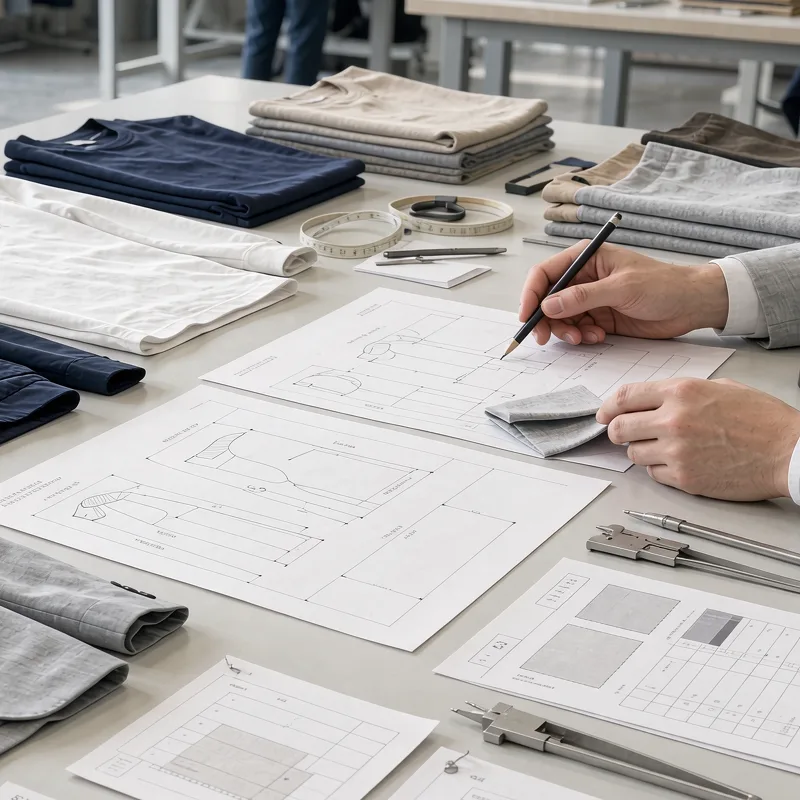
The right factory should match your product and business requirements.
Do not evaluate suppliers only by their website or quotation.
8.1 Check Product Experience
Tanyakan:
- Does the factory produce your product category?
- Does it understand your fabric?
- Can it handle your construction?
- Can it develop samples?
- Does it support your target market?
A factory specializing in basic T-shirts may not be the right technical partner for complex outdoor jackets.
8.2 Check Development Capability
Ask whether the supplier can support:
- Pengembangan pola
- Pengambilan sampel
- Size grading
- Rekomendasi bahan
- Trim sourcing
- Fit revisions
- Production-ready specifications
This separates a true OEM manufacturing partner from a company that mainly coordinates orders.
8.3 Check Production Capability
Ask for evidence of:
- Fasilitas produksi
- Machinery
- Production workflow
- Ruang contoh
- QC process
- Kapasitas produksi
Do not rely only on phrases such as “large factory” or “high capacity.”
Ask how that capacity applies to your product.
8.4 Check Communication
International OEM projects involve many decisions.
You may need to discuss:
- Fabric substitutions
- Measurement revisions
- Sample comments
- Color approvals
- Kemasan
- Production schedules
Clear communication can prevent expensive misunderstandings.
9. China Garment OEM Factory vs Trading Company
This is another important question for international buyers.
A factory and a trading company can both help you source clothing, but their operating models may differ.
| Faktor | Direct Factory | Perusahaan Perdagangan |
|---|---|---|
| Pengendalian produksi | Usually closer | Depends on factory network |
| Product development | May be in-house | May be coordinated externally |
| Factory communication | More direct | Often through intermediary |
| Supplier flexibility | Depends on factory | Can access multiple factories |
| Price structure | Potentially simpler | May include intermediary margin |
| Best fit | Long-term manufacturing | Multi-supplier sourcing |
Neither model automatically guarantees better results.
The important question is:
Who is actually responsible for developing and producing your garment?
Ask for clarity on:
- Manufacturing location
- Sample development responsibility
- Production responsibility
- QC responsibility
- Communication process
- Kemasan
- Shipment
This makes supplier comparison much easier.
10. What Quality Control Should You Expect?
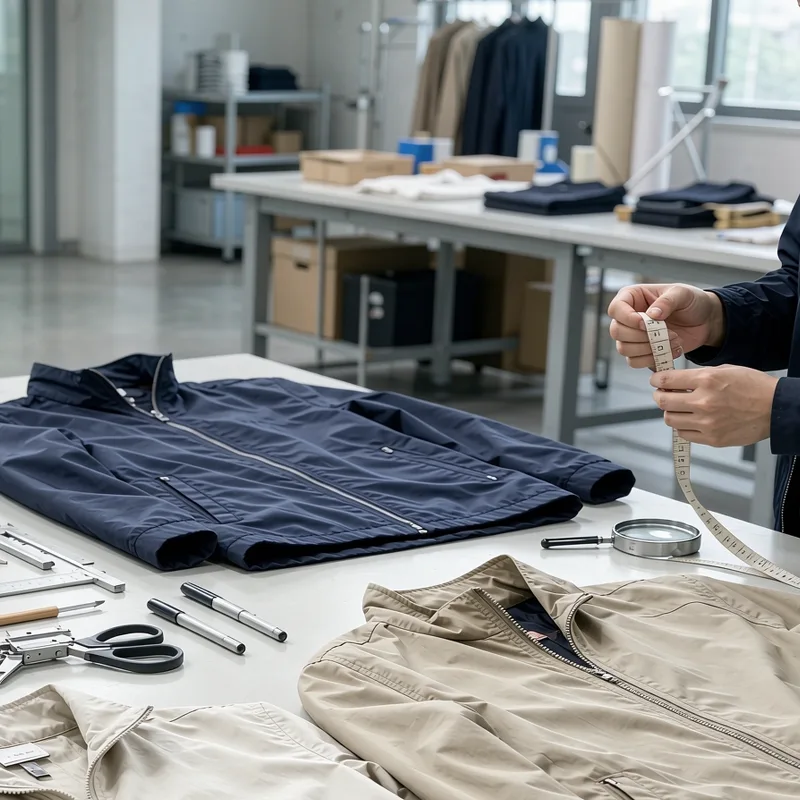
Quality control should not start when the finished garments are already packed.
A stronger process checks quality at several stages.
Stage 1: Material Inspection
Periksa:
- Fabric appearance
- Warna
- Berat
- Composition
- Defects
- Hiasan
Stage 2: Pre-Production Sample
Confirm that the production version matches the approved sample.
Stage 3: In-Process Inspection
Check issues such as:
- Penjahitan
- Pengukuran
- Konstruksi
- Penampilan
- Workmanship
Stage 4: Final Inspection
Check finished garments before shipment.
A practical buyer checklist includes:
- Pengukuran
- Stitch quality
- Konstruksi jahitan
- Fabric defects
- Konsistensi warna
- Print or embroidery
- Label
- Hiasan
- Kemasan
The exact inspection standard should be agreed before production starts.
11. Common China Garment OEM Mistakes Buyers Make
11.1 Choosing the Lowest Price First
Harga itu penting.
But it should not be the first and only filter.
A low quotation can become expensive if it leads to:
- Poor fit
- Material substitutions
- Rework
- Late delivery
- Inconsistent bulk quality
11.2 Sending an Incomplete Brief
A factory cannot accurately quote an undefined product.
“Make this jacket cheaper” is not enough.
A stronger request includes the product image, quantity, fabric direction, size range, colors, branding, and target delivery date.
11.3 Skipping Sample Approval
Never treat the first sample as a box-checking exercise.
Use it to identify production risks.
11.4 Changing Specifications After Approval
Once the sample is approved, changes should be documented.
Changing fabric, measurements, trims, or construction after approval can affect:
- Cost
- Production time
- Kualitas
- Bulk consistency
11.5 Comparing Factories Using Different Specifications
A $10 garment and a $12 garment cannot be compared fairly if the fabrics and construction are different.
Always compare like-for-like specifications.
12. When Does China Garment OEM Make Sense?
China garment OEM can be a practical option for brands that need customized apparel at commercial production volumes.
It may suit:
- Merek fesyen
- Outdoor brands
- Sportswear brands
- Merek gaya hidup
- Private-label businesses
- Pengecer
- Wholesalers
- E-commerce brands
- Corporate apparel buyers
It is especially useful when the buyer wants control over:
- Product design
- Kain
- Pas
- Warna
- Branding
- Kemasan
- Production specifications
For a brand that already has a defined product concept, OEM can provide a direct path from specification to finished garment.
13. What Makes a Strong China Garment OEM Partner?
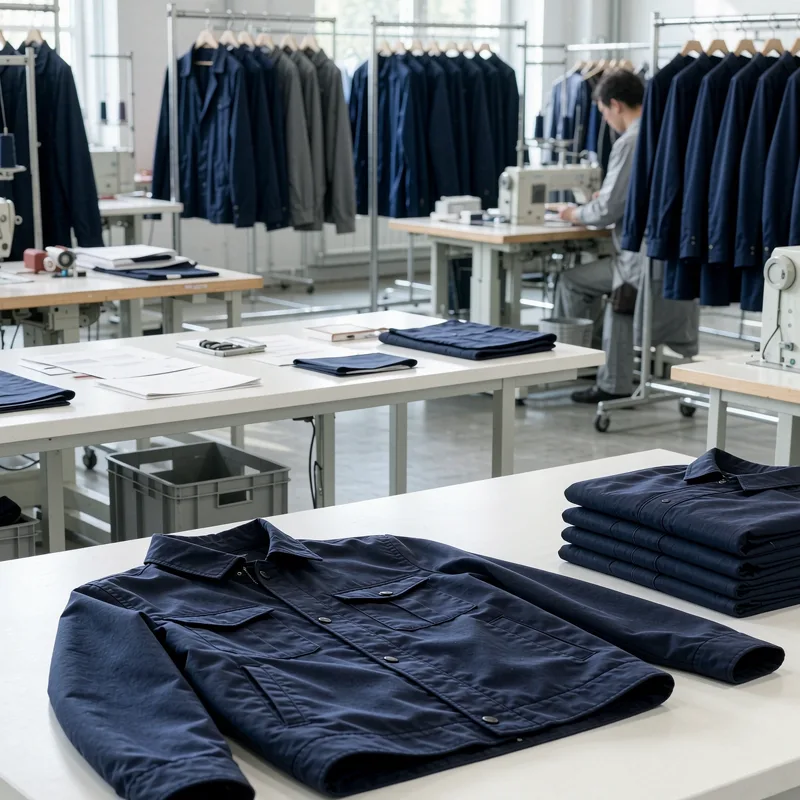
A capable supplier should connect development and production.
Look for these capabilities:
Pengembangan Produk
Can the factory turn your design into a workable pattern and sample?
Material Knowledge
Can the team explain why one fabric is more suitable than another?
Sample Management
Can they document revisions and maintain an approved sample?
Pengendalian Produksi
Can they reproduce the approved sample consistently?
Quality Management
Can they identify problems before shipment?
Komunikasi
Can they provide clear answers instead of vague promises?
Commercial Flexibility
Can they discuss MOQ, materials, quantities, and production planning based on your actual project?
These factors are often more useful than a long list of factory claims.
14. A Practical China Garment OEM Buyer Checklist
Before sending an inquiry, check the following.
Produk
- Product category defined
- Reference images prepared
- Measurements available
- Fabric direction defined
- Colors selected
- Size range confirmed
Branding
- Logo artwork ready
- Woven label requirements
- Hangtag requirements
- Persyaratan pengemasan
Produksi
- Target quantity
- Target delivery date
- Batas waktu pengiriman contoh
- Required customization
- Harapan terhadap kualitas
Supplier
- Relevant product experience
- Sample development capability
- Pattern development capability
- Kapasitas produksi
- QC process
- Komunikasi yang jelas
- Transparent quotation
The more complete this information is, the easier it becomes for an OEM factory to give you a useful response.
15. What Should You Ask a China Garment OEM Factory?
Instead of simply asking:
“What is your price?”
ask questions that reveal manufacturing capability.
Pengembangan Produk
- Can you develop the pattern?
- Can you work from a reference garment?
- Bisakah Anda merekomendasikan kain yang cocok?
- How are sample revisions handled?
Produksi
- What is the MOQ for this specific product?
- What production process will you use?
- How is bulk production matched to the approved sample?
Kualitas
- What quality checks are performed?
- Can you provide production inspection records?
- Can buyer-appointed inspection be arranged?
Commercial
- What information is included in the quotation?
- What are the payment terms?
- What factors could change the final price?
- What information do you need before confirming the production schedule?
These questions generate much more useful information than asking for a generic factory price list.
16. China Garment OEM: A Better Way to Start Your First Project
A successful OEM project does not begin with a purchase order.
It begins with a clear product brief.
Misalnya:
Product: Lightweight outdoor jacket
Quantity: 1,500 pieces
Colors: 3
Sizes: S–XXL
Fabric: Lightweight woven fabric
Branding: Woven label + hangtag
Target market: European outdoor lifestyle
Sample deadline: Required before bulk approval
Target delivery: Defined before production
This gives the manufacturer enough information to evaluate the project.
The factory can then respond with:
- Material recommendations
- Contoh persyaratan
- MOQ
- Quotation
- Development steps
- Perencanaan produksi
- Quality requirements
That is the beginning of a professional OEM relationship.
17. KALAIBEN's China Garment OEM Capabilities
For buyers looking for a China garment OEM partner, KALAIBEN provides OEM and ODM manufacturing for knitted and woven apparel, including casualwear, sportswear, outdoorwear, and children's apparel.
Its manufacturing operation includes approximately 6,000㎡ of production facilities, more than 700 sets of specialized equipment, nearly 700 employees, and annual production capacity of approximately 600,000 pieces or sets. KALAIBEN also states that its CAD pattern-making systems and R&D center support product development, pattern making, sampling, and mass production.
The company accepts product development information such as technical drawings, tech packs, sketches, reference photos, and existing samples. Its stated OEM/ODM support covers product development, pattern making, sampling, production, labeling, and packaging.
For buyers, the important point is not simply factory size.
The more useful question is whether the manufacturer's development and production capabilities match the requirements of your specific garment.
You can explore KALAIBEN's apparel manufacturing and product categories when you are ready to discuss a specific project.
18. Start Your China Garment OEM Inquiry With the Right Information
A good OEM inquiry should answer five basic questions:
What are you making?
Give the product type, reference image, drawing, or existing sample.
How do you want it made?
Provide fabric, measurements, construction, colors, trims, and branding requirements.
How many do you need?
Give the estimated quantity and, if possible, quantity by color.
When do you need it?
Separate the sample deadline from the final delivery deadline.
What quality level do you expect?
Define the approved sample, materials, measurements, workmanship, and inspection requirements.
This gives the factory a much better starting point than a short message asking for a price.
If you are comparing several China garment OEM suppliers, send the same specification to each supplier. Then compare their answers on product understanding, development capability, MOQ, pricing, quality control, communication, and production planning.
That creates a much more reliable supplier comparison than choosing a factory from price alone.











