




Clothing Factory OEM ODM: How to Choose the Right Manufacturing Partner
Tanggal penerbitan:2026-10-06 Kategori:BERITA Jumlah tampilan:476
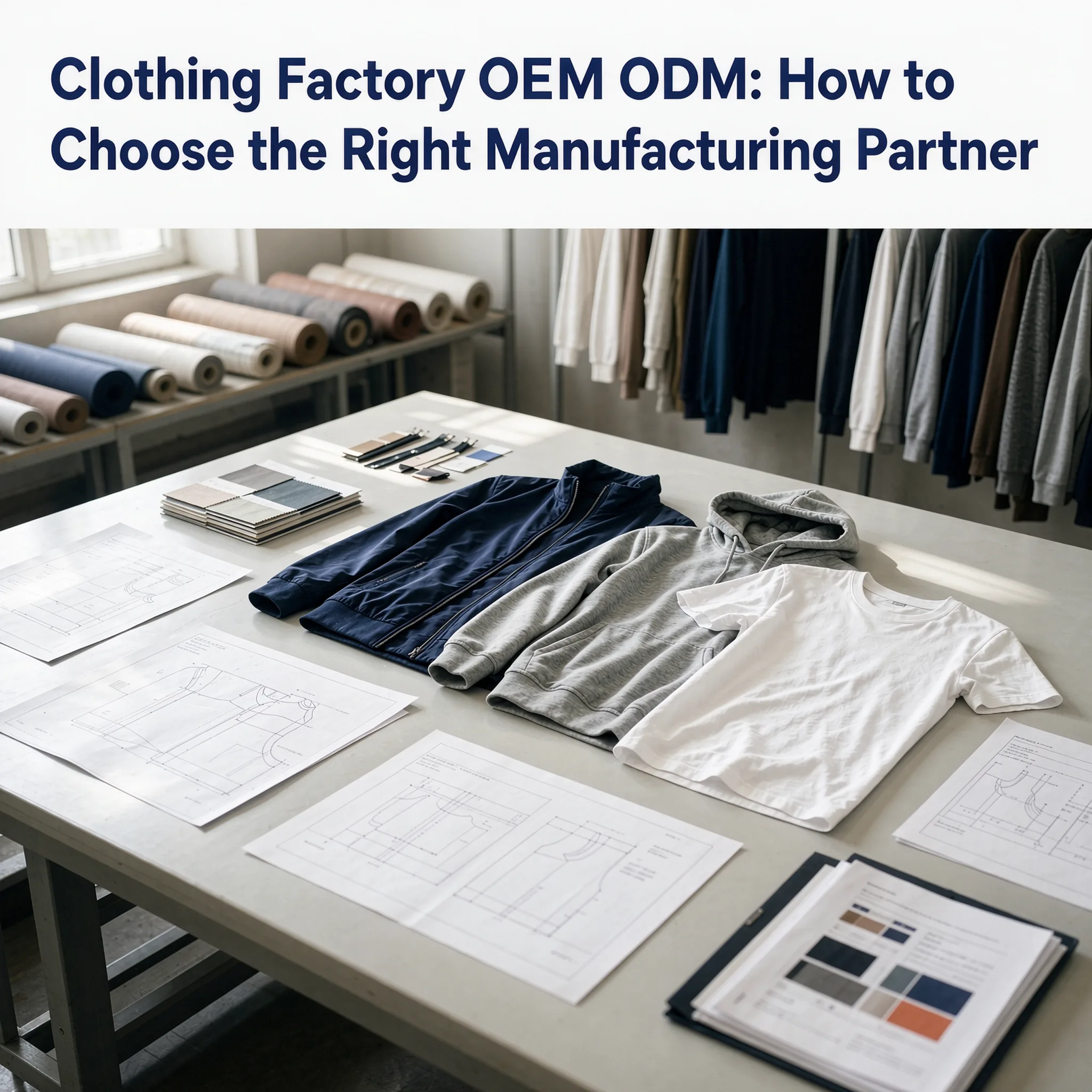
Looking for a clothing factory for OEM or ODM production? Learn the key differences, development process, factory capabilities, and questions to ask before placing an order.
Memilih sebuah clothing factory for OEM ODM production depends on how much of your product is already developed and how much support you need from the manufacturer. OEM usually starts with buyer-defined specifications, while ODM involves more manufacturer support in product development. The right factory should be able to turn your design or product idea into an approved sample and then reproduce it consistently in bulk.
1. What Does a Clothing Factory OEM ODM Mean?
A clothing factory offering OEM and ODM services supports brands through different levels of product development and manufacturing.
1.1 What Is OEM Clothing Manufacturing?
OEM stands for Original Equipment Manufacturing.
With OEM, the brand usually provides the product specifications. These can include:
- Paket teknis
- Design drawings
- Pengukuran
- Kebutuhan kain
- Referensi warna
- Construction details
- Hiasan
- Labels and packaging
The factory then develops samples and manufactures the approved product.
OEM is often suitable when a brand already has a clear product concept and wants strong control over the finished garment.
1.2 What Is ODM Clothing Manufacturing?
ODM stands for Original Design Manufacturing.
In an ODM project, the manufacturer takes a more active role in product development.
A buyer may start with:
- A product concept
- Gambar referensi
- A sketch
- An existing garment
- A mood board
- Fabric preferences
- A target price
The manufacturer may then assist with fabric selection, pattern development, sampling, fit adjustments, and production preparation.
This makes ODM useful for brands that have a clear market direction but do not have a complete technical package.
2. OEM vs ODM Clothing Factory: What Is the Difference?
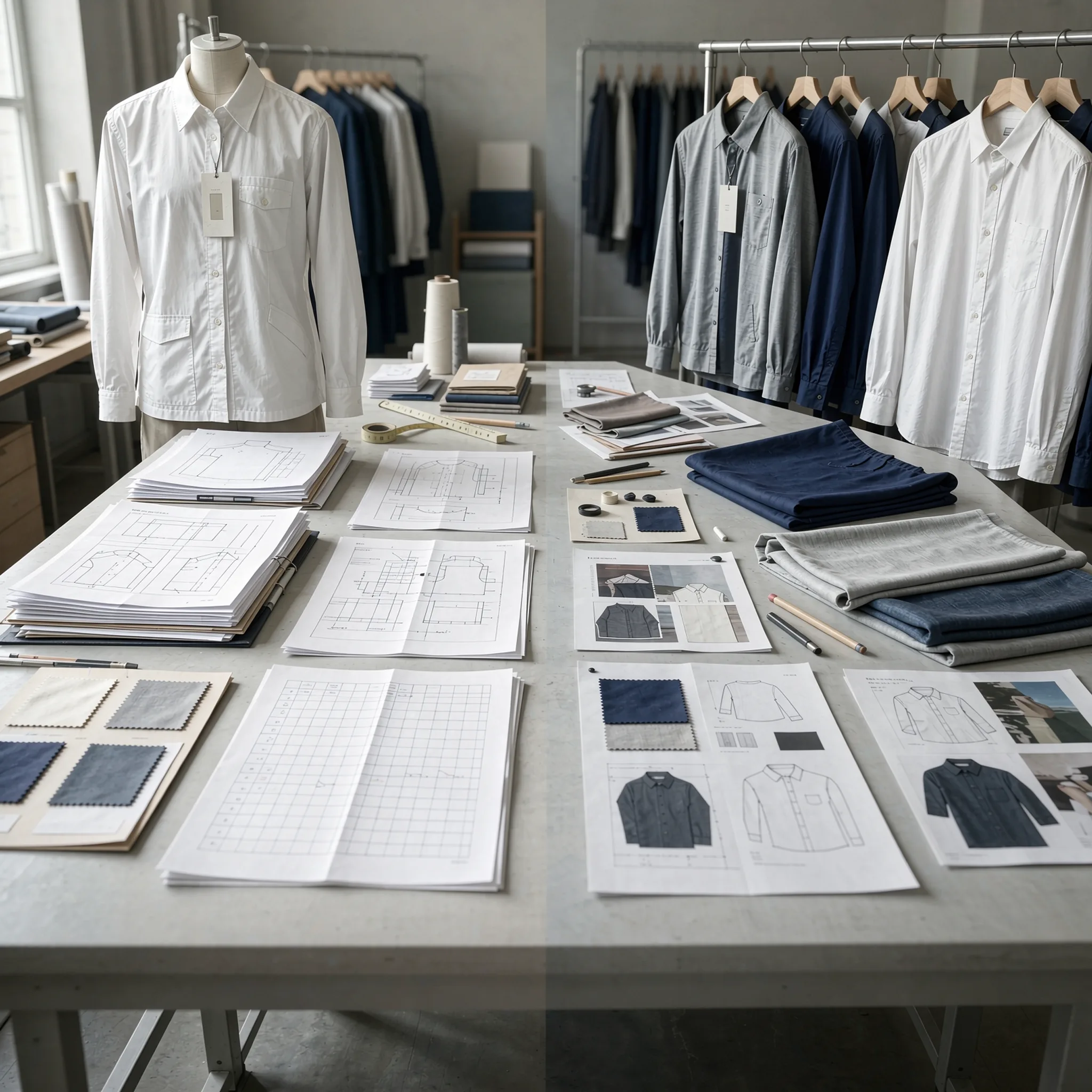
The main difference is where product development starts and how much responsibility the manufacturer takes.
| Faktor | OEM Clothing Factory | ODM Clothing Factory |
|---|---|---|
| Starting point | Buyer specifications | Product idea or reference |
| Design input | Mainly buyer-led | More manufacturer involvement |
| Tech pack | Usually available | May be incomplete |
| Pengembangan pola | Based on specifications | Factory may support |
| Pemilihan kain | Buyer-defined or specified | Factory may recommend |
| Pengambilan sampel | Specification-based | Development-based |
| Development workload | Higher for buyer | Higher for manufacturer |
| Product differentiation | High potential | Depends on customization |
| Best suited for | Defined products | Brands needing development support |
Neither model automatically means better quality. OEM and ODM describe the manufacturing relationship, not a quality certification. A factory still needs the right technical capabilities, production controls, and quality process.
3. When Should You Choose an OEM Clothing Factory?
OEM is generally a practical choice when your product is already well defined.
For example, imagine a sportswear brand developing a performance jacket.
The brand already has:
- A complete tech pack
- Komposisi kain
- GSM requirement
- Measurement chart
- Zipper specification
- Pocket construction
- Color standards
- Logo placement
In this situation, the main challenge is not creating the product concept. It is producing the garment accurately and consistently.
An experienced OEM factory should therefore be able to interpret the specifications, develop samples, identify production issues, and manufacture the approved design at scale.
4. When Is an ODM Clothing Factory More Suitable?
ODM can be more practical when the product concept is clear but the technical details are not complete.
For example, a new outdoor brand may want to launch a lightweight fleece jacket.
The brand knows:
- Its target customer
- Desired price range
- General style
- Color direction
- Intended use
But it does not yet know the best fabric weight, construction, pocket design, or pattern.
An ODM manufacturer can contribute technical knowledge during development.
The process may include:
Product idea → Material recommendation → Pattern development → Sample → Fit adjustment → Final approval → Bulk production
This can reduce the amount of technical development the buyer needs to manage internally.
5. What Should a Good OEM ODM Clothing Factory Be Able to Do?
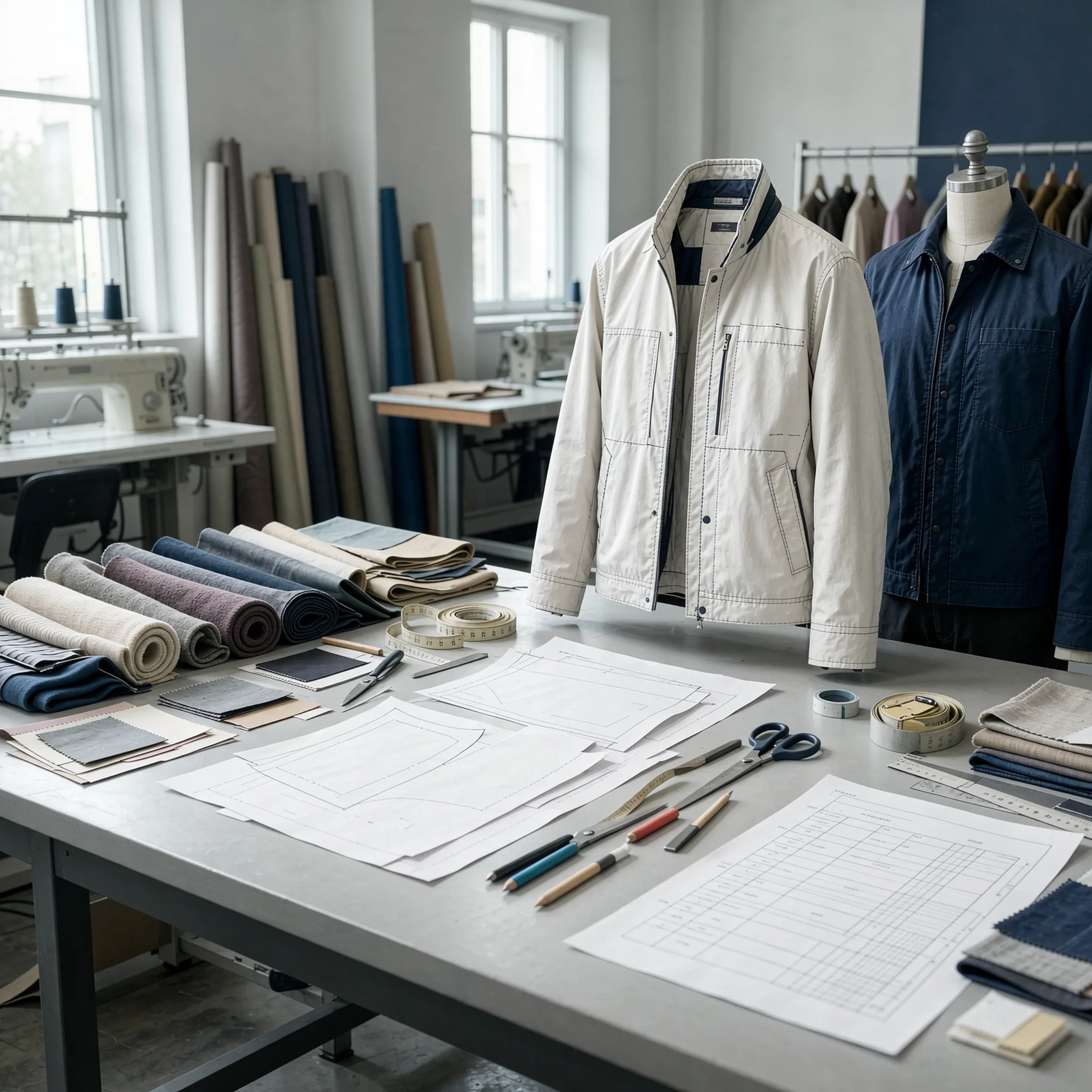
Do not evaluate a manufacturer only by its product photos.
Look at the complete development and production process.
5.1 Fabric and Material Development
A capable factory should understand how material choices affect:
- Berat pakaian
- Tekstur saat disentuh
- Pas
- Ketahanan
- Penyusutan
- Konstruksi
- Final cost
For example, changing from a lightweight fabric to a heavier fabric can affect not only the garment's feel but also pattern measurements, sewing requirements, and material consumption.
5.2 Pattern Making and Sample Development
A production-ready sample should be more than a visual prototype.
The factory should check:
- Pengukuran
- Pas
- Konstruksi
- Seam placement
- Fabric behavior
- Hiasan
- Rincian fungsional
Sample approval is an important control point before bulk production.
5.3 Bulk Production
After sample approval, the factory needs to reproduce the approved specifications consistently.
This includes:
- Persiapan bahan
- Pemotongan
- Menjahit
- Penyelesaian
- Pemeriksaan
- Pengemasan
The goal is not simply to make one good sample. The goal is to make the same product repeatedly at commercial volume.
6. How to Evaluate a Clothing Factory Before Ordering
Before choosing an OEM ODM clothing manufacturer, ask practical questions rather than relying only on marketing claims.
6.1 Ask About Product Development
Find out:
- Do you provide pattern making?
- Can you develop samples from sketches?
- Can you work from reference garments?
- Can you recommend fabrics?
- How many sample revisions are normally required?
6.2 Ask About Production
Periksa:
- What apparel categories do you produce?
- What fabrics can you handle?
- Berapa jumlah pesanan minimum (MOQ) Anda?
- What production capacity is available?
- How is quality inspected?
- How are approved samples controlled during production?
6.3 Ask About Communication
A good manufacturing process requires clear information exchange.
Your supplier should be able to confirm:
- Spesifikasi produk
- Sample changes
- Material approvals
- Jadwal produksi
- Quality requirements
- Persyaratan pengemasan
A factory that cannot clearly document these details can create problems later, even if its initial quotation looks attractive.
7. What Should You Send When Requesting an OEM or ODM Quote?
A detailed inquiry helps the factory evaluate your project more accurately.
For OEM production, prepare as much of the following as possible:
- Tech pack
- Design drawings
- Komposisi kain
- GSM
- Referensi warna
- Size chart
- Spesifikasi trim
- Logo requirements
- Perkiraan jumlah
For ODM development, you can start with less information:
- Kategori produk
- Gambar referensi
- Arah desain
- Pasar sasaran
- Target quantity
- Harga target
- Fabric preferences
- Required functions
- Expected launch date
The more specific the information, the easier it is for a factory to estimate development requirements and production feasibility.
8. OEM, ODM, or a Hybrid Approach?
Not every clothing project fits neatly into one category.
A brand may start with an existing ODM style but request:
- A different fabric
- A new color
- Custom measurements
- Modified pockets
- Different trims
- Custom branding
This creates a hybrid development process.
For example, a brand could use an existing garment block to reduce development time while changing the fabric, fit, construction, and branding to create a more distinctive product.
The important question is not simply whether a factory calls itself OEM or ODM.
Tanyakan:
How much of the product can the factory develop, customize, manufacture, and control according to your requirements?
9. A Simple Checklist for Choosing an OEM ODM Clothing Factory
Before sending an order, check these areas:
| Area | What to Verify |
|---|---|
| Produk | Relevant manufacturing experience |
| Perkembangan | Pattern and sample capabilities |
| Bahan-bahan | Fabric sourcing and technical knowledge |
| MOQ | Minimum quantity per style/color |
| Kualitas | Inspection and approval process |
| Produksi | Capacity and production planning |
| Komunikasi | Clear technical confirmation |
| Branding | Labels, printing, embroidery, packaging |
| Pengiriman | Realistic production schedule |
| After-sales | Support for repeat orders and adjustments |
A factory that matches your product requirements is generally more useful than one that simply offers the lowest quotation.
10. How the OEM ODM Clothing Process Usually Works
A typical project follows these stages:
1. Project Brief
Share your product requirements and target quantity.
2. Technical Review
The factory evaluates materials, construction, measurements, and production feasibility.
3. Development
Patterns, fabrics, trims, and samples are developed or adjusted.
4. Sample Approval
The buyer reviews fit, measurements, construction, color, and details.
5. Bulk Production
The approved specifications are transferred to production.
6. Quality Inspection
Finished garments are inspected against agreed requirements.
7. Packing and Delivery
Products are packed and prepared for shipment.
This workflow applies to both OEM and ODM projects, although the amount of manufacturer involvement changes between stages.
11. What Makes an OEM ODM Factory a Long-Term Partner?
The strongest manufacturing relationship is usually built around repeatable processes rather than a single successful order.
For repeat production, useful records can include:
- Approved samples
- Measurement specifications
- Fabric information
- Trim details
- Referensi warna
- Production notes
- Quality requirements
These records make future reorders and product updates easier to manage.
For brands developing multiple collections, a manufacturer that can support both product development and bulk production can also reduce the need to coordinate separate suppliers.
12. Final Takeaway
When searching for a clothing factory OEM ODM, do not compare factories only by price or product catalogs.
First determine how much of your product is already developed.
Choose an OEM-focused process when you have detailed specifications and need accurate manufacturing execution. Choose ODM when you need more support with product development. Use a hybrid approach when you want to build on an existing product framework but still require meaningful customization.
Then evaluate the factory's actual capabilities in fabric sourcing, pattern making, sampling, quality control, bulk production, communication, and repeat-order management.
The best starting point for a supplier inquiry is simple: send your product idea, reference materials, expected quantity, target market, and development requirements. A capable factory can then tell you what information is needed for the next step.











