




Produsen Merchandise: Cara Memilih Mitra Pakaian yang Tepat untuk Merek Anda
Tanggal penerbitan:2026-09-08 Kategori:BERITA Jumlah tampilan:583
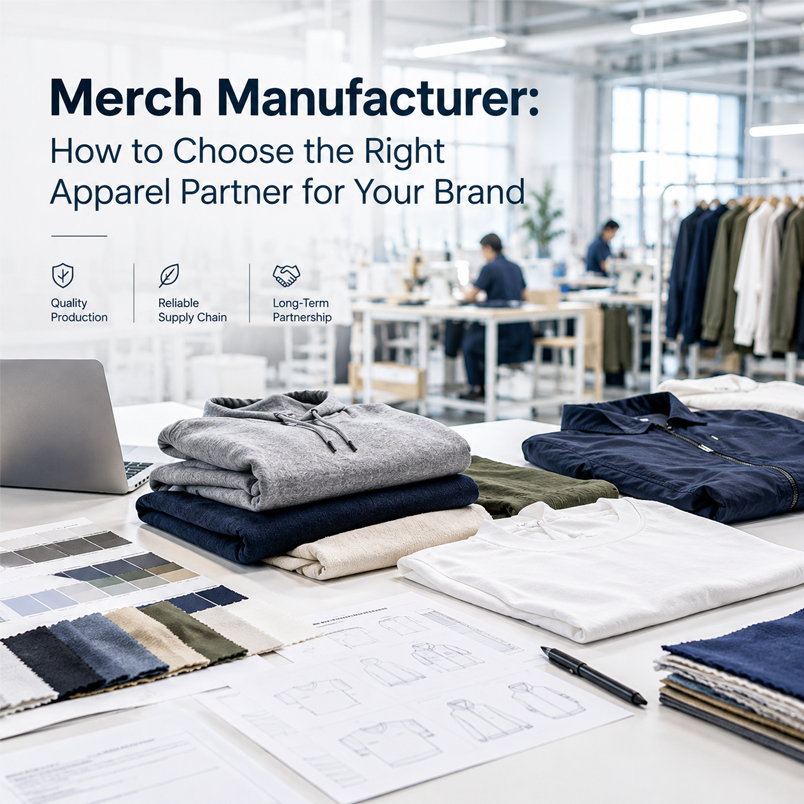
Introduction
Merchandise has become an important part of many modern brands.
Musicians, creators, sports organizations, events, businesses, lifestyle brands, and online communities can all use apparel merchandise to build brand recognition and create an additional revenue stream.
But successful merchandise production involves much more than putting a logo on a T-shirt.
The choice of garment, fabric, fit, decoration method, quantity, packaging, and production partner can all influence the final product.
Working with the right merch manufacturer can help brands move from a simple graphic concept to a commercially usable apparel product.
This guide explains what brands should consider when selecting an apparel manufacturing partner for merchandise production.
1. What Is a Merch Manufacturer?
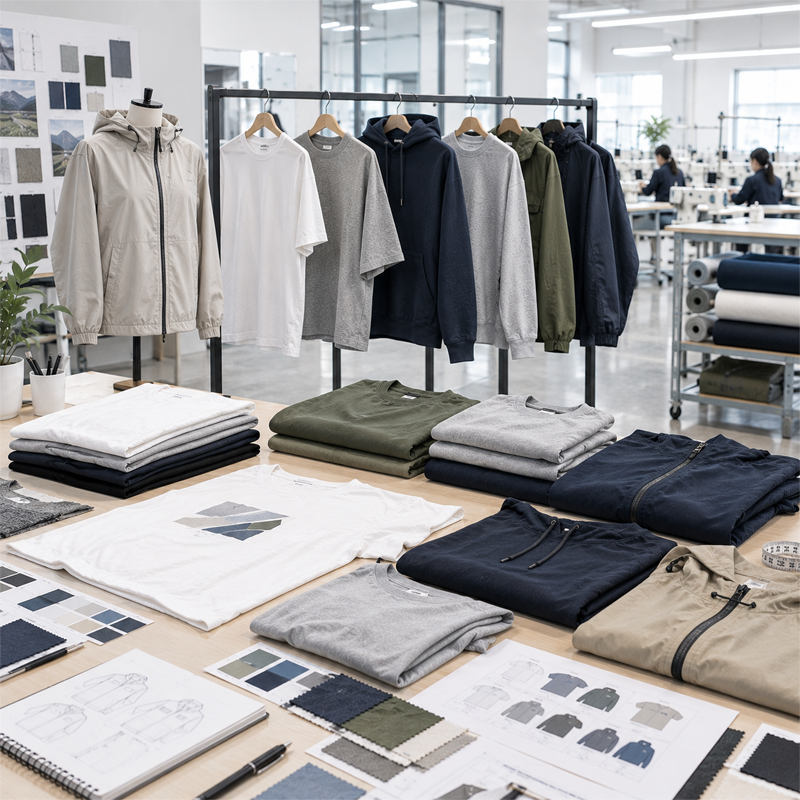
A merch manufacturer is an apparel production partner that helps brands or organizations turn merchandise concepts into physical products.
Merchandise can include:
- T-shirts
- Hoodies
- Sweatshirts
- Jackets
- Caps
- Tote bags
- Teamwear
- Lifestyle apparel
- Event merchandise
The exact product range depends on the manufacturer's capabilities.
A merch manufacturer may provide different levels of service, from basic garment production to more complete product development involving fabric selection, pattern development, sampling, decoration, production, inspection, and packing.
For brands that want more control over the final product, a manufacturing partner with development capabilities can be more useful than a simple decoration supplier.
2. Who Needs a Merch Manufacturer?
Many types of organizations can require custom merchandise.
Clothing Brands
Emerging apparel brands may use merchandise-style products to test new designs or build collections.
Musicians and Creators
Artists and creators can develop apparel around tours, releases, communities, or personal branding.
Sports Organizations
Clubs and teams can produce branded apparel for members and supporters.
Companies
Businesses can develop employee apparel, promotional clothing, event garments, or branded lifestyle products.
Acara
Conferences, festivals, campaigns, and other events may need custom apparel in larger quantities.
Online Communities
Digital communities can transform online identity into physical merchandise through custom apparel.
Each customer may have different requirements, which makes product development flexibility important.
3. Merchandise Is More Than a Logo
One common mistake is to think of merchandise as a standard blank garment with artwork added afterward.
While this approach can work for simple projects, custom manufacturing provides much more flexibility.
A brand can control:
- Kain
- Berat pakaian
- Pas
- Silhouette
- Konstruksi leher
- Sleeve shape
- Warna
- Label
- Dekorasi
- Kemasan
For example, two black T-shirts can have completely different market positioning depending on fabric weight, fit, construction, finishing, and artwork.
This is why brands should define the complete product concept rather than only the graphic.
4. Choosing the Right Merchandise Product
The first manufacturing decision is often the product category.
Different merchandise products communicate different brand messages.
T-Shirts
T-shirts are versatile and suitable for many types of merchandise programs.
Hoodies
Hoodies can offer a heavier, more substantial product and are widely used for lifestyle merchandise.
Sweatshirts
Sweatshirts provide another option for casual collections and seasonal merchandise.
Jackets
Jackets can create higher-value merchandise and provide additional opportunities for custom construction and branding.
Outdoor Apparel
For outdoor-focused brands and communities, functional jackets or other outdoor garments may be more appropriate.
The product should match both the brand identity and the customer's expectations.
5. Fabric Selection for Merchandise
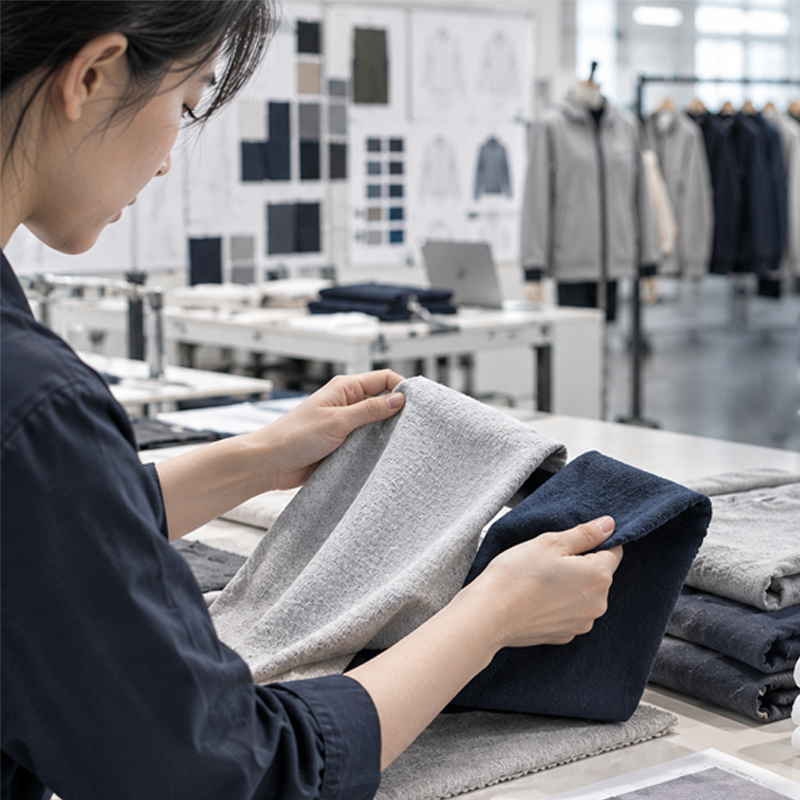
Fabric strongly affects how merchandise feels and performs.
Important characteristics may include:
- Berat
- Komposisi serat
- Tekstur saat disentuh
- Peregangan
- Sirkulasi udara
- Ketahanan
- Surface appearance
- Penyusutan
- Color performance
For example, a premium streetwear brand may prefer a heavier fabric with a structured silhouette, while an event T-shirt may prioritize lighter weight and cost efficiency.
There is no single fabric that is ideal for every merchandise project.
The manufacturer should evaluate fabric together with garment construction and intended use.
6. Choosing the Right Fit
Fit has become increasingly important in branded merchandise.
Common approaches include:
- Regular fit
- Relaxed fit
- Oversized fit
- Athletic fit
- Unisex fit
- Women's-specific fit
Brands should define the intended silhouette before sample development.
Measurements should also be documented through a size specification.
A useful tech pack may include:
- Chest width
- Panjang tubuh
- Lebar bahu
- Panjang lengan
- Sleeve opening
- Neck width
- Hem width
The actual measurement points should be agreed upon with the manufacturer to ensure consistency.
7. Customization and Decoration Methods
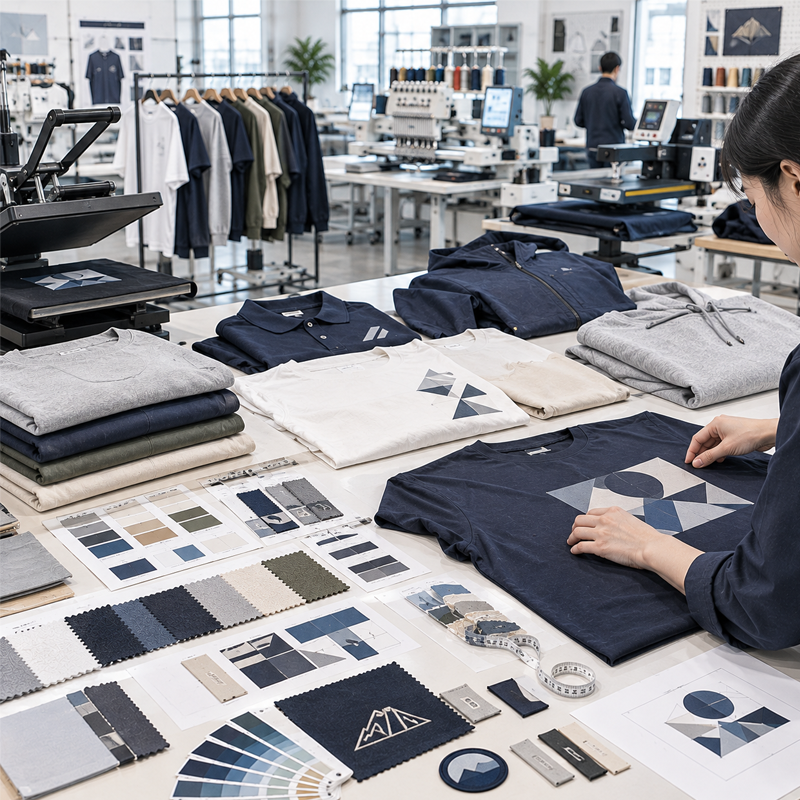
The decoration method should be selected according to the garment and artwork.
Screen Printing
Screen printing can be suitable for many graphic merchandise applications.
Sulaman
Embroidery can provide a textured finish and is often considered for logos, badges, and smaller designs.
Heat Transfer
Heat transfer can be useful for certain names, numbers, and detailed graphics.
Sublimation
Sublimation can be considered for certain synthetic fabrics and all-over graphic applications.
Sewn Details
Woven labels, patches, and other sewn elements can create additional branding opportunities.
The manufacturer should evaluate the artwork and fabric before confirming the final decoration method.
8. Why Sampling Is Essential
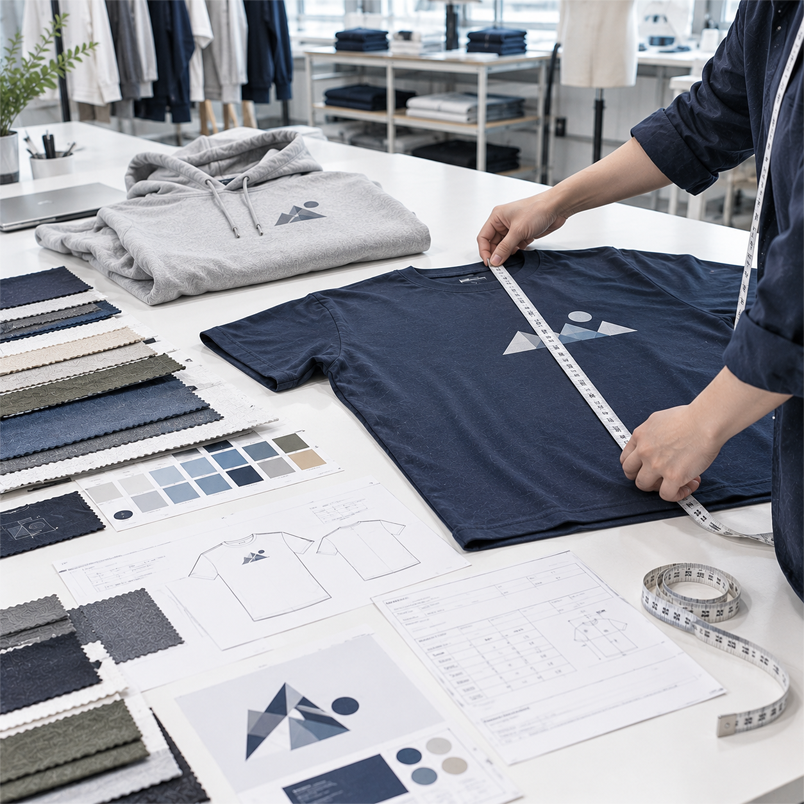
A digital mockup cannot fully represent the final physical garment.
A sample allows the brand to check:
- Kain
- Warna
- Pas
- Konstruksi
- Karya seni
- Dekorasi
- Label
- Hiasan
- Overall appearance
This is especially important when merchandise is intended for sale.
A sample provides an opportunity to identify problems before committing to a larger production run.
Brands should treat sample approval as a formal production milestone rather than as an optional step.
9. Building a Merch Collection
A merchandise program does not always need to consist of a single garment.
Brands can create a coordinated collection.
Misalnya:
Core: T-shirt
Mid-layer: Sweatshirt
Premium: Hoodie
Outer layer: Jaket
The products can share:
- Brand colors
- Graphic language
- Label
- Kemasan
- Design details
This can make a merchandise collection feel more intentional.
However, adding more styles also increases development and production complexity, so brands should begin with products that have a clear commercial purpose.
10. Quantity and MOQ Planning
Order quantity should be considered before production begins.
A merch manufacturer may establish MOQ requirements based on:
- Jenis produk
- Fabric color
- Pengadaan kain
- Custom construction
- Dekorasi
- Proses produksi
Small quantities may provide flexibility for market testing, while larger quantities can make production more efficient depending on the project.
Brands should also avoid producing more merchandise than they can realistically sell.
Inventory planning is particularly important for seasonal, event-specific, or time-sensitive merchandise.
11. Quality Control for Merchandise
When merchandise is sold to customers, quality directly affects the brand's reputation.
Quality control should cover the complete product.
Fabric Inspection
Check the fabric for appearance, consistency, defects, and specifications.
Measurement Inspection
Compare finished garments with the approved size specification.
Sewing Inspection
Look for skipped stitches, uneven seams, loose threads, and construction problems.
Decoration Inspection
Check print clarity, embroidery quality, positioning, and durability as applicable.
Color Inspection
Verify that production colors match the approved reference.
Final Appearance
Each garment should be inspected for visible defects before packing.
A clear quality standard should ideally be established before bulk production.
12. Packaging Is Part of the Merchandise Experience
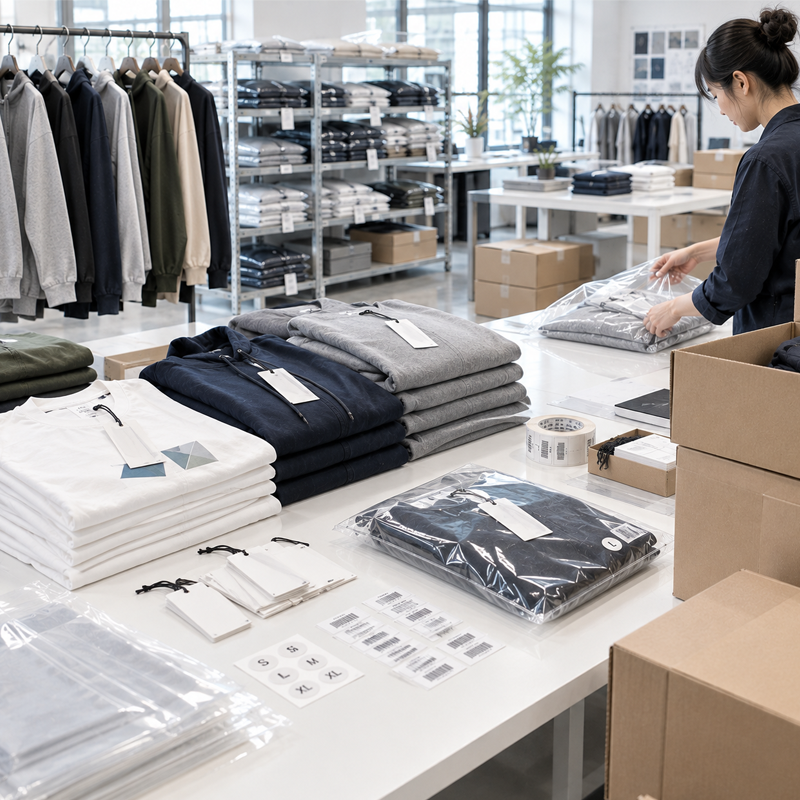
Packaging is sometimes overlooked during apparel development.
However, merchandise is often sold directly to consumers, making presentation important.
Packaging specifications can include:
- Individual polybags
- Size stickers
- Barcode labels
- Label gantung
- Brand labels
- Carton markings
- Folding method
- Assortment requirements
If the merchandise will be shipped directly to customers, packaging requirements should be discussed with the manufacturer before production begins.
13. What Should You Prepare Before Contacting a Merch Manufacturer?
A manufacturer can provide a more accurate assessment when the project information is complete.
Persiapan:
- Kategori produk
- Gambar referensi
- Design artwork
- Fabric preferences
- Color requirements
- Rentang ukuran
- Decoration method
- Jumlah
- Persyaratan pengemasan
- Target delivery date
If you have a technical pack, provide it as well.
If you do not have a complete tech pack, reference images and clear product requirements can still provide a starting point for discussion.
14. Questions to Ask a Merch Manufacturer
Before placing an order, brands should understand how the manufacturer works.
Useful questions include:
- What apparel categories do you manufacture?
- Can you develop custom garments?
- What fabrics can you provide?
- Can you make pre-production samples?
- What decoration methods are available?
- What are your MOQ requirements?
- How is quality inspected?
- What information is needed to start development?
- What is the expected production lead time?
- Can you support repeat production?
These questions help brands compare manufacturing partners based on capability rather than price alone.
15. Price Should Not Be the Only Factor
A lower unit price can appear attractive, but it does not necessarily represent lower total project cost.
Problems during production can result in:
- Rejected garments
- Rework
- Delayed launches
- Additional shipping costs
- Excess inventory
- Customer complaints
A manufacturer that provides clearer communication, accurate sampling, and consistent production may create greater value even if its initial quotation is not the lowest.
For merchandise brands, reliability can be as important as unit price.
16. Working With a Merch Manufacturer Long Term
Once a brand finds a suitable manufacturer, building a consistent working process can make future orders easier.
Keep approved records for:
- Fabrics
- Warna
- Pengukuran
- Patterns
- Karya seni
- Decoration specifications
- Label
- Kemasan
- Standar kualitas
This creates a production reference for future orders.
For repeat merchandise programs, maintaining consistent specifications can also help reduce unnecessary redevelopment.
17. How KALAIBEN Fits Into Apparel Manufacturing
KALAIBEN describes itself as an integrated industry and trade company specializing in weaving and knitted garments. Its company profile states that its primary products include knitted and woven casual garments and outdoor sportswear.
The company profile also describes a Jiangxi production base covering approximately 30 acres with around 26,000 square meters of construction area and more than 380 employees. It reports annual garment production capacity of approximately 700,000–1,000,000 pieces.
Its knitting operation is described as having more than 30 employees and equipment including high-speed single-sided machines, double-sided machines, terry machines, fleece machines, sweatshirt machines, and rib machines for producing knitted fabrics.
For brands developing merchandise, these capabilities can provide a foundation for discussing different knitted and woven apparel projects.
Specific production feasibility, MOQ, sampling requirements, and lead times should be confirmed according to each individual project.
18. When Should You Start Working With a Manufacturer?
Ideally, manufacturing should be considered before the final design is completed.
A manufacturer can help identify potential issues related to:
- Fabric availability
- Konstruksi pakaian
- Dekorasi
- Penentuan Ukuran
- Production quantity
- Cost
- Pengambilan sampel
- Waktu tunggu
Early communication can prevent a design from being developed around specifications that are difficult or expensive to manufacture.
A practical development sequence is:
Concept → Product Specification → Fabric → Sample → Revision → Approval → Bulk Production → Inspection → Packing
This workflow gives brands clear checkpoints throughout the project.
19. Common Merch Manufacturing Mistakes
Several mistakes occur repeatedly in custom merchandise projects.
Designing Without Considering Production
A graphic or silhouette may look good digitally but be difficult to manufacture.
Skipping the Sample
This can create problems that only become visible during bulk production.
Choosing Fabric Only by Price
The cheapest fabric may not provide the desired customer experience.
Ordering Too Much
Excess merchandise can tie up cash and storage space.
Providing Incomplete Artwork
Poor-quality or incomplete artwork can delay production.
Changing Specifications After Approval
Late changes can create additional costs and production delays.
Ignoring Packaging
Incorrect labels or packaging can create problems during fulfillment.
Avoiding these issues can make merchandise production significantly smoother.
20. Building Better Merchandise Through Better Manufacturing
A strong merch manufacturer should be more than a production vendor.
The best manufacturing relationships are built around clear communication and shared understanding of the product.
The brand brings:
- Creative direction
- Customer knowledge
- Brand identity
- Market positioning
The manufacturer contributes:
- Textile knowledge
- Konstruksi pakaian
- Pengambilan sampel
- Pengalaman di bidang produksi
- Pengendalian mutu
- Manufacturing coordination
When these two sides work together early, the final merchandise is more likely to reflect the original concept while remaining practical to produce.
Kesimpulan
Choosing the right merch manufacturer is an important decision for any brand developing custom apparel merchandise.
The right partner should be evaluated on more than price. Product development capability, fabric options, sampling, customization, quality control, communication, production capacity, and repeat-order support can all influence the success of a merchandise program.
Whether you are developing a small collection or a larger apparel merchandise program, start with a clear product specification and involve your manufacturing partner early.
A well-managed process can turn a simple merchandise idea into a consistent, commercially ready apparel product.











