




Produsen Pakaian Streetwear: Hal-hal yang Harus Diketahui Merek Sebelum Memulai Produksi
Tanggal penerbitan:2026-09-09 Kategori:BERITA Jumlah tampilan:584
Introduction
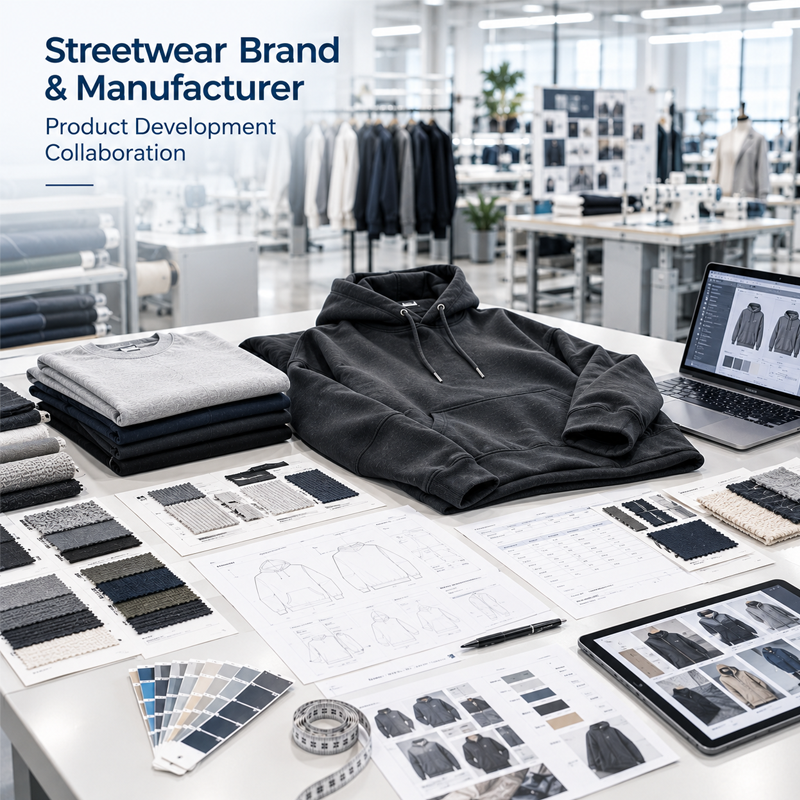
Memilih sebuah streetwear manufacturer is an important step for brands developing their own apparel collections.
Streetwear products often rely on distinctive silhouettes, fabric selection, graphics, labels, and construction details. A manufacturing partner therefore needs to do more than produce a standard garment.
The manufacturer needs to understand the relationship between design and production.
For brands preparing their first collection, knowing how the manufacturing process works can make supplier communication more efficient and reduce unnecessary development problems.
This article explains the major stages of working with a streetwear manufacturer and the factors brands should consider before placing a production order.
1. What Does a Streetwear Manufacturer Do?
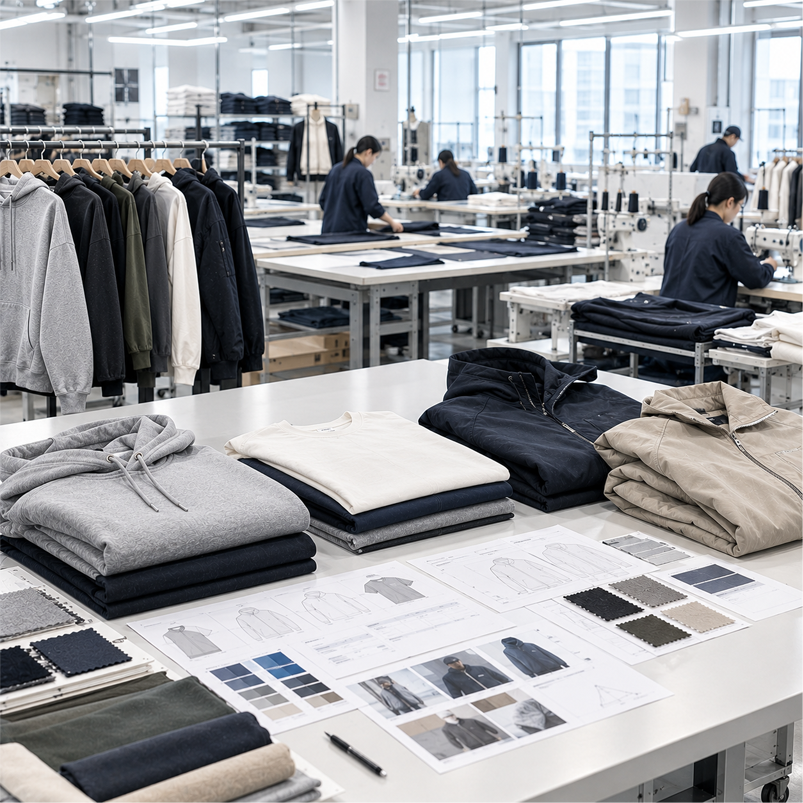
A streetwear manufacturer can support brands with the development and production of casual apparel designed around streetwear aesthetics.
Depending on the manufacturer, services may include:
- Pengadaan kain
- Product development
- Pattern making
- Pengembangan sampel
- Pemotongan
- Menjahit
- Pencetakan
- Sulaman
- Penyelesaian
- Pemeriksaan
- Pengemasan
Not every manufacturer provides exactly the same service range.
Therefore, brands should confirm the manufacturer's capabilities before starting a project.
2. What Products Can a Streetwear Manufacturer Produce?
A streetwear collection can contain many different garment categories.
Common examples include:
- T-shirts
- Hoodies
- Sweatshirts
- Fleece garments
- Jackets
- Overshirts
- Casual woven garments
- Outdoor-inspired apparel
Some brands may focus on one category, while others develop complete seasonal collections.
The manufacturer's experience should match the product categories you intend to produce.
3. Define the Product Before Asking for a Quote
A vague request such as "I need 500 hoodies" does not provide enough information for an accurate quotation.
A manufacturer will usually need to understand:
- Garment type
- Kain
- Berat
- Warna
- Rentang ukuran
- Konstruksi
- Karya seni
- Dekorasi
- Label
- Kemasan
- Jumlah
The more complete the product specification, the more meaningful the quotation becomes.
4. Choosing Streetwear Fabrics
Streetwear brands frequently place strong emphasis on fabric.
The fabric affects:
- Berat
- Drape
- Structure
- Tekstur saat disentuh
- Warmth
- Ketahanan
- Penampilan
- Harga
For example, a lightweight T-shirt and a heavyweight T-shirt can have completely different visual and commercial positioning even if they use the same basic silhouette.
Brands should therefore select fabric based on the intended product experience rather than simply choosing the lowest-cost option.
5. Why Heavyweight Fabric Is Popular in Streetwear
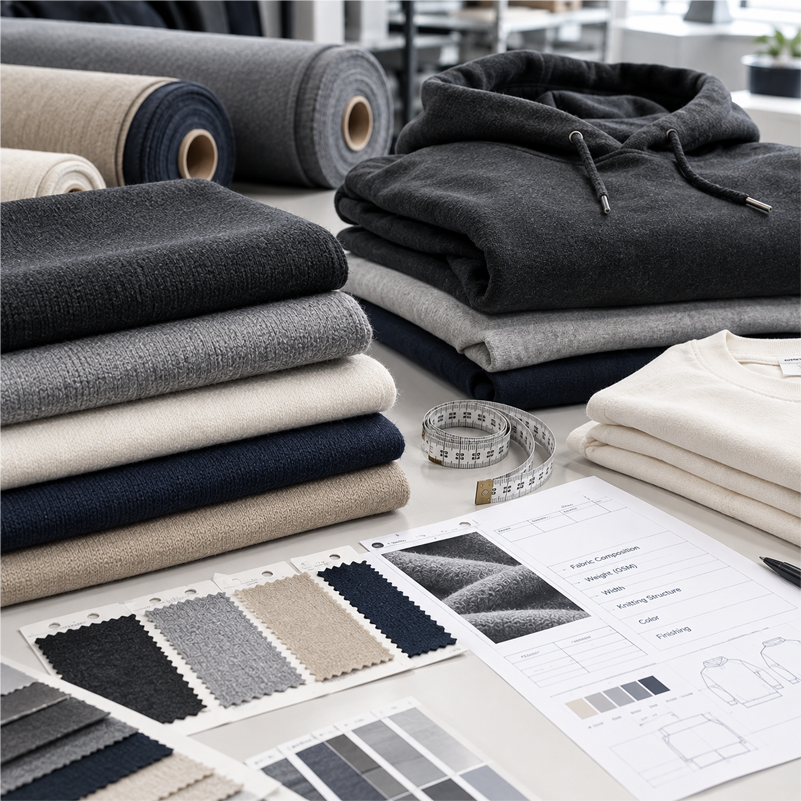
Heavyweight fabrics can create a more substantial garment appearance.
They can be useful for:
- Kaos berukuran besar
- Heavyweight hoodies
- Sweatshirts
- Structured casual apparel
However, heavier does not automatically mean better.
A suitable fabric should balance:
Weight + Hand Feel + Structure + Comfort + Durability + Cost
The manufacturer should help evaluate whether the selected fabric is appropriate for the intended garment construction.
6. Developing a Streetwear Silhouette
Streetwear often uses silhouettes that differ from conventional apparel.
Examples include:
- Oversized
- Relaxed
- Boxy
- Cropped
- Layered
- Dropped shoulder
The silhouette should be translated into measurable specifications.
Important measurements may include:
- Dada
- Bahu
- Panjang tubuh
- Panjang lengan
- Sleeve opening
- Hem
- Neck
A professional sample development process allows these measurements to be reviewed before bulk production.
7. Custom Details Create Product Identity
A streetwear garment may use relatively simple construction while still requiring multiple custom details.
Hal-hal tersebut antara lain:
- Label leher khusus
- Label tenun
- Sulaman
- Sablon
- Patch
- Custom drawcords
- Varian khusus
- Label gantung
- Kemasan
Each additional detail should be documented clearly.
This reduces ambiguity during production.
8. Artwork Preparation
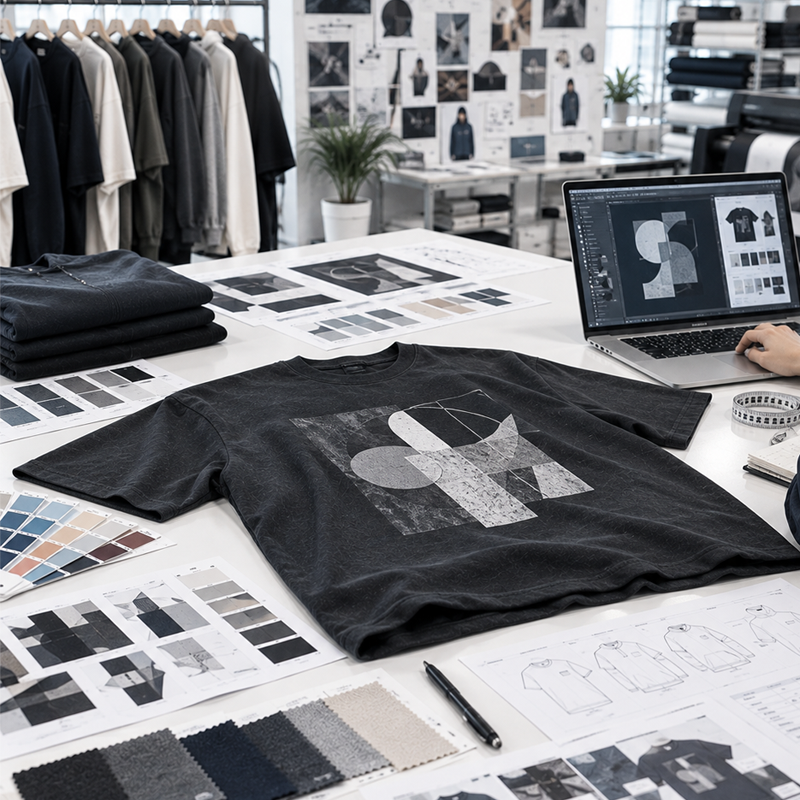
Graphic artwork is an important part of many streetwear products.
Before production, confirm:
- File format
- Ukuran karya seni
- Print location
- Print size
- Number of colors
- Referensi warna
- Decoration method
- Penempatan karya seni
A high-quality artwork file helps the manufacturer prepare the production process more accurately.
9. Sample Development
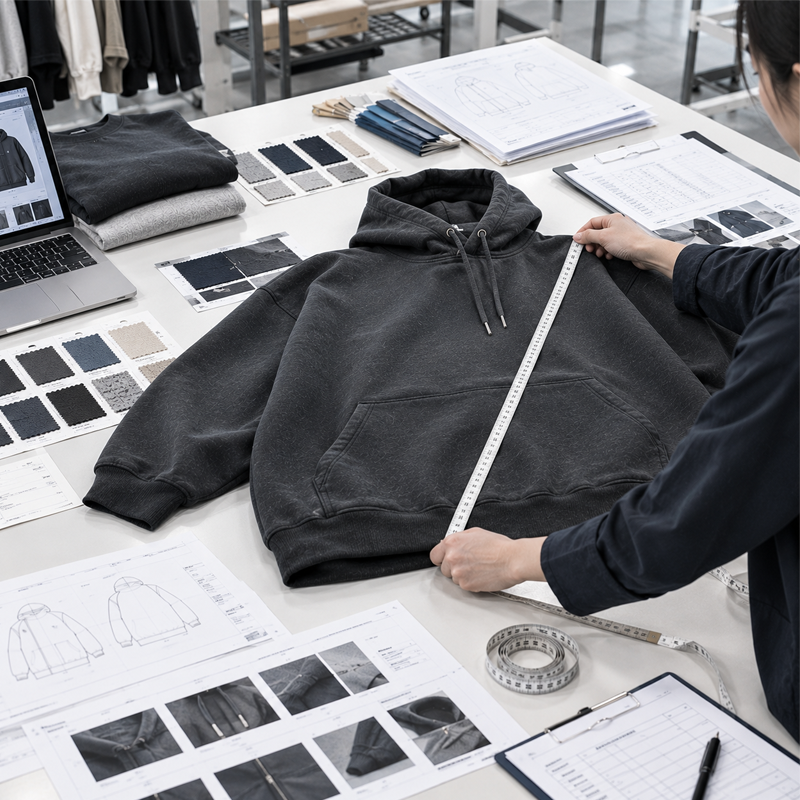
Sampling is one of the most important stages in streetwear manufacturing.
The sample should be used to confirm the actual product rather than simply demonstrate the graphic.
Periksa:
- Kain
- Warna
- Pas
- Pengukuran
- Konstruksi
- Dekorasi
- Label
- Hiasan
- Overall appearance
If revisions are necessary, provide consolidated feedback to the manufacturer.
Multiple scattered changes can make development slower and create confusion.
10. Fit Testing
Streetwear silhouettes often depend heavily on proportions.
For an oversized garment, for example, increasing the body width without adjusting the shoulder, sleeve, neck, and length proportions may produce an unbalanced result.
A proper fit review should therefore evaluate the complete garment.
If possible, test the sample on an appropriate wearer and compare it with the intended fit reference.
11. MOQ for Streetwear Production
MOQ means minimum order quantity.
The MOQ for a streetwear project may depend on:
- Style
- Kain
- Warna
- Custom construction
- Dekorasi
- Production requirements
Brands should confirm MOQ early.
If a first collection contains many styles and colors, the total production quantity can increase quickly.
A focused collection may be easier to manage during the initial launch.
12. Production Planning
Once a sample has been approved, production planning begins.
The manufacturer may need to coordinate:
- Kain
- Hiasan
- Label
- Karya seni
- Pemotongan
- Menjahit
- Dekorasi
- Penyelesaian
- Pemeriksaan
- Pengemasan
Each stage can influence the final delivery schedule.
Brands should therefore avoid leaving production planning until the last minute.
13. Quality Control
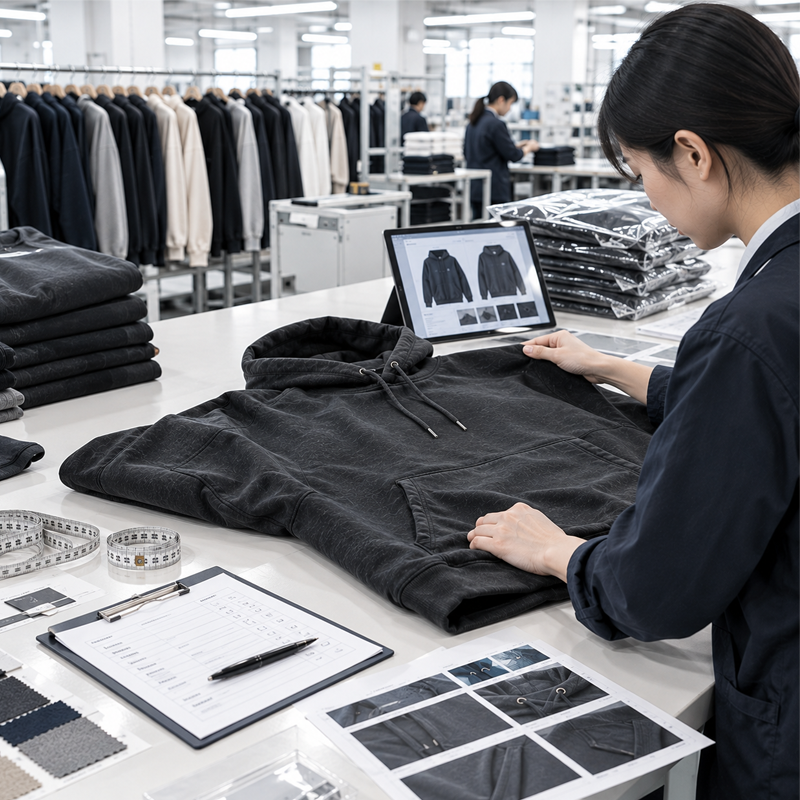
Quality control should be established before production begins.
A useful inspection system can review:
Kain
Appearance, weight, color, and defects.
Pengukuran
Finished garment measurements against approved specifications.
Menjahit
Seams, stitching, hems, cuffs, and construction.
Dekorasi
Prints, embroidery, patches, labels, and positioning.
Penampilan
Stains, loose threads, distortion, and other visible defects.
Pengemasan
Sizes, quantities, labels, folding, and carton information.
The exact inspection standard should be agreed upon according to the product.
14. Communication During Production
Good communication is especially important for custom apparel.
Brands should maintain a clear record of approved:
- Contoh
- Pengukuran
- Fabrics
- Warna
- Karya seni
- Label
- Kemasan
Whenever specifications change, the latest approved version should be clearly identified.
This helps prevent outdated information from being used during production.
15. How to Evaluate a Streetwear Manufacturer
A practical evaluation can include five major areas.
Product Capability
Can the manufacturer produce the garment categories you need?
Development Capability
Can they help turn references into samples?
Manufacturing Capability
Can they manage your expected quantity?
Quality Capability
Do they have a structured inspection process?
Communication Capability
Can they clearly communicate specifications, timelines, and production issues?
A manufacturer that performs well across these areas can be more valuable than a supplier selected solely for a low quotation.
16. Production Capacity and Factory Operations
KALAIBEN's company profile describes its Jiangxi production base as having more than 380 employees and annual garment production capacity of approximately 700,000–1,000,000 pieces. Its primary product categories include knitted and woven casual garments and outdoor sportswear.
The 2025 amfori BSCI monitoring report for Jiangxi KALAIBEN Textile Technology Co., Ltd. records production activities including cutting, sewing, ironing, inspection, and packing.
These facts illustrate the company's involvement across multiple stages of garment manufacturing. Specific capacity, lead time, MOQ, and product feasibility should still be evaluated for each individual order.
17. Why a Manufacturer Should Be Involved Early
Some brands contact a manufacturer only after every design decision has already been finalized.
That can create unnecessary problems.
Early manufacturer involvement can help identify potential issues involving:
- Fabric availability
- Konstruksi
- Dekorasi
- Cost
- MOQ
- Kelayakan produksi
- Waktu tunggu
This does not mean the manufacturer should control the creative direction.
Instead, early communication allows the creative concept and manufacturing reality to work together.
18. Managing Your First Streetwear Collection
New brands do not necessarily need a large collection.
A focused launch may be easier to manage.
Misalnya:
2–3 T-shirt designs + 1 hoodie + 1 outerwear style
can provide enough variety to test a brand concept without creating excessive inventory.
Once customer demand becomes clearer, the brand can expand into additional styles and seasonal products.
19. Building Repeat Production
If a product performs well, the brand may want to reorder it.
Repeat production becomes easier when the original specifications are properly documented.
Maintain records of:
- Approved pattern
- Kain
- Warna
- Pengukuran
- Karya seni
- Label
- Dekorasi
- Kemasan
- Quality standard
This documentation can become a product reference for future orders.
20. Common Mistakes to Avoid
No Clear Specification
The manufacturer has to guess important product details.
Skipping Sampling
Problems appear after bulk production starts.
Changing Designs Too Late
Late changes can affect cost and delivery.
Choosing Fabric Only by Price
The final garment may not achieve the intended positioning.
Ordering Too Much
Unsold inventory can create unnecessary financial pressure.
Ignoring Repeat Production
Without accurate records, future orders may not match the original product.
21. A Practical Streetwear Manufacturing Workflow
A clear workflow can be summarized as:
Brand Concept
↓
Product Specification
↓
Fabric Selection
↓
Pengembangan Sampel
↓
Fit & Quality Review
↓
Sample Revision
↓
Final Approval
↓
Bulk Production
↓
Pemeriksaan
↓
Packing & Delivery
This process gives both the brand and manufacturer clear checkpoints.
22. Choosing the Right Manufacturing Partner
The best streetwear manufacturer is not necessarily the largest factory or the cheapest supplier.
The right partner should match the brand's actual requirements.
Pertimbangkan:
- Kategori produk
- Kebutuhan kain
- Penyesuaian
- MOQ
- Pengembangan sampel
- Pengendalian mutu
- Komunikasi
- Kapasitas produksi
- Delivery requirements
- Kerja sama jangka panjang
A manufacturing relationship should be evaluated as a long-term business partnership rather than as a one-time transaction.
Kesimpulan
A reliable streetwear manufacturer can help transform a creative apparel concept into a consistent finished product.
For streetwear brands, important considerations include fabric, silhouette, construction, decoration, sampling, MOQ, quality control, production planning, and communication.
The process becomes much easier when brands prepare clear specifications and involve their manufacturing partner early.
Whether you are developing your first streetwear collection or expanding an established label, a structured manufacturing workflow can help reduce production risks and create more consistent products.











