




Custom Apparel OEM China: How to Turn Your Design Into Production-Ready Clothing
Data di pubblicazione:2026-10-08 Categoria:NOTIZIE Visualizzazioni:449
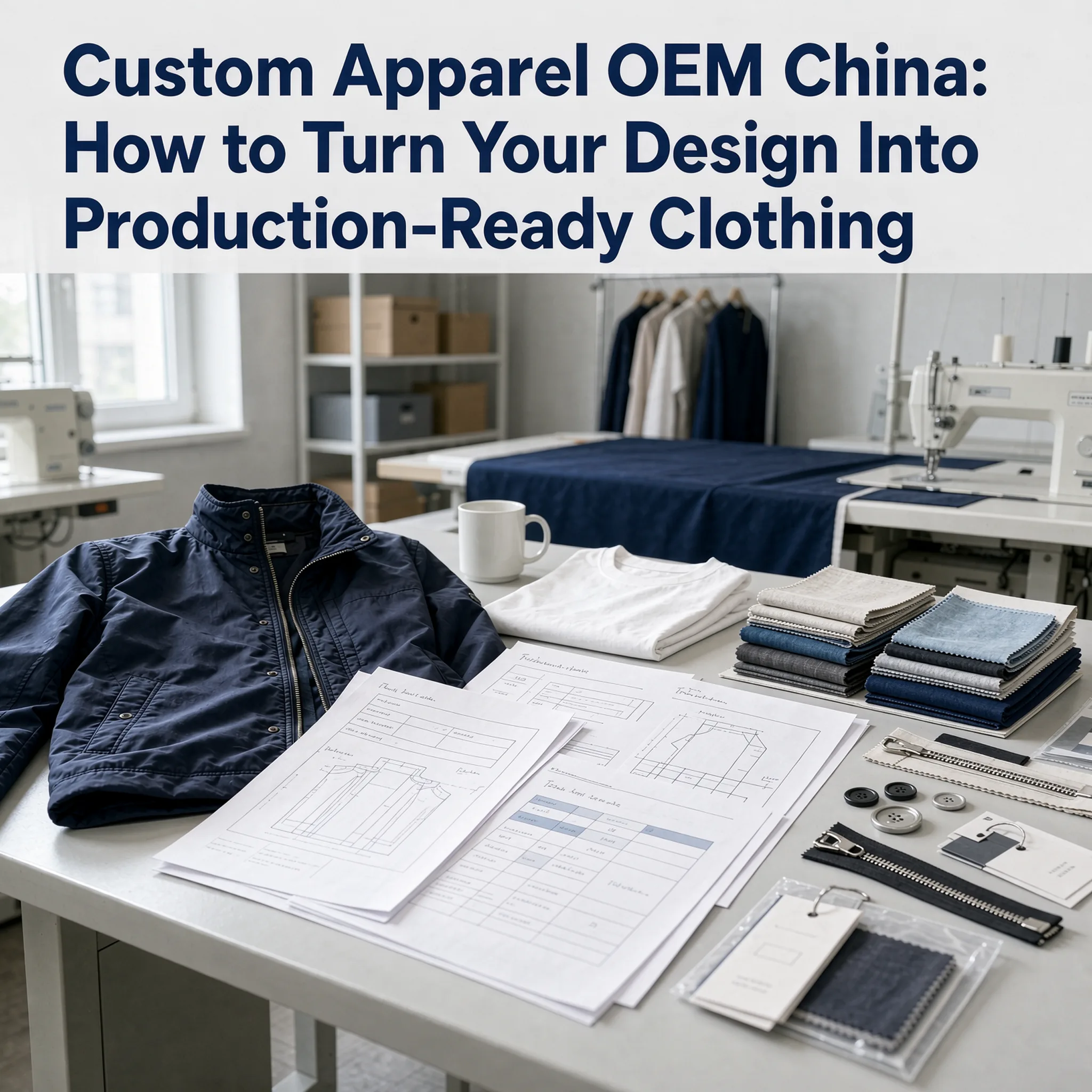
ooking for custom apparel OEM China services? Learn how to turn your design or tech pack into production-ready clothing, from fabric sourcing and sampling to quality control and bulk production.
Choosing a custom apparel OEM China manufacturer is not simply about finding a factory that can sew your garments. The real challenge is turning your design into a product that can be sampled accurately, produced consistently, and delivered at commercial quality.
A professional OEM process usually covers technical review, fabric sourcing, pattern development, sampling, customization, bulk production, and quality control. The better these stages are managed, the lower the risk of expensive mistakes during production.
1. What Does Custom Apparel OEM China Mean?
Custom apparel OEM means a clothing manufacturer produces garments according to a brand's own requirements.
You may provide:
- A complete tech pack
- Technical drawings
- A reference garment
- Product sketches
- Quantità di tessuto necessaria
- Measurement charts
- Branding specifications
The manufacturer then helps convert these requirements into a physical sample and, after approval, bulk production.
This differs from buying ready-made garments because the product is developed around your specifications rather than a factory's standard design.
2. What Can a China OEM Factory Customize?
The exact scope depends on the manufacturer, but custom apparel OEM can include:
Product Construction
- Fit and measurements
- Tasche
- Panels
- Collars
- Sleeves
- Closures
- Stitching details
Materials
- Composizione del tessuto
- GSM
- Colore
- Texture
- Performance characteristics
- Linings
Branding
- Woven labels
- Printed labels
- Etichette da appendere
- Ricamo
- Screen printing
- Heat transfers
- Custom packaging
Current China-based manufacturers commonly position fabric sourcing, pattern making, sampling, printing, embroidery, labeling, and packaging as part of their OEM/ODM offering.
The important point is to confirm the specific capabilities your product requires rather than assuming every OEM factory offers the same service.
3. Start With a Clear Product Brief
Before asking for a quotation, organize the information you already have.
A useful product brief should include:
| Information | Esempio |
|---|---|
| Prodotto | Lightweight fleece jacket |
| Tessuto | Polyester fleece |
| GSM | Target weight |
| Size | S–XXL |
| Colors | 3 colori |
| Quantità | Estimated order volume |
| Branding | Woven label + hang tag |
| Market | US / EU |
| Target date | Required launch period |
You do not need to have every detail finalized.
If something is undecided, mark it as a development point.
This is better than allowing the factory to make assumptions that later affect price, fit, or production.
4. What Happens After You Send Your Design?
A typical custom apparel OEM process looks like this:
Design / Tech Pack
↓
Technical Review
↓
Fabric & Trim Confirmation
↓
Pattern Development
↓
Sample Production
↓
Fit & Detail Revision
↓
Sample Approval
↓
Bulk Production
↓
Quality Inspection
↓
Packing & Shipment
This sequence is important because bulk production should be based on an approved product specification rather than an unfinished concept.
5. Why Fabric Selection Matters More Than You Think
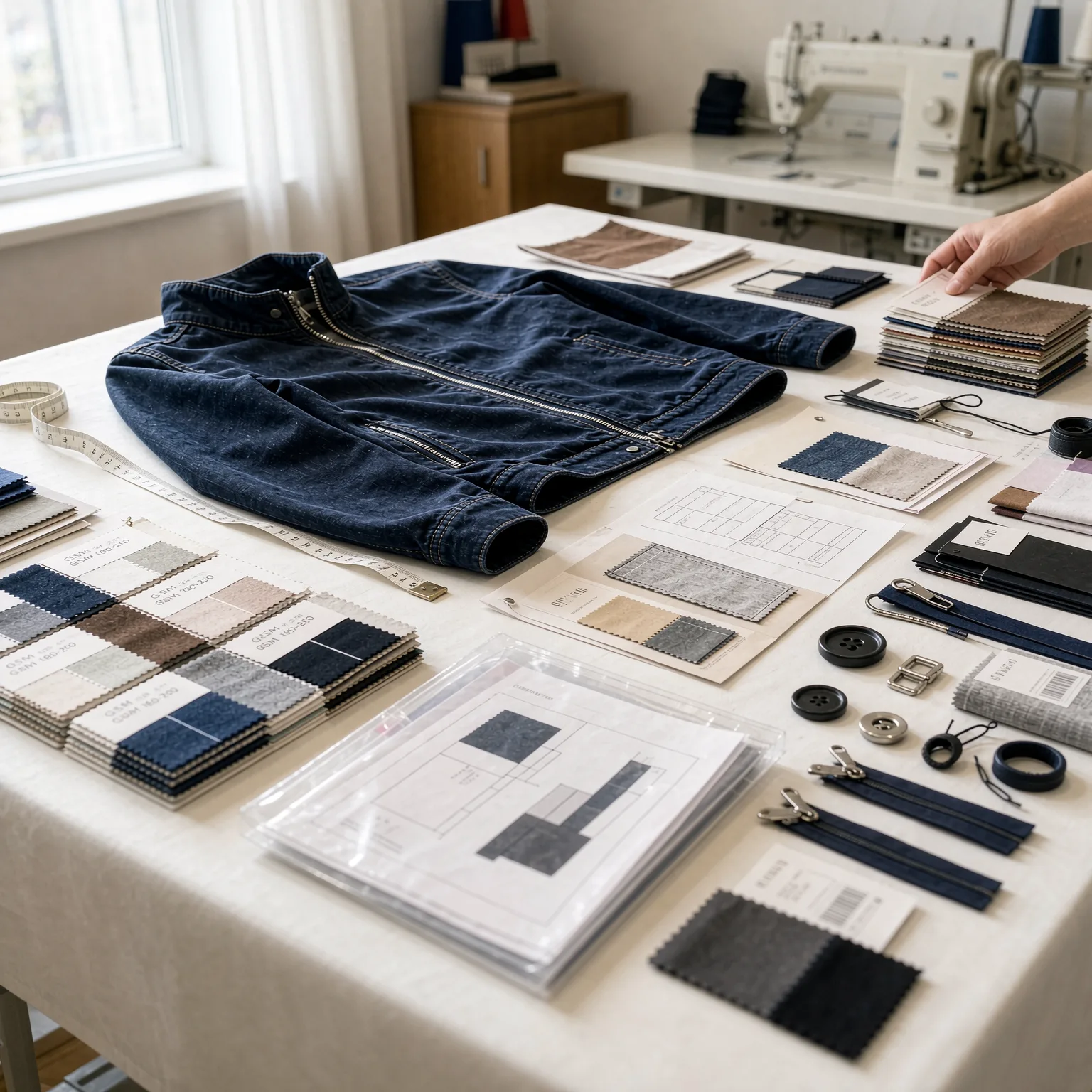
Two fabrics can look similar in a photograph but perform very differently in production.
Fabric selection can affect:
- Vestibilità
- Hand feel
- Garment weight
- Shrinkage
- Resistenza
- Sewing performance
- Cost
For example, changing a T-shirt from a lightweight jersey to a heavyweight fabric can affect not only the feel of the garment but also its drape, measurements, seam construction, and material consumption.
A capable OEM manufacturer should therefore discuss fabric performance and suitability, not only price.
6. Sample Development Is the Critical Checkpoint
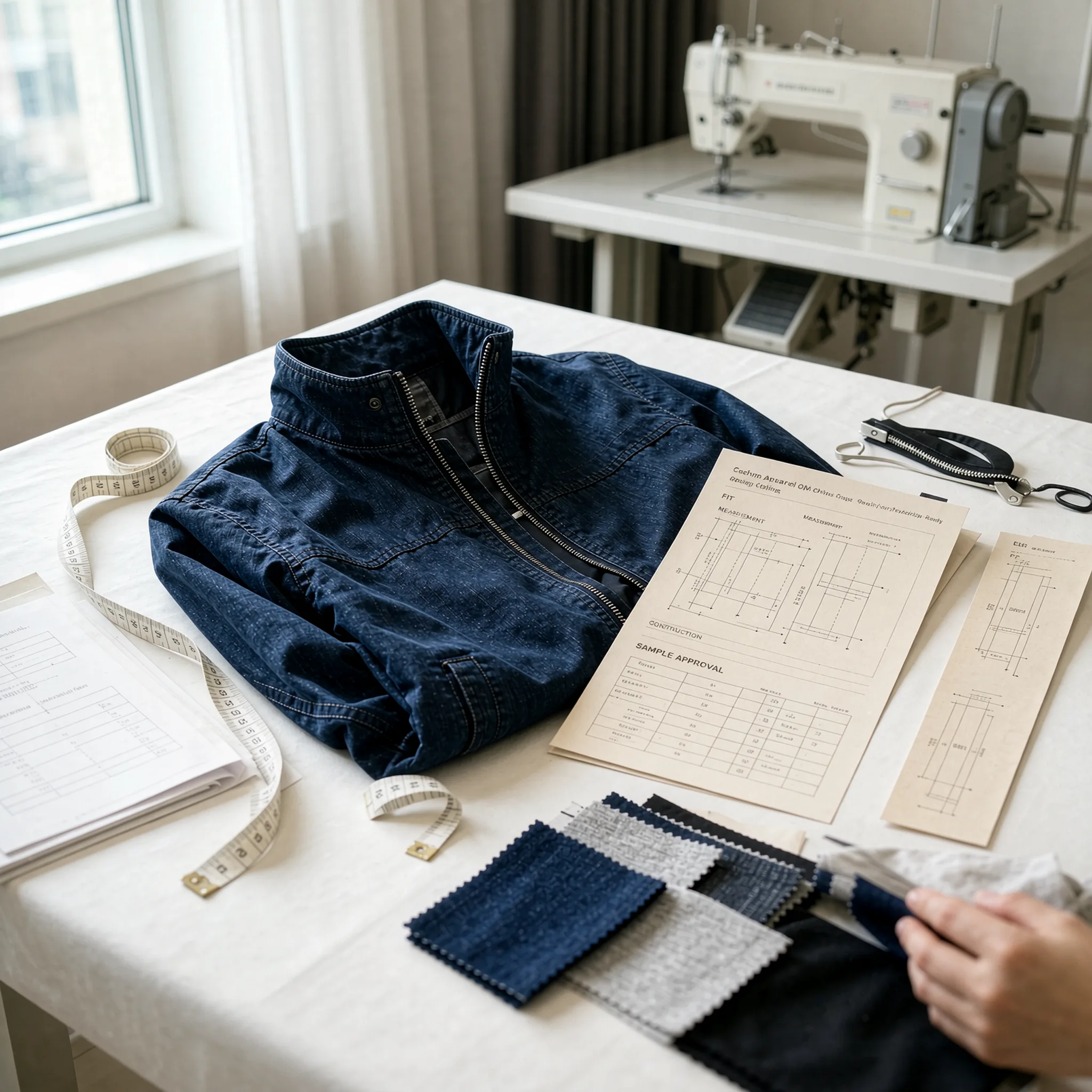
The first sample gives you the opportunity to test the product before committing to bulk production.
Controlla:
Vestibilità
Does the garment match the intended silhouette?
Misure
Compare critical points against the size chart.
Edilizia
Check seams, panels, pockets, closures, and reinforcement.
Materials
Confirm fabric composition, GSM, color, and hand feel.
Branding
Check label placement, artwork, embroidery, and printing.
If something is wrong, revise the sample before approving bulk production.
A small measurement or construction problem becomes much more expensive when repeated across an entire production run.
7. How to Evaluate a Custom Apparel OEM Factory
Do not evaluate a factory only from its product photos.
Look at five practical areas.
7.1 Technical Capability
Can the factory understand your tech pack and construction requirements?
7.2 Sampling Capability
Can it make accurate samples and handle revisions?
7.3 Material Capability
Can it source the required fabrics and trims?
7.4 Production Capability
Can it reproduce the approved sample consistently?
7.5 Quality Control
Does it check materials, production, measurements, and finished garments?
This matters because many manufacturers advertise “OEM/ODM,” but the actual scope of their services can differ significantly. Current competitor pages range from basic custom manufacturing to full-package services covering development, production, QC and export.
8. How Much Should You Order?
There is no universal MOQ for custom apparel OEM in China.
MOQ can vary according to:
- Product category
- Tessuto
- Colore
- Number of styles
- Custom materials
- Production complexity
- Factory setup
Some current manufacturers advertise MOQs as low as 30–100 pieces per style, while others are structured around larger production volumes. These figures are supplier-specific, not industry-wide standards.
When asking for MOQ, clarify:
MOQ per style, color, fabric, or total order?
That distinction can significantly change your actual purchasing requirement.
9. How Should You Compare OEM Quotes?
Do not compare unit price alone.
Check whether each supplier is quoting the same:
- Tessuto
- GSM
- Edilizia
- Quantità
- Branding
- Confezione
- Quality requirements
- Condizioni di spedizione
A factory offering a lower unit price may simply be using different material assumptions or excluding services included in another quotation.
A useful comparison is:
Total project cost = development + samples + materials + production + QC + packaging + shipping
10. What Quality Control Should You Expect?
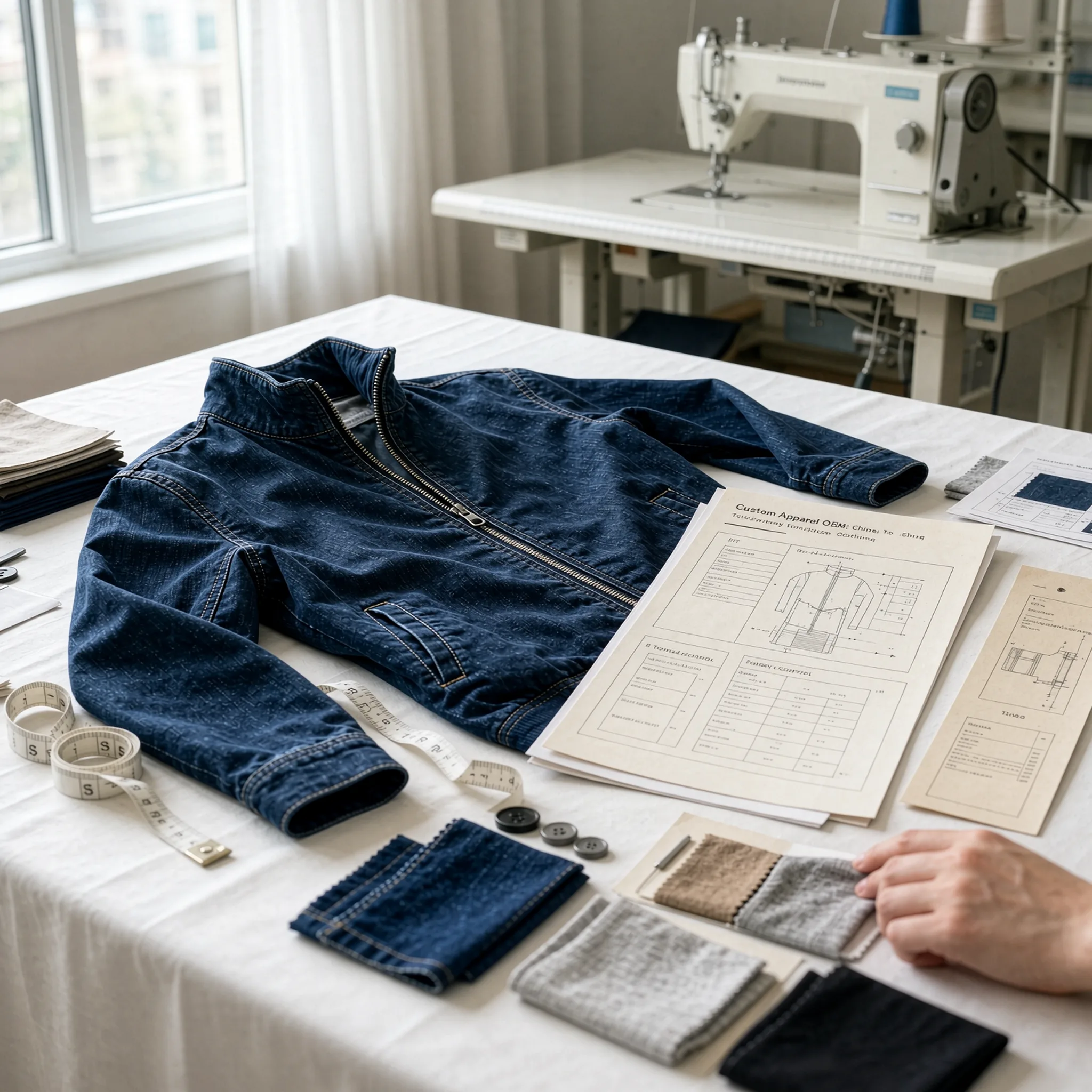
Quality control should start before the finished garments are packed.
A practical process includes:
Fabric inspection → First-piece check → In-line inspection → Finished garment inspection → Packing
The approved sample should remain the reference throughout the process.
For repeat orders, keep records of:
- Approved sample
- Final measurements
- Fabric specifications
- Color references
- Trim details
- Branding artwork
- Packaging requirements
This creates a consistent production reference for future orders.
11. Common Mistakes When Buying Custom Apparel OEM
Choosing Only by Price
The cheapest quotation may not have the same specifications.
Approving Samples Too Quickly
A sample should be checked carefully before bulk production.
Giving Vague Requirements
“Premium quality” is difficult to manufacture against. Use measurable specifications where possible.
Ignoring Fabric Availability
A custom fabric or color may require additional development time or minimum quantities.
Changing Specifications During Production
Late changes can affect patterns, materials, costs, and delivery schedules.
12. What Should You Send for Your First OEM Inquiry?
A strong first inquiry can be surprisingly simple.
Send:
- Product images or sketches
- Tech pack, if available
- Reference samples
- Quantità di tessuto necessaria
- Size range
- Estimated quantity
- Color requirements
- Branding requirements
- Target market
- Expected timeline
If you do not have a complete tech pack, say what information is missing.
A capable manufacturer can then tell you whether it can support the development work and what needs to be confirmed before sampling.
13. When Is Custom Apparel OEM in China a Good Choice?
China OEM manufacturing can be particularly useful when you need:
- Custom product development
- Multiple fabric options
- Private labeling
- Complex garment construction
- Repeat production
- Scalable bulk manufacturing
- One supplier for development and production
The best fit depends on your product requirements, order volume, development resources, and quality expectations.
14. From Custom Design to Production
A successful custom apparel OEM project follows a simple principle:
Do not move faster than the product information allows.
First confirm the design.
Then confirm materials.
Then develop and approve the sample.
Only after the critical specifications are confirmed should the project move into bulk production.
For brands looking for a custom apparel OEM China partner, the best first step is to send the design, available technical information, target quantity, and required delivery window for a feasibility review and quotation.











