




Custom Hoodies Bulk: A Practical Guide for Clothing Brands and Businesses
Data di pubblicazione:2026-09-10 Categoria:NOTIZIE Visualizzazioni:686
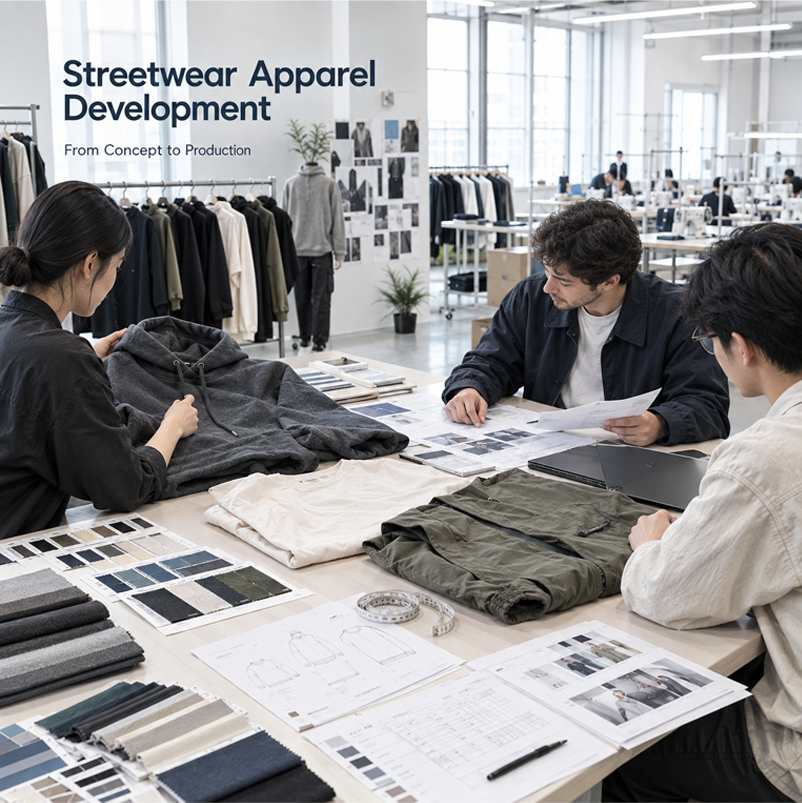
Custom hoodies have become a core product for streetwear brands, startups, organizations, teams, events, and promotional businesses. When larger quantities are required, ordering custom hoodies bulk can provide better production efficiency, more consistent quality, and a lower unit cost.
However, bulk hoodie production involves more than simply choosing a blank hoodie and adding a logo. Fabric weight, construction, sizing, artwork, decoration methods, sampling, production capacity, and quality control all affect the final result.
This guide explains the major factors brands should consider before starting a bulk custom hoodie project.
1. Define the Purpose of Your Hoodies
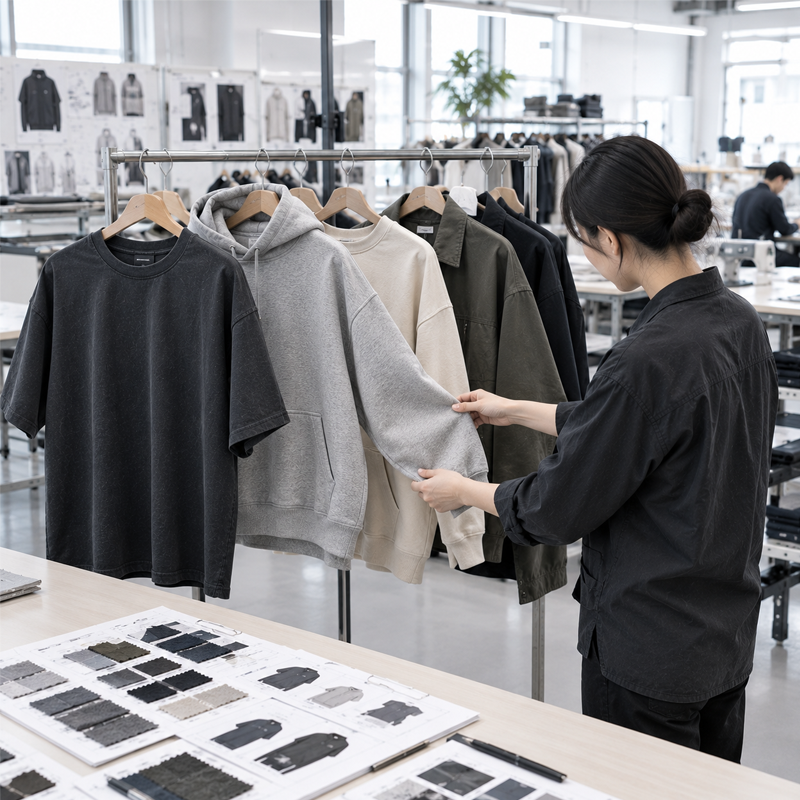
Before contacting a manufacturer, define how the hoodies will be used.
A streetwear brand may need heavyweight hoodies with an oversized silhouette, while a sports organization may prioritize durability and easy care. Promotional projects may focus more heavily on customization and cost efficiency.
Your intended use will influence:
- Hoodie construction
- Peso del tessuto
- Composizione del tessuto
- Vestibilità
- Color options
- Decoration method
- Quantità
- Packaging requirements
Having a clear product direction makes communication with a manufacturer much easier.
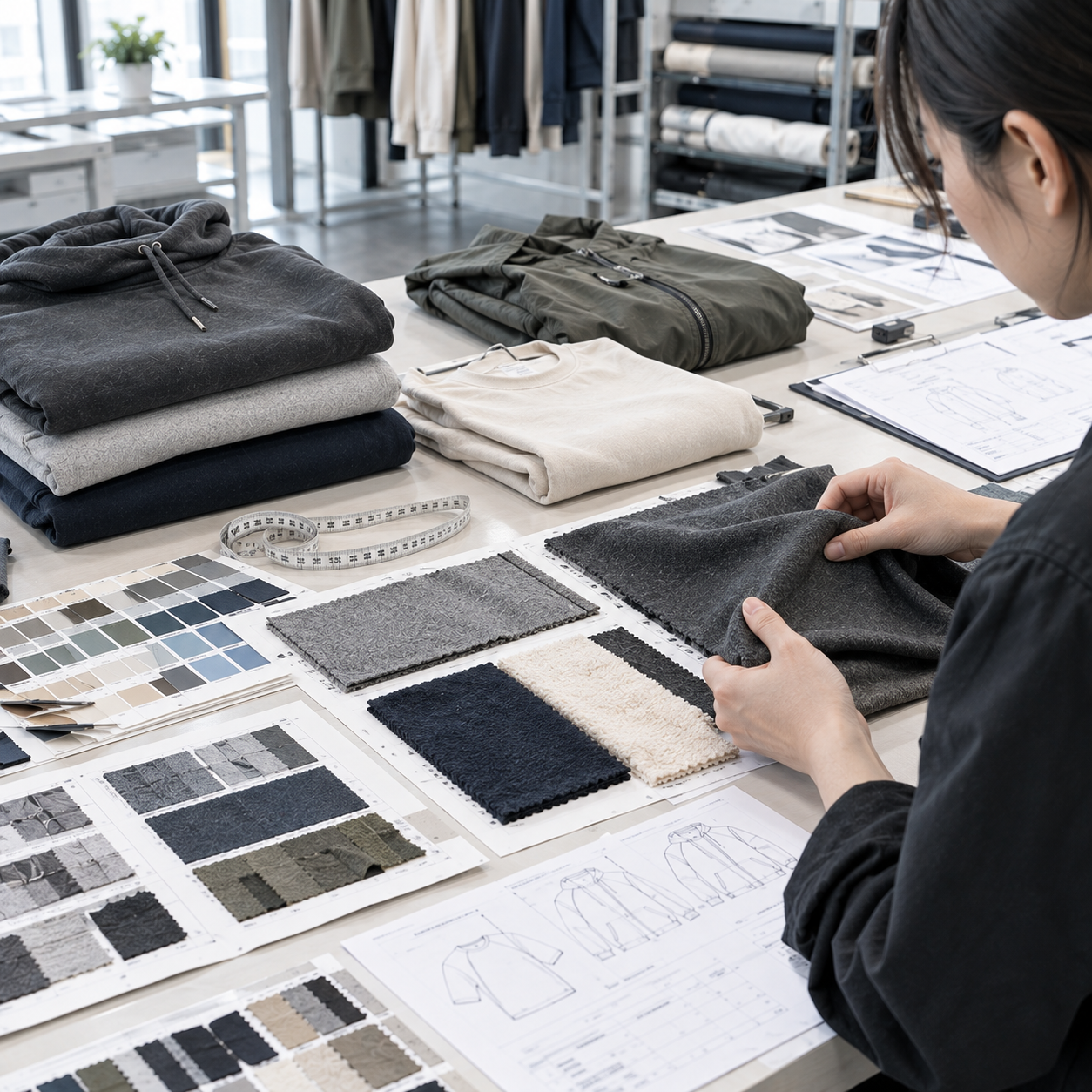
2. Choose the Right Hoodie Fabric
Fabric is one of the most important decisions in bulk hoodie production.
Common options include cotton, polyester, cotton-polyester blends, fleece, French terry, and other knitted fabrics.
Fabric weight also affects the character of the hoodie. Lightweight materials can be suitable for transitional seasons, while heavier fabrics can provide a more substantial structure and premium feel.
When requesting a quotation, provide the manufacturer with as much fabric information as possible, including:
- Composizione del tessuto
- Peso del tessuto
- Surface appearance
- Interior construction
- Desired hand feel
- Color requirements
A clear fabric specification helps reduce misunderstandings during sampling and production.
3. Decide on the Hoodie Fit
A hoodie can have a regular, relaxed, oversized, cropped, or other custom silhouette.
For a clothing brand, fit can be an important part of product identity. Two hoodies made from similar fabrics can look completely different because of differences in shoulder width, body length, sleeve construction, and hood proportions.
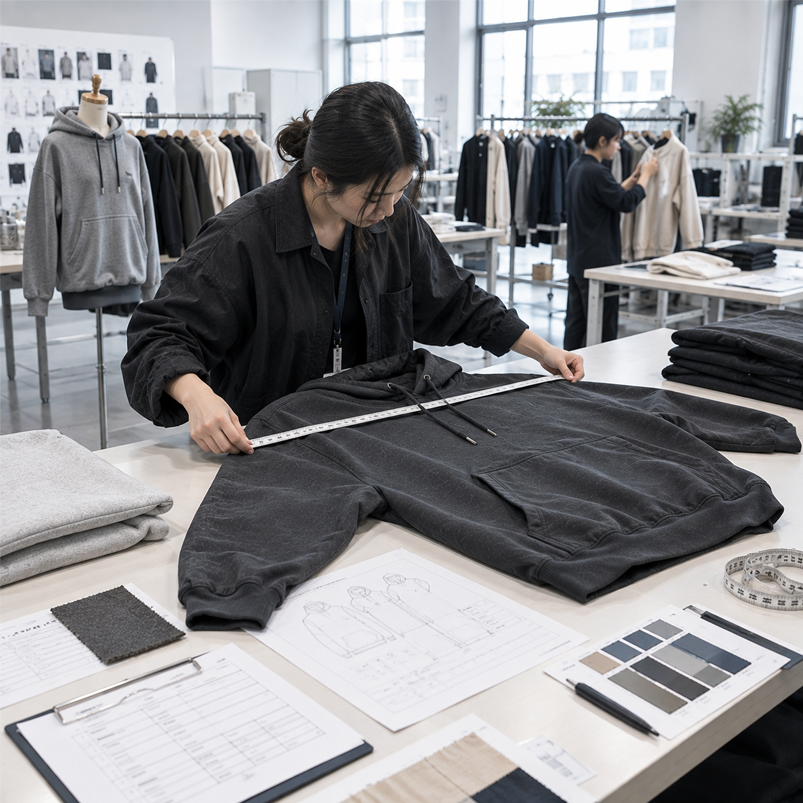
If you already have a reference garment, provide measurements or a physical sample when possible.
Important measurements may include:
- Chest width
- Body length
- Shoulder width
- Sleeve length
- Cuff width
- Hood dimensions
- Pocket dimensions
A detailed measurement specification gives the manufacturer a clear technical target.
4. Select the Right Customization Method
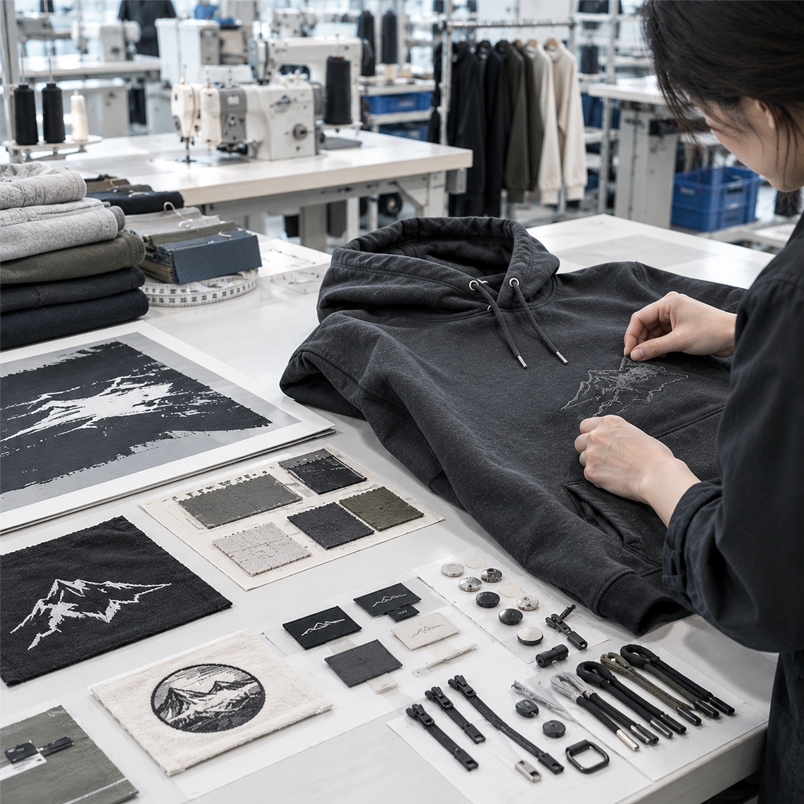
Bulk custom hoodies can be customized in many ways.
Common options include:
- Screen printing
- Digital printing
- Ricamo
- Appliqué
- Patches
- Woven labels
- Printed labels
- Special trims
The best method depends on the artwork, fabric, quantity, and desired appearance.
For example, embroidery can create a textured and premium visual effect, while screen printing may be suitable for larger graphic designs.
The decoration method should be decided during product development rather than after the garment has already entered production.
5. Prepare Your Artwork Correctly
Artwork preparation can directly affect production quality.
Before sending files to a manufacturer, check:
- Artwork dimensions
- Color information
- Placement
- Resolution
- File format
- Number of colors
- Print area
- Embroidery requirements
It is also useful to provide a visual mockup showing where the artwork should appear.
A manufacturer should understand not only what the artwork looks like, but also exactly where it needs to be positioned on the finished hoodie.
6. Develop a Sample Before Bulk Production
One of the most important steps in custom hoodies bulk production is sample development.
A sample allows the brand and manufacturer to evaluate the actual product before committing to a larger quantity.
During sampling, review:
- Tessuto
- Colore
- Vestibilità
- Misure
- Stitching
- Hood construction
- Cuffs
- Artwork
- Etichette
- Trims
- Overall appearance
If adjustments are necessary, they should be communicated before bulk production begins.
Skipping proper sample approval can create unnecessary risks when ordering large quantities.
7. Understand MOQ and Bulk Quantities
Manufacturers normally establish a minimum order quantity based on production requirements.
The MOQ may vary according to:
- Fabric type
- Colore
- Personalizzazione
- Garment construction
- Production method
- Factory capacity
When requesting a quotation, clearly state your expected quantity and whether the order includes multiple colors or designs.
For example, ordering 1,000 hoodies in one color is a different production situation from ordering 1,000 hoodies across ten colors.
8. Ask About Production Capacity
Bulk orders require reliable production planning.
Before placing an order, brands should understand whether the manufacturer has the necessary capacity for their project.
Important questions include:
- What is the estimated production lead time?
- Can the factory handle the required quantity?
- Is fabric available or does it need to be developed?
- How long will sampling take?
- When can bulk production start?
- How is production quality monitored?
A realistic production schedule should include development, material preparation, cutting, sewing, decoration, inspection, packing, and shipment preparation.
9. Quality Control Matters in Bulk Production
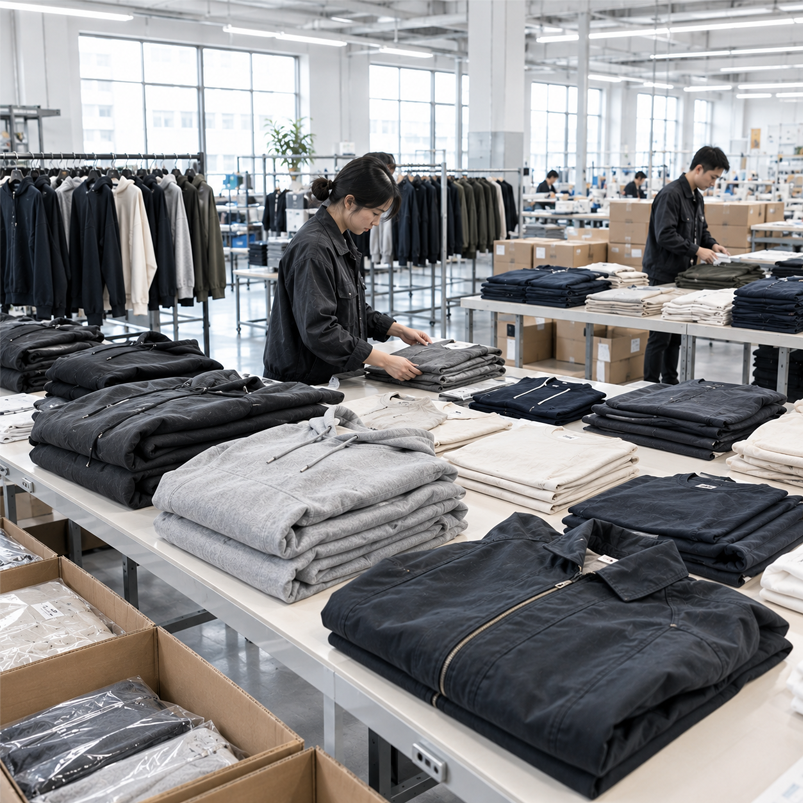
The larger the order, the more important consistency becomes.
A single sample may look excellent, but bulk production involves many pieces that need to meet the same specifications.
Quality control can include checking:
- Fabric quality
- Garment measurements
- Sewing quality
- Stitch density
- Color consistency
- Printing or embroidery
- Etichette
- Trims
- Fili sciolti
- Packing
Clear specifications and approved samples provide useful references for production inspection.
10. Think About Packaging Early
Packaging is sometimes overlooked during apparel development.
For bulk hoodie orders, packaging requirements may include individual polybags, size stickers, carton markings, folding methods, or customized packaging.
If your brand has specific packaging requirements, communicate them before production begins.
This allows the manufacturer to plan the packaging process together with the garment production schedule.
11. Communication Is Part of the Production Process
Good communication can make bulk manufacturing considerably more efficient.
A professional production discussion should clearly cover:
- Product specifications
- Tessuto
- Colors
- Sizes
- Artwork
- Etichette
- Quantità
- Confezione
- Timeline
- Inspection requirements
Instead of relying on short descriptions such as "make it oversized" or "use thick fabric," provide measurable specifications wherever possible.
The more precise the information, the easier it is for the manufacturer to reproduce the intended product.
12. Consider Long-Term Production
If the hoodie is expected to become a recurring product, choose a manufacturing partner that can support future production.
Long-term cooperation can make it easier to maintain:
- Consistent specifications
- Repeatable colors
- Stable construction
- Reliable sizing
- Production records
- Packaging standards
This is especially important for brands that plan to reorder successful styles.
13. How KALAIBEN Supports Apparel Production
KALAIBEN operates as an integrated industry and trade company specializing in woven and knitted garments, with product experience covering casual apparel and outdoor sportswear.
Its production operation in Jiangxi includes cutting, sewing, ironing, inspection, and packing processes. The company's knitting capabilities also include equipment for single-side, double-side, terry, fleece, and rib fabrics.
For brands developing customized apparel, having fabric and garment production capabilities within the same broader manufacturing operation can help connect fabric development, garment construction, sampling, and bulk production.
14. A Practical Bulk Hoodie Manufacturing Workflow
A typical custom hoodie project can be organized into several stages:
Product Planning → Fabric Selection → Artwork Preparation → Sampling → Sample Approval → Material Preparation → Bulk Production → Quality Inspection → Packing → Shipment
Keeping these stages organized helps reduce production mistakes and unexpected delays.
15. Common Mistakes When Ordering Custom Hoodies in Bulk
Several mistakes can create problems during production.
Ordering Before Sample Approval
Bulk production should not begin before the key product specifications have been confirmed.
Providing Incomplete Measurements
A general size description is often not enough for a custom garment.
Changing Artwork Too Late
Late artwork changes can affect production schedules and costs.
Ignoring Fabric Specifications
Words such as "heavyweight" or "soft" can mean different things to different people. Technical specifications are more reliable.
Focusing Only on Unit Price
The cheapest quotation does not necessarily provide the best overall value. Fabric quality, construction, consistency, communication, and production reliability also matter.
Conclusion
Ordering custom hoodies bulk requires careful planning from the beginning. Brands should define the product, select appropriate fabrics, establish the fit, prepare artwork, develop samples, confirm quantities, and establish quality standards before bulk production.
A reliable manufacturing partner should be able to communicate clearly throughout development and production while maintaining consistency between the approved sample and the final order.
For growing apparel brands, treating bulk hoodie production as a structured product-development process can create better products and a more reliable manufacturing relationship.











