




China Garment ODM: How the Process Works and How to Choose the Right Factory
公開日時:2026-09-29 カテゴリ:ニュース 閲覧数:685
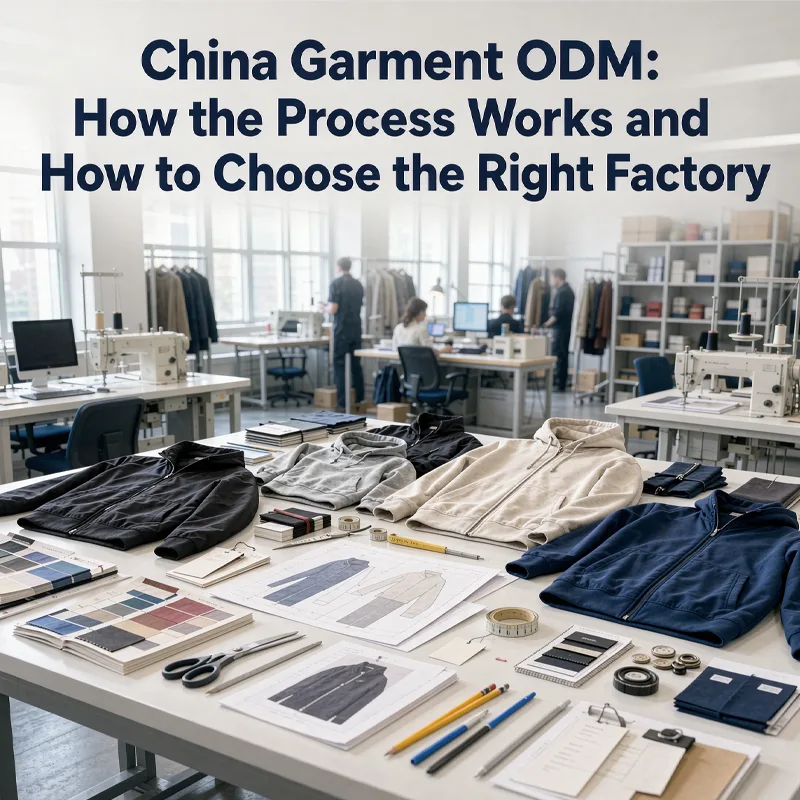
Looking for China garment ODM services? Learn how ODM clothing development works, from fabric sourcing and pattern making to sampling, bulk production, QC, and private label.
When brands search for China garment ODM, they are usually looking for more than a factory that can sew clothes. They need a partner that can help turn a product idea, sketch, reference garment, or tech pack into a production-ready garment.
A good ODM process connects product development, fabric selection, pattern making, sampling, production, and quality control. The goal is simple: make the right product before committing to large-scale production.
This guide explains how China garment ODM works, what buyers should check, and how to avoid common sourcing mistakes.
1. What Is China Garment ODM?
China garment ODM means working with a Chinese apparel manufacturer that provides both product development and manufacturing.
The buyer does not always need to provide a complete technical package.
The project may start with:
- A design sketch
- A reference photo
- An existing garment
- A product concept
- A tech pack
- A fabric idea
- A market requirement
The ODM manufacturer then helps turn that input into a production-ready garment.
1.1 What Does an ODM Garment Factory Actually Do?
A capable ODM factory may support:
- Product development
- 生地の調達
- Pattern making
- サンプルの開発
- Fit adjustments
- Construction development
- Trims and accessories
- ブランディング
- 量産
- 品質管理
- パッケージ
This makes ODM different from simple cut-and-sew production.
Example
Imagine a brand wants to launch a lightweight outdoor jacket.
The buyer has a reference image but no finished pattern.
The ODM factory may need to determine:
- Suitable shell fabric
- Lining
- Zipper type
- Pocket construction
- 測定値
- Pattern structure
- Sewing methods
The project is therefore both a development project and a manufacturing project.
2. China Garment ODM vs OEM: Which Model Do You Need?
OEM and ODM are often used together, but they solve different problems.
OEM
The buyer normally provides clear product specifications.
The factory focuses on manufacturing according to those specifications.
ODM
The manufacturer provides more development support.
The factory can help turn an early product concept into a finished garment.
| Requirement | OEM | ODM |
|---|---|---|
| Complete tech pack | ✓ | ✓ |
| Approved sample | ✓ | ✓ |
| Product concept only | 数量限定 | ✓ |
| パターンの開発 | Sometimes | ✓ |
| Fabric recommendation | Sometimes | ✓ |
| サンプルの開発 | ✓ | ✓ |
| 量産 | ✓ | ✓ |
| 製品開発支援 | 数量限定 | Stronger |
Example
A mature apparel brand sends a complete tech pack for 5,000 jackets.
It knows the fabric, measurements, construction, and trims.
OEM production may be enough.
A startup sends only a jacket reference photo.
It needs help with fabric, pattern, measurements, and construction.
ODM is a better fit for this type of project.
3. How China Garment ODM Works From Idea to Production
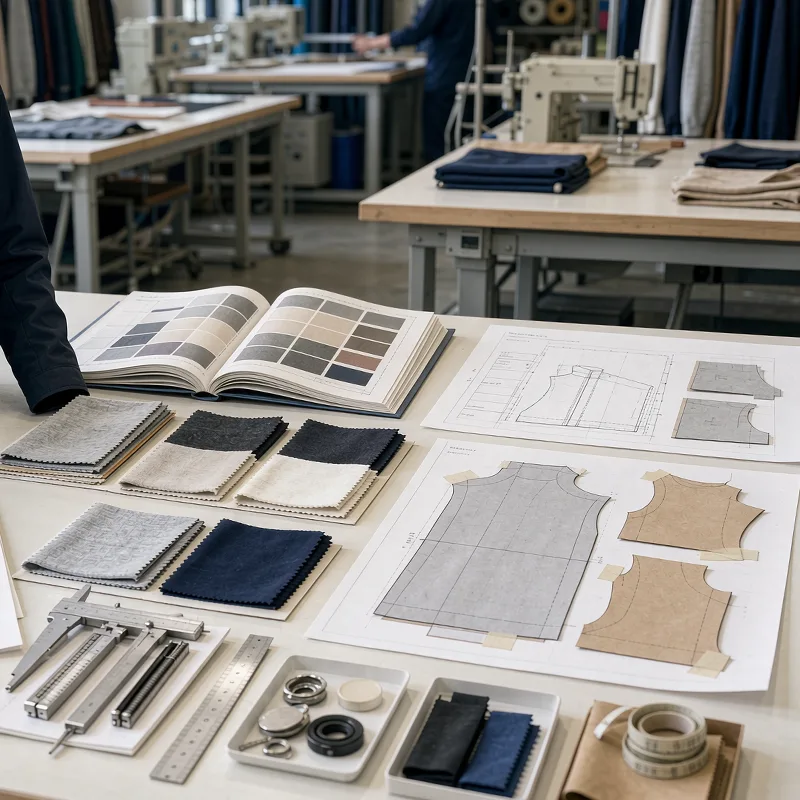
A good ODM project should follow a clear development path.
3.1 Step 1: Product Brief
The buyer explains the product.
Useful information includes:
- 商品カテゴリ
- Target customer
- Reference images
- Target market
- Expected quantity
- Preferred materials
- サイズ範囲
- Target price
The more useful information the factory receives, the easier it is to evaluate the project.
Example
Instead of saying:
“I need a custom jacket.”
A stronger inquiry would say:
“We need a lightweight woven jacket for a European outdoor brand. Target quantity is 2,000 pieces. We need two colors, five sizes, custom labels, and a lightweight polyester shell.”
The second brief gives the manufacturer a much clearer starting point.
4. Fabric Sourcing Is a Key Part of Garment ODM
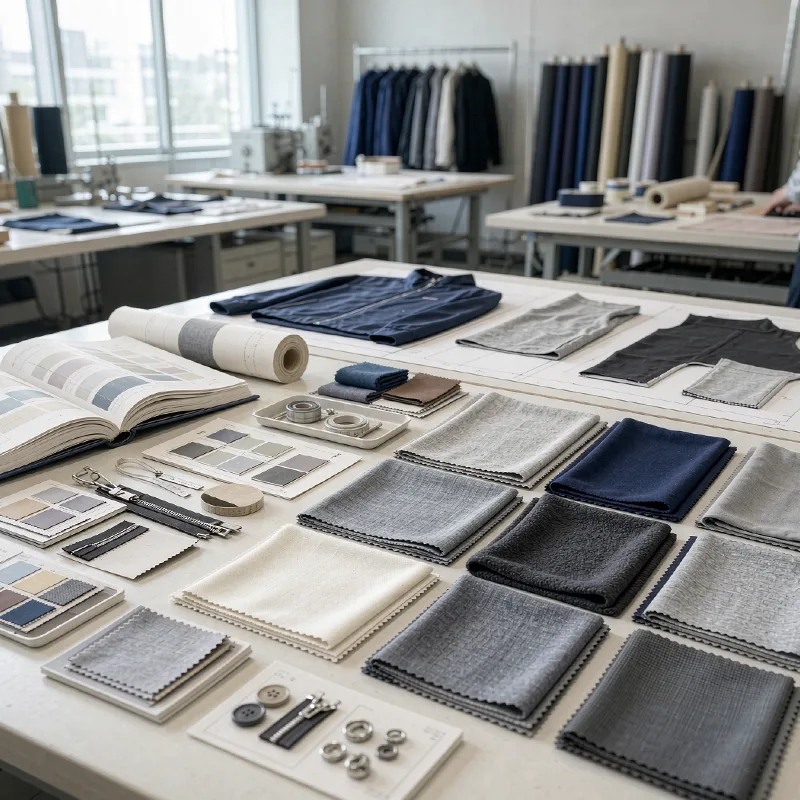
Fabric affects more than appearance.
It can change:
- Garment weight
- フィット
- Cost
- 耐久性
- Comfort
- Production methods
- 最後の登場
That is why fabric selection should happen early.
4.1 What Should Buyers Confirm?
Ask about:
- Fiber composition
- 生地の重さ
- 建設
- ストレッチ
- Hand feel
- 色
- 仕上げ
- Available stock
- Custom development requirements
Example
A brand wants a premium heavyweight hoodie.
A factory may recommend several fabrics with similar compositions but different weights and constructions.
A 280 GSM fabric and a 450 GSM fabric can produce very different garments.
The buyer should approve the actual fabric, not just the fiber composition.
5. Pattern Making Turns an Idea Into a Garment
Pattern making is one of the most important parts of China garment ODM.
A garment can look simple but still require careful technical development.
The pattern determines:
- 測定値
- フィット
- Shape
- Proportions
- 建設
- Sewing requirements
Example
A buyer provides a reference jacket.
The factory cannot simply copy the photograph.
It needs to translate the visual design into:
- Body measurements
- Sleeve measurements
- ポケットの位置
- Collar dimensions
- Seam lines
- Production patterns
This is where technical experience matters.
6. Sampling Is the Most Important Risk-Control Stage
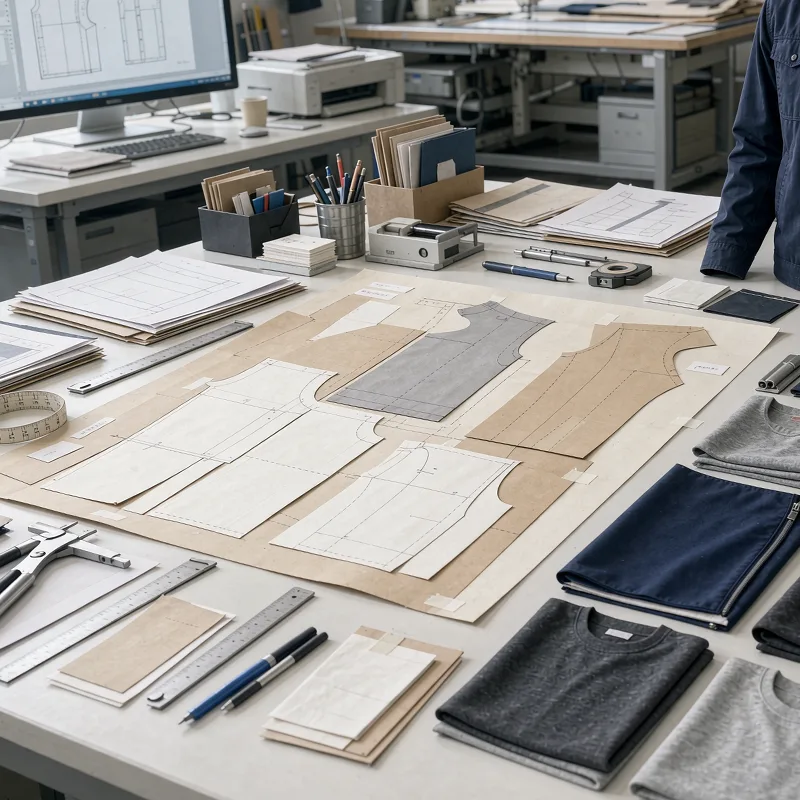
A sample is not just a product photo.
It is a production test.
A good sample review should cover:
フィット
- Chest
- Shoulder
- Sleeve
- Length
- Waist
建設
- 縫い目
- ポケット
- Closures
- Trims
材料
- 生地
- Lining
- Rib
- Zippers
- Buttons
外観
- 色
- Shape
- 仕上げ
- ブランディング
KALAIBEN, for example, states that it recommends developing and approving samples before bulk production so buyers can confirm design, fabric, measurements, workmanship, colors, and overall quality.
Example
A first jacket sample has the correct chest measurement.
But the sleeve opening is too narrow.
Fixing the pattern before bulk production is straightforward.
Finding the same problem after producing 3,000 jackets is much more expensive.
7. Sample Revisions Are Part of the ODM Process
Do not expect every first sample to be perfect.
Complex garments may require several development rounds.
Typical revision areas include:
- フィット
- 生地
- 色
- ポケットポジション
- Sleeve shape
- Collar construction
- Trims
- 測定値
The key is not the number of revisions.
The key is whether each revision moves the product closer to the approved specification.
Example
Sample 1: Fit is too loose.
Sample 2: Fit is corrected, but sleeve length is too long.
Sample 3: Measurements are approved.
The approved sample then becomes the reference for bulk production.
8. From Approved Sample to Bulk Production
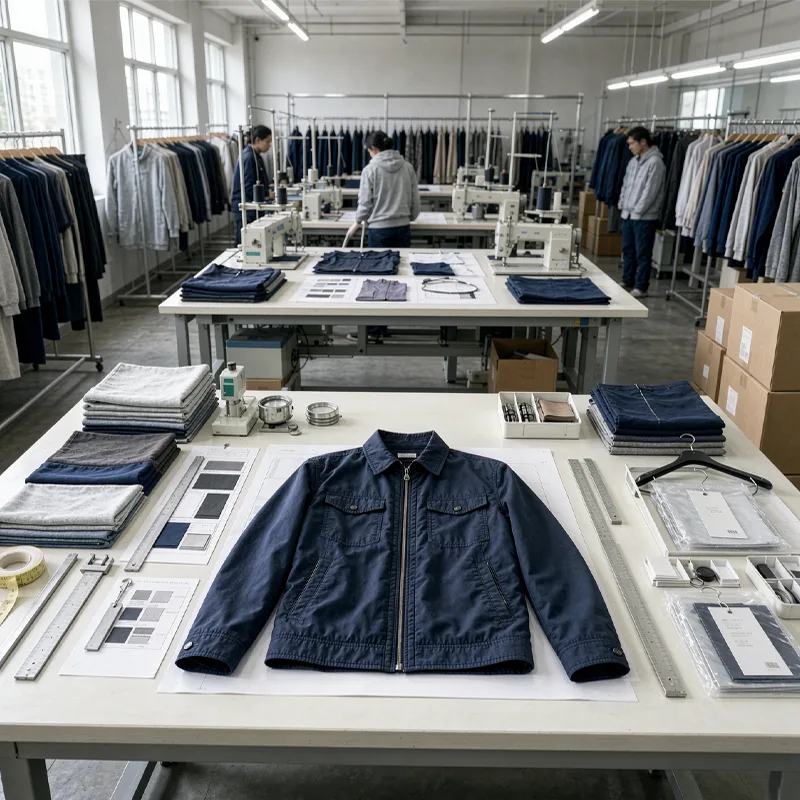
Once the sample is approved, the project moves from development to manufacturing.
A typical workflow includes:
- Material confirmation
- 生産計画
- Fabric preparation
- 切断
- 裁縫
- 仕上げ
- 検査
- 梱包
- Shipment
The approved sample and technical specifications should guide production.
Example
Suppose the approved sample uses a specific fabric weight and zipper.
The bulk order should use the same approved specifications.
If the factory changes a material without approval, the finished garment may no longer match the approved sample.
That is why production communication matters.
9. Quality Control in China Garment ODM
Quality control should not start at the final inspection.
It should start before bulk production.
9.1 Material Inspection
確認:
- 生地の組成
- 色
- 重量
- Surface defects
- Width
- Required specifications
9.2 In-Process Inspection
確認:
- ステッチ
- 測定値
- 建設
- Trims
- Workmanship
9.3 Final Inspection
確認:
- Finished garments
- 数量
- ラベル
- パッケージ
- Visible defects
Example
If a fabric defect is found before cutting, the problem can be isolated.
If it is discovered after the garments are completed, rework becomes much more difficult.
A strong ODM process therefore builds quality checks into several stages.
10. Private Label and Custom Branding
Many brands looking for China garment ODM also need private label production.
Typical requirements include:
- Woven labels
- Hangtags
- Logos
- サイズ表示
- パッケージ
- Barcodes
- Custom product details
The branding process should be confirmed before bulk production.
Example
A brand may approve the garment but forget to confirm the packaging method.
That can create problems close to shipment.
A better process confirms:
Garment → Label → Hangtag → Packaging → Carton
before production starts.
11. MOQ in China Garment ODM
MOQ is not always one fixed number.
It can depend on:
- Product type
- 生地
- 色
- カスタマイズ
- Production method
- Number of sizes
Always ask what the quoted MOQ actually means.
| MOQ Question | その重要性 |
|---|---|
| MOQ per style? | Determines total order size |
| MOQ per color? | Affects color planning |
| MOQ per fabric? | Affects material purchasing |
| MOQ per size? | Affects size distribution |
| Custom fabric MOQ? | Can increase development cost |
Example
A factory says:
MOQ: 500 pieces.
But the actual requirement is 500 pieces per color.
If you want four colors, the practical order quantity becomes 2,000 pieces.
Always clarify this before approving a quotation.
12. How to Choose a China Garment ODM Factory
Do not choose a supplier based only on its website or price.
Check seven areas.
| 評価対象領域 | 確認すべき事項 |
|---|---|
| Product Experience | Similar garments and fabrics |
| 開発 | Pattern and sample capability |
| Production | Equipment and capacity |
| 品質 | QC process |
| 最小発注数量(MOQ) | Fit with your order |
| コミュニケーション | Technical response |
| Transparency | Factory and production information |
12.1 Ask for Evidence
Instead of asking:
“Are you experienced?”
質問:
- Can you show similar products?
- Can you explain your sample process?
- Who handles pattern development?
- How do you control bulk production?
- Can you explain your QC checkpoints?
Specific questions produce better evidence.
13. How to Tell a Real ODM Partner From a Simple Supplier
This is an important sourcing distinction.
A supplier may advertise “ODM” but mainly sell existing products.
A genuine development-oriented ODM partner should be able to discuss:
- Product construction
- パターンの開発
- 生地の選定
- フィット
- サンプリング
- Revision
- 生産の実現可能性
Quick Test
Send the supplier a reference image.
Then ask:
“Can you develop this product?”
A basic supplier may immediately send a price.
A development-oriented factory should ask technical questions first.
For example:
- What fabric do you prefer?
- What is the target market?
- What quantity do you need?
- Do you have a measurement chart?
- Do you need an original pattern?
- What branding details are required?
The quality of these questions can tell you a lot about the supplier.
14. What Should You Send to a China Garment ODM Factory?
A good RFQ should include enough information to evaluate the project.
Product Files
- デザインスケッチ
- Reference photos
- Existing samples
- テクニカルパック
- Measurement charts
Material Information
- 生地の組成
- 生地の重さ
- 色
- Performance requirements
Order Information
- 数量
- Color breakdown
- Size breakdown
- Target delivery date
ブランディングに関する情報
- Logo
- ラベル
- Hangtags
- パッケージ
The better the brief, the more useful the quotation.
15. Common China Garment ODM Mistakes
Mistake 1: Choosing the Lowest Quote
The cheapest quotation may not use the same materials or specifications.
Compare like-for-like.
間違いその2:サンプルの承認を省略する
A sample is your opportunity to catch problems.
Do not treat it as optional for a complex custom garment.
Mistake 3: Choosing a Factory That Does Not Fit the Product
A factory can be excellent but still unsuitable for your category.
Product experience matters.
Mistake 4: Giving the Factory Too Little Information
A single product photo is rarely enough for accurate production planning.
Provide as much technical information as possible.
Mistake 5: Ignoring Revision Management
Record every approved change.
The final specification should be clear before bulk production.
16. When China Garment ODM Makes Sense
ODM is particularly useful when a brand:
- Has product concepts but limited technical resources
- Needs pattern development
- Wants help with fabric selection
- Needs custom samples
- Plans to build new collections
- Wants one partner for development and production
OEM may be more efficient when the buyer already has:
- Complete tech packs
- Approved patterns
- Confirmed materials
- Approved samples
The right model depends on how much development support the project requires.
17. What Buyers Should Look for in an ODM Partner
A strong partner should connect several stages.
Product idea
↓
Material development
↓
Pattern making
↓
Sample
↓
Revision
↓
Approval
↓
量産
↓
品質管理
↓
配送
If one stage is weak, problems can move into the next stage.
That is why the best ODM relationship is not simply about manufacturing capacity.
It is about managing the entire product-development chain.
18. KALAIBEN's Role in China Garment ODM
KALAIBEN is one example of a China-based apparel manufacturer that provides both OEM and ODM services.
Its published capabilities include product development, pattern making, sampling, mass production, private labeling, and packaging. Its product scope includes knitted and woven apparel, casualwear, sportswear, outdoorwear, children's apparel, and other lifestyle categories.
The company states that its manufacturing facility is approximately 6,000㎡, with more than 700 production machines, nearly 700 employees, and annual capacity of approximately 600,000 pieces or sets.
For buyers, however, factory size should be only one part of the evaluation. Product experience, development capability, sample quality, communication, and production control still need to match the specific project.
If you are comparing China garment ODM suppliers, you can review the manufacturer's OEM and ODM capabilities.
19. China Garment ODM Buyer Checklist
Before choosing a supplier, ask:
製品開発
- Can the factory develop patterns?
- Can it work from sketches or reference garments?
- Can it recommend suitable fabrics?
- Can it handle sample revisions?
Production
- What product categories does it specialize in?
- What is its production capacity?
- How does it manage bulk production?
品質
- How are fabrics inspected?
- How is production quality monitored?
- What happens when defects are found?
Commercial Terms
- What is the MOQ?
- What is included in the quotation?
- What is the estimated production schedule?
コミュニケーション
- Does the team understand technical requirements?
- Are revisions documented?
- Can the factory provide clear production updates?
20. Start Your China Garment ODM Project With a Clear Brief
A successful ODM project starts before the quotation.
準備:
- Product concept
- Reference images
- 製品仕様
- 必要な生地
- 数量
- サイズ範囲
- Branding requirements
- Target delivery date
Then compare several suppliers using the same information.
Request samples.
Review the technical details.
Approve the final specifications.
Only then move into bulk production.
For B2B apparel buyers, this approach makes China garment ODM easier to evaluate and easier to manage.
The goal is not simply to find a factory that can make clothes.
The goal is to find a manufacturing partner that can reliably move your product from concept to approved sample to repeatable bulk production.











