




China OEM Clothing Factory: How to Choose the Right Manufacturer
게시일:2026-09-30 분류:뉴스 조회수:532
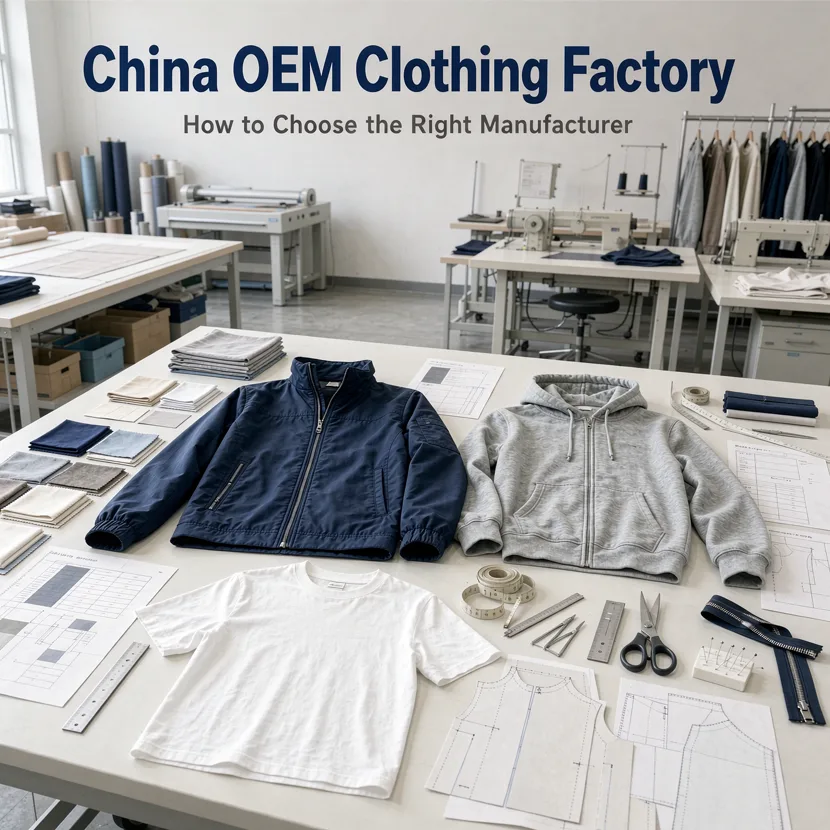
Looking for a China OEM clothing factory? Learn how to compare manufacturers, MOQ, samples, pricing, quality control, production capacity, and private label services.
If you already have a clothing design, tech pack, reference sample, or detailed product specifications, a China OEM clothing factory can turn your requirements into finished garments at commercial scale. But choosing the right factory is not simply about finding the lowest price.
The real questions are more practical:
Can the factory follow your specifications accurately?
Can it develop a reliable sample?
Can it control quality during bulk production?
Is the quotation complete?
Can it handle your MOQ and delivery schedule?
This guide explains how to evaluate a China OEM clothing factory before placing an order, from the first RFQ to final production.
1. What Is a China OEM Clothing Factory?
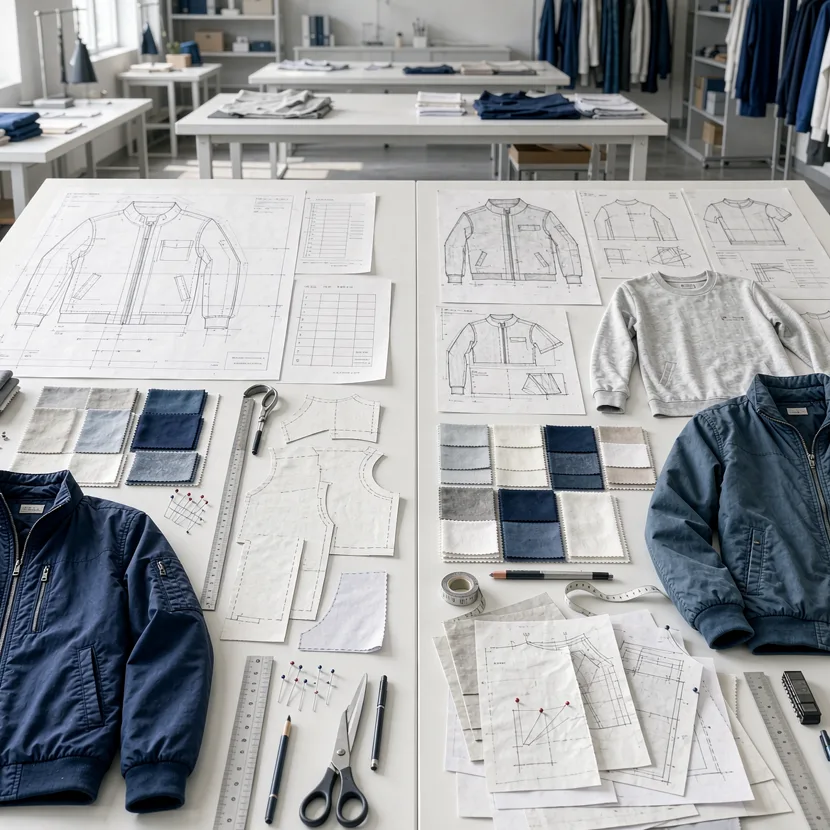
A China OEM clothing factory manufactures garments according to the buyer's own designs, specifications, materials, measurements, branding, and production requirements.
The buyer normally controls the product concept.
The factory focuses on manufacturing.
A typical OEM project may look like:
Tech Pack → Material Confirmation → Pattern → Sample → Sample Approval → Bulk Production → QC → Packing → Shipment
For example, a sportswear brand may provide:
- Technical drawings
- Measurement chart
- Fabric specification
- 색상 참조
- Logo artwork
- 사이즈 범위
- Packaging requirements
- 주문 수량
The factory then converts those specifications into a production-ready garment.
1.1 OEM vs ODM Clothing Manufacturing
The biggest difference is who drives product development.
| 요인 | OEM | ODM |
|---|---|---|
| Product concept | Buyer | Buyer + manufacturer |
| 디자인 | Buyer provides | Factory may assist |
| Tech pack | Usually available | May be incomplete |
| Pattern | Based on buyer specs | Factory may develop |
| Sample | Follows specifications | Collaborative |
| Development responsibility | Mainly buyer | Shared |
| 다음에 가장 적합합니다 | Established designs | New product concepts |
If you already have a complete tech pack, OEM manufacturing is usually the more direct production route.
If you only have a concept, reference image, or rough idea, you may need more development support and should investigate ODM capabilities instead.
2. Why Do Brands Choose a China OEM Clothing Factory?
China remains a major apparel manufacturing base with a broad supply chain covering fabrics, trims, pattern development, sewing, finishing, and export logistics.
In 2025, China's clothing and clothing-accessory exports were approximately US$151.2 billion, according to Chinese customs data compiled by the China National Textile and Apparel Council.
That scale gives international buyers access to a wide manufacturing ecosystem.
But scale alone does not guarantee a good supplier.
A better question is:
Does this factory have the specific manufacturing capability my product requires?
2.1 Common Reasons Brands Use China OEM Manufacturing
Brands may choose a China OEM clothing factory when they need:
- Custom garment production
- Private label manufacturing
- Larger production runs
- Consistent repeat orders
- Specialized fabrics
- Multiple garment categories
- Custom trims and labels
- Export-oriented production
For example, a brand launching 3,000 custom fleece jackets may need much more than sewing capacity.
It may also need:
Fleece sourcing + pattern control + zipper sourcing + sample development + bulk QC + packing
The supplier should be evaluated against the whole project.
3. What Services Should a China OEM Clothing Factory Provide?
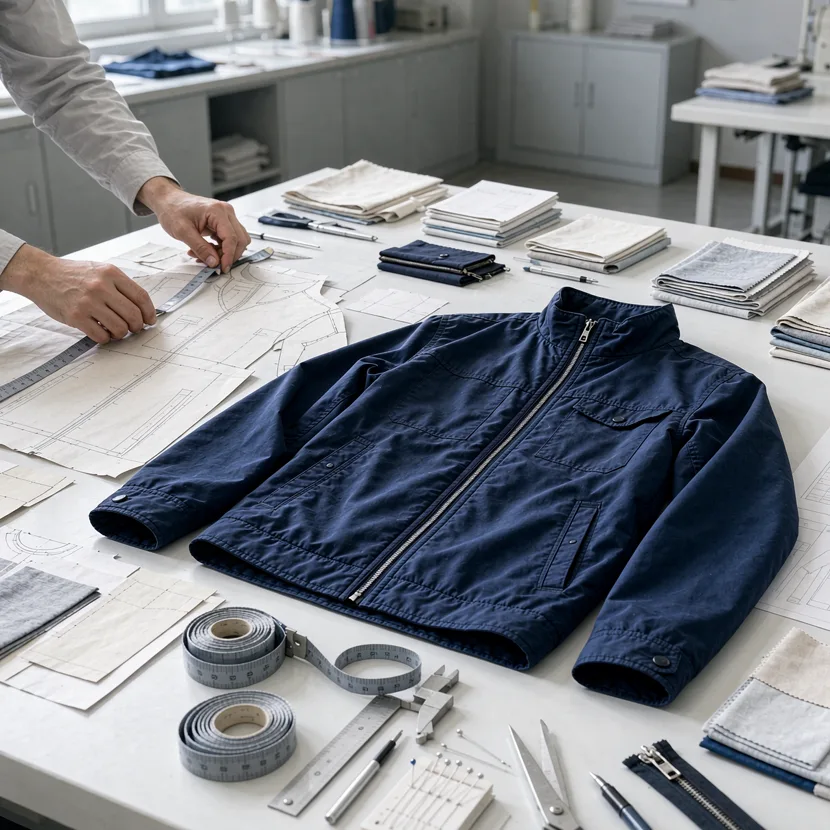
A serious OEM factory should be able to explain exactly what happens after receiving your specifications.
3.1 Tech Pack Review
The factory should review your technical information before quoting.
A useful review may identify:
- Missing measurements
- Fabric inconsistencies
- Unclear construction details
- Trim specifications
- Artwork requirements
- Packaging requirements
If your tech pack says “medium-weight fleece,” for example, the factory may need a specific GSM range before costing the garment accurately.
3.2 Fabric and Trim Sourcing
Depending on the project, the factory may source:
- Cotton
- 폴리에스터
- 나일론
- 플리스
- Jersey
- Rib
- Woven fabrics
- 지퍼
- 버튼
- Snaps
- Drawcords
- 라벨
Do not compare suppliers based only on the fabric name.
“Polyester fleece” can describe fabrics with different GSM, construction, hand feel, finishing, and performance.
3.3 Pattern Making and Grading
Even when the buyer provides a tech pack, pattern accuracy matters.
The factory may need to create or adjust patterns for:
- Different sizes
- Different fabrics
- Construction requirements
- Fit corrections
- Production efficiency
Ask whether pattern development and grading are included in the quotation or charged separately.
3.4 Sample Development
The sample is where your specifications become a physical product.
A good sample review should confirm:
- 핏
- 치수
- 원단
- 색상
- 건설
- 바느질
- 트림
- 브랜딩
- 포장
Do not treat sample approval as a formality.
It is one of the most important risk-control stages before bulk production.
4. How to Choose a China OEM Clothing Factory
Do not start with price.
Start with product fit.
4.1 Match the Factory to Your Product
Different factories have different strengths.
예를 들어:
| 제품 | Important Factory Experience |
|---|---|
| T-shirt | Knit fabric, printing, basic sewing |
| Hoodie | Fleece, rib, hood construction |
| 재킷 | Woven fabric, zippers, structure |
| 운동복 | Stretch fabrics, performance sewing |
| Outdoorwear | Functional materials and construction |
| 제복 | Repeat production and consistency |
If your product is a technical outdoor jacket, a factory mainly producing basic T-shirts may not be the right technical match.
4.2 Check Production Capability
Ask for specific information about:
- Production facility
- Equipment
- 제품 카테고리
- Production lines
- Workforce
- 용량
- QC personnel
- 시연실
- Pattern department
Do not assume that a large factory is automatically suitable.
A factory's capability should match your product, order volume, and quality requirements.
4.3 Check Relevant Experience
Ask for examples of similar products.
예를 들어:
“Have you produced fleece jackets using 280 GSM CVC fleece?”
This is more useful than asking:
“Do you manufacture jackets?”
Specific questions reveal specific experience.
5. How to Verify a China OEM Clothing Factory
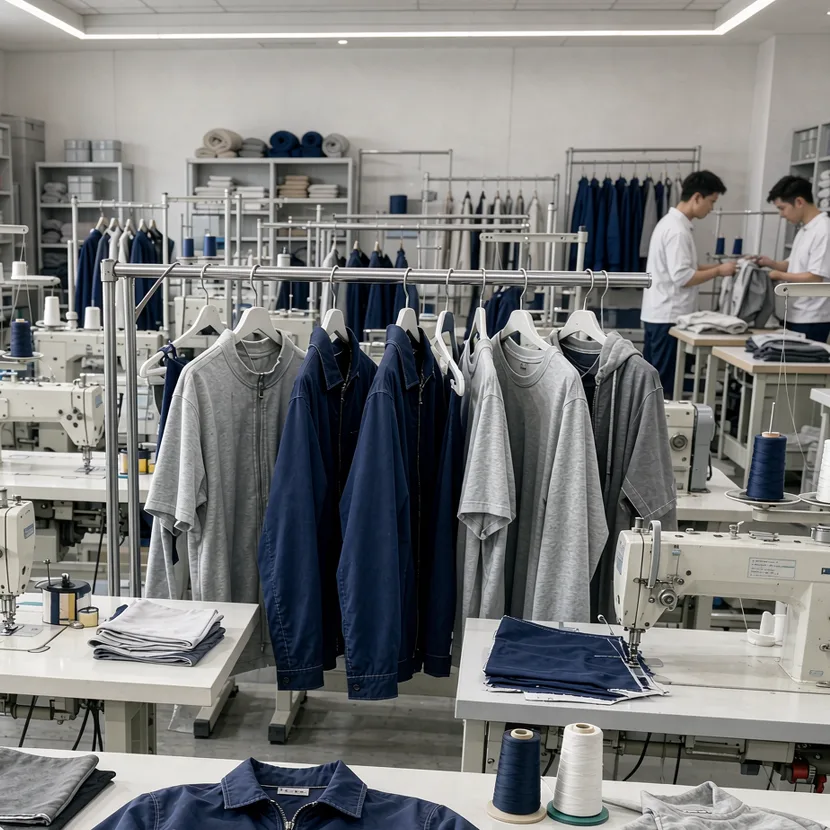
Supplier verification should happen before the bulk order.
5.1 Check the Physical Factory
If possible, verify:
- Factory address
- Production area
- Sewing equipment
- Cutting area
- 시연실
- Fabric storage
- Finished goods area
- QC process
Factory photos are useful, but they are not enough by themselves.
A video call or third-party factory inspection can provide stronger evidence.
5.2 Confirm Who Actually Manufactures Your Order
This is important.
Some companies operate as trading businesses rather than direct factories.
질문:
- Where will my order be produced?
- Is the facility owned or subcontracted?
- Who makes the patterns?
- Where is the sample made?
- Who performs final QC?
- Who controls production scheduling?
The goal is not to avoid every trading company.
The goal is to understand your actual supply chain.
5.3 Ask for Production Evidence
Useful evidence can include:
- Factory video
- Sample room photos
- Production photos
- QC records
- Product examples
- Factory audit reports
- Certifications where relevant
You do not need every document for every order.
The evidence should match the level of risk in your project.
6. How Much Does a China OEM Clothing Factory Cost?
There is no universal OEM clothing price.
Your final cost depends on several variables.
Garment Cost = Fabric + Trims + Labor + Construction + Finishing + Packaging + Factory Overhead + Other Project Costs
Major cost drivers include:
- 원단 구성
- GSM
- Fabric width
- 의류 중량
- 패턴의 복잡성
- Number of sewing operations
- 트림
- 인쇄
- 자수
- 세탁
- 라벨
- 포장
- 수량
For example, a simple 180 GSM cotton T-shirt and a 180 GSM technical jacket cannot be compared simply by fabric weight.
The jacket may require:
- More panels
- 지퍼
- 여러 개의 주머니
- Interlining
- More sewing operations
- More QC points
That increases manufacturing cost.
7. How to Compare OEM Clothing Factory Quotes
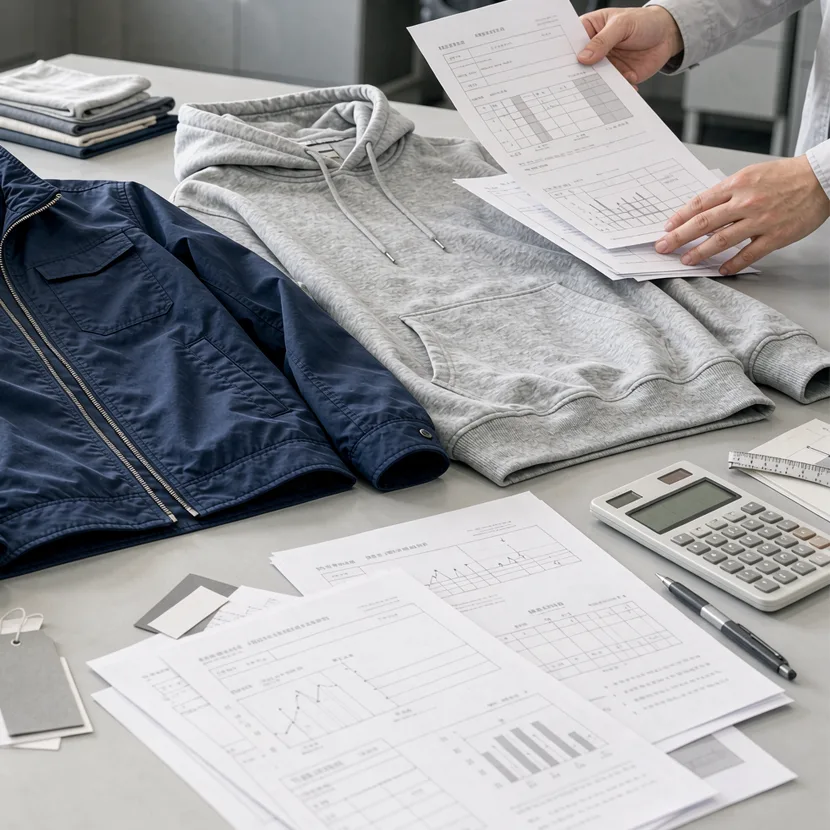
Never compare only the unit price.
Compare the quotation line by line.
| Cost Item | 공급업체 A | 공급업체 B |
|---|---|---|
| 원단 | Included | Included |
| Main label | Included | Extra |
| Hangtag | Extra | Included |
| 포장 | 기본 | 사용자 지정 |
| Sample | Extra | Included |
| Pattern | Included | Extra |
| QC | Final inspection | Inline + final |
| 배송 | Excluded | Excluded |
The cheaper unit price may not be the cheaper project.
7.1 Ask What the Price Includes
Before comparing two factories, confirm:
- 원단
- 트림
- 라벨
- 포장
- Sample
- Pattern
- 인쇄
- 자수
- QC
- Testing
- 배송
A simple written comparison can prevent misunderstandings later.
8. What MOQ Should You Expect From a China OEM Clothing Factory?
MOQ varies by factory and product.
There is no universal China OEM clothing MOQ.
It can depend on:
- 의류 종류
- 원단
- 색상
- Fabric supplier MOQ
- Custom trims
- Production method
- 주문 수량
- Factory planning
Ask whether MOQ is calculated:
Per style?
Per color?
Per fabric?
Per order?
예를 들어:
A factory may accept 500 pieces per style but require a higher quantity for a custom-dyed fabric.
That difference matters when you are planning several colors.
8.1 MOQ Is Not the Only Number to Check
Also ask about:
- Sample MOQ
- Bulk MOQ
- Reorder MOQ
- Color MOQ
- Fabric MOQ
- Mixed-size ordering
- Mixed-style ordering
A flexible MOQ structure can be more useful than a low advertised MOQ.
9. Sample Approval Before Bulk Production
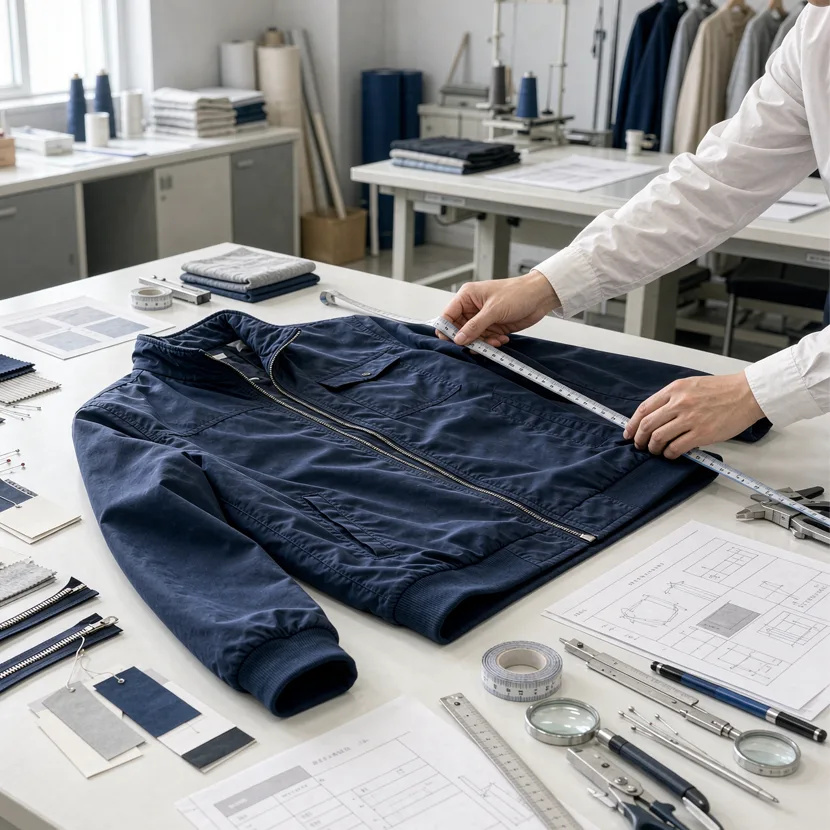
The sample should become your production reference.
Before approval, check five areas.
9.1 Measurements
Compare actual measurements against the approved size chart.
확인:
- 가슴
- 어깨
- Sleeve
- 몸길이
- Waist
- 헤임
- Armhole
9.2 Fabric
Confirm:
- Composition
- GSM
- 색상
- 손에 닿는 느낌
- 스트레치
- Finish
9.3 Construction
확인:
- Seam quality
- Stitch density
- 주머니 위치
- 칼라
- 수갑
- 헤임
- Reinforcement
9.4 Branding
Confirm:
- Main label
- Size label
- Care label
- Hangtag
- 로고 배치
9.5 Packaging
Confirm:
- Folding
- Polybag
- Carton
- Carton markings
- Quantity per carton
A simple sample approval checklist can prevent expensive bulk corrections.
10. Quality Control at a China OEM Clothing Factory
Quality control should not happen only at the end.
A practical production process can include:
Fabric Inspection → Cutting Check → Inline QC → Finished Garment Inspection → Packing Check
10.1 Fabric Inspection
Check for:
- 색상 차이
- Fabric defects
- GSM
- Width
- Shrinkage where relevant
10.2 Inline Inspection
Inspect garments during sewing.
This can identify problems before hundreds or thousands of pieces are completed.
10.3 Final Inspection
Final inspection can check:
- 치수
- 외관
- 바느질
- 라벨
- 트림
- 수량
- 포장
For larger orders, buyers may also consider independent third-party inspection.
11. What Should You Send When Requesting an OEM Quote?
A detailed RFQ usually produces a more useful quotation.
Send:
Product Information
- Product type
- Reference photos
- Tech pack
- Existing sample
- Size chart
Material Information
- 원단 구성
- GSM
- 색상
- Performance requirements
Production Information
- 수량
- 색상
- 사이즈 범위
- Target delivery date
Branding Information
- 로고
- 라벨
- 행태그
- 포장
Commercial Information
- Destination market
- Target price if available
- Shipping requirements
If you do not have a complete tech pack, send clear front and back photos, measurements, fabric direction, and quantity first.
That gives the factory enough information to identify what is still missing.
12. A Simple OEM Clothing Factory RFQ Template
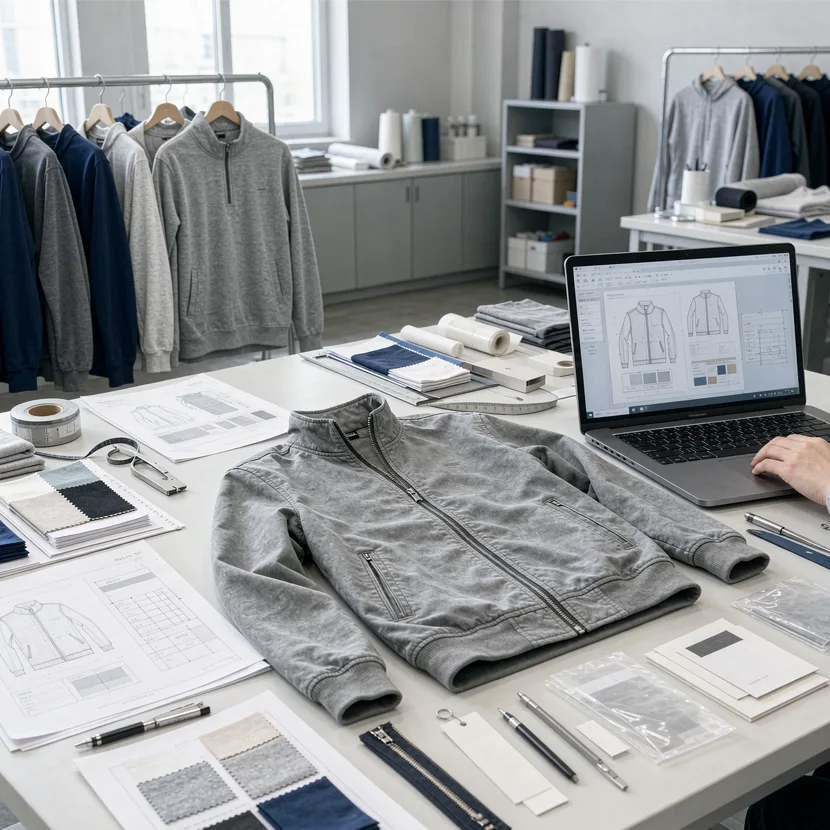
You can use this structure when contacting a China OEM clothing factory:
Product: Men's fleece jacket
Quantity: 1,500 pcs
Colors: 3
Size: S–XXL
Fabric: 280 GSM fleece, polyester/cotton blend
Branding: Woven label + care label + hangtag
Sample: Reference garment available
Packaging: Individual polybag
Destination: EU
Target delivery: November
Please quote: Sample cost, MOQ, bulk price, sample lead time, production lead time, and payment terms.
This is much easier for a factory to process than:
“Hi, how much for custom clothes?”
13. China OEM Clothing Factory vs Trading Company
Both models can work, but the supply chain is different.
| 요인 | Direct OEM Factory | 무역 회사 |
|---|---|---|
| Production control | 직접 | 공급업체를 통해 |
| Factory communication | 직접 | Intermediated |
| 제품 개발 | Factory team | May be outsourced |
| Supplier network | Usually focused | 여러 공장에 접근할 수 있음 |
| Price structure | Factory-based | 서비스 마진이 포함될 수 있습니다 |
| Production visibility | 보통 더 높다 | Depends on company |
The important issue is transparency.
You should know who is responsible for:
Sample → Production → QC → Packing → Shipment
14. Common Mistakes When Choosing a China OEM Clothing Factory
Mistake 1: Choosing the Lowest Price
A lower price can result from:
- Lower fabric quality
- Fewer QC steps
- Different trims
- Less packaging
- Different construction
- Excluded development costs
Compare specifications before comparing prices.
Mistake 2: Skipping the Sample
Bulk production should not start from an unapproved product.
Always establish a clear approved sample or production reference.
Mistake 3: Using Vague Fabric Specifications
“Premium fleece” is not a technical specification.
Use measurable information such as:
- Composition
- GSM
- Width
- Finish
- Color standard
Mistake 4: Not Confirming Lead Time
Ask separately about:
Sample lead time
and
Bulk production lead time
Fabric availability can also affect the timeline.
Mistake 5: Not Planning Reorders
If the first product sells well, you may need another 1,000 or 5,000 pieces later.
Ask how the factory maintains:
- Patterns
- Fabric specifications
- Approved samples
- Color standards
- Production records
This can make repeat production much easier.
15. When Is a China OEM Clothing Factory the Right Choice?
OEM is particularly suitable when you already control the product specification.
You may have:
- Finished designs
- Tech packs
- Reference samples
- Approved measurements
- 원단 필요량
- Branding requirements
The factory's main responsibility is then to manufacture consistently according to your specifications.
If you only have a product concept and need substantial development assistance, compare OEM and ODM capabilities before choosing the production route.
16. Final China OEM Clothing Factory Checklist
Before placing your first order, confirm:
| Area | Question |
|---|---|
| Factory | Where will production take place? |
| 제품 | Have they made similar garments? |
| Tech Pack | Are all specifications understood? |
| 원단 | Are composition and GSM confirmed? |
| Sample | Has the final sample been approved? |
| 최소 주문 수량(MOQ) | Is MOQ per style or color? |
| 가격 | What exactly is included? |
| QC | When are inspections performed? |
| 리드 타임 | Are sample and bulk timelines confirmed? |
| 브랜딩 | Are labels and packaging confirmed? |
| Reorder | Can the factory maintain product records? |
If these questions have clear answers, you have a much stronger foundation for the first purchase order.
17. How to Start an OEM Clothing Project
The best first step is not asking for a price.
It is sending a complete product brief.
Prepare:
Product + Tech Pack + Fabric + Quantity + Branding + Timeline
Then ask the factory to confirm:
- Product feasibility
- Sample cost
- Sample lead time
- 최소 주문 수량(MOQ)
- Bulk price
- Production lead time
- QC process
- Packaging requirements
This creates a structured conversation from the beginning.
For buyers who already have a clear product specification, this approach can make it much easier to compare a China OEM clothing factory with other manufacturing options.
A Natural OEM Inquiry Path
If the product is suitable for the manufacturer's existing capabilities, the next step should be a sample or quotation request rather than a general supplier inquiry.
KALAIBEN, for example, states that it provides OEM and ODM manufacturing for knitted and woven apparel and can work from technical drawings, tech packs, sketches, reference photos, or existing samples. Its published capabilities include pattern making, sampling, production, private labeling, and packaging.
For buyers, the more useful approach is still to send the actual product requirements and ask whether the factory can meet them.
Request an OEM manufacturing quotation → KALAIBEN
18. Related Resources
For a buyer researching apparel manufacturing, keep the internal-link structure focused rather than linking every possible page.
Recommended internal links:
- Apparel OEM China Factory — for the broader China OEM supplier-selection topic.
- Apparel Factory ODM China — useful when the buyer does not have a complete technical specification.
- Apparel Manufacturer ODM Services — for product development and sample-development questions.
- KALAIBEN OEM Clothing — commercial route for buyers ready to discuss OEM production.
- Jacket Manufacturing — useful for buyers developing customized outerwear.
- Men's Jacquard Polar Fleece Bonded Fabric Jacket — product-level example of OEM/ODM development and production support.
The goal is to move the reader naturally from:
Search → Education → Supplier Evaluation → Product Fit → RFQ
rather than repeatedly inserting the KALAIBEN brand throughout the article.











