Inkoopgids voor medische kleding voor mannen: praktische stretch-operatiekleding voor groothandels en institutionele afnemers
Publicatiedatum:2026-09-11 Categorie:NIEUWS Aantal weergaven:621
Men’s medical suits remain a standard uniform requirement across hospitals, clinics and care facilities. These two-piece sets are built for daily movement, frequent laundering and a professional appearance. This guide examines the practical design features of men’s scrub sets, the real-world performance of the common 95% polyester 5% spandex woven fabric, and the points that matter most when buying in volume.
Understanding Men’s Medical Suits in Professional Settings
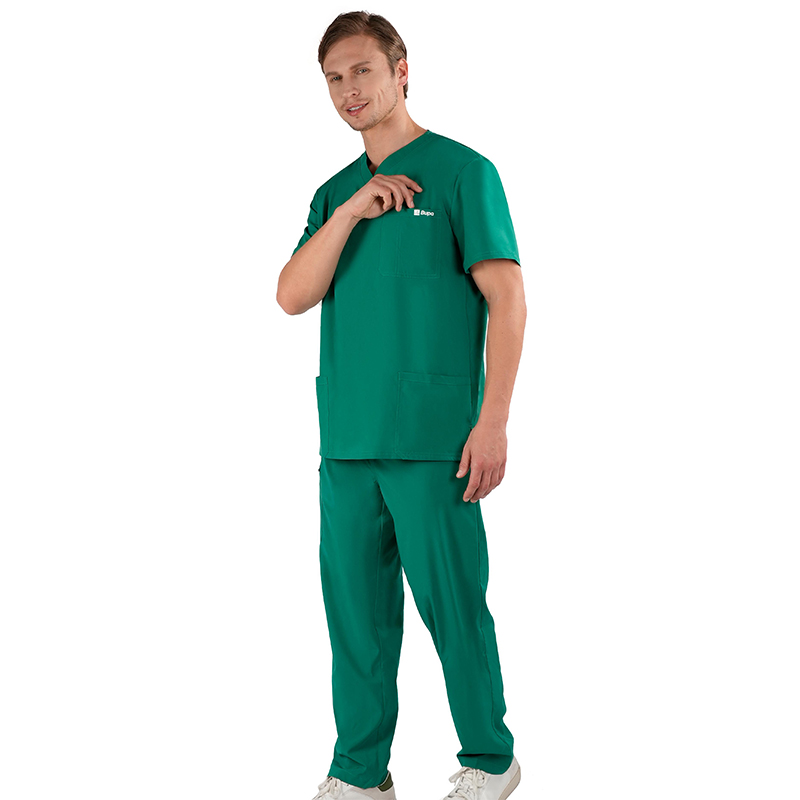
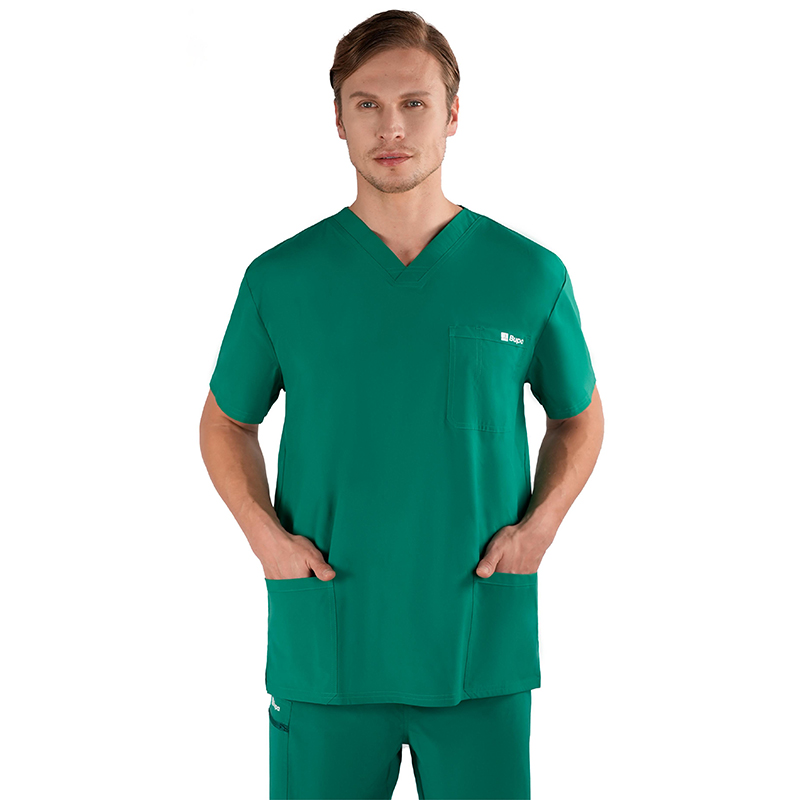
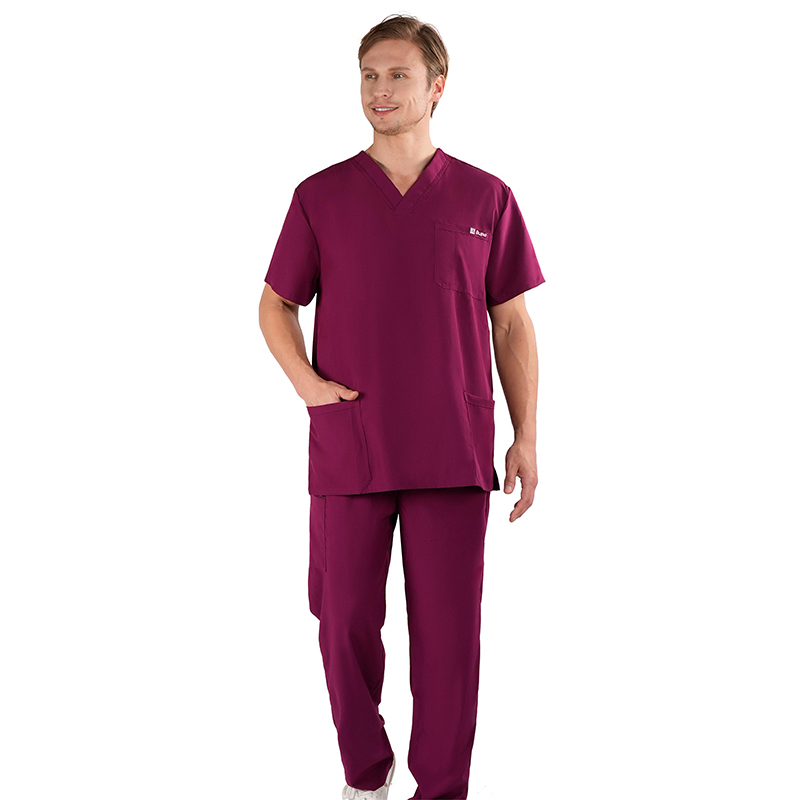
A men’s medical suit is a matching top and pant combination designed for clinical work. The top is usually short-sleeved with a V-neck and several pockets. The pants often include cargo or utility pockets and an adjustable waist. The goal is straightforward: allow free movement during shifts while surviving repeated industrial washing without losing shape or color.
Functional Design Elements for Male Healthcare Staff
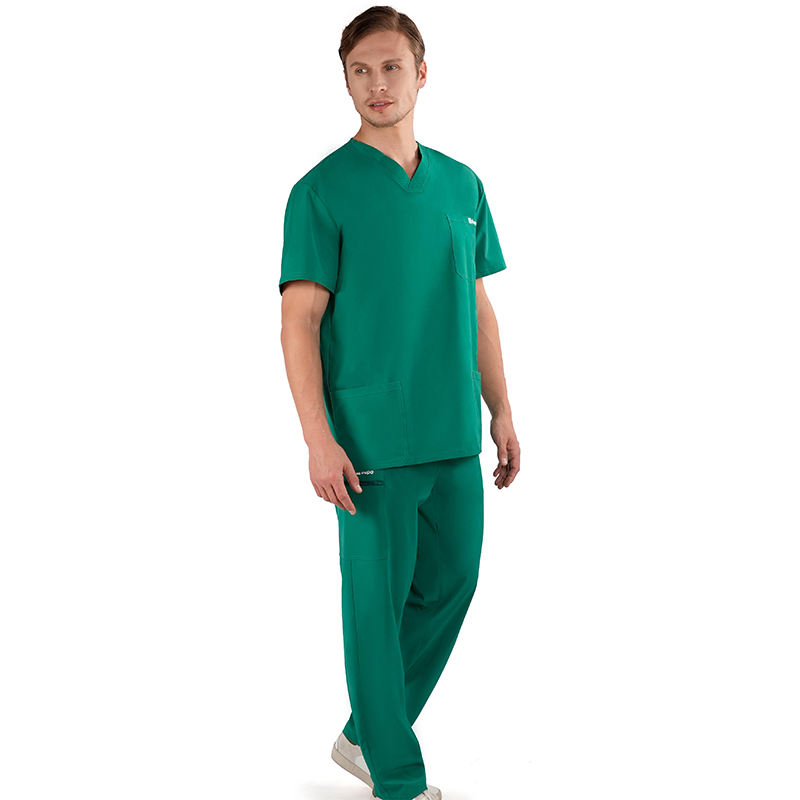
Typical features that buyers look for include:
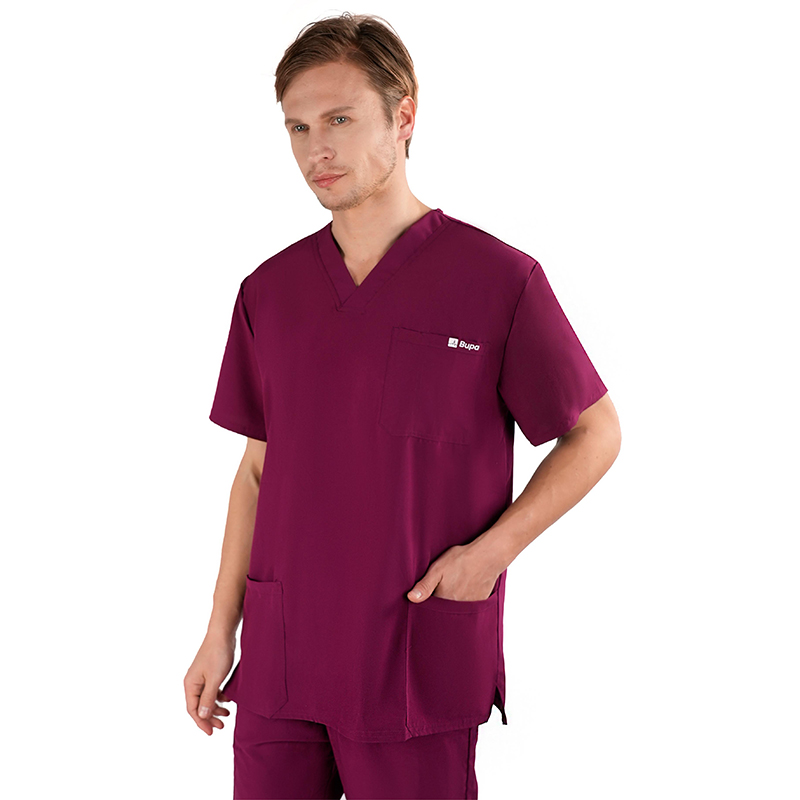
- V-neck tops with a chest pocket and lower side pockets
- Cargo-style pants with zippered or open utility pockets on the side
- Elastic or drawcord waistbands that accommodate different builds
- Straight-leg cuts that maintain a neat profile
- Reinforced stress points around pockets and side seams
- Side vents or slits for easier sitting and bending
These details focus on storage capacity and range of motion rather than decorative elements.
Fabric Breakdown: 95% Polyester + 5% Spandex Woven (120gsm)
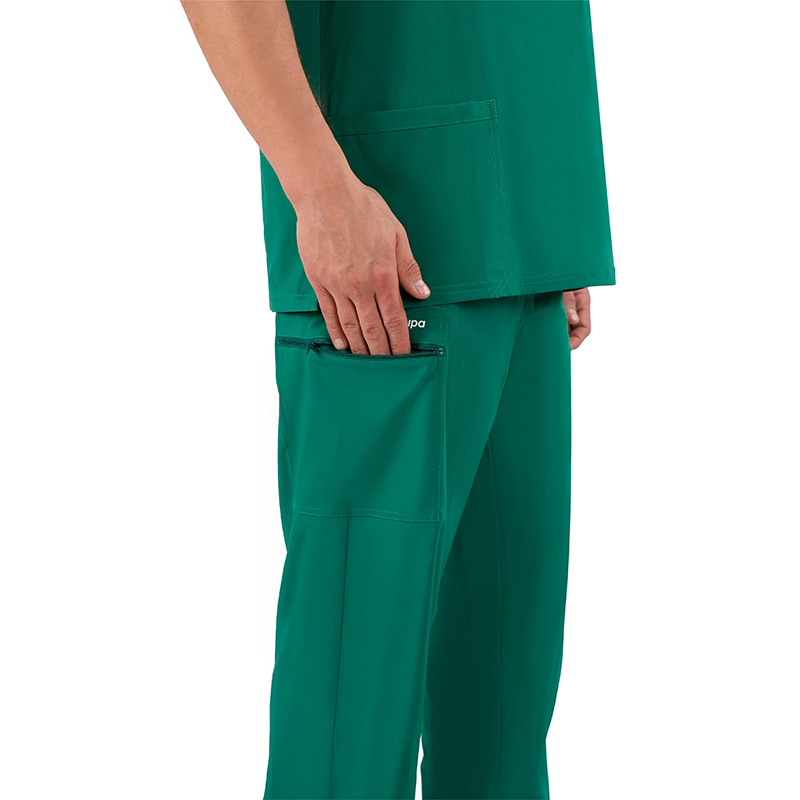
Most current men’s medical suits use a lightweight woven fabric composed of 95% polyester and 5% spandex at around 120gsm.
What this fabric actually delivers:
- A stable woven structure that keeps a clean, professional surface throughout the day
- Enough spandex to allow natural movement when reaching, crouching or turning
- Reliable recovery so the garment does not bag at the elbows or knees
- Strong resistance to fading and wrinkling after many wash cycles
- Moisture movement away from the body, helping the wearer stay drier during long shifts
- Fast drying that supports high-volume laundry operations
- A light 120gsm weight that avoids the bulk of heavier traditional fabrics while still feeling substantial
- Good abrasion resistance in high-contact zones such as pocket edges and seat areas
Polyester supplies the strength and color stability; the small percentage of spandex supplies the mobility needed for physical clinical tasks.
Performance Differences from Conventional Uniform Fabrics
| Aspect | 95% Poly / 5% Spandex (120gsm) | Pure Cotton | Non-stretch Poly-Cotton | Heavy Cotton Twill |
|---|---|---|---|---|
| Movement freedom | Controlled stretch | Almost none | Minimal | Geen |
| Shape after repeated wash | Holds well | Can shrink and distort | Matig | Holds but feels heavy |
| Color stability | Hoog | Fades more easily | Good | Good |
| Drying speed | Fast | Slow | Matig | Slow |
| Daily comfort | Light and flexible | Soft when dry, heavy when wet | Stable but rigid | Structured but bulky |
| Institutional laundry fit | Excellent | Higher replacement rate | Acceptable | Durable but slower turnaround |
The polyester-spandex woven option reduces the common problems of cotton (shrinkage, slow drying, wrinkling) while adding the stretch that rigid polyester or poly-cotton blends lack.
Why Volume Buyers Choose This Type of Scrub Set
Large-volume purchasers tend to favor these sets for several practical reasons:
- Stretch improves comfort without looking casual
- High wash durability lowers long-term replacement costs
- Light weight reduces wearer fatigue over 10–12 hour shifts
- Easy-care performance cuts ironing and special handling
- Consistent appearance supports a professional institutional image
Practical Steps for Evaluating Suppliers
When reviewing potential suppliers, check:
- Batch-to-batch consistency in fabric weight and stretch level
- Clear technical data for fiber content and GSM
- Proven capacity for stable bulk production
- Flexibility for private-label logos, labels and packaging
- Realistic minimum order quantities and sampling timelines
A typical MOQ in this category sits around 500 pieces per color.
Order Quantities, Custom Options and Sampling
Most manufacturers can accommodate:
- Men’s size ranges covering common body types
- Color matching to approved standards
- Chest or pant logo embroidery / printing
- Adjustments to pocket layout and packaging
Always request fabric swatches and full sample sets. Test stretch recovery, pocket strength, and color under wash conditions before locking in bulk quantities.
Typical End-Use Environments
These suits appear in:
- Hospital wards and operating support areas
- Large clinic networks
- Long-term care and nursing facilities
- Medical uniform distributors
- Laboratory and related professional settings
Common Buyer Questions
What fabric specification is most common for men’s medical suits today?
95% polyester with 5% spandex in a woven construction near 120gsm.
Does the 120gsm weight feel substantial enough?
Yes. It offers a professional hand-feel while staying light enough for extended wear.
How much stretch is present?
The 5% spandex provides comfortable, controlled movement with good return to shape.
Where does this fabric outperform traditional cotton uniforms?
Better stretch, less shrinkage, faster drying, higher color retention and reduced wrinkling.
Is customization available on volume orders?
Yes—colors, logos, pocket details and packaging can normally be adjusted.
What should be confirmed before a large purchase?
Stretch performance, GSM accuracy, color consistency across batches, pocket construction strength and overall workmanship.
Closing Notes
Successful bulk purchasing of men’s medical suits depends on selecting a fabric that balances mobility, wash durability and consistent appearance. The 95% polyester 5% spandex woven option at 120gsm addresses the main shortcomings of older cotton or non-stretch blends. Clear specifications, reliable sampling and agreed MOQ terms help keep long-term supply stable and cost-effective.