




Bulk Clothing Manufacturer China: How to Choose and Manage the Right Factory
发布时间:2026-09-24 分类:NEWS 浏览量:574
Looking for a bulk clothing manufacturer China partner? Learn how to compare factories, manage samples, control bulk quality, evaluate capacity, and reduce production risks.
Finding a reliable bulk clothing manufacturer China partner is not just about getting a low unit price. The real challenge is keeping the same fabric, fit, workmanship, color, and specifications across hundreds or thousands of garments.
China remains a major apparel manufacturing and export hub. In 2024, China exported about US$159.14 billion of apparel and clothing accessories, with apparel export volume reaching about 34.19 billion pieces.
That scale gives buyers many sourcing options.
It also creates a problem.
How do you know which factory can handle your bulk order reliably?
The answer is to evaluate the factory before production, lock the product specification before bulk cutting, and control quality throughout the production process.
1. What Is a Bulk Clothing Manufacturer China Partner?
A bulk clothing manufacturer produces apparel in larger quantities based on a buyer's specifications.
The order may include:
- Hundreds of pieces per style
- Thousands of pieces per style
- Multiple colors
- Multiple sizes
- Multiple garment styles
- Repeat seasonal orders
Bulk production is different from making a few samples.
The factory must maintain consistency across the entire order.
Example
A brand approves one hoodie sample.
The sample looks perfect.
The factory then receives an order for 5,000 pieces.
The challenge is no longer making one good hoodie.
The challenge is making 5,000 hoodies that match the approved standard.
That requires production planning, material control, line management, and quality inspection.
2. Why Choose a China Bulk Clothing Manufacturer?
China has a broad apparel supply chain covering fabrics, trims, garment production, finishing, packaging, and export services.
The scale is significant.
In 2024, China's textile and apparel exports reached about US$301.1 billion, including approximately US$159.1 billion in apparel exports.
For buyers, the value is not simply production volume.
A suitable factory can provide access to:
- Fabric suppliers
- Trims and accessories
- Pattern development
- Sampling
- Cutting
- Sewing
- Finishing
- Quality control
- Packaging
Example
A brand is preparing a 10,000-piece outdoorwear program.
Instead of sourcing fabric from one supplier, samples from another company, and bulk production from a third party, an experienced apparel manufacturer may coordinate several stages within one production workflow.
That can simplify communication.
3. How to Choose a Bulk Clothing Manufacturer in China
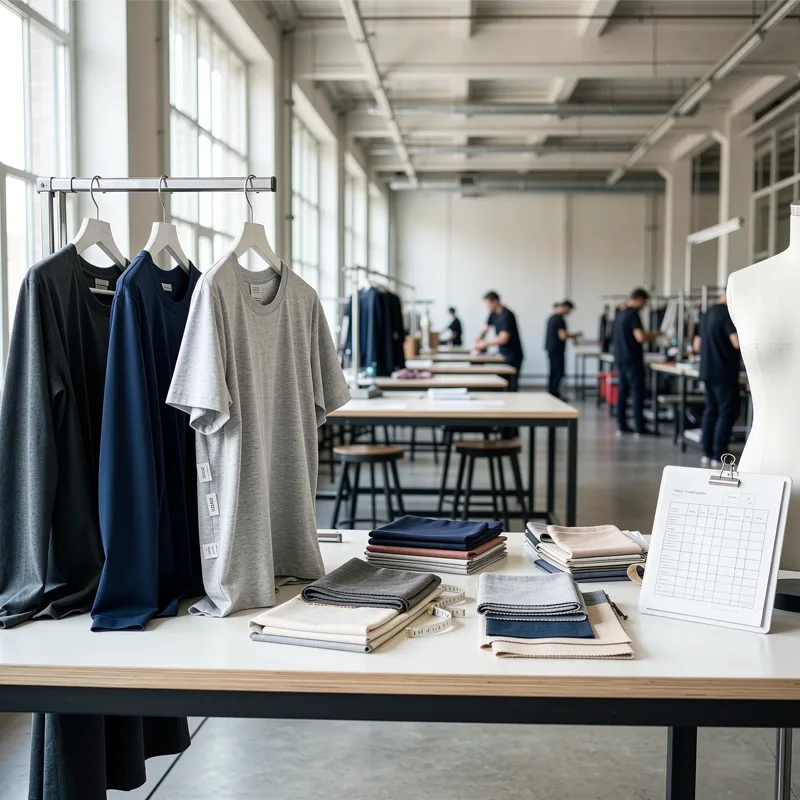
Do not start with price.
Start with product fit.
A factory should have relevant experience with your:
- Product category
- Fabric type
- Construction
- Quality level
- Order size
- Customization requirements
3.1 Check Similar Product Experience
Ask the factory for examples of similar products.
For example:
If you need fleece jackets, look for experience with:
- Fleece fabrics
- Zippers
- Lining
- Pocket construction
- Binding
- Sleeve construction
If you need sportswear, look for experience with:
- Stretch fabrics
- Performance materials
- Flat seams
- Elastic components
- Movement-focused construction
Example
A factory may produce 50,000 T-shirts every month.
That sounds impressive.
But if your order is for a complex insulated jacket, T-shirt volume does not prove jacket expertise.
Product relevance matters more than a large production number.
4. Bulk Clothing Manufacturer vs Small-Batch Factory
Not every factory is designed for the same production scale.
A small-batch manufacturer may focus on flexibility.
A bulk manufacturer needs stronger production planning and capacity management.
| Factor | Small-Batch Production | Bulk Production |
|---|---|---|
| Order Volume | Lower | Higher |
| Production Planning | More flexible | More structured |
| Material Purchasing | Smaller quantities | Larger quantities |
| Line Management | Simple | More complex |
| Quality Control | Style-focused | Batch-focused |
| Reorder Capability | Varies | Usually important |
| Best For | Testing products | Scaled collections |
Example
A startup may test 300 hoodies before launching a new product.
An established retailer may need 20,000 units for a seasonal program.
The second project needs much stronger production planning.
5. What MOQ Should You Expect From a Bulk Clothing Manufacturer?
MOQ is one of the first numbers buyers ask about.
But MOQ should not be viewed alone.
It can depend on:
- Product type
- Fabric
- Color
- Customization
- Production method
- Number of sizes
Different factories publish very different MOQ models. Current China manufacturer examples range from low-MOQ programs to much larger bulk-production programs, which shows why buyers should confirm MOQ against the actual product specification rather than rely on a general number.
Ask These Questions
Before accepting an MOQ, confirm:
- Is MOQ per style?
- Is it per color?
- Is it per fabric?
- Can colors be combined?
- Does custom fabric change the MOQ?
- Does the MOQ change for repeat orders?
Example
A factory says:
MOQ: 500 pieces.
That sounds simple.
But then you discover it means:
500 pieces per color per style.
If you need four colors, your actual commitment could be 2,000 pieces.
Always clarify the calculation.
6. Sampling Before Bulk Production
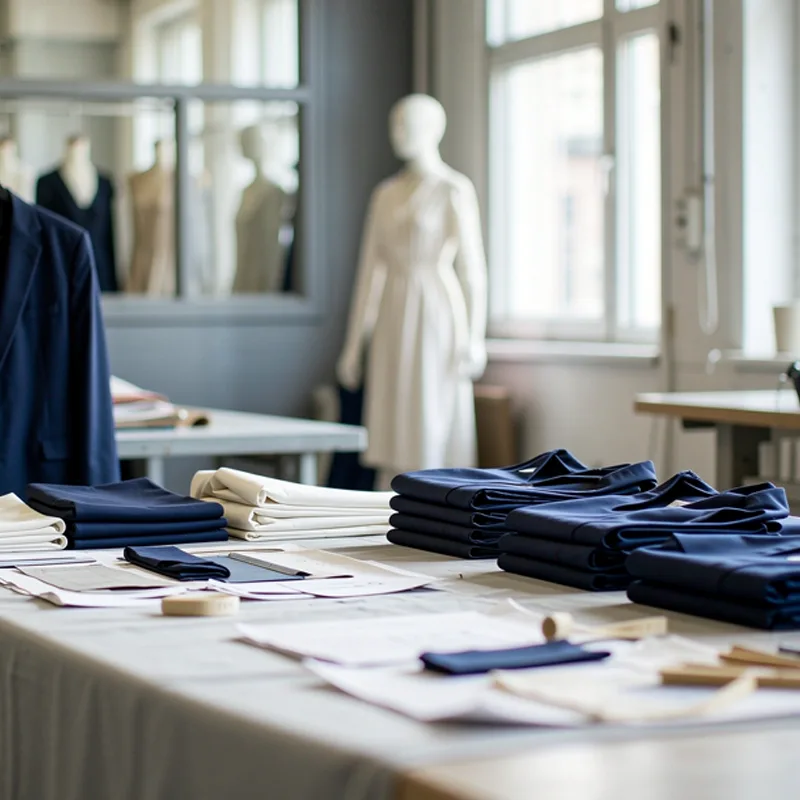
A professional bulk clothing manufacturer China partner should treat sampling as a control stage.
The sample should establish the production standard.
Check:
- Fabric composition
- Fabric weight
- Measurements
- Fit
- Color
- Stitching
- Construction
- Trims
- Labels
- Packaging
6.1 Why the Approved Sample Matters
The approved sample becomes the physical reference for bulk production.
However, a sample alone is not enough.
Your technical specification should also define:
- Measurement tolerances
- Fabric specifications
- Color references
- Construction requirements
- Branding details
Example
Suppose the approved jacket has a sleeve length of 64 cm.
The bulk production specification should state the required measurement and acceptable tolerance.
Otherwise, the factory may interpret the sample differently.
A clear specification reduces interpretation.
7. How to Control Quality During Bulk Clothing Production
Quality control should not happen only at the end.
A stronger process has several checkpoints.
7.1 Material Inspection
Check materials before cutting.
Review:
- Fabric composition
- Fabric weight
- Color
- Width
- Defects
- Shrinkage requirements
7.2 Pre-Production Approval
Confirm:
- Approved sample
- Fabric
- Trims
- Labels
- Packaging
- Production specifications
7.3 In-Line Inspection
Inspect garments while production is running.
Check:
- Stitching
- Measurements
- Construction
- Defects
- Color consistency
7.4 Final Inspection
Check:
- Finished garments
- Quantity
- Packaging
- Labels
- Cartons
Example
Imagine a sewing problem appears on day two of production.
If the factory detects it immediately, only part of the order may need correction.
If the problem is discovered after all 8,000 pieces are finished, the cost and delay can be much higher.
That is why in-line quality control matters in bulk apparel production.
8. Production Capacity: What Should Buyers Actually Check?
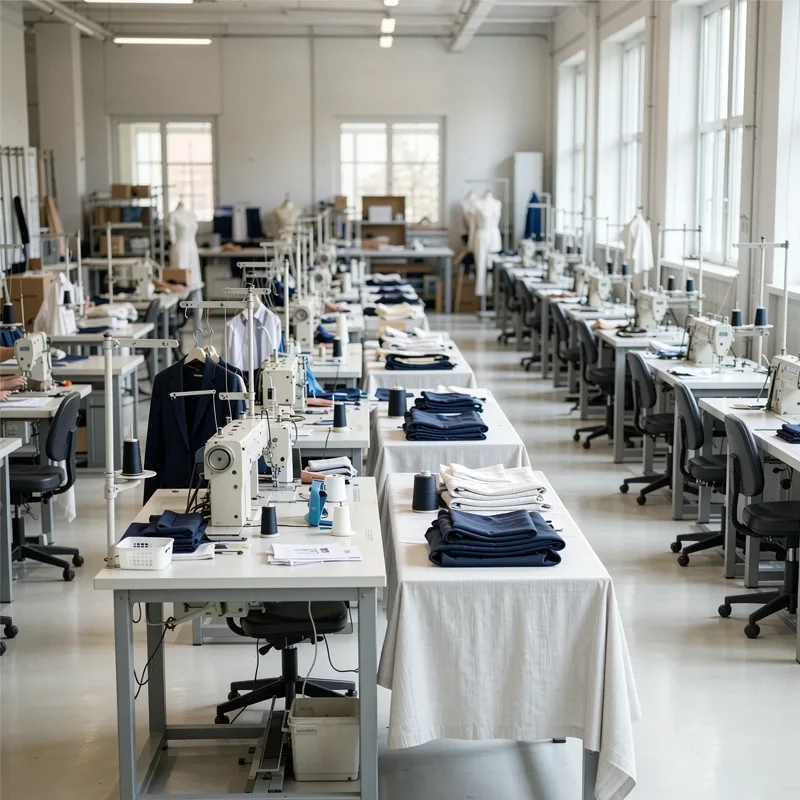
Do not ask only:
“How many pieces can your factory produce?”
Ask more specific questions.
Check:
- Number of production lines
- Main product categories
- Equipment
- Workforce
- Current production schedule
- Monthly capacity
- Seasonal capacity
- Subcontracting policy
Capacity should also be matched to your product.
Example
A factory may claim a capacity of 100,000 pieces per month.
That does not mean it can produce your 20,000 technical jackets next month.
Capacity depends on:
- Garment complexity
- Available materials
- Existing orders
- Production lines
- Required finishing
Available capacity is more important than theoretical capacity.
9. Bulk Clothing Manufacturer China: Factory vs Trading Company
Buyers should understand who actually controls production.
A trading company can provide useful sourcing services.
A direct factory provides direct access to manufacturing.
Neither model automatically guarantees better results.
The key is transparency.
| Factor | Direct Factory | Trading Company |
|---|---|---|
| Production Control | Direct | Depends on partners |
| Technical Communication | Direct factory team | Through intermediary |
| Product Range | Often more focused | Often broader |
| Supplier Network | Internal | External |
| Production Visibility | Usually higher | Depends on structure |
| Custom Development | Depends on factory | Depends on partner network |
Questions to Ask
- Where will production take place?
- Who controls the sewing line?
- Who manages QC?
- Are subcontractors involved?
- Can the factory provide a live production walkthrough?
- Who handles production problems?
These questions matter more than the word “factory” on a website.
10. How to Compare Bulk Clothing Factory Quotes
Never compare unit prices without comparing specifications.
A useful quotation comparison should include:
| Cost Item | Factory A | Factory B | Factory C |
|---|---|---|---|
| Garment Price | — | — | — |
| Fabric | — | — | — |
| Trims | — | — | — |
| Labels | — | — | — |
| Packaging | — | — | — |
| Sampling | — | — | — |
| Inspection | — | — | — |
| Shipping | — | — | — |
The final comparison should consider total landed cost, not just the factory unit price.
Example
Factory A quotes $10.
Factory B quotes $10.50.
But Factory A uses a different fabric specification and excludes custom packaging.
Factory B may actually offer the more comparable quotation.
11. Communication Is Critical for Bulk Apparel Orders
Large orders involve hundreds of details.
Communication errors can multiply quickly.
A reliable manufacturer should clearly confirm:
- Product specifications
- Material approvals
- Sample comments
- Production dates
- Quantity
- Packaging
- Shipping requirements
Test Communication Before Ordering
Send the same RFQ to several factories.
Compare:
- Response speed
- Technical questions
- Quotation detail
- Understanding of specifications
- Willingness to clarify risks
Example
You send a jacket tech pack.
Factory A replies:
“Price: $18. MOQ: 1,000.”
Factory B asks about:
- Fabric weight
- Lining
- Zipper specification
- Color standard
- Quantity by size
- Packaging
Factory B has shown more technical engagement.
That does not prove Factory B will perform better, but it gives you useful evidence before placing an order.
12. When Should You Move From Sample to Bulk Production?
Do not scale simply because the sample looks good.
Before bulk production, confirm:
Product
- Final sample approved
- Measurements confirmed
- Fabric approved
- Color approved
- Trims approved
Commercial
- Price confirmed
- Quantity confirmed
- Payment terms agreed
- Delivery schedule agreed
Production
- Materials available
- Production schedule confirmed
- QC requirements documented
- Packaging approved
Example
A brand tests 500 hoodies.
The sample passes.
But the fabric supplier has not yet confirmed enough fabric for 10,000 units.
Starting bulk production immediately creates unnecessary risk.
Material readiness should be part of the bulk-production approval.
13. How to Manage a Large Clothing Order Step by Step
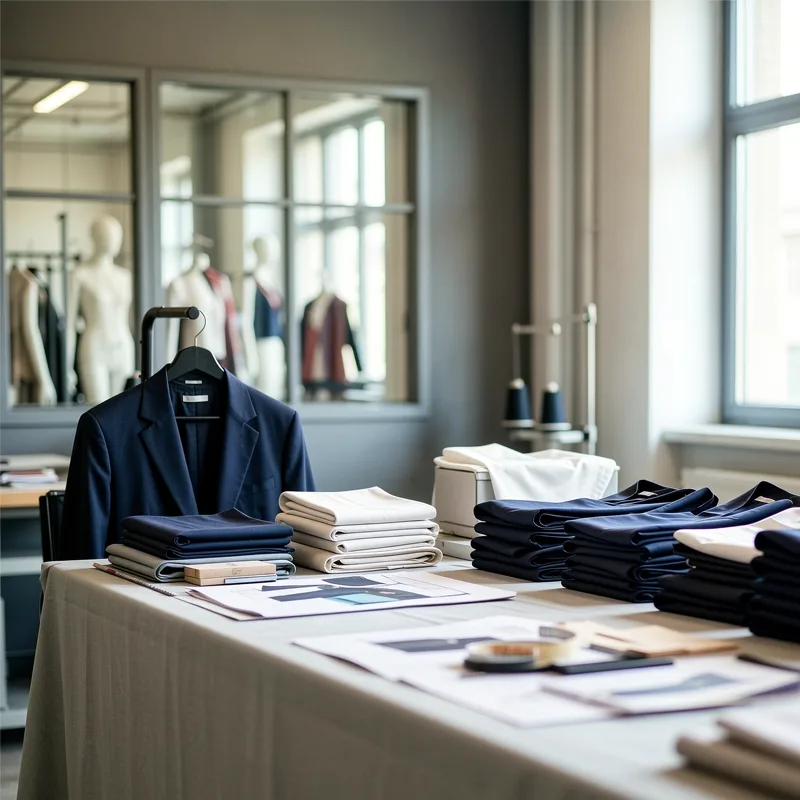
A practical workflow looks like this:
Step 1: Product Brief
Provide:
- Product photos
- Tech pack
- Measurements
- Fabric requirements
- Quantity
Step 2: Factory Shortlist
Compare several manufacturers.
Step 3: Sample
Develop and review samples.
Step 4: Production Specification
Lock the final requirements.
Step 5: Material Approval
Approve fabrics and trims.
Step 6: Pre-Production Meeting
Confirm production details.
Step 7: Bulk Production
Monitor the production process.
Step 8: Final Inspection
Check quality and quantity.
Step 9: Packing and Shipment
Confirm cartons and shipping documents.
This workflow creates checkpoints before money and materials move to the next stage.
14. How to Reduce Risk When Starting With a New Bulk Clothing Manufacturer
Do not immediately move from a first sample to your largest possible order.
A staged approach is safer.
A Practical Scaling Model
Stage 1 — Sample
Test product development.
↓
Stage 2 — Trial Order
Test factory execution.
↓
Stage 3 — Larger Production
Test capacity and consistency.
↓
Stage 4 — Repeat Orders
Evaluate long-term reliability.
Example
A brand plans to order 10,000 jackets.
Instead of immediately committing to 10,000, it can first test the supplier's ability to produce a smaller controlled order.
If the result is consistent, the brand can increase volume.
The exact order size depends on the product, factory, budget, and risk tolerance.
15. What Information Should You Send a Bulk Clothing Manufacturer?
A detailed RFQ saves time.
Include:
Product Information
- Product category
- Reference images
- Tech pack
- Fabric composition
- Fabric weight
- Size chart
- Color references
Branding
- Logo
- Labels
- Hangtags
- Packaging
Order
- Total quantity
- Quantity by color
- Quantity by size
- Target delivery date
- Destination country
Example
Instead of:
“We need 5,000 jackets. Please quote.”
Send:
“We need 5,000 jackets across three colors and five sizes. Please quote based on the attached tech pack, fabric specification, logo placement, packaging requirements, and target delivery date.”
The second request gives the manufacturer much more information.
16. What Makes a Good Bulk Clothing Manufacturer?
A reliable supplier should combine several capabilities.
| Capability | Why It Matters |
|---|---|
| Product Experience | Understands your garment |
| Sampling | Confirms the product |
| Material Control | Protects consistency |
| Production Planning | Supports delivery |
| QC System | Reduces defects |
| Communication | Prevents misunderstandings |
| Capacity | Supports larger orders |
| Repeatability | Supports future orders |
The last point is often overlooked.
Repeatability is one of the most important characteristics of a bulk manufacturer.
A factory that produces one excellent order is useful.
A factory that can reproduce the same standard season after season is much more valuable to a growing brand.
17. Bulk Clothing Manufacturer China: What About KALAIBEN?
KALAIBEN is one China-based apparel manufacturer offering OEM and ODM production.
Its published capabilities include knitted and woven apparel, casualwear, sportswear, outdoorwear, children's apparel, product development, pattern making, sampling, and mass production.
The company states that its facility covers approximately 6,000㎡, with more than 700 production machines, nearly 700 employees, and annual production capacity of approximately 600,000 pieces or sets.
It also states that buyers can develop products from technical drawings, tech packs, sketches, reference photos, or existing samples, with support for sampling before bulk production.
For buyers, the important question is not simply whether a manufacturer is large.
The better question is:
Can the manufacturer's product experience, development process, capacity, and quality system match your bulk order?
You can review the company's manufacturing capabilities through the KALAIBEN official website.
18. Bulk Clothing Manufacturer China: Final Buyer Checklist
Before placing a large apparel order, confirm:
Product
- Similar product experience
- Approved sample
- Final measurements
- Fabric specification
- Color standard
- Trims approved
Factory
- Production capability verified
- Capacity matches the order
- Production location confirmed
- Subcontracting policy understood
Quality
- Material inspection
- Pre-production approval
- In-line inspection
- Final inspection
Commercial
- Unit price confirmed
- MOQ confirmed
- Quantity confirmed
- Payment terms agreed
- Delivery date confirmed
Logistics
- Packaging approved
- Carton information confirmed
- Shipping terms agreed
- Required documents confirmed
19. How to Choose the Right Bulk Clothing Manufacturer China Partner
The best supplier is not necessarily the cheapest factory or the largest factory.
For bulk apparel production, the real test is consistency.
A strong sourcing process should look like this:
Product fit → RFQ → Sample → Specification lock → Material approval → Production → QC → Final inspection → Shipment → Reorder
This process gives buyers more control over quality, cost, and delivery.
China offers a large and mature apparel manufacturing ecosystem. But the size of that ecosystem makes supplier selection more important, not less.
Choose a manufacturer based on evidence.
Check the product experience.
Test the sample.
Verify production capability.
Control the specification.
Then scale the order.
That is how a bulk clothing manufacturer China partnership becomes a long-term supply relationship rather than a one-time transaction.











