




China Clothing OEM ODM Factory: How to Choose the Right Manufacturing Partner
发布时间:2026-09-28 分类:NEWS 浏览量:555
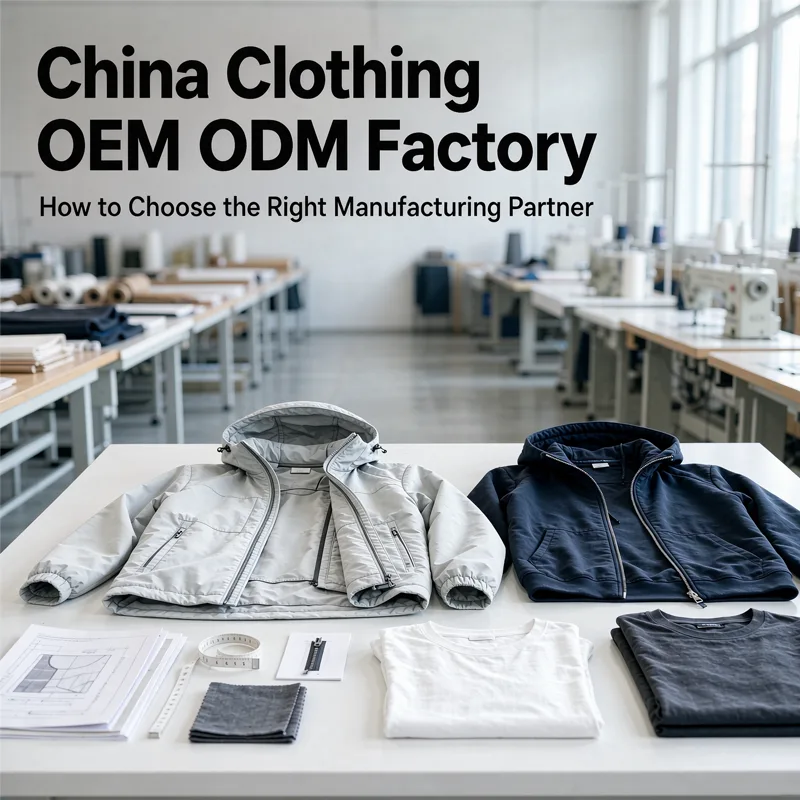
Finding the right China clothing OEM ODM factory is not only about getting a lower production price. The right factory should match your product development needs, order volume, quality standards, communication process, and delivery expectations.
For brands, wholesalers, retailers, and private-label businesses, the key question is simple:
Can this factory turn your clothing idea into a consistent, production-ready product?
A good OEM/ODM partner should be able to support the process from fabric and pattern development to sampling, bulk production, quality control, labeling, packaging, and delivery preparation.
This guide explains how to evaluate a China clothing OEM ODM factory, compare OEM and ODM services, avoid common sourcing mistakes, and prepare a better inquiry before requesting a quotation.
1. What Is a China Clothing OEM ODM Factory?
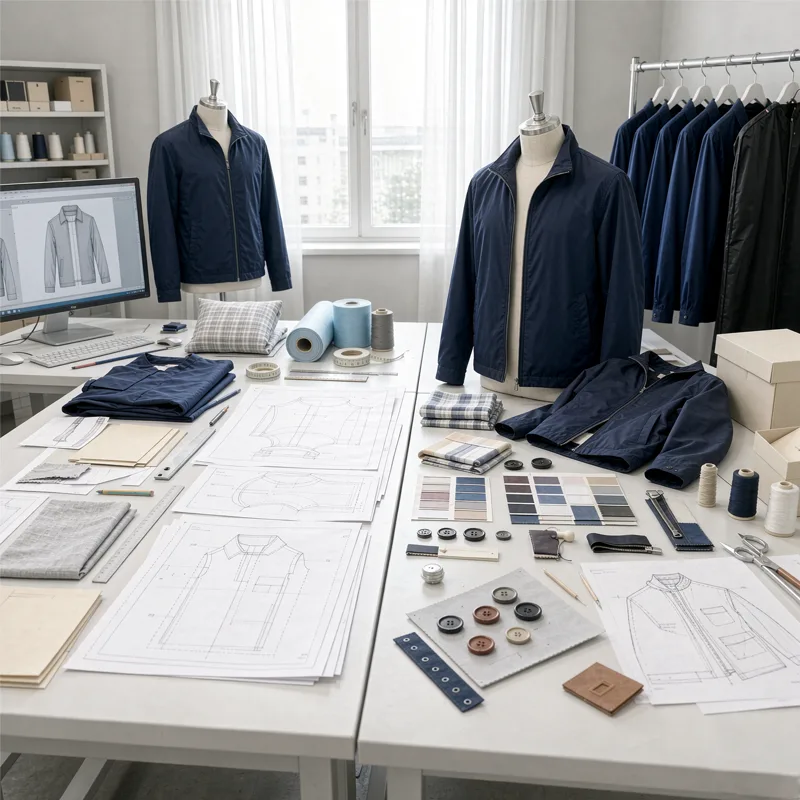
A China clothing OEM ODM factory provides manufacturing services under two main models: OEM and ODM.
They are related, but they solve different problems.
1.1 What Does Clothing OEM Mean?
OEM stands for Original Equipment Manufacturing.
In an OEM project, the buyer usually provides most of the product specifications.
These may include:
- Technical drawings
- Tech packs
- Measurements
- Fabric requirements
- Color references
- Construction details
- Trim specifications
- Labels and packaging requirements
The factory's job is to manufacture the product according to the approved specifications.
Example:
A sportswear brand already has a finished jacket tech pack.
The brand knows the:
- Fabric composition
- GSM
- Measurements
- Stitching requirements
- Zipper specifications
- Size grading
- Packaging requirements
In this situation, an OEM clothing factory can focus on turning the specifications into consistent bulk production.
1.2 What Does Clothing ODM Mean?
ODM stands for Original Design Manufacturing.
ODM involves more product development support from the manufacturer.
A buyer may start with:
- A product concept
- Reference photos
- A sketch
- An existing garment
- A mood board
- A target price
- A functional requirement
The manufacturer can then help develop the product.
Typical support may include:
- Fabric recommendations
- Pattern development
- Sample making
- Fit adjustments
- Construction suggestions
- Trim selection
- Production preparation
Example:
A new outdoor brand wants to launch a lightweight fleece jacket.
The brand understands its target market but does not have a complete technical package.
An ODM partner can help turn the initial idea into a production-ready garment.
1.3 OEM vs ODM Clothing Manufacturing
| Factor | OEM | ODM |
|---|---|---|
| Design source | Buyer-led | Joint development |
| Tech pack | Usually provided | May be incomplete |
| Pattern development | Based on specifications | Manufacturer can support |
| Product development | More limited | More extensive |
| Sample development | Specification-based | Development-based |
| Best suited for | Experienced brands | New or growing brands |
| Manufacturer involvement | Production-focused | Development + production |
The important point is that OEM and ODM are not simply two different factory labels.
They describe different levels of manufacturer involvement.
2. Why Source Clothing From a China OEM ODM Factory?
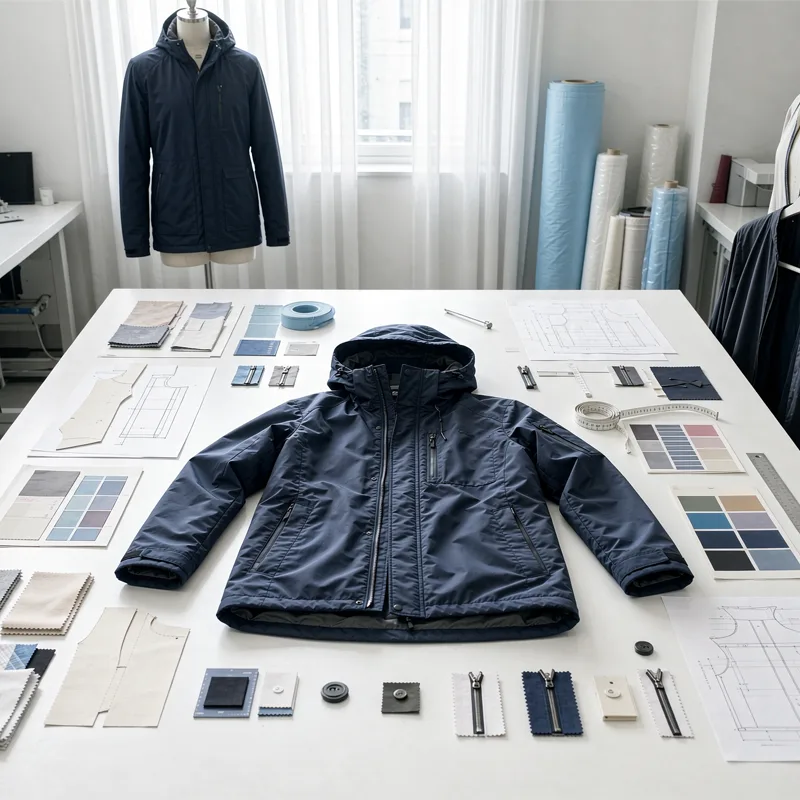
China remains a major global apparel manufacturing base.
According to the China National Garment Association, China's apparel and clothing accessory exports reached about US$159.15 billion in 2024. Knitwear exports increased in volume while woven apparel also recorded substantial export volumes.
For international buyers, the attraction is not only production cost.
A capable China clothing OEM ODM factory can provide access to a broader manufacturing ecosystem.
2.1 Product Development Support
A factory with technical development capability can help solve problems before production begins.
For example:
- The fabric may be too heavy.
- The sleeve construction may restrict movement.
- The pocket position may not be practical.
- The sample measurement may not match the intended fit.
- The selected trim may increase production complexity.
Solving these problems during development is usually easier than correcting them after bulk production.
2.2 Large-Scale Production Capability
China has a mature apparel supply chain covering fabrics, trims, pattern development, cutting, sewing, finishing, inspection, and packaging.
However, large theoretical capacity does not automatically mean good production capability for your project.
A factory may have many machines but still struggle with:
- Your specific garment category
- Seasonal production peaks
- Complex construction
- Small production windows
- Multi-style orders
- Strict quality requirements
Capacity should therefore be evaluated against your actual product.
2.3 OEM and ODM Flexibility
Brands do not always have the same level of product development resources.
One company may have a complete technical team.
Another may only have:
“We want a lightweight fleece jacket with this look and target price.”
An experienced manufacturer can support both situations.
That flexibility is one reason buyers consider China OEM and ODM manufacturing.
3. How to Choose a China Clothing OEM ODM Factory
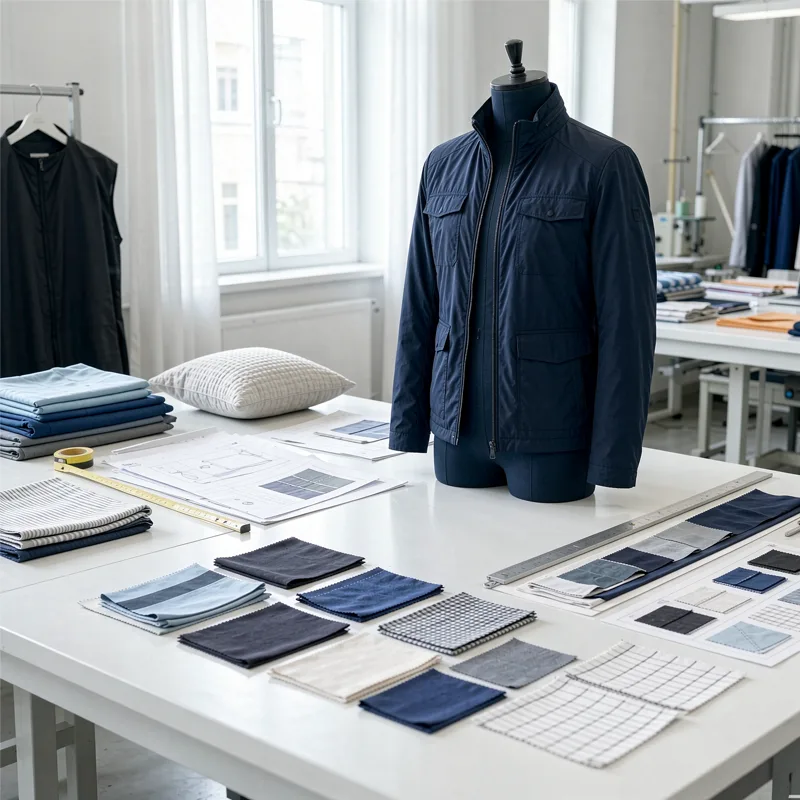
The cheapest quotation is rarely enough to identify the right manufacturing partner.
Use a structured evaluation process instead.
3.1 Check the Factory's Product Experience
First, check whether the factory actually manufactures products similar to yours.
Look for experience with:
- Jackets
- Hoodies
- T-shirts
- Sportswear
- Outdoorwear
- Knitwear
- Woven garments
- Children's apparel
- Workwear
- Lifestyle clothing
A factory that specializes in your product category will usually understand the relevant construction and production challenges better.
Example:
A brand needs a technical outdoor jacket with multiple zippers and functional pockets.
A factory that mainly produces basic T-shirts may not be the right production partner, even if its quoted price is attractive.
3.2 Verify Real Manufacturing Capability
Do not evaluate a supplier only from its website.
Ask practical questions:
- Where is production performed?
- Which processes are handled in-house?
- What equipment is available?
- What product categories are produced?
- What is the normal production volume?
- How is quality inspected?
- What happens during production peaks?
A real manufacturing evaluation should connect factory capability to your specific product.
3.3 Review the Sample Process
Ask how the factory handles:
- First sample
- Fit comments
- Pattern revisions
- Second sample
- Pre-production approval
- Bulk production
A strong sample process creates a clear bridge between design and manufacturing.
3.4 Evaluate Communication
Communication is an often-overlooked manufacturing cost.
Poor communication can create:
- Incorrect fabric
- Wrong measurements
- Missing trims
- Incorrect labels
- Packaging mistakes
- Production delays
For international buyers, the factory should clearly confirm specifications in writing.
4. China OEM vs ODM: Which Manufacturing Model Do You Need?
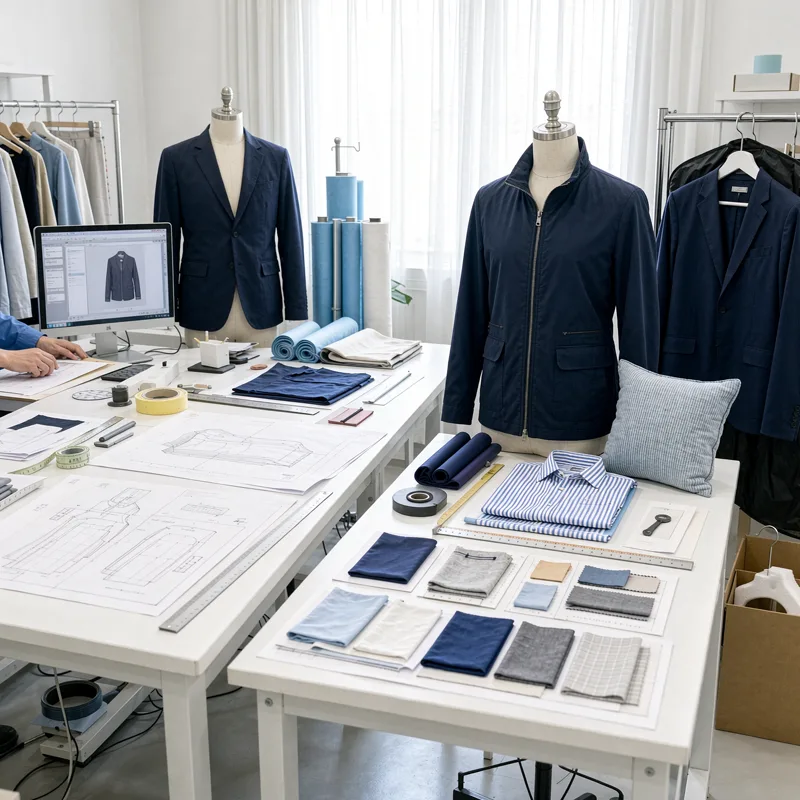
The answer depends on how developed your product is.
4.1 Choose OEM When Your Product Is Already Defined
OEM is generally suitable when you already have:
- Complete tech packs
- Approved measurements
- Fabric specifications
- Construction requirements
- Sample references
- Branding requirements
Your main need is reliable execution.
4.2 Choose ODM When You Need Product Development
ODM can make more sense when you need help with:
- Product concepts
- Fabric selection
- Pattern development
- Sample development
- Fit adjustment
- Construction improvements
4.3 A Simple Decision Framework
| Your Situation | More Suitable Model |
|---|---|
| Complete tech pack | OEM |
| Existing approved sample | OEM |
| Need factory production only | OEM |
| Product concept only | ODM |
| Need pattern development | ODM |
| Need material recommendations | ODM |
| Need help turning ideas into samples | ODM |
There is also a middle ground.
A brand may start with ODM development and move into OEM production once the final product specifications are approved.
That can be useful for growing brands.
5. What Services Should a China Clothing OEM ODM Factory Provide?
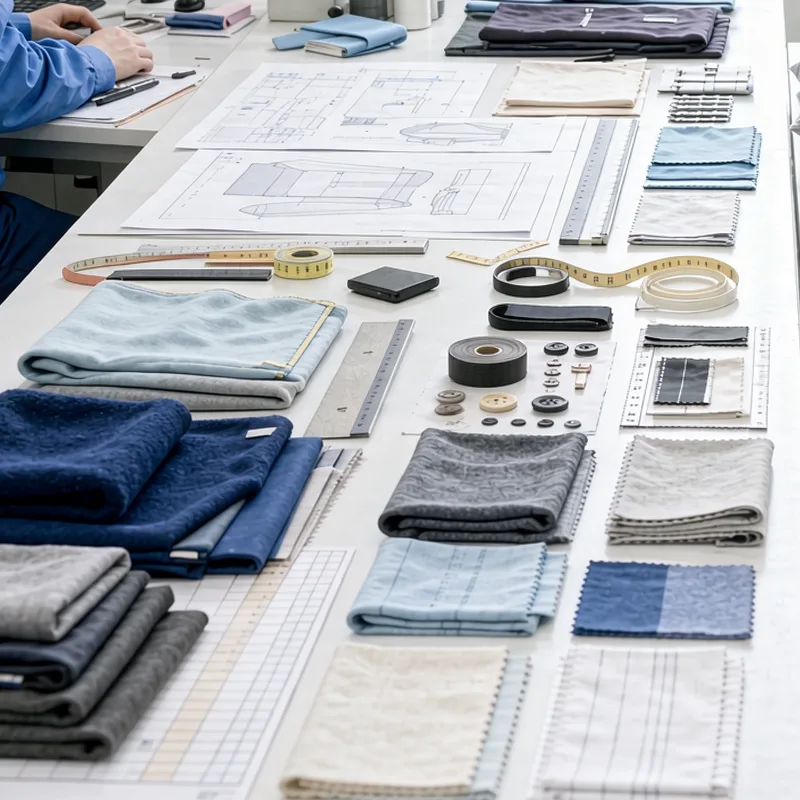
A capable factory may offer more than cutting and sewing.
The exact service scope varies by supplier, so confirm it before placing an order.
5.1 Fabric and Material Sourcing
Material selection affects:
- Product performance
- Hand feel
- Appearance
- Cost
- Durability
- Production stability
For example, choosing a fleece fabric is not simply a matter of selecting a color.
You may also need to consider:
- Weight
- Composition
- Surface finish
- Stretch
- Shrinkage
- Pilling resistance
- Color consistency
5.2 Pattern Development
Pattern development converts product requirements into production-ready garment shapes.
This can affect:
- Fit
- Comfort
- Appearance
- Sewing efficiency
- Fabric consumption
A small pattern adjustment can sometimes change the finished garment significantly.
5.3 Sampling
Sampling allows buyers to check the product before committing to bulk production.
A sample should be reviewed for:
- Measurements
- Fit
- Fabric
- Color
- Construction
- Stitching
- Trims
- Branding
- Function
5.4 Bulk Production
After approval, the factory prepares materials and production.
A typical process may include:
Material preparation → Cutting → Sewing → Finishing → Inspection → Packing
The exact workflow depends on the product.
5.5 Private Label and Packaging
Many B2B buyers also require:
- Woven labels
- Hangtags
- Care labels
- Printed labels
- Custom packaging
- Cartons
- Polybags
Confirm these requirements before production because branding details can affect both cost and lead time.
6. What MOQ Should You Expect From a China Clothing OEM ODM Factory?
There is no universal MOQ for Chinese clothing factories.
MOQ can depend on:
- Product category
- Fabric
- Fabric minimums
- Number of colors
- Construction complexity
- Customization
- Production process
- Factory planning
A jacket using a standard fabric may have different production requirements from a garment using a custom-developed fabric.
6.1 Ask About MOQ by Style and Color
Do not ask only:
“What is your MOQ?”
Ask:
“What is the MOQ per style, color, and size range?”
Also clarify whether fabric MOQ applies separately.
6.2 Example MOQ Scenario
Imagine a buyer wants:
- 3 jacket styles
- 4 colors per style
- Custom labels
- Custom packaging
The factory may calculate production requirements differently depending on whether the MOQ applies to:
- Each style
- Each color
- Each fabric
- The entire order
This is why a written quotation should clearly define the MOQ structure.
7. How Does the OEM ODM Clothing Production Process Work?
A clear process reduces misunderstandings.
7.1 Step 1: Send the Product Brief
Provide:
- Product type
- Reference images
- Tech pack if available
- Fabric requirements
- Target quantity
- Target market
- Size range
- Colors
- Branding requirements
- Target delivery date
7.2 Step 2: Factory Review
The manufacturer reviews:
- Technical requirements
- Materials
- Construction
- Quantity
- Production difficulty
- Timeline
At this stage, the factory should identify obvious production risks.
7.3 Step 3: Quotation
A useful quotation should make clear:
- Product cost
- Sample cost
- MOQ
- Fabric basis
- Customization
- Packaging
- Lead time
- Shipping terms if applicable
Do not compare two quotations only by the final unit price.
7.4 Step 4: Sample Development
The factory develops the sample.
The buyer checks the garment and provides revisions.
7.5 Step 5: Pre-Production Approval
Before bulk manufacturing, confirm the final approved specifications.
This may include:
- Approved sample
- Measurements
- Fabric
- Color
- Labels
- Packaging
- Quantity
7.6 Step 6: Bulk Production
The factory moves into material preparation and production.
Quality checks should happen throughout production, not only at the end.
7.7 Step 7: Final Inspection and Packing
Finished garments are checked and packed according to the agreed requirements.
8. How to Control Quality With a China Clothing OEM ODM Factory
Quality control should start before the production line starts.
8.1 Approve a Reference Sample
The approved sample should become the physical reference for bulk production.
It helps the factory and buyer align on:
- Fit
- Construction
- Appearance
- Fabric
- Trims
- Finishing
8.2 Define Measurable Specifications
Avoid vague instructions such as:
“Make the fit slightly larger.”
Use measurable specifications instead.
For example:
| Specification | Better Requirement |
|---|---|
| Chest | Exact measurement |
| Body length | Exact measurement |
| Sleeve length | Exact measurement |
| Fabric | Composition + GSM |
| Color | Approved color reference |
| Stitching | Defined construction |
| Label | Approved artwork |
| Packaging | Defined packing method |
This makes quality easier to manage.
8.3 Check Quality During Production
Do not wait until the entire order is finished.
Depending on the project, checks may include:
- Fabric inspection
- Cutting accuracy
- Sewing quality
- Measurement checks
- Trim inspection
- Finishing
- Final garment inspection
The goal is simple:
Find problems before they become large quantities of problems.
9. How to Compare China Clothing OEM ODM Factory Quotes
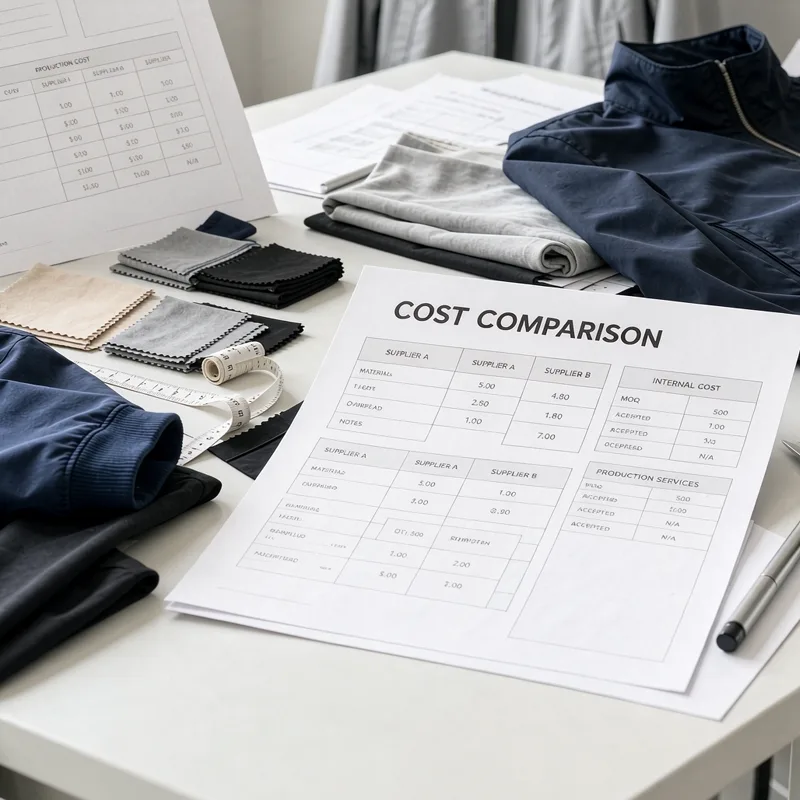
Price comparison becomes difficult when factories quote different specifications.
Use a like-for-like comparison.
9.1 Compare the Same Product Specification
Check:
- Fabric composition
- Fabric weight
- Construction
- Number of colors
- Quantity
- Size range
- Labels
- Packaging
- Sample requirements
- Delivery terms
9.2 Build a Supplier Comparison Table
| Factor | Factory A | Factory B | Factory C |
|---|---|---|---|
| OEM capability | ✓ | ✓ | ✓ |
| ODM support | ✓ | — | ✓ |
| Sample development | ✓ | ✓ | ✓ |
| Fabric sourcing | ✓ | ✓ | — |
| Private label | ✓ | ✓ | ✓ |
| Quality inspection | Confirm | Confirm | Confirm |
| MOQ | Ask | Ask | Ask |
| Lead time | Confirm | Confirm | Confirm |
The purpose of this table is not to choose the factory with the most checkmarks.
It helps you identify which supplier actually matches your project requirements.
10. How to Tell if a China Clothing Factory Is a Real Factory
This is one of the most important questions for international buyers.
A supplier may present itself as a manufacturer while outsourcing most production.
That is not automatically a problem, but buyers should understand the production structure.
10.1 Ask Where Production Happens
Ask:
- Is production performed in your own facility?
- Which processes are outsourced?
- Who manages quality control?
- Who manages production scheduling?
- Where are samples developed?
- Where is bulk production completed?
10.2 Look Beyond Factory Photos
Factory photos are useful, but they are not enough.
Also evaluate:
- Product knowledge
- Sample quality
- Technical communication
- Production explanation
- Documentation
- Quality process
- Response to technical questions
A supplier that can explain your product clearly is often easier to work with than one that only sends attractive factory photographs.
10.3 Verify Production Capacity Carefully
Ask about available capacity for your project, not just annual theoretical capacity.
For example:
A factory may claim a large annual output.
But if your order falls during its peak season, the available production window may be much smaller.
Capacity is therefore both a technical issue and a scheduling issue.
11. What Should You Send to a China Clothing OEM ODM Factory for a Quote?
A better inquiry usually produces a better quotation.
Send as much relevant information as you can.
11.1 Product Information
Include:
- Product category
- Product images
- Technical drawings
- Existing sample
- Fabric requirements
- GSM
- Composition
- Color
- Size range
- Construction details
11.2 Order Information
Include:
- Estimated quantity
- Number of styles
- Number of colors
- Expected repeat orders
- Target delivery date
11.3 Branding Information
Include:
- Logo
- Woven labels
- Hangtags
- Care labels
- Packaging
- Carton requirements
11.4 Business Information
If available, also explain:
- Target market
- Brand positioning
- Target price range
- Sales channel
- Expected order frequency
This gives the manufacturer more context.
12. Common Mistakes When Choosing a China Clothing OEM ODM Factory
Several mistakes appear repeatedly in apparel sourcing.
12.1 Choosing Only by Unit Price
A lower price may come from:
- Lower fabric quality
- Different GSM
- Different construction
- Fewer inspections
- Different packaging
- Different production assumptions
Compare specifications before comparing prices.
12.2 Skipping the Sample
A bulk order should not depend on assumptions.
The sample provides an opportunity to identify:
- Fit problems
- Fabric problems
- Construction issues
- Color issues
- Trim problems
before large quantities are produced.
12.3 Giving Vague Requirements
“Premium quality” is not a technical specification.
Instead, define:
- Fabric
- GSM
- Measurements
- Construction
- Stitching
- Trims
- Finishing
- Packaging
12.4 Ignoring Communication
A factory may produce good garments but still be difficult to manage.
Look at how clearly the supplier responds to:
- Technical questions
- Sample revisions
- Cost changes
- Production schedules
- Quality issues
Communication is part of manufacturing performance.
12.5 Ordering Too Much Too Early
For a new supplier, a controlled first order can reduce risk.
After the first production run, review:
- Product consistency
- Quality
- Delivery
- Communication
- Documentation
- Problem-solving
Then decide whether to scale the relationship.
13. When Should You Choose OEM, ODM, or a Full-Service Factory?
Use your current business stage as a guide.
13.1 New Product Idea
If you only have an idea, look for stronger ODM development support.
You may need help with:
- Fabric
- Pattern
- Fit
- Sample
- Construction
13.2 Existing Product Specification
If your product is already fully developed, OEM manufacturing may be more efficient.
The factory's main job is accurate execution.
13.3 Growing Product Range
If your brand is expanding across several categories, a full-service manufacturer can simplify supplier management.
Instead of coordinating:
- Fabric suppliers
- Pattern makers
- Sample rooms
- Production factories
- Packaging suppliers
you may be able to consolidate more stages with one manufacturing partner.
14. What Makes a Reliable China Clothing OEM ODM Factory?
A reliable supplier is not defined by one number.
Look at the complete manufacturing system.
14.1 Product Development
Can the factory understand your product?
14.2 Sampling
Can it create and revise samples efficiently?
14.3 Production
Can it manufacture your order at the required scale?
14.4 Quality Control
Does it have a clear inspection process?
14.5 Communication
Can the team communicate technical details accurately?
14.6 Delivery Planning
Can the factory provide a realistic production schedule?
14.7 Customization
Can it support your:
- Fabric
- Colors
- Labels
- Trims
- Packaging
- Construction requirements
A strong supplier should perform consistently across these areas.
15. What Can You Expect From a Professional China Clothing OEM ODM Factory?
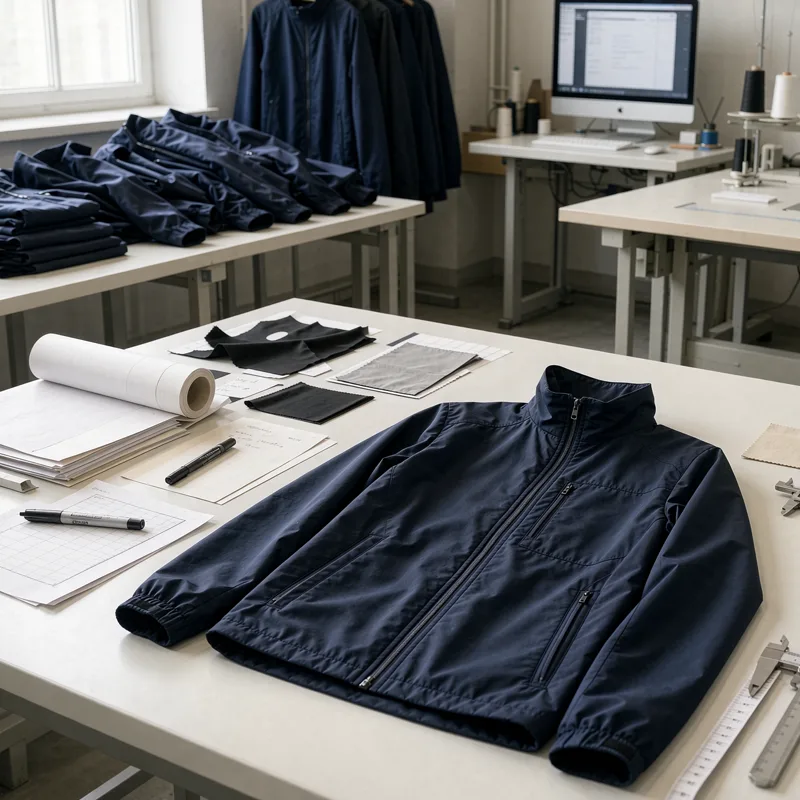
The exact service scope varies by factory.
However, a professional partner should be able to clearly explain its capabilities rather than simply saying:
“We can make anything.”
Look for specific answers about:
- Product categories
- Development process
- Sampling
- MOQ
- Production capacity
- Quality control
- Customization
- Packaging
- Lead time
- Export experience
For example, KALAIBEN states that it supports both OEM and ODM projects, including product development, pattern making, sampling, customized production, labeling, and packaging. Its official information also lists a 6,000㎡ facility, 700+ production machines, nearly 700 employees, and approximately 600,000 pieces or sets of annual capacity.
The important point for buyers is not the numbers alone.
The question is whether those capabilities fit your product, order size, quality requirements, and development process.
16. How to Prepare Before Contacting a China Clothing OEM ODM Factory
Before sending an inquiry, prepare a simple sourcing brief.
Buyer Preparation Checklist
Product
- Product category
- Reference images
- Tech pack
- Existing sample
- Fabric requirements
- Color requirements
- Size range
Order
- Quantity
- Number of styles
- Number of colors
- Target delivery date
- Expected repeat order
Branding
- Logo
- Labels
- Hangtags
- Packaging
Commercial
- Target price
- Target market
- Shipping destination
- Required certifications, if applicable
The more complete the brief, the easier it is for a factory to assess feasibility and prepare a meaningful quotation.
17. China Clothing OEM ODM Factory: What About KALAIBEN?
KALAIBEN is one example of a China-based apparel manufacturer offering both OEM and ODM services.
The company specializes in knitted and woven apparel, including casualwear, sportswear, outdoorwear, and children's apparel. Its manufacturing information states that it supports product development, pattern making, sampling, customization, labeling, and packaging.
For buyers interested in learning more about the company's manufacturing capabilities, the official KALAIBEN apparel manufacturing page provides further information.
For a more detailed explanation of the ODM development process, see KALAIBEN's article on apparel manufacturer ODM services.
The goal is not simply to find a factory that can produce clothing.
It is to find a manufacturing partner whose capabilities match your product and business requirements.
18. China Clothing OEM ODM Factory: Final Buyer Checklist
Before placing your first production order, confirm these points.
| Evaluation Area | Questions to Ask |
|---|---|
| Product | Does the factory make similar products? |
| OEM | Can it follow complete specifications? |
| ODM | Can it support product development? |
| Sampling | How many sample revisions are possible? |
| MOQ | Is MOQ per style, color, or order? |
| Materials | Can the factory source your required fabrics? |
| Quality | How is bulk quality inspected? |
| Capacity | Is capacity available during your production window? |
| Customization | Can it handle labels and packaging? |
| Communication | Are technical details confirmed clearly? |
| Lead time | Is the production schedule realistic? |
| Pricing | Are all quotation assumptions clear? |
| Production | Is the manufacturing structure transparent? |
If a supplier cannot answer these questions clearly, ask for clarification before committing to bulk production.
19. How to Choose the Right China Clothing OEM ODM Factory
Choosing a China clothing OEM ODM factory is a manufacturing decision, but it is also a risk-management decision.
The right partner should help you move through the complete product journey:
Idea → Development → Sample → Approval → Production → Quality Control → Packing → Delivery
Do not evaluate a factory only by:
- Lowest price
- Largest factory
- Highest claimed capacity
- Fastest sample promise
Instead, evaluate how well the manufacturer fits your actual project.
For OEM buyers, prioritize specification accuracy and production consistency.
For ODM buyers, look closely at product development and technical support.
For growing brands, consider whether the manufacturer can support you beyond the first order.
A well-prepared product brief, a controlled sample process, clear specifications, and careful supplier evaluation can significantly reduce avoidable sourcing problems.
The best starting point is simple:
Define your product clearly, ask the right manufacturing questions, and compare factories on the complete production process—not price alone.











