




How to Start a Clothing Brand: A Complete Guide for Beginners
发布时间:2026-08-25 分类:NEWS 浏览量:694
Starting a clothing brand is an exciting opportunity, but turning a fashion idea into a real business requires more than creating attractive designs. A successful clothing brand needs a clear market position, well-developed products, reliable manufacturing, consistent quality, and a practical strategy for reaching customers.
For new fashion entrepreneurs, the process can seem complicated. You may need to make decisions about your target customers, clothing categories, fabrics, product development, samples, manufacturing, minimum order quantities, pricing, packaging, and sales channels.
The good news is that you do not need to build everything at once.
A well-planned clothing brand can start with a focused product concept and gradually develop as you learn more about your customers and the market.
In this guide, we explain the key steps to starting a clothing brand, from developing your initial idea to finding a suitable clothing manufacturing partner.
1. Define Your Clothing Brand Concept
The first step in starting a clothing brand is deciding what your brand represents.
Before designing your first products, consider your target customer, clothing category, price positioning, design style, and the reason customers should choose your brand instead of another one.
Start by answering a few basic questions:
- Who are your target customers?
- What type of clothing will you offer?
- What price range will you target?
- What style will define your brand?
- What problem or need will your products address?
- What makes your brand different?
For example, a brand focused on outdoor and active lifestyles may prioritize functionality, comfort, durability, and performance fabrics. A casual fashion brand may focus more heavily on everyday comfort, design, and versatility.
The clearer your concept is at the beginning, the easier it becomes to make decisions about product development and manufacturing later.
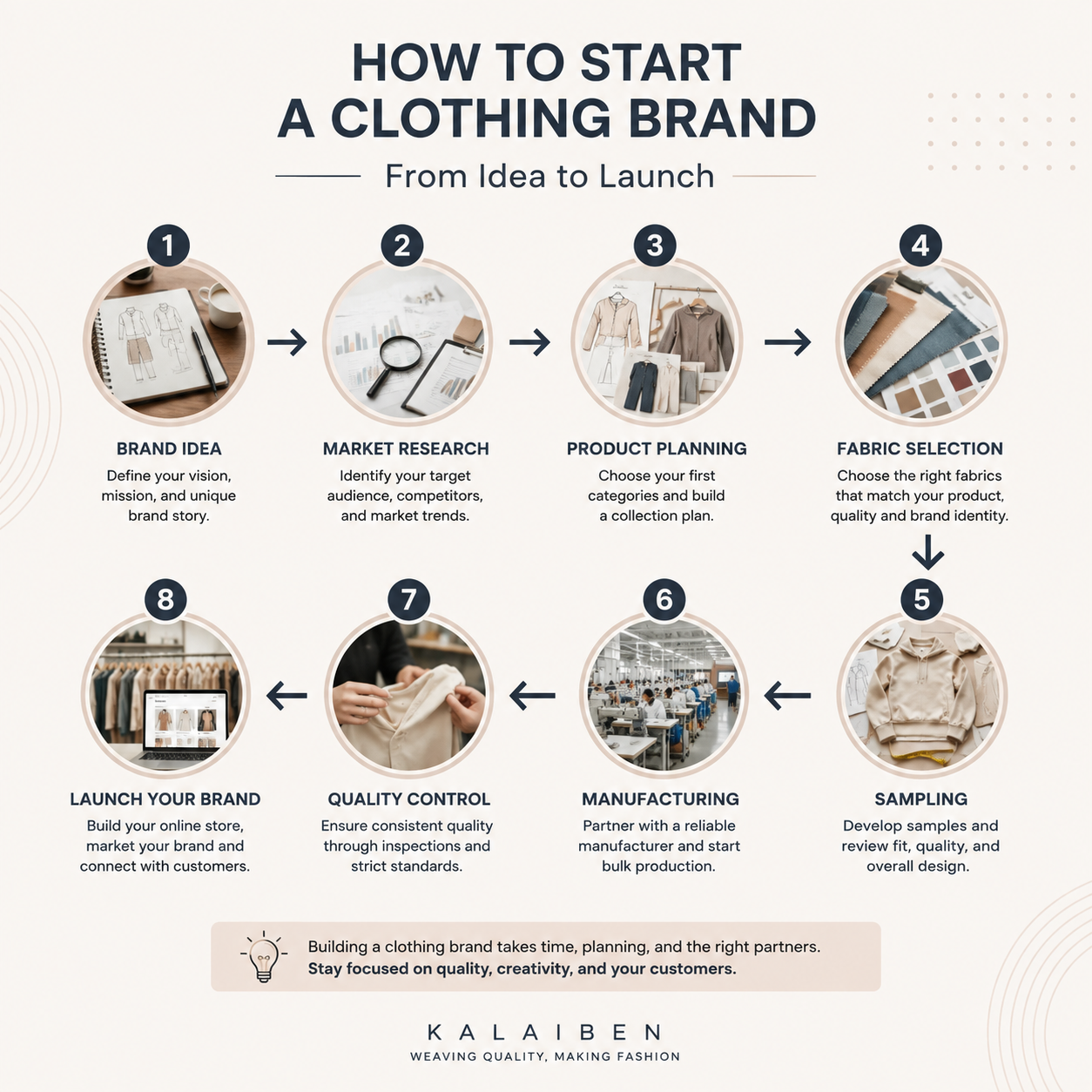
2. Research Your Target Market
Before investing in product development, spend time understanding the market.
Research existing clothing brands that target similar customers. Look at their product categories, prices, fabrics, colors, sizing, product reviews, website content, and marketing strategies.
You can also identify areas where customers may have unmet needs.
For example, there may be opportunities to compete through:
- Better fabric choices
- Functional designs
- More practical sizing
- Competitive pricing
- Small or flexible collections
- Better product quality
- A clearer brand identity
- More specialized clothing categories
Market research does not mean copying competitors. Instead, it helps you understand the environment in which your clothing brand will operate.
3. Choose Your First Clothing Categories
New brands often make the mistake of trying to offer too many products at the beginning.
A more practical approach is to start with a focused product range.
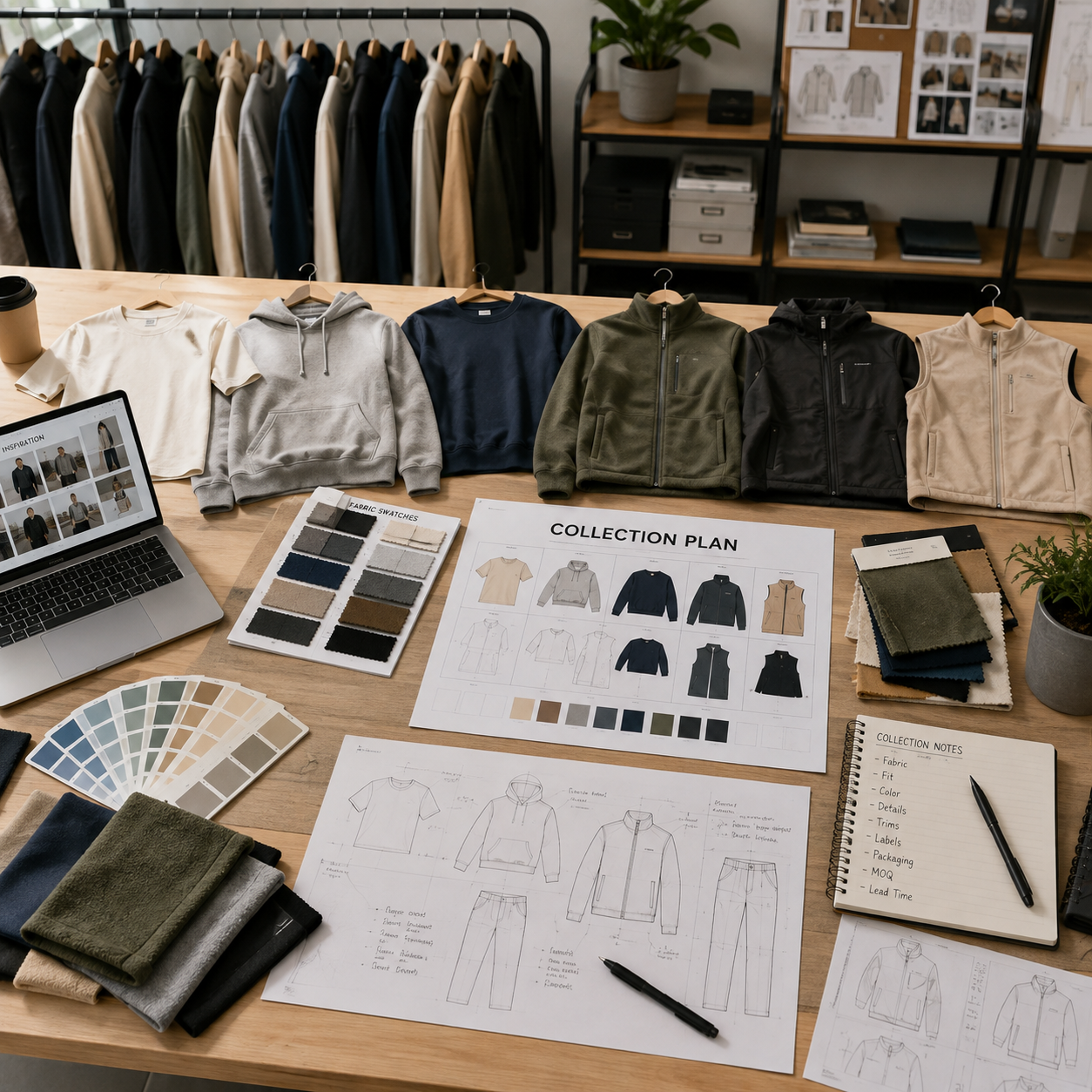
Depending on your brand positioning, this could include:
- T-shirts
- Sweatshirts
- Hoodies
- Fleece garments
- Jackets
- Vests
- Casualwear
- Outdoor clothing
- Activewear
- Children's clothing
The product category you choose will influence fabric selection, construction methods, sampling requirements, manufacturing processes, and production costs.
For brands that want to develop several categories over time, starting with a focused range can make it easier to establish a consistent design language.
4. Develop Your Clothing Products
Once you know what your brand stands for, you can begin developing your products.
Product development may include decisions about:
- Garment design
- Fabric composition
- Fabric weight
- Colors
- Sizes
- Fit
- Construction
- Trims
- Labels
- Packaging
At this stage, it is important to think about both design and manufacturing.
A design may look excellent on paper but become difficult or expensive to produce because of its construction, fabric requirements, or special details.
Working with an experienced clothing manufacturer during development can help identify production considerations before you move to bulk manufacturing.
5. Choose the Right Fabrics
Fabric is one of the most important elements of a clothing product.
The right fabric can influence comfort, appearance, durability, performance, and production cost.
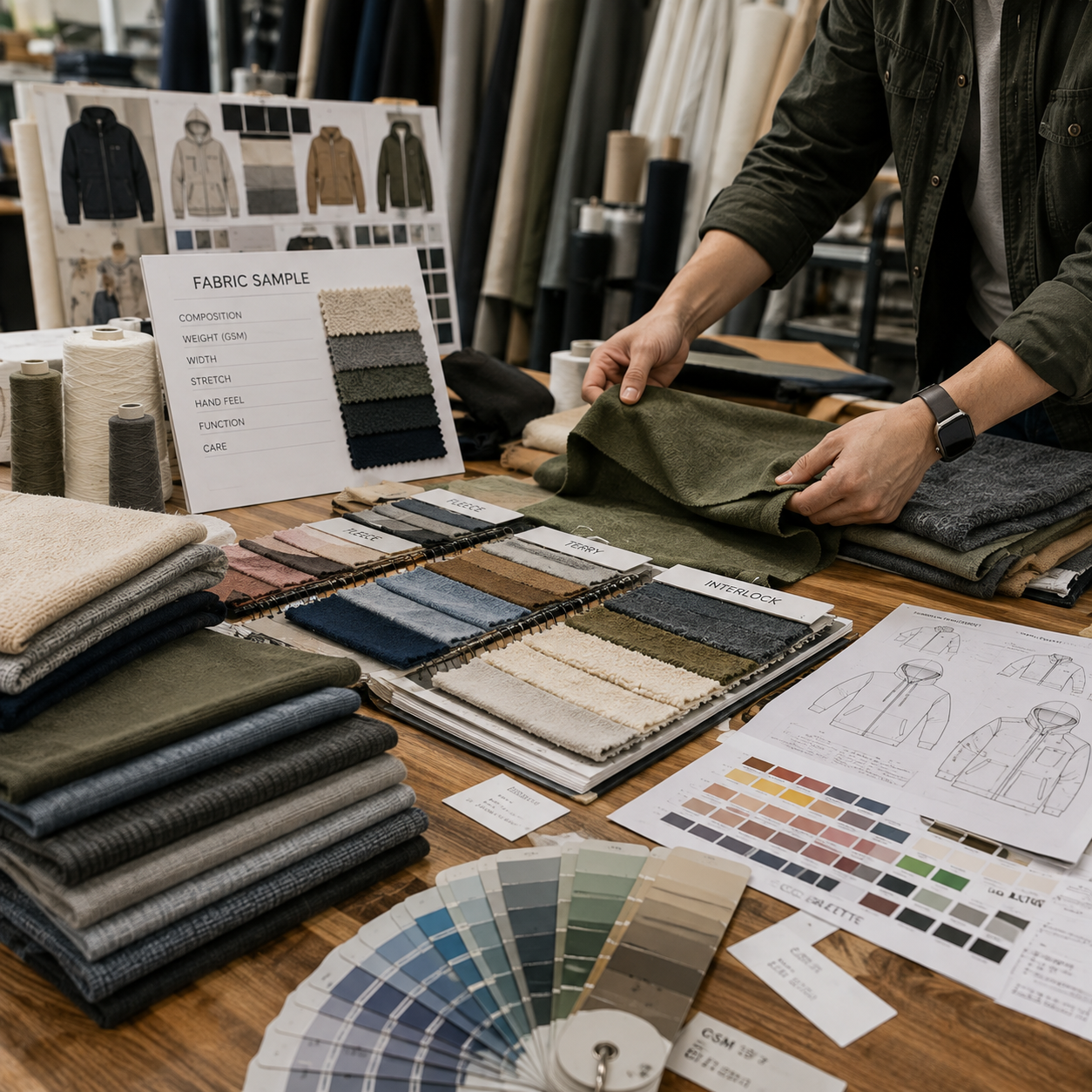
Depending on the product, you may need to consider:
- Fiber composition
- GSM
- Stretch
- Softness
- Breathability
- Durability
- Moisture management
- Warmth
- Seasonal suitability
- Washing performance
For example, fleece may be suitable for warm and comfortable outer layers, while lighter knitted fabrics may be better suited to everyday casualwear.
KALAIBEN has an integrated textile and garment manufacturing background. Its business includes knitted fabric production as well as knitted and woven apparel manufacturing. The company's textile facility employs skilled workers and operates high-speed single-side, double-side, terry, fleece and rib knitting equipment.
This type of integrated capability can be useful for brands that want to communicate with a manufacturing partner about both fabric and finished garment requirements.
6. Prepare Your Product Specifications
Before sampling, your manufacturer needs enough information to understand what you want to produce.
Depending on the product, this information may include:
- Measurements
- Fabric specifications
- Color references
- Construction details
- Stitching requirements
- Artwork
- Logo placement
- Labels
- Trims
- Packaging requirements
A detailed tech pack can make communication easier between a brand and a manufacturer.
For new brands without extensive production experience, clear product specifications can also help reduce misunderstandings during the sampling stage.
7. Develop and Review Samples
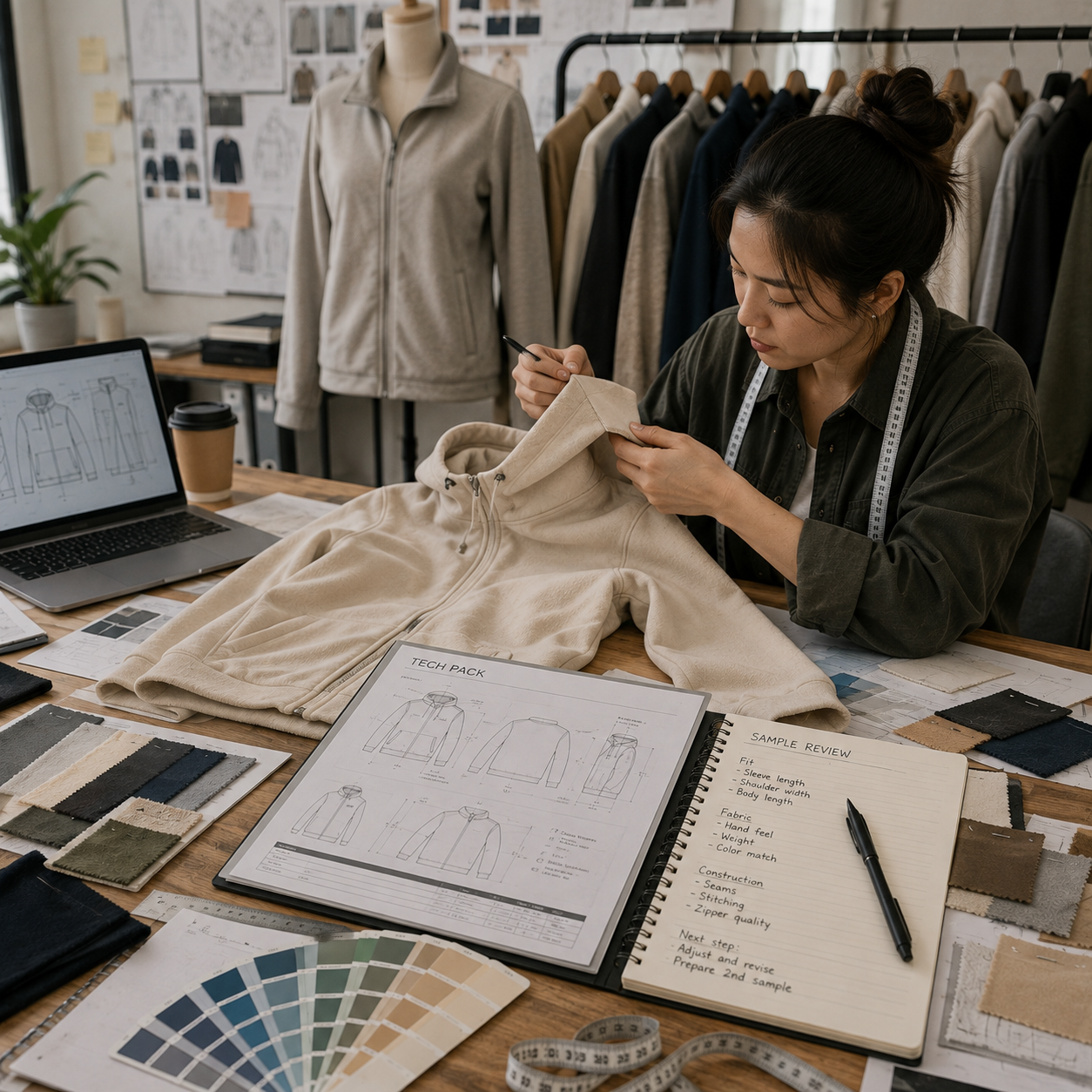
Sampling is an important stage before bulk production.
A sample allows you to evaluate whether the design works in practice.
You can check:
- Fit
- Measurements
- Fabric
- Color
- Construction
- Comfort
- Appearance
- Functional details
- Overall workmanship
If changes are needed, they should ideally be made during sample development rather than after bulk production has started.
For new brands, the sample stage is also an opportunity to understand how the original design translates into a real garment.
8. Find a Reliable Clothing Manufacturer
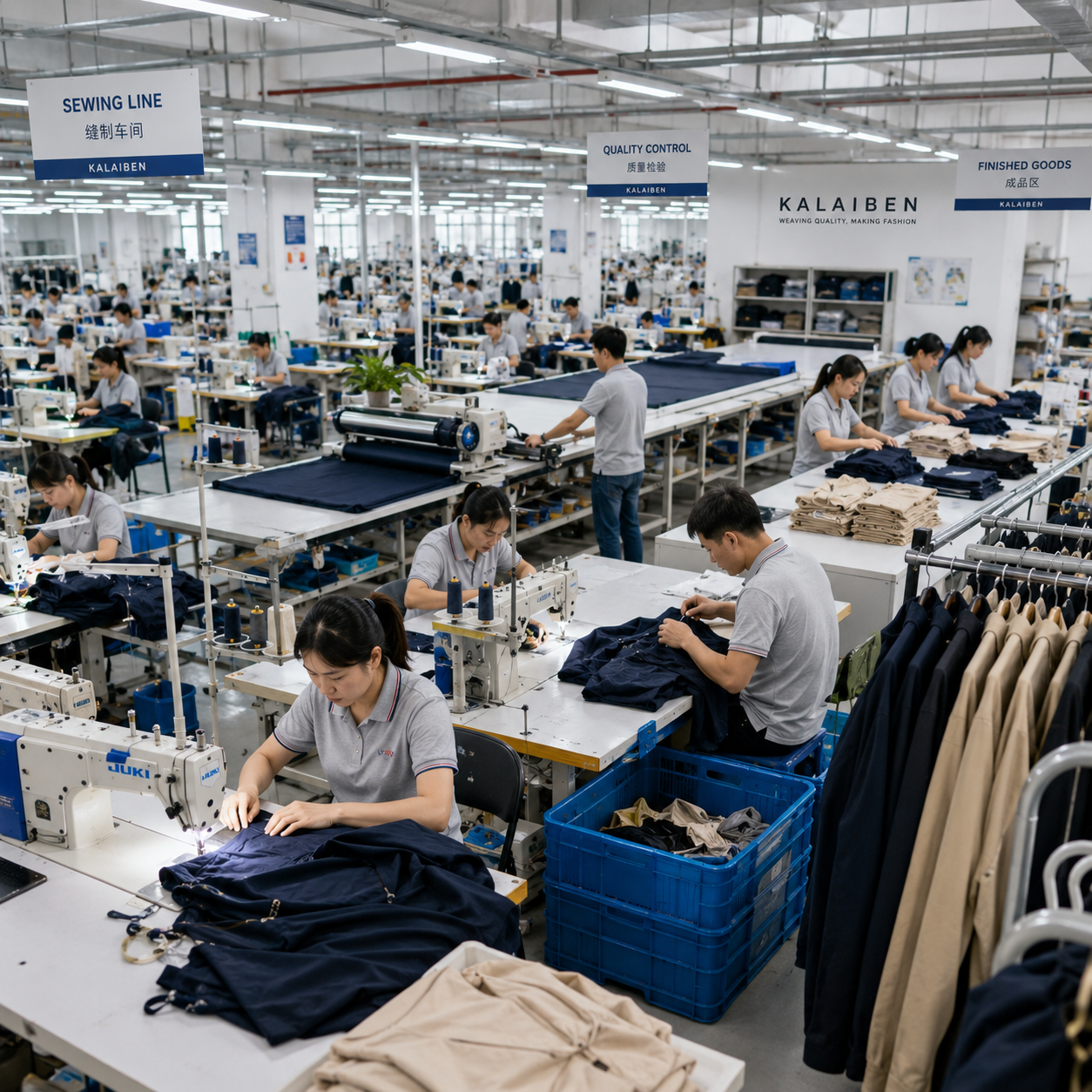
Finding the right clothing manufacturer is one of the most important decisions when starting a clothing brand.
Do not choose a manufacturer based only on the lowest quotation.
Instead, evaluate several factors:
- Manufacturing experience
- Product categories
- Fabric capabilities
- Sample development
- Production capacity
- MOQ
- Quality management
- Communication
- Lead time
- Export experience
KALAIBEN is an integrated textile and garment industry and trade company headquartered in Quanzhou, Fujian Province. Its subsidiary, Jiangxi Kalaiben Textile Technology Co., Ltd., is located in Jinshan Industrial Park in Nancheng County, Jiangxi, with a reported site covering approximately 30 acres and a construction area of around 26,000 square meters. The company has more than 380 employees and focuses on knitted and woven casual garments and outdoor sportswear.
The company also operates its own adult clothing brand, KALAIBEN, and children's brand, BOWTAD, giving it experience in developing and producing apparel for its own brands as well as supporting garment manufacturing.
For brands looking for a manufacturing partner, this combination of textile and garment production experience can be an important factor to consider.
9. Understand MOQ and Production Costs
MOQ means Minimum Order Quantity.
Different manufacturers may have different MOQ requirements depending on:
- Product category
- Fabric
- Color
- Construction
- Production process
- Customization requirements
New clothing brands should understand MOQ before confirming a production plan.
You should also consider the full cost of bringing a product to market, including:
- Product development
- Sampling
- Fabric
- Trims
- Labels
- Packaging
- Bulk production
- Shipping
- Import costs
- Marketing
- Storage
A realistic production budget can help reduce financial pressure during your first collection.
10. Pay Attention to Quality Control
Quality should be considered throughout product development and production.
Important areas may include:
- Fabric quality
- Measurements
- Color consistency
- Stitching
- Seams
- Garment construction
- Printing or embroidery
- Labels
- Packaging
An approved sample can provide an important reference for bulk production.
Brands should also establish clear product specifications with their manufacturing partners before production begins.
11. Build Your Sales Channels
Once your products are ready, decide where customers will purchase them.
Possible sales channels include:
- Your own e-commerce website
- Online marketplaces
- Social media
- Physical stores
- Pop-up shops
- Wholesale distributors
Your choice should depend on your target customer and business model.
For example, a digitally focused startup may begin with its own website and social media, while a wholesale-focused brand may prioritize relationships with retailers and distributors.
12. Launch and Market Your Clothing Brand
Manufacturing the products is only one part of building a clothing brand.
You also need to communicate your brand story and product value to potential customers.
Marketing activities may include:
- Social media
- SEO
- Email marketing
- Influencer partnerships
- Product photography
- Video content
- Paid advertising
- Content marketing
For a new brand, consistent content can help potential customers understand not only what you sell, but also why the brand exists.
13. Learn From Your First Collection
Your first collection does not need to be perfect.
After launch, pay attention to:
- Best-selling products
- Popular colors
- Popular sizes
- Customer reviews
- Return reasons
- Product complaints
- Marketing performance
- Production costs
This information can help you make better decisions for future collections.
Over time, successful products can be improved, expanded, or developed into related styles.
Conclusion
Starting a clothing brand requires a combination of creativity, market research, product development, manufacturing, and marketing.
The process begins with a clear brand concept and target customer. From there, you can develop focused products, select appropriate fabrics, create samples, evaluate manufacturers, understand MOQ and production costs, and prepare your collection for launch.
For new fashion brands, choosing the right manufacturing partner can be just as important as developing the right product. A manufacturer with experience across fabric and garment production can help brands communicate their product requirements and move more efficiently from development to production.
KALAIBEN combines textile production and garment manufacturing, with experience in knitted and woven casualwear as well as outdoor and sportswear. Its manufacturing operations in Jiangxi support the company's broader textile and apparel business.
With a clear brand strategy, well-developed products, and a reliable production partner, a clothing idea can gradually develop into a sustainable apparel business.











