




Fabricante de roupa desportiva: como escolher o fornecedor certo para a sua marca
Data de publicação:2026-09-11 Categoria:NOTÍCIAS Número de visualizações:588
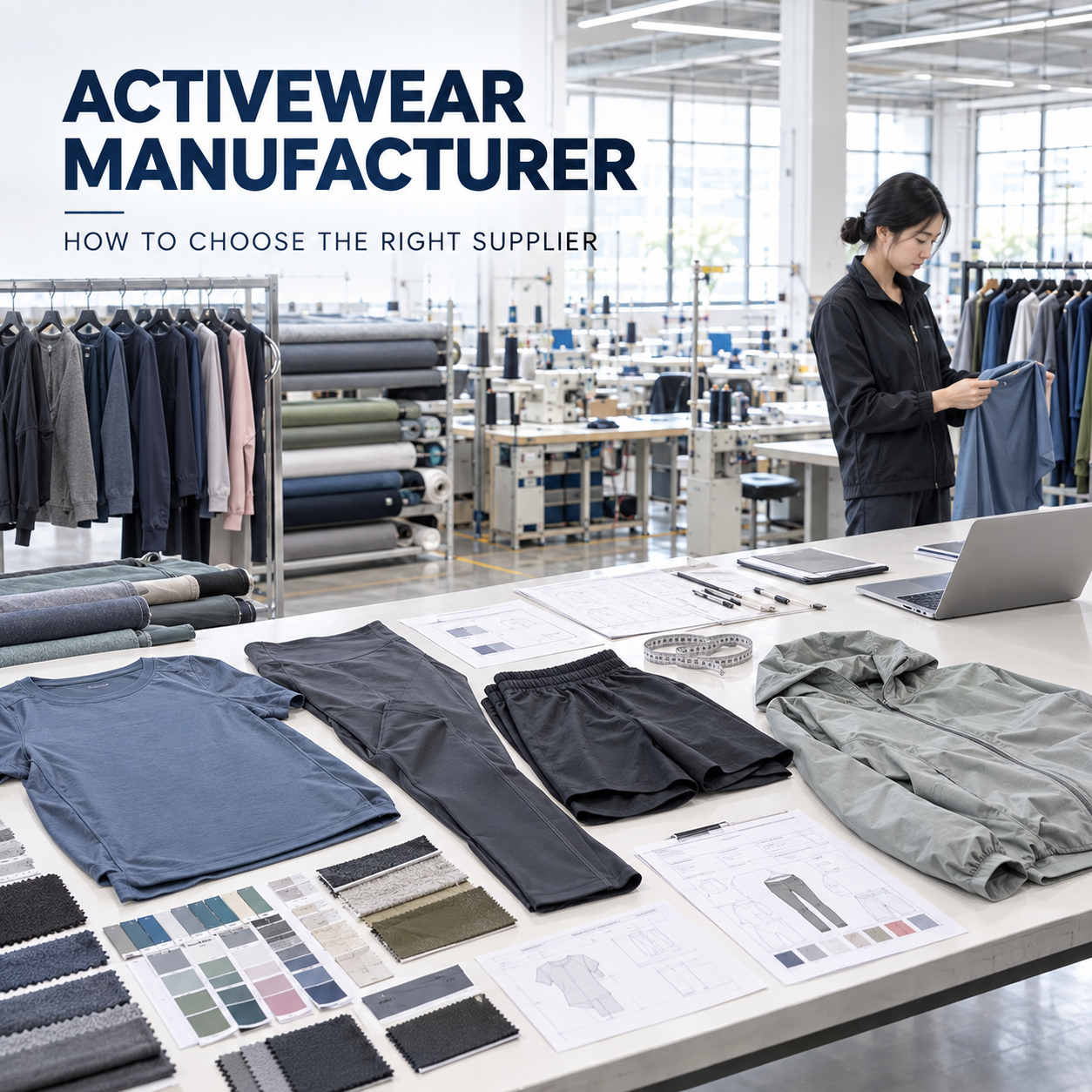
Encontrar o certo activewear manufacturer is a key step for any fitness, sportswear, outdoor, or athleisure brand. The right supplier helps you build consistent products, control costs, and scale production. The wrong supplier can create problems with fabric performance, sizing, stitching, lead times, and quality.
Activewear requires more than basic cut-and-sew production. Buyers need to consider stretch, recovery, breathability, moisture management, durability, fit, and construction. You also need a supplier that can turn your specifications into stable bulk production.
This guide explains what to check before choosing an activewear manufacturing partner.
1. What Does an Activewear Manufacturer Produce?
An activewear manufacturer produces garments designed for sports, fitness, training, outdoor activities, or everyday athleisure use.
Common product categories include:
- Sports T-shirts
- Training tops
- Leggings
- Sports bras
- Shorts
- Joggers
- Tracksuits
- Running wear
- Cycling wear
- Gym wear
- Performance jackets
- Yoga clothing
Some factories specialize in specific product types. Others offer a wider range.
Example: Choosing a Factory for a Fitness Collection
Imagine a fitness brand wants to launch a small collection with leggings, sports bras, and training tops.
A manufacturer with strong knitwear and stretch-fabric experience may be a better fit than a factory that mainly produces woven fashion garments.
The product category should match the manufacturer's technical experience.
2. Custom Activewear Manufacturer: What Can You Customize?
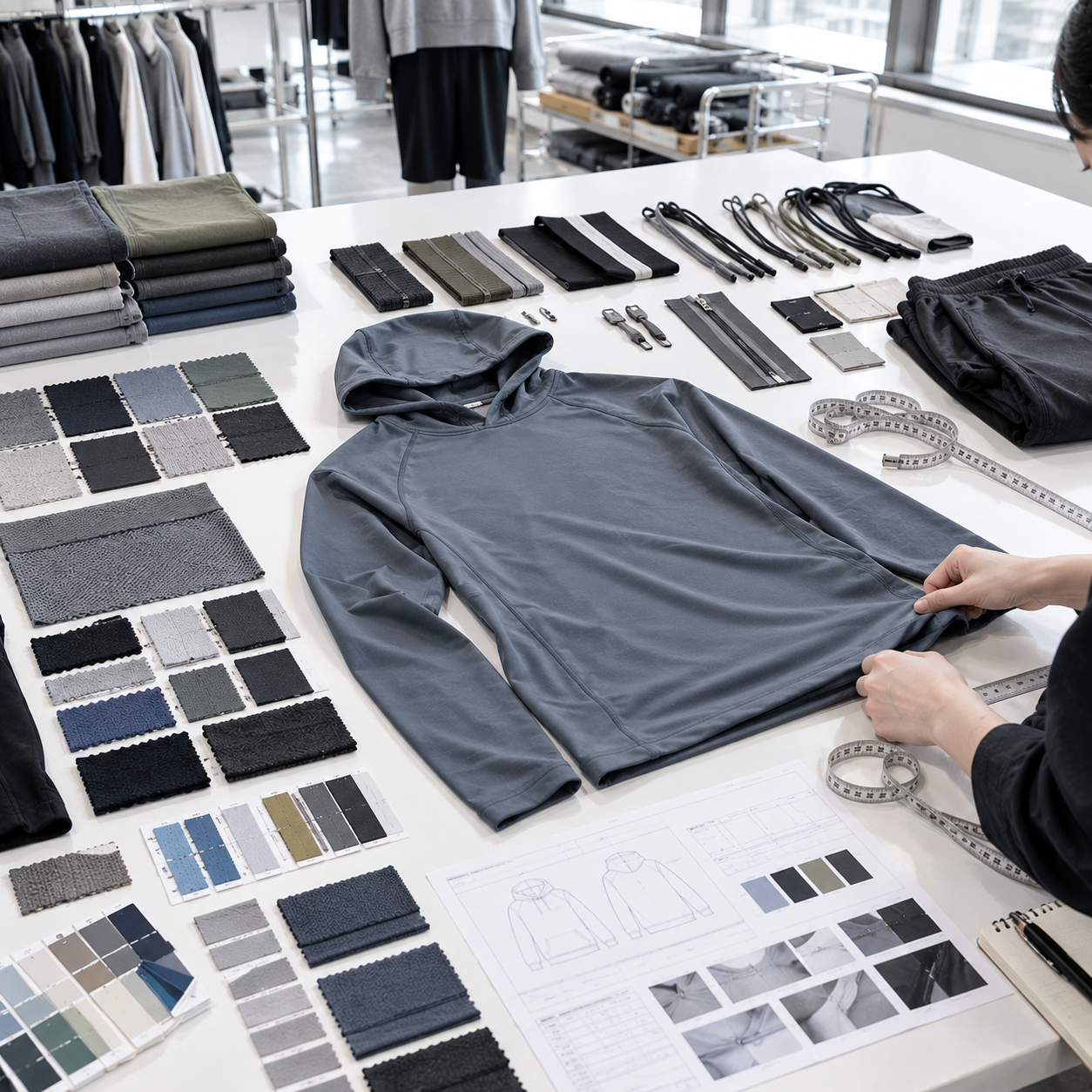
A custom activewear manufacturer should be able to work from your designs, tech packs, reference samples, or detailed specifications.
Customization may include:
- Composição do tecido
- Gramagem do tecido
- Stretch level
- Cor
- Garment fit
- Waistband construction
- Seam design
- Localização do bolso
- Elastic specifications
- Impressão
- Bordado
- Etiquetas
- Embalagem
The exact options depend on the manufacturer's equipment and development capabilities.
Example: Developing Custom Leggings
A brand may want high-waisted leggings for strength training.
The specification could include:
- Four-way stretch fabric
- High waistband
- Squat-resistant construction
- Flat seams
- Bolsos laterais
- Custom color
- Small logo embroidery
Each detail affects production.
For example, a wider waistband may require different construction and additional fabric. A pocket can also change the pattern and sewing process.
A good manufacturer should identify these issues before bulk production.
3. Wholesale Activewear Manufacturer: What Should Buyers Check?
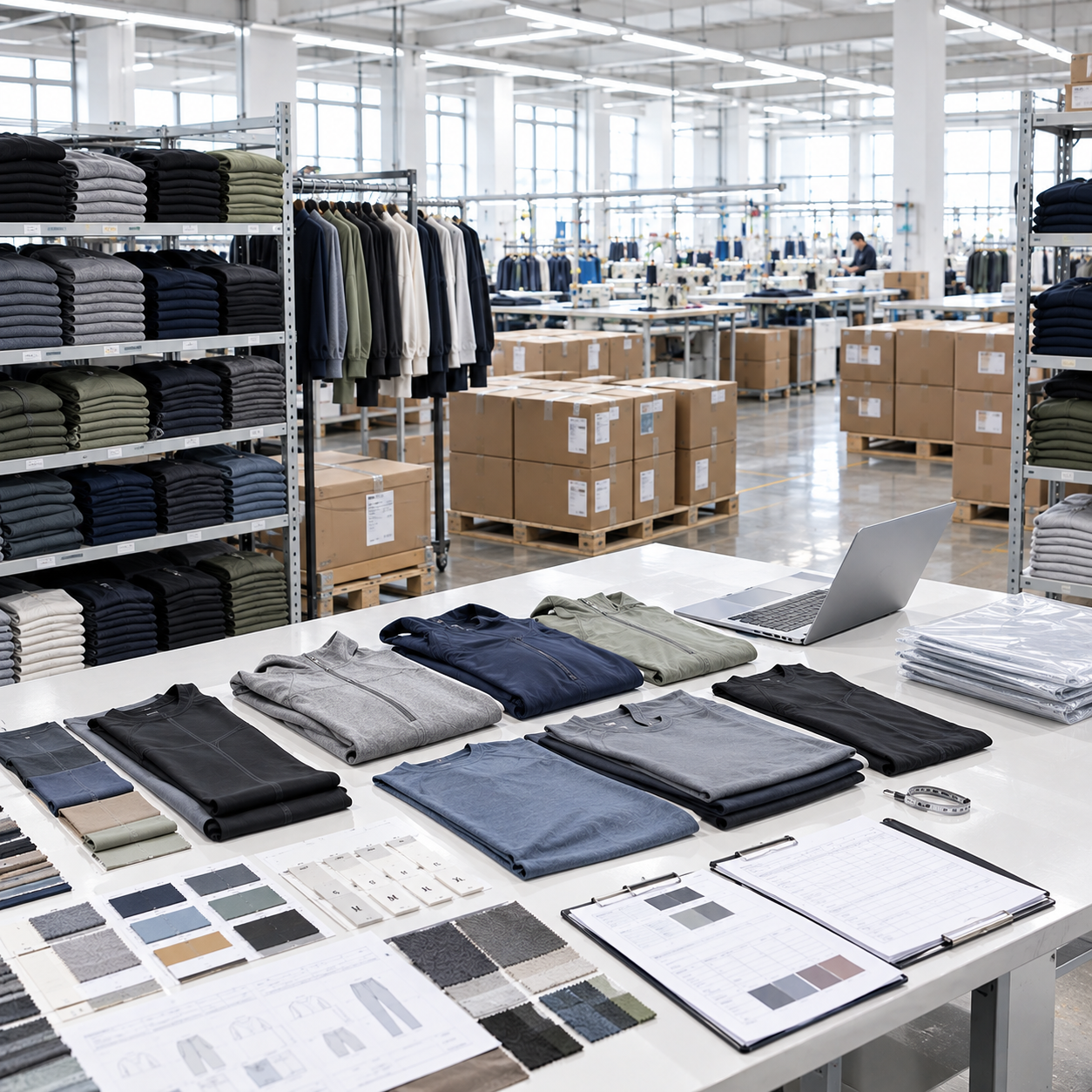
A wholesale activewear manufacturer usually works with larger quantities. Buyers should evaluate more than unit price.
Check the following areas:
| Fator | O que verificar | Por que é importante |
|---|---|---|
| Quantidade mínima de encomenda (MOQ) | Minimum quantity per style/color | Controls inventory risk |
| Tecido | Composition and performance | Affects product function |
| Alongamento | Alongamentos e recuperação | Affects fit |
| Amostragem | Sample development process | Reduces production errors |
| Controlo de Qualidade | Inspection procedures | Protects consistency |
| Prazo de entrega | Sample and bulk timelines | Supports launch planning |
| Personalização | Opções disponíveis | Supports brand positioning |
| Embalagem | Labels and packing | Apoia a preparação para a venda a retalho |
Example: Comparing Two Suppliers
Supplier A offers a lower price.
Supplier B costs slightly more but provides better fabric options, stronger sample development, and more detailed quality control.
For performance clothing, Supplier B may provide better long-term value.
A low unit price means little if the finished garment does not meet the required performance standard.
4. Private Label Activewear Manufacturer: How Does It Work?
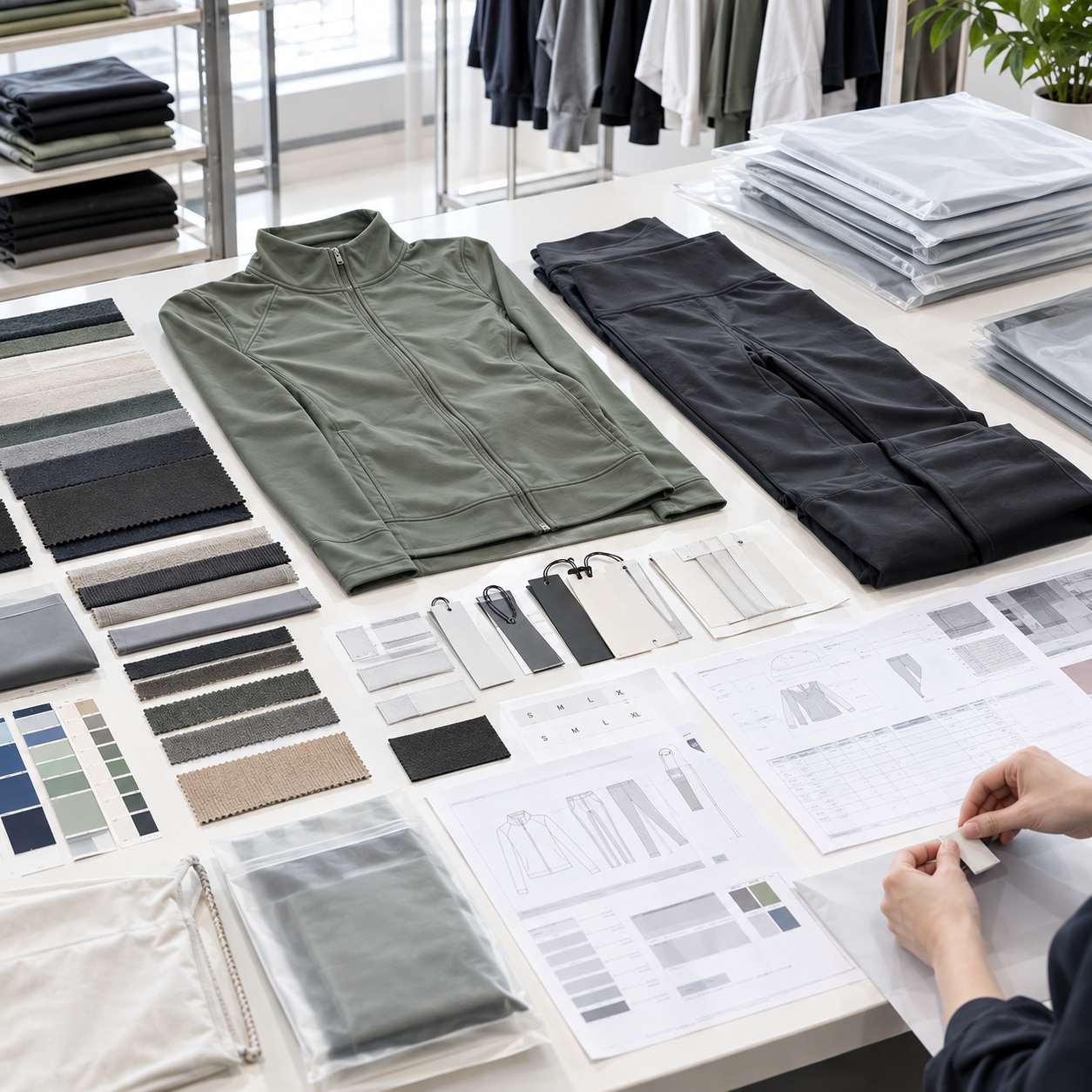
A private label activewear manufacturer produces sportswear under your own brand identity.
This model is common for:
- Fitness brands
- Yoga brands
- Running brands
- Gym businesses
- Online retailers
- Athleisure brands
- Sports clubs
- Wellness businesses
Private-label services may include:
- Etiquetas personalizadas
- Etiquetas de tamanho
- Etiquetas penduradas
- Branded packaging
- Cores personalizadas
- Custom garment designs
- Impressão
- Bordado
Example: Building a Private Label Gym Collection
A new fitness brand may start with three products:
- Training T-shirt
- Performance shorts
- High-waisted leggings
Instead of developing every production detail from scratch, the brand can provide its specifications and work with a manufacturer to develop samples.
This can shorten the development process.
The key is maintaining the same fit, color standards, branding details, and quality across the collection.
5. How to Choose an Activewear Manufacturer
Choosing an activewear manufacturer requires a technical review.
Do not rely only on factory photos or a product catalog.
Look at actual production capabilities.
5.1 Check Activewear Experience
Ask how long the manufacturer has worked with performance fabrics and sportswear construction.
Experience matters because activewear behaves differently from standard fashion garments.
Important areas include:
- Stretch fabrics
- Elastic construction
- Flatlock seams
- Seam reinforcement
- Waistband construction
- Body mapping
- Moisture-management fabrics
- Fabric recovery
- Garment durability
Example: Running Top Construction
A running top may experience repeated stretching, sweat, washing, and friction.
A factory that understands performance garment construction can select suitable seams and fabric combinations.
A general apparel factory may focus mainly on appearance.
For activewear, function matters just as much as appearance.
6. Activewear Fabric Selection
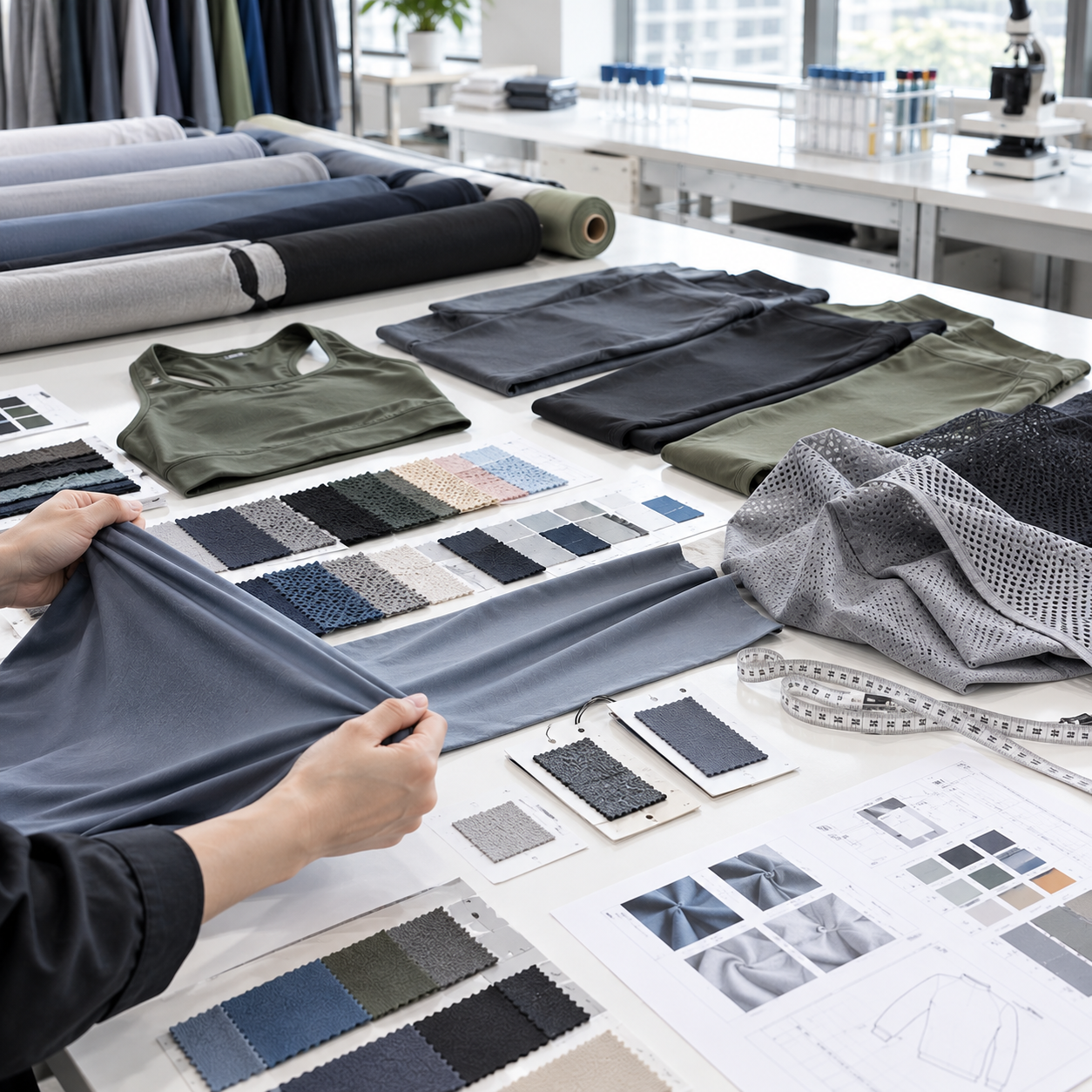
Fabric is one of the most important decisions in sportswear production.
Common activewear fabrics include:
- Polyester
- Nylon
- Spandex blends
- Recycled polyester
- Nylon-spandex
- Polyester-spandex
- Performance mesh
- Moisture-wicking knits
Different activities require different fabric properties.
Key Fabric Properties
Look at:
- Alongamento
- Recovery
- Respirabilidade
- Moisture management
- Peso
- Softness
- Durabilidade
- Opacity
- Pilling resistance
- Colorfastness
Example: Yoga vs. Running
Yoga leggings need excellent stretch and recovery.
Running shorts may need lightweight fabric and good moisture management.
A heavy fabric that works well for training joggers may not work well for high-intensity running.
Product function should guide fabric selection.
7. Activewear Sampling and Product Development
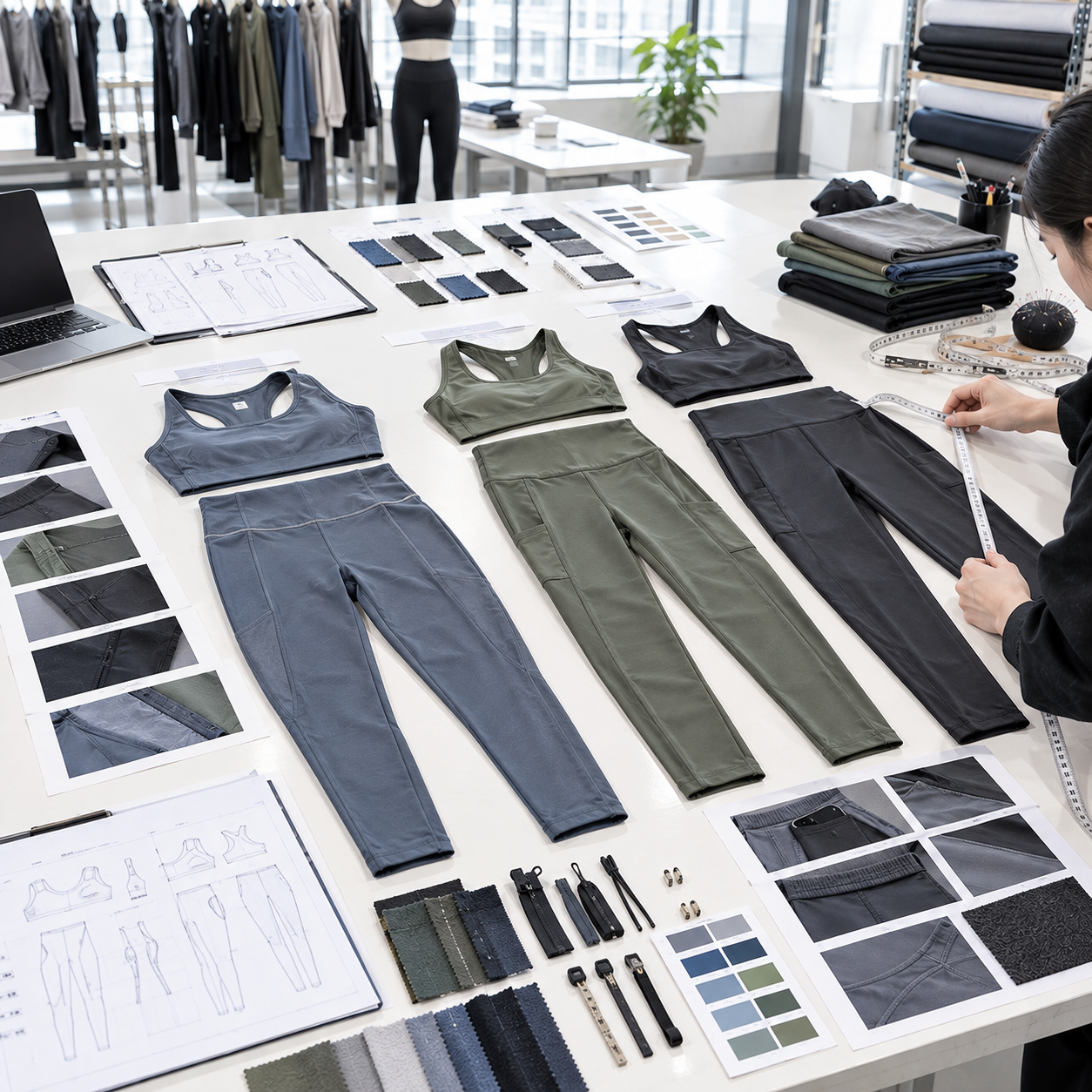
Sampling allows buyers to test the product before committing to bulk production.
A professional development process may include:
- Initial design review
- Tech pack review
- Seleção de tecidos
- Primeira amostra
- Análise do ajuste
- Sample revision
- Amostra de pré-produção
- Bulk production
What Should You Check on a Sample?
Inspect:
- Medidas
- Ajuste
- Fabric stretch
- Fabric recovery
- Construção das costuras
- Waistband tension
- Pocket position
- Cor
- Print placement
- Bordado
- Label position
Example: Testing a Pair of Leggings
A sample may look perfect on a hanger.
But when worn, the waistband may roll down during movement.
This is why activewear sampling should include movement-based testing.
A small pattern adjustment can improve the final product significantly.
8. MOQ for Activewear Production
MOQ significa Quantidade Mínima de Encomenda.
Manufacturers may calculate MOQ differently.
For example, MOQ can apply to:
- Each style
- Each color
- Each fabric
- Each production order
- Each size breakdown
Always ask how the MOQ works.
Example: Color Planning
Suppose the factory requires 500 pieces per color.
A brand wants:
- Black
- Navy
- Gray
- Green
The total order could reach 2,000 pieces.
That may be too much inventory for a new brand.
In this situation, MOQ flexibility becomes an important supplier-selection factor.
9. Activewear Quality Control
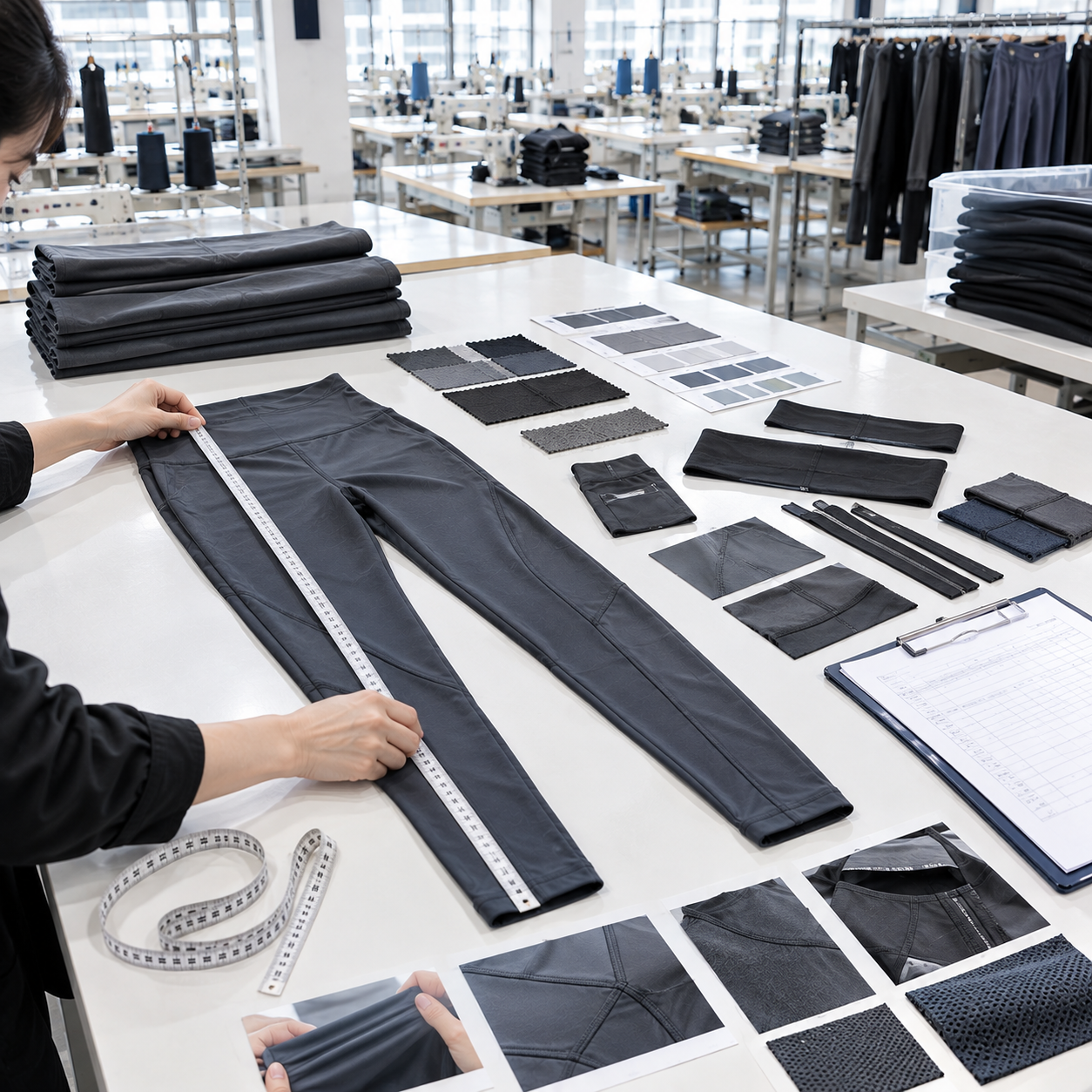
Quality control is critical because sportswear faces repeated movement and washing.
A good inspection process should cover production from fabric to final packing.
Key checkpoints include:
- Inspeção de tecidos
- Color inspection
- Inspeção de corte
- Inspeção da costura
- Verificação das medidas
- Seam inspection
- Print and embroidery inspection
- Stretch and recovery checks
- Inspeção final da peça de vestuário
- Inspeção da embalagem
Common Activewear Problems
A ter em atenção:
- Uneven seams
- Poor stretch recovery
- Costuras torcidas
- Medidas incorretas
- Fabric transparency
- Color variation
- Pilling
- Pontas soltas
- Weak elastic
- Misaligned printing
- Poor waistband construction
Example: The Squat Test
For leggings, opacity matters.
A fabric may look opaque when the garment is hanging.
But it can become transparent when stretched.
Testing the fabric under realistic movement conditions can identify the problem before mass production.
10. How Much Does an Activewear Manufacturer Charge?
There is no single standard price for activewear.
Production cost depends on several factors.
The main variables include:
- Composição do tecido
- Gramagem do tecido
- Fabric performance
- Garment design
- Number of panels
- Sewing complexity
- Impressão
- Bordado
- Etiquetas
- Embalagem
- Quantidade do pedido
- Testing requirements
Example: Basic vs. Performance Leggings
| Feature | Basic Leggings | Performance Leggings |
|---|---|---|
| Tecido | Standard stretch knit | Performance stretch fabric |
| Construção | Simple | Technical |
| Costuras | Padrão | Reinforced or flatlock |
| Waistband | Basic elastic | Engineered waistband |
| Bolsos | None | Multiple pockets |
| Desenvolvimento | Simple | Mais pormenorizado |
| Production Cost | Mais baixo | Mais alto |
The more technical the product, the more important it becomes to compare specifications rather than prices.
11. Manufacturer vs. Trading Company
Not every supplier that sells activewear is a direct manufacturer.
Some companies operate as trading or sourcing businesses.
Both models can work.
The best option depends on your production requirements.
| Fator | Fabricante direto | Empresa Comercial |
|---|---|---|
| Factory Communication | Direct | Usually through supplier |
| Production Control | Normalmente mais elevado | Depende dos parceiros |
| Desenvolvimento de Produtos | Muitas vezes mais forte | Varia |
| Supplier Network | Own production | Pode aceder a várias fábricas |
| Product Range | Based on factory capability | Potentially broader |
| Estrutura de preços | Direct production | Pode incluir a margem de serviço |
| Ideal para | Long-term product development | Multi-supplier sourcing |
Example: When a Trading Company Makes Sense
A retailer needs sportswear, jackets, accessories, and packaging from different suppliers.
A trading company may simplify sourcing.
But a performance brand developing technical leggings may benefit from direct access to a specialized factory.
12. Questions to Ask an Activewear Manufacturer
Before placing an order, prepare a supplier questionnaire.
Pergunte:
- What activewear products do you specialize in?
- What performance fabrics can you source?
- What fabric compositions are available?
- Qual é a vossa quantidade mínima de encomenda (MOQ)?
- Podem desenvolver amostras personalizadas?
- Consegues trabalhar a partir de um «tech pack»?
- Can you handle private-label production?
- What printing and embroidery options are available?
- Qual é o prazo de entrega das amostras?
- Qual é o vosso prazo de entrega para a produção em grande escala?
- What quality control process do you use?
- Can you provide a pre-production sample?
- Que opções de embalagem estão disponíveis?
- Which export markets do you currently serve?
Clear questions make supplier comparisons much easier.
13. How to Compare Activewear Manufacturers
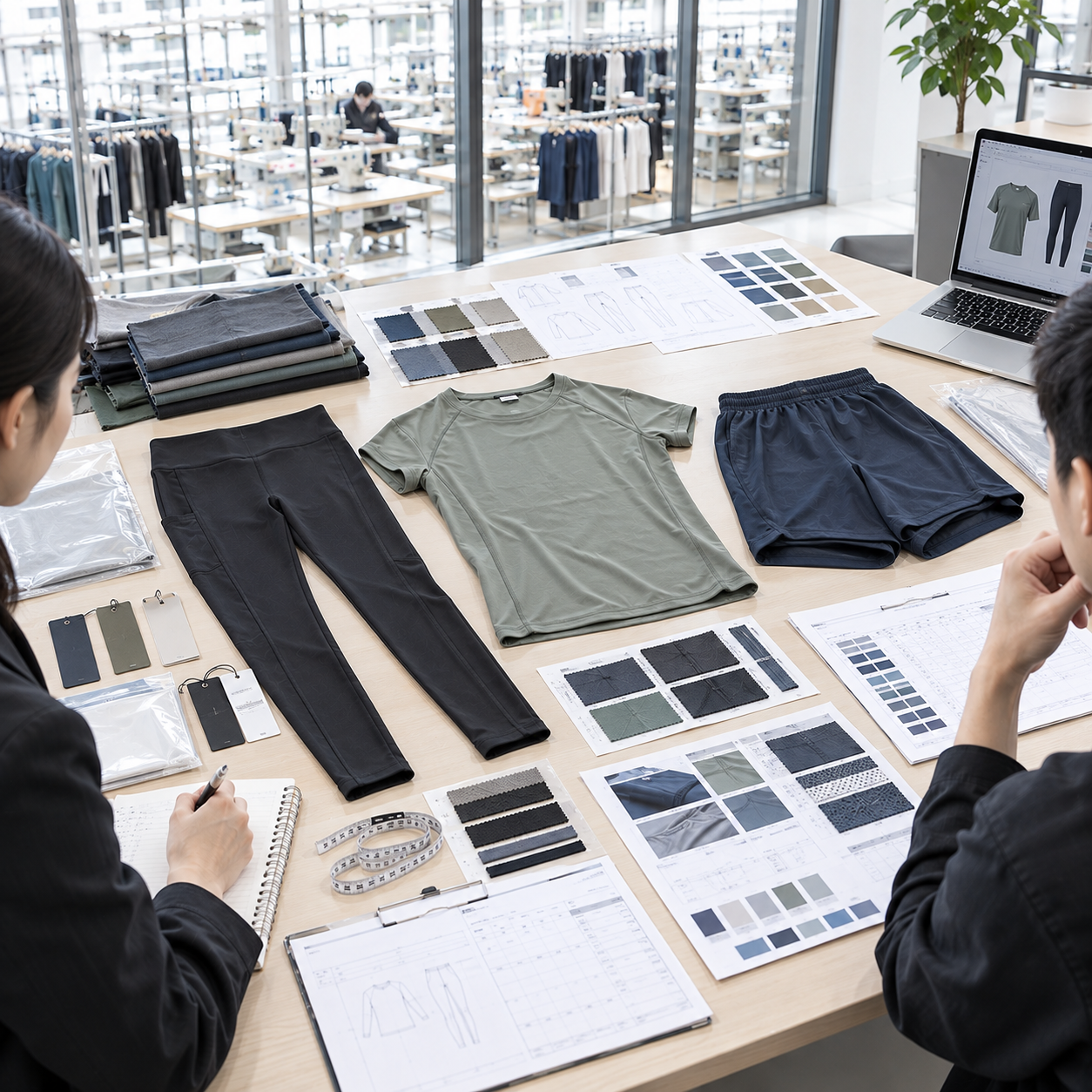
Do not compare factories based on price alone.
Create a simple supplier scorecard.
| Área de Avaliação | Fornecedor A | Fornecedor B | Fornecedor C |
|---|---|---|---|
| Activewear Experience | Elevado | Médio | Elevado |
| Opções de tecido | Elevado | Elevado | Médio |
| Flexibilidade quanto à quantidade mínima de encomenda (MOQ) | Médio | Elevado | Baixo |
| Desenvolvimento de amostras | Elevado | Médio | Elevado |
| Controlo de Qualidade | Elevado | Médio | Elevado |
| Personalização | Elevado | Médio | Elevado |
| Production Capacity | Médio | Elevado | Elevado |
| Preço | Médio | Elevado | Médio |
Example: Choosing a Supplier for a New Brand
A startup may prioritize:
- Low MOQ
- Flexible development
- Strong sample support
- Preços competitivos
An established sportswear brand may prioritize:
- Capacidade de produção
- Qualidade consistente
- Fabric stability
- Reliable lead times
The right supplier depends on your business stage.
14. Production Capacity and Scalability
A supplier may handle a small order well.
That does not automatically mean they can manage a large production run.
Ask about production capacity before scaling.
Verificar:
- Monthly production capacity
- Sewing lines
- Abastecimento de tecidos
- Quality control staff
- Desenvolvimento de amostras
- Production scheduling
- Peak-season capacity
Example: Scaling From 500 to 5,000 Pieces
A brand starts with 500 training tops.
The first order performs well.
The next order reaches 5,000 pieces.
The manufacturer now needs to maintain the same fabric, measurements, color, stitching, and finishing across a much larger production run.
A scalable supplier should have systems to manage this increase.
15. Activewear Manufacturer Checklist
Before approving a supplier, review the following:
- Product category experience
- Fabric capabilities
- Stretch and recovery requirements
- Quantidade mínima de encomenda (MOQ)
- Sample process
- Tech pack capability
- Customization options
- Private-label services
- Controlo de qualidade
- Capacidade de produção
- Prazo de entrega
- Embalagem
- Shipping terms
- Final quotation
A clear checklist reduces supplier-selection mistakes.
It also helps buyers compare different factories using the same standards.
16. Finding the Right Activewear Manufacturer
A direita activewear manufacturer should match your product requirements, target market, order volume, and growth plan.
Start with the product.
Define the fabric, fit, performance requirements, size range, colors, branding, and packaging.
Then evaluate manufacturers based on their technical capabilities.
Look at samples before bulk production.
Check quality control.
Confirm MOQ and lead times.
Compare suppliers using the same specifications.
Price matters. But product consistency matters more.
A reliable manufacturing partner should help you move from design to sample, from sample to bulk production, and from a small launch to long-term growth.











