




Custom Clothing OEM: A Practical Guide for Brands Choosing a Manufacturer
Дата публикации:2026-10-09 Категория:НОВОСТИ Количество просмотров:426
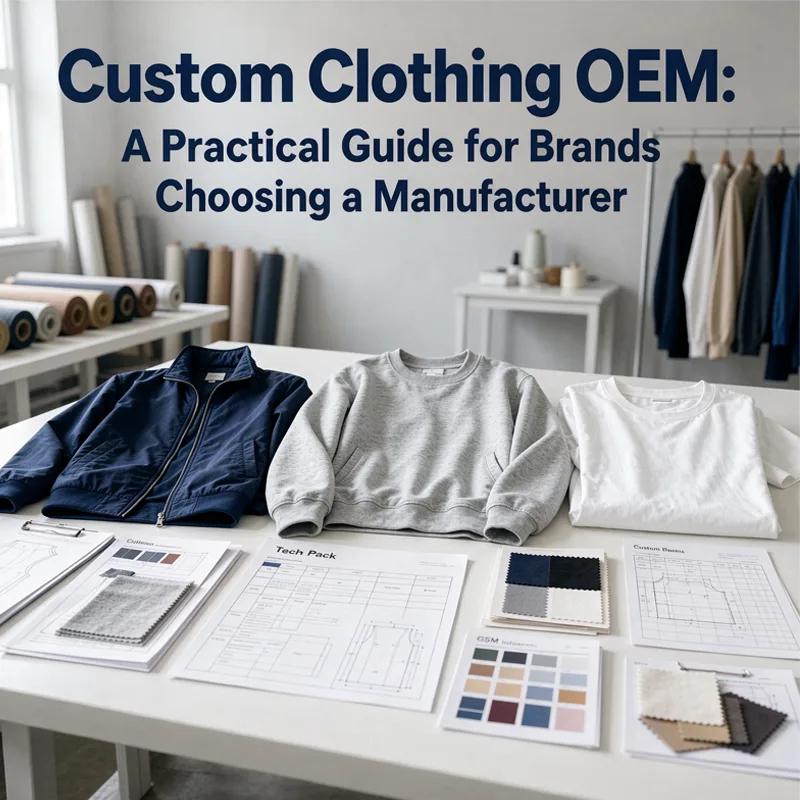
Looking for custom clothing OEM services? Learn how OEM apparel production works, what to check before sampling, how to compare quotes, and how to avoid costly production mistakes.
If you already have a clothing design, tech pack, reference sample, or clear product specifications, custom clothing OEM can turn that concept into a finished garment under your own brand.
But choosing an OEM manufacturer is not simply about finding the lowest unit price.
The right manufacturer should be able to understand your specifications, source suitable materials, develop accurate samples, control production quality, and reproduce the approved garment consistently.
This guide explains what brands should know before starting a custom clothing OEM project.
1. What Is Custom Clothing OEM?
Custom clothing OEM means a manufacturer produces garments according to the buyer's own design, specifications, and branding requirements.
The brand owns the product concept. The manufacturer handles the technical and production work.
A typical OEM project may include:
- Разработка лекал
- Fabric sourcing
- Разработка образцов
- Cutting and sewing
- Printing or embroidery
- Custom labels and trims
- Контроль качества
- Упаковка
- Bulk production
This makes OEM different from buying ready-made wholesale clothing.
With ready-made products, you select an existing style.
With OEM, the garment is developed around your requirements.
2. What Can You Customize With Clothing OEM?
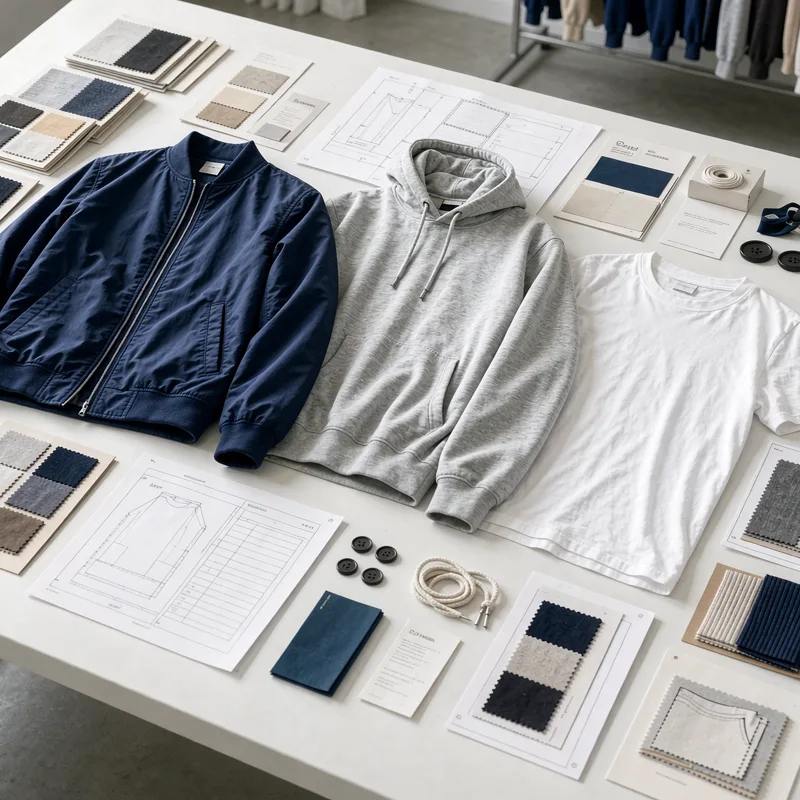
The level of customization depends on the manufacturer's technical capabilities.
Garment Construction
You can specify details such as:
- Fit and silhouette
- Collar and neckline
- Sleeve construction
- Pocket design
- Zippers and closures
- Cuffs and waistbands
- Сшивание
- Lining
- Функциональные особенности
For example, a brand developing a lightweight outdoor jacket may need a specific fabric, pocket layout, zipper system, hood construction, and adjustable cuffs.
These details should be confirmed before sampling.
Fabric and Materials
Fabric affects more than appearance.
It can influence:
- Garment weight
- Hand feel
- Подходит
- Durability
- Shrinkage
- Цветовая стабильность
- Production cost
A good OEM manufacturer should be able to discuss whether the selected fabric is suitable for the garment and the expected order quantity.
Брендинг
OEM production can also include:
- Woven labels
- Care labels
- Hangtags
- Embroidery
- Screen printing
- Heat transfers
- Custom buttons
- Custom zippers
- Branded packaging
These details should be included in the specifications before bulk production.
3. What Should You Send to a Custom Clothing OEM Manufacturer?
A manufacturer can quote and develop your product more accurately when the initial information is clear.
Ideally, provide:
| Requirement | Example |
|---|---|
| Продукт | Men's fleece jacket |
| Ткань | 100% polyester |
| GSM | 280 GSM |
| Sizes | S–2XL |
| Colors | Black, navy, gray |
| Количество | 1,000 pcs |
| Брендинг | Woven label + embroidery |
| Упаковка | Individual polybag |
| Market | EU |
| Target date | September |
You do not always need a perfect tech pack to start a conversation.
However, the more measurable your specifications are, the less room there is for misunderstanding.
Instead of saying “heavy fabric,” specify the target GSM.
Instead of saying “oversized fit,” provide measurements or a reference garment.
4. How Does the Custom Clothing OEM Process Work?
A typical project follows this sequence:
Design → Technical Review → Material Confirmation → Pattern → Sample → Revision → Approval → Bulk Production → QC → Shipment
4.1 Design and Technical Review
The manufacturer reviews your design, measurements, materials, quantity, and construction requirements.
This is where potential production issues should be identified.
4.2 Fabric and Trim Confirmation
The factory confirms the main fabric and supporting materials.
This may include:
- Ткань
- Rib
- Lining
- Zippers
- Buttons
- Drawcords
- Метки
- Упаковка
Material availability can affect both cost and lead time.
4.3 Pattern and Sample Development
Your design is converted into a production pattern.
A physical sample is then produced.
The first sample should be checked for:
- Измерения
- Подходит
- Ткань
- Строительство
- Сшивание
- Брендинг
- Overall appearance
4.4 Sample Approval
Do not treat the sample as just a visual preview.
It is the reference point for bulk production.
A buyer should confirm the important specifications before approving it.
4.5 Bulk Production and QC
After approval, the manufacturer moves into bulk production.
Quality checks may cover:
- Ткань
- Измерения
- Сшивание
- Цвет
- Printing or embroidery
- Метки
- Упаковка
- Finished garments
The exact inspection process depends on the manufacturer and project requirements.
5. How Do You Choose the Right Custom Clothing OEM Manufacturer?
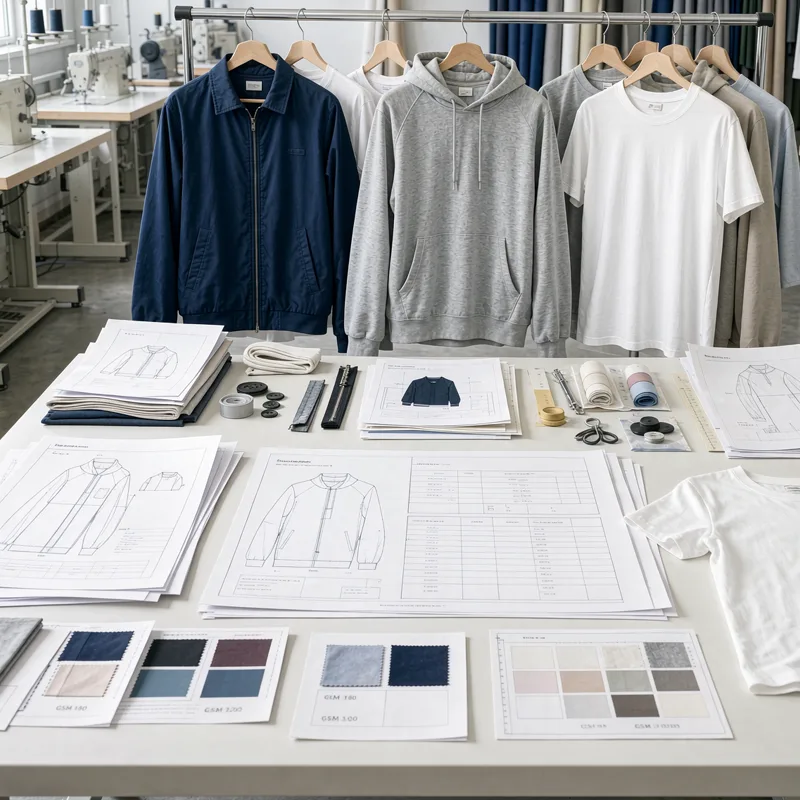
Do not evaluate a manufacturer only by its website or quoted price.
Check these five areas.
5.1 Technical Capability
Can the factory actually make your product?
Ask about experience with:
- Similar garment structures
- Your fabric type
- Complex construction
- Special finishes
- Функциональные особенности
- Printing and embroidery
A manufacturer experienced with basic T-shirts may not be the best choice for technical outerwear.
5.2 Sampling Capability
Ask how the manufacturer handles:
- First samples
- Measurement corrections
- Fit revisions
- Material changes
- Окончательное утверждение
Strong sample development reduces risk before bulk production.
5.3 Production Capability
Ask about:
- MOQ
- Производственные мощности
- Lead time
- Material availability
- Production scheduling
Do not focus only on the factory's maximum capacity.
Your actual order size and product complexity matter more.
5.4 Quality Control
Ask when quality is checked.
A stronger process does not wait until the final carton.
Material, workmanship, measurements, branding, and packing should all be controlled throughout the project.
5.5 Communication
Clear communication is an important part of OEM manufacturing.
A good production partner should question unclear specifications rather than simply accept them and discover problems later.
6. What Is the MOQ for Custom Clothing OEM?
There is no universal MOQ for custom clothing OEM.
Current manufacturer websites show significantly different advertised minimums, from around 50 pieces per style to 100 or 300 pieces per style. These are supplier-specific policies, not an industry standard.
Your actual MOQ may depend on:
- Garment type
- Ткань
- Цвет
- Number of sizes
- Custom trims
- Printing or embroidery
- Special washing
- Production complexity
So instead of asking only:
“What is your MOQ?”
ask:
“What is the MOQ for this product, fabric, color, and customization level?”
That gives you a much more useful comparison.
7. How Should You Compare Custom Clothing OEM Quotes?
The cheapest quote is not necessarily the cheapest production solution.
Consider a simple example.
Supplier A quotes a jacket at $8.50.
Supplier B quotes $9.20.
If Supplier B includes a different fabric, better trims, more detailed construction, and additional QC, the two quotes are not actually comparable.
Always compare the same specifications.
| Cost Factor | What to Compare |
|---|---|
| Ткань | Composition and GSM |
| Строительство | Sewing and finishing |
| Брендинг | Labels, print, embroidery |
| Количество | Same order volume |
| Упаковка | Bags, tags, cartons |
| Sampling | Sample fees and revisions |
| QC | Inspection scope |
| Shipping | EXW, FOB or other terms |
Compare the total production solution, not just the unit price.
8. What Are the Most Common OEM Mistakes?
Choosing Only by Price
A low quotation may not include the same materials, construction, or services.
Approving Samples Too Quickly
Small measurement or construction problems can become much more expensive after bulk production begins.
Using Vague Specifications
“Premium,” “heavyweight,” and “high quality” are subjective.
Use measurable requirements whenever possible.
Changing Specifications During Production
Changing fabric, measurements, trims, or branding after production starts can cause delays and extra costs.
Ignoring Material Availability
A fabric that works for one sample may not be practical for a larger order or future repeat production.
Ask whether the material can be sourced consistently.
9. When Is Custom Clothing OEM a Good Choice?
OEM is a strong option when your brand already has a clear product direction.
It works particularly well when you need:
- Your own garment designs
- Custom measurements
- Specific fabrics
- Custom construction
- Private-label branding
- Custom trims
- Repeat production
- Scalable bulk orders
If you only need an existing blank garment with a logo, a simpler customization service may be more efficient.
The manufacturing model should match the complexity of the product.
10. What Should You Ask Before Starting an OEM Project?
Before placing an order, ask:
- Can you produce from my design or tech pack?
- What is the MOQ for this exact product?
- What fabrics can you source?
- How is the first sample developed?
- How are sample revisions handled?
- What is the estimated bulk lead time?
- How is quality controlled?
- Can you produce custom labels and trims?
- What exactly is included in the quotation?
- What specifications must be confirmed before bulk production?
These questions reveal much more than a supplier's product catalog.
11. How Can You Prepare a Better OEM Inquiry?
A clear inquiry helps the manufacturer evaluate your project faster.
Include:
- Product photos or sketches
- Tech pack, if available
- Требования к ткани
- Size chart
- Colors
- Количество
- Branding requirements
- Packaging requirements
- Target market
- Delivery window
If some information is not ready, state what is still undecided.
A capable manufacturer can then tell you which details need to be confirmed before sampling.
12. From Custom Design to Production
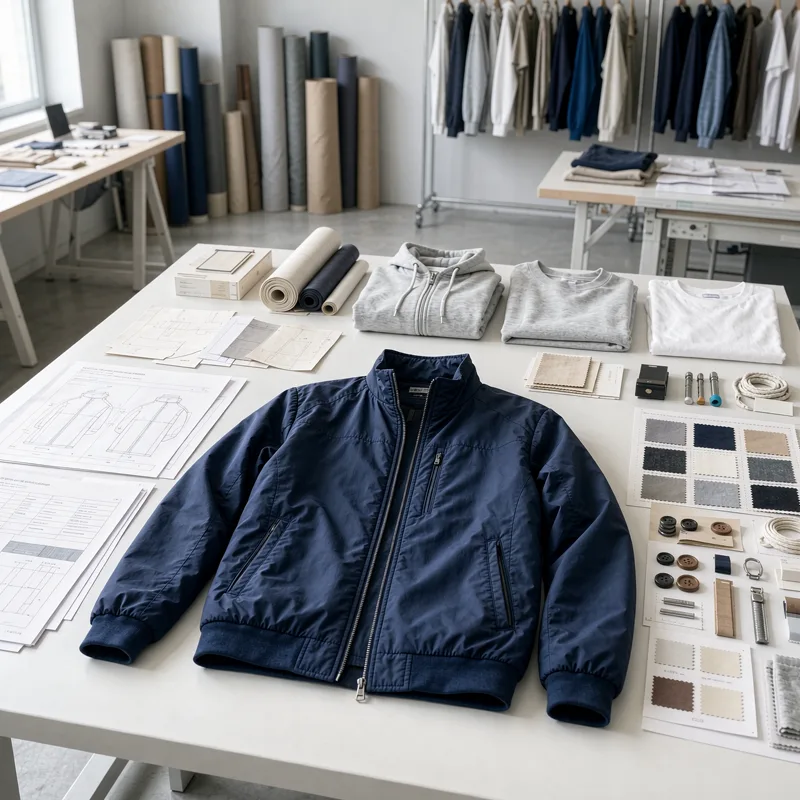
The goal of custom clothing OEM is not simply to find a factory that can sew garments.
The goal is to turn your specifications into a repeatable production standard.
A reliable OEM partner should be able to review your product, identify technical issues, confirm materials, develop samples, make controlled revisions, and reproduce the approved specifications consistently.
For brands looking for a long-term manufacturing partner, the best starting point is a clear product brief.
Share your design or tech pack, target quantity, fabric direction, branding requirements, and delivery window. The manufacturer can then assess feasibility and prepare the next step toward sampling and quotation.
For an OEM/ODM apparel manufacturing project, you can also learn more about KALAIBEN's manufacturing capabilities and submit your requirements for further discussion.











