




China ODM Clothing Factory: How to Choose the Right Manufacturing Partner
Datum objave:2026-09-30 Kategorija:NOVICE Število ogledov:597
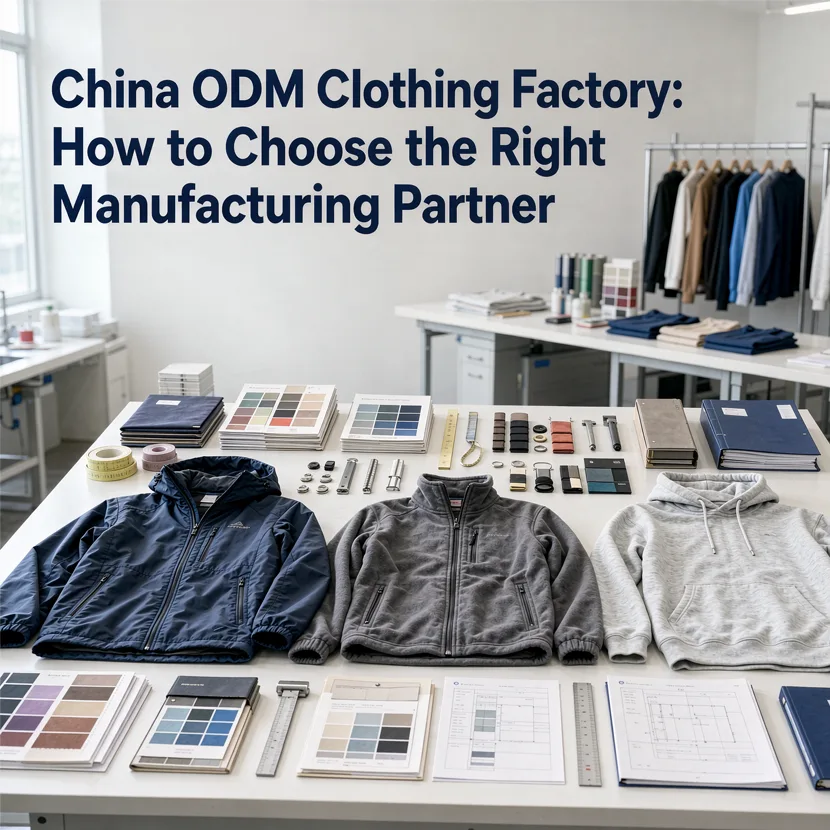
Looking for a China ODM clothing factory? Learn how to compare ODM capabilities, samples, MOQ, pricing, quality control, and production before choosing a manufacturing partner.
Choosing a China ODM clothing factory is not simply about finding a supplier with a low unit price. A reliable ODM partner should help you turn a product idea, sketch, reference garment, or technical concept into a production-ready garment. That means product development, fabric selection, pattern making, sampling, quality control, and bulk production all need to work together.
For brands entering a new category, testing a new collection, or working without a complete tech pack, ODM can reduce the gap between design and manufacturing. But not every factory offering “ODM” provides the same level of development support.
This guide explains what to check before you choose a China ODM clothing factory, how to compare suppliers, and what to prepare before requesting a quotation.
1. What Is a China ODM Clothing Factory?
A China ODM clothing factory develops and manufactures apparel based on a buyer's product concept rather than simply following a complete production specification.
The buyer may provide:
- A sketch
- Reference photos
- An existing garment
- A rough product concept
- A tech pack
- Zahteve glede tkanine
- Target price
- Size requirements
- Functional requirements
The factory then helps convert the concept into a manufacturable garment.
A typical ODM project may include:
Concept → Material Selection → Pattern Development → Sample → Revision → Costing → Bulk Production → QC → Shipment
This is different from a traditional OEM project.
With OEM, the buyer usually provides more complete specifications. The factory's primary responsibility is to manufacture the product according to those requirements.
With ODM, the manufacturer is more involved in the development stage.
1.1 ODM vs OEM for Clothing Brands
| Factor | OEM Clothing Manufacturing | ODM Clothing Manufacturing |
|---|---|---|
| Design input | Mainly buyer-provided | Buyer + manufacturer |
| Tech pack | Usually required | May be incomplete |
| Razvoj vzorcev | Buyer or factory | Factory often supports |
| Fabric selection | Buyer-defined or factory-assisted | Often factory-assisted |
| Razvoj vzorcev | Production-focused | Development-focused |
| Product improvement | Limited | More collaborative |
| Best for | Finished designs | Ideas or developing concepts |
| Development responsibility | Lower factory involvement | Higher factory involvement |
For example, imagine a brand wants to launch a lightweight outdoor jacket.
If the brand already has the complete pattern, fabric specification, measurements, construction details, and trim information, OEM may be sufficient.
If the brand only has reference jackets and knows the target market, price range, and desired functionality, ODM may be more suitable.
2. When Should You Choose a China ODM Clothing Factory?
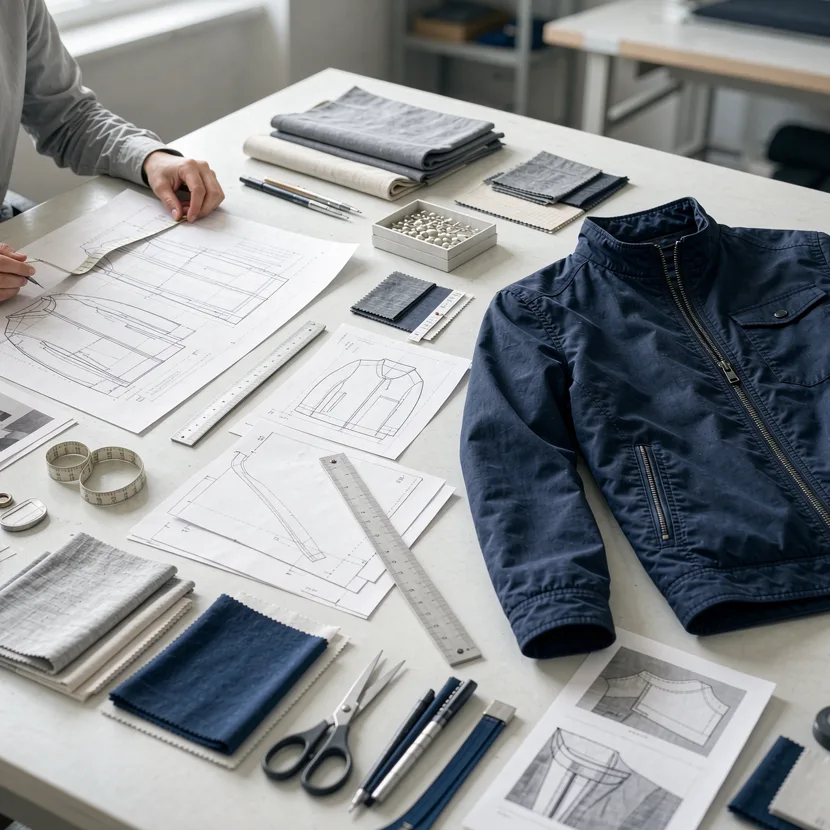
ODM is particularly useful when your product idea is clear but your technical package is incomplete.
2.1 You Have a Design but No Complete Tech Pack
This is one of the most common situations.
You may know:
- The garment silhouette
- Target fabric
- Color direction
- Target customer
- Approximate price
- Desired quantity
But you may not have:
- Final measurements
- Construction details
- Pattern
- Seam specifications
- Specifikacije opreme
- Production-ready artwork
An experienced ODM factory can help fill those technical gaps.
2.2 You Want to Develop a New Product Category
Suppose a brand mainly sells T-shirts but wants to introduce fleece jackets.
The brand may understand its customer well but lack technical experience with fleece construction, lining, zipper selection, pocket construction, or pattern development.
An ODM partner can help translate the product concept into manufacturing specifications.
2.3 You Need Faster Product Development
ODM can reduce the number of separate suppliers involved in development.
Instead of working with:
Designer → Sourcing Agent → Pattern Maker → Sample Room → Factory
you may be able to work with one manufacturing partner that coordinates several of these stages.
That does not automatically make development faster. The factory still needs to have the right technical resources.
The important question is therefore not:
“Does this supplier offer ODM?”
Ask instead:
“What exactly does your ODM service include?”
3. What Services Should a China ODM Clothing Factory Provide?
A genuine ODM manufacturing partner should be able to explain its development process clearly.
3.1 Product Development
The factory should be able to review your initial concept and identify missing production information.
For example, if you send a reference photo of a padded vest, the factory may need to clarify:
- Shell fabric
- Filling
- Lining
- Quilting method
- Zipper type
- Pocket construction
- Binding
- Meritve
- Label placement
A useful ODM partner does not simply say “yes” to the photo.
It should identify what needs to be developed before production.
3.2 Fabric Sourcing
Fabric affects more than appearance.
It influences:
- Garment weight
- Hand feel
- Prileganje
- Trajnost
- Cost
- Production behavior
- Učinkovitost pranja
For example, two fleece fabrics can look similar in photographs but perform differently in thickness, softness, stretch, pilling resistance, and cost.
Ask the factory whether it can recommend alternative fabrics when the requested material is unavailable or too expensive.
3.3 Pattern Making
Pattern development is one of the most important differences between basic production and genuine ODM support.
Ask:
- Who develops the pattern?
- Is CAD pattern making available?
- How are measurements confirmed?
- How are fit revisions recorded?
- Can patterns be adjusted after sample fitting?
A factory that cannot clearly explain its pattern development process may have limited ODM capability.
3.4 Sample Development
Samples turn an idea into something measurable.
A professional sample review should examine:
- Prileganje
- Meritve
- Tkanina
- Construction
- Šivanje
- Okraski
- Barva
- Label placement
- Overall appearance
Do not approve a bulk order simply because the sample “looks good.”
The sample should become the reference point for bulk production.
3.5 Bulk Production
Once the sample is approved, the factory should be able to transfer the approved specifications into production.
This is where development capability meets manufacturing capability.
A factory may create a good sample but still struggle with bulk consistency.
That is why you should evaluate both:
Development capability + Production capability
4. How the China ODM Clothing Factory Process Works
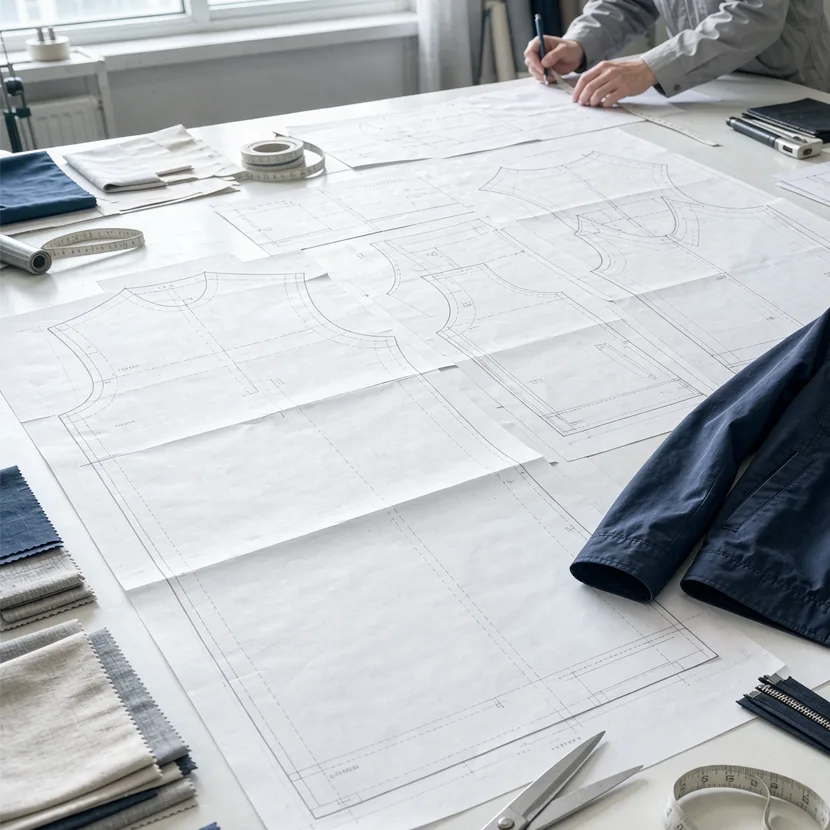
A practical ODM workflow usually looks like this.
4.1 Step 1: Send Your Product Brief
Start with whatever information you already have.
You can send:
- Reference photos
- Sketches
- Existing samples
- Tehnični paketi
- Product measurements
- Fabric preferences
- Target quantity
- Target market
- Target price
You do not always need a perfect tech pack to start a conversation.
4.2 Step 2: Factory Feasibility Review
The factory should review whether your product can be manufactured within the requested requirements.
For example:
Product: Lightweight outdoor gilet
Quantity: 800 pieces
Target fabric: Recycled polyester
Target market: European outdoor brand
Target price: Mid-range
The factory should consider fabric availability, construction, trims, sampling requirements, MOQ, production capacity, and estimated lead time.
4.3 Step 3: Material and Construction Confirmation
At this stage, the factory may recommend changes.
For example:
Your selected fabric is suitable for appearance but may not provide enough durability for the intended outdoor use.
This type of feedback is valuable.
A factory that only accepts instructions without discussing manufacturing risks may not provide much real ODM value.
4.4 Step 4: Pattern and Sample Development
The first sample is not always the final sample.
Common revisions include:
- Chest width
- Dolžina rokava
- Dolžina telesa
- Pocket position
- Collar shape
- Teža tkanine
- Zipper specification
- Stitching details
This is normal in product development.
4.5 Step 5: Sample Approval
Before bulk production, confirm the approved sample and written specifications.
Record:
- Final fabric
- Barva
- Meritve
- Construction
- Dodatki
- Oznake
- Embalaža
- Approved sample version
This creates a production reference.
4.6 Step 6: Bulk Production and QC
After approval, production can move forward.
Quality control should cover key stages rather than only checking finished garments.
A useful process can include:
Fabric Inspection → Cutting → Sewing → Inline Inspection → Finished Garment Inspection → Packing
4.7 Step 7: Packing and Shipment
The final stage should confirm:
- Folding method
- Polybag requirements
- Carton specifications
- Carton markings
- Količina
- Oznake
- Shipping documents
Small packaging mistakes can create unnecessary delays even when the garments themselves are acceptable.
5. How to Evaluate a China ODM Clothing Factory
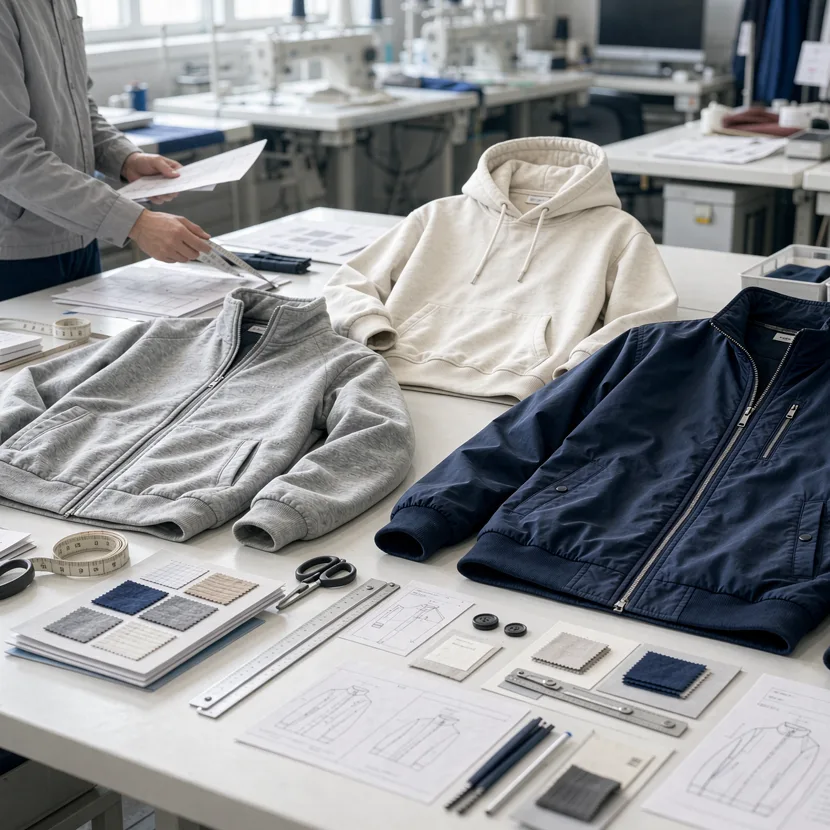
Factory evaluation should go beyond a website's claims.
5.1 Check Real Development Capability
Ask the supplier to explain its ODM workflow.
A useful question is:
“If I only provide reference photos and a target fabric, what happens next?”
A capable factory should be able to explain the development process step by step.
Look for:
- Razvoj vzorcev
- Sample making
- Fabric recommendations
- Technical review
- Fit revision
- Costing
- Production planning
5.2 Check Factory Capability
Look at:
- Factory location
- Production space
- Equipment
- Production categories
- Workforce
- Development team
- Monthly or annual capacity
- Quality control system
Do not judge a factory only by factory size.
A 10,000㎡ factory is not automatically better for your project than a smaller specialized manufacturer.
The important question is whether its capabilities match your product.
5.3 Check Product Experience
A factory specializing in T-shirts may not be the best technical fit for highly constructed outdoor jackets.
Ask for relevant product experience.
For example:
Your product: Technical fleece jacket
Useful supplier experience: Fleece, outerwear, jackets, sportswear or outdoor apparel
Product-category experience can reduce development mistakes.
5.4 Check Communication
Communication quality is often underestimated.
During development, you may need to discuss:
- Meritve
- Fabric alternatives
- Construction
- Primeri popravkov
- Cost changes
- Production timing
If answers are consistently vague before the order, communication may become harder after the deposit.
6. How to Compare China ODM Clothing Factory Quotes
Do not compare only the final unit price.
A quote can contain different levels of service.
| Cost Factor | Supplier A | Supplier B |
|---|---|---|
| Tkanina | Included | Included |
| Razvoj vzorcev | Included | Extra |
| Sample | Included | Extra |
| Revision | 1 round | 3 rounds |
| Oznake | Included | Extra |
| Embalaža | Basic | Customized |
| QC | Final only | Multi-stage |
| Dostava | Excluded | Excluded |
A supplier quoting $9.20 per piece is not necessarily more expensive than one quoting $8.50.
The cheaper quote may exclude development, trims, packaging, or other requirements.
6.1 Calculate Total Development Cost
Your actual project cost can include:
Sample Cost + Development Cost + Fabric + Trims + Pattern + Bulk Production + Packaging + Inspection + Freight
This gives you a more realistic comparison.
7. What MOQ Should You Expect From a China ODM Clothing Factory?
There is no universal ODM MOQ.
MOQ depends on:
- Product category
- Tkanina
- Minimalne količine tkanin
- Barva
- Construction
- Prilagajanje
- Production method
- Supplier capacity
For example, a basic T-shirt may be easier to produce in a smaller quantity than a heavily customized technical jacket.
Ask suppliers:
- What is the MOQ per style?
- Is MOQ calculated by color?
- Is fabric MOQ separate?
- Can multiple colors share the same fabric order?
- Can multiple styles be combined?
- What happens if the order is below MOQ?
Do not focus only on the advertised MOQ.
Ask what MOQ applies to your actual product.
8. How to Check an ODM Sample Before Bulk Production
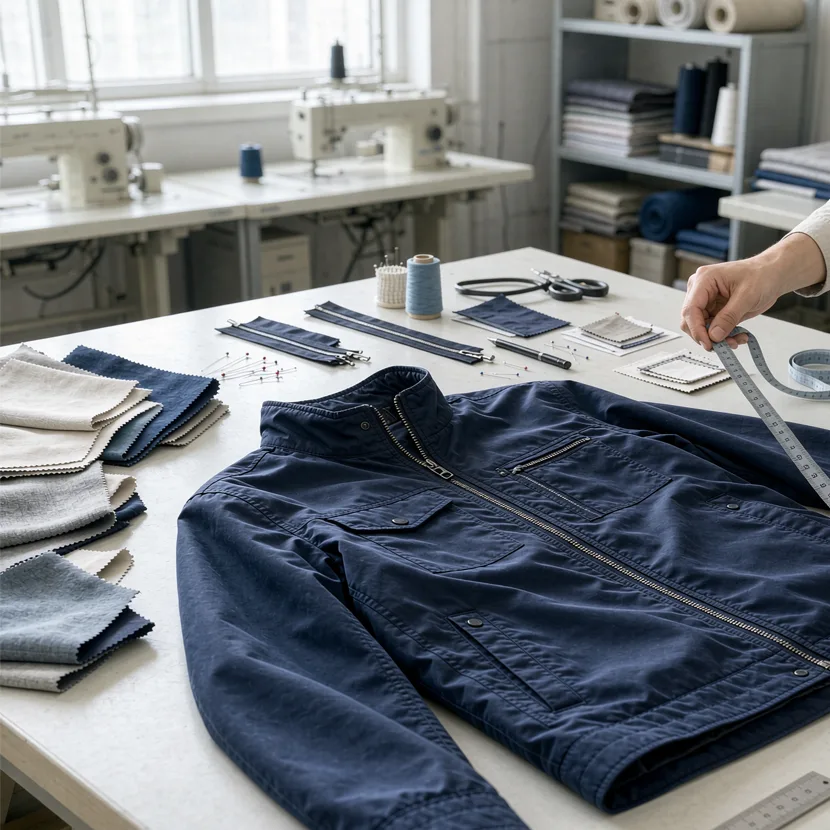
Sample approval is one of the most important steps in the entire project.
Use a structured checklist.
Sample Approval Checklist
Prileganje
- Prsni koš
- Ramo
- Sleeve
- Dolžina telesa
- Armhole
- Waist or hem
Material
- Sestava tkanine
- GSM
- Hand feel
- Raztezanje
- Barva
- Surface appearance
Construction
- Seam quality
- Stitch density
- Pocket construction
- Collar
- Cuffs
- Hem
Okraski
- Zadrge
- Gumbi
- Snaps
- Vezalne vrvice
- Oznake
Oblikovanje blagovne znamke
- Main label
- Size label
- Care label
- Hangtag
- Embalaža
For a new brand, this checklist can prevent a common mistake: approving the visual appearance while missing technical details.
9. China ODM Clothing Factory vs Trading Company
A trading company can be useful in some sourcing situations, but buyers should understand who actually controls development and production.
| Question | Direct Factory | Trading Company |
|---|---|---|
| Own production facility | Usually | Not necessarily |
| Razvoj vzorcev | Factory team | May outsource |
| Sample room | Usually if development-focused | May outsource |
| Production control | Direct | Through supplier |
| Komunikacija | Direct technical team | Intermediary |
| Supplier flexibility | Depends on factory | May access multiple factories |
| Price structure | Factory quotation | May include margin |
The key issue is not simply whether a company is a factory.
Ask:
“Who will make my pattern?”
“Where will my sample be developed?”
“Where will bulk production take place?”
“Who is responsible for final QC?”
Clear answers help you understand the actual supply chain.
10. What Should You Send to a China ODM Clothing Factory?
A better inquiry usually produces a better quotation.
Send as much information as possible.
Basic RFQ Information
Izdelek
- Garment type
- Reference image
- Sketch or sample
Material
- Fabric type
- Composition
- GSM
- Barva
- Performance requirements
Sizing
- Size range
- Size chart
- Fit preference
Količina
- Expected quantity
- Quantity per color
- Number of styles
Oblikovanje blagovne znamke
- Logo
- Oznake
- Oznake na izdelkih
- Embalaža
Commercial
- Target market
- Target price
- Required delivery date
You do not need to have every answer before contacting an ODM factory.
But the more information you provide, the easier it is for the factory to identify production requirements.
11. How to Avoid Common ODM Sourcing Problems
Several problems appear repeatedly in apparel development.
11.1 Choosing the Lowest Quote
A low quotation may look attractive.
But if the fabric, construction, sampling, or QC scope is different, the comparison is not meaningful.
11.2 Approving the First Sample Too Quickly
The first sample is often a development tool.
Use it to identify problems before production.
11.3 Not Confirming Fabric Specifications
“Black fleece” is not a sufficient fabric specification.
You may need:
- Composition
- GSM
- Width
- Finish
- Raztezanje
- Color standard
- Performance requirements
11.4 Discussing Important Details Only by Chat
For important production requirements, written specifications are safer than relying only on messages.
Keep a clear record of:
- Meritve
- Materiali
- Barve
- Construction
- Embalaža
- Revision comments
11.5 Ignoring Reorder Capability
Your first order may be small.
But if the product sells well, the supplier needs to reproduce the same quality later.
Ask how the factory manages:
- Approved samples
- Patterns
- Fabric specifications
- Color standards
- Production records
12. What Makes a Reliable China ODM Clothing Factory?
A reliable ODM partner should connect development with production.
Look for five capabilities:
12.1 Technical Development
The factory can convert an idea into measurable specifications.
12.2 Material Knowledge
The factory understands how fabric choices affect construction, cost, fit, and performance.
12.3 Sample Control
The factory can develop, revise, and approve samples systematically.
12.4 Production Capability
The factory can reproduce the approved sample consistently at scale.
12.5 Quality Control
Quality should be controlled throughout production, not only when cartons are ready to ship.
These five areas are more useful than simply asking how many years a factory has been in business.
13. A Practical China ODM Clothing Factory Evaluation Checklist
Before choosing a supplier, ask:
- Can they develop patterns?
- Can they work from reference photos?
- Can they source suitable fabrics?
- Can they make samples?
- How many sample revisions are included?
- What is the MOQ for my product?
- Is MOQ per style or color?
- Who handles QC?
- Where does bulk production take place?
- Can they provide relevant product examples?
- Can they support private labeling?
- Can they handle packaging requirements?
- What information is included in the quotation?
- How are approved samples documented?
- Can they support future reorders?
If a supplier gives clear answers, you have a stronger basis for comparison.
14. China ODM Clothing Factory: What Buyers Should Expect
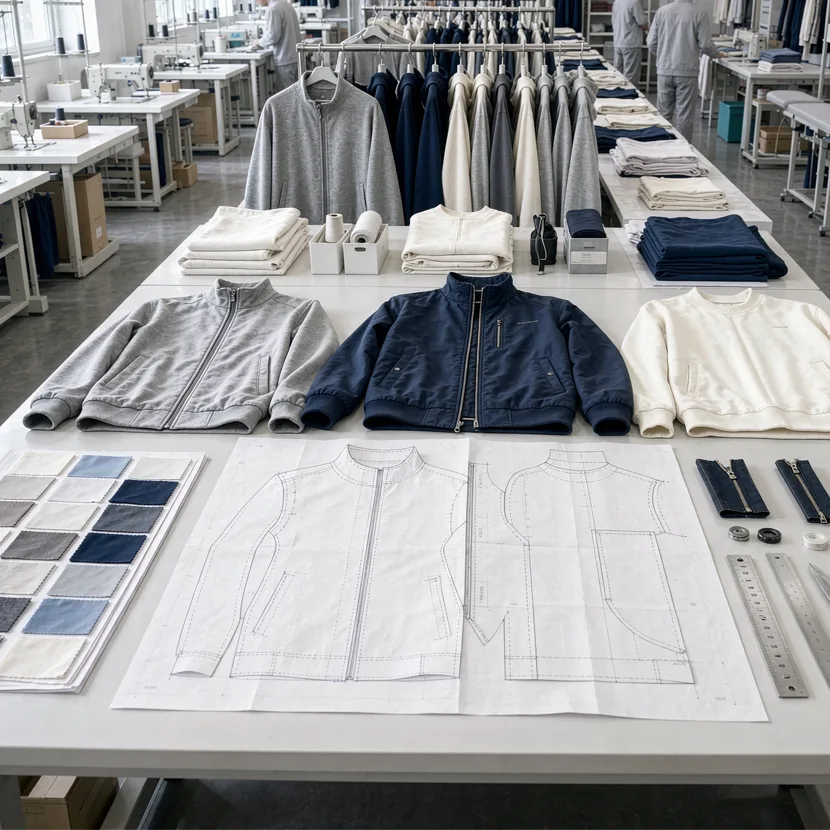
A strong ODM relationship is not simply:
Buyer sends design → Factory produces garment.
It is closer to:
Buyer Concept → Technical Development → Material Selection → Pattern → Sample → Revision → Approval → Production → QC → Delivery
The factory's value is created during the development process as much as during sewing.
For example, a brand launching a new fleece collection may start with only reference images. The right ODM partner can help define fabric weight, construction, measurements, trims, sample requirements, and production specifications before bulk manufacturing begins.
That is where ODM can become a practical business advantage.
15. How KALAIBEN Fits Into an ODM Manufacturing Project
For brands looking for an ODM partner across knitted and woven apparel, KALAIBEN provides product development, pattern making, sampling, OEM/ODM manufacturing, labeling, and packaging support. Its published factory information states that the facility covers approximately 6,000㎡, with more than 700 production machines, nearly 700 employees, and annual production capacity of approximately 600,000 pieces or sets.
The company also states that buyers can provide technical drawings, tech packs, sketches, reference photos, or existing samples as starting points for product development. Samples can then be reviewed before bulk production.
For a buyer, the important point is not the factory numbers alone. The better question is whether the manufacturer's product categories, development process, MOQ, quality requirements, and communication model fit the specific project.
Explore KALAIBEN OEM & ODM apparel capabilities
16. Final Buyer Checklist Before Sending an ODM Inquiry
Before contacting a China ODM clothing factory, prepare these six things:
- Product reference — photo, sketch, sample, or tech pack.
- Material direction — fabric type, composition, GSM, or performance needs.
- Količina — expected order volume and colors.
- Target market — country and customer type.
- Target price — approximate acceptable range.
- Delivery requirement — desired sample and bulk timeline.
Then ask the factory to confirm:
- Development scope
- Sample cost
- Sample timeline
- MOQ
- Fabric options
- Bulk price
- QC process
- Čas izdelave
- Embalaža
- Shipping terms
This creates a much more useful comparison than simply asking:
“What is your best price?”
17. Related Resources for Apparel Buyers
For buyers researching OEM and ODM manufacturing, the following resources can support the next stage of supplier evaluation:
- KALAIBEN About the Factory
- KALAIBEN FAQ: OEM, ODM, Samples and MOQ
- Apparel Factory ODM China Guide
- Apparel Manufacturer ODM Services
If you already have a garment concept, reference image, sample, or tech pack, the next step is to send those details to an ODM factory and request a development review rather than asking for a unit price alone.











