




Custom Clothing Manufacturer: A Complete Guide to Developing Your Own Clothing
Datum objave:2026-08-31 Kategorija:NOVICE Število ogledov:527
Introduction
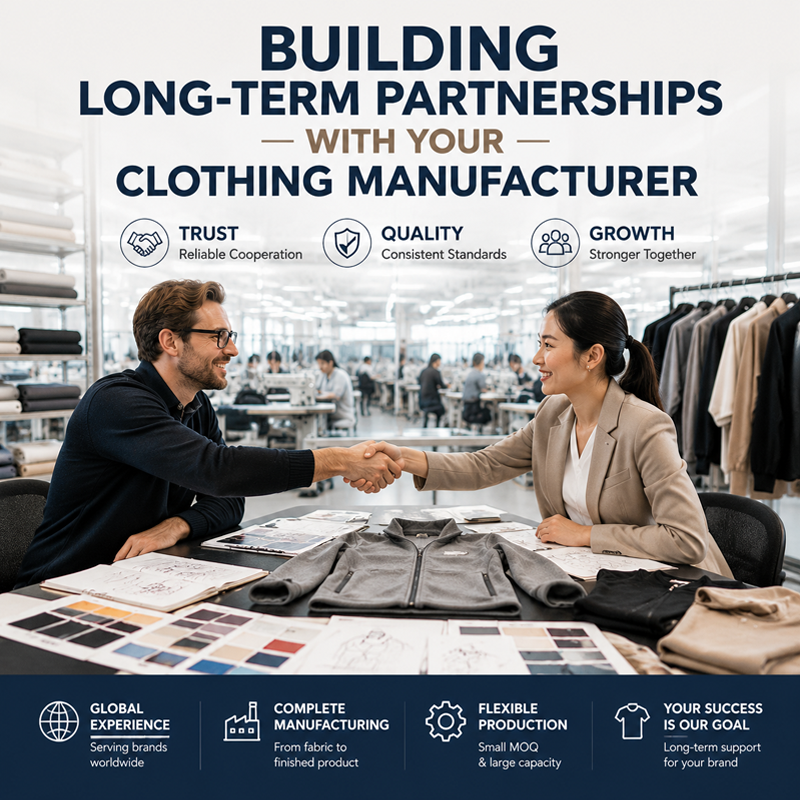
Working with a custom clothing manufacturer allows brands and businesses to develop garments according to their own specifications instead of relying entirely on ready-made products.
For a clothing brand, customization can start with an original design.
It can also begin with an existing garment reference that needs to be modified.
The process may involve fabric selection, fit development, color, construction, branding, labels, trims, packaging, and production.
The more customized the garment, the more important it becomes to work with a manufacturer that understands the development process.
1. What Is a Custom Clothing Manufacturer?
A custom clothing manufacturer produces clothing based on a buyer's specifications.
The buyer may provide:
- A sketch
- A technical drawing
- A product sample
- A reference garment
- Zahteve glede tkanine
- Meritve
- Color requirements
- Branding specifications
The manufacturer then works through the required development and production stages.
Custom clothing manufacturing is therefore different from simply purchasing wholesale garments.
The goal is to create a product that follows the buyer's specific requirements.
2. Decide How Much Customization You Need
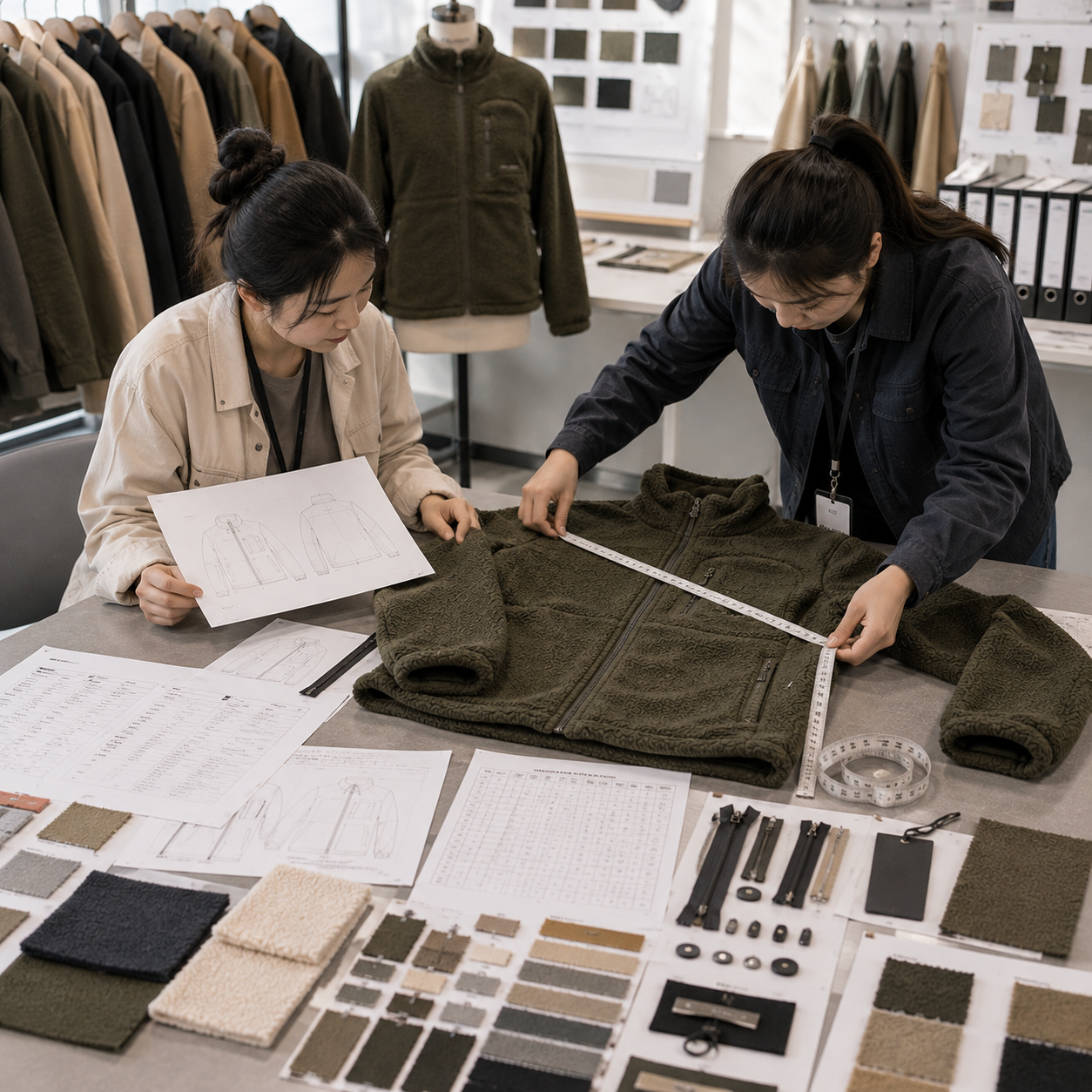
Not every project requires the same level of development.
There are generally several approaches.
Modify an Existing Style
You may start with an existing garment and change:
- Tkanina
- Barva
- Logo
- Oznake
- Okraski
- Embalaža
Develop a Customized Version
You may provide a reference and request changes to:
- Prileganje
- Pockets
- Collar
- Cuffs
- Construction
- Tkanina
Develop an Original Garment
The manufacturer may need to work from a design concept or technical specification and develop the garment through sampling.
Knowing which approach you need can help you communicate with manufacturers more effectively.
3. Prepare a Clear Product Brief
Before contacting a manufacturer, prepare a product brief.
It should include as much information as possible.
Izdelek
What type of garment are you developing?
Target Customer
Who will wear it?
Tkanina
What composition and weight do you want?
Barva
What colors are required?
Size
What size range do you need?
Details
What pockets, zippers, cuffs, collars, or other details are required?
Oblikovanje blagovne znamke
Where should the logo and labels be placed?
Količina
How many pieces do you expect to order?
A clear product brief can make the initial manufacturer discussion much more productive.
4. Fabric Development Is Part of Product Development
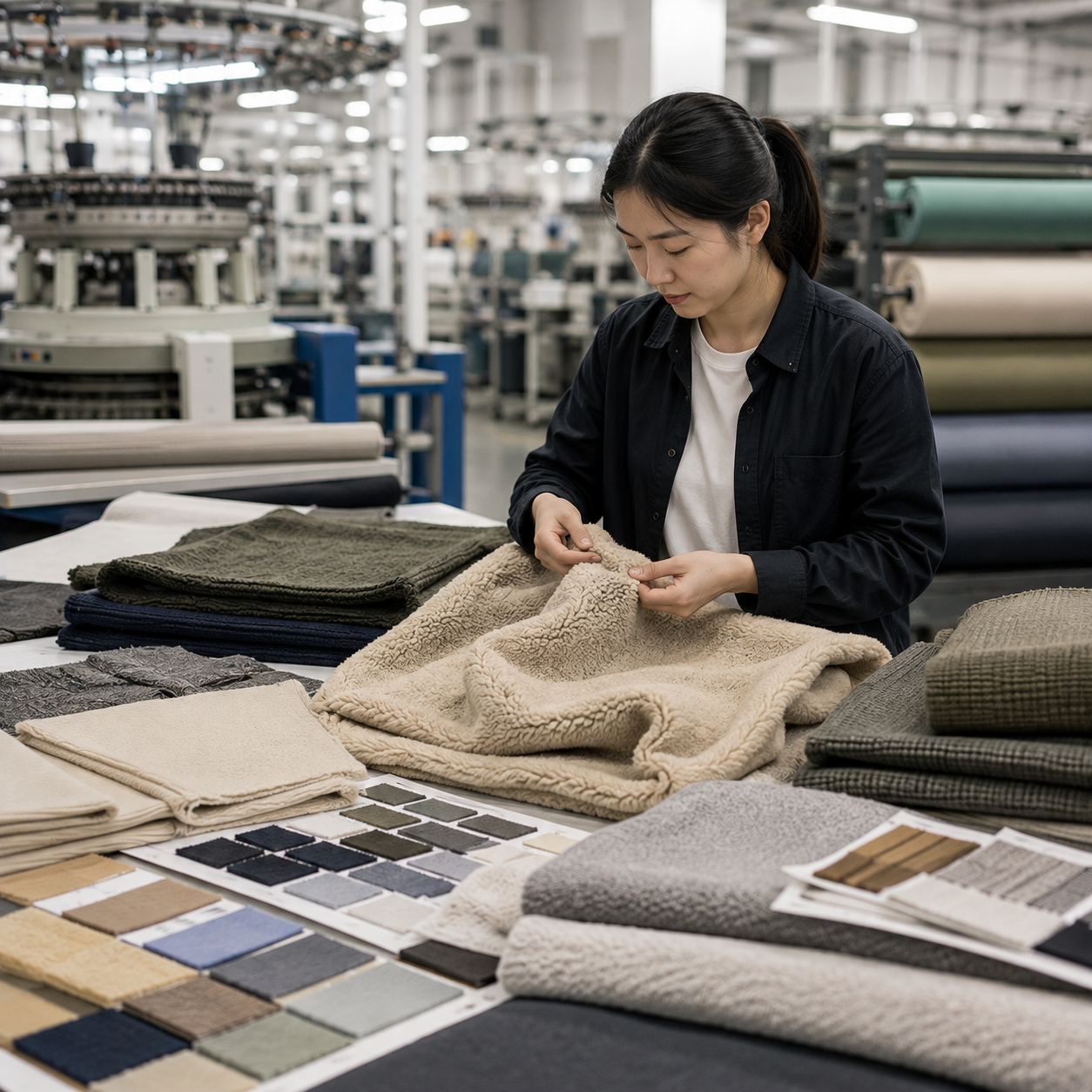
A custom garment is only as good as the specifications behind it.
Fabric should therefore be discussed early.
For example, a brand developing a fleece jacket may need to consider:
- Sestava vlaken
- GSM
- Tekstura površine
- Warmth
- Hand feel
- Barva
- Trajnost
KALAIBEN's company information describes its own knitted fabric production capabilities, including single-side, double-side, terry, fleece, and rib knitting equipment.
This provides a basis for discussing fabric and garment requirements together when developing knitted apparel.
5. Sampling Turns an Idea Into a Product
One of the most important stages in custom clothing manufacturing is sample development.
A sample allows the buyer to evaluate the physical product.
You can check:
- Overall appearance
- Prileganje
- Meritve
- Tkanina
- Barva
- Construction
- Oblikovanje blagovne znamke
- Dodatki
The first sample may not be perfect.
That is normal in product development.
The purpose of the sample stage is to identify changes before bulk manufacturing.
6. Review the Sample Systematically
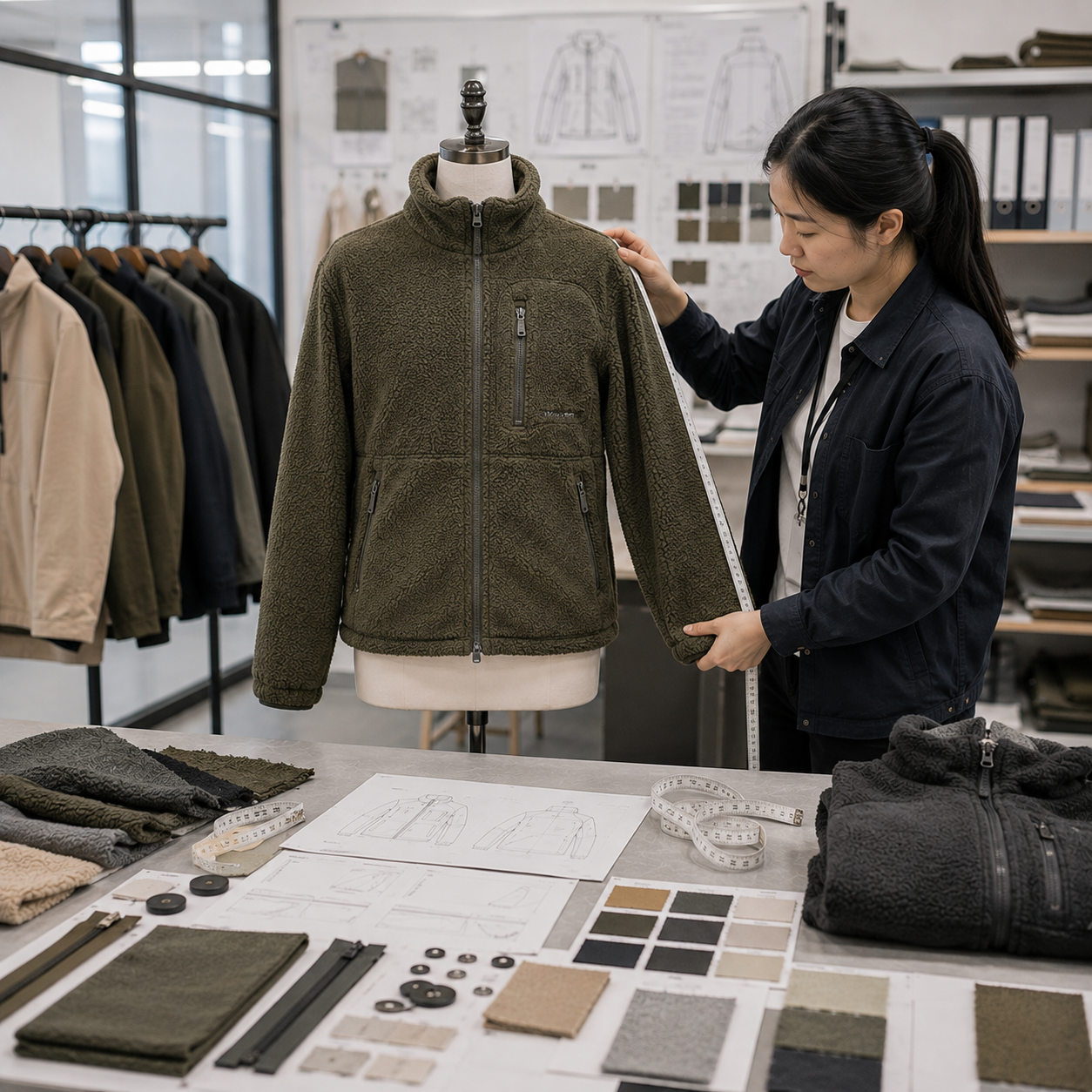
Instead of simply asking whether you "like" the sample, create a checklist.
Measurement
Compare actual measurements with your specification.
Tkanina
Confirm composition, weight, hand feel, and appearance.
Construction
Inspect seams, stitching, pockets, cuffs, collars, and closures.
Oblikovanje blagovne znamke
Check logo size, location, labels, and other branding elements.
Barva
Compare the garment with the approved color reference.
A structured review makes revisions easier to communicate.
7. Understand MOQ and Production Economics
Custom clothing manufacturing requires an appropriate production quantity.
MOQ can depend on:
- Style
- Tkanina
- Barva
- Prilagajanje
- Proizvodni proces
A startup may want a small initial order to reduce inventory risk.
An established brand may require larger quantities to support retail or wholesale distribution.
The important point is to discuss MOQ early.
This allows you to determine whether the manufacturer's production model fits your business.
8. Check the Manufacturer's Garment Categories
A custom clothing manufacturer should ideally have relevant experience with your product category.
KALAIBEN identifies its main products as knitted and woven casual garments and outdoor sportswear.
The company's own brands also include BOWTAD children's apparel and KALAIBEN adult casualwear.
This product experience is particularly relevant for businesses developing:
- Prosti čas
- Outdoor apparel
- Športna oblačila
- Children's apparel
- Knit garments
- Woven garments
However, buyers should always confirm that the manufacturer's specific capabilities match their individual product requirements.
9. Production Requires More Than Sewing
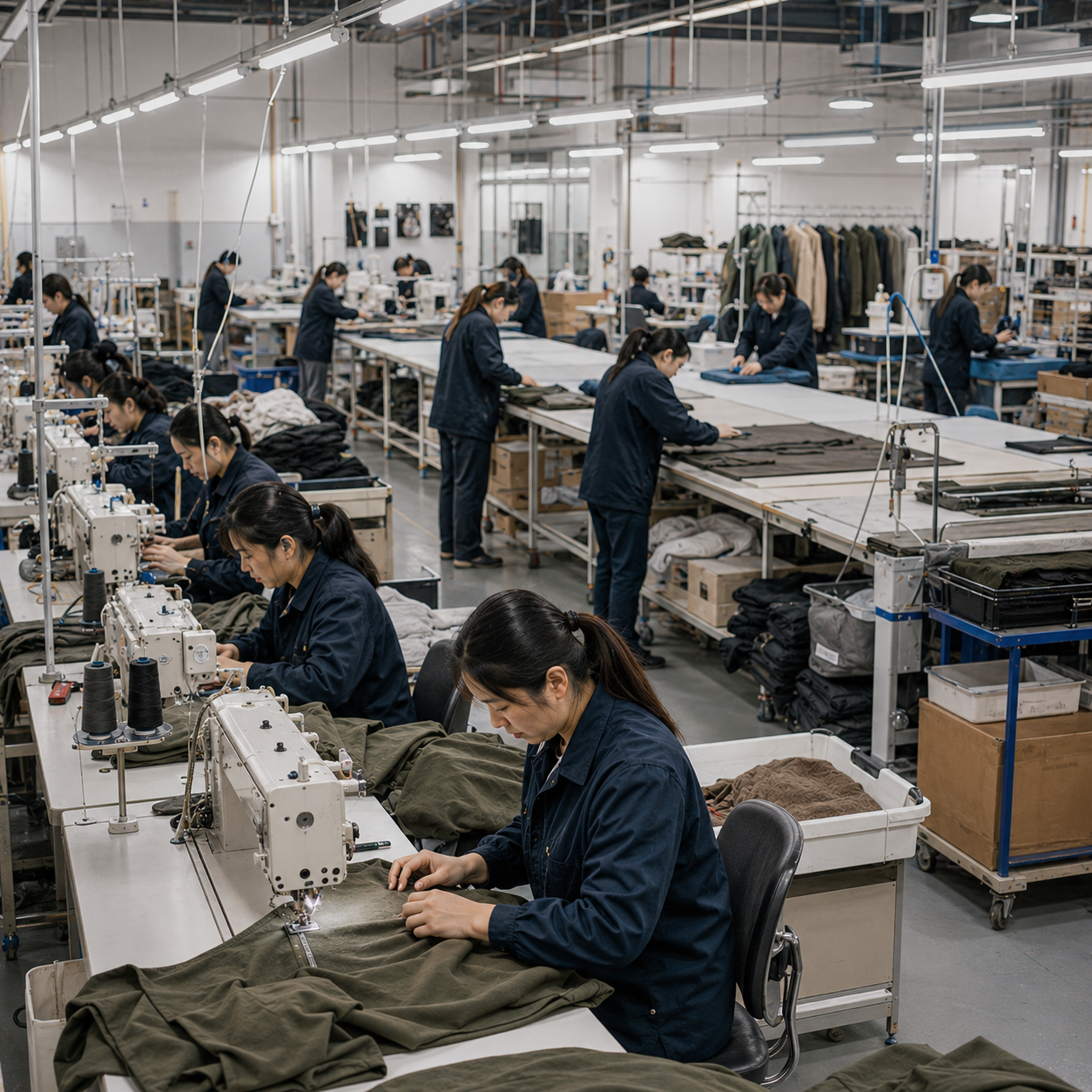
Custom clothing manufacturing involves multiple production stages.
The documented production activities at Jiangxi KALAIBEN include:
Cutting → Sewing → Ironing → Inspection → Packing.
Each stage can affect the final product.
For example:
Rezanje affects garment dimensions and consistency.
Šivanje affects construction and appearance.
Ironing and finishing affect presentation.
Pregled helps identify production problems.
Pakiranje protects the finished products before shipment.
This is why the manufacturing process should be considered as a complete system rather than only a sewing operation.
10. Define Quality Requirements Before Bulk Production
A custom clothing manufacturer cannot interpret vague quality expectations in exactly the same way as every buyer.
Instead of saying:
"Make it high quality."
Provide specific requirements.
For example:
- Sestava tkanine
- Teža tkanine
- Measurement tolerances
- Zahteve glede šivanja
- Color standards
- Logo specifications
- Label requirements
- Zahteve glede embalaže
The clearer these standards are, the easier it is to evaluate the finished product.
11. Consider the Manufacturer's Production Scale
A manufacturer's production scale can be relevant when planning long-term cooperation.
KALAIBEN's company profile states that its Jiangxi subsidiary covers approximately 30 acres and has a construction area of approximately 26,000㎡. The profile also states that the garment factory has more than 380 employees.
The company's Chinese profile describes annual garment production of approximately 700,000–1,000,000 pieces.
For a buyer, production scale should be evaluated alongside product specialization, quality requirements, MOQ, communication, and the manufacturer's ability to handle the specific project.
12. Think Beyond the First Order
A successful clothing product may lead to additional requirements.
For example:
First order → Repeat order → New colors → New styles → New collection
A manufacturer that understands your product specifications can potentially make future development more efficient.
When evaluating a supplier, therefore, ask:
- Can the product be reproduced consistently?
- Can additional colors be developed?
- Can new styles be developed?
- Can production quantities increase?
- Can the manufacturer support future collections?
Long-term compatibility can be more valuable than simply finding the lowest first-order quotation.
Why KALAIBEN Can Support Custom Clothing Projects
KALAIBEN operates as an integrated textile and garment business.
Its company profile describes capabilities in knitted and woven casual garments, outdoor sportswear, and knitted fabric production.
The company also develops its own BOWTAD children's brand and KALAIBEN adult casualwear brand.
For buyers developing custom clothing, this creates a manufacturing environment where product requirements can be discussed across several connected areas:
Fabric → Product Development → Garment Production → Finishing → Inspection → Packing
The company's documented production activities include cutting, sewing, ironing, inspection, and packing.
This integrated approach can be particularly relevant for brands looking for a manufacturing partner rather than simply a finished-garment trading supplier.
What Should You Send to a Custom Clothing Manufacturer?
When requesting a quotation or sample, prepare:
Product Reference
Sketches, photos, technical drawings, or existing samples.
Fabric Requirements
Composition, GSM, color, and other specifications.
Size Requirements
Size chart and measurement details.
Količina
Estimated order quantity and color breakdown.
Oblikovanje blagovne znamke
Logo, labels, embroidery, printing, hangtags, and packaging.
Timeline
Target sample date and expected production schedule.
The more complete the initial information, the easier it is for a manufacturer to evaluate the project.
Common Mistakes When Working With a Custom Clothing Manufacturer
Starting With an Unclear Product Concept
A manufacturer needs enough information to understand what you want to produce.
Changing Requirements Too Frequently
Major changes after production begins can create additional cost and delays.
Skipping Sample Approval
Always evaluate the product before committing to bulk manufacturing.
Ignoring MOQ
Production quantity affects pricing and inventory planning.
Choosing a Manufacturer Without Relevant Product Experience
A supplier experienced in your specific product category can make communication and development more efficient.
FAQ
What is a custom clothing manufacturer?
A custom clothing manufacturer produces garments according to a buyer's specific product, fabric, sizing, branding, and production requirements.
Can I provide a clothing sample to a manufacturer?
Yes. An existing garment can serve as a useful reference when discussing construction, measurements, fabric, and details.
Do I need a technical drawing?
Not always. Depending on the manufacturer and project, photos, sketches, samples, and detailed product information can also help communicate requirements.
How important is fabric selection?
Very important. Fabric affects the garment's appearance, hand feel, weight, comfort, and overall performance.
Should I develop a sample before bulk production?
Yes. Sample development provides an opportunity to review the garment and make necessary adjustments before bulk manufacturing.
Zaključek
Working with the right custom clothing manufacturer can help turn a clothing concept into a repeatable finished product.
The key is to evaluate the complete manufacturing process, including:
- Product development
- Fabric selection
- Vzorčenje
- MOQ
- Prilagajanje
- Production
- Kakovost
- Dokončanje
- Pakiranje
- Long-term cooperation
KALAIBEN's textile and garment capabilities, together with its focus on knitted and woven casualwear and outdoor sportswear, provide a practical foundation for brands developing customized apparel projects.
Have a custom clothing project in development? Contact KALAIBEN with your design, fabric requirements, size specifications, and estimated quantity to discuss your next apparel project.











