




Kendi Kapüşonlu Sweatshirt'ünüzü Tasarlayın: Giyim Markaları İçin Adım Adım Kılavuz
Yayın tarihi:2026-09-10 Kategori:HABERLER Görüntüleme sayısı:645

A hoodie may look like a simple garment, but creating a successful custom hoodie requires decisions about design, fabric, fit, construction, decoration, and production.
For clothing brands, learning how to design your own hoodie can turn an initial creative idea into a manufacturable product. The key is to move from visual inspiration to clear technical specifications that a manufacturer can understand.
This guide explains the main stages of designing a custom hoodie.
1. Start With the Product Concept

Every hoodie development project should begin with a clear concept.
Think about:
- Who will wear the hoodie?
- What type of brand is it?
- What season is it designed for?
- What price level are you targeting?
- What visual style should it communicate?
- Will it be a basic product or a statement piece?
A clear concept helps guide later decisions about fabric, color, fit, and customization.
2. Decide on the Hoodie Silhouette
The silhouette is one of the most visible aspects of hoodie design.
You can develop a:
- Regular-fit hoodie
- Relaxed hoodie
- Oversized hoodie
- Cropped hoodie
- Boxy hoodie
- Longer-length hoodie
For a custom design, consider the relationship between shoulder width, chest width, body length, sleeve length, and hood size.
A balanced silhouette is usually easier to achieve when these measurements are developed together rather than independently.
3. Choose the Fabric
Fabric determines much of the hoodie’s physical character.
Consider factors such as:
- Fiber composition
- Fabric weight
- Thickness
- Stretch
- Surface texture
- Interior texture
- Breathability
- Durability
- Washing performance
Knitted fabrics such as fleece and French terry are commonly considered for hoodie development because they can provide different combinations of warmth, structure, and comfort.
The appropriate fabric depends on the intended product rather than simply choosing the heaviest available material.
4. Select the Color Palette

Color is an important part of hoodie identity.
A brand may choose a classic neutral color, a seasonal shade, or a custom color developed around its visual identity.
When selecting colors, consider:
- Main garment color
- Artwork color
- Drawcord color
- Rib color
- Label color
- Hardware color
- Ambalaj
For larger production quantities, it is important to establish a clear color reference before bulk manufacturing.
5. Design the Hood
The hood deserves special attention because it strongly affects both appearance and comfort.
Important design considerations include:
- Hood depth
- Hood width
- Overlap
- Opening size
- Drawcord placement
- Drawcord thickness
- Seam construction
A shallow hood creates a different appearance from a deep, structured hood.
If the hood is an important part of the design concept, include detailed measurements in the technical specification.
6. Plan the Pocket

Pocket construction can also change the character of a hoodie.
Common options include:
- Kangaroo pocket
- Side pockets
- Zipper pockets
- Hidden pockets
- No front pocket
Consider both function and appearance.
Pocket size and position should be evaluated together with the overall body proportions.
7. Develop the Sleeves and Cuffs

Sleeve proportions can significantly affect the silhouette.
For oversized hoodies, wider sleeves may complement the overall shape. For more traditional styles, a closer sleeve can create a cleaner appearance.
Cuffs also need to balance stretch, recovery, width, and visual proportion.
Technical measurements should be established during sample development.
8. Add Graphics and Branding
Once the base garment has been defined, consider how graphics or branding will be applied.
Possible customization options include:
- Screen printing
- Digital printing
- Embroidery
- Appliqué
- Patches
- Woven labels
- Printed labels
Think about both the artwork itself and its physical placement.
A front chest graphic, sleeve graphic, back print, or embroidered logo can create very different visual results.
9. Prepare a Technical Specification
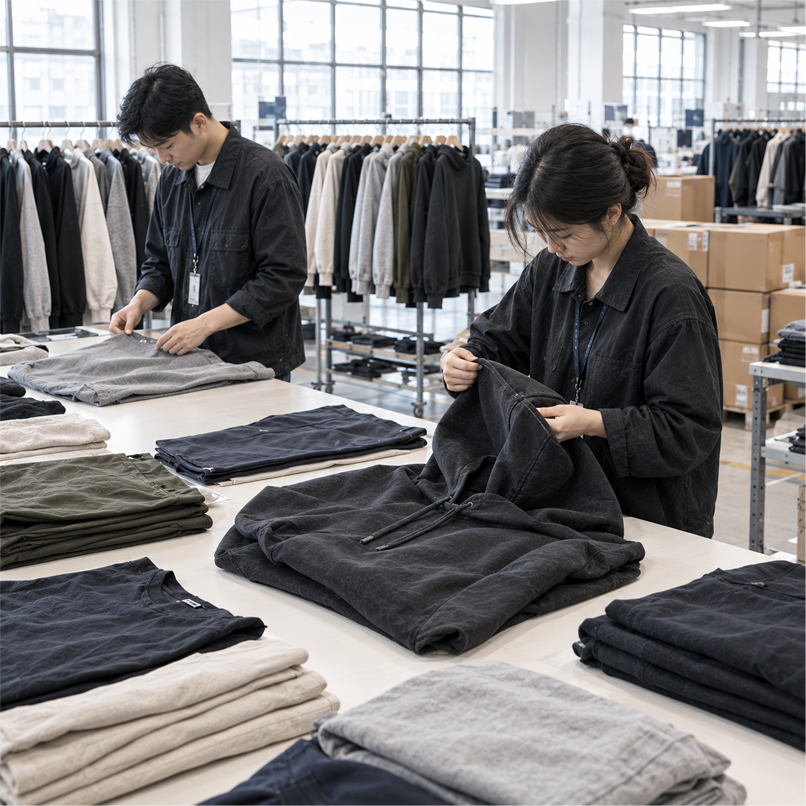
A professional hoodie design should eventually become a clear technical specification.
Useful information may include:
- Garment measurements
- Fabric composition
- Fabric weight
- Color references
- Artwork dimensions
- Artwork placement
- Label specifications
- Trim specifications
- Stitching requirements
- Packaging requirements
A technical specification helps transform a creative concept into something a manufacturer can reproduce.
10. Create a Prototype or Sample
Before starting production, develop a sample.
The sample allows you to evaluate whether the physical garment matches your original concept.
Kontrol edin:
- Overall silhouette
- Fabric hand feel
- Ölçümler
- Hood shape
- Sleeve proportions
- Pocket placement
- Cuff construction
- Artwork
- Etiketler
- Dikiş
If something does not look or feel right, make adjustments before approving the final version.
11. Test the Fit
Fit evaluation should be systematic.
Compare the sample measurements against the intended size specification.
Check areas such as:
- Chest
- Shoulder
- Body length
- Sleeve length
- Hood
- Cuff
For brands developing multiple sizes, consider how the pattern should change between sizes rather than simply increasing every measurement by the same amount.
12. Think About Manufacturing at the Design Stage
A good hoodie design needs to be manufacturable.
Some design details may increase production complexity, material consumption, or decoration requirements.
For example, multiple fabric panels, unusual construction, complicated embroidery, or highly detailed trims may require additional development work.
Talking to a manufacturer early can help identify potential production challenges before the design becomes finalized.
13. Consider the Target Production Quantity
The intended quantity can influence how you approach the design.
A small initial collection may require a different production strategy from a large commercial order.
Before finalizing the design, understand:
- Minimum order quantity
- Fabric minimums
- Color minimums
- Decoration requirements
- Sampling costs
- Production lead time
These factors can help determine whether the design is practical for the intended launch.
14. Build a Consistent Size Range
If the hoodie will be sold commercially, the size range should be considered early.
Common size ranges may include:
S – M – L – XL – 2XL
However, the correct range depends on the target market and product positioning.
A well-developed size specification should define measurements for each size rather than relying only on generic S, M, L, and XL labels.
15. Review Quality Before Production
Before approving production, establish what quality means for the hoodie.
Review:
- Fabric consistency
- Renk
- Ölçümler
- Dikiş
- Printing
- Embroidery
- Etiketler
- Trims
- Son işlem
The approved sample can serve as an important production reference.
Clear quality standards are especially valuable when manufacturing larger quantities.
16. Understand the Difference Between Design and Manufacturing
Designing a hoodie and manufacturing a hoodie are related but different processes.
Design focuses on:
- Görünüm
- Concept
- Uygunluk
- Function
- Malzemeler
- Markalaşma
Manufacturing focuses on:
- Malzemeler
- Desen tasarımı
- Kesme
- Dikiş
- Decoration
- Denetim
- Paketleme
A successful product connects these two areas through clear specifications and communication.
17. Work With an Experienced Manufacturer
A manufacturer can contribute more than production capacity.
During development, an experienced manufacturing partner may help brands understand:
- Fabric possibilities
- Construction methods
- Sampling requirements
- Decoration techniques
- Production limitations
- Quality considerations
This is particularly useful for startups that may have a strong creative concept but limited technical apparel experience.
18. How KALAIBEN Supports Hoodie and Apparel Development
KALAIBEN specializes in woven and knitted apparel and operates an integrated industry and trade business with production capabilities covering garment development and manufacturing.
Its broader production operation includes cutting, sewing, ironing, inspection, and packing, while its knitting capabilities include fleece and other knitted fabric production.
For brands developing apparel collections, connecting fabric knowledge with garment production can help create a more coordinated development process.
19. A Practical Hoodie Design Workflow
A simple workflow for designing your own hoodie is:
Concept → Silhouette → Fabric → Color → Construction → Graphics → Technical Specification → Sample → Fit Review → Revision → Production
Following a structured process makes it easier to identify problems before they become expensive production issues.
20. Common Mistakes When Designing a Hoodie
Starting With Graphics Instead of the Garment
A strong graphic cannot compensate for poor fit or unsuitable fabric.
Choosing Fabric Only by Weight
Two fabrics with similar weights can have very different hand feels, structures, and performance.
Using Generic Measurements
Custom products require clear measurements if the desired fit differs from standard garments.
Changing the Design During Production
Major changes after bulk production begins can create delays and additional costs.
Ignoring Manufacturing Feasibility
A visually interesting design still needs to be technically and commercially practical.
Conclusion
Learning how to design your own hoodie is about more than creating an attractive graphic. A successful hoodie combines concept, silhouette, fabric, color, construction, customization, fit, and manufacturing considerations.
The best approach is to develop the garment systematically, turn the concept into clear specifications, create a sample, test the fit, make revisions, and only then move into bulk production.
For apparel brands, this process creates a stronger connection between creative ideas and commercially manufacturable products.











