




How to Find a Clothing Manufacturer: A Practical Guide for New Apparel Brands
Yayın tarihi:2026-09-02 Kategori:HABERLER Görüntüleme sayısı:628
Introduction
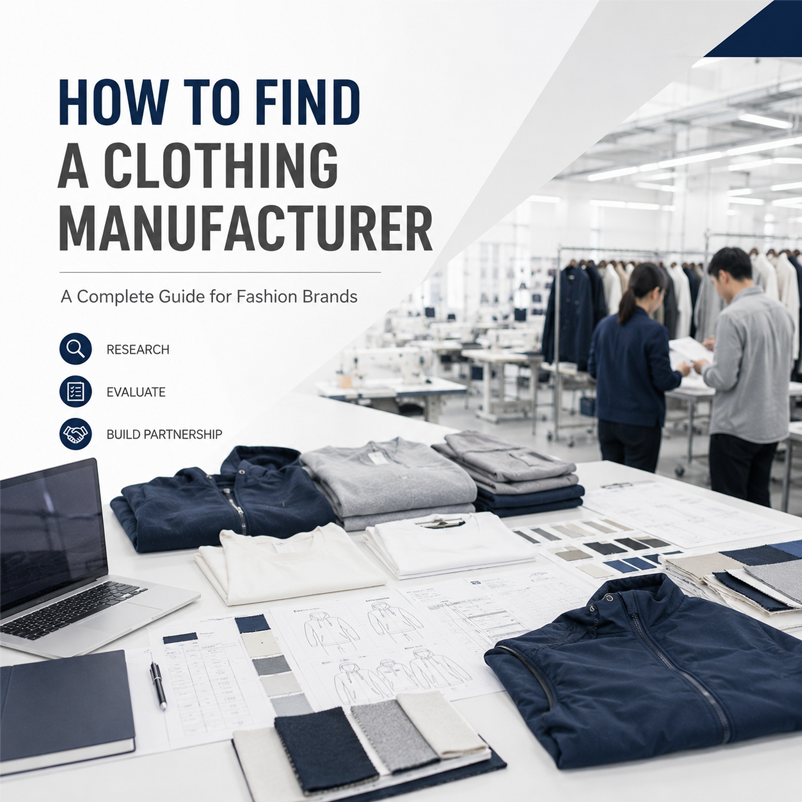
Knowing how to find a clothing manufacturer is one of the first major steps when developing an apparel brand.
A good product idea is only the beginning.
You also need a manufacturing partner that can turn that idea into a consistent finished garment.
For new brands, the process can seem complicated.
Where should you search?
What information should you send?
How should you compare factories?
What questions should you ask?
Should you order samples?
How do you know whether a manufacturer is suitable?
The answer is to approach manufacturer sourcing as a structured process rather than simply searching for a factory and asking for a price.
This guide explains the major steps.
1. Define What You Want to Manufacture
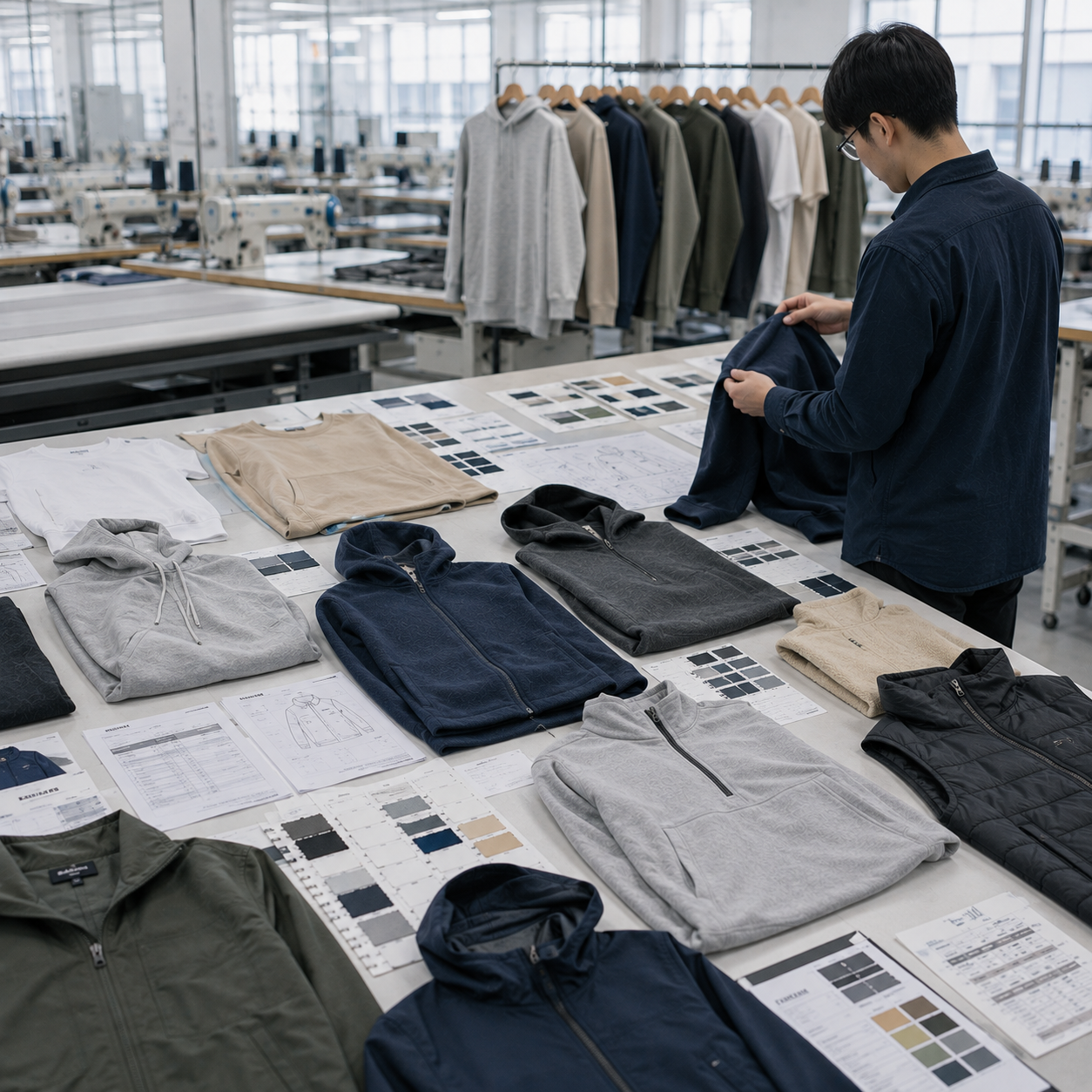
Before searching for manufacturers, define your product.
Start with:
Product Category
For example:
- T-shirts
- Hoodies
- Sweatshirts
- Jackets
- Vests
- Fleece garments
- Spor giyim
- Outdoor apparel
- Children's clothing
Kumaş
Specify:
- Composition
- GSM
- İnşaat
- Stretch
- Finish
Size
Prepare your intended size range.
Renk
List your target colors.
Design Details
Include:
- Pockets
- Zippers
- Collars
- Cuffs
- Seams
- Closures
Markalaşma
Include:
- Logo
- Main label
- Care label
- Hangtag
- Embroidery
- Printing
- Ambalaj
The more information you have, the easier it becomes to compare manufacturers.
2. Decide What Type of Manufacturer You Need
Not every clothing supplier operates in exactly the same way.
You may encounter:
Cut-and-Sew Manufacturers
These factories focus on garment production based on your specifications.
Full-Service Manufacturers
These suppliers may support several stages, from material sourcing and sampling to production.
Specialized Manufacturers
These focus on specific categories or materials.
For example:
- Spor giyim
- Outdoor apparel
- Children's clothing
- Knitwear
- Woven garments
Your product requirements should determine which type of manufacturer you approach.
3. Search by Product and Manufacturing Capability
Instead of searching only for:
"clothing manufacturer"
make the search more specific.
For example:
- Clothing manufacturer for outdoor apparel
- Knitwear manufacturer
- Sportswear manufacturer
- Fleece clothing manufacturer
- Woven garment manufacturer
- Custom clothing manufacturer
This can help narrow your search toward factories with relevant experience.
KALAIBEN's company profile identifies knitted and woven casual garments and outdoor sportswear as its primary product categories.
4. Create a Shortlist
You do not need to contact dozens of factories at once.
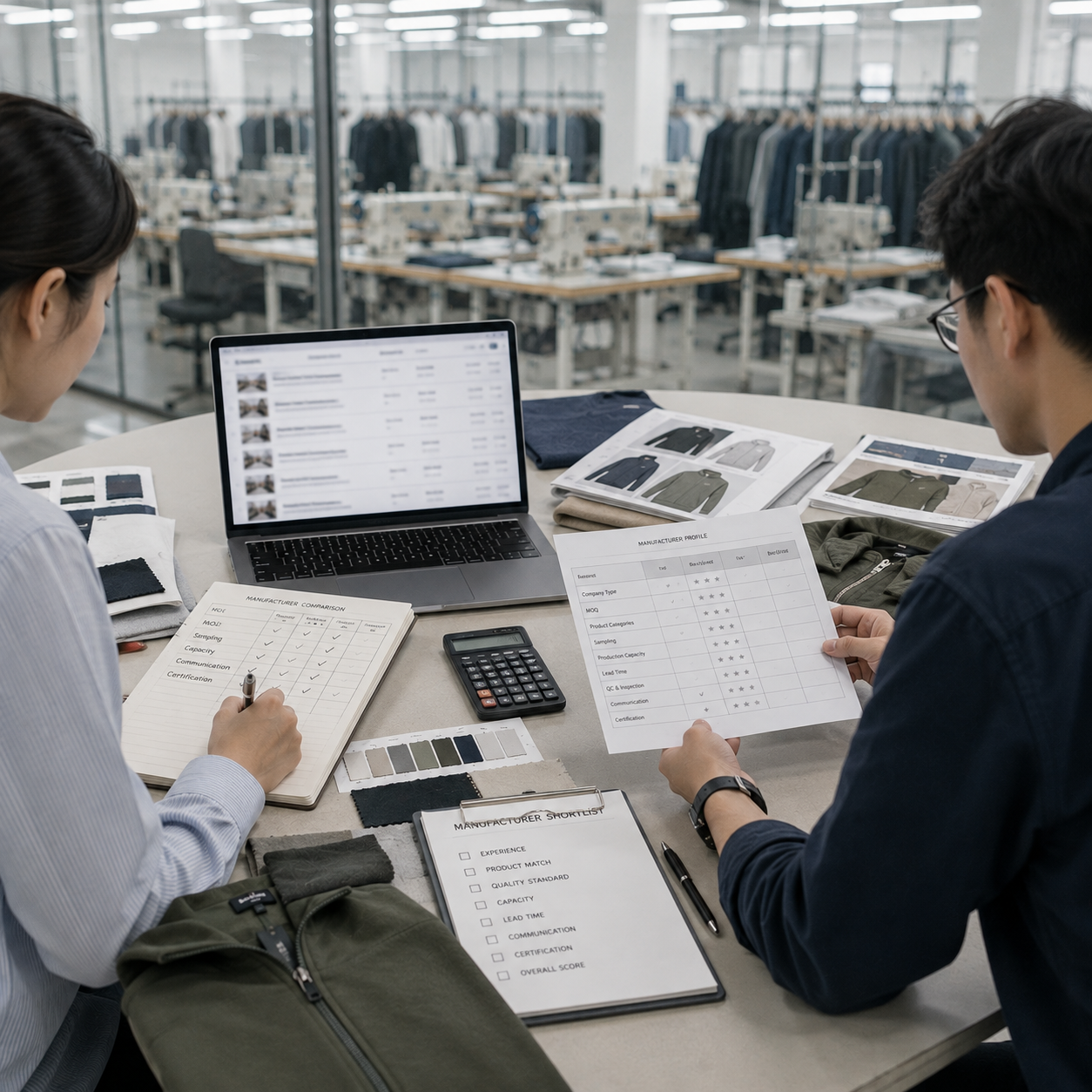
Start with a manageable shortlist.
For example:
10 potential manufacturers
↓
5 manufacturers that match your product
↓
3 manufacturers for detailed discussion
↓
1–2 manufacturers for sample development
The exact number is less important than having a structured comparison process.
5. Compare the Manufacturers
Create a simple supplier comparison sheet.
Record:
- Location
- Product categories
- Fabric capabilities
- MOQ
- Sample process
- Özelleştirme
- Üretim kapasitesi
- Quality process
- İletişim
- Estimated pricing
- Lead time
This makes it easier to compare manufacturers objectively.
6. Send a Clear Inquiry
When contacting a manufacturer, avoid sending only:
"How much for this jacket?"
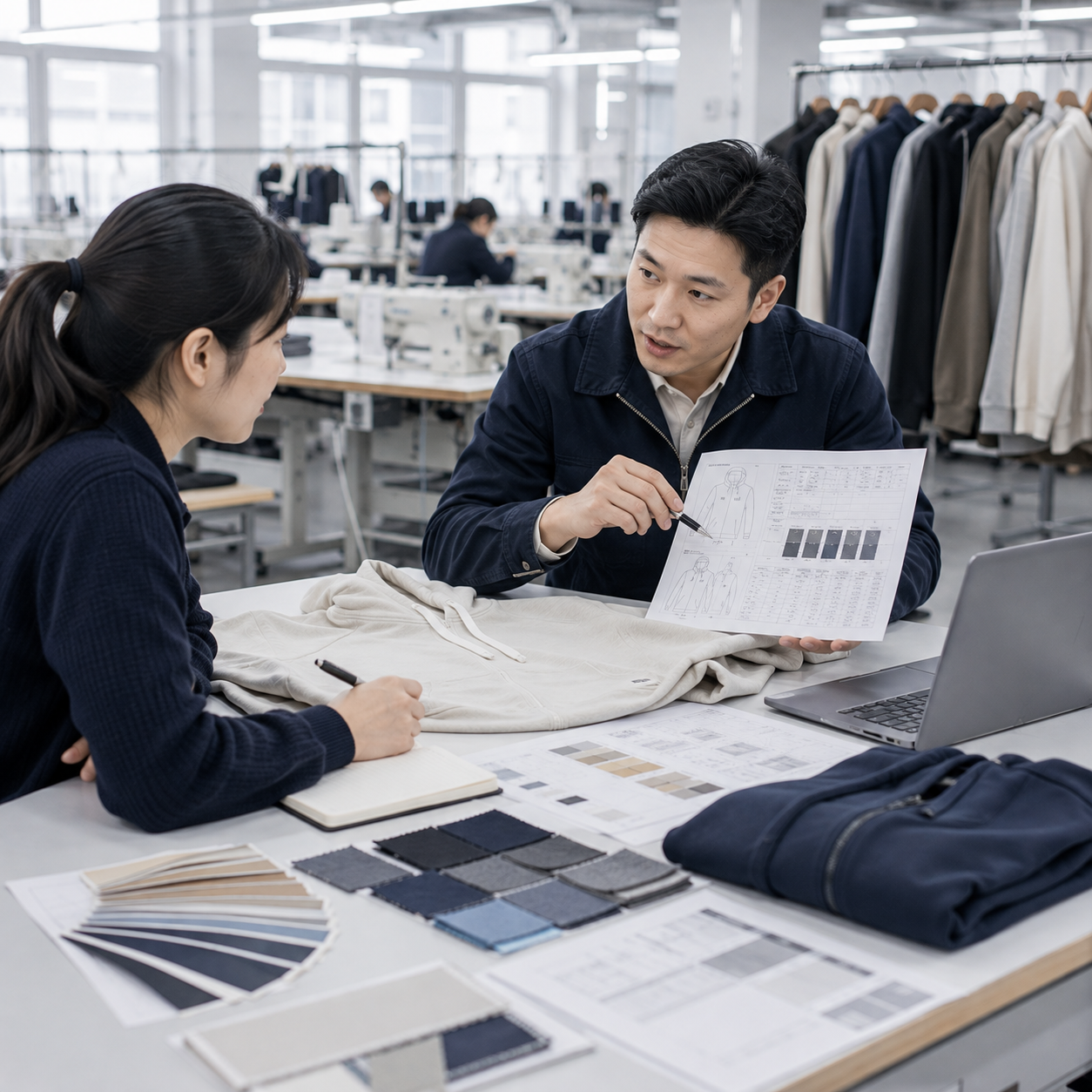
Instead, provide a product brief.
For example:
Product: Outdoor casual jacket
Fabric: 100% polyester
Color: Navy / Black
Sizes: S–XXL
Quantity: Estimated production quantity
Branding: Woven label + hangtag
Reference: Attached product image or sample
Packaging: Individual polybag
Then ask:
- Can you produce this garment?
- What is the MOQ?
- Can you provide a sample?
- What information is required?
- What is the estimated production time?
This produces much more useful responses.
7. Ask About MOQ
MOQ is one of the most important questions for new brands.
Ask whether MOQ is calculated by:
- Style
- Renk
- Kumaş
- Order
- Size
Also ask whether custom fabrics or special colors have different requirements.
Understanding MOQ early can prevent problems later.
8. Request Samples
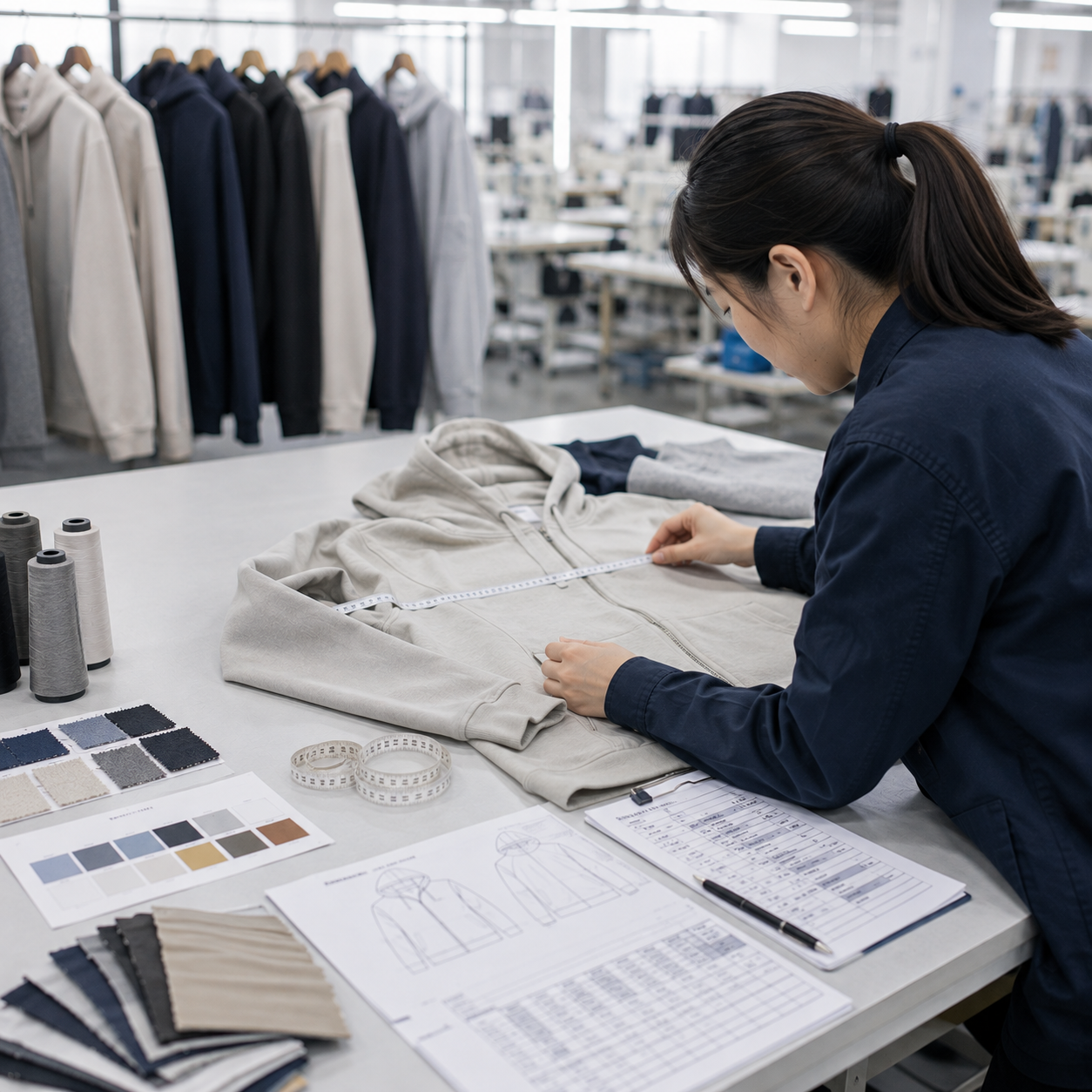
Once you have identified suitable manufacturers, move toward sample development.
The sample should help you evaluate:
Ürün
Does it match your design?
Uygunluk
Does it match the intended measurements?
Kumaş
Does it match your requirements?
İnşaat
Are the garment details correct?
Markalaşma
Are labels, logos, and other branding elements correct?
A sample gives you something physical to evaluate before bulk production.
9. Review and Revise the Sample
Do not simply approve a sample because it looks good in a photograph.
Create a review checklist.
Measurement
Compare actual measurements against your specification.
Kumaş
Check weight, hand feel, color, and appearance.
Dikiş
Inspect seams, stitching, and construction.
Ayrıntılar
Check pockets, zippers, cuffs, collars, and other components.
Markalaşma
Check logo size and placement.
If changes are required, communicate them clearly and request another sample when necessary.
10. Evaluate Quality Control
Ask the manufacturer how quality is checked during production.
Important areas can include:
- Fabric inspection
- Kesme
- Dikiş
- Son işlem
- Measurement
- Final inspection
- Paketleme
Jiangxi KALAIBEN's 2025 BSCI report identifies cutting, sewing, ironing, inspection, and packing among its main production activities.
For any potential supplier, however, brands should evaluate the manufacturer's current quality and compliance status based on their own sourcing requirements.
11. Check the Manufacturer's Production Scale
A manufacturer should be able to handle your expected production volume.
KALAIBEN's company profile describes a Jiangxi production base covering approximately 30 acres and a construction area of approximately 26,000㎡, with more than 380 employees.
The profile also states annual garment production of approximately 700,000–1,000,000 pieces.
When evaluating production scale, however, consider whether the factory's actual product capabilities match your requirements.
12. Consider Communication
Communication problems can become expensive during product development.
A manufacturer should be able to understand information such as:
- Ölçümler
- Fabric specifications
- Product references
- Color requirements
- Markalaşma
- Ambalaj
- Sample corrections
Pay attention to how the manufacturer communicates during the early stages.
If basic requirements are difficult to communicate now, production may become even more complicated later.
13. Don't Ignore the Manufacturer's Product Specialization
A manufacturer may have a large factory but limited experience with your specific product.
For example, if your brand specializes in outdoor casualwear, look for manufacturers with relevant experience.
KALAIBEN's stated primary products include knitted and woven casual garments and outdoor sportswear.
Its textile operation also includes equipment for fleece and rib fabrics, among other knitted structures.
This type of product and material specialization can be relevant when evaluating manufacturers for similar categories.
14. Evaluate Long-Term Cooperation
Do not ask only:
"Can you make my first order?"
Also ask:
"Can you make my fifth order?"
If your brand grows, you may need:
- Daha büyük miktarlar
- More colors
- More sizes
- New products
- Tekrar siparişler
- Seasonal collections
A manufacturer capable of supporting your future requirements can become a valuable long-term partner.
15. A Simple Manufacturer-Sourcing Process
You can summarize the process as:
Step 1
Define Your Product
↓
Step 2
Search for Relevant Manufacturers
↓
Step 3
Create a Shortlist
↓
Step 4
Send Product Inquiries
↓
Step 5
Compare MOQ, Pricing, and Capabilities
↓
Step 6
Develop Samples
↓
Step 7
Review and Revise
↓
Step 8
Approve the Product
↓
Step 9
Begin Bulk Production
↓
Step 10
Evaluate the Partnership for Future Orders
This process can help new brands avoid choosing a manufacturer based on incomplete information.
16. What Should You Ask Before Choosing a Manufacturer?
Use this checklist:
Ürün
- Do you manufacture this type of garment?
Kumaş
- Can you meet my fabric specifications?
MOQ
- What is the minimum quantity?
Samples
- Can you develop samples?
Özelleştirme
- Can you customize colors, labels, logos, and details?
Production
- What is your production capacity?
Kalite
- How is production quality checked?
Ambalaj
- What packaging options are available?
Timeline
- What is the estimated production schedule?
Future
- Can you support repeat orders?
Why KALAIBEN Can Be Considered During Your Search
KALAIBEN's company information describes the business as an integrated industry and trade company specializing in weaving and knitted garments. Its primary products include knitted and woven casual garments and outdoor sportswear.
The company also has knitted fabric production capabilities and a garment production base in Jiangxi.
Its documented garment production activities include cutting, sewing, ironing, inspection, and packing.
For brands searching for manufacturers in these product categories, these capabilities provide a starting point for discussing potential apparel projects.
FAQ
How do I find a clothing manufacturer for my brand?
Start by defining your product, then search for manufacturers with relevant product experience. Create a shortlist and compare MOQ, samples, quality, production capabilities, communication, and pricing.
How many manufacturers should I contact?
There is no fixed number. A practical approach is to create a shortlist and gradually narrow it down through product discussions and sample development.
What should I send when contacting a clothing manufacturer?
Send product references, fabric requirements, size information, colors, estimated quantities, branding details, and packaging requirements.
Should I ask for a sample?
Yes. A sample allows you to evaluate the physical product before bulk production.
What is the most important factor when choosing a clothing manufacturer?
There is no single factor. The manufacturer should match your product requirements, MOQ, quality expectations, production volume, communication needs, and long-term plans.
Conclusion
Learning how to find a clothing manufacturer is not simply about finding a factory with a low quotation.
A more reliable approach is:
Define → Search → Shortlist → Contact → Compare → Sample → Review → Approve → Produce
By following a structured process, new apparel brands can make better manufacturing decisions and reduce unnecessary problems during product development.
For brands developing knitted or woven casualwear, outdoor apparel, and related clothing categories, KALAIBEN's stated textile and garment capabilities provide one potential manufacturing option to evaluate.
Have a clothing project in development? Send KALAIBEN your product reference, fabric requirements, estimated quantity, and customization details to start a manufacturing discussion.











