




Виробник одягу преміум-класу: як вибрати правильного постачальника для вашого бренду
Дата публікації:2026-09-14 Категорія:НОВИНИ Кількість переглядів:547
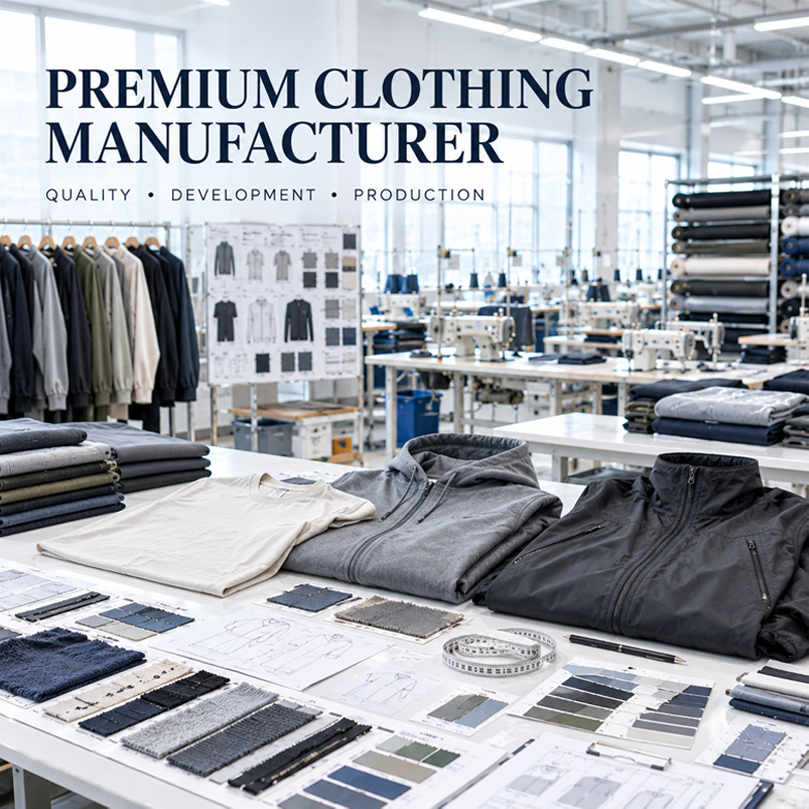
Choosing a premium clothing manufacturer is not just about finding a factory with a higher price. It is about finding a supplier that can turn your product specifications into consistent, market-ready garments. Fabric quality, construction, fit, finishing, sampling, quality control, and production consistency all matter. A supplier may offer a competitive quote, but if the bulk order does not match the approved sample, your brand pays the real cost.
For fashion brands, retailers, private-label businesses, and growing apparel companies, the right manufacturing partner should meet your quality expectations while also fitting your order volume, product category, budget, and delivery schedule.
This guide explains what to look for when choosing a premium clothing manufacturer and how to compare suppliers before placing a bulk order.
1. What Is a Premium Clothing Manufacturer?
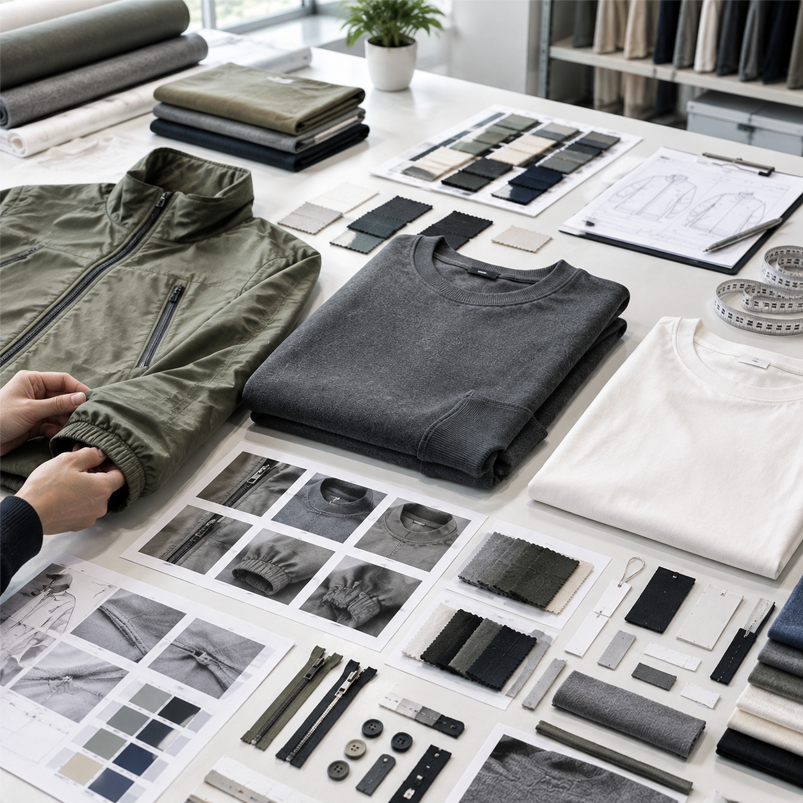
A premium clothing manufacturer produces garments to a defined quality standard rather than simply producing at the lowest possible cost.
The word premium should describe measurable product characteristics. It should not only describe the factory's marketing language.
A reliable manufacturer should be able to control areas such as:
- Fabric composition and weight
- Garment construction
- Stitching quality
- Pattern accuracy
- Fit and measurements
- Trims and accessories
- Color consistency
- Оздоблення
- Упаковка
- Quality inspection
Приклад
Imagine two suppliers produce the same heavyweight hoodie.
Supplier A uses a lower-cost fabric that looks similar in photos. The first sample appears acceptable, but the fabric changes slightly during bulk production.
Supplier B confirms the fabric composition, GSM, color, shrinkage requirements, and approved sample before production.
The second supplier provides a more controlled manufacturing process.
That difference matters when customers expect every reorder to look and feel the same.
2. What Should You Expect From a Premium Apparel Manufacturer?
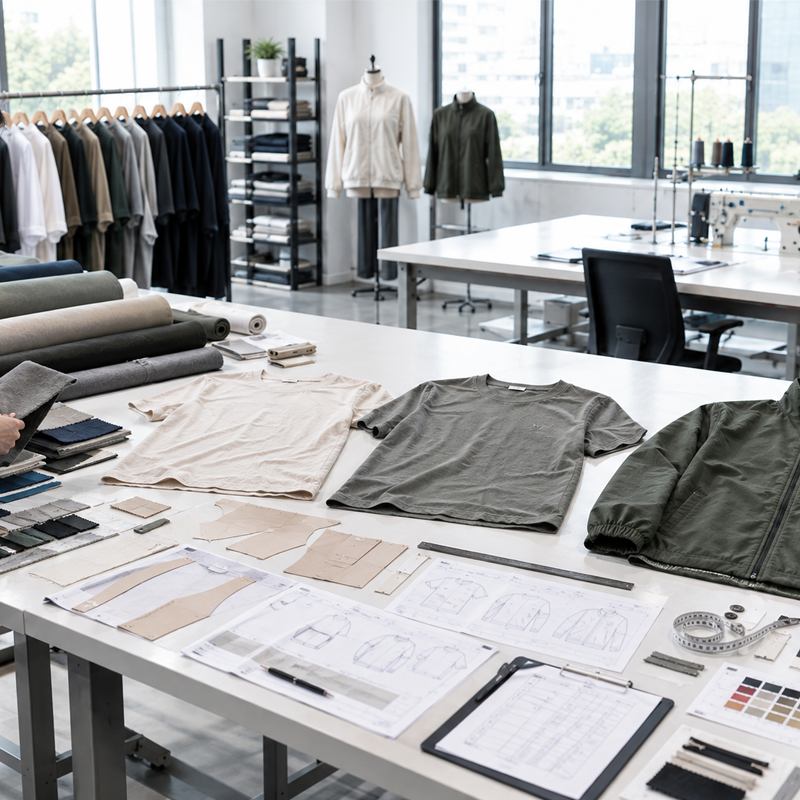
A strong premium apparel manufacturer should provide more than sewing capacity.
You should expect a structured process from product development to final inspection.
A typical workflow includes:
- Product brief review
- Fabric and trim sourcing
- Розробка лекал
- Sample production
- Fit and measurement review
- Sample revisions
- Pre-production approval
- Bulk manufacturing
- Inline quality control
- Кінцевий огляд
- Packing and shipment
The exact process varies by product category.
A technical jacket may require more development work than a basic T-shirt. A fashion collection may also require more sampling than a repeat basic style.
Приклад
If you are developing a premium fleece jacket, the supplier should not only quote the sewing cost.
The team should also review fabric weight, fleece density, zipper quality, pocket construction, seam strength, rib specifications, measurements, and finishing requirements.
That is a much better indicator of manufacturing capability.
3. Premium Clothing Manufacturer vs. Standard Clothing Supplier
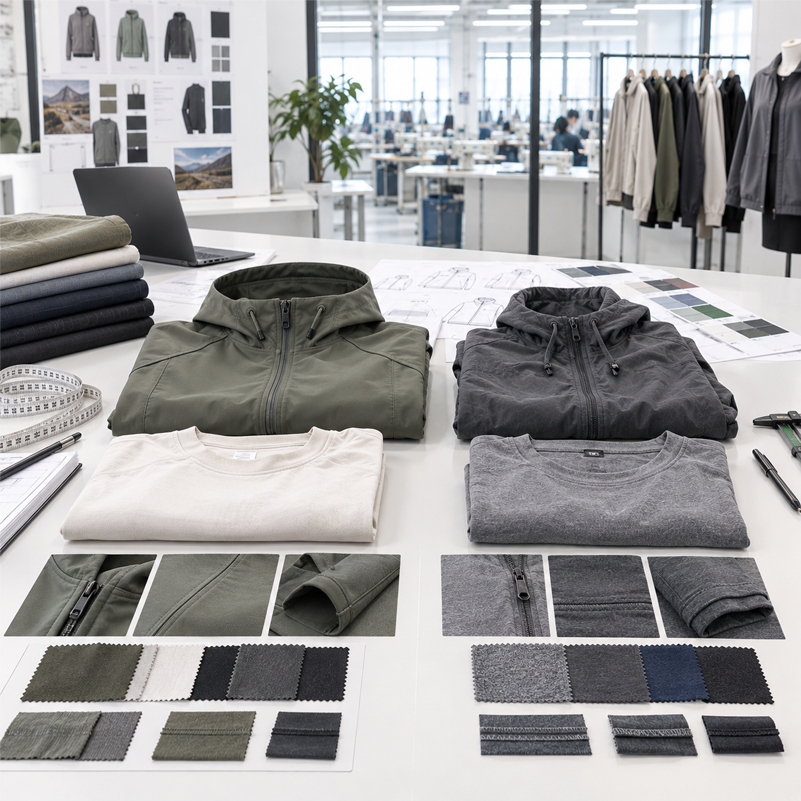
Not every clothing supplier follows the same quality-control process.
The main difference is often the level of control and documentation behind the product.
| Фактор | Standard Supplier | Premium Clothing Manufacturer |
|---|---|---|
| Закупівля тканин | Basic options | Specification-based sourcing |
| Розробка зразків | Limited revisions | Structured development |
| Fit control | Basic measurement | Detailed measurement review |
| Будівництво | General production | Defined workmanship standards |
| Контроль якості | Mainly final check | Multiple checkpoints |
| Bulk consistency | Can vary | Controlled against approval sample |
| Комунікація | Order-focused | Development-focused |
| Long-term support | Залежить від обставин | Usually stronger |
This does not mean every standard supplier produces poor garments.
The real question is whether the supplier can consistently meet your required quality level.
4. How to Choose a Premium Clothing Manufacturer
Choosing a manufacturer starts with your own product requirements.
Before contacting suppliers, define:
- Product category
- Target market
- Вимоги до тканини
- Expected quantity
- Target price
- Quality level
- Branding requirements
- Вимоги до упаковки
- Delivery schedule
Then evaluate suppliers against the same criteria.
Look for these signals
- Clear manufacturing capabilities
- Strong product-development experience
- Transparent sampling process
- Defined quality-control procedures
- Consistent communication
- Relevant product experience
- Ability to support repeat orders
- Clear production timelines
Приклад
Suppose your brand needs 1,000 premium T-shirts.
Supplier A mainly produces low-cost promotional garments.
Supplier B regularly develops heavyweight cotton T-shirts and understands GSM, shrinkage, neckline construction, fit, and garment finishing.
Supplier B is likely to be the better match, even if the initial quotation is higher.
The best supplier is not always the cheapest supplier.
It is the supplier that fits the product.
5. Premium Fabric Selection: What Should You Check?

Fabric is one of the first things customers notice.
A premium garment needs fabric that matches its intended use, construction, and price positioning.
Do not judge fabric quality by appearance alone.
Перевірте:
- Склад волокон
- Вага тканини
- GSM
- Hand feel
- Розтяжка та відновлення
- Shrinkage
- Color consistency
- Pilling performance
- Surface appearance
- Wash performance
For different products, the right fabric can be very different.
A premium T-shirt may need a smooth cotton jersey.
A sweatshirt may need heavyweight French terry or fleece.
An activewear product may require stretch performance and moisture-management properties.
Приклад
A buyer requests a heavyweight T-shirt but does not specify GSM.
The manufacturer may interpret “heavyweight” differently.
One supplier may use 220 GSM fabric.
Another may use 260 GSM.
Both may call the product heavyweight.
A clear technical specification removes this ambiguity.
6. Custom Clothing Manufacturer: How Much Can You Customize?
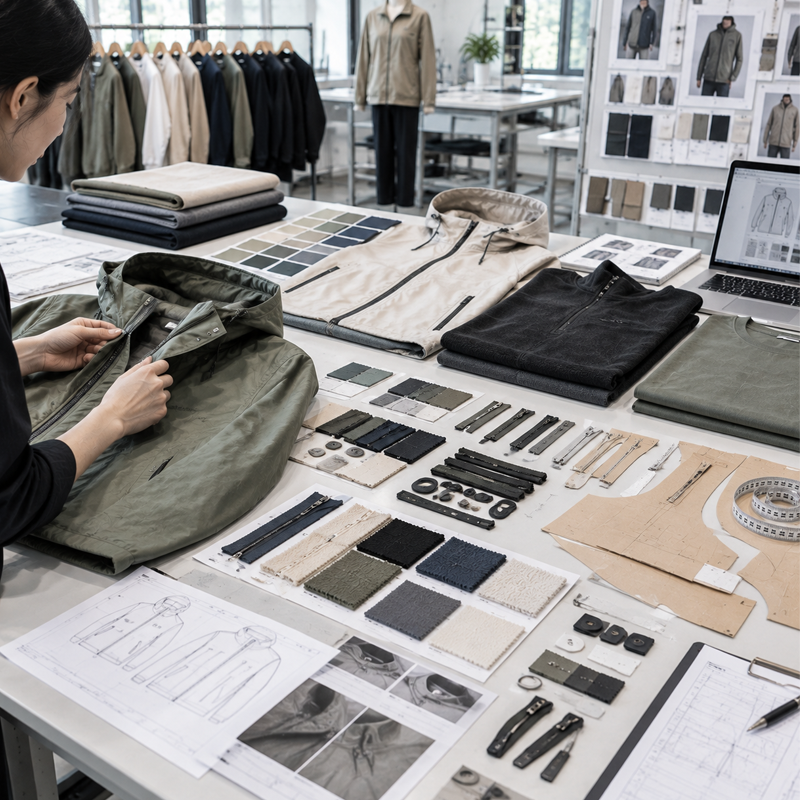
A custom clothing manufacturer should be able to translate your specifications into a production-ready garment.
Customization can include:
- Тканина
- Колір
- Підходить
- Вимірювання
- Neckline
- Sleeves
- Кишені
- Zippers
- Buttons
- Rib
- Вишивка
- Друк
- Етикетки
- Hangtags
- Упаковка
The level of customization depends on the supplier's capabilities.
Приклад
A brand wants an oversized T-shirt with dropped shoulders, a wider neckline, heavyweight cotton, custom woven labels, and a specific garment wash.
A basic supplier may only change the color and print.
A capable custom manufacturer should be able to review the construction and develop the product according to the complete specification.
7. Sampling and Product Development Matter
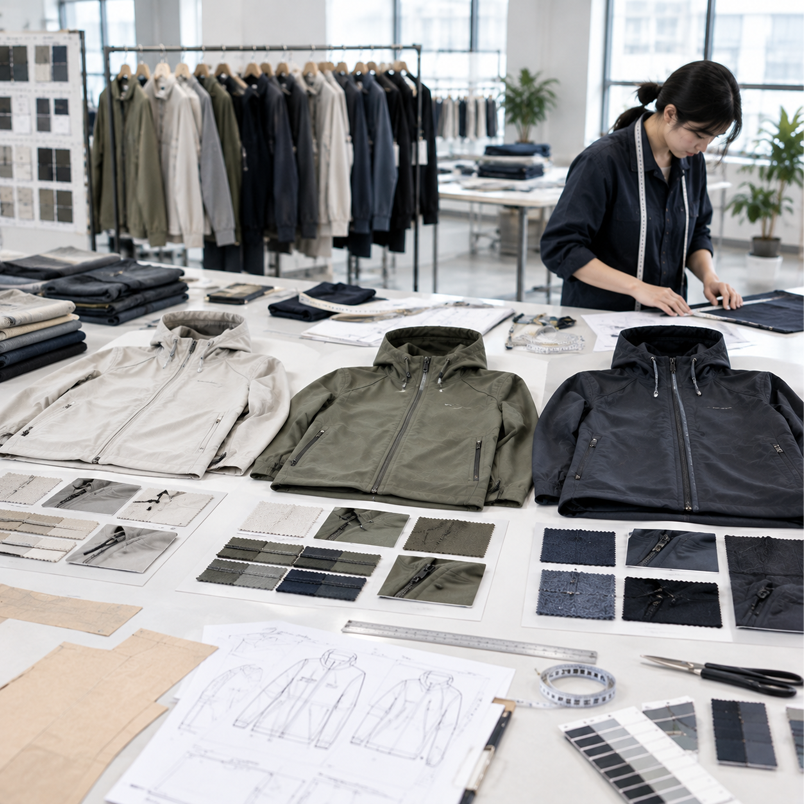
A sample is not simply a preview.
It is a manufacturing test.
A professional supplier should use sampling to identify problems before bulk production.
The development process may include:
- Перший зразок
- Огляд моделі
- Measurement corrections
- Fabric adjustments
- Construction changes
- Revised sample
- Довиробничий зразок
Приклад
A brand receives the first sample of a jacket.
The body length is correct, but the sleeve opening is too narrow.
Instead of moving directly into production, the manufacturer updates the pattern and produces a revised sample.
That extra step can prevent thousands of incorrect garments from entering production.
This is why sample approval should be part of your supplier evaluation.
8. Quality Control: What Does Premium Quality Really Mean?
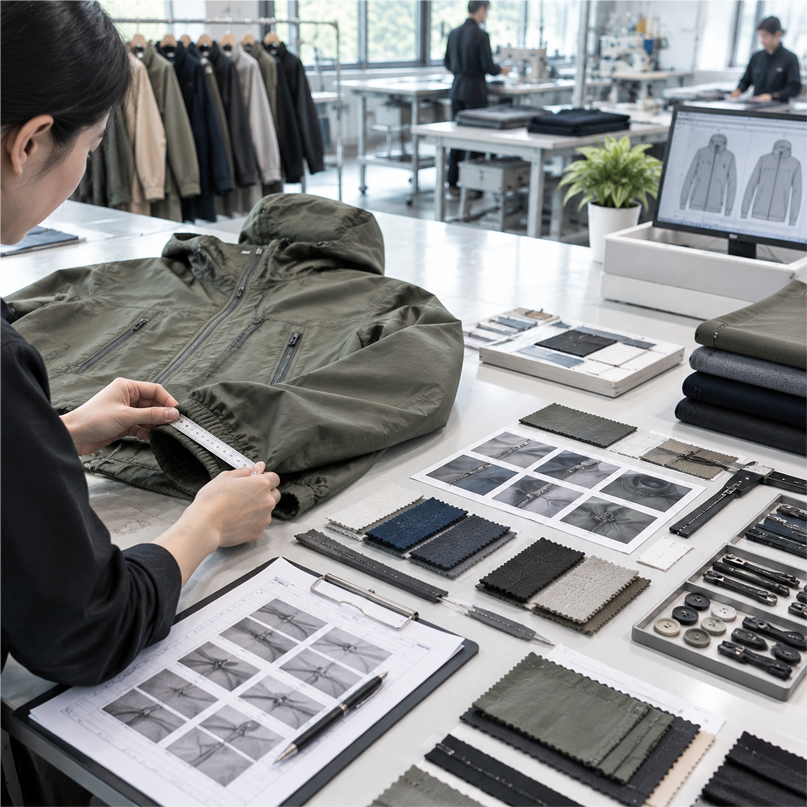
Quality control should happen throughout production.
A final inspection alone may not catch every issue early enough.
A structured QC process can include:
Fabric Inspection
Check fabric color, weight, defects, width, and other agreed specifications.
Inline Inspection
Inspect garments while production is running.
This helps identify recurring problems before the entire order is completed.
Measurement Inspection
Compare garment measurements against the approved specification.
Workmanship Inspection
Перевірте такі ділянки, як:
- Зшивання
- Шви
- Hems
- Zippers
- Buttons
- Кишені
- Етикетки
- Вишивка
- Друк
Final Inspection
Inspect finished garments before packing and shipment.
Приклад
Imagine 2,000 shirts are being produced.
If a sewing problem appears during the first 200 pieces and nobody checks production until the end, the problem could affect the entire order.
If the factory checks production during the run, the issue can be corrected much earlier.
That is the value of process-based quality control.
9. How Does a Premium Clothing Manufacturer Control Consistency?
Consistency becomes especially important when your brand starts reordering.
Your second order should not feel completely different from your first order.
Important control points include:
- Approved fabric
- Approved color
- Approved measurements
- Approved construction
- Approved trims
- Approved sample
- Production specifications
- Inspection standards
A strong manufacturer should keep these specifications organized for future production.
Приклад
Your first order uses a specific 240 GSM cotton jersey.
Six months later, you reorder the same T-shirt.
If the supplier changes the fabric without approval, the new garments may have a different hand feel, shrinkage rate, or appearance.
Good production control reduces this risk.
10. Private Label Clothing Manufacturer: What Should Brands Check?
A private label clothing manufacturer produces garments under your brand identity.
The manufacturing process can include:
- Main labels
- Етикетки з розмірами
- Care labels
- Hangtags
- Упаковка
- Кольори на замовлення
- Custom garment construction
- Друк
- Вишивка
However, private label is not only about adding a label.
The garment itself must meet your product standard.
Приклад
A premium fashion brand orders a basic sweatshirt.
The label may look excellent, but the sweatshirt uses inconsistent fabric and poor stitching.
Customers will judge the garment, not just the label.
Your private-label supplier should therefore control both brand presentation and garment quality.
11. How Much Does a Premium Clothing Manufacturer Cost?
Premium manufacturing does not have one fixed price.
The final cost depends on the product and production requirements.
Key cost factors include:
- Тканина
- GSM
- Garment construction
- Оздоблення
- Друк
- Вишивка
- Washing
- Упаковка
- Кількість у замовленні
- Відбір проб
- Labor
- Shipping requirements
A higher price does not automatically mean better quality.
You need to understand what creates the price difference.
| Фактор вартості | Lower-Cost Approach | Premium Approach |
|---|---|---|
| Тканина | Basic specification | Controlled specification |
| Оздоблення | Standard options | Selected to match product |
| Будівництво | Simplified | Більш детально |
| Відбір проб | Обмежена кількість | Multiple development stages |
| QC | Basic | Defined checkpoints |
| Упаковка | Стандартний | Brand-specific |
| Production | Price-driven | Quality and consistency focused |
Приклад
A buyer compares two T-shirt quotes.
Supplier A: $4.50
Supplier B: $6.20
At first, Supplier A looks better.
But Supplier B includes heavier fabric, better rib, custom labels, more detailed inspection, and stronger packaging.
The correct question is not:
“Which supplier is cheaper?”
It is:
“What am I receiving for the price?”
12. Premium Clothing Manufacturer vs. Trading Company
A trading company and a manufacturer can both be useful.
The important issue is transparency.
| Фактор | Торгова компанія | Прямий виробник |
|---|---|---|
| Factory access | May use partner factories | Direct or controlled access |
| Product range | Often broad | Often capability-focused |
| Комунікація | Commercial coordination | Production coordination |
| Контроль якості | Depends on factory | More direct control |
| Розробка на замовлення | Залежить від обставин | Usually stronger for core products |
| Factory visibility | May be limited | Usually easier to verify |
A trading company may have strong sourcing resources.
A direct manufacturer may offer more direct production control.
Neither model is automatically better.
Your decision should depend on your product, quantity, risk level, and required transparency.
13. Questions to Ask a Premium Clothing Manufacturer
Before placing an order, ask practical questions.
Product Questions
- На яких товарах ви спеціалізуєтеся?
- Чи можете ви працювати за технічним пакетом?
- Can you develop from a physical sample?
- What fabrics can you source?
- Can you support custom construction?
Sampling Questions
- How does your sample process work?
- How many revisions are possible?
- How long does sampling take?
- Do you provide a pre-production sample?
Питання щодо якості
- How do you inspect fabric?
- Do you conduct inline inspections?
- Як ви контролюєте результати вимірювань?
- What happens when a defect is found?
- How do you maintain consistency between orders?
Питання щодо виробництва
- Яка у вас мінімальна партія замовлення?
- What is your normal production lead time?
- Can you handle repeat orders?
- How do you manage production peaks?
Питання щодо брендингу
- Can you produce custom labels?
- Can you handle hangtags?
- Can you provide custom packaging?
- Can you follow specific packing instructions?
A supplier that gives clear answers is easier to evaluate.
14. How to Compare Premium Clothing Manufacturers
Do not compare suppliers using price alone.
Create a simple scorecard.
| Область оцінювання | Вага | Постачальник А | Постачальник B | Постачальник C |
|---|---|---|---|---|
| Досвід користування продуктом | 20% | |||
| Fabric capability | 15% | |||
| Відбір проб | 15% | |||
| Контроль якості | 20% | |||
| Комунікація | 10% | |||
| Гнучкість щодо мінімального обсягу замовлення | 5% | |||
| Виробнича потужність | 10% | |||
| Ціна | 5% |
This approach helps you avoid choosing a supplier simply because it offered the lowest quotation.
Приклад
Supplier A has the lowest price but weak sampling support.
Supplier B costs more but has stronger fabric control, sampling, and QC.
Supplier C has excellent product development but cannot meet your required production volume.
The scorecard makes the trade-offs visible.
15. Premium Clothing Manufacturer Checklist
Use this checklist before moving forward with a supplier.
Товар
- Relevant product experience
- Suitable fabric capabilities
- Custom development support
- Clear technical specifications
Відбір проб
- First sample available
- Fit review process
- Процес перегляду
- Pre-production approval
Quality
- Перевірка тканини
- Measurement control
- Inline inspection
- Кінцевий огляд
- Defect handling process
Production
- Suitable MOQ
- Realistic lead time
- Sufficient production capacity
- Repeat-order capability
Брендинг
- Індивідуальні етикетки
- Hangtags
- Упаковка
- Packing requirements
Комунікація
- Clear quotation
- Clear production schedule
- Fast response
- Documented specifications
If a supplier cannot clearly explain several of these areas, investigate further before placing a large order.
16. How to Find the Right Premium Clothing Manufacturer
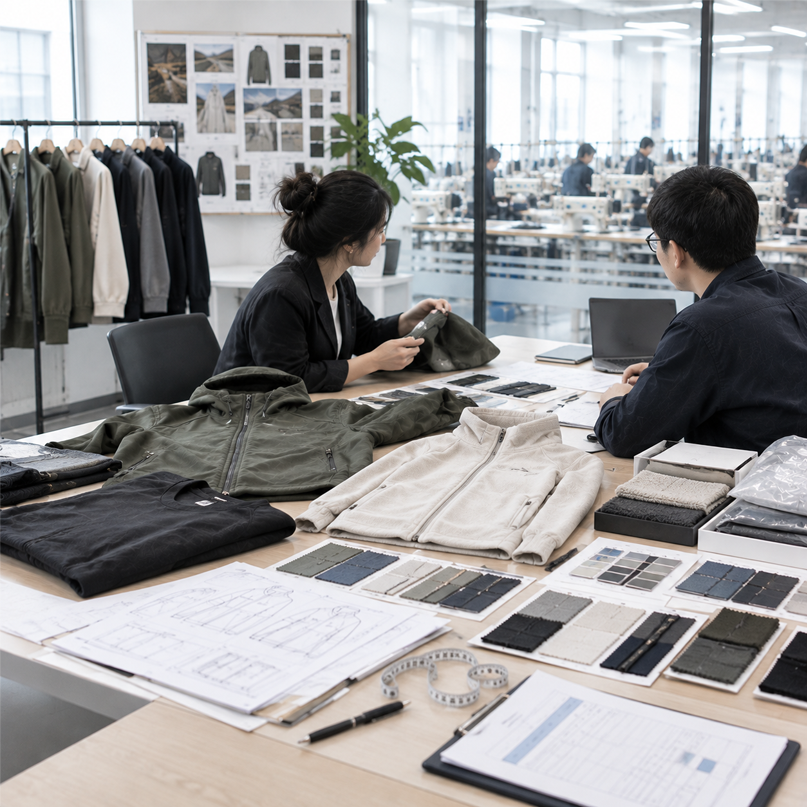
Право premium clothing manufacturer should match your product, quality target, order volume, and long-term business plan.
Start with your specifications.
Then compare several suppliers using the same criteria.
Do not judge quality from website photos alone.
Ask for samples.
Review the fabric.
Check measurements.
Inspect construction.
Discuss production requirements.
Ask how the supplier handles problems.
A strong manufacturing relationship is built before the first bulk order.
A practical selection process
Step 1: Define your product requirements.
Step 2: Shortlist manufacturers with relevant experience.
Step 3: Request quotations using the same specifications.
Step 4: Order development samples.
Step 5: Compare fabric, fit, construction, and finishing.
Step 6: Review the manufacturer's quality-control process.
Step 7: Confirm MOQ, lead time, packaging, and payment terms.
Step 8: Approve the final sample before bulk production.
For example, a growing fashion brand may start with a small collection of T-shirts, hoodies, and outerwear. Instead of choosing three different suppliers based only on price, the brand can first test each supplier with samples. The supplier that delivers the best combination of quality, communication, production capability, and consistency becomes the stronger long-term partner.
The goal is not simply to find a factory that can make clothes.
The goal is to find a manufacturing partner that can make your clothes to your required standard, consistently and at scale.
That is what makes a supplier valuable to a growing apparel brand.











