




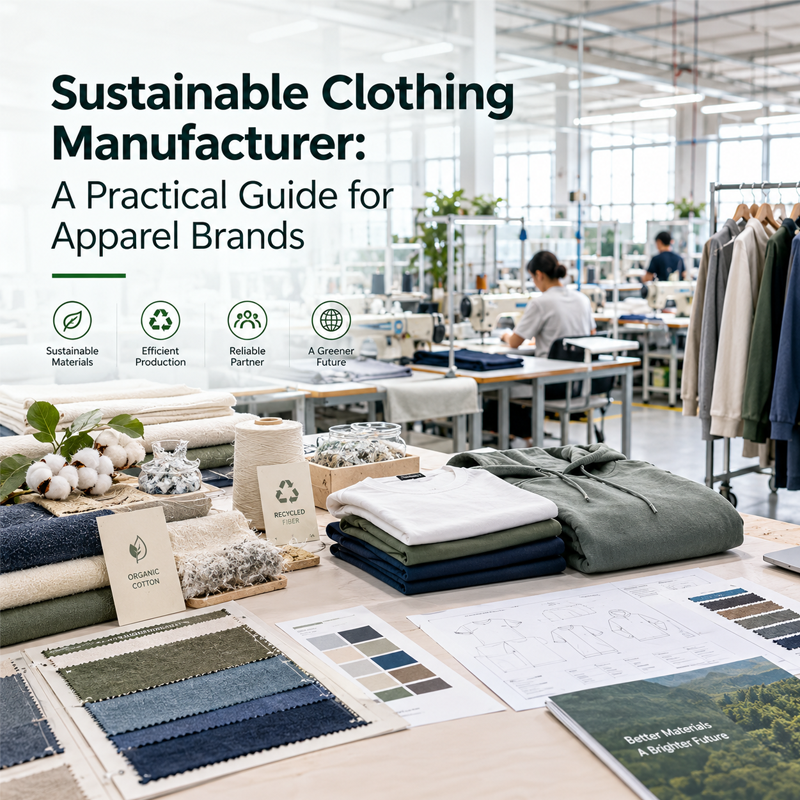
Виробник одягу, що дотримується принципів сталого розвитку: практичний посібник для брендів одягу
Дата публікації:2026-09-07 Категорія:НОВИНИ Кількість переглядів:565
Introduction
Sustainability is becoming an increasingly important consideration in apparel manufacturing.
For clothing brands, choosing a sustainable clothing manufacturer is not simply about finding a factory that offers recycled or organic fabrics. Sustainable apparel production involves a much broader set of decisions, from material sourcing and manufacturing efficiency to product durability, waste management, and supply chain transparency.
For startups and established brands alike, the challenge is understanding which sustainability practices are genuinely relevant to their products and customers.
A suitable manufacturing partner should be able to balance sustainability goals with practical requirements such as product quality, production capacity, cost, and delivery schedules.
This guide explains the key factors apparel brands should consider when evaluating a sustainable clothing manufacturer.
1. What Is a Sustainable Clothing Manufacturer?
A sustainable clothing manufacturer is a garment manufacturer that considers environmental and resource-related factors throughout the apparel production process.
This can include:
- Sustainable fabric sourcing
- Material efficiency
- Waste reduction
- Production efficiency
- Responsible resource management
- Product durability
- Supply chain transparency
Sustainability does not necessarily mean that every part of a manufacturing process has zero environmental impact.
Instead, brands should look at the specific practices a manufacturer uses and determine whether they align with their own sustainability goals.
2. Why Are Brands Looking for Sustainable Clothing Manufacturers?
The demand for more responsible apparel production has created new expectations for clothing manufacturers.
Brands may choose sustainable manufacturing to support several objectives.
Meeting Customer Expectations
Consumers increasingly want to understand how apparel is made and what materials are used.
Building a Stronger Brand Identity
Sustainability can become part of a brand's positioning when it is supported by genuine product and supply chain practices.
Improving Resource Efficiency
More efficient production can help reduce unnecessary material and resource consumption.
Supporting Long-Term Product Value
Durable garments can reduce the need for frequent replacement.
For these reasons, sustainability can influence decisions at both the product and manufacturing levels.
3. What Materials Can Sustainable Clothing Manufacturers Offer?

Material selection is one of the first areas brands should discuss with a manufacturer.
Potential options include:
Organic Cotton
Organic cotton can be used for products such as T-shirts, sweatshirts, casualwear, and children's clothing.
Recycled Polyester
Recycled polyester can be considered for various apparel applications where polyester performance is required.
Recycled Fabrics
Depending on the manufacturer and fabric supplier, different recycled materials may be available.
Other Lower-Impact Material Options
Brands may also explore alternative fibers or fabric constructions according to the intended product.
However, the most sustainable material is not necessarily the same for every garment.
Fabric selection should consider:
- Product function
- Довговічність
- Customer requirements
- Manufacturing compatibility
- Available documentation
4. Sustainable Manufacturing Goes Beyond Fabric
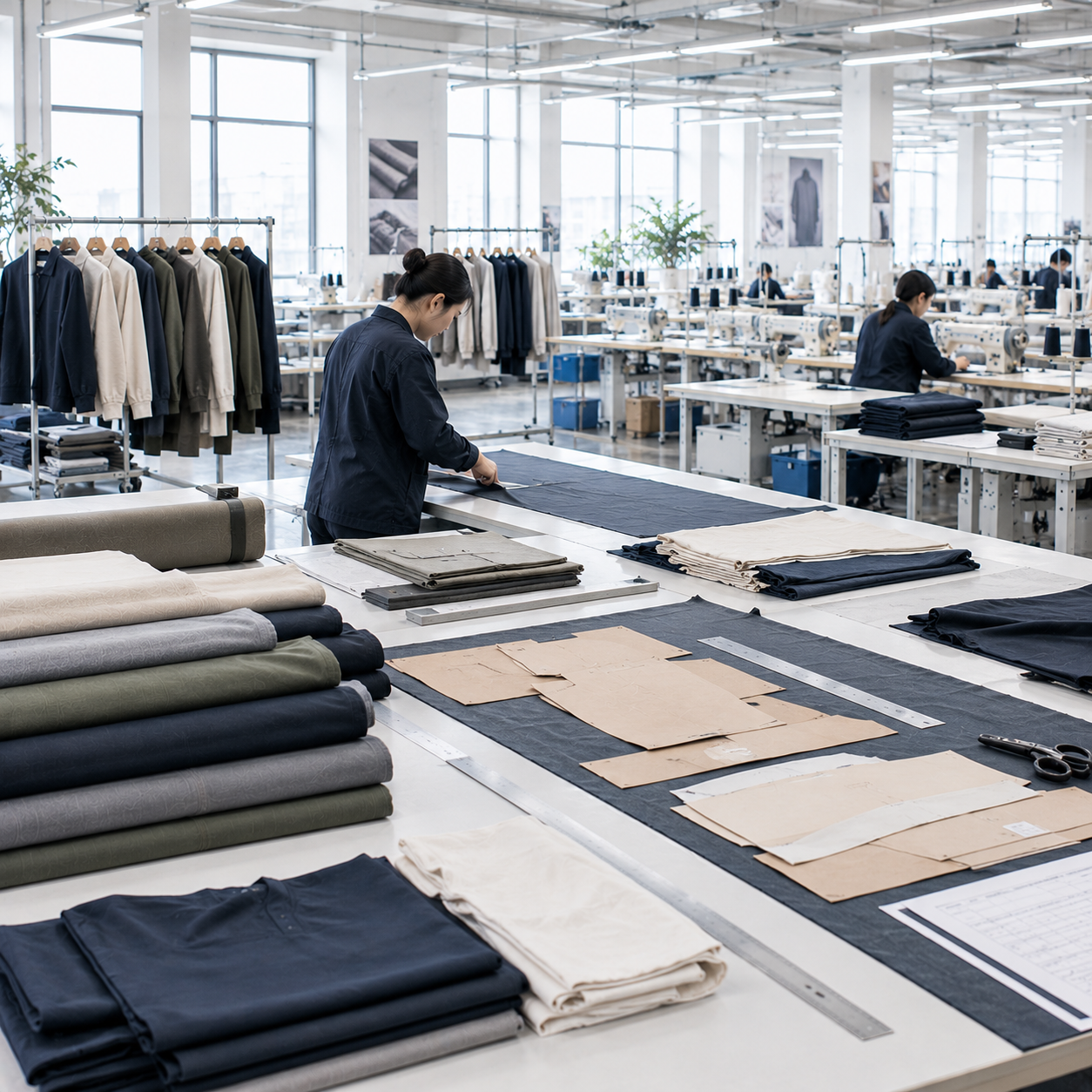
Choosing an environmentally preferable fabric is only one part of sustainable apparel production.
Brands should also consider how the garment is manufactured.
Potential areas include:
- Fabric utilization
- Cutting efficiency
- Production planning
- Waste reduction
- Resource management
- Упаковка
- Product durability
A sustainable approach should therefore look at the entire production workflow rather than one individual material.
5. Why Product Durability Matters
A garment's environmental impact does not end when production is completed.
Product lifespan is also important.
If a garment is well constructed and maintains its appearance and performance over time, consumers may not need to replace it as frequently.
Brands should therefore evaluate:
- Fabric durability
- Конструкція шва
- Stitching quality
- Color stability
- Оздоблення
- Overall garment construction
Sustainability and quality should work together rather than being treated as separate objectives.
6. How to Evaluate a Sustainable Clothing Manufacturer
When comparing potential manufacturing partners, consider the following areas.
1. Material Capability
Can the manufacturer provide the materials your collection requires?
2. Production Experience
Does the factory have experience with your product category?
3. Quality Control
How does the manufacturer inspect fabrics and finished garments?
4. Production Efficiency
What processes are used to reduce unnecessary waste and improve efficiency?
5. Documentation
Can the manufacturer provide relevant material or sustainability documentation?
6. Communication
Can the manufacturer clearly explain its production processes?
A manufacturer should be evaluated based on specific capabilities rather than broad sustainability language.
7. Certifications and Documentation
When developing sustainable apparel, brands may encounter different certification and verification systems.
Depending on the material and supply chain, documentation may relate to:
- Organic materials
- Recycled materials
- Textile processing
- Supply chain traceability
Brands should ask manufacturers which certifications or documents are actually available for the specific materials being offered.
It is important to distinguish between:
“The factory can source a certified material”
and
“The factory itself holds a particular certification.”
These are not necessarily the same thing.
Clear documentation helps brands make more accurate sustainability claims.
8. Sustainable Apparel Development Starts With Sampling

Sustainability should be considered during product development, not only during bulk production.
A sample allows the brand to evaluate:
- Тканина
- Підходить
- Будівництво
- Вага
- Зовнішній вигляд
- Довговічність
If a fabric does not perform as expected, changes can be made before bulk production.
This can help reduce unnecessary production waste caused by incorrect material or construction decisions.
9. Waste Reduction in Clothing Production
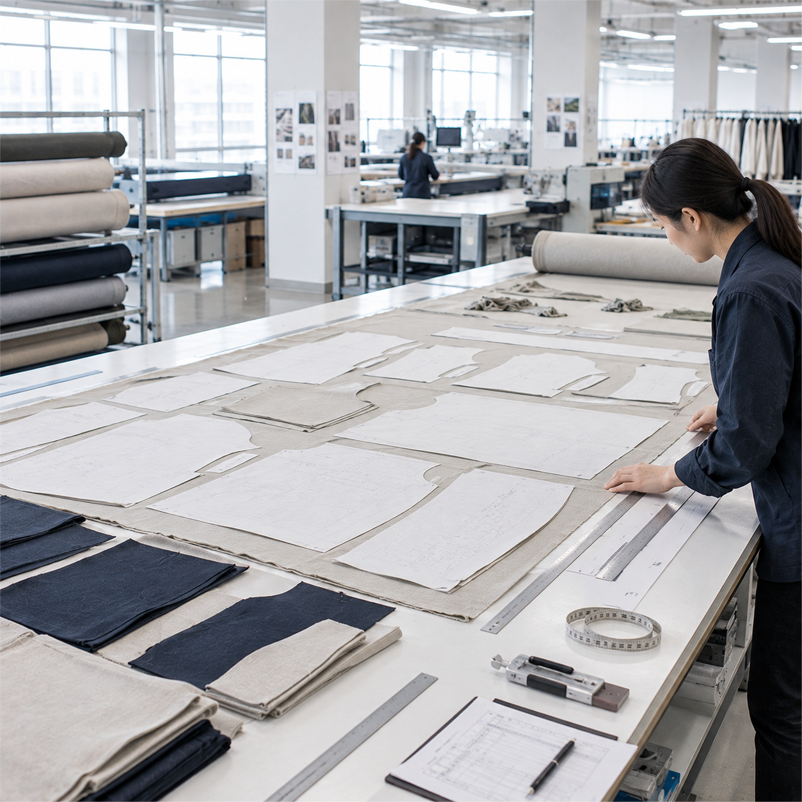
Fabric waste is an important consideration in garment manufacturing.
Efficient production planning can help improve material utilization.
Brands and manufacturers can discuss:
- Pattern efficiency
- Fabric width
- Cutting layouts
- Production quantities
- Sample requirements
Accurate planning can reduce unnecessary material consumption.
However, waste reduction should not come at the expense of garment quality.
10. Sustainable Packaging Considerations
Packaging is another area brands can review.
Depending on the product and market, brands may consider:
- Reducing unnecessary packaging
- Optimizing packaging size
- Using recyclable packaging materials
- Avoiding excessive individual packaging
Packaging decisions should be practical and compatible with product protection requirements.
11. Sustainable Manufacturing and Cost
One common misconception is that sustainability is only about paying more for materials.
In reality, the total cost of sustainable production can involve several factors.
These may include:
- Material cost
- Production efficiency
- Waste reduction
- Product durability
- Упаковка
- Certification or documentation requirements
Brands should therefore evaluate overall product value, rather than comparing only the price per garment.
12. Questions to Ask a Sustainable Clothing Manufacturer

Before starting a project, ask:
- What sustainable fabrics can you provide?
- Where are the materials sourced?
- What documentation is available?
- What garment categories do you specialize in?
- How is fabric quality controlled?
- How is production quality inspected?
- How do you manage production waste?
- Can you support custom product development?
- Яка у вас мінімальна партія замовлення?
- Can you support repeat production?
These questions help brands understand what a manufacturer can actually provide.
13. How KALAIBEN Approaches Apparel Manufacturing
For an integrated apparel manufacturer, sustainability-related product development can be connected with fabric and garment manufacturing.
KALAIBEN's company profile describes an integrated industry and trade operation covering weaving and knitted garments, with a production base in Jiangxi and a knitting fabric factory. Its stated product range includes knitted and woven casual garments and outdoor sportswear.
This type of integrated setup can be useful when brands want to discuss fabric and garment development together rather than treating material sourcing and garment production as completely separate processes.
At the same time, brands should evaluate specific sustainable-material availability and documentation for each individual project.
Висновок
Choosing a sustainable clothing manufacturer requires looking beyond a single fabric or environmental claim.
Brands should evaluate:
- Матеріали
- Production efficiency
- Waste management
- Product durability
- Контроль якості
- Documentation
- Supply chain transparency
The strongest sustainable apparel strategy is one that combines responsible material decisions with reliable manufacturing and long-lasting product quality.
For brands developing sustainable collections, finding a manufacturing partner that understands both apparel production and material requirements can create a more practical path from concept to finished product.











