




Kuinka paljon vaatemerkkiin perustaminen maksaa?
Julkaisupäivä:2026-08-27 Luokka:UUTISET Katselukerrat:684
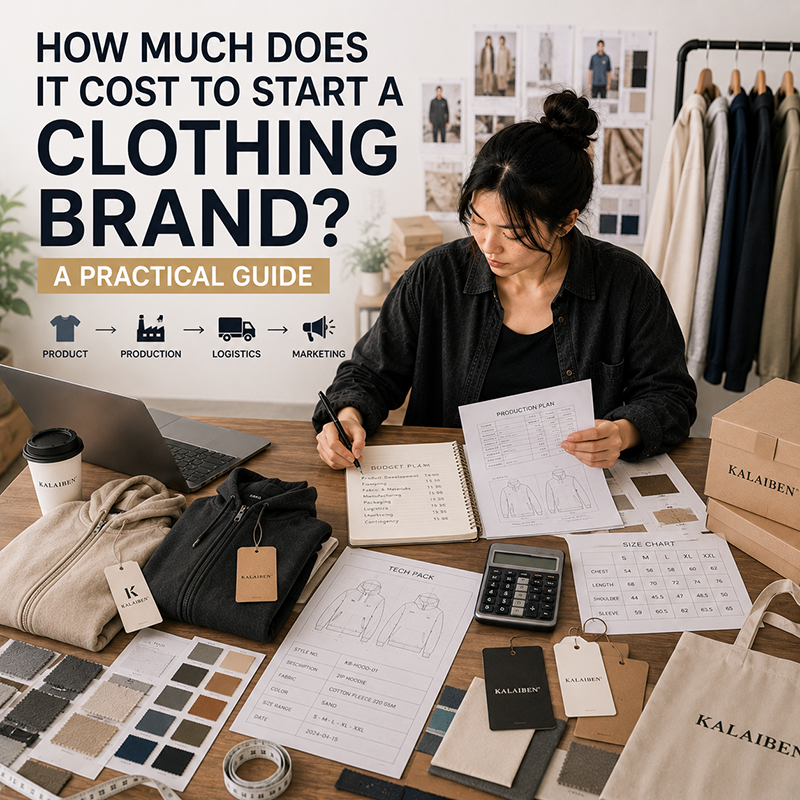
One of the first questions new fashion entrepreneurs ask is:
How much does it cost to start a clothing brand?
There is no single answer.
The total cost depends on many factors, including the type of clothing, number of products, materials, order quantity, manufacturing requirements, sales channels and marketing strategy.
A small clothing startup may begin with a focused collection and limited inventory, while a larger brand may require significantly more investment.
Instead of looking for one fixed number, it is more useful to understand the different costs involved and create a realistic budget based on your own business model.
1. Start With Your Business Model
Before calculating costs, decide how you plan to operate your clothing brand.
For example, will you:
- Produce your own designs?
- Buy ready-made products?
- Develop private-label clothing?
- Work with an OEM manufacturer?
- Develop products through an ODM partner?
- Sell directly to consumers?
- Sell wholesale?
Your business model can have a major effect on your initial investment.
A brand developing completely custom products will normally have different development costs from a business selling existing products under its own label.
2. Product Development Costs
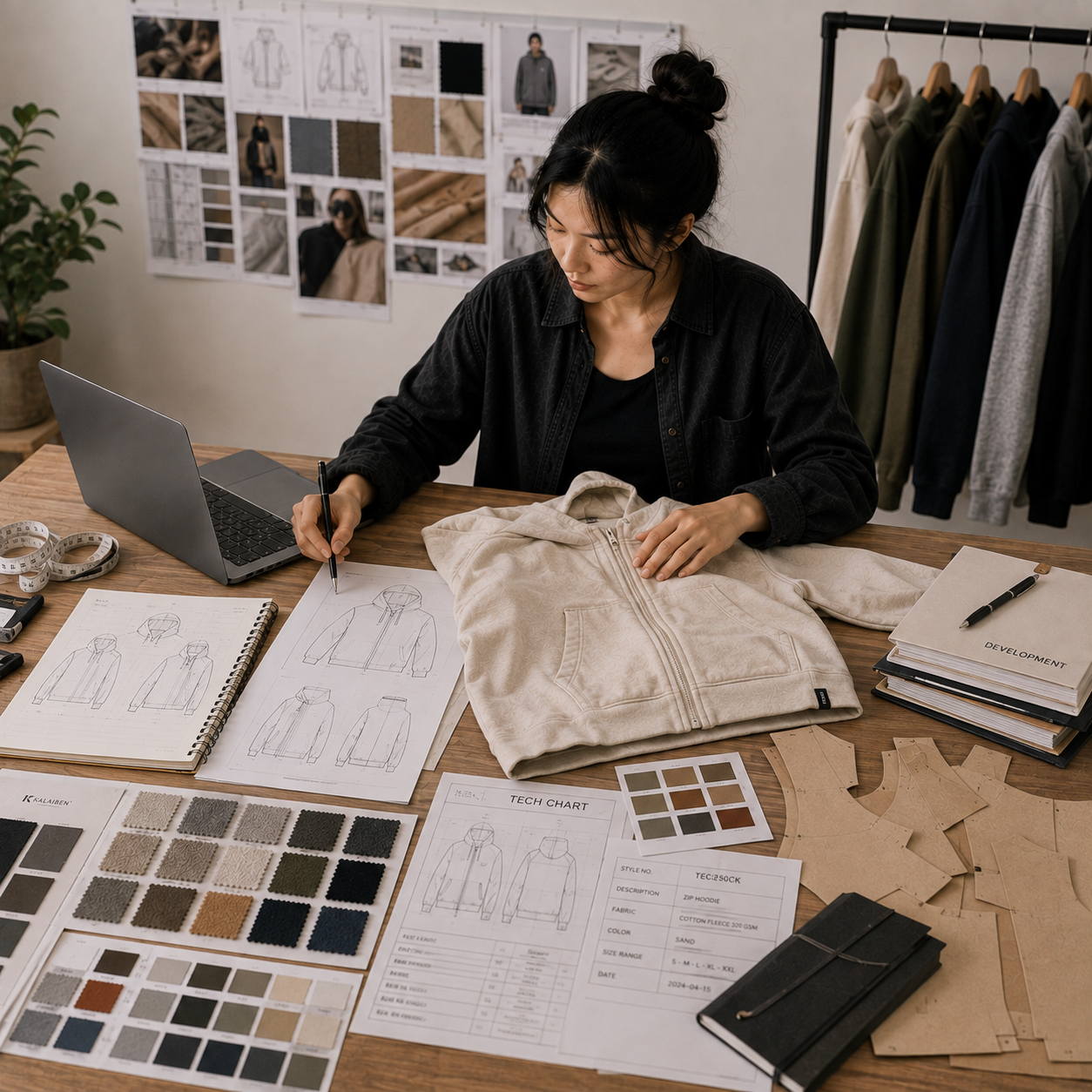
One of the first expenses is product development.
Depending on your product, this may include:
- Design
- Technical drawings
- Tech packs
- Fabric sourcing
- Trim selection
- Kuvioiden suunnittelu
- Sample development
- Sample revisions
If you are designing a completely new garment, you may need several rounds of development before reaching the final version.
For this reason, it is useful to include a separate product development budget rather than treating sampling as part of bulk production.
3. Sampling Costs
Samples are essential for most custom clothing projects.
A sample allows you to evaluate the product before placing a larger order.
You may need to pay for:
- Fabric
- Sample labor
- Kuvioiden suunnittelu
- Special trims
- Printing or embroidery
- Shipping
- Sample revisions
The number of samples required depends on product complexity and how many changes are needed.
It is usually better to spend time improving a sample than to discover major problems after bulk production.
4. Fabric and Material Costs
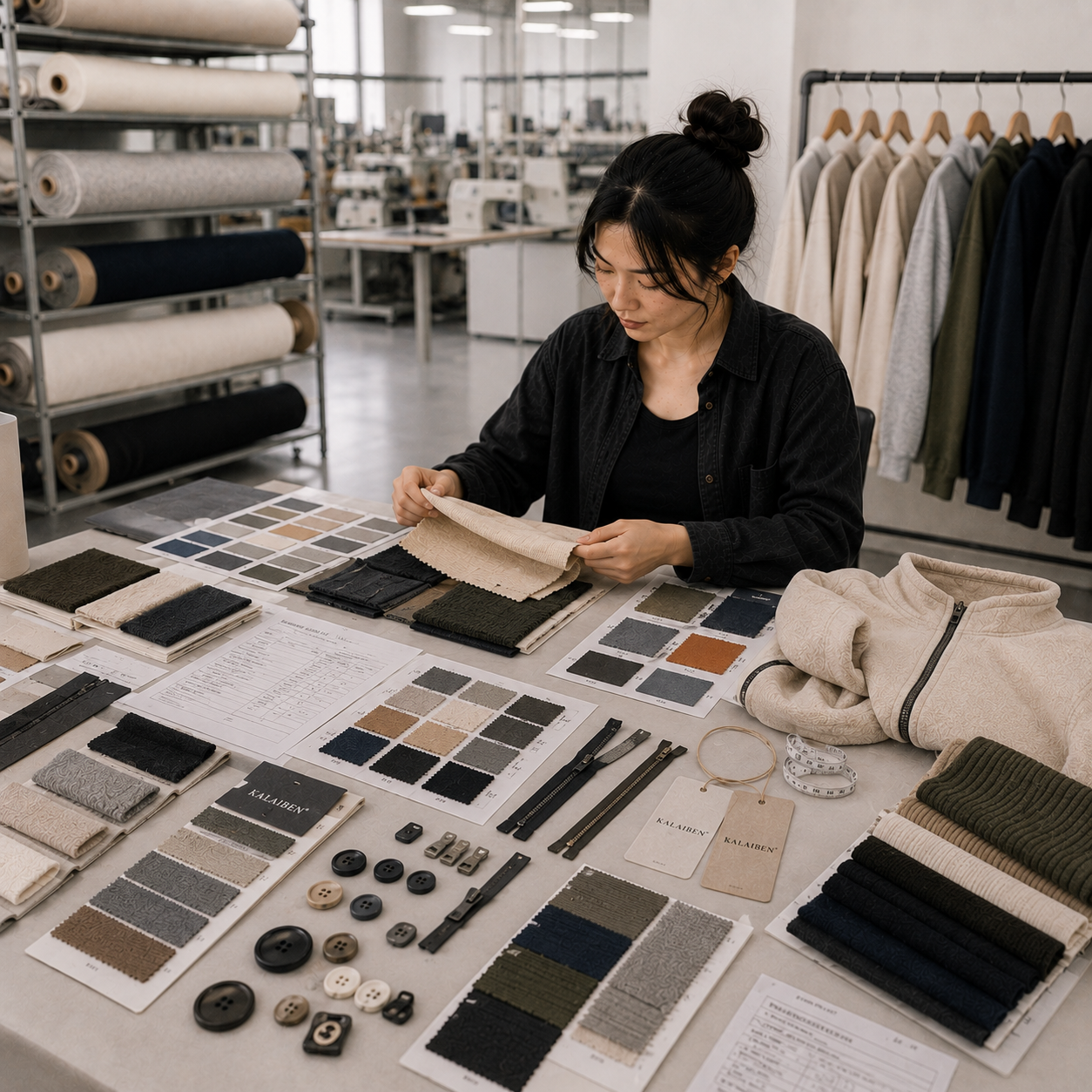
Fabric can be one of the most important components of garment cost.
The price can vary depending on:
- Kuidun koostumus
- Kankaan paino
- GSM
- Quality
- Väri
- Viimeistely
- Special treatments
- Order quantity
Other materials may include:
- Zippers
- Buttons
- Drawcords
- Elastic
- Tunnisteet
- Hangtags
- Pakkaus
When creating your budget, consider the complete material package rather than only the main fabric.
KALAIBEN's integrated textile business includes knitted fabric production and garment manufacturing. Its company information states that the textile operation produces mid-to-high-grade knitted fabrics and uses several types of knitting equipment, including single-side, double-side, terry, fleece and rib machines.
For brands developing knitted products, discussing fabric requirements directly with a manufacturer that has textile production experience can be useful during product development.
5. Clothing Manufacturing Costs
Bulk manufacturing is another major part of your budget.
The final garment cost can depend on:
- Product construction
- Fabric
- Garment complexity
- Quantity
- Colors
- Sisustustarvikkeet
- Special processes
- Pakkausvaatimukset
A simple T-shirt and a technically complicated jacket will naturally require different production processes.
This is why you should compare quotations based on the complete product specification rather than comparing one price number without context.
6. MOQ and Initial Inventory
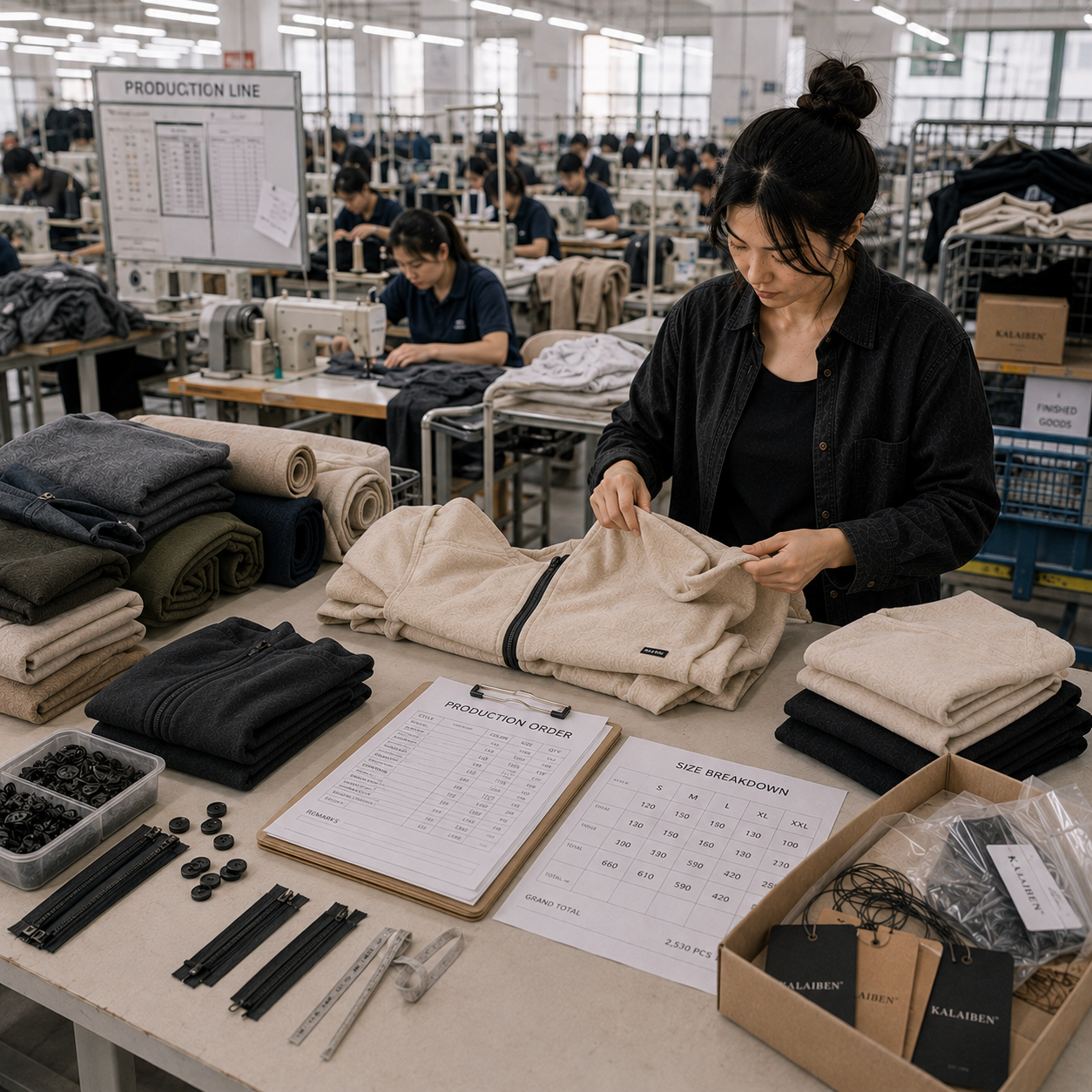
MOQ stands for Minimum Order Quantity.
Manufacturers may establish different MOQs depending on:
- Tuote
- Fabric
- Väri
- Production process
- Customization
Your MOQ directly affects how much inventory you need to purchase at the beginning.
For a new brand, ordering too much inventory can tie up cash and increase storage risks.
On the other hand, ordering too little may result in higher unit costs or make it difficult to maintain inventory.
The right quantity depends on your sales expectations, budget and manufacturing arrangement.
7. Labels and Packaging
Your clothing brand may also require custom branding materials.
These can include:
- Kudotut etiketit
- Painetut tarrat
- Hangtags
- Stickers
- Polybags
- Boxes
- Shipping cartons
- Custom packaging
These costs are usually smaller than the main manufacturing cost, but they should still be included in your overall budget.
A consistent packaging system can also help create a more professional customer experience.
8. Shipping and Import Costs
Manufacturing costs are not necessarily the final product cost.
If you manufacture internationally, you may also need to consider:
- Freight
- Shipping
- Customs
- Duties
- Import taxes
- Insurance
- Local transportation
- Warehousing
The final logistics cost depends on the origin, destination, shipment size, shipping method and applicable import requirements.
For international clothing brands, it is important to calculate these costs before setting the final selling price.
9. Website and E-Commerce Costs
Your clothing brand also needs a way to sell its products.
Depending on your business model, you may need to budget for:
- Domain name
- E-commerce platform
- Website design
- Product photography
- Product descriptions
- Payment processing
- Apps or software
- Website maintenance
You do not necessarily need an expensive website at the beginning.
The priority should be making it easy for customers to understand the products and complete a purchase.
10. Marketing Costs
Marketing is another major part of launching a clothing brand.
Possible expenses include:
- Social media advertising
- Influencer partnerships
- Product photography
- Video production
- SEO
- Content creation
- Email marketing
- Paid search
- Events
New brands should avoid assuming that every marketing channel needs a large budget.
Instead, test different approaches and track which channels generate meaningful customer interest.
11. Inventory and Storage
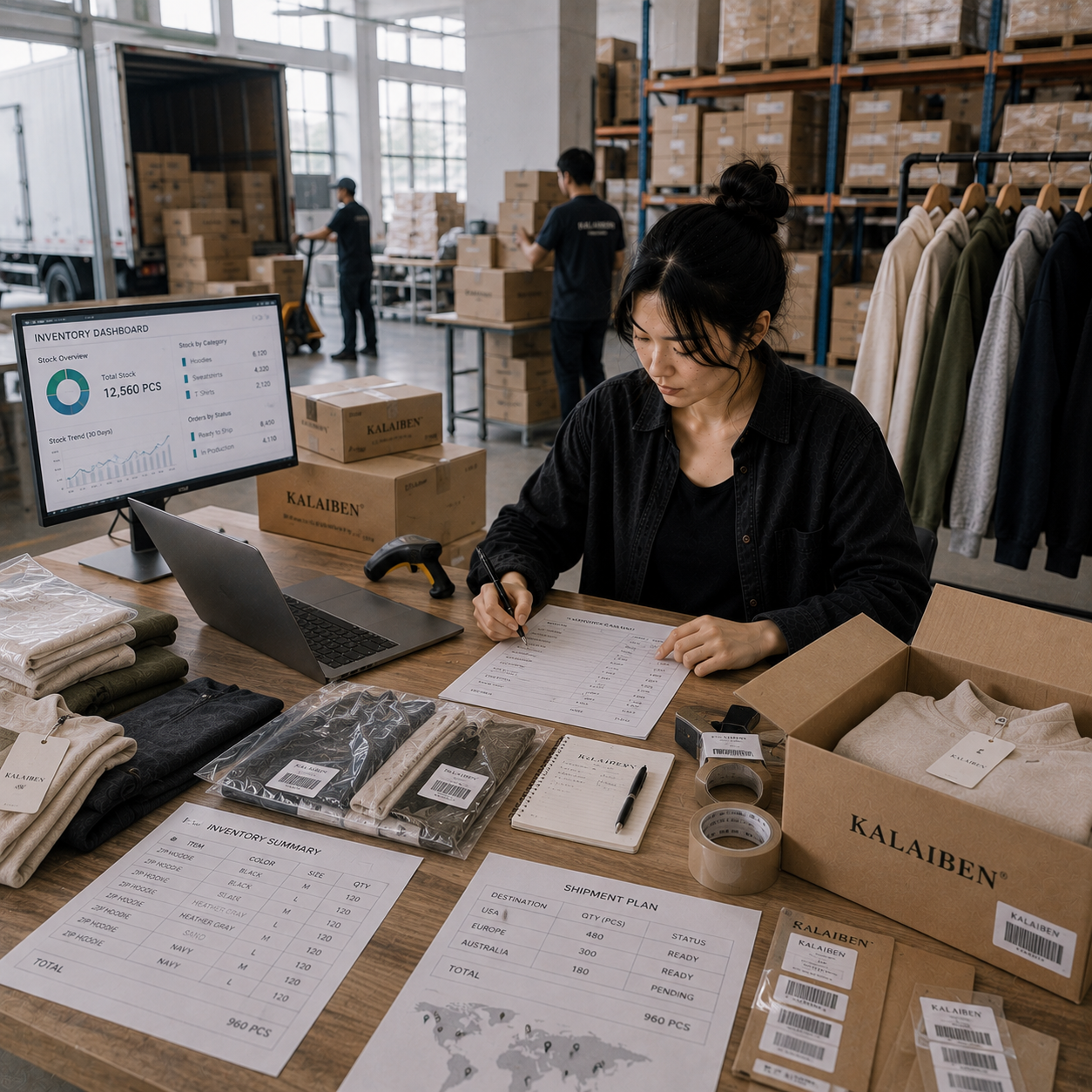
Once products are manufactured, they need to be stored before being sold.
Depending on the size of your business, storage may involve:
- Warehouse space
- Shelving
- Inventory management
- Packaging materials
- Fulfillment
- Local delivery
Inventory is one of the reasons why product planning is important.
A large collection with many colors and sizes can quickly create a large number of individual SKUs.
A focused collection may be easier to manage when starting out.
12. Create a Simple Clothing Brand Budget
Rather than asking:
"How much does it cost to start a clothing brand?"
a better question is:
"How much will my specific clothing business cost to launch?"
You can organize your budget into several categories:
| Cost Category | What to Include |
|---|---|
| Product Development | Design, tech packs, patterns |
| Sampling | Fabric, labor, revisions |
| Materiaalit | Fabric, trims, labels |
| Manufacturing | Bulk garment production |
| Pakkaus | Tags, bags, boxes |
| Logistics | Shipping, customs, local transport |
| Website | Domain, platform, design |
| Marketing | Content, advertising, promotion |
| Inventory | Stock and storage |
| Operating Costs | Business and administration |
This structure gives you a much clearer picture of your actual startup requirements.
13. How to Reduce Initial Costs
Starting with a smaller budget does not necessarily mean sacrificing product quality.
You can control your initial investment by:
Start With Fewer Styles
A smaller first collection reduces development and inventory requirements.
Limit Color Options
Too many colors can increase inventory complexity.
Focus on Core Products
Build around a small number of products that fit your brand concept.
Sample Before Bulk Production
Spending on development can help reduce costly production mistakes.
Understand MOQ
Choose production quantities based on realistic sales expectations.
Compare Manufacturers
Do not compare factories based only on unit price. Compare their overall value, capabilities and terms.
14. Do Not Build Your Budget Around the Lowest Factory Price
A low garment quotation can look attractive, especially to a new brand.
But the cheapest price is not necessarily the lowest overall cost.
If a manufacturer has poor communication, inconsistent quality, long delays or frequent production problems, the additional costs can become significant.
When evaluating manufacturers, consider:
- Product quality
- Sampling
- Fabric capability
- MOQ
- Lead time
- Quality control
- Communication
- Production experience
KALAIBEN operates an integrated textile and garment manufacturing business, with stated product categories including knitted and woven casualwear and outdoor sportswear. The company also operates its own KALAIBEN adult brand and BOWTAD children's brand.
For a new clothing brand, these types of manufacturing capabilities can be considered alongside pricing when evaluating a production partner.
15. Build a Budget Before Contacting Manufacturers
Before requesting quotations, prepare as much product information as possible.
Provide:
- Product type
- Fabric requirements
- Kankaan paino
- Colors
- Sizes
- Estimated quantity
- Customization
- Tunnisteet
- Pakkaus
The clearer your requirements are, the easier it is for manufacturers to provide meaningful quotations.
Comparing quotations based on the same specifications can also make the decision much easier.
16. Leave Room for Unexpected Costs
Even a carefully planned clothing startup can encounter unexpected expenses.
These may include:
- Additional sample revisions
- Fabric changes
- Design adjustments
- Shipping changes
- Packaging revisions
- Unexpected marketing costs
- Additional inventory
For this reason, avoid using your entire available budget on the first production order.
Keeping some financial flexibility can make it easier to respond to unexpected situations.
Johtopäätös
So, how much does it cost to start a clothing brand?
There is no universal startup figure.
The total investment depends on your product category, development requirements, materials, order quantity, manufacturing model, sales channels and marketing strategy.
The most useful approach is to build your own budget by separating:
Product Development → Sampling → Materials → Manufacturing → Packaging → Logistics → Website → Marketing → Inventory → Operating Costs
For a new brand, starting with a focused collection can help control both production and inventory risk.
You should also compare manufacturers based on more than price. Product experience, fabric capabilities, sampling, MOQ, quality control, communication and production reliability can all influence your actual cost of doing business.
KALAIBEN's integrated textile and apparel operations cover knitted fabric production and garment manufacturing, with products including knitted and woven casualwear and outdoor sportswear.
The best starting budget is therefore not simply the smallest possible budget. It is a realistic budget that gives you enough room to develop good products, manufacture them reliably, market them effectively and learn from your first collection.











