




Kuinka löytää vaatevalmistaja: Kattava opas muotibrändeille
Julkaisupäivä:2026-08-26 Luokka:UUTISET Katselukerrat:579
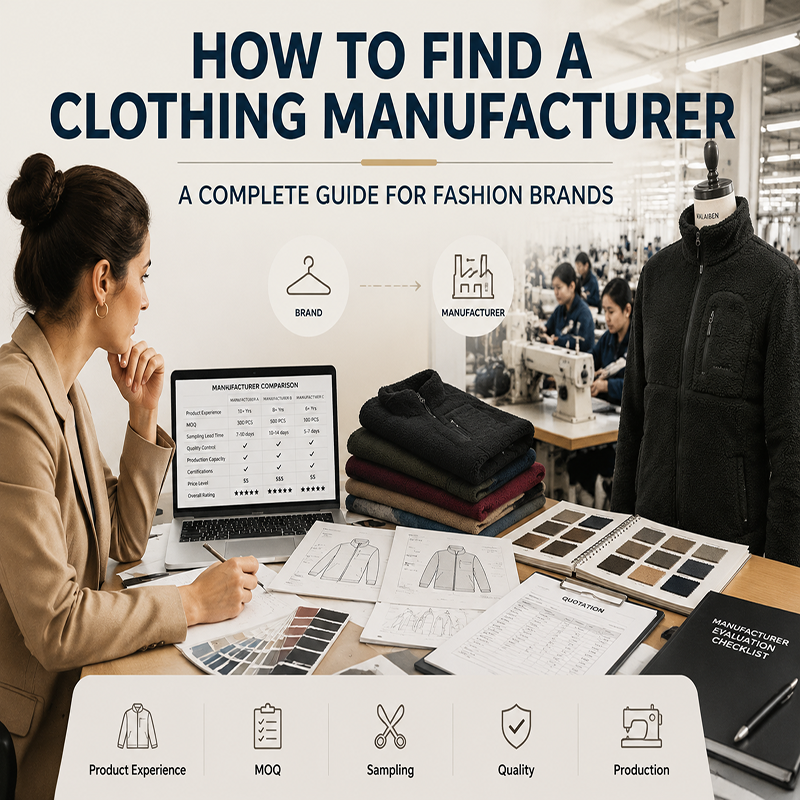
Finding the right clothing manufacturer is one of the most important steps when starting or growing a fashion brand.
A good manufacturer does more than turn designs into finished garments. The right manufacturing partner can support fabric selection, product development, sampling, bulk production, quality control, and communication throughout the manufacturing process.
However, finding a suitable factory can be challenging, especially for new clothing brands. Manufacturers may differ significantly in their product experience, minimum order quantities, production capabilities, quality standards, lead times, and communication.
Choosing the cheapest factory is not always the best solution.
Instead, fashion brands should evaluate manufacturers based on their actual production requirements and long-term business goals.
This guide explains how to find a clothing manufacturer and what to consider before choosing a manufacturing partner.
1. Define Your Manufacturing Requirements First
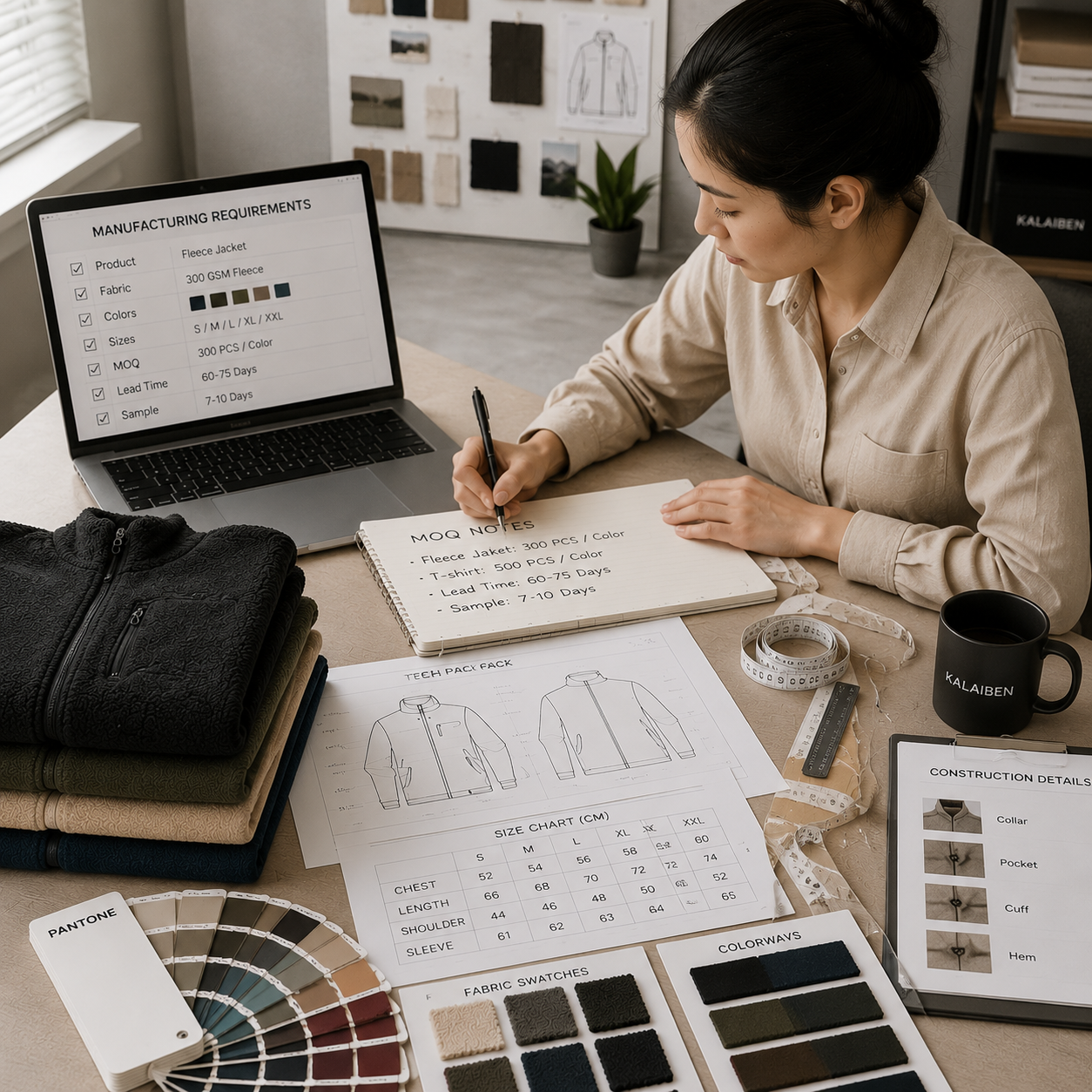
Before searching for a clothing manufacturer, clearly define what you need to produce.
A manufacturer that is suitable for one type of clothing may not necessarily be suitable for another.
Start by preparing basic information about your project, including:
- Product category
- Target market
- Fabric requirements
- Estimated order quantity
- Size range
- Color options
- Customization requirements
- Target price
- Expected delivery time
- Pakkausvaatimukset
For example, a brand producing fleece jackets may need a manufacturer with experience in warm fabrics and outerwear construction, while an activewear brand may require experience with stretch fabrics and performance garments.
The more clearly you define your requirements, the easier it becomes to identify suitable manufacturers.
2. Decide What Type of Manufacturer You Need
Not every clothing manufacturer operates in the same way.
Some factories specialize in specific product categories, while others provide broader manufacturing services.
You may encounter manufacturers focused on:
- Knitwear
- Woven garments
- Urheiluvaatteet
- Outdoor clothing
- Vapaa-ajan vaatteet
- Children's clothing
- Workwear
- Activewear
- Jackets and outerwear
You should also understand the difference between different production models.
For example, some manufacturers mainly produce according to a buyer's specifications, while others may provide more extensive product development and OEM or ODM support.
Before contacting factories, decide how much support you expect from your manufacturing partner.
3. Search for Potential Clothing Manufacturers
There are several ways to find potential manufacturers.
You can search through:
- Industry directories
- Trade exhibitions
- B2B platforms
- Manufacturer websites
- Industry recommendations
- Professional networks
- Referrals from other businesses
Search using specific terms rather than simply searching for "clothing factory."
For example:
- Clothing manufacturer for startups
- Custom clothing manufacturer
- Private label clothing manufacturer
- Outdoor clothing manufacturer
- Sportswear manufacturer
- Knitwear manufacturer
- Woven clothing manufacturer
You can also combine the product category with the manufacturing location.
For example:
China outdoor clothing manufacturer
or:
China knitwear manufacturer
More specific searches can help you find manufacturers whose capabilities are closer to your requirements.
4. Check the Manufacturer's Product Experience
Once you have a list of potential manufacturers, review their product experience.
Look at the types of clothing they manufacture and determine whether their experience matches your products.
Important questions include:
- What types of garments do they produce?
- Do they work with similar fabrics?
- Do they support custom designs?
- Can they develop samples?
- Do they manufacture small or large orders?
- Do they have experience exporting?
- Can they support repeat production?
A manufacturer with relevant experience may understand common production challenges more quickly than a factory that rarely produces your type of garment.
5. Evaluate Fabric and Material Capabilities
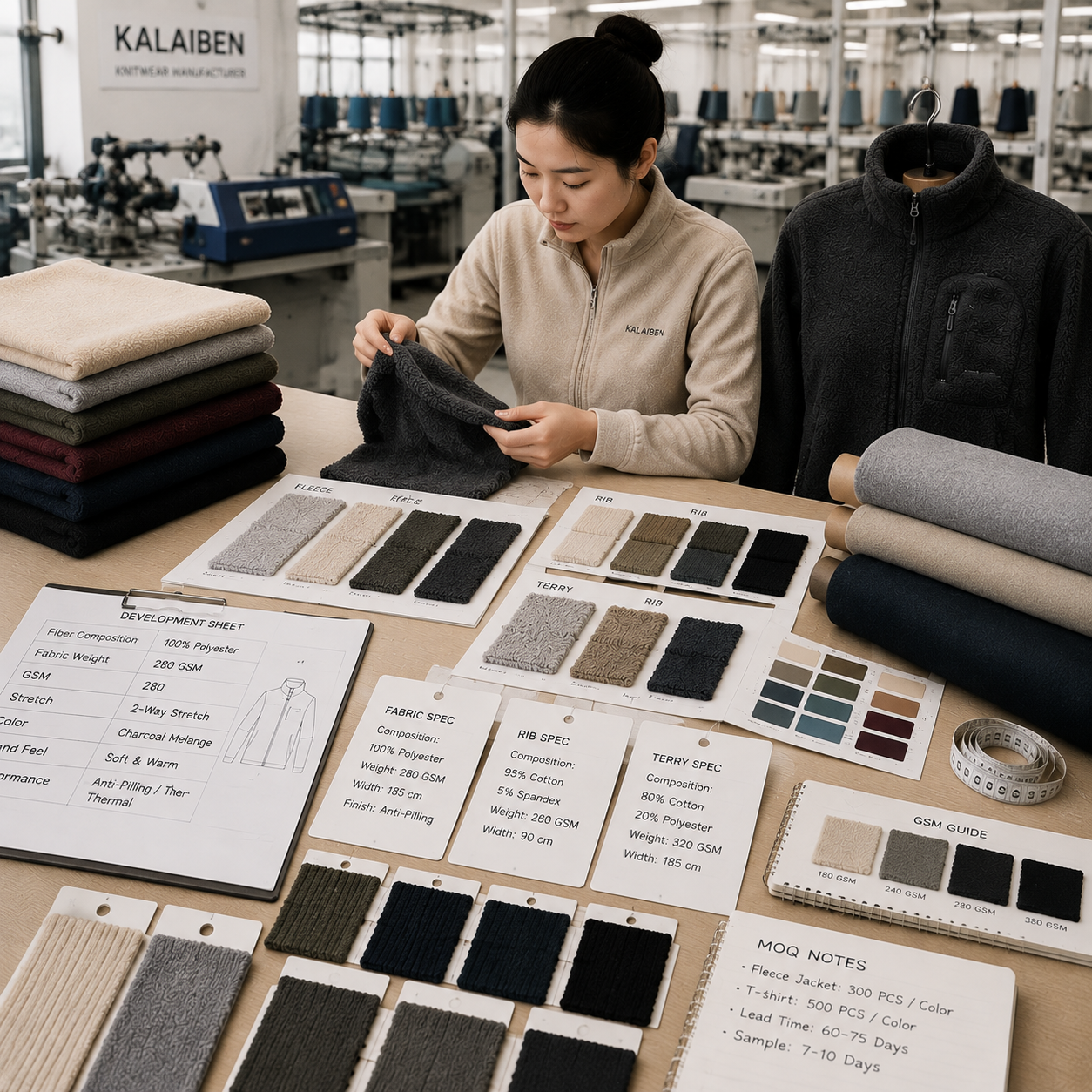
Fabric is a major part of clothing manufacturing.
When evaluating a manufacturer, ask how they handle fabric sourcing and whether they have experience working with the materials required for your products.
Important considerations include:
- Kuidun koostumus
- Kankaan paino
- GSM
- Venyttely
- Väri
- Hand feel
- Performance
- Kestävyys
- Seasonal suitability
For brands developing knitted garments, a manufacturer with access to or experience in knitted fabric production may provide advantages during product development.
KALAIBEN's business covers both textile and garment manufacturing. Its textile operation produces knitted fabrics and uses equipment including high-speed single-side machines, double-side machines, terry machines, fleece machines and rib machines.
This integrated textile and garment background allows the company to work across fabric and finished apparel production rather than focusing only on garment assembly.
6. Ask About OEM and ODM Capabilities
If you already have your own designs, you may be looking for an OEM manufacturer.
OEM production generally involves manufacturing garments according to the buyer's specifications.
If you need more development support, an ODM manufacturer may be able to provide additional assistance with product development.
When speaking with manufacturers, ask:
- Can you manufacture according to our designs?
- Can you help develop samples?
- Can you recommend suitable fabrics?
- Can you make design adjustments?
- Can you support custom labels and packaging?
- Can you assist with product development?
Understanding these capabilities early can help you choose a manufacturer that matches your business model.
7. Ask About MOQ
MOQ stands for Minimum Order Quantity.
This is one of the most important questions for new fashion brands.
Different manufacturers may have different MOQs depending on:
- Tuote
- Fabric
- Väri
- Production process
- Customization
- Order quantity
For example, a manufacturer may have one MOQ for standard products and another requirement for highly customized garments.
Before moving forward, ask the manufacturer to clearly explain:
- MOQ per style
- MOQ per color
- Sample requirements
- Bulk production quantity
- Whether mixed colors or sizes are possible
Understanding MOQ can help you determine whether a manufacturer is suitable for your current stage of business.
8. Request Samples Before Bulk Production
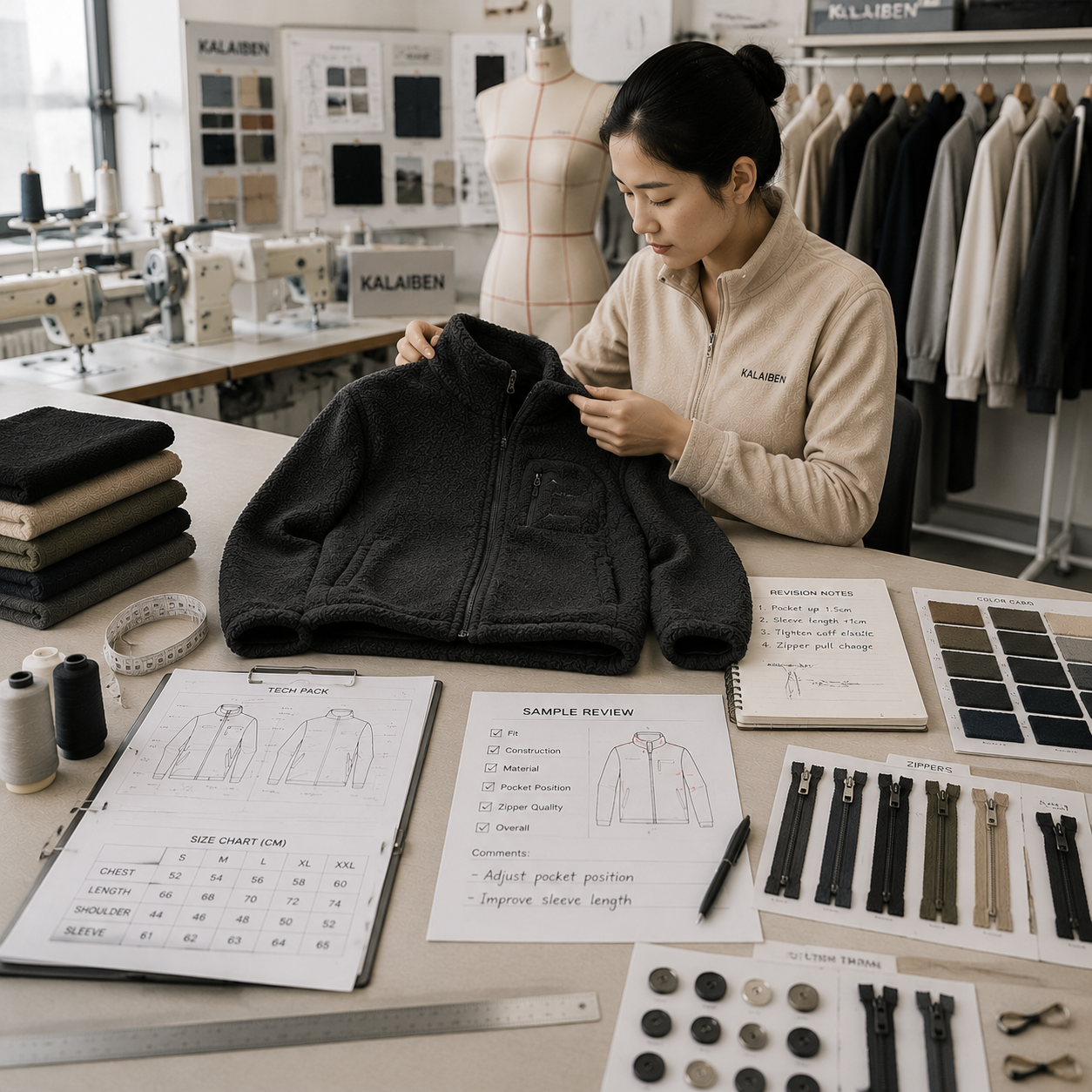
Never rely only on photographs or product descriptions when evaluating a manufacturer.
Whenever possible, request samples.
Sampling allows you to evaluate:
- Fabric
- Istuvuus
- Mitat
- Construction
- Väri
- Ompelu
- Details
- Overall workmanship
If you already have a design, provide the manufacturer with your specifications or tech pack and ask for a development sample.
You can then identify areas that need improvement before placing a larger production order.
For new brands, the sampling stage is particularly important because it provides a practical test of the manufacturer's ability to understand and execute your requirements.
9. Evaluate Quality Control
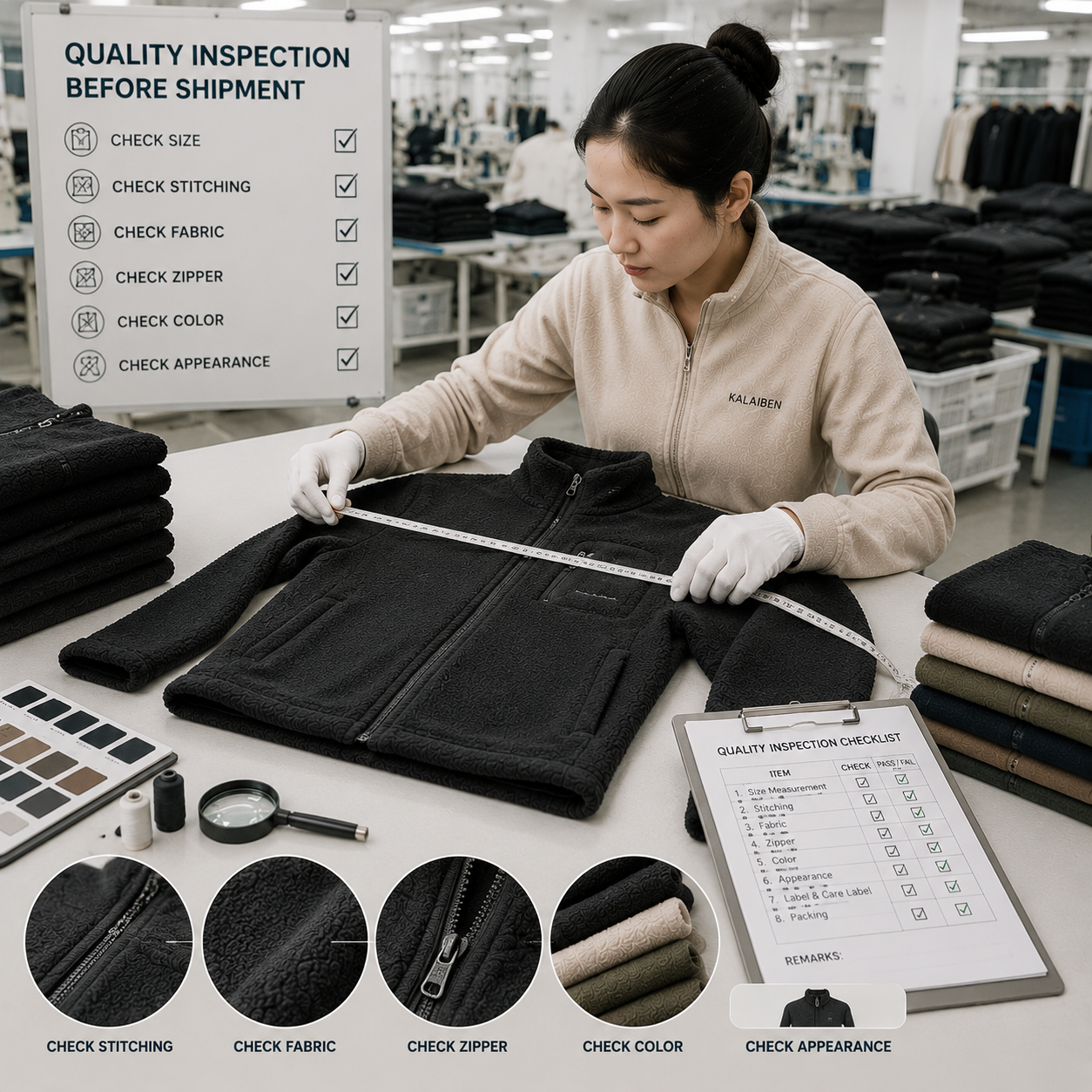
Quality control should be an important part of your manufacturer evaluation.
Ask potential manufacturers how they manage quality during production.
Areas to discuss may include:
- Fabric inspection
- Leikkaaminen
- Ompelu
- Mitat
- Color consistency
- Garment construction
- Finished garment inspection
- Pakkaus
You can also ask how production problems are identified and handled.
The goal is not simply to find a manufacturer that claims to have good quality.
You should look for clear production processes and communication that allow quality expectations to be understood before production begins.
10. Check Production Capacity
Production capacity matters because your requirements may change as your brand grows.
A manufacturer that can handle your current order may also need to support larger orders in the future.
Ask about:
- Production facilities
- Workforce
- Equipment
- Product categories
- Production planning
- Lead times
- Peak-season capacity
KALAIBEN operates an integrated textile and apparel manufacturing business. Its Jiangxi subsidiary is located in Jinshan Industrial Park, Nancheng County, Jiangxi. Company information states that the facility covers approximately 30 acres, with a construction area of around 26,000 square meters, and that the company has more than 380 employees.
The company's manufacturing focus includes knitted and woven casualwear as well as outdoor sportswear.
For brands evaluating manufacturers, facility scale is only one factor, but it can be useful when considered together with product experience, quality processes and communication.
11. Consider the Manufacturer's Location
Manufacturing location can affect:
- Production costs
- Shipping
- Lead times
- Communication
- Supply chain access
- Import requirements
China remains an important sourcing location for international apparel brands because of its broad textile and garment supply chain.
However, the best manufacturing location depends on your target market, product category, budget, order quantity and logistics requirements.
Instead of choosing a country first, define your production requirements and then compare suitable manufacturers.
12. Compare More Than Just the Price
Price is important, but it should not be the only factor.
When comparing quotations, look at the complete manufacturing offer.
Consider:
| Factor | What to Check |
|---|---|
| Product Quality | Fabric and workmanship |
| MOQ | Minimum order requirements |
| Sampling | Development and revision support |
| Fabric | Material sourcing and options |
| Production | Manufacturing capabilities |
| Lead Time | Sampling and bulk production |
| Communication | Response and coordination |
| Quality Control | Inspection procedures |
| Pakkaus | Custom packaging options |
| Shipping | Export and logistics support |
A manufacturer with a slightly higher quotation may provide better overall value if it offers stronger quality, communication and production reliability.
13. Verify the Manufacturer Before Placing an Order
Before committing to a large production order, carry out reasonable due diligence.
You can review:
- Company information
- Factory location
- Product portfolio
- Manufacturing capabilities
- Certifications or audit documentation where applicable
- Samples
- Customer references where available
- Production communication
- Contract and payment terms
If possible, a factory visit or third-party verification can provide additional information.
You should also make sure that product specifications, pricing, quantities, quality requirements and delivery expectations are clearly documented.
14. Build a Long-Term Manufacturing Relationship
Finding a clothing manufacturer should not always be viewed as a one-time transaction.
For a growing clothing brand, a reliable long-term manufacturing relationship can make future product development more efficient.
Once a manufacturer understands your:
- Product standards
- Preferred fabrics
- Sizing
- Construction
- Quality expectations
- Pakkausvaatimukset
future production may become easier to coordinate.
Long-term communication can also help both sides understand expectations more clearly.
15. Why an Integrated Textile and Garment Manufacturer Can Be Useful
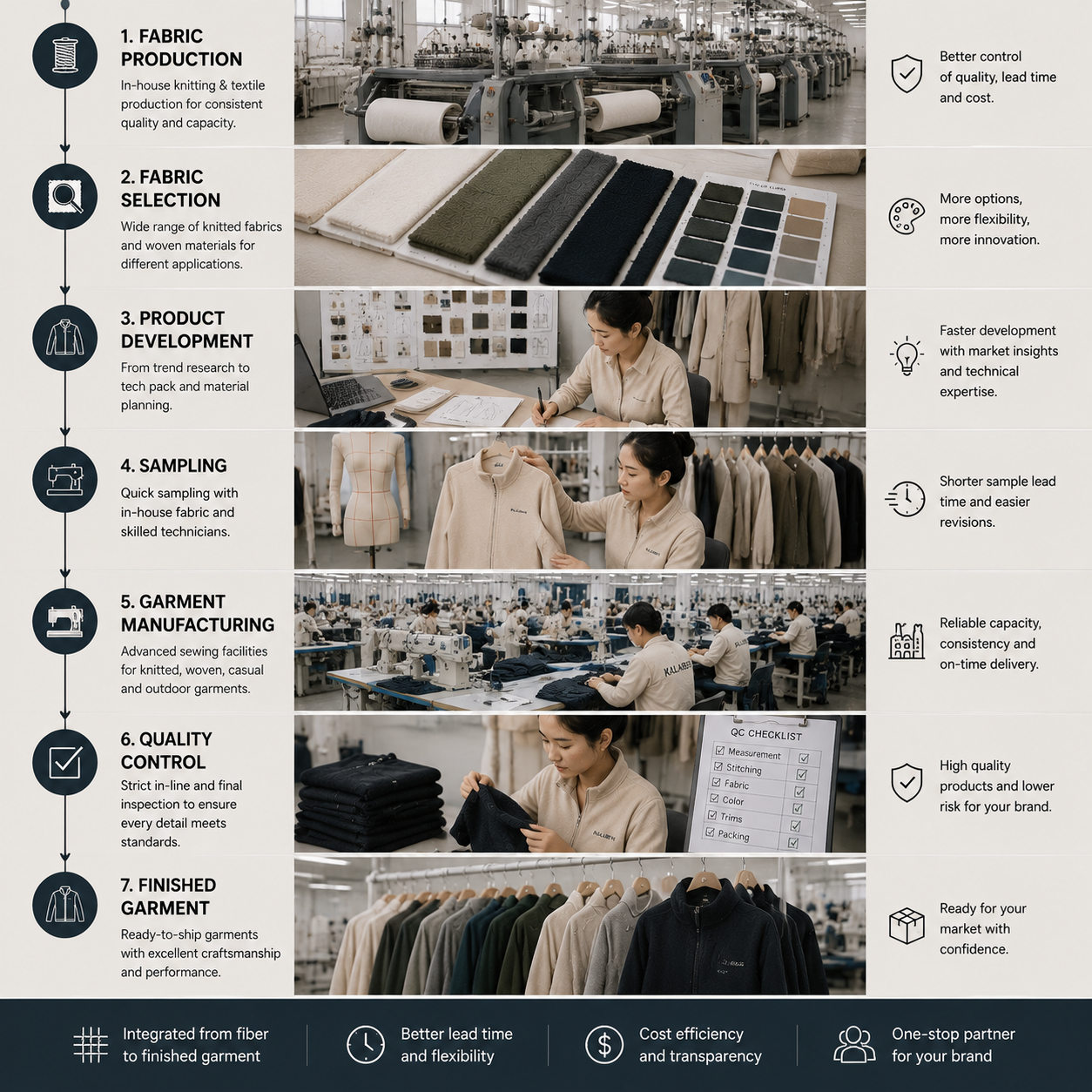
For some clothing brands, working with a manufacturer that combines textile and garment capabilities can simplify communication.
When fabric production and garment manufacturing are closely connected, brands may be able to discuss fabric requirements and finished garment requirements within the same manufacturing system.
KALAIBEN operates across textile and apparel manufacturing, with its business covering knitted fabric production, knitted garments, woven casualwear and outdoor sportswear. The company also operates the KALAIBEN adult clothing brand and BOWTAD children's brand.
This experience across its own brands and manufacturing operations provides a practical understanding of apparel product development and production.
For fashion brands evaluating potential manufacturing partners, an integrated production model can be one factor worth considering alongside quality, MOQ, product experience and communication.
16. Questions to Ask a Clothing Manufacturer
Before choosing a factory, prepare a list of questions.
Here are some useful examples:
About Products
- What clothing categories do you specialize in?
- Can you manufacture our product type?
- Do you work with our required fabrics?
About Development
- Can you develop samples?
- Can you work from a tech pack?
- How many sample revisions are possible?
About Production
- What is your MOQ?
- What is your typical production lead time?
- What production quantities can you handle?
About Quality
- How do you manage quality control?
- How are production problems handled?
- Can we approve a pre-production sample?
About Logistics
- Do you export internationally?
- What shipping options are available?
- What documentation can you provide?
Getting clear answers to these questions before placing an order can reduce potential misunderstandings later.
Johtopäätös
Finding the right clothing manufacturer requires more than searching for the lowest production price.
A suitable manufacturing partner should match your product category, fabric requirements, order quantity, quality expectations, development needs and long-term business plans.
Start by clearly defining your requirements. Then compare manufacturers based on product experience, fabric capabilities, sampling, MOQ, production capacity, quality control, communication and lead times.
Always request samples before committing to bulk production, and make sure important requirements are clearly documented.
For international fashion brands, an experienced textile and garment manufacturer can provide additional value when fabric development and garment production need to work closely together.
KALAIBEN operates an integrated textile and apparel business covering knitted fabric production and garment manufacturing. Its product focus includes knitted and woven casualwear and outdoor sportswear, with manufacturing operations in Fujian and Jiangxi.
Ultimately, the best clothing manufacturer is not necessarily the one offering the lowest price. It is the one that can consistently meet your requirements and become a reliable production partner as your brand grows.











