




Clothing Manufacturer OEM Services: What to Expect From a Professional OEM Partner
Date de publication :2026-10-07 Catégorie :ACTUALITÉS Nombre de visites :356
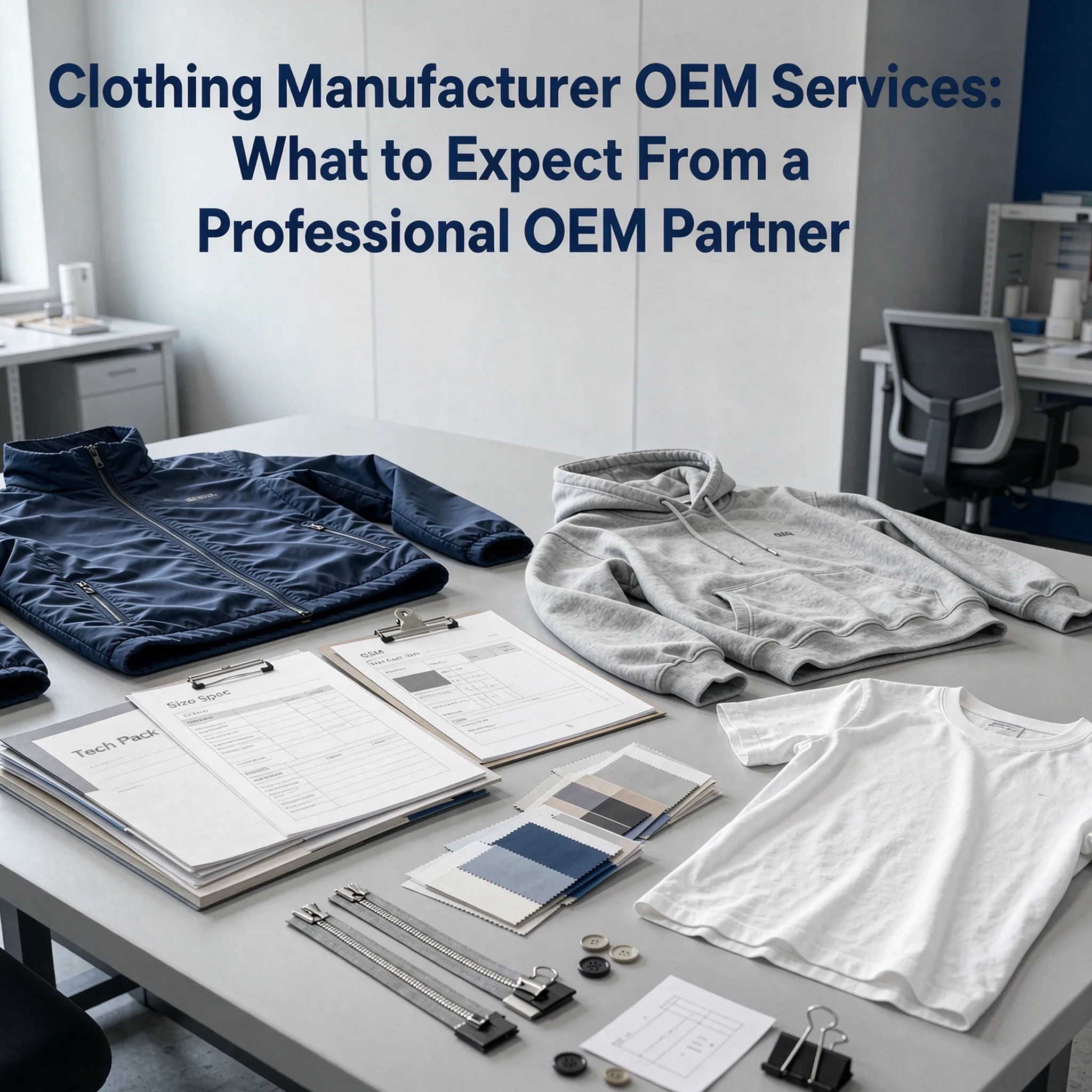
When you choose a clothing manufacturer for OEM services, you are not simply buying factory production. You are choosing a manufacturing partner that should turn your designs and specifications into consistent, production-ready garments.
A complete OEM service can cover technical review, fabric sourcing, pattern development, sampling, customization, bulk production, quality control, and packaging. The exact scope depends on your product and how much development work you have already completed.
1. What Are Clothing Manufacturer OEM Services?
OEM stands for Original Equipment Manufacturing.
In clothing production, OEM means the manufacturer produces garments according to the buyer's specifications, designs, approved samples, or technical requirements.
A typical OEM project may include:
- Analyse du dossier technique
- Fabric and trim sourcing
- Modélisme
- Élaboration d'échantillons
- Fit adjustments
- Couleurs personnalisées
- Printing or embroidery
- Marque de distributeur
- Production en série
- Contrôle qualité
- Emballage
The key difference is that the brand controls the product requirements while the manufacturer provides the technical and production capability to execute them.
2. What Should a Clothing Manufacturer OEM Service Include?
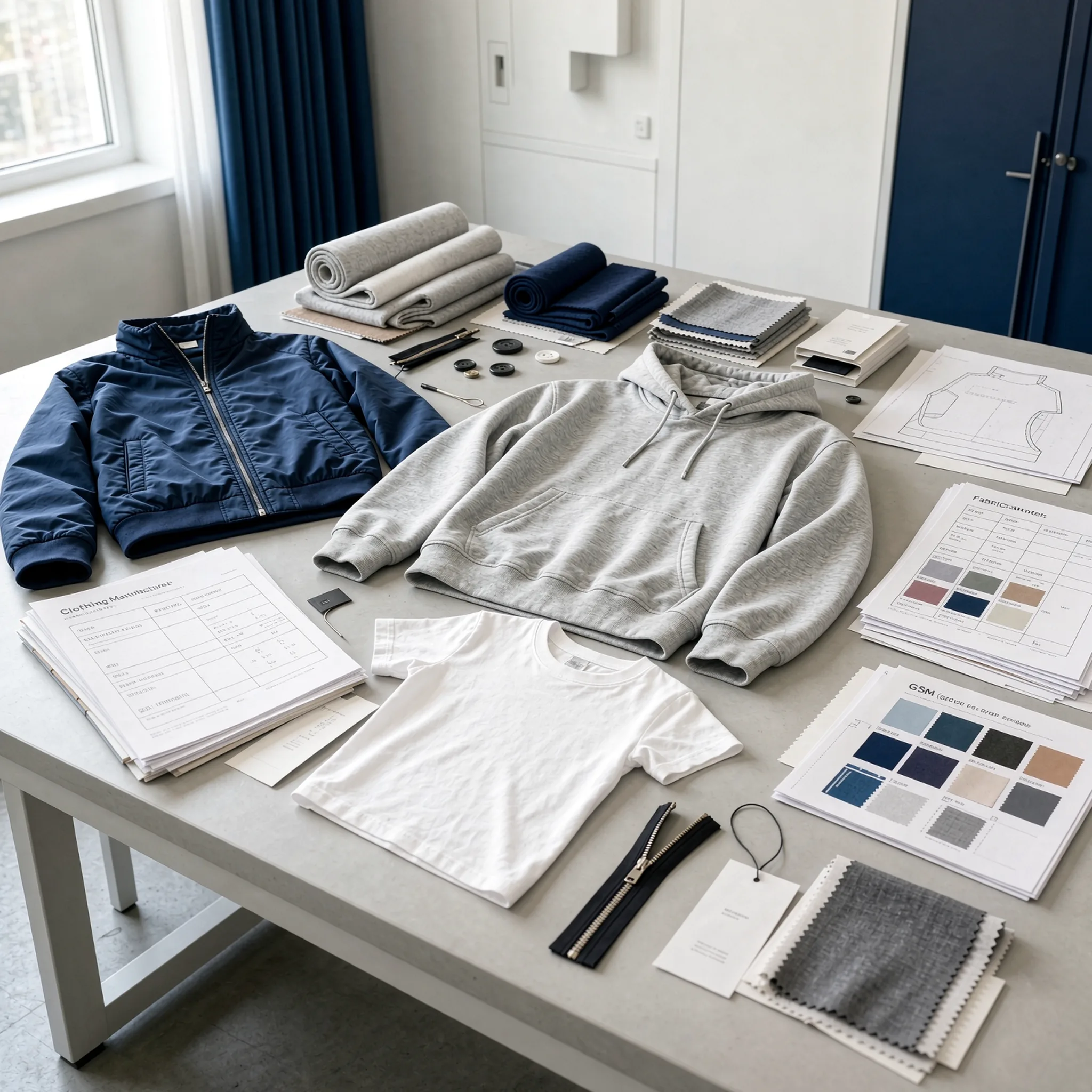
A professional OEM service should cover more than cutting and sewing.
2.1 Design and Tech Pack Review
If you already have a tech pack, the manufacturer should review whether the specifications are practical for production.
This can include:
- Dimensions
- Caractéristiques du tissu
- GSM
- Détails de construction
- Exigences en matière de couture
- Finitions
- Emplacement des illustrations
- Size grading
A good factory may identify production issues before sampling. This can prevent unnecessary sample revisions later.
2.2 Fabric and Trim Sourcing
Material selection directly affects garment cost, appearance, comfort, durability, and production performance.
An OEM manufacturer may help source:
- Cotton
- Polyester
- Polaire
- Knits
- Woven fabrics
- Recycled materials
- Zippers
- Buttons
- Étiquettes
- Other trims
The right material should match both the product's function and the construction method.
2.3 Pattern Making and Sample Development
The pattern converts the product specifications into a structure that can actually be cut and sewn.
The manufacturer may then create a prototype or development sample.
Sample review should cover:
- Ajustement
- Dimensions
- Fabric behavior
- Construction
- Couture
- Détails fonctionnels
- Aspect général
This stage is critical because a good-looking design on paper does not always translate directly into a production-ready garment.
3. Why Sample Approval Matters in OEM Manufacturing
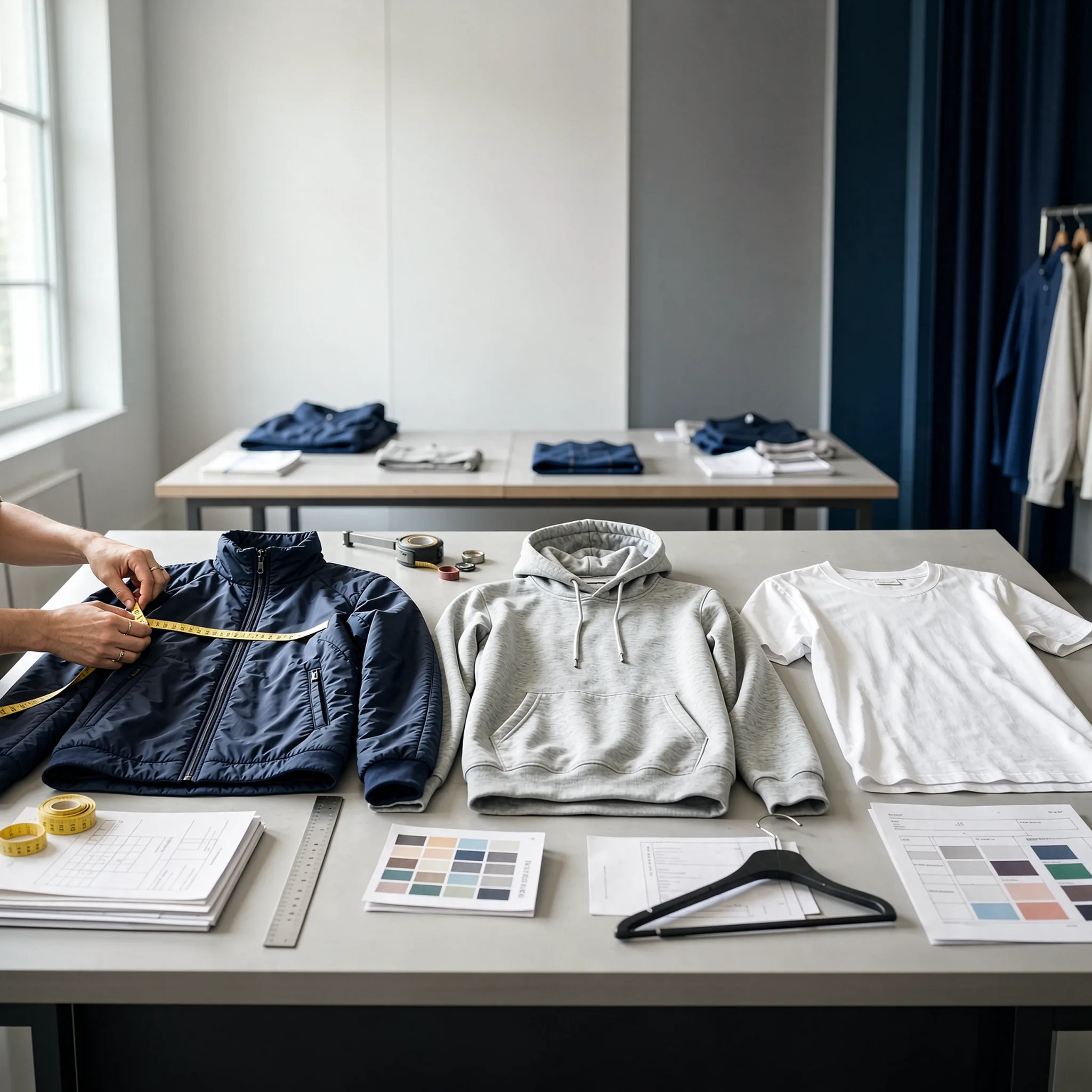
Sample approval creates a clear production reference.
Before bulk manufacturing starts, the buyer and manufacturer should confirm the approved:
- Tissu
- Couleur
- Dimensions
- Construction
- Finitions
- Image de marque
- Finishing details
This matters because bulk production involves hundreds or thousands of garments. Small specification differences can become large quality problems when repeated across an entire order.
For example, a 1 cm measurement difference may seem minor on one sample. Across multiple sizes and production batches, however, inconsistent measurements can affect the fit of the whole collection.
4. Custom Branding and Private Label Support
OEM clothing production often includes brand-specific details.
Depending on the project, manufacturers may support:
- Étiquettes tissées
- Printed labels
- Étiquettes volantes
- Broderie
- Sérigraphie
- Heat transfers
- Emballages sur mesure
- Care labels
- Étiquettes de taille
These details should be confirmed before production rather than added at the last minute.
The approved sample should ideally show the final branding configuration that will be used in bulk production.
5. What Happens After Sample Approval?
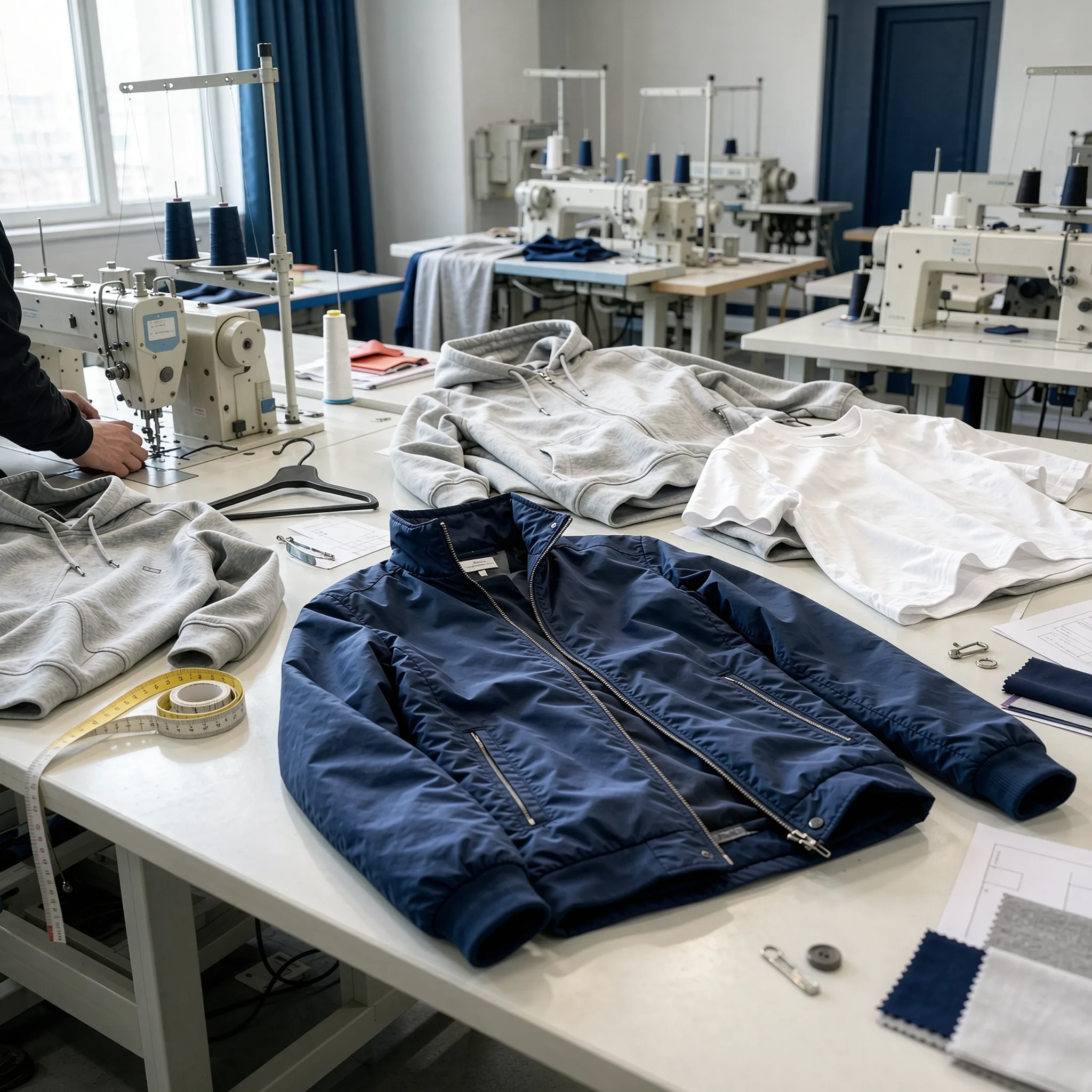
Once the sample is approved, the project moves into bulk manufacturing.
A typical workflow is:
1. Final specification confirmation
↓
2. Material preparation
↓
3. Cutting
↓
4. Sewing and assembly
↓
5. Finishing
↓
6. Quality inspection
↓
7. Packing and shipment
The exact production process varies by garment type.
For example, a fleece jacket may require different construction and finishing controls from a basic T-shirt.
6. Quality Control in OEM Clothing Manufacturing
Quality control should not happen only at the end of production.
Important checkpoints can include:
Contrôle des matériaux
Check fabric color, weight, defects, and other agreed specifications.
In-Process Inspection
Monitor measurements, stitching, construction, and workmanship during production.
Inspection finale
Check finished garments against the approved specifications before shipment.
A useful principle is simple:
The approved sample should become the reference for bulk production.
This gives both the buyer and manufacturer a clear quality standard.
7. How to Choose a Clothing Manufacturer for OEM Services
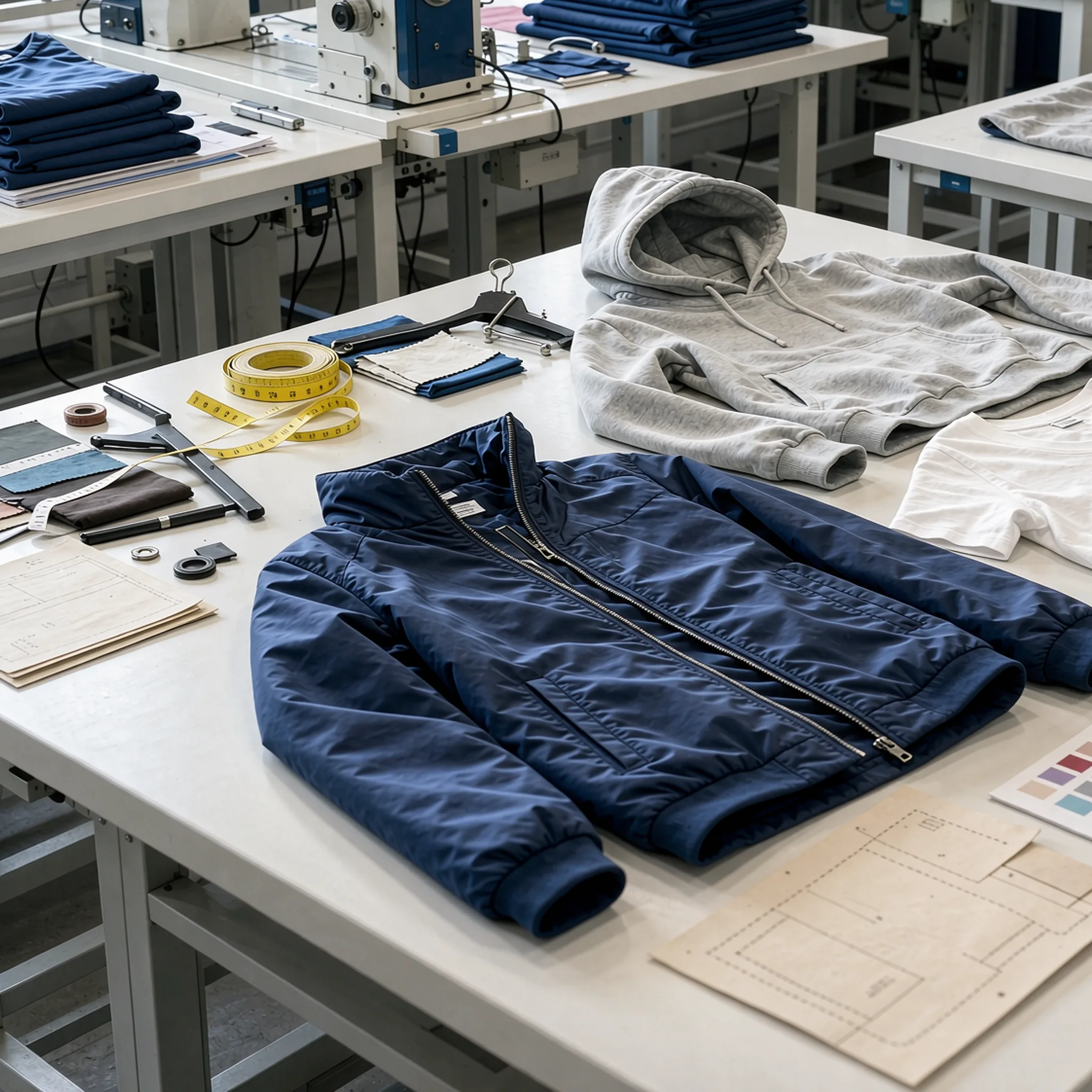
Do not choose an OEM supplier based only on price.
Evaluate these areas:
| Facteur | Ce qu'il faut vérifier |
|---|---|
| Expérience produit | Similar garments already produced |
| Développement | Pattern and sampling capabilities |
| Matériaux | Fabric and trim sourcing |
| Personnalisation | Labels, printing, embroidery, packaging |
| Production | Ability to handle your expected quantity |
| Qualité | Inspection process and standards |
| Communication | Clear technical confirmation |
| Délai de livraison | Realistic sample and production schedule |
| Commandes récurrentes | Ability to maintain specifications |
A manufacturer that understands your product category can often identify technical issues earlier and reduce unnecessary development work.
8. What Should You Send for an OEM Quote?
The more complete your initial information, the more useful the quotation will be.
Ideally, provide:
- Type de produit
- Design drawings or reference images
- Tech pack, if available
- Quantités de tissu nécessaires
- Gamme de tailles
- Quantité estimée
- Color requirements
- Branding requirements
- Target market
- Expected delivery date
You do not necessarily need a perfect tech pack to start a conversation. If your product is still being developed, explain what you already have and where you need manufacturing support.
9. OEM vs ODM: Which Service Do You Need?
The easiest way to distinguish them is to look at your starting point.
| If You Have... | More Suitable |
|---|---|
| Complete tech pack | OEM |
| Approved design | OEM |
| Detailed specifications | OEM |
| Sketch or concept | ODM |
| Reference garment | ODM |
| Product idea but limited technical details | ODM |
OEM is generally buyer-led. ODM involves greater manufacturer participation in product development.
Some projects use both. A brand may begin with an ODM development process and then move into OEM production once the final design and specifications are approved.
10. Questions to Ask Before Starting an OEM Project
Before placing an order, ask the manufacturer:
- Can you manufacture this product category?
- Can you review my tech pack?
- Can you source the required fabric?
- Do you provide pattern making?
- How is sample approval handled?
- Quelle est votre quantité minimale de commande ?
- What quality checks are performed?
- How are approved specifications controlled during production?
- Can you provide custom labels and packaging?
- What information do you need to prepare a quotation?
Clear answers to these questions can reveal much more about a supplier's real capabilities than a factory website alone.
11. The Best OEM Manufacturer Is Not Always the Cheapest
A lower unit price does not necessarily mean lower total cost.
Poor communication, repeated sample revisions, inconsistent materials, or quality problems can increase the actual cost of a project.
For B2B apparel buyers, a better evaluation is:
Product quality + development capability + communication + production consistency + total cost
rather than simply:
Lowest price = best supplier
This is especially important when the same style will be reordered or developed into a larger collection.
12. Start Your OEM Clothing Project With Clear Information
A successful OEM project starts before production begins.
Share your product requirements, references, quantities, materials, branding details, and target timeline. A capable clothing manufacturer offering OEM services can then evaluate the project, identify missing specifications, develop samples, and prepare the product for bulk production.
If your design is already defined, OEM can give your brand greater control over the finished garment while allowing an experienced manufacturer to manage the technical and production side of the process.











