




Fabricant de sweats à capuche : comment choisir le bon fournisseur pour votre marque
Date de publication :2026-09-11 Catégorie :ACTUALITÉS Nombre de visites :555
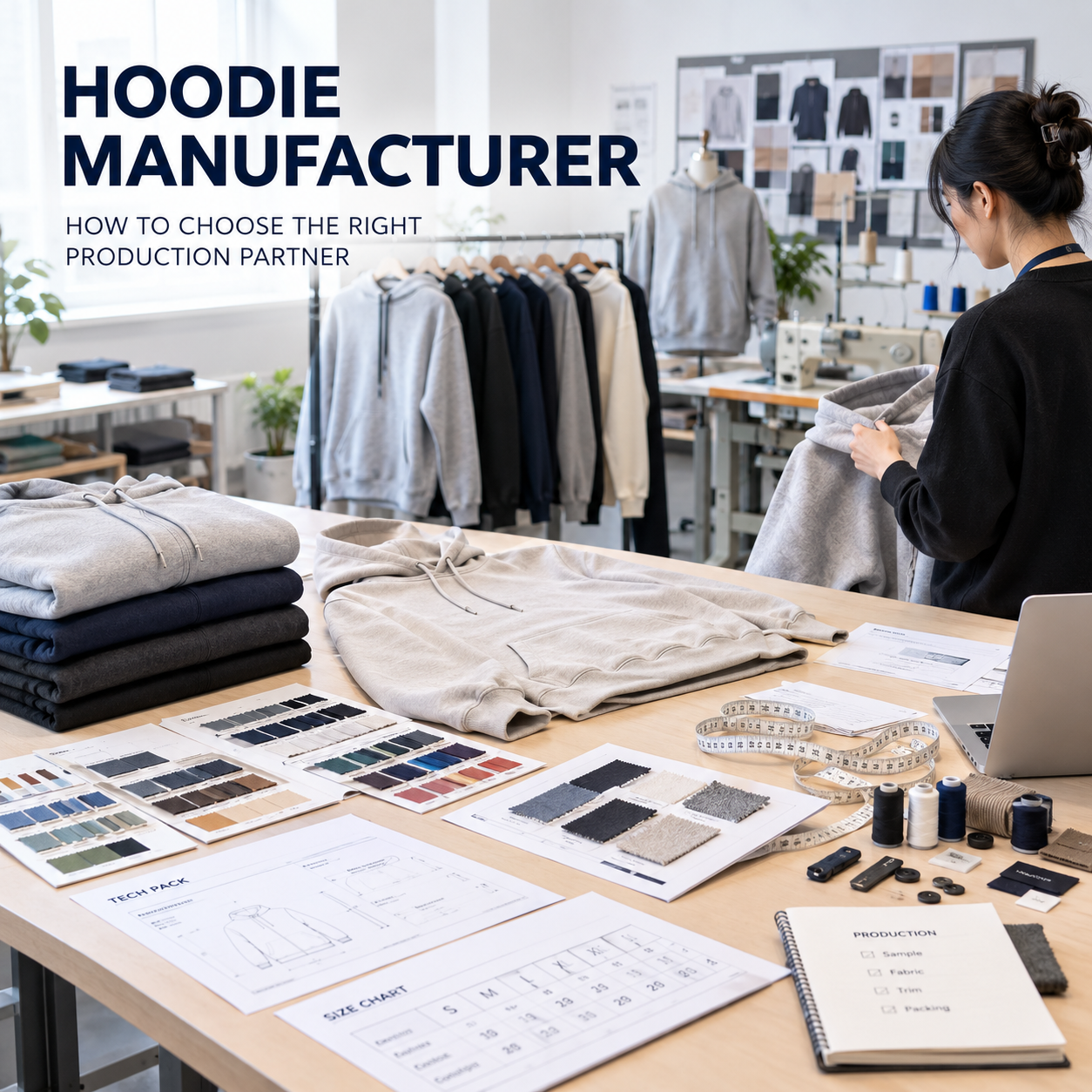
Trouver le bon hoodie manufacturer can make or break a clothing brand. A good supplier helps you control quality, costs, lead times, and production risks. The wrong one can cause inconsistent sizing, fabric problems, late shipments, and expensive rework.
For brands, wholesalers, retailers, and private-label businesses, choosing a manufacturer is not only about getting the lowest price. You need the right combination of product quality, production capability, communication, MOQ, customization, and delivery reliability.
This guide explains what to check before placing a hoodie production order.
1. What Does a Hoodie Manufacturer Actually Do?
A hoodie manufacturer produces hooded sweatshirts based on a buyer's requirements. The service can cover everything from fabric sourcing to final packing.
A typical production process includes:
- Approvisionnement en tissus
- Conception de motifs
- Réalisation d'échantillons
- Découpe
- Couture
- Printing or embroidery
- Washing or finishing
- Contrôle qualité
- Emballage
- Bulk shipment
Some manufacturers only handle cut-and-sew production. Others offer a more complete service.
Example: Basic Production vs. Full-Service Production
Imagine a startup brand wants to launch a 400-piece hoodie collection.
A basic factory may require the buyer to provide the fabric, trims, labels, tech pack, and packaging.
A full-service manufacturer may help source the fabric, develop samples, add labels, arrange packaging, and manage bulk production.
For a new brand, the second option can reduce the number of suppliers involved.
2. Custom Hoodie Manufacturer: What Can You Customize?
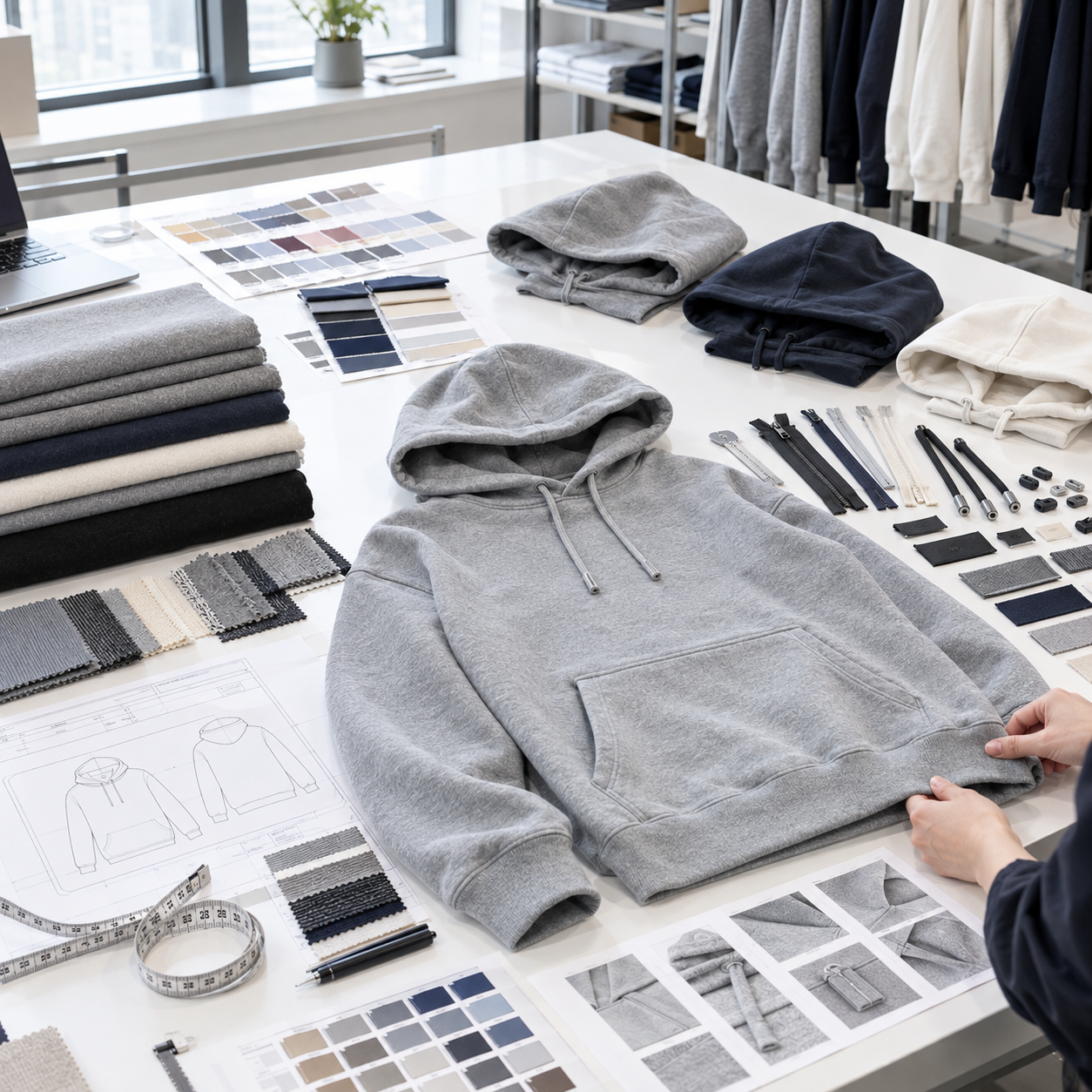
A custom hoodie manufacturer allows brands to modify the garment according to their design and market positioning.
La personnalisation peut inclure :
- Composition du tissu
- Poids du tissu
- Hoodie fit
- Longueur du corps
- Sleeve shape
- Hood construction
- Caractéristiques techniques des nervures
- Zipper or pullover design
- Pocket style
- Couleur
- Impression
- Broderie
- Étiquettes tissées
- Étiquettes volantes
- Emballage
The level of customization depends on the manufacturer's development and production capabilities.
Example: Building a Premium Oversized Hoodie
Suppose a streetwear brand wants a heavyweight oversized hoodie.
The buyer may request:
- 400–500 GSM fabric
- Oversized fit
- Épaules tombantes
- Heavy rib cuffs
- Double-layer hood
- Custom embroidery
- Branded labels
The manufacturer must understand how these specifications affect fabric consumption, sewing time, garment weight, and final cost.
A good supplier should not simply say "yes." They should also explain production limitations and recommend practical solutions.
3. Wholesale Hoodie Manufacturer: What Should Buyers Check?
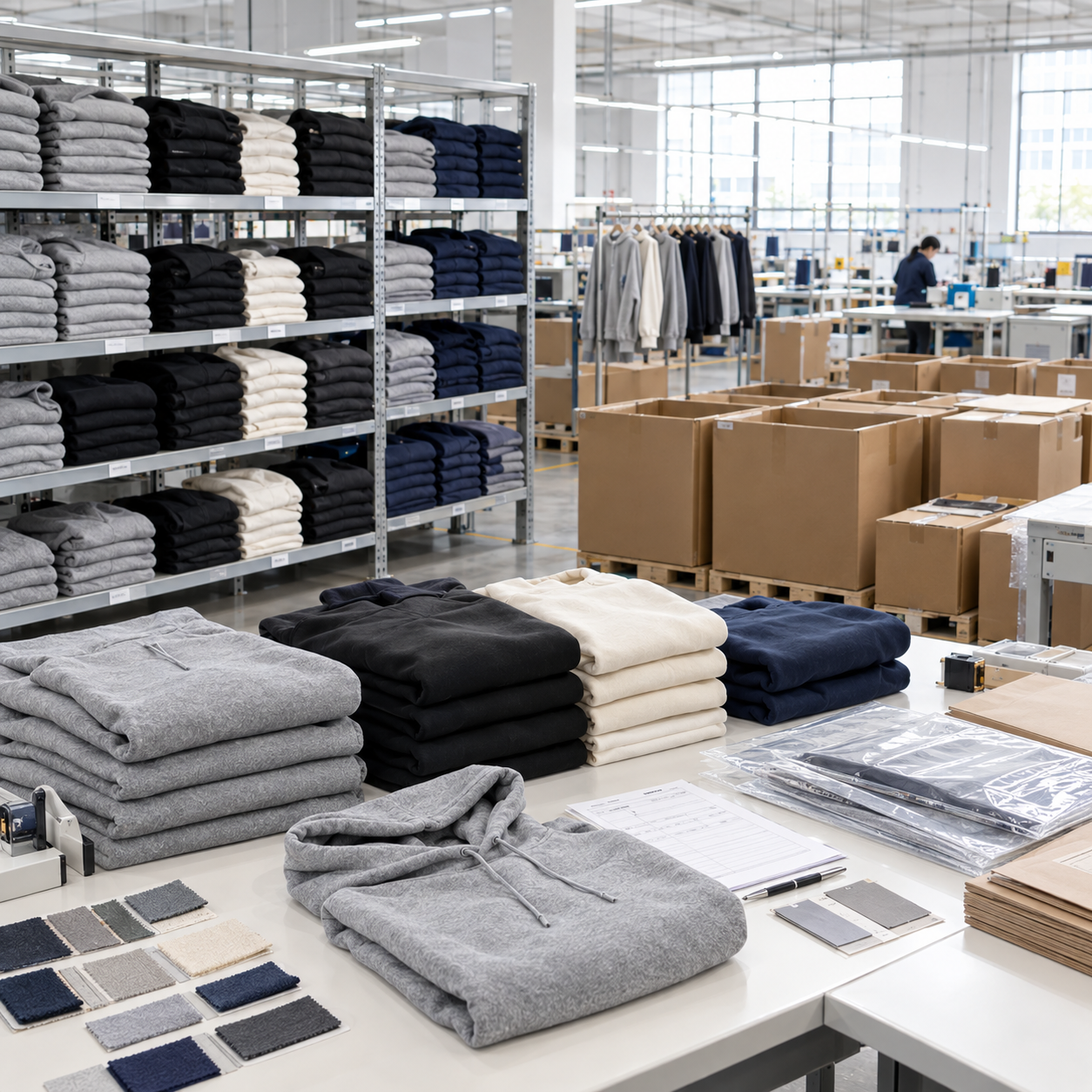
A wholesale hoodie manufacturer usually works with larger production quantities. Buyers should look beyond the quoted unit price.
Check these factors before placing an order:
| Facteur | Ce qu'il faut vérifier | Pourquoi est-ce important ? |
|---|---|---|
| Quantité minimale de commande | Minimum pieces per style/color | Affects inventory risk |
| Tissu | Composition et grammage (g/m²) | Affects comfort and cost |
| Échantillonnage | Sample process and fees | Reduces production mistakes |
| Délai de livraison | Calendrier pour les échantillons et les livraisons en vrac | Helps launch planning |
| Contrôle qualité | Inspection process | Reduces defective goods |
| Personnalisation | Options disponibles | Supports brand identity |
| Emballage | Labels, bags, cartons | Favorise la préparation à la vente au détail |
| Shipping | Expérience en matière d'exportation | Reduces delivery risk |
Example: Why the Lowest Quote May Cost More
Factory A offers a hoodie at $8.20 per piece.
Factory B offers $8.70.
At first glance, Factory A looks cheaper.
But Factory A may have a higher defect rate and limited quality control. If 6% of the order requires rework, the real production cost can become higher.
The cheapest quotation is not always the lowest total cost.
4. Private Label Hoodie Manufacturer: How Does It Work?
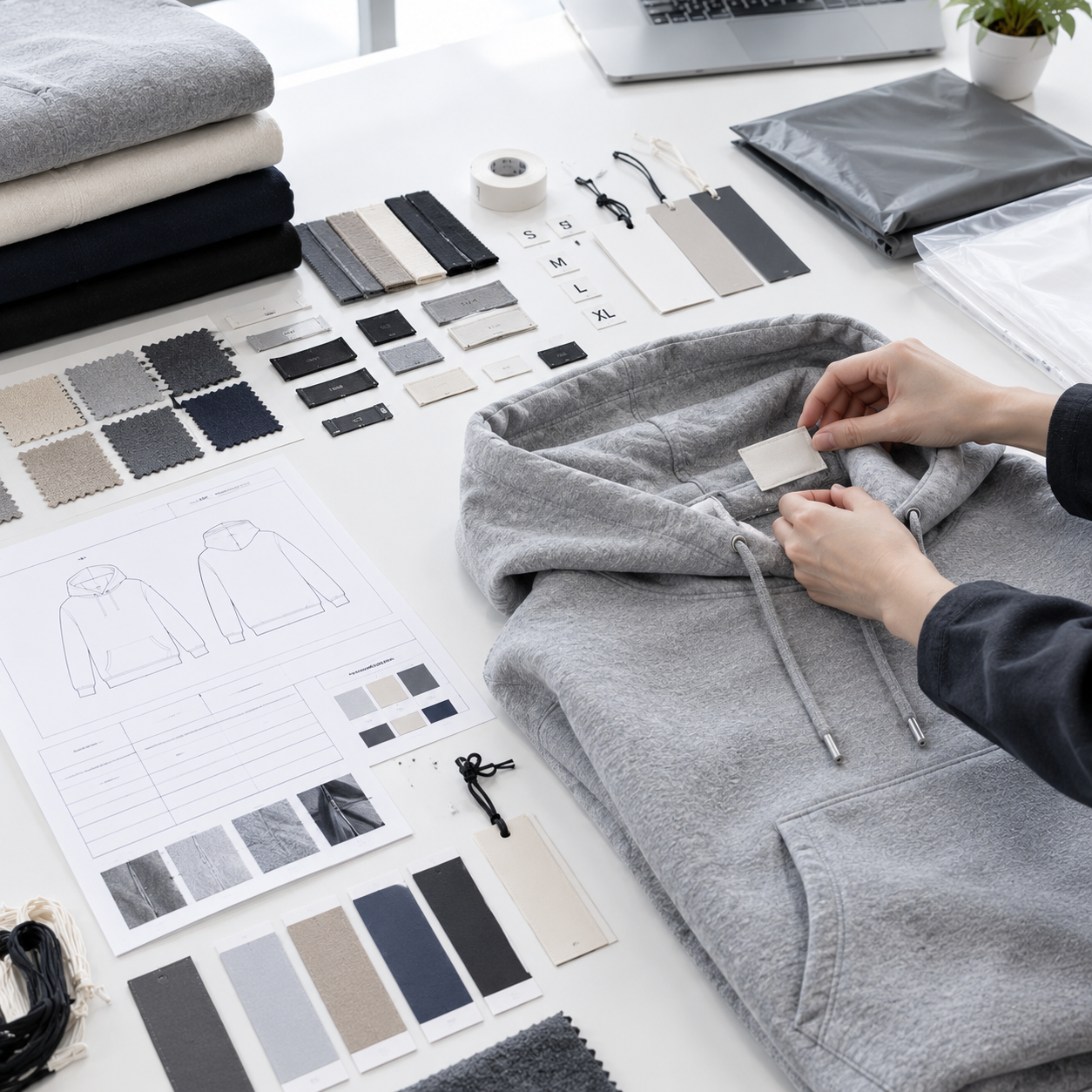
A private label hoodie manufacturer produces garments under the buyer's own brand.
Ce modèle convient particulièrement à :
- Marques de mode
- Marques de streetwear
- Outdoor brands
- E-commerce brands
- Retail businesses
- Corporate clothing companies
Private-label production can include branding elements such as:
- Étiquettes de col
- Étiquettes tissées
- Printed labels
- Étiquettes de taille
- Étiquettes volantes
- Emballages sur mesure
- Branded poly bags
Example: Turning a Basic Hoodie Into a Brand Product
A standard hoodie may look similar to hundreds of products on the market.
Adding a custom fit, fabric specification, embroidery, branded labels, and packaging can create a much stronger brand identity.
The key is consistency.
Your hoodie should match your brand's other products in fit, color, fabric quality, and branding details.
5. How to Choose the Right Hoodie Manufacturer
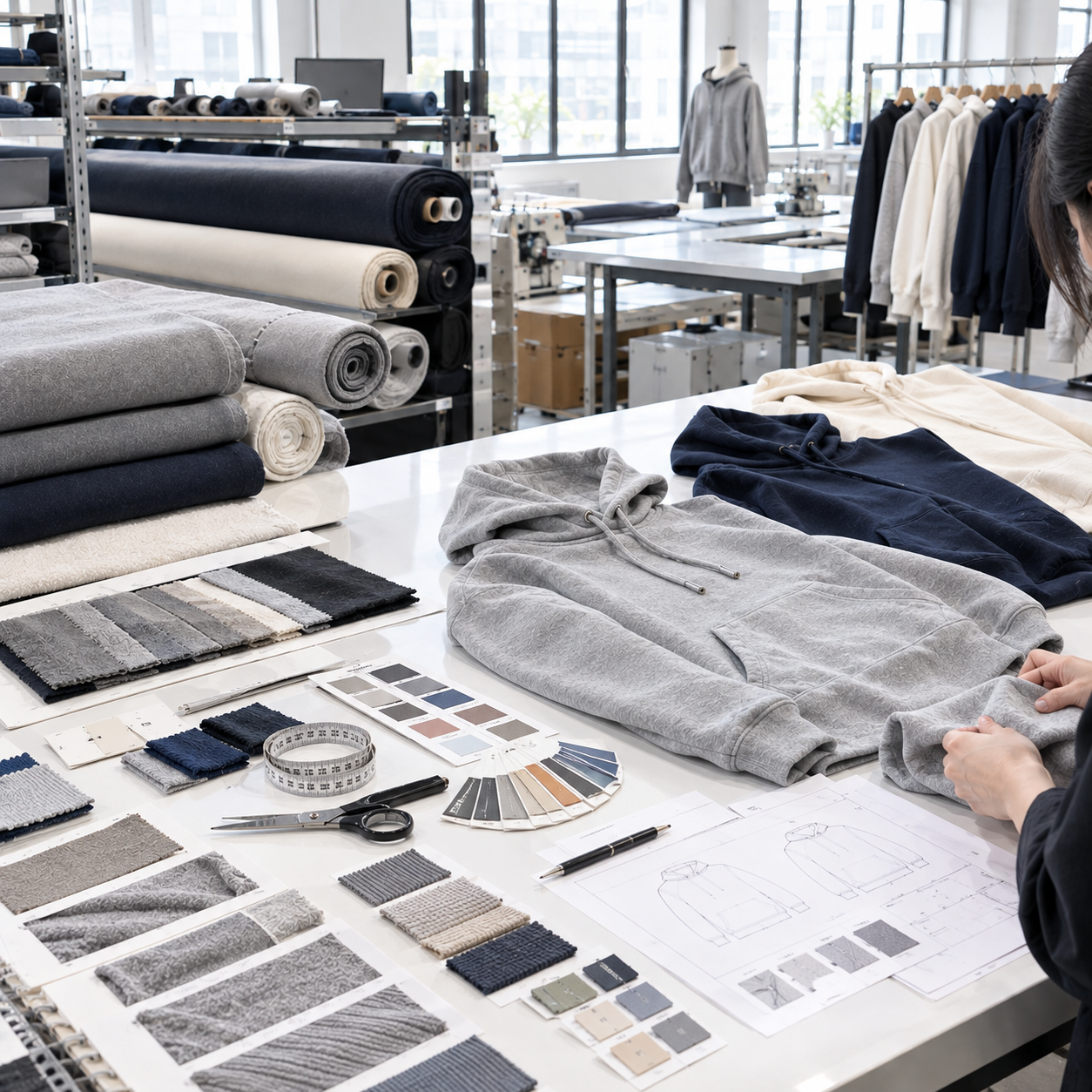
Choosing a supplier requires more than checking a website or requesting a price list.
Look at the manufacturer's actual capabilities.
5.1 Évaluation de l'expérience utilisateur
Ask whether the factory regularly produces hoodies and sweatshirts.
Relevant experience matters because hoodie production involves specific construction details.
For example, the factory should understand:
- Hood shape
- Shoulder construction
- Rib tension
- Pocket reinforcement
- Seam strength
- Fabric shrinkage
- Garment washing
- Brushing or fleece finishing
A factory that mainly produces woven shirts may not have the same expertise as one that regularly produces fleece and knit garments.
5.2 Check Fabric Options
Fabric has a major effect on the final hoodie.
Common choices include:
- Cotton fleece
- Cotton-polyester fleece
- French terry
- Brushed fleece
- Coton biologique
- Recycled polyester blends
GSM also matters.
A 280 GSM hoodie feels very different from a 450 GSM heavyweight hoodie.
Example: Same Design, Different Fabric
Two manufacturers produce the same oversized hoodie pattern.
Manufacturer A uses 280 GSM fleece.
Manufacturer B uses 450 GSM heavyweight fleece.
The appearance, drape, warmth, weight, and production cost will differ significantly.
That is why buyers should define fabric specifications before comparing quotations.
6. MOQ and Production Quantity
MOQ signifie « quantité minimale de commande ».
Different manufacturers use different MOQ structures.
Some calculate MOQ by:
- Style
- Couleur
- Tissu
- Taille
- Total order quantity
Always ask how the MOQ is calculated.
Example: 500 Pieces Does Not Always Mean 500 Pieces Per Color
A factory may quote an MOQ of 500 pieces.
But the actual requirement could be:
500 pieces per color.
If you want five colors, the order could become 2,500 pieces.
This difference matters for startups with limited inventory budgets.
Ask for a clear MOQ breakdown before approving the order.
7. Hoodie Sampling Before Bulk Production
Sampling is one of the most important stages in garment manufacturing.
Do not judge a manufacturer only by its website photos or quotation.
Request a sample.
Vérifier :
- Overall fit
- Dimensions
- Fabric hand feel
- Poids du tissu
- Hood shape
- Stitch quality
- Emplacement des poches
- Rib construction
- Impression
- Broderie
- Étiquettes
- Couleur
- Washing effect
Example: Catching a Fit Problem Early
A brand orders 2,000 oversized hoodies.
After production, the buyer discovers that the sleeves are too long.
Fixing the problem after bulk production can be expensive.
If the same issue appears during sampling, the pattern can be corrected before production starts.
A sample is not just a product preview. It is a production checkpoint.
8. Quality Control for Hoodie Manufacturing
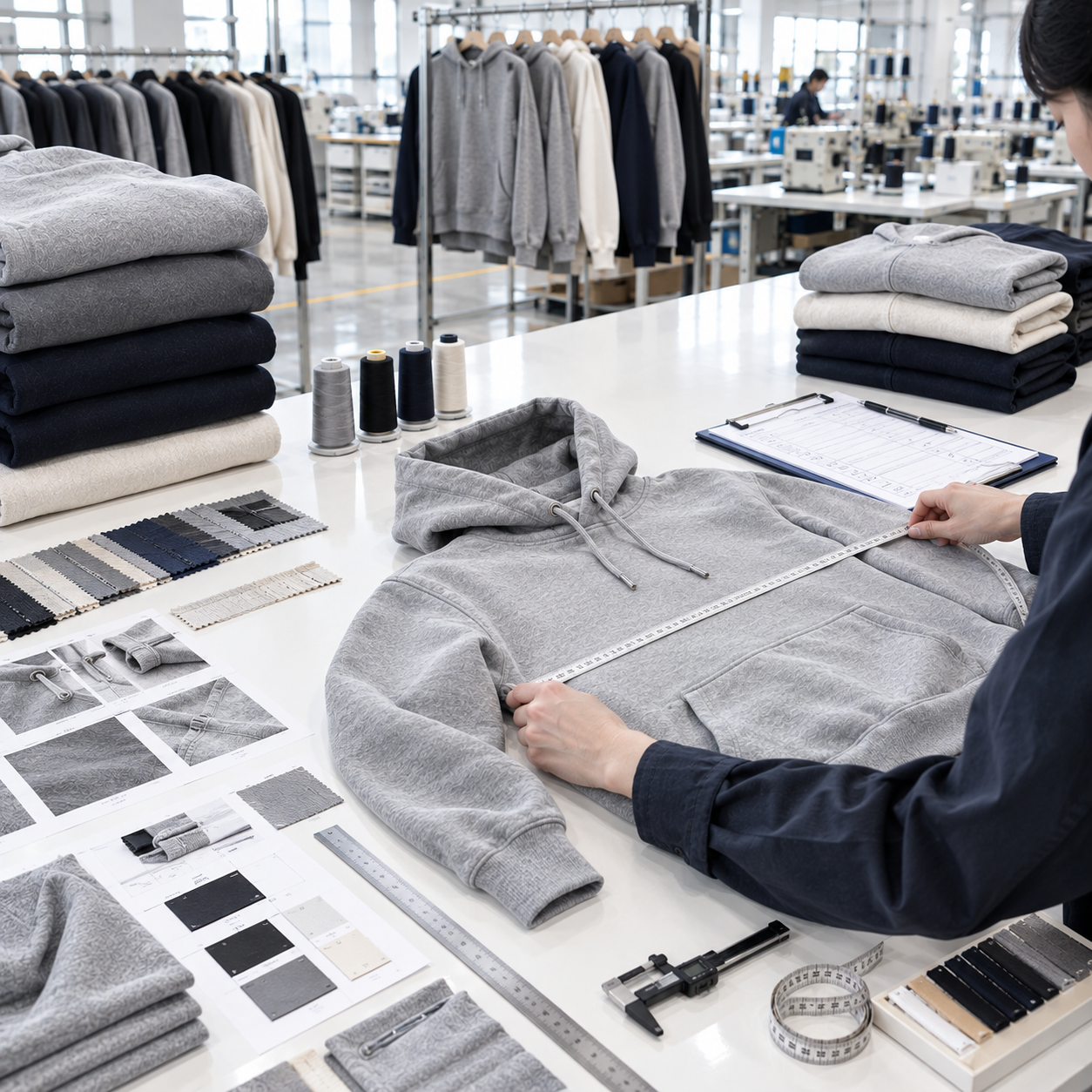
A reliable quality control process should cover the entire production cycle.
Important checkpoints include:
- Contrôle des tissus
- Validation des échantillons de pré-production
- Contrôle de la découpe
- Contrôle de la couture
- Printing and embroidery inspection
- Vérification des mesures
- Contrôle final des vêtements
- Contrôle des emballages
Quality control should not happen only at the end.
Common Hoodie Quality Problems
À surveiller :
- Coutures irrégulières
- Fils qui dépassent
- Mesures erronées
- Trous dans le tissu
- Color differences
- Rétrécissement
- Coutures tordues
- Broderie de mauvaise qualité
- Misaligned prints
- Weak drawstrings
- Uneven rib tension
A clear inspection standard helps both sides understand what qualifies as an acceptable product.
9. How Much Does a Hoodie Manufacturer Charge?
Hoodie pricing depends on many variables.
The main cost factors include:
- Fabric type
- Grammage du tissu (GSM)
- Composition du tissu
- Poids du vêtement
- Design complexity
- Impression
- Broderie
- Étiquettes
- Emballage
- Quantité commandée
- Production technology
- Shipping requirements
A simple pullover hoodie usually costs less to produce than a heavily customized heavyweight hoodie.
Example: Why Two Hoodies Have Different Prices
Hoodie A:
- 280 GSM fabric
- Basic pullover design
- No embroidery
- Standard packaging
Hoodie B:
- 450 GSM fabric
- Oversized construction
- Custom embroidery
- Étiquettes tissées
- Premium packaging
Even if both products look similar in a product photo, their production costs can be very different.
For this reason, buyers should compare quotations based on the same specifications.
10. Manufacturer vs. Trading Company
Not every supplier is a direct manufacturer.
Some businesses operate as trading companies and outsource production.
Both models can work. The right choice depends on your needs.
| Option | Manufacturer | Société commerciale |
|---|---|---|
| Factory Control | Généralement plus élevé | Cela dépend des partenaires |
| Communication | Direct production contact | Usually centralized |
| Développement de produits | Souvent plus fort | Depends on supplier |
| Quantité minimale de commande | Often flexible by capability | Variable |
| Factory Selection | Limited to own capacity | Peut accéder à plusieurs usines |
| Structure tarifaire | Direct production cost | Peut inclure une marge de service |
| Idéal pour | Production à long terme | Multi-product sourcing |
Example: When a Trading Company Can Help
A buyer needs hoodies, jackets, T-shirts, and accessories from different factories.
A sourcing company may coordinate several suppliers.
But if the buyer wants deep hoodie development and direct control over production, working directly with a specialized manufacturer may be more efficient.
11. Questions to Ask a Hoodie Manufacturer
Before placing an order, prepare a clear supplier questionnaire.
Demandez :
- Quelle est votre quantité minimale de commande ?
- What hoodie fabrics do you offer?
- Quelles sont les options GSM disponibles ?
- Pouvez-vous réaliser des échantillons sur mesure ?
- Can you follow a tech pack?
- What customization options do you support?
- Quel est votre délai de livraison pour les échantillons ?
- Quel est votre délai de livraison pour la production en série ?
- Comment assurez-vous le contrôle qualité ?
- Can you provide pre-production samples?
- Quelles sont les options d'emballage disponibles ?
- Quels sont les marchés d'exportation que vous desservez ?
Clear questions produce clearer quotations.
They also make it easier to compare multiple suppliers.
12. How to Compare Hoodie Manufacturers
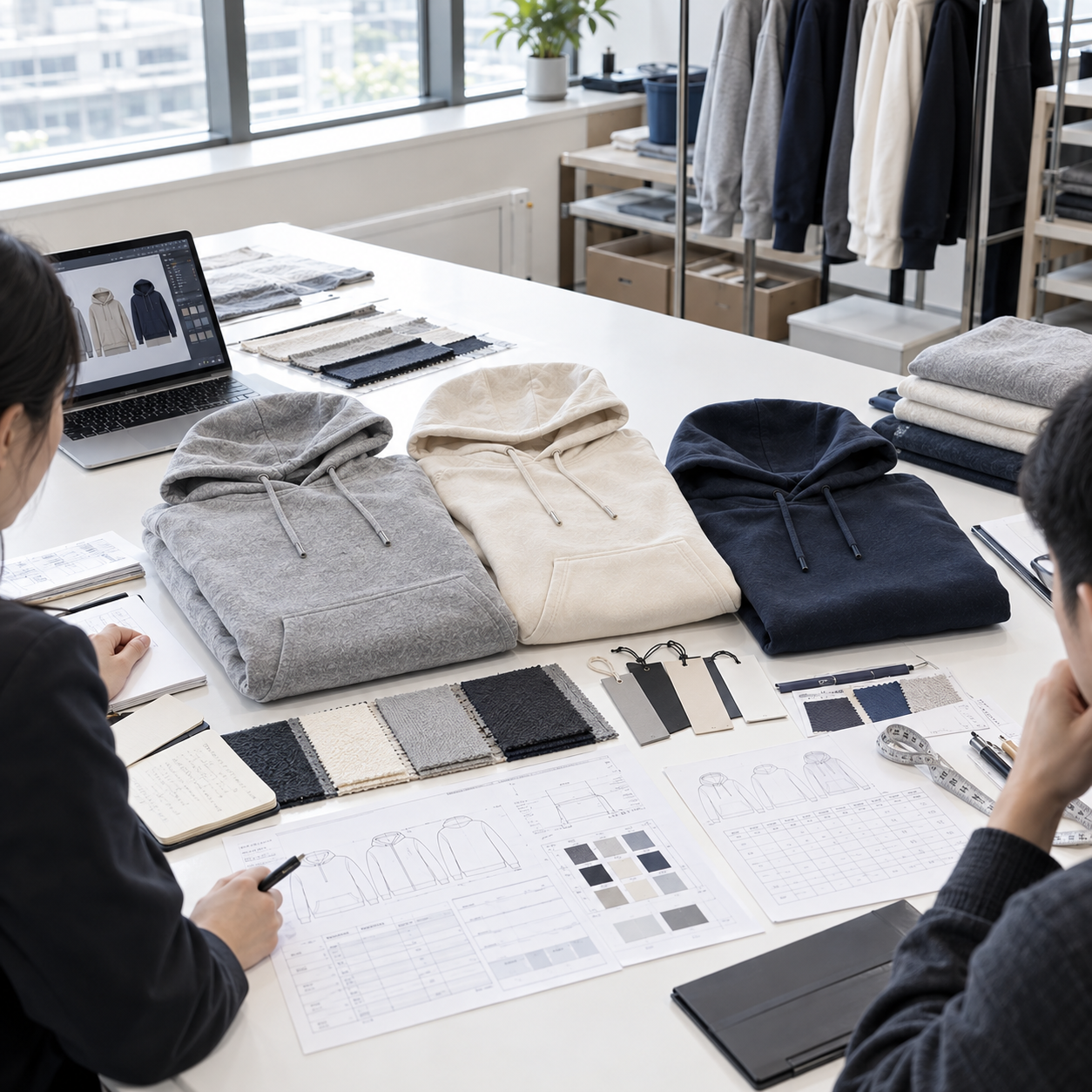
Do not compare suppliers by price alone.
Use a simple scoring system.
| Domaine d'évaluation | Fournisseur A | Fournisseur B | Fournisseur C |
|---|---|---|---|
| Expérience produit | Élevé | Moyen | Élevé |
| Choix de tissus | Élevé | Élevé | Moyen |
| Flexibilité en matière de quantité minimale de commande (MOQ) | Moyen | Élevé | Faible |
| Élaboration d'échantillons | Élevé | Moyen | Élevé |
| Contrôle qualité | Élevé | Moyen | Élevé |
| Personnalisation | Élevé | Moyen | Élevé |
| Délai de livraison | Moyen | Élevé | Moyen |
| Prix | Moyen | Élevé | Moyen |
The best supplier is usually the one that fits your entire production plan.
Example: Choosing for a Growing Brand
A new fashion brand may prioritize:
- Lower MOQ
- Strong sample development
- Personnalisation flexible
- Une qualité constante
Un détaillant bien établi peut donner la priorité à :
- Capacité de production
- Une qualité constante
- Des tarifs compétitifs
- Livraison fiable
The "best" manufacturer changes according to the buyer's business model.
13. What Makes a Good Long-Term Manufacturing Partner?
A strong manufacturing relationship goes beyond one successful order.
Look for a supplier that can support your growth.
A long-term partner should offer:
- Une qualité constante
- Consistent communication
- Reliable production capacity
- Clear pricing
- Transparent lead times
- Practical product advice
- Flexible development support
- Strong quality control
- Consistent fabric sourcing
Example: Growing From 500 to 5,000 Pieces
A brand may start with 500 hoodies.
After several successful launches, the order could increase to 5,000 pieces.
If the supplier cannot maintain the same fabric quality, measurements, and sewing standards at a higher volume, the relationship becomes difficult.
Production scalability matters from the beginning.
14. Final Checklist Before Placing a Hoodie Order
Use this checklist before approving bulk production:
- Confirm product specifications
- Confirm fabric composition
- Confirm GSM
- Confirm colors
- Confirm size measurements
- Confirm MOQ
- Approve the sample
- Confirm branding details
- Confirm packaging
- Confirm production timeline
- Confirm quality standards
- Confirm shipping terms
- Confirm final quotation
A clear production brief reduces misunderstandings.
It also gives the manufacturer everything needed to calculate an accurate quotation.
15. Finding the Right Hoodie Manufacturer for Your Brand
The right supplier should match your product, order volume, quality expectations, and growth plan.
Do not choose based on price alone.
Start with your product specifications. Then compare fabric options, MOQ, samples, customization, quality control, production capacity, and lead time.
For a startup, flexibility may matter most.
For an established brand, production consistency and scalability may matter more.
The goal is simple: find a manufacturing partner that can turn your hoodie design into a consistent, commercially viable product at the quality and volume your business needs.











