




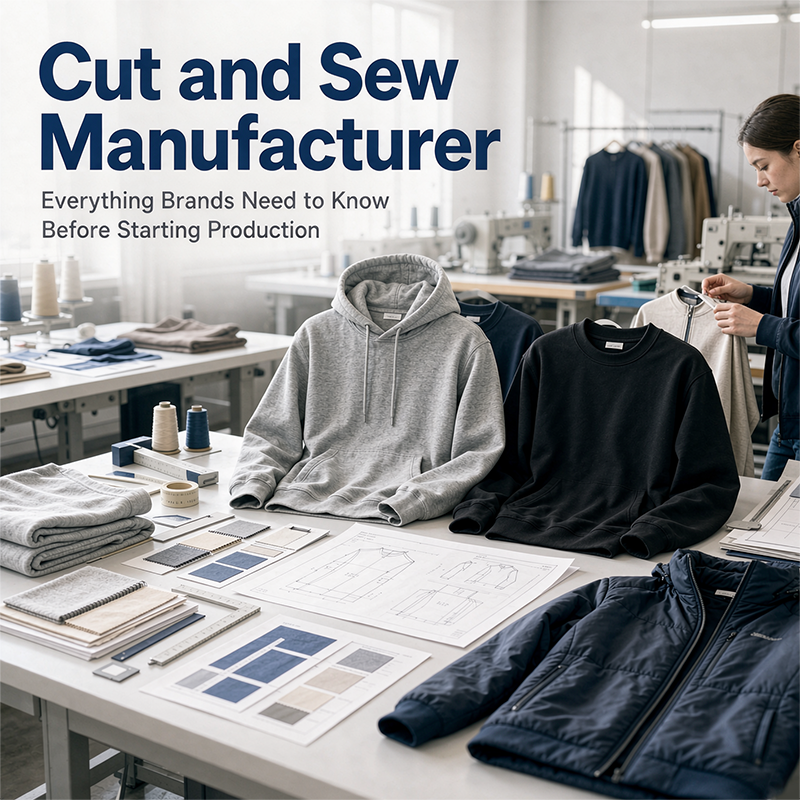
Cut and Sew Manufacturer: Everything Brands Need to Know Before Starting Production
Paskelbimo data:2026-09-04 Kategorija:NAUJIENOS Peržiūrų skaičius:457
Įvadas
For apparel brands that want complete control over garment design, working with the right manufacturing partner is one of the most important decisions.
A professional cut and sew manufacturer does more than assemble clothing.
They help transform an idea, sketch, or technical concept into a finished garment through fabric selection, pattern development, cutting, sewing, finishing, and quality inspection.
Compared with simple customization methods such as adding logos to existing garments, cut and sew production allows brands to create products with unique structures, materials, measurements, and details.
However, not every manufacturer has the same capabilities.
Choosing the right partner requires understanding production experience, technical ability, sampling process, quality management, and communication.
This guide explains what brands should know before selecting a cut and sew manufacturer.
1. What Is a Cut and Sew Manufacturer?
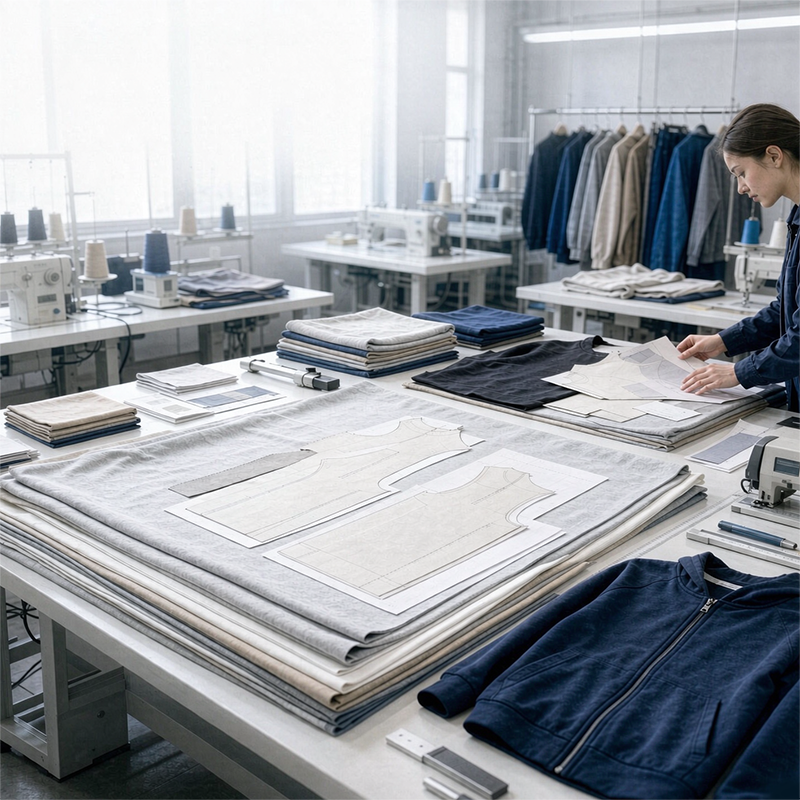
A cut and sew manufacturer is a clothing factory that produces garments by cutting fabric into pattern pieces and sewing them together into finished products.
The process usually includes:
- Audinių tiekimas
- Modelio kūrimas
- Audinio pjaustymas
- Siuvimas
- Assembly
- Apdaila
- Kokybės patikra
- Pakavimas
Unlike blank garment suppliers, cut and sew manufacturers create garments from the construction stage.
This gives brands more control over:
- Garment silhouette
- Audinio pasirinkimas
- Matavimai
- Sewing details
- Functional features
- Finishing methods
2. Why Do Brands Work With Cut and Sew Manufacturers?
Many modern clothing brands want products that are different from standard wholesale garments.
A cut and sew manufacturer allows brands to create more customized products.
Unique Product Development
Brands can develop:
- Original garment shapes
- Custom sizes
- Special pockets
- Different panels
- Unique stitching details
- Custom trims
Better Brand Identity
When a product is developed from scratch, every detail can support the brand image.
Fabric, construction, color, and finishing all contribute to the final customer experience.
More Product Control
Brands can decide:
- What fabric to use
- How the garment fits
- Where details are placed
- How the final product looks
3. What Products Can a Cut and Sew Manufacturer Produce?
Cut and sew production is commonly used for many apparel categories.
Examples include:
Kasdieniniai drabužiai
- T-shirts
- Sweatshirts
- Hoodies
- Bėgikai
Outerwear
- Jackets
- Vests
- Lightweight coats
Outdoor Apparel
- Functional jackets
- Fleece products
- Layering garments
Children's Clothing
- Vaikiški drabužiai
- School apparel
- Lifestyle clothing
The manufacturer's experience with specific product categories is important because different garments require different construction techniques.
4. What Should Brands Prepare Before Contacting a Manufacturer?
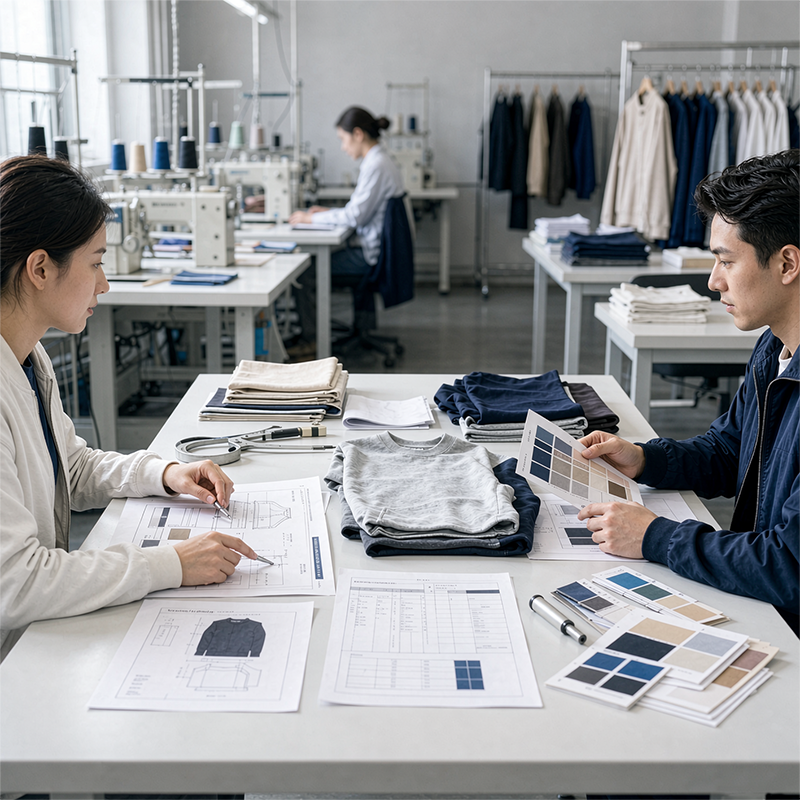
A clear product brief helps manufacturers understand the project.
Prekės ženklai turėtų pasirengti:
Informacija apie produktą
Including:
- Garment type
- Target market
- Intended use
- Style direction
Technical Information
Including:
- Matavimai
- Audinio reikalavimai
- Construction details
- Color references
Visual References
Including:
- Inspiration images
- Existing samples
- Dizaino eskizai
Production Requirements
Including:
- Kiekis
- Dydžių asortimentas
- Expected timeline
The more complete the information, the easier it is for the manufacturer to evaluate the project.
5. Understanding Fabric Selection
Fabric is one of the most important elements in cut and sew production.
Different fabrics affect:
- Išvaizda
- Komfortas
- Ilgaamžiškumas
- Svoris
- Manufacturing process
For example:
A lightweight cotton fabric may be suitable for T-shirts.
A heavyweight fleece fabric may require different sewing considerations.
A technical outdoor fabric may require specialized production experience.
A good cut and sew manufacturer should understand how fabric selection affects garment construction.
6. The Cut and Sew Production Process
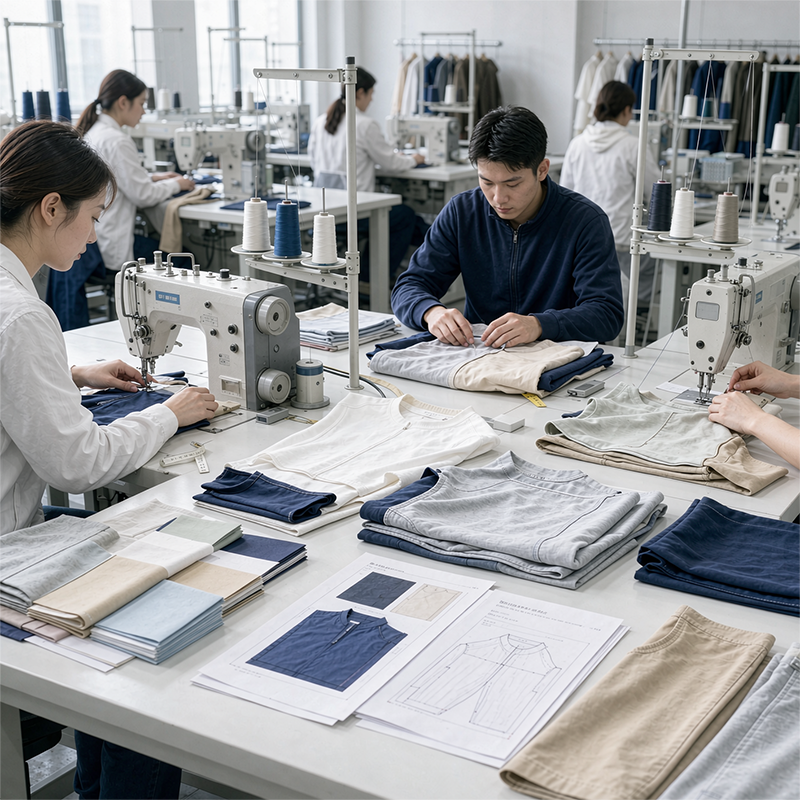
A typical workflow includes:
Step 1: Product Development
The brand shares the product concept and requirements.
Step 2: Pattern Making
The manufacturer develops garment patterns based on specifications.
Step 3: Sample Production
The first sample is created for evaluation.
Step 4: Sample Revision
Changes are made according to feedback.
Step 5: Bulk Production
Approved specifications are transferred into production.
Step 6: Quality Inspection
Finished garments are checked before shipment.
7. Why Sampling Is Critical
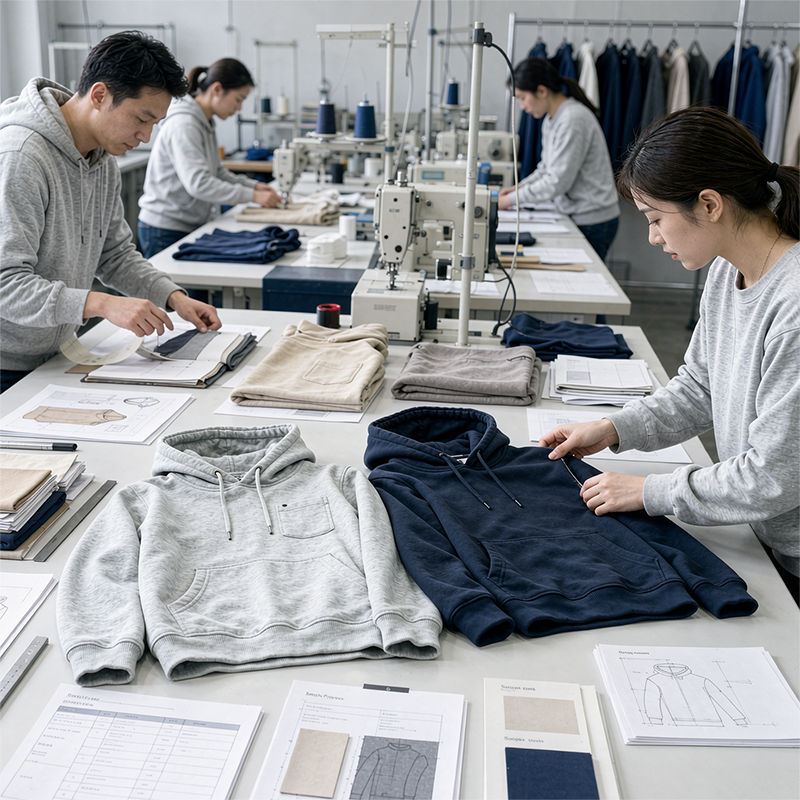
Sampling allows brands to test the actual product before large-scale production.
A sample helps evaluate:
- Tinka
- Audinio savybės
- Statyba
- Matavimai
- Sewing quality
- Išvaizda
Skipping proper sampling can create problems during bulk production.
A professional manufacturer should have a clear sample approval process.
8. How to Evaluate a Cut and Sew Manufacturer
When selecting a manufacturer, brands should consider:
Manufacturing Experience
Does the factory produce similar garments?
Technical Capability
Can they handle your construction requirements?
Gamybos pajėgumai
Can they support your expected order volume?
Komunikacija
Can they understand technical details?
Kokybės kontrolė
Do they have inspection procedures?
Parama plėtrai
Can they assist during sampling?
9. Common Mistakes When Choosing a Manufacturer
Choosing Only Based on Price
The lowest quotation may not provide the best production quality.
Not Checking Previous Experience
A manufacturer experienced in T-shirts may not specialize in jackets.
Skipping Sample Approval
Bulk production should never start without confirming the final sample.
Providing Unclear Requirements
Poor communication can create delays and unexpected results.
10. How Cut and Sew Manufacturers Support Growing Brands
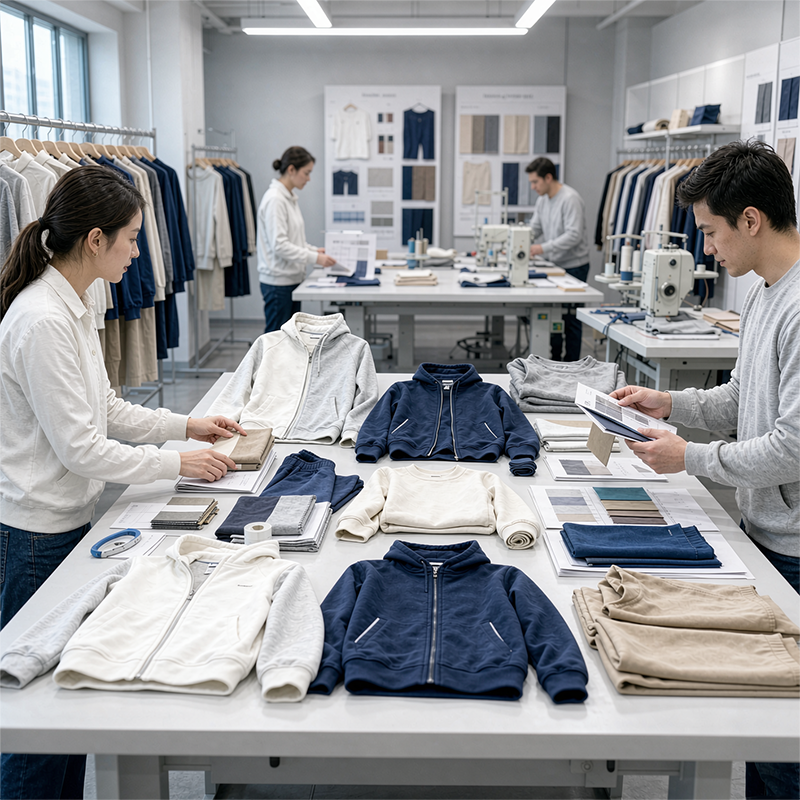
For growing apparel brands, a reliable manufacturing partner can become part of the product development team.
They can support:
- New collection development
- Audinio pasirinkimas
- Produkto tobulinimas
- Repeat production
- Kokybės pastovumas
A strong relationship can help brands develop products more efficiently over time.
Išvada
Choosing the right cut and sew manufacturer is an important step for brands that want greater control over apparel development.
From fabric selection and pattern creation to sewing, finishing, and quality inspection, the right manufacturing partner can help turn creative ideas into reliable products.
The best manufacturer is not always the largest or cheapest option.
It is the partner that understands your product requirements, communicates clearly, develops quality samples, and consistently delivers according to your standards.











