




Mažų partijų drabužių gamintojas: kaip pasirinkti tinkamą tiekėją nedidelėms gamybos partijoms
Paskelbimo data:2026-09-16 Kategorija:NAUJIENOS Peržiūrų skaičius:488
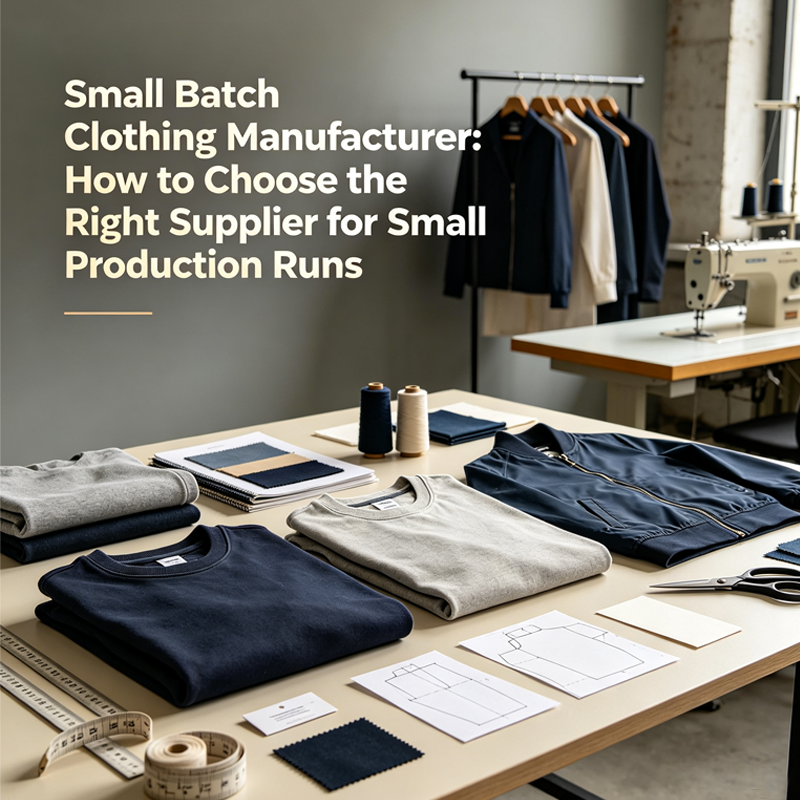
Looking for a small batch clothing manufacturer? Learn how small-batch production works, how MOQ is calculated, what affects cost, and how to choose the right apparel supplier.
Launching a new clothing line does not always require thousands of pieces. A mažų partijų drabužių gamintojas can help startups, independent designers, retailers, and growing brands test new products with lower inventory risk. Instead of committing to a large production run, you can start with a focused quantity, collect market feedback, and scale the styles that perform well.
But small-batch production is not simply about finding the lowest MOQ. The real questions are more practical. What does the MOQ include? Is it counted per style or color? Can sizes be mixed? How much does customization affect the minimum? And can the manufacturer maintain consistent quality at a smaller production volume?
This guide explains how to evaluate a small batch clothing manufacturer before placing an order.
1. What Is Small Batch Clothing Manufacturing?
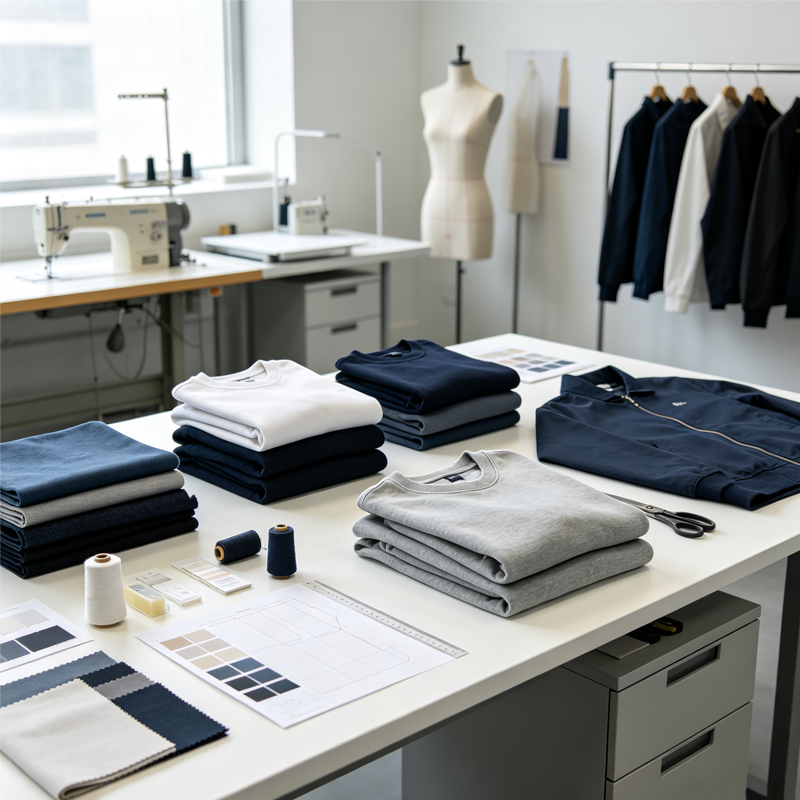
Small batch clothing manufacturing means producing a relatively limited quantity of garments compared with traditional bulk production.
There is no universal definition of "small batch." Some manufacturers may work with quantities around 50–300 pieces per style. Others may define their small-batch service differently. The actual minimum depends on the product, fabric, color, construction, decoration, and factory setup.
For buyers, the more useful question is not:
"Is this a small order?"
It is:
"Can this manufacturer produce my exact product efficiently at my target quantity?"
Example: A startup launching three styles
Imagine a new streetwear brand wants to launch:
- 100 oversized T-shirts
- 100 hoodies
- 100 sweatpants
A traditional bulk manufacturer may require a much larger quantity per style. A small batch apparel manufacturer may be able to work with the smaller production plan.
This gives the brand an opportunity to test:
- Product demand
- Tinka
- Audinio pasirinkimas
- Color performance
- Customer feedback
- Repeat purchase potential
The brand can then increase the quantity of the strongest-selling products.
That is the core value of small batch production.
2. Why Brands Choose a Small Batch Clothing Manufacturer
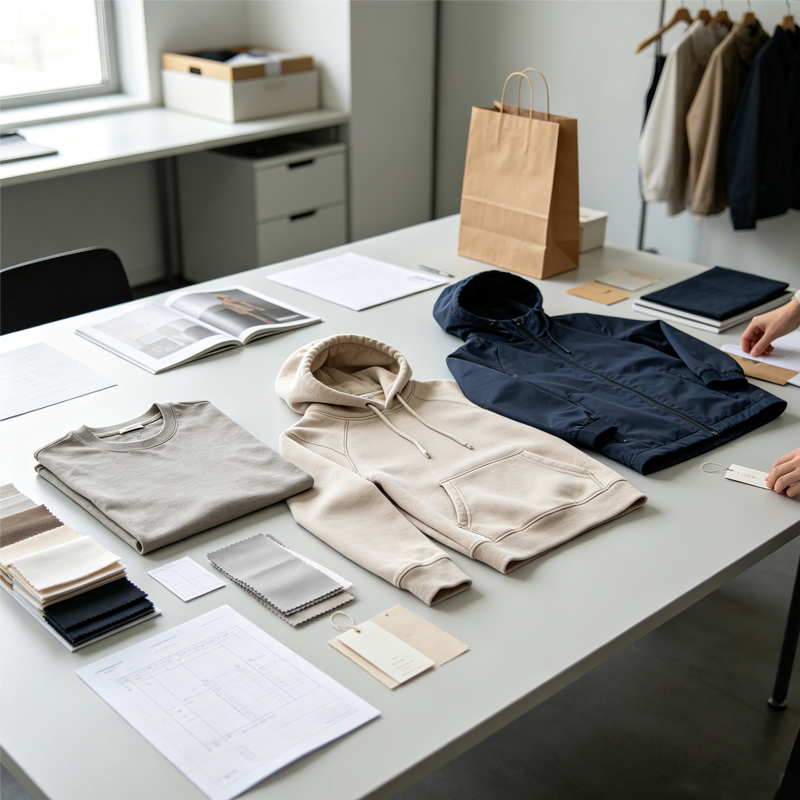
Small-batch production is especially useful when demand is still uncertain.
A new brand may have a strong product concept. But it does not yet know which size, color, or style will sell fastest.
Ordering 2,000 pieces before testing the market can create unnecessary inventory exposure.
A smaller production run changes that equation.
Main benefits of small batch apparel production
- Lower initial inventory commitment
- Easier product testing
- More flexible product launches
- Faster customer feedback
- Easier collection updates
- Lower risk of overproduction
- More room for design adjustments
Example: Testing one hoodie design
Suppose a brand develops one heavyweight hoodie in four colors.
Instead of producing a large quantity in every color, the brand could test fewer units first.
If black sells quickly while the other colors move slowly, the next order can focus on black.
This approach turns manufacturing into a feedback loop:
Design → Sample → Small Batch → Market Test → Feedback → Reorder → Scale
That is often more useful for a growing brand than committing to a large first order.
3. Small Batch Clothing Manufacturer vs. Traditional Bulk Factory
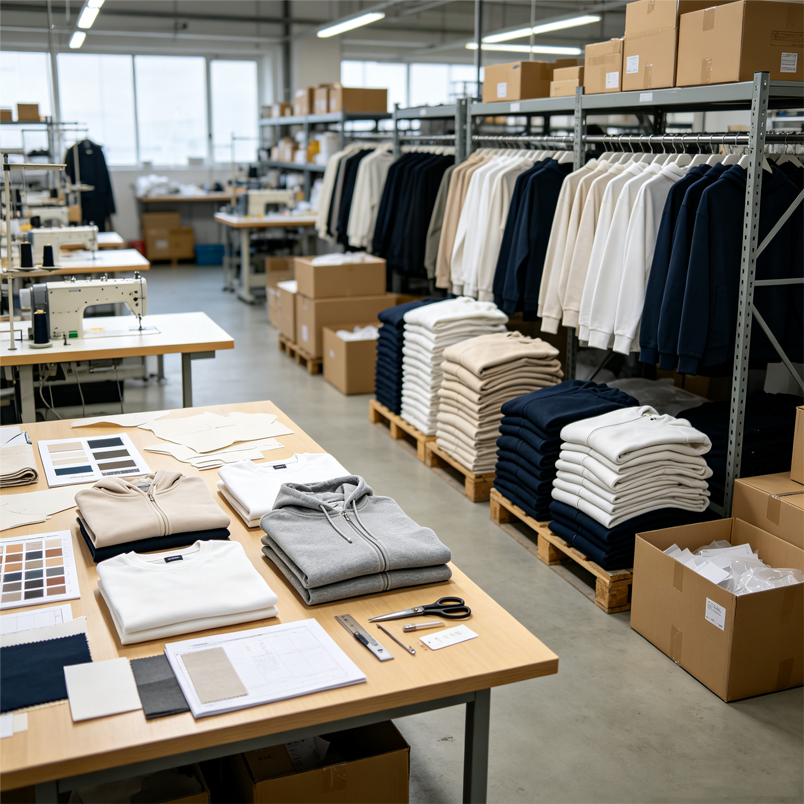
Not every clothing manufacturer is structured for small orders.
Large factories often optimize their production lines for higher quantities. A small-batch supplier needs a production system that can handle shorter runs without sacrificing product consistency.
The difference is not simply the number printed beside "MOQ."
It is the way the factory manages sourcing, sampling, production planning, and quality control.
Comparison: Small Batch vs. Bulk Production
| Veiksnys | Small Batch Production | Traditional Bulk Production |
|---|---|---|
| Initial Quantity | Žemiau | Didesnis |
| Inventory Risk | Žemiau | Didesnis |
| Product Testing | Paprastiau | More expensive |
| Unit Cost | Paprastai didesnis | Paprastai mažesnis |
| Design Flexibility | Didesnis | Often lower |
| Market Validation | Strong fit | Less suitable for early testing |
| Tinkamiausias | Startups, new styles, test launches | Established high-volume products |
| Reordering | Based on sales data | Usually planned in larger cycles |
Small-batch production usually carries a higher unit cost because fixed setup costs are spread across fewer garments. Fabric minimums and production changeovers can also affect the economics.
Pavyzdys
A factory may spend similar time preparing patterns, cutting markers, setting machines, and arranging production for a small run and a larger run.
If those fixed costs are divided across 100 garments instead of 1,000 garments, the cost per garment naturally increases.
So the cheapest unit price is not always the lowest-risk option.
4. How MOQ Works With a Small Batch Clothing Manufacturer
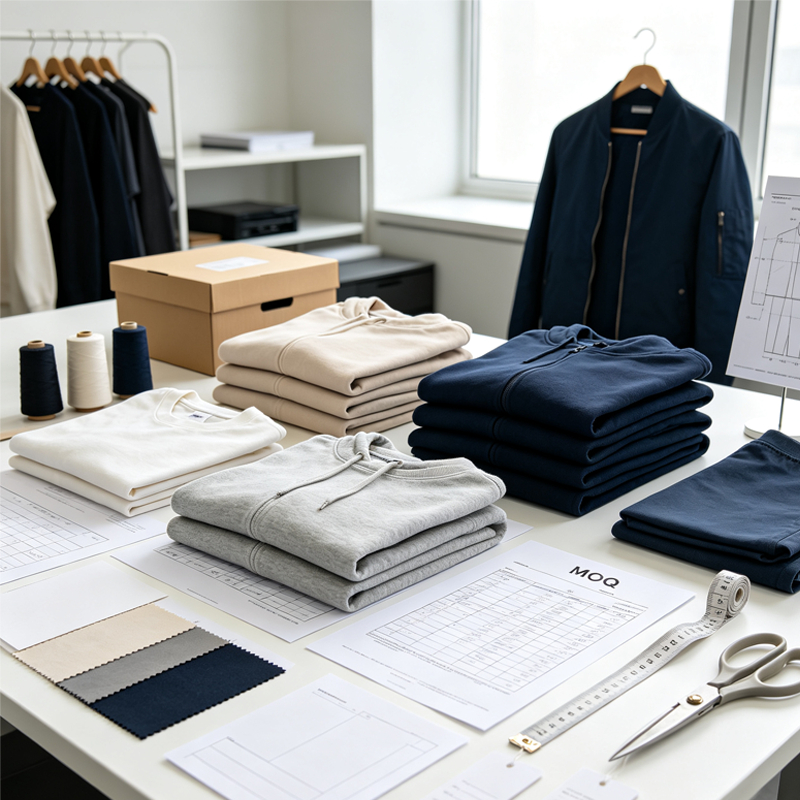
MOQ means Mažiausias užsakymo kiekis.
But clothing buyers often misunderstand how MOQ is calculated.
A manufacturer's MOQ may apply to:
- Style
- Spalva
- Audinys
- Decoration
- Production method
- Other production variables
Recent apparel manufacturing guides commonly emphasize that MOQ is often calculated per style and color rather than across an entire collection.
Example: 100-piece MOQ
Imagine a manufacturer quotes:
MOQ: 100 pieces per style and color
You want:
- 100 black T-shirts
- 100 white T-shirts
- 100 gray T-shirts
That may mean a total production quantity of 300 pieces, not 100.
Why?
Because each color can require separate fabric allocation, cutting, production planning, and quality control.
However, sizes can often be distributed within the same style and color run.
For example:
| Size | Kiekis |
|---|---|
| S | 15 |
| M | 30 |
| L | 30 |
| XL | 20 |
| XXL | 5 |
| Total | 100 |
The exact size-mix policy depends on the manufacturer. Confirm it before production.
Questions to ask about MOQ
Before accepting a quotation, ask:
- Is MOQ per style?
- Is MOQ per color?
- Can sizes be mixed?
- Does MOQ include sampling?
- Does custom fabric increase MOQ?
- Does embroidery affect MOQ?
- Does custom dyeing affect MOQ?
- Can different styles share fabric?
- What happens if I need a repeat order?
These questions can prevent expensive misunderstandings.
5. What Affects Small Batch Clothing Manufacturing Cost?
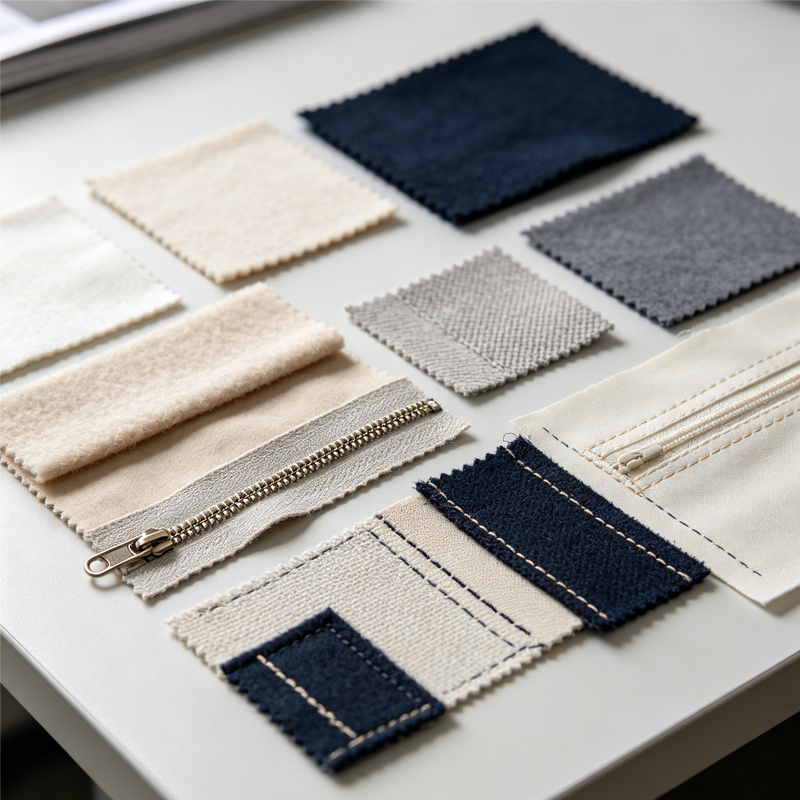
Small quantities do not automatically mean low production costs.
Several factors influence the final price.
5.1 Fabric
Fabric is one of the most important cost variables.
Stock fabric can be easier to source for a small order. Custom-developed or custom-dyed fabric may require higher minimum quantities.
Pavyzdys
A startup wants a custom green fleece color.
The garment order may only require 100 pieces. But the fabric supplier may require a much larger dye lot.
The garment manufacturer must then decide how to handle the excess fabric.
That can increase the effective production cost.
5.2 Garment Construction
Simple garments are usually easier to manufacture in small runs.
Complex garments may require:
- More pattern pieces
- More sewing operations
- Special machines
- Additional trims
- More quality-control checkpoints
For example, a basic T-shirt and a multi-panel technical jacket should not be expected to have the same small-batch economics.
5.3 Customization
Customization can include:
- Privačios prekės ženklai
- Austos etiketės
- Hangtags
- Siuvinėjimas
- Screen printing
- Heat transfer
- Custom buttons
- Custom zippers
- Speciali pakuotė
Each additional process can introduce setup time or supplier minimums.
Pavyzdys
A 100-piece T-shirt order with one simple printed logo is very different from a 100-piece T-shirt order with:
- Individualiai parinktas audinys
- Custom dye color
- Siuvinėjimas
- Austos etiketės
- Individualizuota pakuotė
- Special finishing
Both are "100 pieces."
But they are not the same production job.
6. What Products Work Well for Small Batch Clothing Production?
Small batch production can work across many apparel categories.
The right choice depends on the manufacturer's capabilities.
Common applications include:
- T-shirts
- Hoodies
- Sweatshirts
- Jackets
- Gilets
- Fleece garments
- Sportinė apranga
- Kasdieniniai drabužiai
- Children's apparel
- Workwear
- Seasonal capsule collections
For example, KALAIBEN currently lists product categories including jackets, pullovers, gilets, sweaters, accessories, uniforms, casualwear, sportswear, outdoorwear, and children's apparel.
The key is to match your product requirements with the manufacturer's actual production capabilities.
7. Small Batch Clothing Manufacturer vs. Low MOQ Clothing Manufacturer
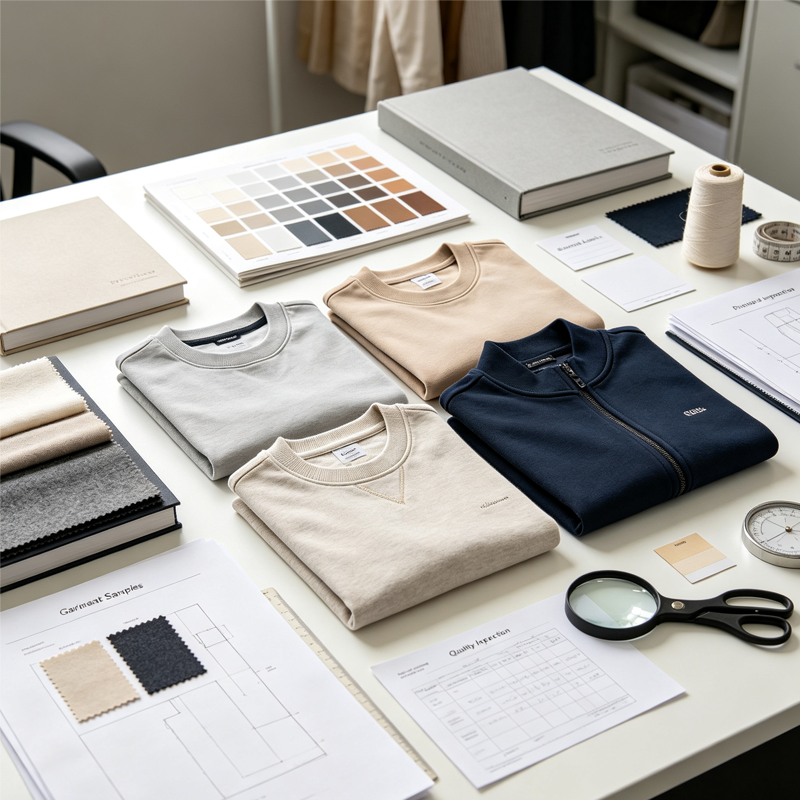
The terms mažų partijų drabužių gamintojas and drabužių gamintojas, reikalaujantis mažo minimalaus užsakymo kiekio (MOQ) are closely related.
But they are not always identical.
A low MOQ manufacturer focuses heavily on the minimum quantity it can accept.
A small batch clothing manufacturer should also be evaluated on the complete production process.
That includes development, sourcing, sampling, production, quality control, and delivery.
Comparison Table
| Evaluation Point | Low MOQ Focus | Small Batch Manufacturing Focus |
|---|---|---|
| Minimalus užsakymo kiekis (MOQ) | Very important | Important |
| Mėginių ėmimas | Important | Very important |
| Produktų kūrimas | May vary | Important |
| Fabric Sourcing | Important | Very important |
| Kokybės kontrolė | Essential | Essential |
| Production Flexibility | Important | Very important |
| Repeat Orders | Important | Very important |
| Scaling Capability | May vary | Important |
Pavyzdys
Supplier A offers a 50-piece MOQ.
Supplier B offers a 150-piece MOQ but has stronger sampling, fabric sourcing, technical development, and production support.
If your product is technically complex, the second supplier may fit the project better.
The lowest MOQ should not be the only selection criterion.
8. How to Choose the Right Small Batch Apparel Manufacturer
A good supplier should fit both your current order and your future production plan.
Use a structured evaluation process.
8.1 Check Product Experience
Look at the manufacturer's actual product categories.
Paklauskite:
- Have they produced similar garments?
- Do they understand your construction requirements?
- Can they source the required fabrics?
- Can they handle your target decoration?
- Can they provide samples?
A supplier that regularly produces similar products will usually understand the technical requirements faster.
8.2 Review Sampling Capability
Sampling is one of the most important stages in apparel manufacturing.
A tech pack can communicate measurements, materials, construction details, artwork, labels, and other production instructions. A clear technical package can reduce ambiguity during sampling.
A professional sampling process should help verify:
- Tinka
- Matavimai
- Audinys
- Statyba
- Siuvimas
- Spalva
- Trims
- Decoration
- Overall appearance
Pavyzdys
You provide a sketch for an oversized sweatshirt.
The factory makes the first sample.
You discover that the body width is correct but the sleeve opening is too narrow.
That issue should be identified and corrected during sample development.
It is much easier to fix before bulk production.
9. Ask for a Clear Small Batch Production Process
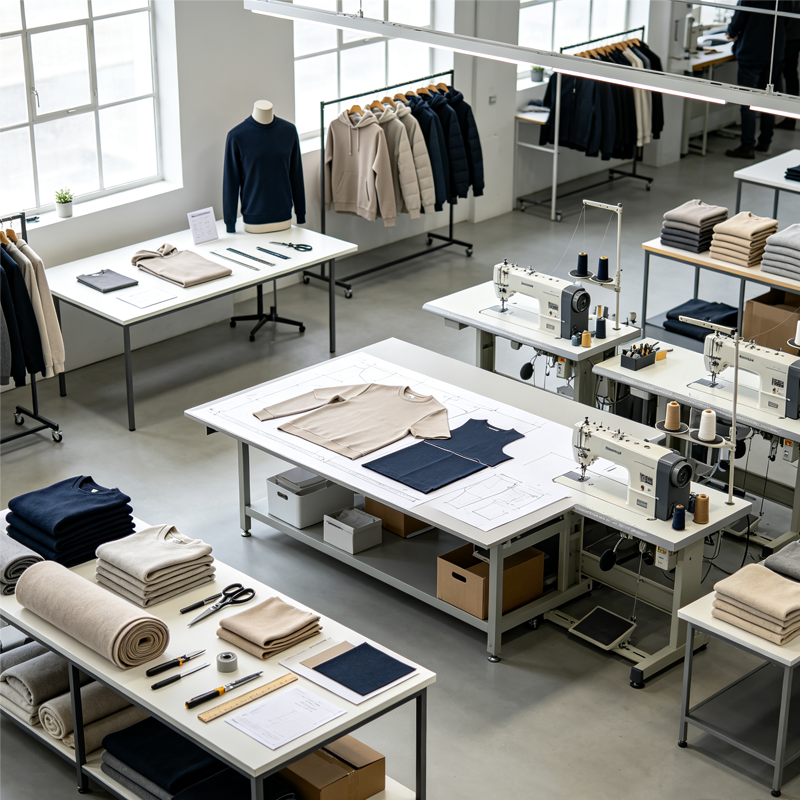
A reliable manufacturer should be able to explain what happens after you approve the sample.
A typical process may include:
- Product inquiry
- Technical review
- Quotation
- Fabric and trim confirmation
- Pavyzdžių kūrimas
- Sample review
- Pre-production approval
- Medžiagų paruošimas
- Pjovimas
- Siuvimas
- Apdaila
- Kokybės patikra
- Pakavimas
- Shipment
Quality should not only be checked at the end. Production-stage checks can help identify problems before defective goods reach final packing.
Pavyzdys
Suppose a batch contains 200 hoodies.
If sleeve measurements drift during production, checking only the finished cartons is too late.
In-process measurement checks can catch the issue earlier.
That is why the production system matters as much as the MOQ.
10. Prepare These Details Before Requesting a Quote
Your quotation will usually be more accurate when the manufacturer receives clear product information.
Prepare as much of the following as possible:
Informacija apie produktą
- Prekių kategorija
- Style reference
- Target quantity
- Dydžių asortimentas
- Colorways
- Audinio sudėtis
- Audinio tankis
- Construction details
- Artwork
- Reikalavimai etiketėms
- Packaging requirements
- Target delivery date
Technical Information
If you have a tech pack, include:
- Front and back technical drawings
- Measurement chart
- Fabric specifications
- Bill of materials
- Stitching requirements
- Artwork placement
- Label placement
- Packaging instructions
- Quality requirements
A visual mockup alone may not communicate enough technical information for accurate production.
Pavyzdys
Compare these two inquiries:
Inquiry A
"I need 100 custom hoodies. Please send price."
Inquiry B
"We need 100 heavyweight cotton hoodies. One color. Sizes S–XL. Custom woven neck label. Front embroidery. Attached tech pack. Target delivery in eight weeks."
Inquiry B gives the manufacturer much more information.
That makes the quotation process easier and reduces assumptions.
11. Questions to Ask a Small Batch Clothing Manufacturer
Before placing an order, use this checklist.
MOQ Questions
- What is your MOQ per style?
- Is MOQ calculated per color?
- Can I mix sizes?
- Can I combine different colors?
- Can MOQ change based on fabric?
Product Development Questions
- Ar galite pagaminti pavyzdžius?
- Ar galite dirbti remdamiesi technine specifikacija?
- Can you help with fabric sourcing?
- How many sample revisions are possible?
- Can you develop custom labels?
Klausimai apie gamybą
- What is the production lead time?
- When does production officially start?
- Do you provide a pre-production sample?
- Kaip kontroliuojate matavimus?
- How do you handle defective pieces?
Commercial Questions
- What is included in the quoted price?
- Are sample costs separate?
- Are mold or setup charges included?
- What are the payment terms?
- How are repeat orders handled?
A clear answer to these questions can tell you much more than a manufacturer's headline MOQ.
12. Common Mistakes When Ordering Small Batch Apparel
Small orders reduce inventory risk.
They do not remove production risk.
Mistake 1: Choosing Only by MOQ
A supplier offering the smallest MOQ may not be the right fit for your product.
Pavyzdys:
A 30-piece MOQ sounds attractive.
But if the supplier cannot handle your custom fabric or construction, the low MOQ has little practical value.
Mistake 2: Asking for Too Many Variations
A small order can become expensive when divided across many styles and colors.
For example:
- 100 total pieces
- 5 styles
- 4 colors per style
This creates many tiny production runs.
The supplier may need to repeat setup and sourcing activities several times.
A focused collection is usually easier to manage.
Mistake 3: Skipping the Sample Approval
Do not assume the final production will automatically match your design.
Approve the sample first.
Patikrinkite:
- Matavimai
- Tinka
- Audinys
- Spalva
- Siuvimas
- Decoration
- Etiketės
- Statyba
Bulk production should begin only after the required sample has been reviewed and approved.
Mistake 4: Ignoring Repeat-Order Capability
Your first order is only part of the business.
Imagine one hoodie sells out in two weeks.
You now need another 300 pieces.
If the supplier cannot reproduce the same fabric, measurements, color, and construction consistently, the success of the first launch creates a new problem.
Ask about repeat production before placing the first order.
13. How Startups Can Plan Their First Small Batch
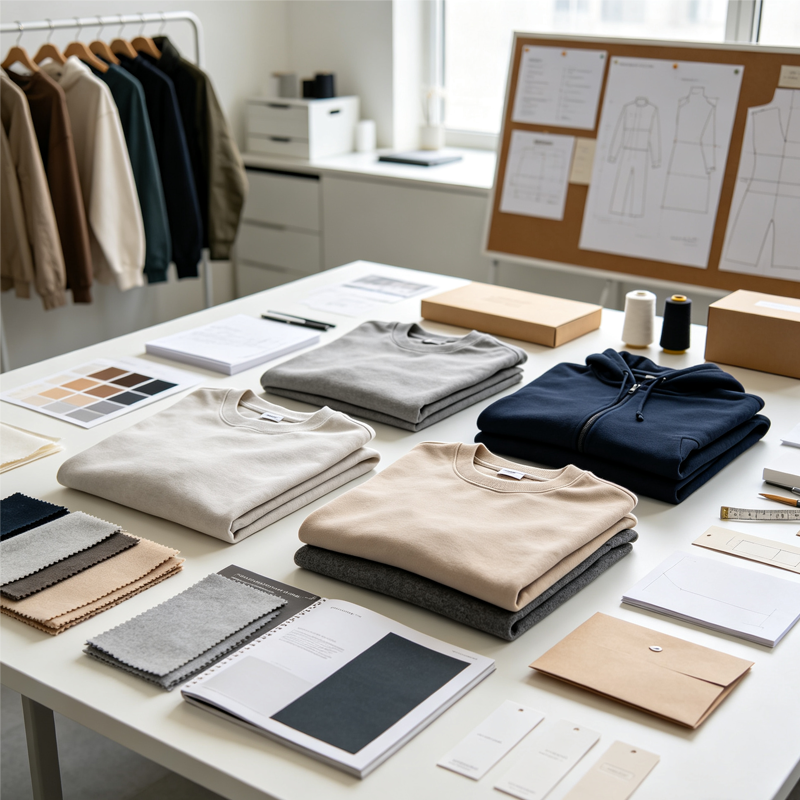
A simple approach is to keep the first collection focused.
Step 1: Select a Small Number of Core Styles
Do not launch every idea at once.
Start with the products that best represent your brand.
Step 2: Limit Colorways
Fewer colors can simplify material planning.
Step 3: Confirm Your Size Range
Create a realistic size breakdown based on your target market.
Step 4: Develop Samples
Use samples to validate the actual product.
Step 5: Place a Small Production Run
Use the first batch to collect real market feedback.
Step 6: Track Sales by SKU
Monitor:
- Style
- Spalva
- Size
- Sales speed
- Returns
- Customer feedback
Step 7: Reorder the Winners
Do not scale every product equally.
Use actual sales data to decide where to put the next production budget.
14. When Should You Scale From Small Batch to Larger Production?
Small-batch production is often a starting point.
It does not have to be the final production model.
Consider scaling when:
- A product sells consistently
- Repeat orders become predictable
- One or more colors show strong demand
- Your size curve becomes clearer
- Inventory turnover improves
- Larger quantities create meaningful unit-cost savings
Pavyzdys
A brand starts with 150 fleece jackets.
After launch:
- 80% sell within the first month.
- One color accounts for most sales.
- Customers request the same style again.
The next production run can focus on that proven style.
The brand has moved from guessing demand to using demand data.
That is one of the biggest advantages of starting with a small batch.
15. What to Look for in a Long-Term Apparel Manufacturing Partner
A manufacturer should not only help you place the first order.
The stronger question is:
Can this supplier grow with my brand?
Look for a partner that can support:
- Product development
- Mėginių ėmimas
- Audinių tiekimas
- Small-batch production
- Kokybės kontrolė
- Private labeling
- Pakuotė
- Repeat production
- Larger production runs
For example, KALAIBEN states that it provides OEM and ODM services covering fabric selection, pattern making, customization, labeling, and packaging. Its website also describes a 6,000㎡ production facility, 700+ production machines, nearly 700 employees, and annual capacity of approximately 600,000 pieces.
For brands comparing suppliers, this type of information can help answer a practical question:
Can the manufacturer support both the first order and the next stage of growth?
16. Small Batch Clothing Manufacturer Checklist
Before you place an order, run through this checklist.
Supplier Checklist
- Product experience matches your category
- MOQ is clearly defined
- MOQ rules for colors are clear
- Size mixing policy is confirmed
- Sample process is clear
- Fabric sourcing is available
- Customization options are confirmed
- Production lead time is confirmed
- Quality-control process is explained
- Packaging requirements are clear
- Repeat-order process is discussed
- Communication process is reliable
Buyer Checklist
- Tech pack prepared
- Target quantity confirmed
- Size range confirmed
- Colorways confirmed
- Fabric specification confirmed
- Artwork prepared
- Label requirements prepared
- Packaging requirements prepared
- Target delivery date defined
- Budget confirmed
This simple checklist can make supplier comparisons much easier.
17. Final Takeaway: Focus on the Right Fit, Not Just the Lowest MOQ
Finding a mažų partijų drabužių gamintojas is about more than finding a factory willing to accept a small number of pieces.
The right manufacturing partner should fit your product, quantity, quality requirements, budget, and growth plan.
Remember these key points:
- Small batch does not have one universal quantity.
- MOQ may apply per style and color.
- Lower quantities often mean higher unit costs.
- Fabric and customization can change the minimum.
- Sampling is critical before bulk production.
- A clear tech pack reduces production ambiguity.
- Quality control should continue throughout production.
- A small first order can help validate market demand.
- Repeat-order capability matters when a product succeeds.
- The lowest MOQ is not always the most practical solution.
For startups and growing brands, the goal is simple:
Start with a manageable production quantity. Learn from the market. Improve the product. Then scale with confidence.
If you are comparing apparel suppliers or looking for OEM/ODM production support, you can explore KALAIBEN’s apparel manufacturing services and review its product categories and manufacturing capabilities.











