




Brand Clothing Manufacturer China: How to Choose the Right Partner for Your Clothing Brand
Publicēšanas datums:2026-09-23 Kategorija:Ziņas Apskates skaits:583
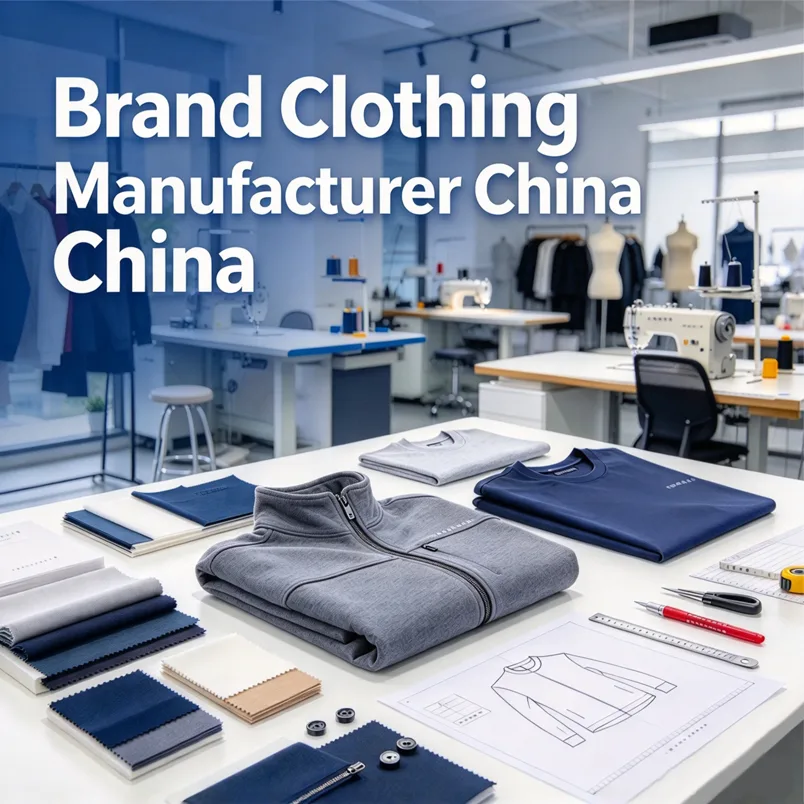
Looking for a brand clothing manufacturer China partner? Learn how to evaluate product development, sampling, quality, branding, MOQ, production, and long-term supplier fit.
When a brand searches for a brand clothing manufacturer China partner, it usually needs more than a factory that can sew garments. It needs a manufacturer that understands brand requirements and can turn product ideas, specifications, and samples into consistent finished apparel.
The right supplier should fit your product category, quality level, order volume, development process, and growth plans. This guide explains what to check before choosing a China clothing manufacturer for your brand.
1. What Is a Brand Clothing Manufacturer in China?
A brand clothing manufacturer produces apparel according to a brand's specific requirements.
The relationship can cover much more than basic production.
Depending on the project, a manufacturer may support:
- Product development
- Auduma iepirkšana
- Pattern making
- Parauga izstrāde
- Custom sizing
- Garment production
- Kvalitātes kontrole
- Pielāgotas etiķetes
- Karājošās etiķetes
- Iepakojums
The key difference is brand-specific production.
A brand does not simply purchase a standard garment from a catalog. It develops products around its own positioning, customers, specifications, and visual identity.
Example
A new outdoor brand wants to launch a fleece jacket.
It may need:
- A specific fleece weight
- A custom fit
- Special zipper details
- Branded labels
- Individuāli pielāgots iepakojums
A suitable manufacturer needs to understand all of these requirements, not just the sewing process.
2. What Should a Brand Clothing Manufacturer China Partner Provide?
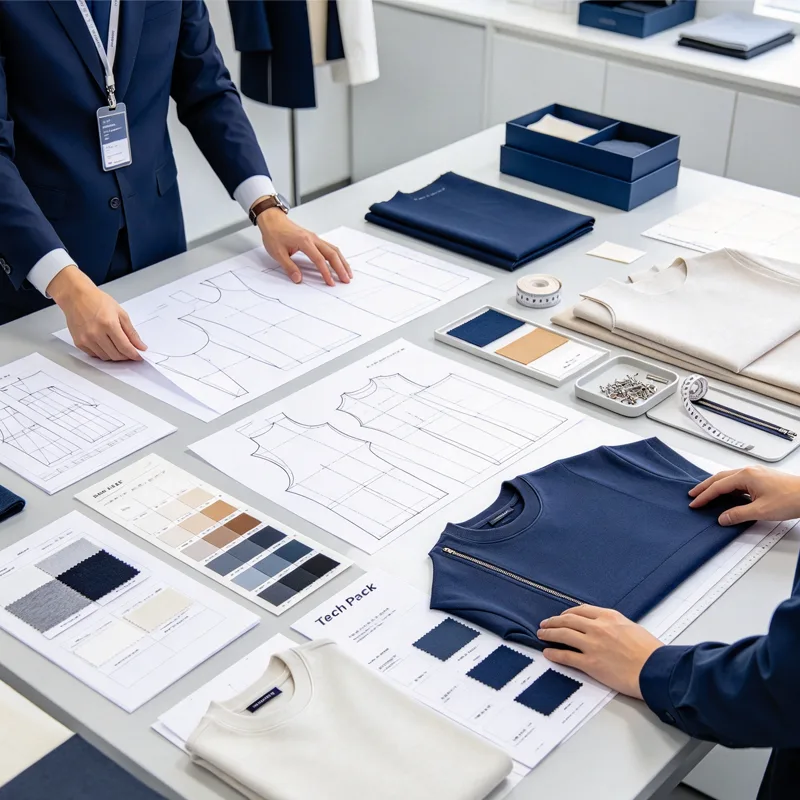
The best supplier for your brand depends on your project.
However, several capabilities matter across most apparel categories.
2.1 Product Development
A capable manufacturer should be able to work with different starting points.
You may have:
- A complete tech pack
- A technical drawing
- A sketch
- A reference photo
- An existing garment sample
Some manufacturers can help convert these materials into production-ready products.
For example, KALAIBEN states that its technical and R&D teams can work from technical drawings, tech packs, sketches, reference photos, or existing samples to develop patterns and samples.
Example
You send a reference jacket but do not have a complete pattern.
The manufacturer needs to understand:
- Mērījumi
- Celtniecība
- Audums
- Apdares elementi
- Sewing details
This is where development experience becomes important.
3. Check Product Experience Before Factory Size
A large factory is not automatically the right factory.
Product experience should come first.
Ask whether the manufacturer regularly works with your product category.
Check for:
- T-krekli
- Kapučkrekli
- Jakas
- Fleece
- Activewear
- Outdoorwear
- Ikdienas apģērbs
- Children's apparel
Also check the materials.
A manufacturer experienced with cotton jersey may not have the same expertise with technical outerwear.
Example
Suppose your brand sells premium fleece jackets.
Instead of asking only:
“How many garments can you produce?”
Jautājums:
“How many similar fleece jacket projects have you produced?”
The second question tells you more about product fit.
4. How a China Clothing Manufacturer Develops Your Samples
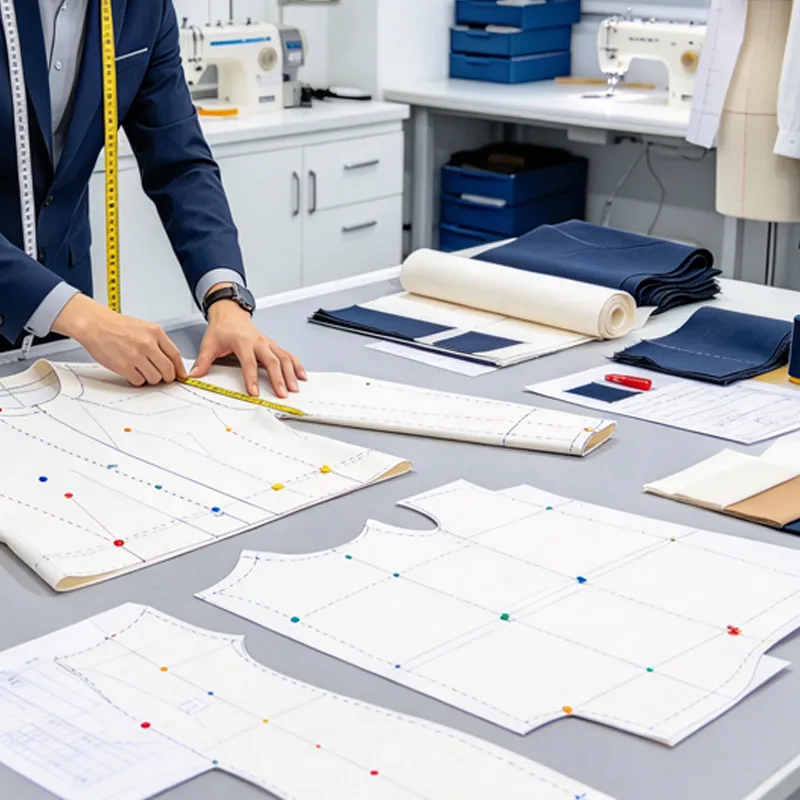
Sampling is one of the most important stages in apparel production.
A good sample helps you verify the product before committing to bulk production.
Typical Sample Process
Step 1: Review the Requirements
The factory reviews:
- Dizains
- Audums
- Mērījumi
- Celtniecība
- Daudzums
- Zīmola veidošana
Step 2: Develop the Pattern
The pattern team translates product specifications into production-ready patterns.
Step 3: Make the First Sample
The sample allows the brand to check:
- Fit
- Audums
- Izskats
- Celtniecība
- Sīkāka informācija
Step 4: Revise the Sample
Changes may involve:
- Piedurknes garums
- Korpusa platums
- Collar shape
- Kabatas novietojums
- Auduma svars
Step 5: Approve the Final Sample
The approved sample becomes an important production reference.
Example
A brand develops a relaxed-fit hoodie.
The first sample looks good, but the body is too narrow.
It is much easier to correct the pattern at this stage than after 2,000 garments have been produced.
5. Brand Clothing Manufacturer vs Generic Clothing Supplier
These two supplier models are easy to confuse.
| Faktors | Generic Clothing Supplier | Brand Clothing Manufacturer |
|---|---|---|
| Produkts | Standard or catalog products | Brand-specific products |
| Pielāgošana | Ierobežots | Augstāks |
| Attīstība | Usually limited | More involved |
| Etiķetes | Basic options | Custom branding |
| Iepakojums | Standarts | Brand-specific |
| Product Specifications | Standarts | Customer-defined |
| Vispiemērotākais | Simple sourcing | Clothing brands |
Example
A retailer wants 500 standard sweatshirts.
A generic supplier may work.
A fashion brand wants a specific fit, custom fabric, woven label, hangtag, and packaging.
A brand-focused manufacturer is more appropriate.
6. Private Label Is More Than Adding a Logo
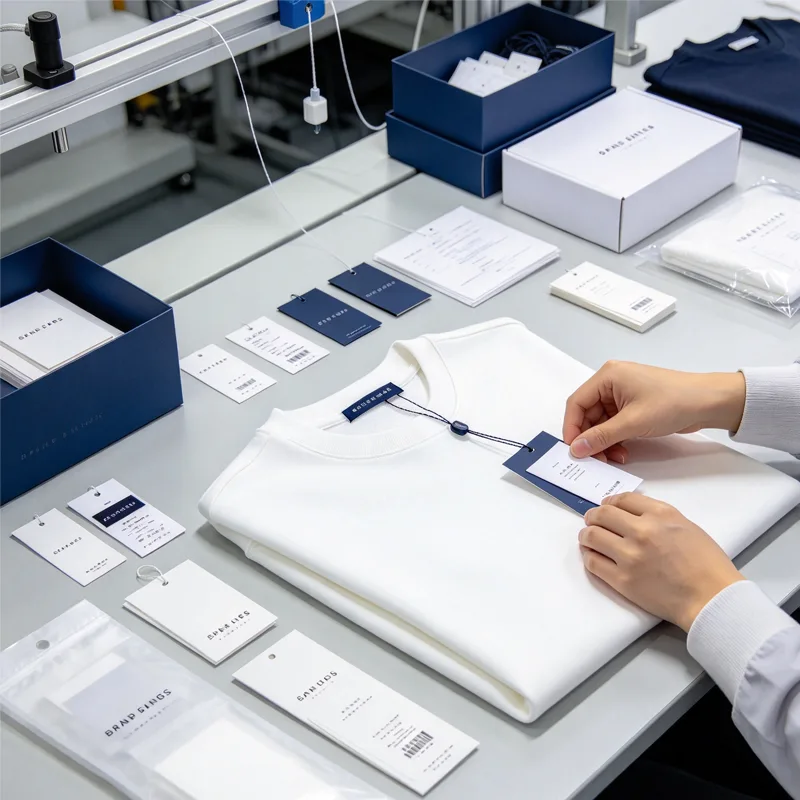
Private label apparel is often misunderstood.
It does not have to mean buying an existing garment and adding a label.
A deeper private-label project can include:
- Custom fit
- Pēc pasūtījuma izgatavots audums
- Pielāgotas krāsas
- Pielāgotas apdares
- Pielāgotas etiķetes
- Custom hangtags
- Individuāli pielāgots iepakojums
This gives the brand more control over the final product.
Example
Two brands may sell similar fleece jackets.
Brand A uses an existing factory style with a logo.
Brand B controls:
- Auduma svars
- Fit
- Krāsa
- Zipper
- Etiķetes
- Iepakojums
Brand B has much more control over the actual product.
7. Quality Control Should Protect Your Brand
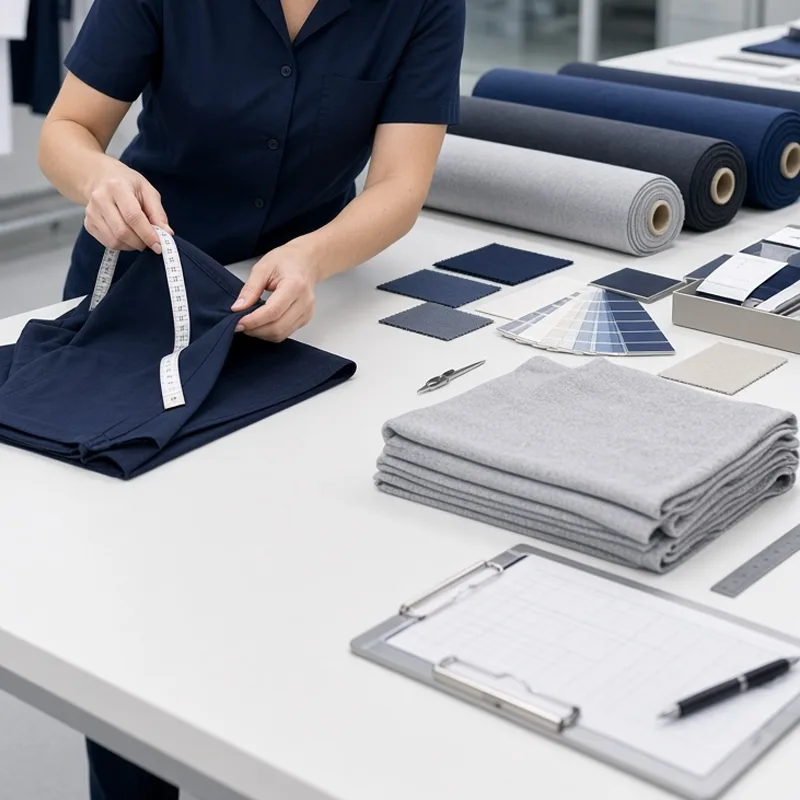
When customers buy your garment, they see your brand name.
They do not see the factory's name.
That makes quality control especially important.
A Practical Apparel QC Process
7.1 Material Inspection
Pārbaudi:
- Auduma sastāvs
- GSM
- Krāsa
- Width
- Izskats
7.2 Pre-Production Sample
Confirm the approved:
- Mērījumi
- Celtniecība
- Audums
- Apdares elementi
7.3 In-Production Inspection
Pārbaudi:
- Šūšana
- Mērījumi
- Workmanship
- Krāsu viendabīgums
7.4 Final Inspection
Pārbaudi:
- Finished garments
- Etiķetes
- Iepakojums
- Daudzums
Example
Imagine a brand orders 5,000 jackets.
A small measurement problem can affect the entire batch if it is not detected early.
A proper QC process reduces the chance of discovering major problems after production is finished.
8. MOQ: Find a Manufacturer That Fits Your Business
MOQ matters, but the lowest MOQ is not automatically the best option.
Ask what the MOQ applies to.
It may be based on:
- Style
- Krāsa
- Audums
- Size
- Order
- Pielāgošana
Example
A manufacturer quotes an MOQ of 500 pieces.
But the requirement is 500 pieces per color.
If you need four colors, your real production requirement becomes 2,000 pieces.
Always ask:
“Is the MOQ per style, color, or total order?”
This simple question can prevent misunderstandings.
9. Compare Suppliers by Total Value, Not Unit Price
Price is important.
It is not the only factor.
A better supplier comparison includes:
| Faktors | Questions to Ask |
|---|---|
| Product Fit | Does the factory make similar products? |
| Sample Quality | Can it meet your specifications? |
| Minimālais pasūtījuma daudzums | Does it fit your business? |
| Kvalitāte | How is production inspected? |
| Pielāgošana | Can it support your brand requirements? |
| Komunikācija | Can the team understand technical details? |
| Ietilpība | Can it support future growth? |
| Piegāde | Is production planning clear? |
Example
Supplier A offers a lower unit price.
Supplier B costs slightly more but provides:
- Better samples
- Better communication
- More accurate specifications
- Stronger QC
For a brand, the second supplier may create lower total risk.
The right comparison is not simply:
Price A vs Price B
It is:
Total cost + quality + development + reliability + communication.
10. Factory or Trading Company?
When searching for a brand clothing manufacturer China, determine who actually produces your garments.
A trading company is not automatically a bad choice.
It may provide useful sourcing and project management.
But you should understand the production structure.
| Question | Direct Factory | Tirdzniecības uzņēmums |
|---|---|---|
| Production | Internal | External or mixed |
| Saziņa ar rūpnīcu | Tieši | Through intermediary |
| Produktu klāsts | Often specialized | Often broader |
| Ražošanas kontrole | Tieši | Depends on suppliers |
| Sourcing Support | Atšķiras | Bieži vien spēcīgāks |
Jautājums:
- Where will production happen?
- Who manages the production line?
- Who handles quality control?
- Can you see the factory?
- Who manages sample development?
Transparency matters more than the label.
11. Check Branding and Packaging Capabilities
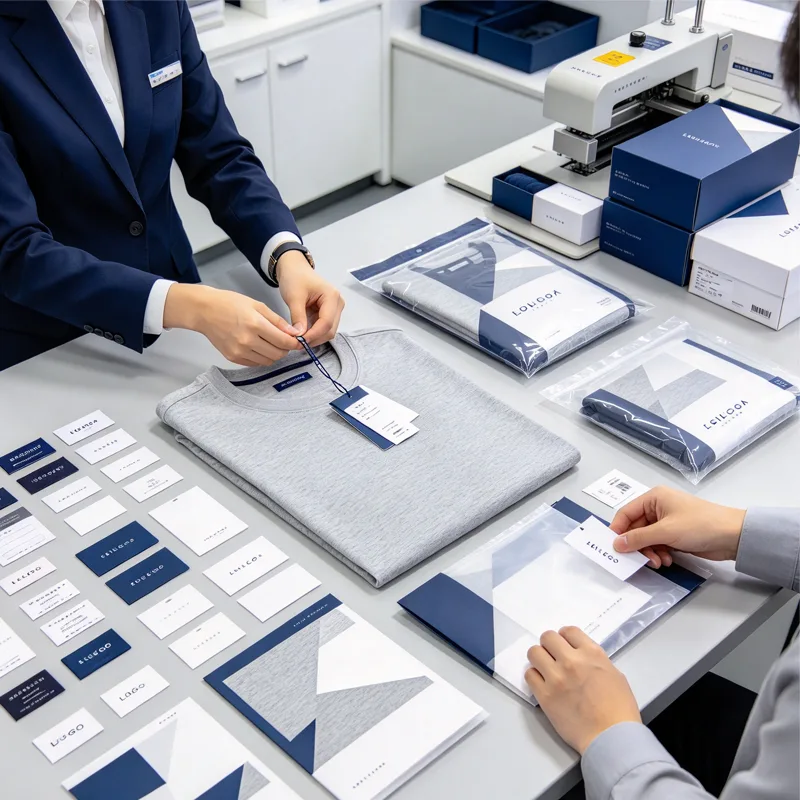
Your brand experience does not stop at the garment.
A professional manufacturer may support:
- Austas etiķetes
- Care labels
- Izmēra marķējumi
- Karājošās etiķetes
- Logo applications
- Individuāli pielāgots iepakojums
KALAIBEN states that it supports private-label apparel manufacturing with custom labels, hangtags, logos, packaging, and other branding requirements.
Example
A premium casualwear brand wants every garment to arrive retail-ready.
The production specification may include:
- Main label
- Care label
- Size label
- Hangtag
- Individual packaging
- Outer carton markings
These details should be confirmed before bulk production.
12. How to Verify a China Clothing Manufacturer
Do not rely only on a website.
Use several forms of evidence.
Before Sampling
Ask for:
- Factory information
- Product examples
- Production photos
- Relevant experience
- Manufacturing capabilities
During Sampling
Evaluate:
- Product accuracy
- Response speed
- Technical questions
- Revision handling
Before Bulk Production
Confirm:
- Final specifications
- Approved sample
- Daudzums
- Iepakojums
- Delivery schedule
- Quality requirements
For larger projects, consider a factory audit or third-party inspection.
13. Build a Simple Supplier Scorecard
Create your own evaluation system.
| Kategorija | Suggested Weight |
|---|---|
| Pieredze ar produktu | 25% |
| Sample Quality | 20% |
| Kvalitātes kontrole | 20% |
| Komunikācija | 15% |
| MOQ Fit | 10% |
| Ražošanas jauda | 10% |
The weights should change according to your project.
Piemēram:
A startup may care more about MOQ and sampling flexibility.
An established brand may care more about production consistency and capacity.
The purpose of the scorecard is not to create a universal “best manufacturer.”
It helps you compare suppliers against your own requirements.
14. What Information Should You Send to a Brand Clothing Manufacturer?
A clear RFQ saves time.
Informācija par produktu
Norādiet:
- Preču kategorija
- Atsauces fotogrāfijas
- Tech pack
- Size chart
- Auduma sastāvs
- Auduma svars
- Prasības attiecībā uz krāsu
- Construction details
Informācija par zīmolu
Norādiet:
- Logo artwork
- Prasības attiecībā uz marķējumu
- Hangtag requirements
- Iepakojuma prasības
Order Information
Norādiet:
- Aptuvenais daudzums
- Quantity by color
- Quantity by size
- Plānotais piegādes datums
- Destination market
Example
Instead of:
“I need 1,000 jackets. What is your price?”
Send:
“We need 1,000 fleece jackets in two colors and five sizes. The shell is 100% polyester fleece. We need custom woven labels, hangtags, individual packaging, and delivery to the US.”
The second inquiry gives the manufacturer much more useful information.
15. How to Start Working With a Brand Clothing Manufacturer China Partner
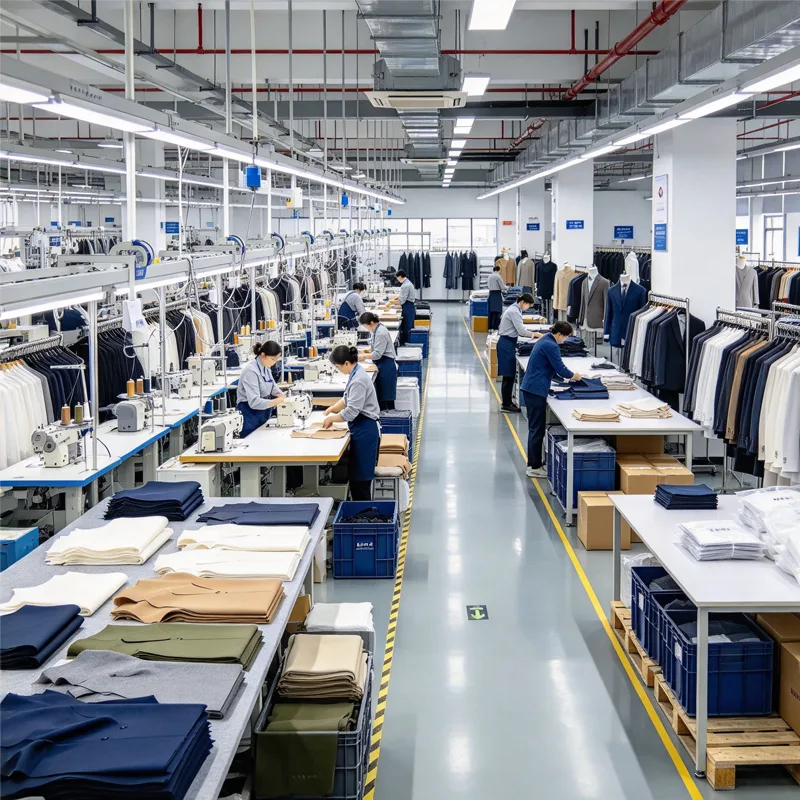
Use a controlled process.
Step 1: Define Your Product
Know:
- Preču kategorija
- Audums
- Daudzums
- Quality level
- Target price
Step 2: Shortlist Relevant Manufacturers
Focus on factories with matching product experience.
Step 3: Send the Same RFQ
Use consistent specifications.
This makes supplier comparison easier.
Step 4: Develop Samples
Check fit, construction, fabric, and details.
Step 5: Verify the Supplier
Review factory information and production capabilities.
Step 6: Approve Production
Confirm all specifications in writing.
Step 7: Start With a Controlled Order
Use the first production project to evaluate:
- Kvalitāte
- Komunikācija
- Piegāde
- Ražošanas stabilitāte
16. What Makes a Good Long-Term Brand Manufacturing Partner?
A strong manufacturing relationship is built over repeated orders.
The factory should gradually understand:
- Your sizing standards
- Your preferred fabrics
- Your quality expectations
- Your packaging rules
- Your production calendar
- Your communication style
This creates operational efficiency over time.
Example
A brand orders three collections from the same manufacturer.
By the third collection, the factory already understands the brand's:
- Fit preferences
- Label specifications
- Packaging standards
- Prasības attiecībā uz kvalitāti
This can make future development more efficient.
17. Choosing a Brand Clothing Manufacturer in China
A suitable manufacturer should match your brand rather than simply claim to be a “top factory.”
Use this checklist:
Produkts
- Does the factory make your product category?
- Does it understand your fabrics?
- Can it meet your construction requirements?
Attīstība
- Can it develop samples?
- Can it work from your tech pack?
- Can it handle revisions?
Production
- Is its production capacity suitable?
- Can it support your expected order volume?
- Can it maintain consistent quality?
Zīmola veidošana
- Can it produce custom labels?
- Can it handle hangtags?
- Can it support packaging?
Komunikācija
- Does the team understand technical information?
- Does it communicate production changes clearly?
- Can it support long-term projects?
18. Why KALAIBEN Can Be Considered for Brand Apparel Manufacturing
KALAIBEN is a China-based apparel manufacturer offering OEM and ODM production for global brands, retailers, and wholesalers.
Its published capabilities cover knitted and woven apparel, casualwear, sportswear, outdoorwear, children's apparel, product development, pattern making, sampling, and mass production.
The company reports approximately 6,000㎡ of production facilities, more than 700 production machines, nearly 700 employees, and annual capacity of approximately 600,000 pieces or sets.
For buyers, the more important question is still product fit. A factory's capabilities should match the product category, specifications, order volume, and quality requirements of the project.
You can review the manufacturer's capabilities through the KALAIBEN official website.
19. Brand Clothing Manufacturer China: Buyer Checklist
Before starting production, confirm:
- Preču kategorija
- Auduma specifikācijas
- Size requirements
- Sample approval
- Minimālais pasūtījuma daudzums
- Branding requirements
- Iepakojums
- Kvalitātes standarti
- Production timeline
- Shipping requirements
Then compare suppliers based on evidence rather than marketing claims.
A good brand clothing manufacturer China partner should help you move from product concept to approved sample and from approved sample to consistent bulk production.
The goal is not simply to find a factory.
The goal is to build a production system that your brand can rely on as it grows.











