




China Apparel ODM Supplier: How to Choose the Right Manufacturing Partner
Publicēšanas datums:2026-09-24 Kategorija:Ziņas Apskates skaits:587
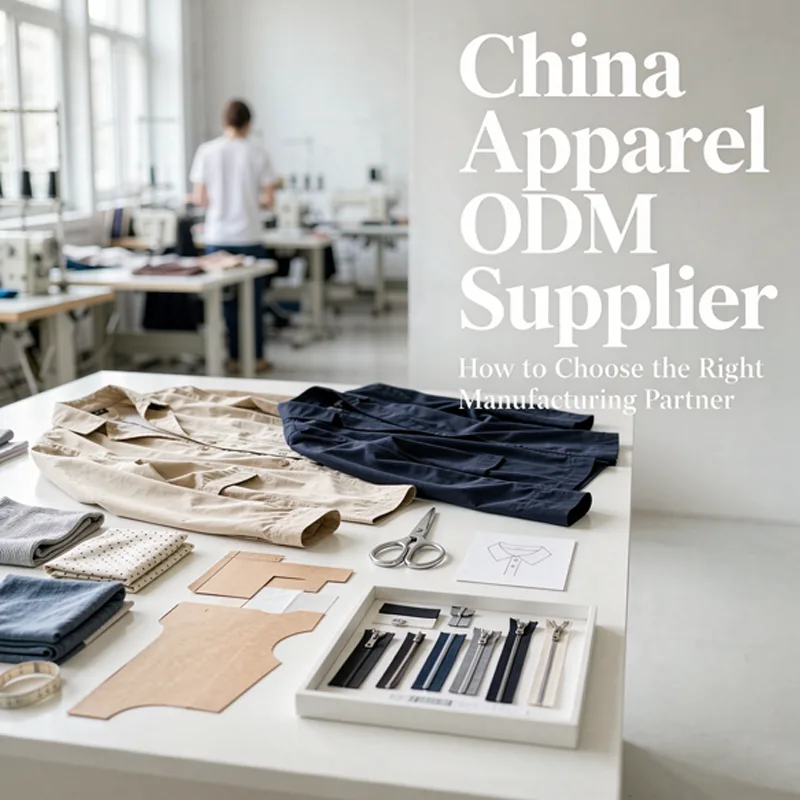
Atrast pareizo China apparel ODM supplier is about more than finding a factory with a low price. A capable ODM partner should help you turn a product idea, sketch, reference garment, or technical brief into a production-ready apparel product. The process may include fabric selection, pattern development, sampling, fit adjustment, bulk production, quality control, labeling, and packaging.
For brands, wholesalers, and retailers, the real challenge is knowing which supplier can handle these stages reliably.
This guide explains how China apparel ODM works, what to check before placing an order, how ODM differs from OEM, and how to move from the first idea to stable bulk production.
1. What Is a China Apparel ODM Supplier?
A China apparel ODM supplier provides both product development and manufacturing services.
ODM means Original Design Manufacturing. Instead of receiving a completely finished product specification, the manufacturer can participate in the development process.
A typical ODM project may start with:
- A product idea
- A design sketch
- Atsauces fotogrāfijas
- A mood board
- An existing garment sample
- A basic product brief
- A partial tech pack
The supplier then helps develop the product into something that can be manufactured consistently.
1.1 What Does an ODM Supplier Actually Do?
A professional apparel ODM supplier may support:
| Development Stage | Typical Supplier Support |
|---|---|
| Product concept | Feasibility review |
| Auduma izvēle | Material recommendations |
| Modeļu izstrāde | Pattern creation and adjustment |
| Paraugu izgatavošana | Prototype development |
| Fit atsauksme | Measurement and construction adjustments |
| Costing | Material and production quotation |
| Pre-production | Production specification confirmation |
| Masveida ražošana | Cutting, sewing and finishing |
| Kvalitātes kontrole | Inline and final inspection |
| Zīmola veidošana | Labels, hangtags and packaging |
The important point is that ODM is not simply “custom clothing manufacturing.”
The supplier becomes part of the product development process.
1.2 A Simple Example
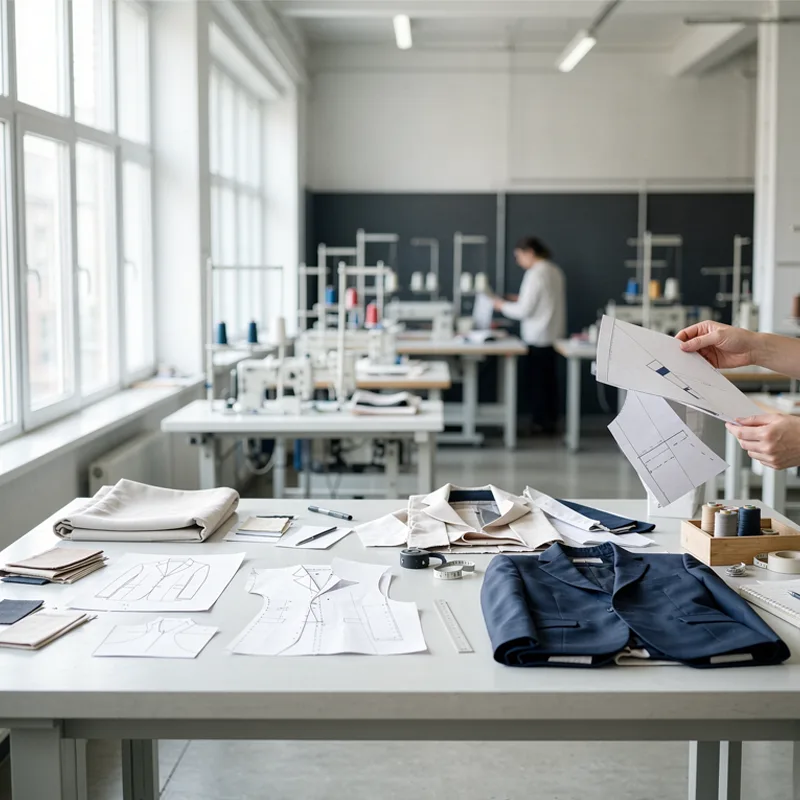
Imagine a new outdoor brand wants to launch a lightweight fleece jacket.
The brand knows:
- Mērķa klients
- Desired style
- Approximate retail price
- Preferred color
- Paredzamais pasūtījuma apjoms
But it does not have a finalized pattern or complete technical package.
An ODM supplier can help evaluate the fabric, develop the pattern, create samples, adjust the fit, and prepare the product for bulk manufacturing.
That is where ODM creates value.
2. China Apparel ODM Supplier vs OEM Manufacturer
OEM and ODM are often used together, but the working relationship is different.
With OEM, the buyer usually provides a more complete product specification.
With ODM, the manufacturer provides more development support.
| Faktors | OEM Manufacturing | ODM Manufacturing |
|---|---|---|
| Design source | Mainly buyer-provided | Buyer and supplier collaborate |
| Tech pack | Usually more complete | May be partial or unavailable |
| Modeļu izstrāde | Specification-led | Supplier can support |
| Auduma izvēle | Often buyer-defined | Supplier can recommend |
| Parauga izstrāde | Based on specifications | More collaborative |
| Product development | Buyer-led | Shared development |
| Best suited for | Established products | New or developing products |
2.1 When Should You Choose ODM?
ODM may be useful when:
- You have an idea but no complete tech pack.
- You need help selecting materials.
- You need pattern development.
- You want to test several product versions.
- Your internal technical team is small.
- You want one partner to manage development and production.
2.2 When Is OEM More Practical?
OEM may make more sense when you already have:
- Complete tech packs
- Approved patterns
- Detailed measurement charts
- Auduma specifikācijas
- Construction instructions
- Approved samples
For example, an established brand may already have a production-ready hoodie specification.
In that situation, the factory's primary role is to reproduce the approved product accurately.
3. What Should You Look for in a China Apparel ODM Supplier?
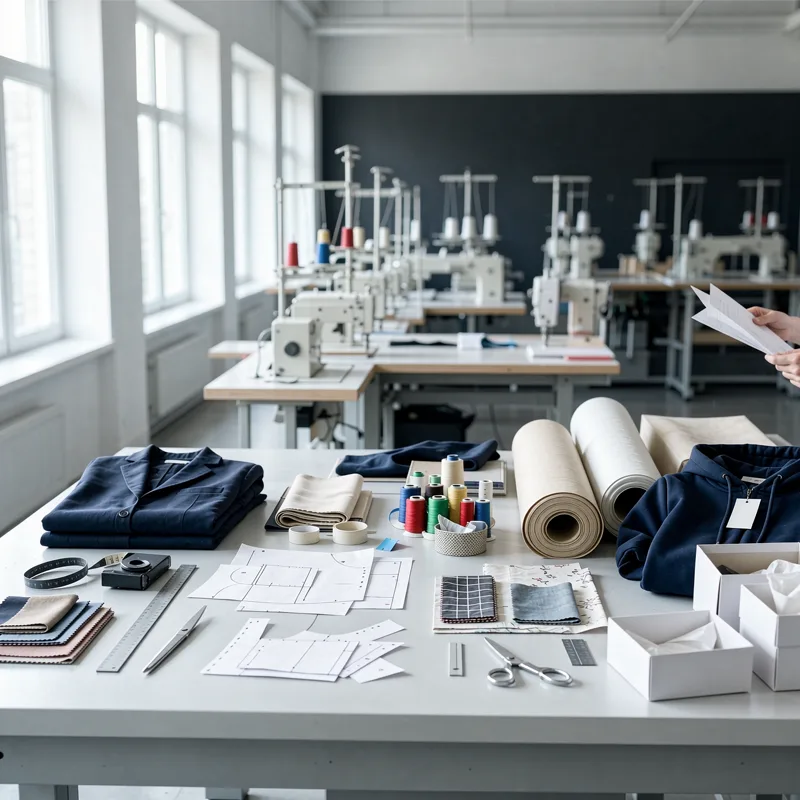
Not every clothing manufacturer offering “ODM” provides the same level of development support.
Before requesting a quotation, check six areas.
3.1 Product Development Capability
Jautājums:
- Can you develop from sketches?
- Can you work from reference garments?
- Do you have pattern-making capability?
- Can you adjust samples after fitting?
- Can you recommend suitable fabrics?
- Can you assess production feasibility?
A factory with only sewing capacity may not be able to solve development problems.
3.2 Sample Room Capability
Sampling is one of the most important parts of ODM.
Look for evidence of:
- Pattern making
- Sample sewing
- Fit adjustment
- Construction review
- Multiple sample revisions
- Pre-production approval
A useful question is:
“What happens if the first sample does not meet our fit requirements?”
The answer tells you more than a generic claim such as “we provide samples.”
3.3 Production Capability
Development capability alone is not enough.
The supplier must also reproduce the approved sample at scale.
Pārbaudi:
- Production equipment
- Available production lines
- Sewing capabilities
- Cutting capacity
- Finishing processes
- Kvalitātes kontrole
- Ražošanas plānošana
- Bulk order experience
The goal is simple:
The factory should be able to manufacture what its development team creates.
3.4 Quality Control
Ask how quality is controlled during:
- Fabric receiving
- Griešana
- Šūšana
- Apdare
- Final inspection
- Iepakošana
Important checkpoints include:
- Auduma sastāvs
- GSM
- Krāsu viendabīgums
- Mērījumi
- Šūšana
- Vīļu izgatavošana
- Apdares elementi
- Rāvējslēdzēji
- Etiķetes
- Iepakojums
3.5 Communication
Communication is often underestimated.
An ODM project involves more decisions than a standard wholesale order.
You may need to discuss:
- Auduma izmaiņas
- Pattern revisions
- Fit issues
- Color matching
- Construction details
- Sample comments
- Cost changes
A supplier that responds quickly but does not document decisions clearly can still create production problems.
3.6 Private Label Support
If you are building your own brand, check whether the supplier can support:
- Austas etiķetes
- Care labels
- Karājošās etiķetes
- Iepakojums
- Pielāgotas apdares
- Marķējumi uz kartona iepakojuma
- Brand-specific packing requirements
Private label should be treated as part of the production specification, not as an afterthought.
4. How Does the China Apparel ODM Process Work?
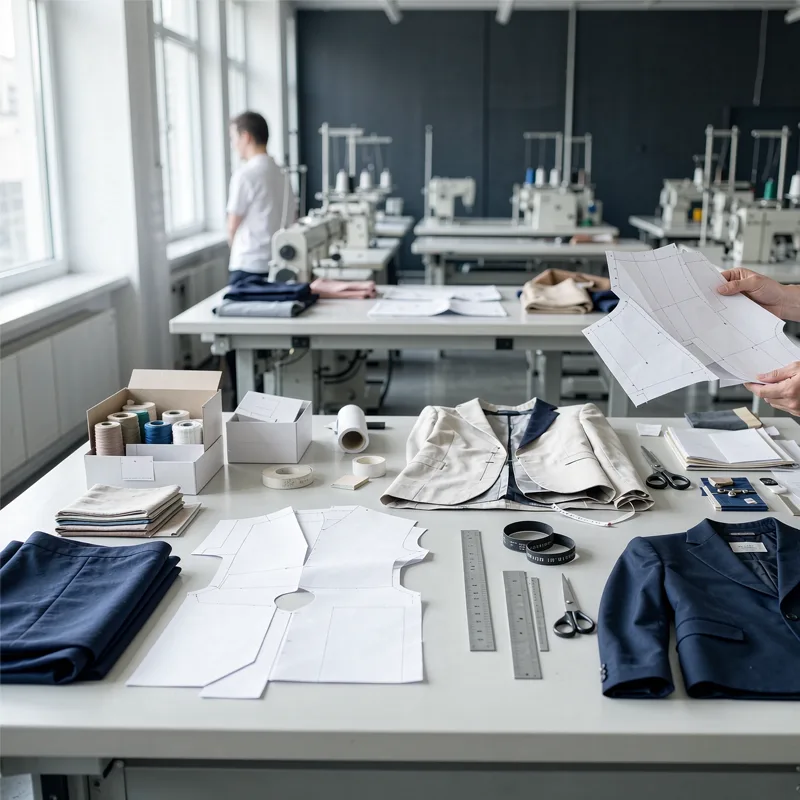
A clear ODM workflow reduces mistakes.
4.1 Step 1: Send Your Product Brief
Start with the information you already have.
You can provide:
- Preču kategorija
- Atsauces attēli
- Sketches
- Existing samples
- Auduma izvēle
- Target quantity
- Izmēru klāsts
- Prasības attiecībā uz krāsu
- Branding requirements
- Plānotais piegādes datums
You do not need to wait until everything is perfect.
A good ODM partner should help identify what is missing.
4.2 Step 2: Review Materials and Construction
The supplier evaluates whether your idea is technically realistic.
For example, you may request a lightweight jacket with:
- Water-resistant fabric
- Vairākas kabatas
- Metal zippers
- Custom lining
- Izšūšana
- A slim fit
The factory should review whether these requirements work together.
Material choice can affect:
- Izmaksas
- Svars
- Fit
- Sewing difficulty
- Izturība
- Production time
4.3 Step 3: Develop the Pattern
The pattern converts the product concept into measurable garment components.
This stage may involve:
- Body measurements
- Sleeve measurements
- Collar construction
- Kabatas novietojums
- Seam allowance
- Grading
- Construction details
A strong pattern is important because small pattern errors can become large problems during bulk production.
4.4 Step 4: Make the First Sample
The first sample is not necessarily the final product.
Use it to check:
- Vispārējais izskats
- Fit
- Audums
- Krāsa
- Mērījumi
- Celtniecība
- Function
- Apdares elementi
A practical buyer should expect some adjustment during development.
4.5 Step 5: Revise and Approve
Document every change.
Piemēram:
| Item | First Sample | Final Requirement |
|---|---|---|
| Ķermeņa garums | 70 cm | 68 cm |
| Mangu formas | Standarts | Slightly tapered |
| Audums | 280 GSM fleece | 260 GSM fleece |
| Single welt | Zipped pocket | |
| Label | Standarts | Custom woven label |
This creates a clear reference for production.
4.6 Step 6: Move Into Bulk Production
Only start bulk production after the important specifications are confirmed.
The production file should clearly define:
- Approved sample
- Audums
- Krāsa
- Mērījumi
- Celtniecība
- Apdares elementi
- Etiķetes
- Iepakojums
- Daudzums
This reduces the risk of the production team working from outdated information.
5. What Information Should You Send to a China Apparel ODM Supplier?
The quality of your initial inquiry affects the quality of the quotation.
A message such as:
“Please quote 2,000 jackets.”
is too vague.
A better inquiry includes:
- Produkta veids
- Reference image
- Target quantity
- Fabric preference
- Izmēru klāsts
- Krāsa
- Custom logo
- Prasības attiecībā uz marķējumu
- Iepakojuma prasības
- Target market
- Expected delivery date
If you have a tech pack, attach it.
If you do not have one, send your sketches, photos, measurements, or reference garments instead.
KALAIBEN's published FAQ, for example, states that its development team can work from technical drawings, tech packs, sketches, reference photos, or existing samples.
The more useful information the factory receives, the easier it becomes to assess feasibility and prepare a meaningful quote.
6. How to Compare China Apparel ODM Supplier Quotes
Price is important, but it should not be the first and only comparison.
Two factories can quote different prices because their specifications are different.
6.1 Compare the Same Specification
Build a comparison sheet.
| Cost Area | Piegādātājs A | Piegādātājs B | Piegādātājs C |
|---|---|---|---|
| Audums | Included | Included | Included |
| Modeļu izstrāde | Included | Extra | Included |
| Sample | Included | Extra | Included |
| Etiķetes | Extra | Included | Extra |
| Iepakojums | Standarts | Pēc pasūtījuma | Standarts |
| Bulk unit price | $XX | $XX | $XX |
| QC | Included | Included | Extra |
| Piegāde | Separate | Separate | Separate |
This makes the quotation easier to understand.
6.2 Look Beyond the Unit Price
Jautājums:
- Is sample development included?
- Are revisions included?
- Is fabric sourcing included?
- Are trims included?
- What MOQ applies?
- What happens if the fabric price changes?
- Is QC included?
- What packaging is included?
- What are the payment terms?
- Kāds ir paredzamais ražošanas izpildes termiņš?
A slightly higher unit price may include development work that another supplier charges separately.
The correct comparison is therefore total project cost, not just the quoted garment price.
7. What MOQ Should You Expect From a China Apparel ODM Supplier?
There is no universal ODM MOQ.
Minimālais pasūtījuma daudzums var atšķirties atkarībā no:
- Preču kategorija
- Fabric type
- Customization level
- Number of colors
- Number of sizes
- Īpašās apdares
- Apdruka vai izšūšana
- Ražošanas process
- Fabric supplier requirements
For example, 500 pieces of a simple fleece pullover may be easier to produce than 500 highly customized technical jackets.
Ask the supplier to clarify whether MOQ applies:
- Per style
- Per color
- Per fabric
- Per size
- Per order
This distinction can significantly affect your actual purchasing plan.
8. How to Control Quality From Sample to Bulk Production
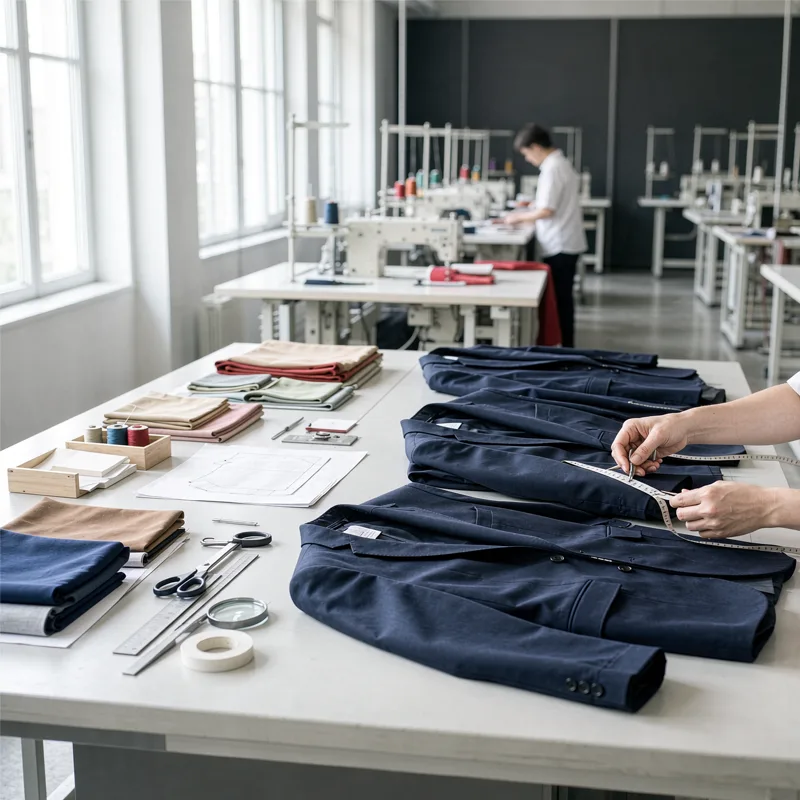
One of the biggest risks in apparel manufacturing is the gap between the approved sample and the final bulk order.
The solution is to make the approved sample the production reference.
8.1 Create a Clear Approval Standard
Before bulk production, confirm:
- Auduma sastāvs
- Auduma svars
- Krāsa
- Mērījumi
- Tolerance
- Celtniecība
- Šūšana
- Apdares elementi
- Etiķetes
- Iepakojums
8.2 Check Measurements
Do not only inspect the appearance.
Measure key points such as:
- Chest
- Ķermeņa garums
- Shoulder
- Piedurknes garums
- Waist
- Hem
- Kabatas novietojums
A garment can look correct while still being outside the agreed measurement tolerance.
8.3 Control Fabric Consistency
Fabric can affect the final garment more than buyers expect.
Changes in:
- GSM
- Stiepties
- Sajūta uz rokas
- Krāsa
- Saraušanās
- Apdare
can change the final product.
For repeat orders, keep the approved fabric specification as a reference.
9. China Apparel ODM Supplier vs Trading Company
This is an important question when sourcing from China.
A factory and a trading company can both provide a quotation, but their operating models may differ.
| Faktors | Direct Factory | Tirdzniecības uzņēmums |
|---|---|---|
| Production control | Usually direct | May depend on partner factories |
| Product development | Depends on factory | Depends on production partner |
| Komunikācija | Direct technical contact possible | Usually through sourcing team |
| Factory visibility | Higher potential | May be lower |
| Product range | Often based on capabilities | Can be broader |
| Flexibility | Depends on factory | Can coordinate multiple suppliers |
Neither model automatically guarantees better results.
The key question is:
Who is actually responsible for developing and producing your garment?
Ask for clarity about:
- Factory location
- Production responsibility
- Sampling responsibility
- QC responsibility
- Subcontracting
- Communication structure
This matters especially for technically complicated apparel.
10. How to Verify a China Apparel ODM Supplier Before Ordering
Do not choose a supplier based only on website photos.
Use several forms of evidence.
10.1 Check the Factory
Look for:
- Factory address
- Production photos
- Aprīkojums
- Sample room
- Product categories
- Development capability
- Quality process
- Export experience
10.2 Ask for Product Evidence
Ask to see relevant examples of:
- Similar garments
- Parauga izstrāde
- Fabric handling
- Finished products
- Iepakojums
- Quality inspection
The examples should be relevant to your project.
A supplier that specializes in basic T-shirts may not be the right technical partner for complex outdoor jackets.
10.3 Test With a Sample
A sample order is one of the most practical ways to evaluate a supplier.
Pārbaudi:
- Komunikācija
- Development speed
- Fit accuracy
- Material quality
- Workmanship
- Revision handling
- Documentation
- Response to feedback
The sample stage reveals how the supplier works before you commit to larger production.
11. Common Mistakes When Choosing an ODM Apparel Supplier
11.1 Choosing Only by Price
The cheapest quote may not represent the lowest total cost.
Development revisions, poor samples, inconsistent materials, and production problems can create additional expenses.
11.2 Assuming “ODM” Means Full Design Service
ODM capabilities vary.
Always ask exactly what is included.
11.3 Skipping the Sample Approval Stage
Never treat bulk production as the first real quality check.
The sample should establish the production standard.
11.4 Giving Incomplete Requirements
Vague requirements create vague quotations.
Provide as much useful information as possible.
11.5 Ignoring Repeat-Order Consistency
A supplier may produce one good sample but struggle to reproduce it months later.
Ask how the factory records:
- Auduma specifikācijas
- Paraugi
- Mērījumi
- Celtniecība
- Trim details
- Approved samples
Repeatability matters for growing apparel brands.
12. What Makes a Good China Apparel ODM Supplier?
A capable supplier should connect development capability with production capability.
Look for these characteristics:
- Strong pattern-making capability
- Practical fabric knowledge
- Reliable sample development
- Clear communication
- Transparent costing
- Elastīga pielāgošana
- Controlled bulk production
- Pastāvīga kvalitāte
- Private-label support
- Clear documentation
- Repeat-order capability
The most useful supplier is not necessarily the one with the biggest factory.
It is the one whose capabilities match your product requirements.
13. Example: Choosing an ODM Partner for a New Collection
Consider a brand developing a six-style autumn collection.
Zīmolam ir:
- Six design concepts
- Atsauces attēli
- A target customer
- Three preferred colors
- An estimated order of 3,000 pieces
- No finalized patterns
Instead of contacting factories with only:
“Can you produce these six styles?”
the brand should ask:
- Can you develop patterns from references?
- Can you source suitable fabrics?
- How many sample revisions are possible?
- Can you produce all six styles?
- What is the MOQ per style and color?
- How is bulk QC handled?
- Can you provide private-label packaging?
- What information do you need to start?
This creates a much better basis for evaluating suppliers.
14. Why China Remains Important for Apparel ODM Sourcing
China has a mature apparel manufacturing ecosystem covering fabric sourcing, garment production, trims, machinery, development, logistics, and export services.
China's apparel export scale also illustrates the size of its manufacturing ecosystem. According to the China National Garment Association, China's apparel and clothing accessory exports reached about US$159.15 billion in 2024, while knitted apparel exports reached about US$73.06 billion.
For international buyers, the practical advantage is not simply production volume.
It is the ability to connect multiple stages of product development and manufacturing within an established supply chain.
That can be particularly useful for brands developing customized collections rather than buying standard garments.
15. What Can KALAIBEN Offer as an ODM Apparel Manufacturer?
For buyers evaluating different China apparel ODM suppliers, KALAIBEN is one example of a manufacturer with development and production capabilities under one operation.
According to its official website, KALAIBEN focuses on knitted and woven garments, including casualwear, sportswear, outdoorwear, and children's apparel. Its published capabilities include product development, pattern making, sampling, customized production, labeling, and packaging.
The company also states that its manufacturing operation includes a 6,000㎡ facility, more than 700 production machines, nearly 700 employees, and approximately 600,000 pieces of annual capacity.
For an ODM project, the relevant question is not simply factory size.
The more important question is whether the supplier's development process, product categories, production capabilities, and communication model match the buyer's project.
16. China Apparel ODM Supplier Buyer Checklist

Before choosing a supplier, use this checklist.
Produkta izstrāde
- Can they develop from sketches?
- Can they work from reference samples?
- Do they provide pattern development?
- Can they recommend fabrics?
- Can they make sample revisions?
Production
- Does the factory handle your product category?
- Is production capacity suitable?
- Can they reproduce the approved sample?
- Can they support your expected quantity?
Kvalitāte
- Is fabric checked?
- Are measurements checked?
- Is inline QC available?
- Is final inspection performed?
- Is the approved sample used as a reference?
Commercial Terms
- What is the MOQ?
- What is included in the quotation?
- What is the sample cost?
- What are the payment terms?
- What is the estimated lead time?
Private Label
- Pielāgotas etiķetes
- Karājošās etiķetes
- Care labels
- Iepakojums
- Carton requirements
17. Questions to Ask Before Sending Your First ODM Order
Before making a decision, ask the supplier:
1. Can you develop my product from a sketch or reference sample?
2. Who handles pattern development?
3. What information do you need before making the first sample?
4. How many sample revisions are normally required?
5. Can you recommend fabrics based on my target price and product function?
6. What is the MOQ per style and color?
7. How do you control quality during bulk production?
8. How do you ensure bulk production matches the approved sample?
9. Can you support private-label labels and packaging?
10. Who will manage my project after the sample is approved?
The answers will tell you far more about a supplier than a generic “OEM/ODM available” statement.
18. How to Start a Project With a China Apparel ODM Supplier
A good first inquiry does not need to be complicated.
Send:
- Preču kategorija
- Reference images or sketches
- Target quantity
- Preferred fabric
- Izmēru klāsts
- Krāsas
- Branding requirements
- Iepakojuma prasības
- Target market
- Desired delivery date
Then ask the supplier to confirm:
- Product feasibility
- Recommended fabric
- Minimālais pasūtījuma daudzums
- Sample cost
- Sample timeline
- Estimated bulk price
- Bulk lead time
- Required information
This gives both sides enough information to decide whether the project is worth developing further.
19. China Apparel ODM Supplier: What Should You Do Next?
Choosing a China apparel ODM supplier should start with product requirements, not price alone.
A strong partner should be able to connect:
Product Idea → Material → Pattern → Sample → Approval → Bulk Production → QC → Delivery
Before placing a large order, verify the supplier's actual development capability, sampling process, production capacity, quality system, communication, MOQ, and private-label options.
If you already have a tech pack, send it.
If you only have a concept or reference garment, explain what you want to achieve.
The right ODM relationship should make the path from an idea to a repeatable commercial product clearer, not more complicated.











