




Apģērbu ražotājs Ķīnā: ceļvedis pareizā apģērbu ražošanas partnera izvēlē
Publicēšanas datums:2026-09-01 Kategorija:Ziņas Apskates skaits:490
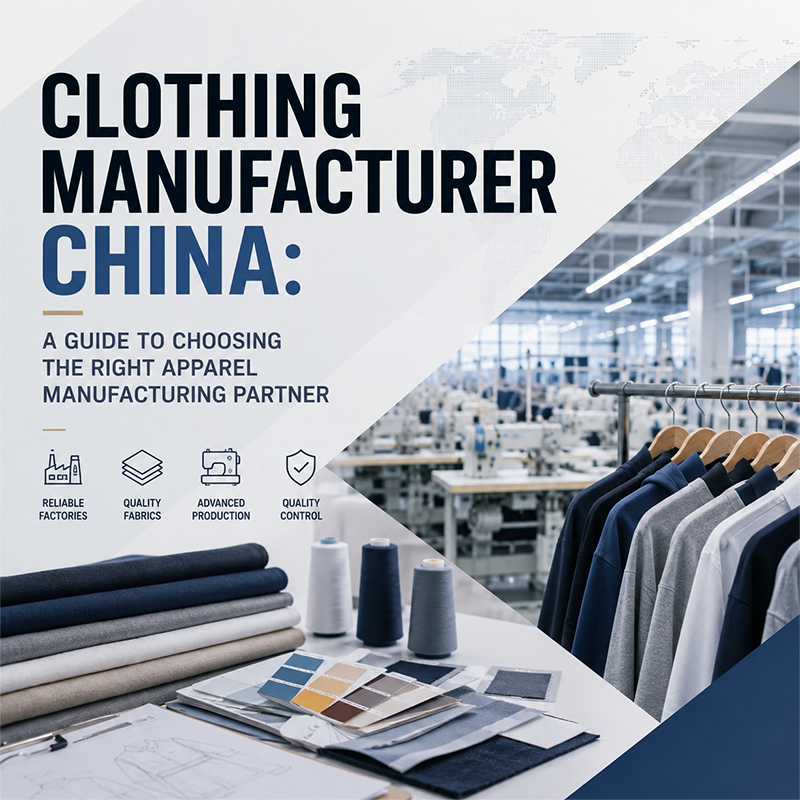
Ievads
China has become an important manufacturing destination for clothing brands and businesses around the world.
For brands developing casualwear, sportswear, outdoor apparel, children's clothing, or customized garments, working with a clothing manufacturer china can provide access to established textile and garment production capabilities.
However, choosing a manufacturer should involve more than comparing factory quotations.
Different manufacturers may have very different capabilities in terms of:
- Product categories
- Fabric development
- Paraugu ņemšana
- Minimālais pasūtījuma daudzums
- Ražošanas jauda
- Kvalitātes kontrole
- Pielāgošana
- Komunikācija
- Delivery management
The right manufacturer is the one whose capabilities match the requirements of your clothing business.
This guide explains the key factors to consider when evaluating a clothing manufacturer in China.
1. Why Do Brands Work With Clothing Manufacturers in China?
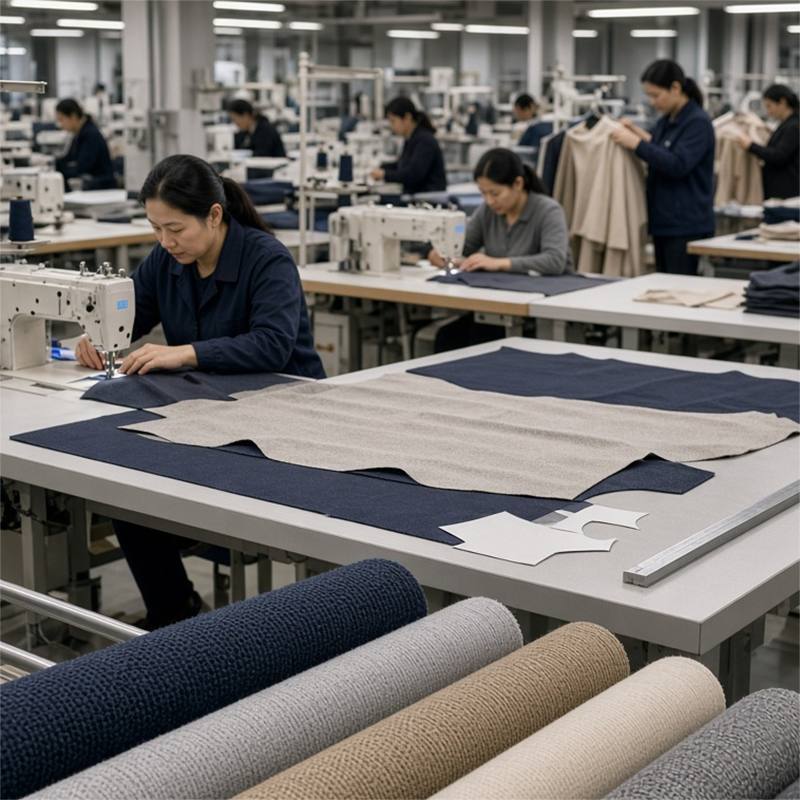
China has a broad textile and apparel manufacturing ecosystem.
A clothing project may involve several connected processes, including:
Fabric → Product Development → Sampling → Cutting → Sewing → Finishing → Inspection → Packing
Having access to different stages of the supply chain can make communication and production management more efficient.
For brands, this can be particularly useful when developing products that require specific fabrics, garment construction, or customized details.
However, the size of China's apparel manufacturing industry also means that manufacturers can vary significantly.
Therefore, brands should focus on finding the right manufacturer, rather than simply finding a manufacturer in China.
2. Define Your Product Before Searching for a Manufacturer
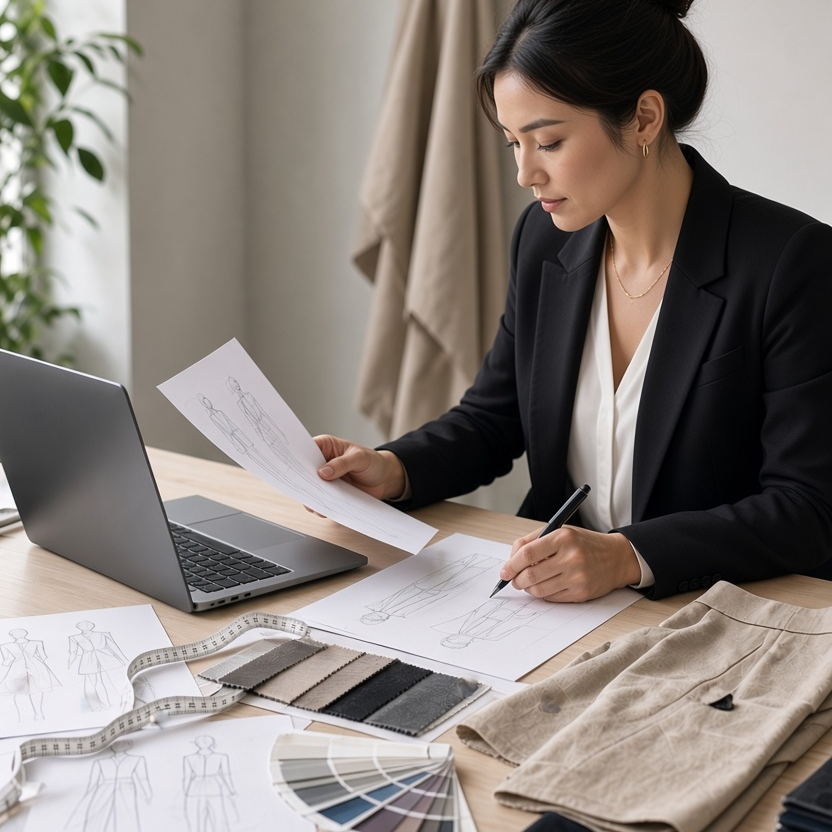
The first step is to understand what you actually need to manufacture.
Start with the product category.
Piemēram:
- T-krekli
- Svītraini džemperi
- Kapučkrekli
- Fleece jackets
- Vests
- Casual jackets
- Sporta apģērbs
- Outdoor apparel
- Children's clothing
Then define the key specifications.
Audums
Specify composition, weight, construction, and other known requirements.
Size
Prepare a size range and measurement chart.
Krāsa
Define the required colors and color standards.
Celtniecība
Explain pockets, zippers, collars, cuffs, seams, and other details.
Zīmola veidošana
Include labels, logos, embroidery, printing, hangtags, and packaging.
The clearer your product requirements are, the easier it is to find an appropriate manufacturer.
3. Check the Manufacturer's Product Experience
A manufacturer may have strong production capabilities but still not be suitable for your product.
For example, a manufacturer specializing in basic knitted garments may not be the best choice for a highly technical outdoor jacket.
Before starting cooperation, check whether the factory has experience with your product category.
KALAIBEN's company profile states that its primary products include knitted and woven casual garments and outdoor sportswear. It also states that the company has developed its own children's BOWTAD brand and adult KALAIBEN brand.
This product focus provides a relevant manufacturing background for brands working with casualwear, outdoor apparel, and related clothing categories.
4. Look at Fabric Capabilities
Fabric is one of the most important factors in garment manufacturing.
The same clothing style can have completely different characteristics depending on the fabric.
Important fabric specifications may include:
- Šķiedru sastāvs
- GSM
- Celtniecība
- Stiepties
- Surface texture
- Sajūta uz rokas
- Krāsa
- Performance requirements
KALAIBEN's company information states that its knitting fabric factory has more than 30 employees and operates equipment including high-speed single-side machines, double-side machines, terry machines, fleece machines, and rib machines.
For brands developing knitted products, this type of fabric production capability can be relevant when discussing material requirements together with garment manufacturing.
5. Ask About MOQ
MOQ means Minimum Order Quantity.
This is an important consideration when choosing a clothing manufacturer.
Minimālais pasūtījuma daudzums var atšķirties atkarībā no:
- Produkts
- Audums
- Krāsa
- Pielāgošana
- Ražošanas process
Before requesting a quotation, ask the manufacturer:
What is the MOQ per style?
What is the MOQ per color?
Does the MOQ change for custom fabrics?
Can repeat orders use the same specifications?
Understanding MOQ early can help you determine whether the manufacturer is suitable for your business.
6. Review the Sampling Process
A professional clothing development process should include sample evaluation before bulk production.
The sample gives you an opportunity to check:
Fit
Does the garment match the intended measurements?
Audums
Does the actual fabric match the requested composition and weight?
Celtniecība
Are the pockets, seams, collars, cuffs, and closures correct?
Krāsa
Does the color match the approved reference?
Zīmola veidošana
Are logos and labels correctly positioned?
Any necessary changes should be communicated before bulk production.
7. Evaluate Production Capacity
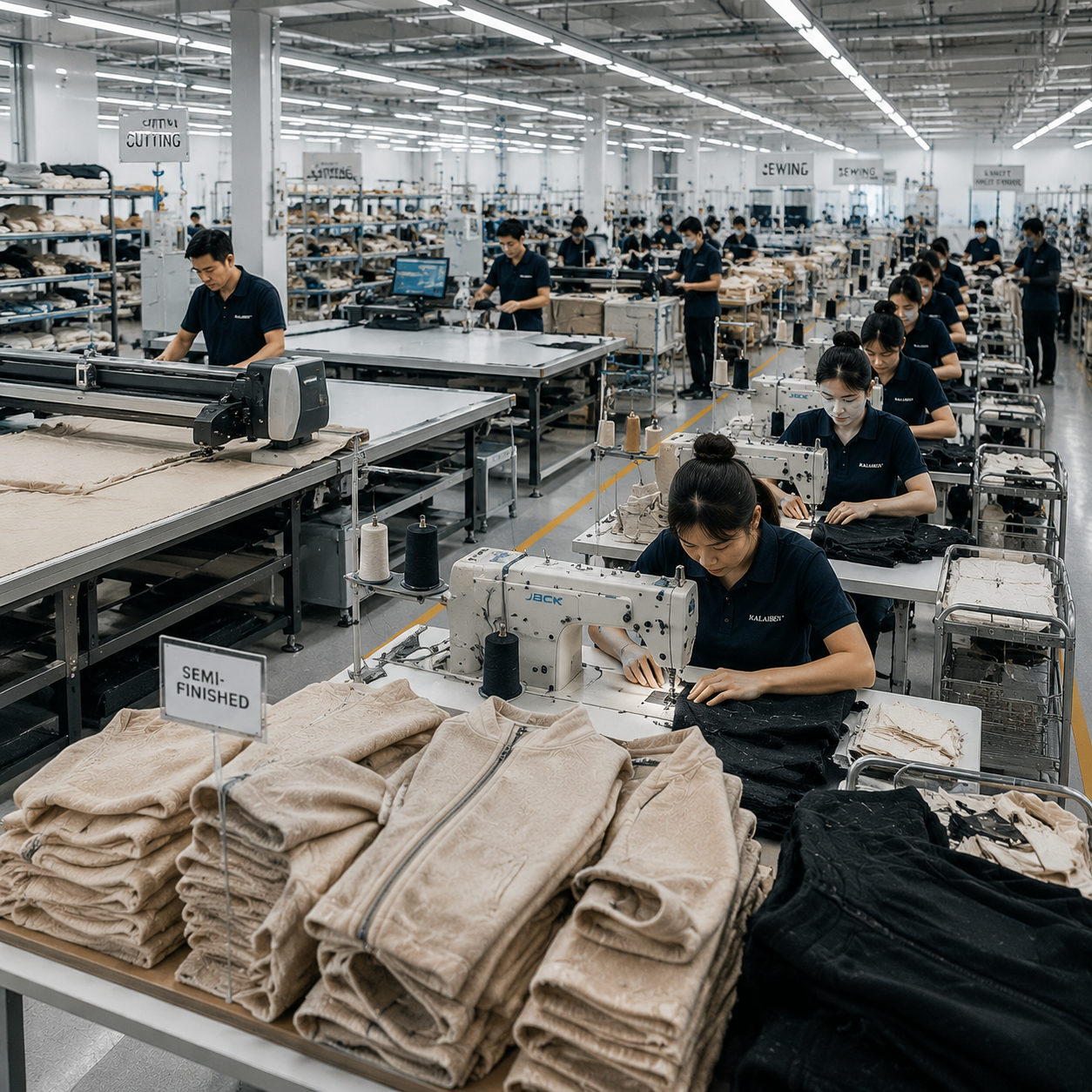
Production capacity is important when planning both initial orders and future growth.
A manufacturer should have enough capacity for your expected production requirements while maintaining appropriate quality standards.
KALAIBEN's company profile describes its Jiangxi production base as covering approximately 30 acres, with a construction area of approximately 26,000㎡. It states that the company has more than 380 employees and an annual garment production capacity of approximately 700,000–1,000,000 pieces.
Production scale, however, should not be evaluated on its own.
Brands should consider it together with:
- Product specialization
- Kvalitātes kontrole
- Minimālais pasūtījuma daudzums
- Paraugu ņemšana
- Komunikācija
- Delivery requirements
8. Understand the Production Process
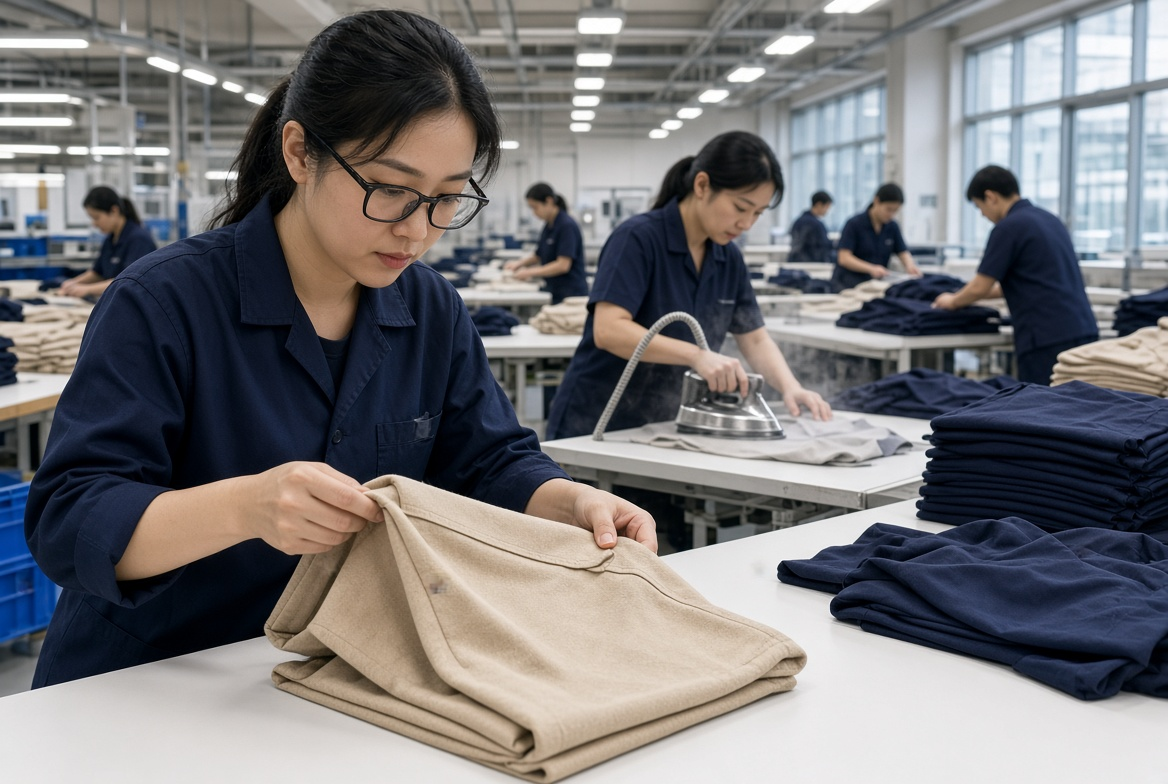
A typical clothing production process may include:
Produkta izstrāde
↓
Fabric Selection
↓
Parauga izstrāde
↓
Sample Approval
↓
Production Preparation
↓
Griešana
↓
Šūšana
↓
Apdare
↓
Pārbaude
↓
Iepakošana
↓
Shipment
The 2025 amfori BSCI report for Jiangxi KALAIBEN identifies its main production activities as including cutting, sewing, ironing, inspection, and packing.
Understanding the production stages allows brands to know where specifications and approvals need to be confirmed.
9. Quality Control Should Be Defined Clearly
Quality should not be treated as a vague concept.
Before production, define specific requirements.
Piemēram:
- Auduma sastāvs
- Auduma svars
- Garment measurements
- Šūšana
- Krāsa
- Logo placement
- Etiķetes
- Iepakojums
A clear quality standard gives both the buyer and manufacturer a common reference.
10. Consider Communication
International manufacturing requires clear communication.
During a clothing project, brands may need to discuss:
- Produkta specifikācijas
- Audums
- Samples
- Corrections
- Daudzums
- Krāsas
- Iepakojums
- Production schedules
A manufacturer that can communicate product information clearly can make the development process easier.
For international brands, communication is particularly important because product requirements often need to be confirmed remotely.
11. Think About Long-Term Cooperation
Choosing a clothing manufacturer should not only be about the first order.
A successful clothing brand may eventually need:
- Repeat production
- Additional colors
- New sizes
- New products
- Seasonal collections
- Larger production quantities
A suitable manufacturing partner should ideally have the capabilities needed to support these future requirements.
12. Why Consider KALAIBEN as a Clothing Manufacturer in China?
KALAIBEN is an integrated industry and trade company specializing in weaving and knitted garments, with headquarters in Quanzhou, Fujian, and a production operation in Nancheng County, Jiangxi.
The company profile identifies its main products as knitted and woven casual garments and outdoor sportswear.
Its Jiangxi operation covers garment production activities including cutting, sewing, ironing, inspection, and packing, as documented in the 2025 BSCI report.
For brands looking for a Chinese apparel manufacturing partner, these capabilities provide a basis for discussing product development, fabric requirements, garment production, and customized apparel projects.
Questions to Ask a Clothing Manufacturer in China
Before starting cooperation, ask:
- What clothing categories do you specialize in?
- What fabrics can you manufacture or source?
- Kāds ir jūsu minimālais pasūtījuma daudzums?
- Can you develop samples?
- What customization options are available?
- Kā tiek pārbaudīta kvalitāte?
- What information is required before production?
- What is the expected production schedule?
- Can you support repeat orders?
- Can your production capacity support future growth?
Common Mistakes to Avoid
Choosing Only by Price
The cheapest quotation is not necessarily the best overall option.
Ignoring Product Experience
Choose a manufacturer familiar with your specific garment category.
Skipping Sample Development
Samples provide an important opportunity to identify problems before bulk production.
Not Confirming MOQ
Unexpected MOQ requirements can affect inventory planning.
Failing to Plan for Repeat Production
A manufacturer should ideally be able to support successful products beyond the first order.
FAQ
How do I find a clothing manufacturer in China?
Start by defining your product requirements, then evaluate manufacturers based on product experience, fabric capabilities, MOQ, sampling, quality, production capacity, and communication.
Is China good for clothing manufacturing?
China has an extensive textile and garment manufacturing ecosystem, but individual manufacturers vary. Brands should evaluate each supplier based on their specific requirements.
What MOQ do Chinese clothing manufacturers require?
MOQ varies by manufacturer, product, fabric, color, and customization requirements.
Can a Chinese clothing manufacturer make custom garments?
Many manufacturers provide customized garment production, but the available customization options depend on their capabilities.
Should I order samples before bulk production?
Yes. Sample development allows buyers to confirm the product before committing to larger quantities.
Secinājums
Atrast pareizo clothing manufacturer china requires more than searching for a factory with competitive prices.
Zīmoliem būtu jāizvērtē:
Product Experience + Fabric Capability + Sampling + MOQ + Production + Quality + Communication
KALAIBEN's integrated textile and garment operations, focus on knitted and woven casualwear and outdoor sportswear, and documented production capabilities provide a foundation for discussing apparel manufacturing projects with international brands.
Looking for a clothing manufacturer in China? Contact KALAIBEN with your product requirements, fabric specifications, estimated quantity, and customization needs.











