




Custom Apparel Manufacturer: What to Look for in a Reliable Manufacturing Partner
Publicēšanas datums:2026-08-31 Kategorija:Ziņas Apskates skaits:486
Ievads
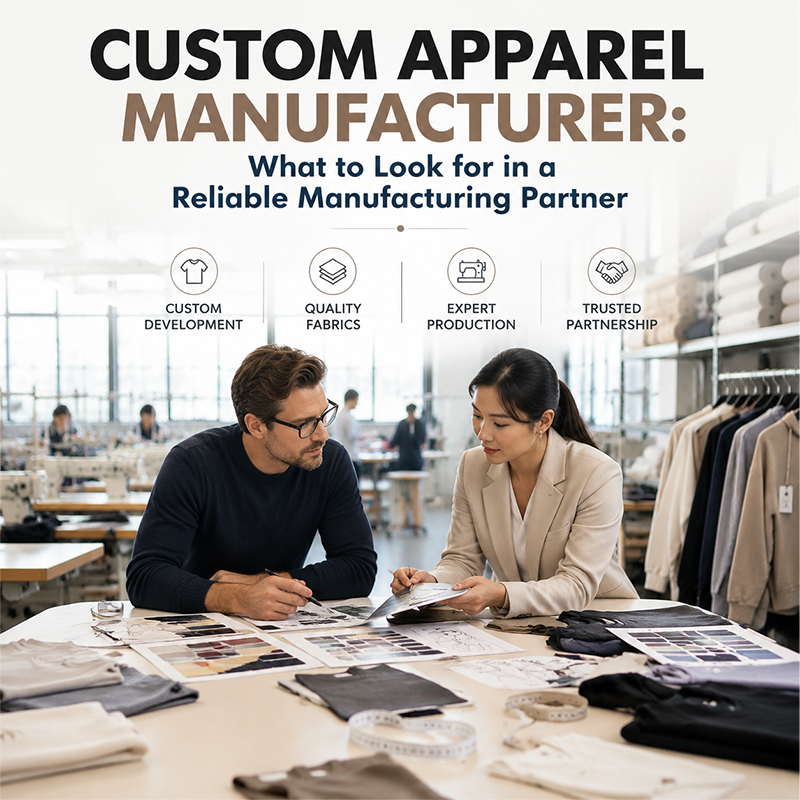
Pareizās izvēles izdarīšana custom apparel manufacturer is an important decision for clothing brands, retailers, startups, and businesses developing their own apparel collections.
Custom apparel manufacturing is more than simply putting a logo on an existing garment.
Depending on the project, customization may involve fabric selection, garment construction, colors, sizing, trims, branding, packaging, and production specifications.
A suitable manufacturing partner should therefore be able to understand the complete product requirement and turn it into a consistent finished garment.
For businesses looking for a long-term apparel supplier, the key question is not simply:
"Who can manufacture my clothes?"
It is:
"Which manufacturer can consistently manufacture the type of apparel my brand needs?"
1. What Is a Custom Apparel Manufacturer?
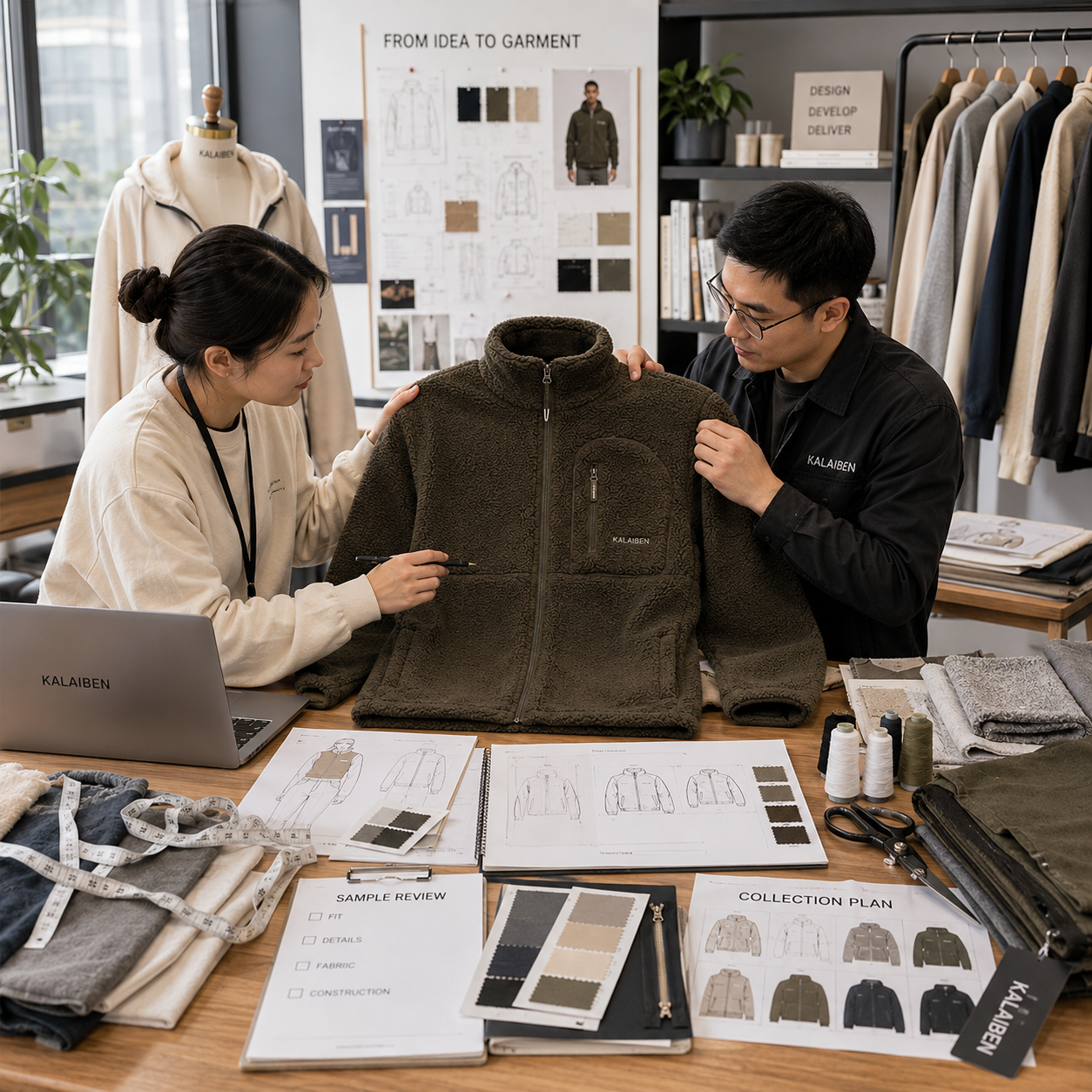
A custom apparel manufacturer produces garments according to a buyer's specific requirements.
Instead of purchasing completely standard products, buyers can provide specifications for areas such as:
- Apģērbu dizains
- Audums
- Krāsa
- Size
- Mērījumi
- Etiķetes
- Logo
- Izšūšana
- Drukāšana
- Apdares elementi
- Iepakojums
The level of customization can vary from project to project.
Some businesses may start with an existing garment style and modify the fabric, color, branding, or details.
Others may require a garment to be developed from an original design.
Understanding this difference is important when selecting a manufacturing partner.
2. Start With Your Apparel Requirements
Before contacting a manufacturer, prepare as much product information as possible.
A manufacturer may need to know:
Product Type
Piemēram:
- T-krekli
- Kapučkrekli
- Jakas
- Vests
- Fleece apģērbi
- Sporta apģērbs
- Outdoor apparel
- Ikdienas apģērbs
- Children's clothing
Audums
Provide the composition and weight when available.
Piemēram:
- 100% polyester
- Cotton blends
- Pārstrādāts poliesters
- Fleece
- Jersey
- Rib
- Terry
Size
Provide your expected size range and measurement specifications.
Krāsas
Specify the required colors and whether custom colors are needed.
Zīmola veidošana
Include:
- Main labels
- Care labels
- Karājošās etiķetes
- Logos
- Izšūšana
- Drukāšana
The clearer the requirements are, the easier it is for a manufacturer to evaluate the project.
3. Check the Manufacturer's Product Capabilities
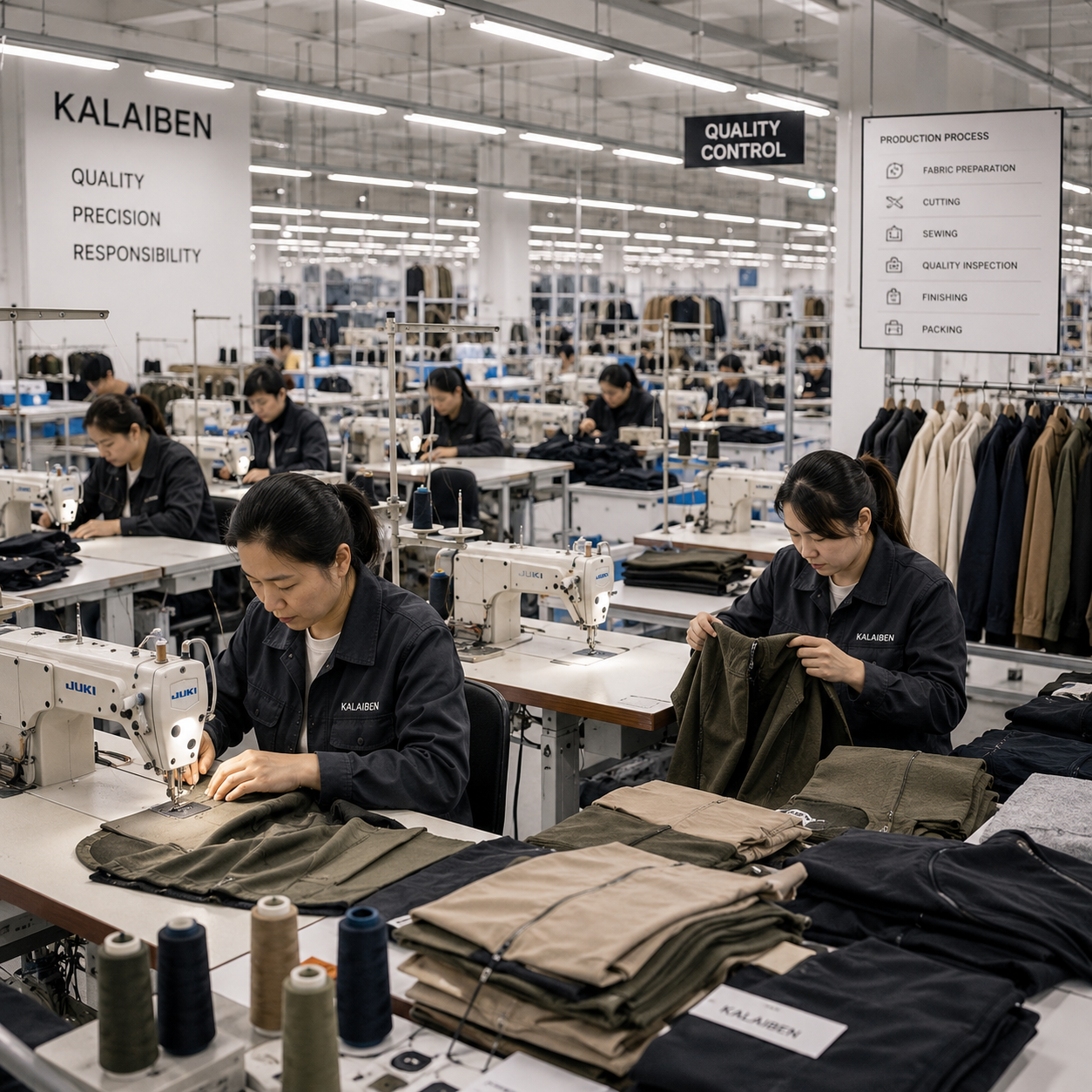
Not every apparel manufacturer is suitable for every product.
A manufacturer specializing in T-shirts may not have the same experience with technical jackets.
Likewise, a manufacturer focused on woven garments may not be the best match for a project requiring specialized knitted fabrics.
Before choosing a supplier, check whether its product experience matches your project.
For example, a brand developing outdoor casualwear may want a manufacturer experienced with:
- Fleece
- Woven fabrics
- Jakas
- Vests
- Outdoor garments
- Sporta apģērbs
KALAIBEN's company profile identifies knitted and woven casual garments and outdoor sportswear as its primary product categories.
This product focus is relevant to buyers developing casual, outdoor, and sports-related apparel.
4. Fabric Capability Matters
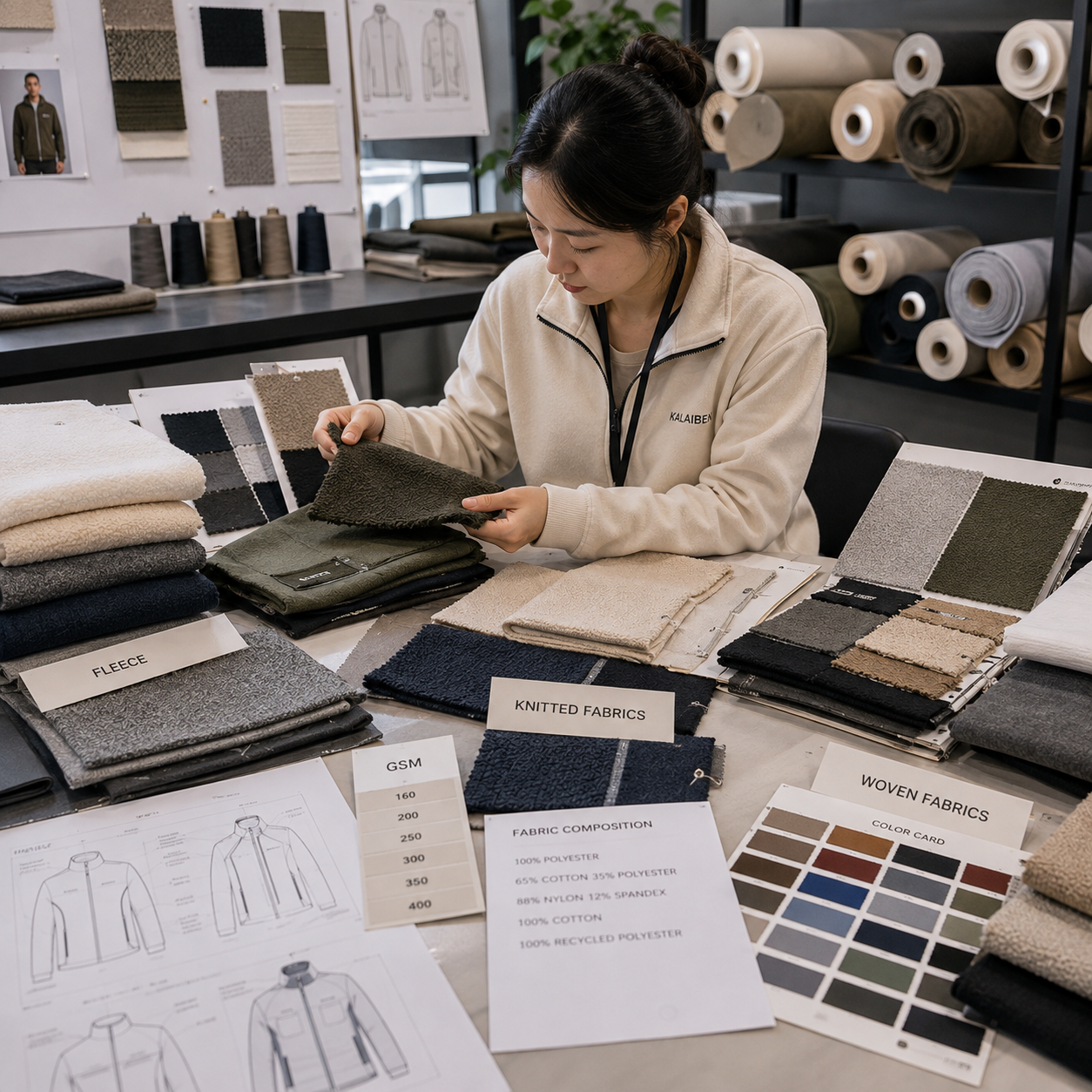
Fabric is one of the most important parts of a custom apparel project.
A manufacturer should be able to discuss fabric requirements in practical terms.
Important specifications can include:
- Šķiedru sastāvs
- Auduma svars
- Celtniecība
- Stiepties
- Surface finish
- Sajūta uz rokas
- Krāsa
- Performance requirements
KALAIBEN also operates a knitting fabric production facility. Its company information describes more than 30 textile employees and equipment including high-speed single-side machines, double-side machines, terry machines, fleece machines, and rib machines.
For projects involving knitted apparel, this textile capability can provide an additional point of communication between fabric requirements and garment production.
5. Ask About Sampling
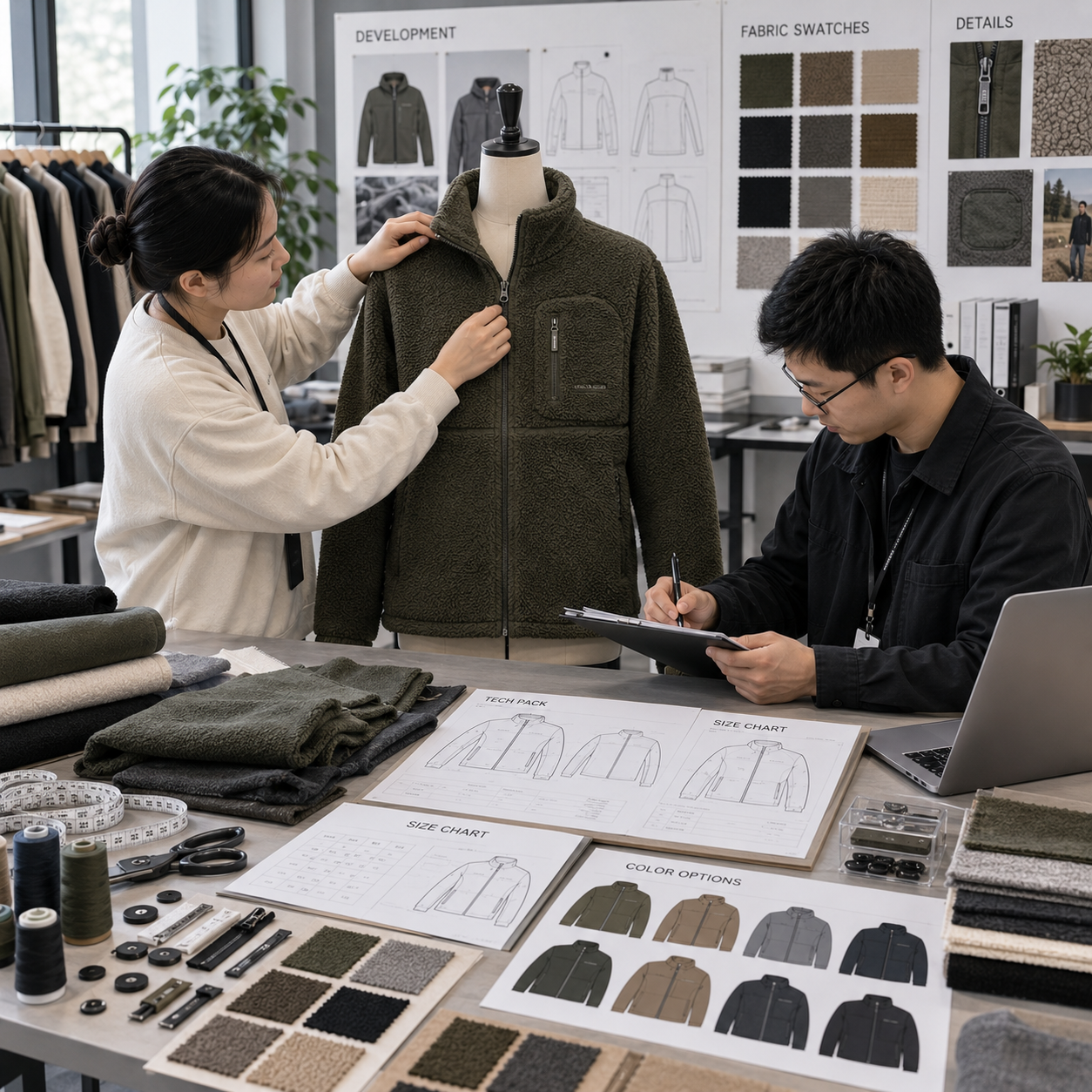
A sample is an important checkpoint before bulk manufacturing.
It allows a buyer to evaluate the actual garment rather than relying only on drawings or descriptions.
During sample review, check:
Fit
Are the measurements and proportions correct?
Audums
Does the actual fabric match the intended weight and appearance?
Celtniecība
Are seams, pockets, cuffs, collars, and other details correct?
Zīmola veidošana
Are logos, labels, embroidery, and prints positioned correctly?
Krāsa
Does the actual garment match the approved color?
If changes are required, communicate them before bulk production.
6. Understand MOQ
MOQ means Minimum Order Quantity.
Every manufacturer may have different MOQ requirements.
MOQ can depend on:
- Produkts
- Audums
- Krāsa
- Pielāgošana
- Ražošanas process
- Pasūtījuma daudzums
For a custom apparel project, it is important to clarify whether MOQ is calculated by:
- Style
- Krāsa
- Total order
- Size
Do not assume that one manufacturer's MOQ structure will be the same as another's.
7. Evaluate Production Capability
A reliable custom apparel manufacturer should have production capabilities that match the expected order volume.
KALAIBEN's company profile describes a Jiangxi production base covering approximately 30 acres, with a construction area of approximately 26,000㎡. It also states that the garment factory has more than 380 employees and produces knitted and woven casual garments and outdoor sportswear.
The company's stated annual garment production capacity is approximately 700,000–1,000,000 pieces in the Chinese company profile.
For buyers, production capacity should be considered together with product specialization and quality requirements.
A larger production capability does not automatically mean a manufacturer is the right choice.
The important point is whether its capabilities match your project.
8. Look at the Complete Production Process
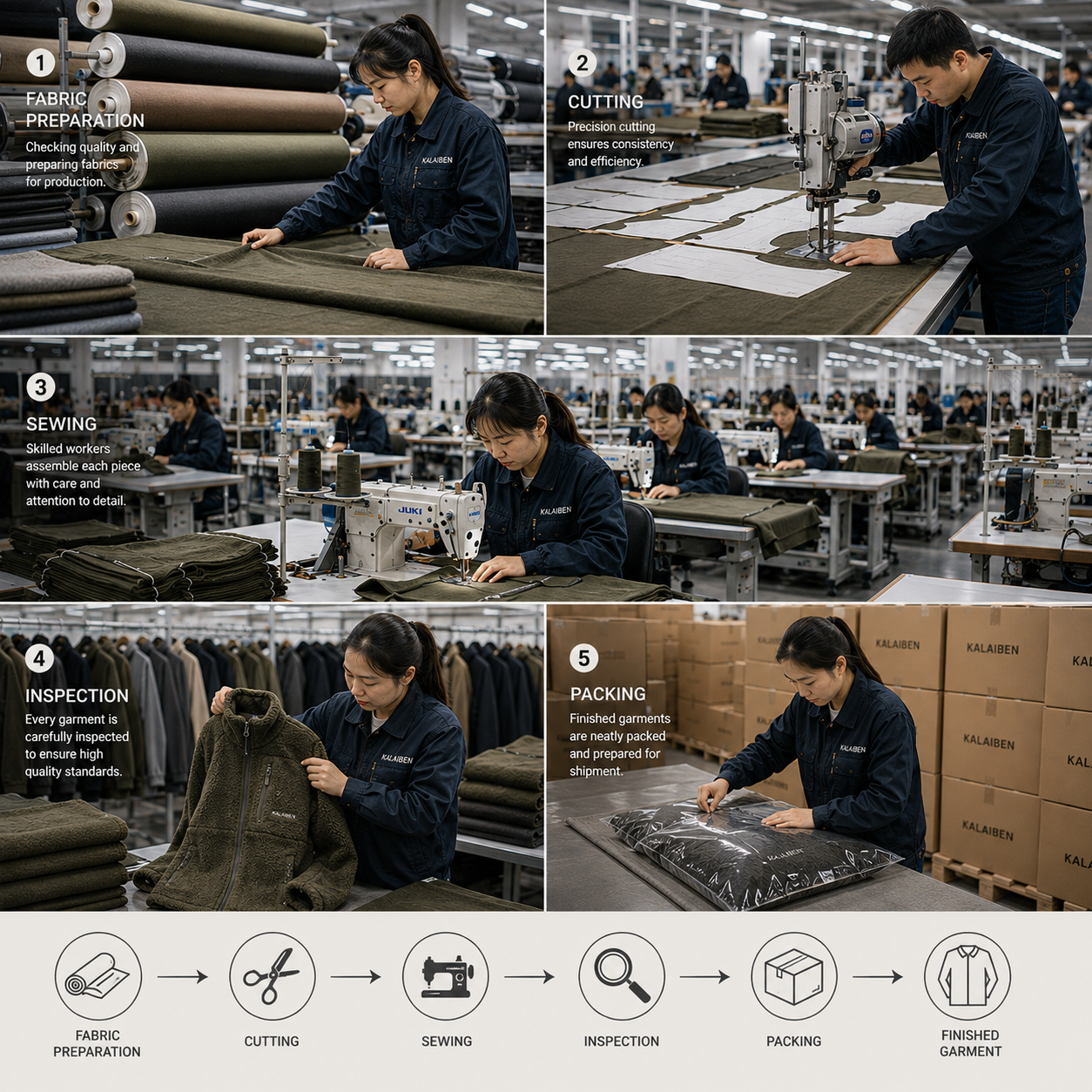
Custom apparel manufacturing can involve multiple stages.
A typical project may follow:
Design → Fabric Selection → Sample Development → Sample Approval → Production Preparation → Cutting → Sewing → Finishing → Inspection → Packing → Shipment
The audited production activities documented for Jiangxi KALAIBEN included cutting, sewing, ironing, inspection, and packing.
Understanding these stages helps buyers communicate requirements more clearly and identify where approvals are needed.
9. Quality Should Be Defined Before Production
"High quality" can mean different things to different buyers.
Instead of using only general descriptions, establish measurable requirements.
Piemēram:
- Measurement tolerances
- Auduma sastāvs
- Auduma svars
- Stitching requirements
- Color standards
- Logo placement
- Iepakojuma prasības
This makes quality expectations easier to communicate.
It also gives both the buyer and manufacturer a clearer reference during production.
10. Consider Communication and Long-Term Cooperation
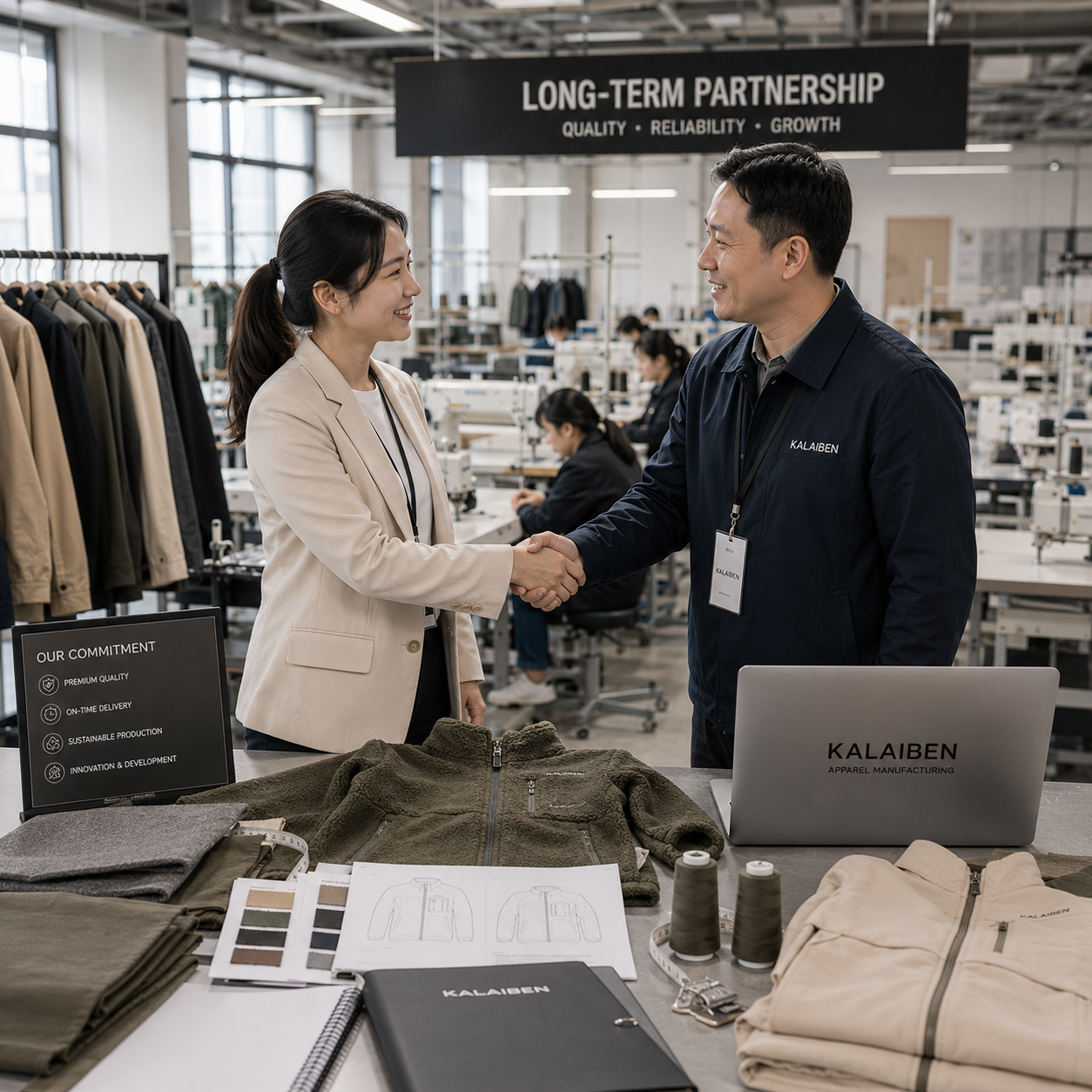
Custom apparel projects often require several rounds of communication.
A manufacturer may need to discuss:
- Design changes
- Fabric options
- Pārskatīto paraugu piemēri
- Production quantities
- Color approvals
- Iepakojums
- Delivery schedules
Good communication can make this process more efficient.
It is also worth considering the manufacturer's ability to support future orders.
If your first product performs well, you may need:
- Repeat production
- New colors
- New sizes
- Additional styles
- Seasonal collections
The best manufacturing relationship should be able to develop with your business.
Why KALAIBEN Can Be Considered for Custom Apparel Manufacturing
KALAIBEN describes itself as an integrated industry and trade company specializing in weaving and knitted garments, headquartered in Quanzhou, Fujian, with its Jiangxi subsidiary operating a textile and garment production base.
Its stated product focus includes knitted and woven casualwear and outdoor sportswear, while the company also develops its own BOWTAD children's brand and KALAIBEN adult brand.
This combination gives buyers a basis for discussing:
Fabric + Garment + Customization + Production
rather than treating garment manufacturing as a simple finished-product purchasing process.
Questions to Ask a Custom Apparel Manufacturer
Before starting a project, consider asking:
- Kādas apģērbu kategorijas jūs ražojat?
- Ar kādiem audumiem jūs varat strādāt?
- Kāds ir jūsu minimālais pasūtījuma daudzums?
- How is MOQ calculated?
- Can you develop samples?
- How are sample revisions handled?
- What customization options are available?
- What information is required before production?
- What are the quality inspection procedures?
- Vai jūs varat nodrošināt atkārtotu ražošanu?
These questions can help buyers compare potential manufacturing partners more effectively.
Common Mistakes When Choosing a Custom Apparel Manufacturer
Choosing Only Based on Price
A lower quotation does not necessarily mean lower total production cost.
Providing Incomplete Specifications
Unclear requirements can lead to unnecessary revisions.
Skipping the Sample Stage
Bulk production should not begin before the product requirements are sufficiently confirmed.
Ignoring Fabric Specifications
Fabric has a major influence on the final garment.
Not Considering Future Orders
A supplier should ideally be able to support the brand beyond its first production order.
FAQ
What does a custom apparel manufacturer do?
A custom apparel manufacturer produces garments according to a buyer's requirements, which may include fabric, design, colors, sizing, branding, trims, and packaging.
What information should I provide to a manufacturer?
Provide product references, fabric specifications, size requirements, colors, quantities, branding details, and packaging requirements whenever available.
What is MOQ in apparel manufacturing?
MOQ means Minimum Order Quantity. It is the minimum quantity a manufacturer requires for a particular production project.
Do custom apparel manufacturers provide samples?
Many manufacturers can provide samples or sample-development services, but the exact process depends on the manufacturer and project.
How do I choose a custom apparel manufacturer?
Compare product capabilities, fabric experience, MOQ, sampling, quality processes, communication, production capabilities, and long-term cooperation potential.
Secinājums
Choosing a custom apparel manufacturer is an important part of building a reliable apparel supply chain.
The right partner should be evaluated not only by price, but also by:
- Pieredze ar produktu
- Auduma īpašības
- Paraugu ņemšana
- Minimālais pasūtījuma daudzums
- Pielāgošana
- Production capability
- Quality requirements
- Komunikācija
- Long-term support
For brands developing casualwear, outdoor apparel, sportswear, fleece garments, and other knitted or woven products, KALAIBEN's integrated textile and garment capabilities provide a foundation for discussing customized apparel projects.
Looking for a custom apparel manufacturer? Contact KALAIBEN with your product design, fabric requirements, quantity, and customization needs to discuss your project.











