




Cut and Sew Clothing Manufacturer: A Practical Guide for Apparel Brands
Publicēšanas datums:2026-09-04 Kategorija:Ziņas Apskates skaits:508
Ievads
Not every garment can be produced simply by choosing an existing blank product and adding a logo.
Many apparel brands need control over the garment's fabric, shape, construction, measurements, seams, pockets, trims, and finishing details.
For these products, cut and sew clothing manufacturing provides a more flexible approach.
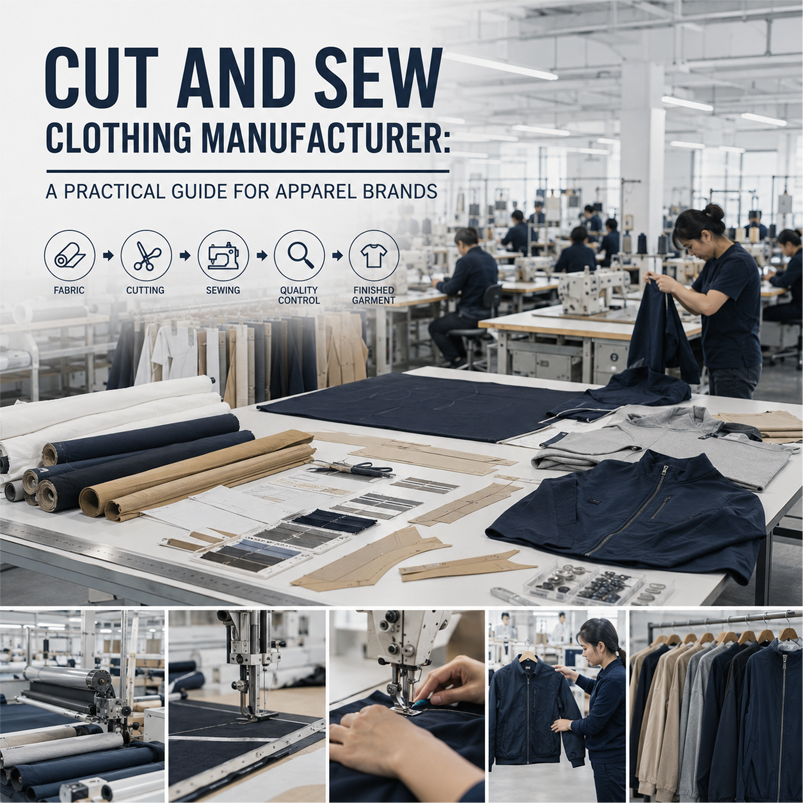
Cut and sew production starts with fabric and transforms it into a finished garment through processes such as pattern cutting, sewing, finishing, and quality inspection.
For brands developing original apparel styles, understanding how this process works can help them communicate more effectively with manufacturers and make better production decisions.
1. What Is Cut and Sew Clothing Manufacturing?
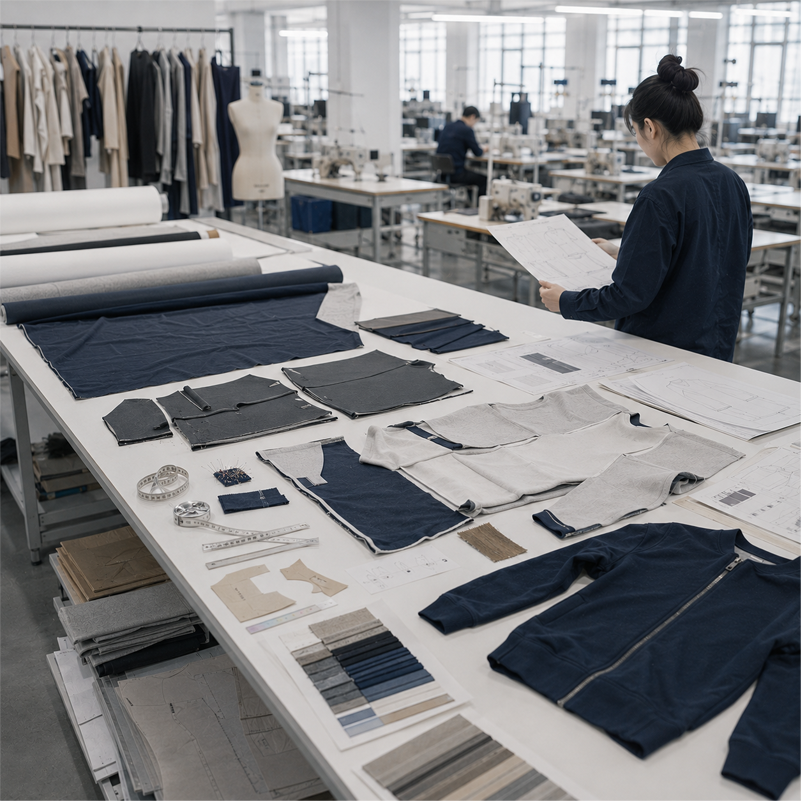
Cut and sew manufacturing is a garment production method in which fabric is cut into specific pattern pieces and then sewn together to create the finished garment.
Unlike decoration-only customization, cut and sew production focuses on the actual construction of the garment.
The process can involve:
- Modeļu izstrāde
- Auduma izvēle
- Fabric cutting
- Šūšana
- Vīļu izgatavošana
- Trims and accessories
- Apdare
- Quality inspection
- Iepakošana
This approach gives brands greater control over the physical structure of the garment.
2. What Products Can a Cut and Sew Manufacturer Make?
Cut and sew manufacturing can be used for a wide range of apparel products.
Examples include:
- T-krekli
- Svītraini džemperi
- Kapučkrekli
- Jakas
- Vests
- Casual shirts
- Outdoor garments
- Fleece apģērbi
- Children's clothing
- Other custom apparel styles
The exact product range depends on the manufacturer's equipment, workforce, technical capabilities, and production experience.
Therefore, brands should always check whether a potential manufacturer has experience with the specific garments they want to develop.
3. Why Do Brands Choose Cut and Sew Manufacturing?
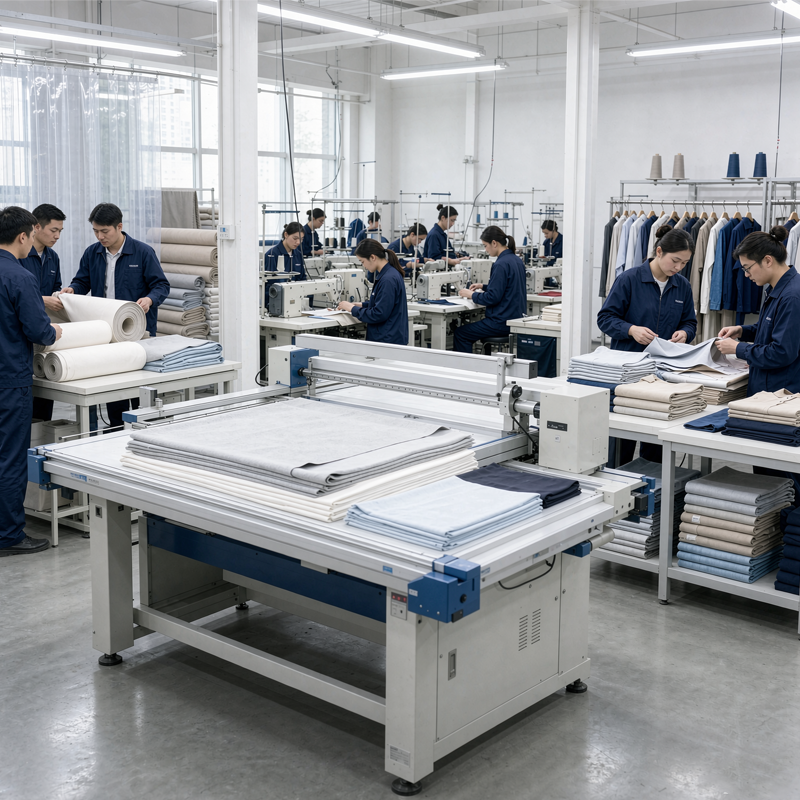
The main advantage is product control.
A brand can define more aspects of the garment rather than starting from a standardized blank.
This can include:
Garment Shape
The brand can develop its own silhouette and proportions.
Audums
Different fabrics can be selected according to the intended function and appearance.
Mērījumi
The brand can define its own size specifications.
Celtniecība
Details such as seams, pockets, cuffs, collars, closures, and panels can be developed according to the design.
Apdare
Additional details can be incorporated during garment production.
This makes cut and sew particularly useful for brands that want products with a distinctive construction.
4. Cut and Sew vs. Blank Garment Customization
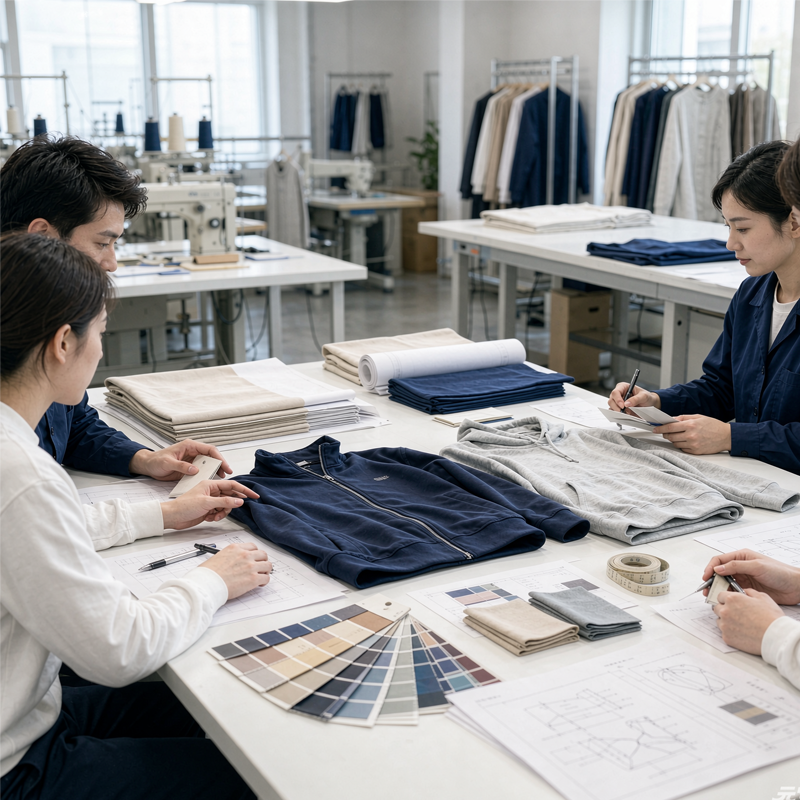
These two approaches are often confused.
Blank Garment Customization
A brand starts with an existing garment and adds customization such as:
- Sietspiede
- Izšūšana
- Etiķetes
- Patches
The basic garment construction already exists.
Cut and Sew Manufacturing
The garment is developed from fabric and pattern pieces.
The manufacturer can work with the brand to define:
- Audums
- Pattern
- Mērījumi
- Celtniecība
- Apdares elementi
- Apdare
Therefore, cut and sew generally provides greater control over the physical design of the garment.
5. What Information Does a Cut and Sew Manufacturer Need?
The more clearly a brand communicates its product requirements, the easier it is for a manufacturer to evaluate the project.
Useful materials may include:
- Tehniskie rasējumi
- Garment measurements
- Auduma specifikācijas
- Krāsu atsauces
- Construction details
- Trim information
- Prasības attiecībā uz marķējumu
- Mākslas darbs
- Etalona paraugi
- Target quantities
A technical package or clearly organized specification document can help reduce misunderstandings during development.
6. Fabric Selection Is an Important Part of Cut and Sew
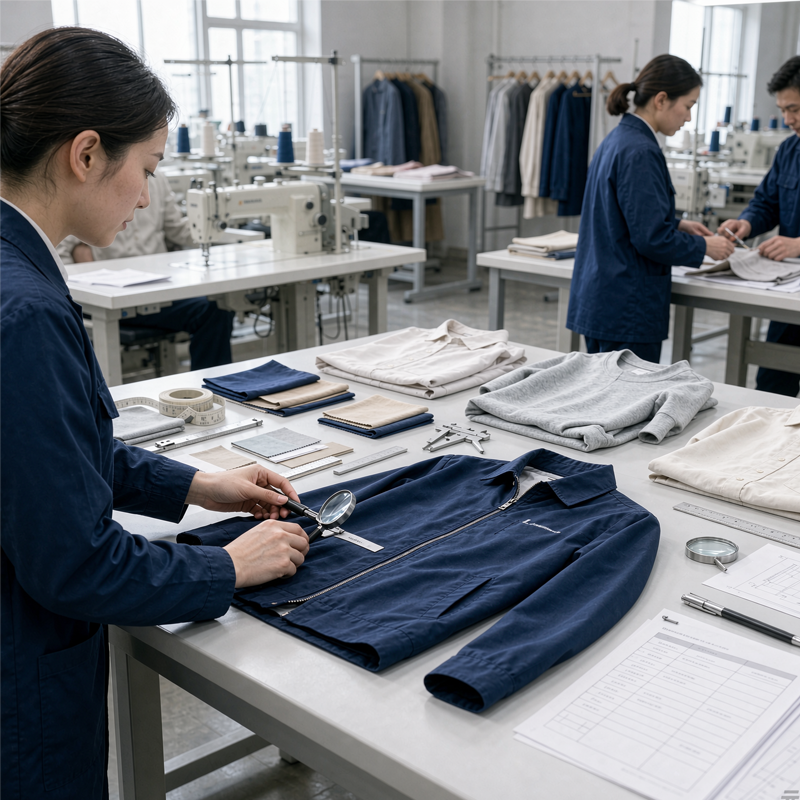
Fabric is not simply a material choice.
It affects:
- Apģērba svars
- Sajūta uz rokas
- Izskats
- Fit
- Drape
- Izturība
- Celtniecība
- Production requirements
For example, a lightweight woven fabric and a heavyweight fleece fabric can require different handling and construction considerations.
Brands should communicate their desired fabric composition, weight, texture, stretch, color, and intended use as clearly as possible.
7. How Does the Cut and Sew Process Work?
A typical production workflow includes several stages.
Step 1: Design and Technical Specifications
The brand provides the garment concept and technical requirements.
Step 2: Pattern Development
The design is translated into pattern pieces and garment measurements.
Step 3: Fabric Preparation
The required fabric is prepared for cutting.
Step 4: Cutting
Fabric is cut into the required pattern components.
Step 5: Sewing
The individual components are assembled into a garment.
Step 6: Finishing
Garments receive finishing operations and any required trims or decoration.
Step 7: Inspection
Finished garments are checked against the approved specifications.
Step 8: Packing
Approved products are prepared for shipment.
The exact sequence may vary according to garment type and manufacturing setup.
8. Why Is Sampling Important?
Sampling allows a brand to evaluate the actual garment before committing to bulk production.
A sample can reveal issues that may not be obvious from a technical drawing.
Brands should review:
- Fit
- Mērījumi
- Audums
- Šūšana
- Vīles
- Celtniecība
- Krāsa
- Apdares elementi
- Vispārējais izskats
If something needs to change, the manufacturer can revise the sample before bulk production.
This makes sampling an important bridge between the design concept and the finished production order.
9. What Should You Check in a Cut and Sew Sample?
A systematic review can make sample approval more effective.
Mērījumi
Compare the sample against the agreed size specifications.
Audums
Check weight, hand feel, appearance, stretch, and overall suitability.
Celtniecība
Inspect seams, panels, collars, cuffs, pockets, closures, and other structural elements.
Šūšana
Look for consistent stitching and clean construction.
Izskats
Check whether the finished garment matches the original design direction.
Sīkāka informācija
Review labels, trims, decoration, and finishing.
The approved sample should become a clear reference for bulk production.
10. How to Choose a Cut and Sew Clothing Manufacturer
When comparing manufacturers, consider more than price.
Pieredze ar produktu
Does the manufacturer regularly produce your type of garment?
Technical Capability
Can the factory handle your construction requirements?
Fabric Knowledge
Can the manufacturer work with the fabrics your products require?
Paraugu ņemšana
Is there a clear sample development and approval process?
Ražošanas jauda
Can the manufacturer handle your expected quantity?
Kvalitātes kontrole
Are inspection procedures clearly defined?
Komunikācija
Can the manufacturer understand and respond to technical requirements?
A manufacturer with relevant experience may be more valuable than one that simply offers the lowest quotation.
11. What Is the Difference Between a Cut and Sew Manufacturer and a Full-Service Manufacturer?
A cut and sew manufacturer focuses strongly on garment construction and production.
A full-service or one stop manufacturer may coordinate additional services such as:
- Auduma iepirkšana
- Product development
- Paraugu ņemšana
- Dekorēšana
- Production
- Kvalitātes kontrole
- Iepakošana
The two categories can overlap.
For a brand, the important question is not which label a manufacturer uses, but whether its actual capabilities match the project's requirements.
12. What Questions Should You Ask Before Placing an Order?
Before starting a project, ask:
- What types of garments do you specialize in?
- Can you develop samples from technical drawings?
- What fabrics can you source?
- Kāds ir jūsu minimālais pasūtījuma daudzums?
- What sample process do you use?
- How are pattern and measurement revisions handled?
- Which customization services are available?
- How do you control production quality?
- What is the expected production timeline?
- Vai jūs varat nodrošināt atkārtotu ražošanu?
These questions can help a brand determine whether the manufacturer is suitable for a long-term production relationship.
13. Common Mistakes When Working With a Cut and Sew Manufacturer
Providing Too Little Information
A vague design concept may not provide enough information for accurate development.
Changing Requirements Too Late
Frequent changes after production begins can create additional complexity.
Skipping Sample Approval
Bulk production should not begin before the brand is satisfied with the approved sample and specifications.
Focusing Only on Price
A low quotation does not automatically mean the manufacturer is the best fit.
Ignoring Fabric Specifications
Fabric composition, weight, construction, and performance can significantly affect the final garment.
Not Defining Quality Expectations
Quality requirements should be discussed before bulk production.
14. Is Cut and Sew Right for Your Brand?
Cut and sew can be a strong option when a brand wants to develop garments with control over the product itself.
It is particularly relevant when the brand needs:
- Original garment shapes
- Custom measurements
- Specific fabrics
- Individuāla būvniecība
- Custom pockets or panels
- Pielāgotas apdares
- Distinctive finishing
- Consistent repeat production
If the brand only needs to add a logo to an existing blank garment, a simpler customization model may be sufficient.
The right manufacturing method depends on how much control the brand needs over the garment.
Secinājums
A cut and sew clothing manufacturer can help apparel brands turn a design concept into a finished garment by controlling the actual construction of the product.
From fabric selection and pattern development to cutting, sewing, finishing, and quality inspection, the process gives brands more control than simple blank-garment customization.
The most important step is choosing a manufacturer with relevant product experience and the technical capabilities needed for the project.
A clear product specification, properly developed sample, agreed quality requirements, and effective communication can help create a smoother path from concept to bulk production.











