




Ako založiť módnu značku: Príručka krok za krokom
Dátum zverejnenia:2026-08-25 Kategória:SPRÁVY Počet zobrazení:659
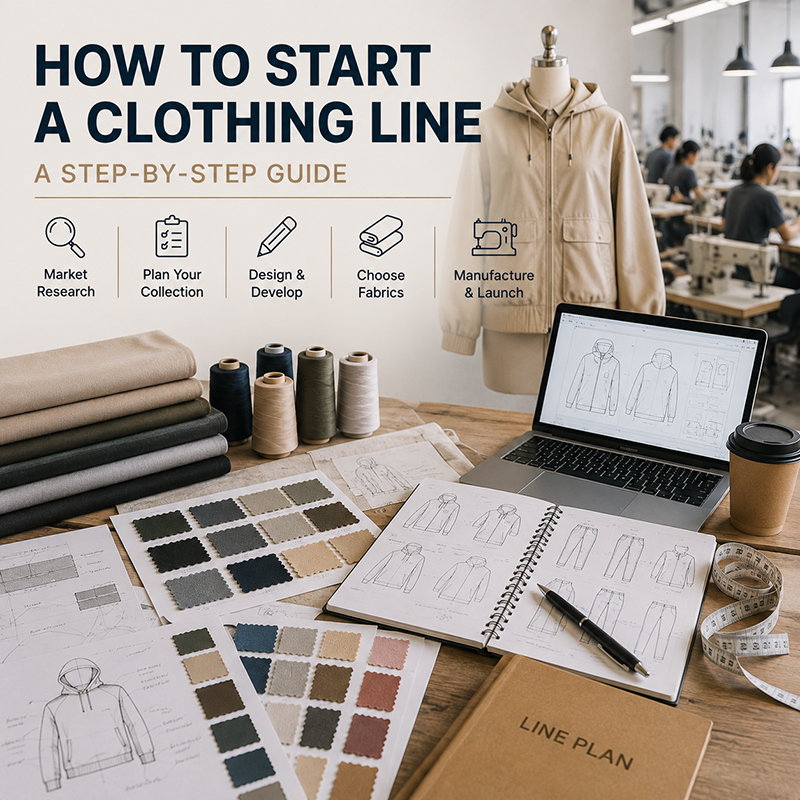
Starting a clothing line requires careful planning from the first product idea to the final production run.
A clothing line is not simply a group of individual garments. The products need to work together through their design, fabrics, colors, target customers, price positioning, and overall brand direction.
For new fashion entrepreneurs, the development process can include market research, collection planning, garment design, fabric selection, tech pack preparation, sampling, manufacturing, quality control, and launch preparation.
A well-organized product development process can help reduce unnecessary costs and make it easier to turn your ideas into commercially viable garments.
Here is a step-by-step guide to starting a clothing line.
1. Choose a Clear Clothing Line Concept
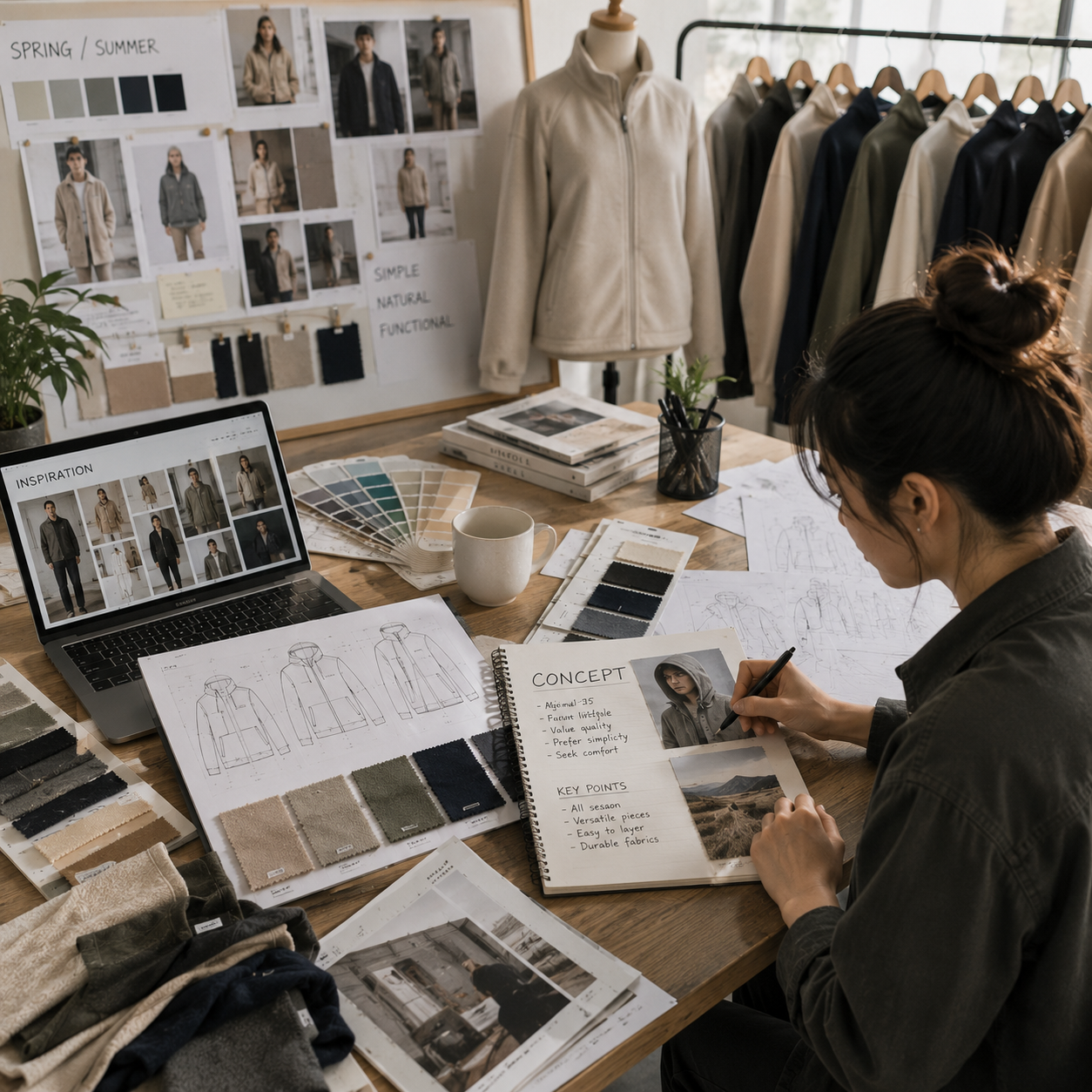
Start with a clear concept for your collection.
Think about:
- Target customers
- Clothing category
- Design style
- Season
- Price range
- Function
- Brand positioning
For example, an outdoor clothing line may focus on comfort, durability, warmth, and functionality, while a casualwear collection may emphasize versatility and everyday comfort.
Your products should share a consistent design direction so that customers can recognize them as part of the same collection.
2. Research the Market
Before developing products, study the market you want to enter.
Look at competing clothing lines and compare:
- Kategórie produktov
- Price points
- Tkaniny
- Farby
- Sizes
- Product features
- Customer reviews
- Marketing strategies
The goal is not to copy another brand.
Instead, identify what customers already want and where your collection could offer something different.
3. Plan Your First Collection
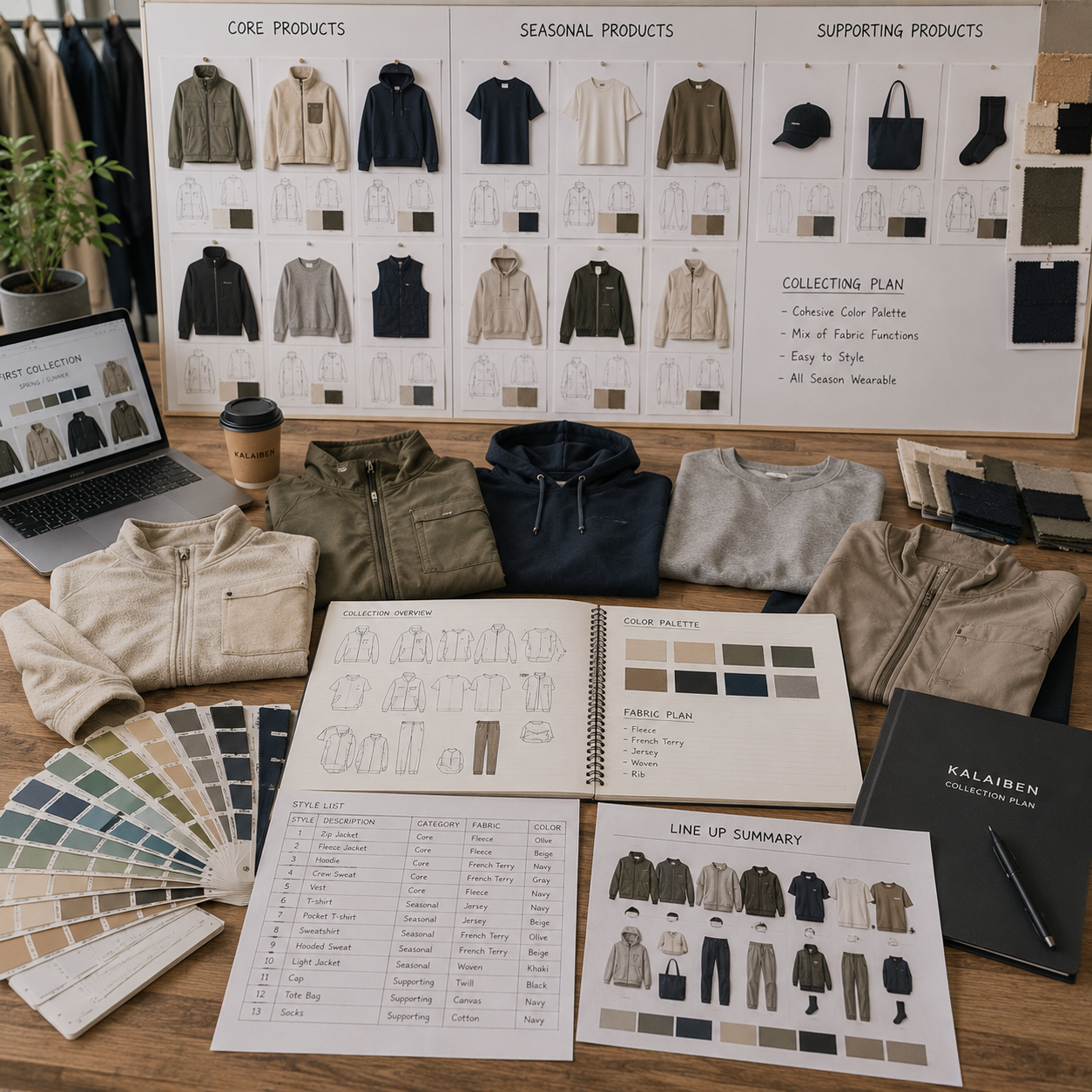
A new clothing line does not need dozens of styles.
Starting with a focused collection can make development and production easier to manage.
You can divide products into:
Core Products
The essential styles that define your collection.
Seasonal Products
Products designed around specific weather or seasons.
Supporting Products
Additional styles that complement the core range.
For example, an outdoor casual collection might include jackets, fleece tops, vests, trousers, and other complementary garments.
Planning the collection before sampling can help you control the number of styles, colors, sizes, and production requirements.
4. Develop Your Garment Designs
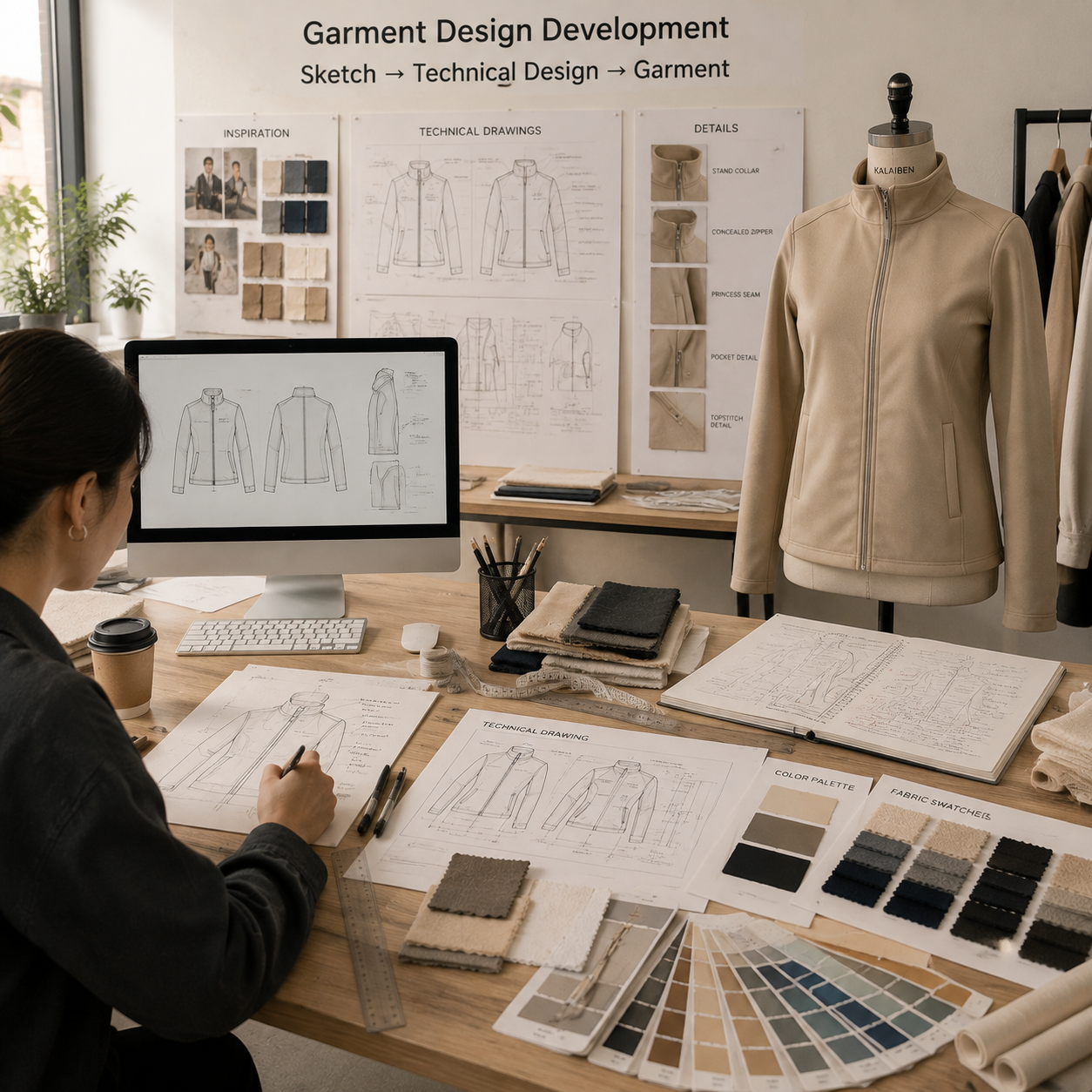
Once the collection concept is clear, begin developing individual garments.
Your design information may include:
- Garment sketches
- Technical drawings
- Rozmery
- Farby
- Požiadavky na látku
- Vhodné
- Stavebníctvo
- Ozdobné lišty
- Štítky
- Balenie
It is useful to consider manufacturing feasibility during the design stage.
Some construction details may require additional production processes or specialized materials.
Working with an experienced manufacturer early can help identify potential production challenges before samples are finalized.
5. Select Suitable Fabrics
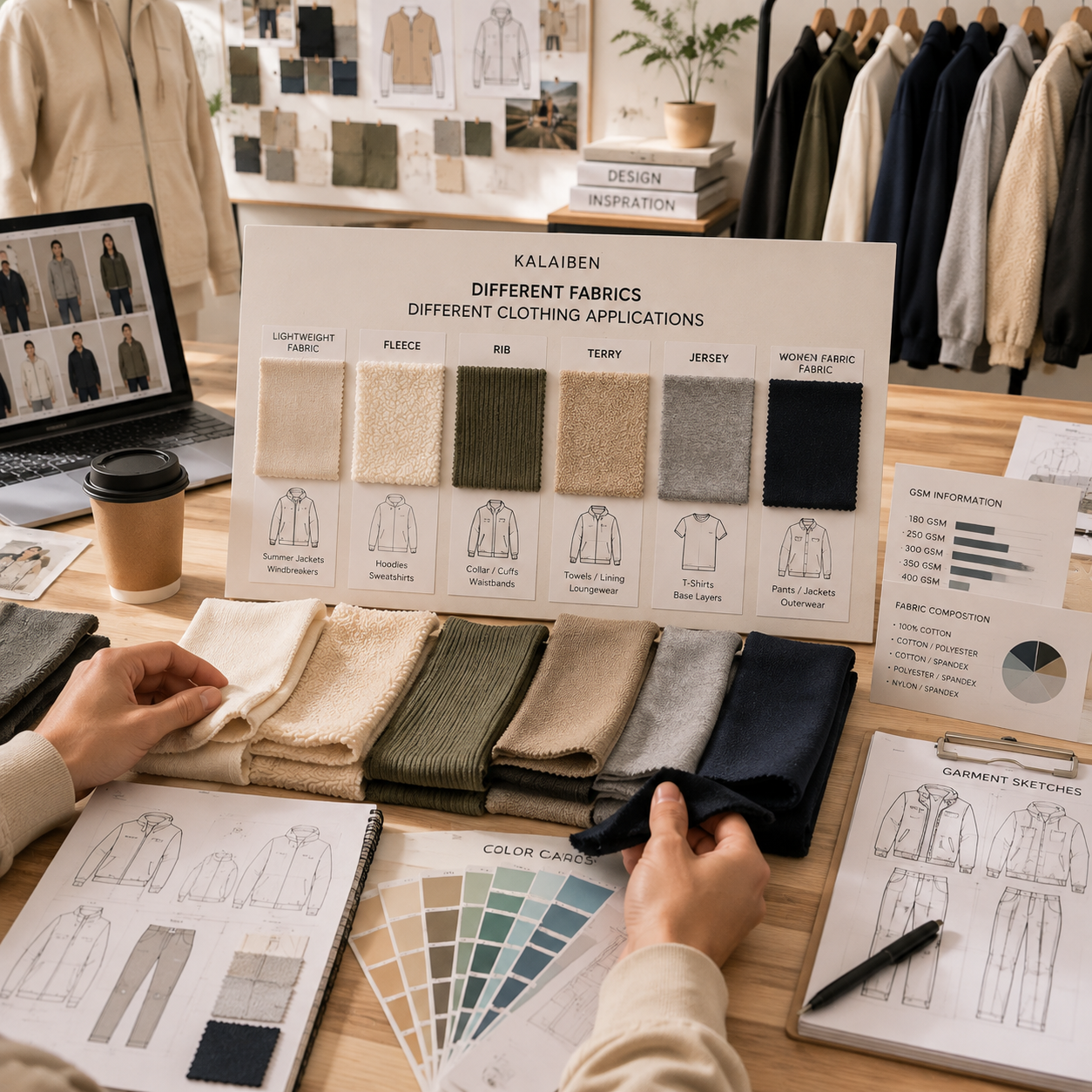
Fabric selection is particularly important when developing a clothing line.
The same design can have a completely different appearance and performance depending on the fabric used.
Zamyslite sa nad tým:
- Zloženie vlákien
- GSM
- Pocit v rukách
- Strečing
- Breathability
- Trvanlivosť
- Teplo
- Moisture management
- Farba
- Care requirements
KALAIBEN's integrated business includes knitted fabric production and garment manufacturing. Its textile operation produces knitted fabrics using equipment including high-speed single-side machines, double-side machines, terry machines, fleece machines, and rib machines.
For brands developing knitted apparel, having a manufacturing partner with textile production experience can help create closer communication between fabric requirements and finished garment development.
6. Prepare a Tech Pack
A tech pack gives the manufacturer detailed information about the product.
Depending on the garment, it may include:
- Rozmery
- Zloženie tkaniny
- Hmotnosť tkaniny
- Farby
- Construction details
- Šitie
- Umelecké dielo
- Umiestnenie loga
- Štítky
- Ozdobné lišty
- Balenie
Clear documentation can reduce communication problems during sampling and bulk production.
For brands developing multiple styles, standardized product specifications can also make collection management more efficient.
7. Develop Samples
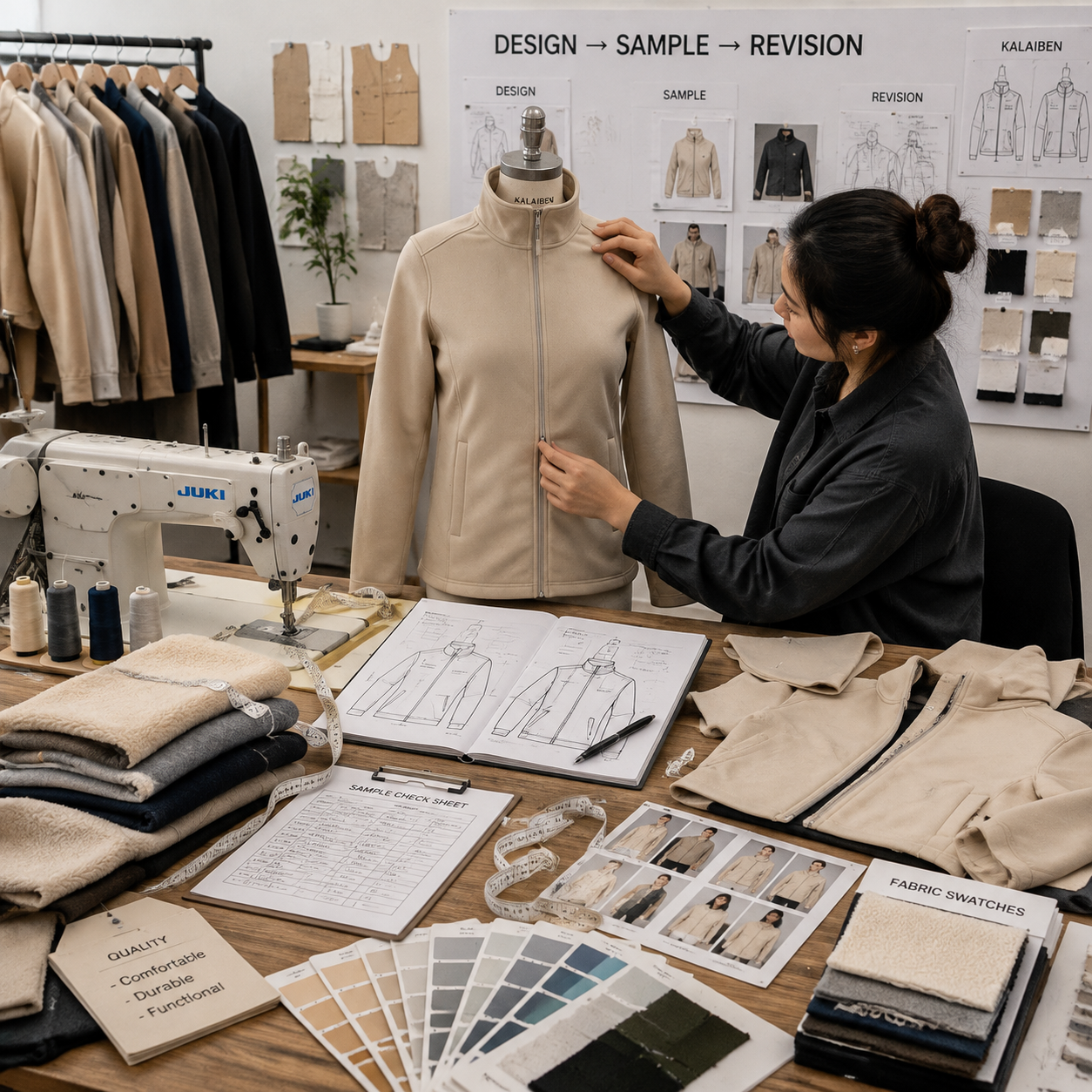
Samples allow you to test the design before committing to bulk production.
During the sample stage, review:
- Vhodné
- Rozmery
- Tkanina
- Farba
- Stavebníctvo
- Pohodlie
- Vzhľad
- Funkčné detaily
If changes are required, communicate them clearly to the manufacturer and review the revised sample.
The goal is to have a product specification that is sufficiently clear before bulk production begins.
8. Choose a Clothing Manufacturer
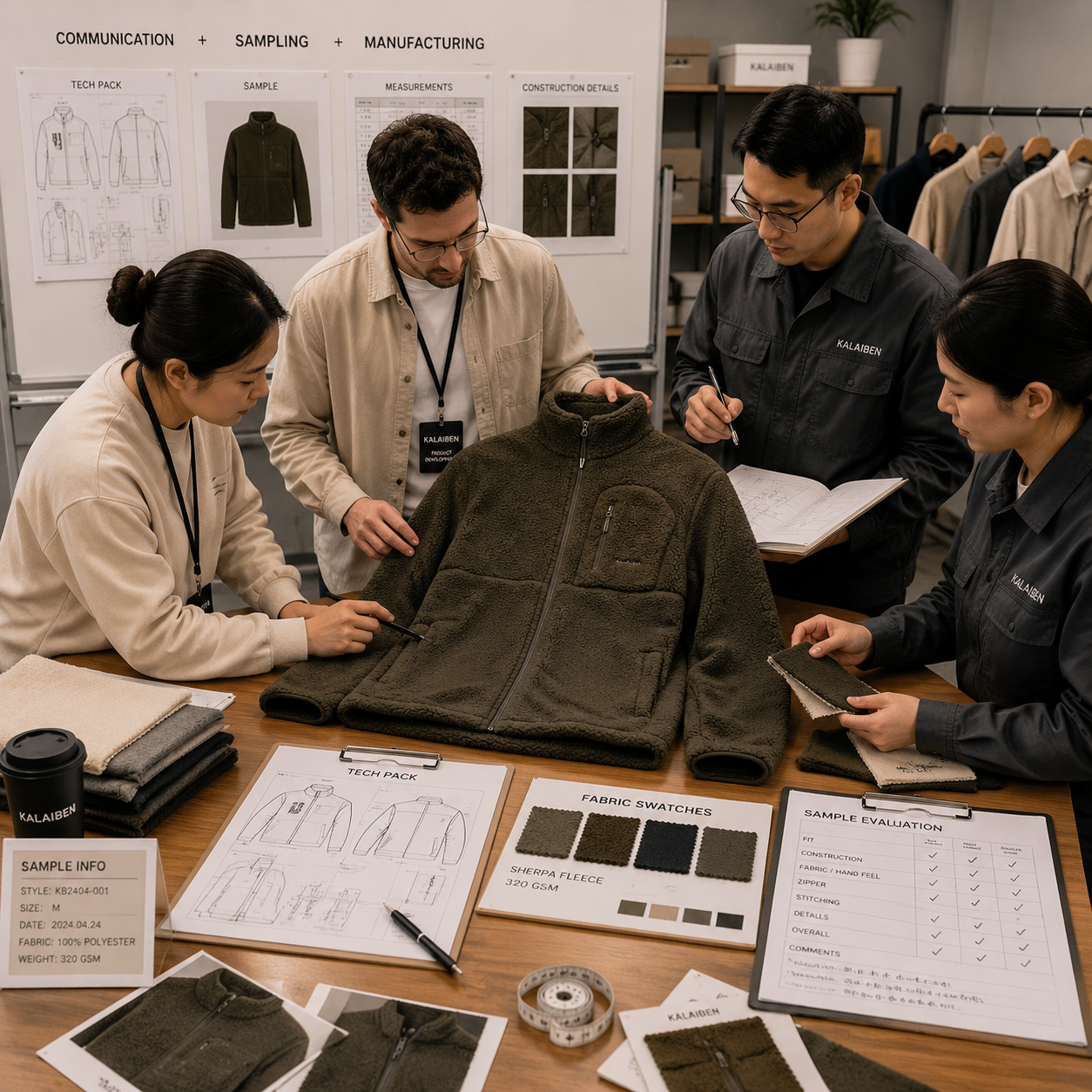
Your clothing manufacturer will play a major role in turning your collection into finished garments.
When comparing manufacturers, consider:
Experience
Does the manufacturer have experience with your product category?
Možnosti použitia tkanín
Can the manufacturer work with the fabrics and materials you need?
Odber vzoriek
Can they support product development and sample revisions?
Production
Do their facilities and production processes match your expected requirements?
Minimálne objednané množstvo
Are their minimum order quantities suitable for your business?
Quality
Do they have clear quality control processes?
Komunikácia
Can they communicate effectively throughout product development and production?
KALAIBEN is an integrated textile and apparel industry and trade company headquartered in Quanzhou, Fujian. Its Jiangxi subsidiary operates in Jinshan Industrial Park, Nancheng County, and focuses on garment manufacturing including knitted and woven casualwear and outdoor sportswear.
According to the company's introduction, its Jiangxi facility covers approximately 30 acres with a construction area of about 26,000 square meters, while the company has more than 380 employees.
The company also operates its own KALAIBEN adult clothing brand and BOWTAD children's brand, providing experience in apparel product development and manufacturing.
9. Understand MOQ and Production Costs
Before confirming your production plan, understand the manufacturer's MOQ requirements.
MOQ can vary depending on:
- Štýl
- Tkanina
- Farba
- Množstvo
- Výrobný proces
- Prispôsobenie
You should also calculate the complete cost of your collection.
This may include:
- Design
- Odber vzoriek
- Tkanina
- Ozdobné lišty
- Štítky
- Balenie
- Production
- Shipping
- Import costs
- Marketing
- Storage
Understanding these costs before production can help you establish a more realistic pricing strategy.
10. Establish Quality Standards
Before bulk production, clearly define the quality expectations for each product.
Use approved samples and product specifications as references.
Quality checks can cover:
- Tkanina
- Rozmery
- Šitie
- Seams
- Farba
- Garment construction
- Príslušenstvo
- Štítky
- Balenie
Clear quality standards are particularly important when producing multiple styles or repeating an order.
11. Prepare for Your Clothing Line Launch
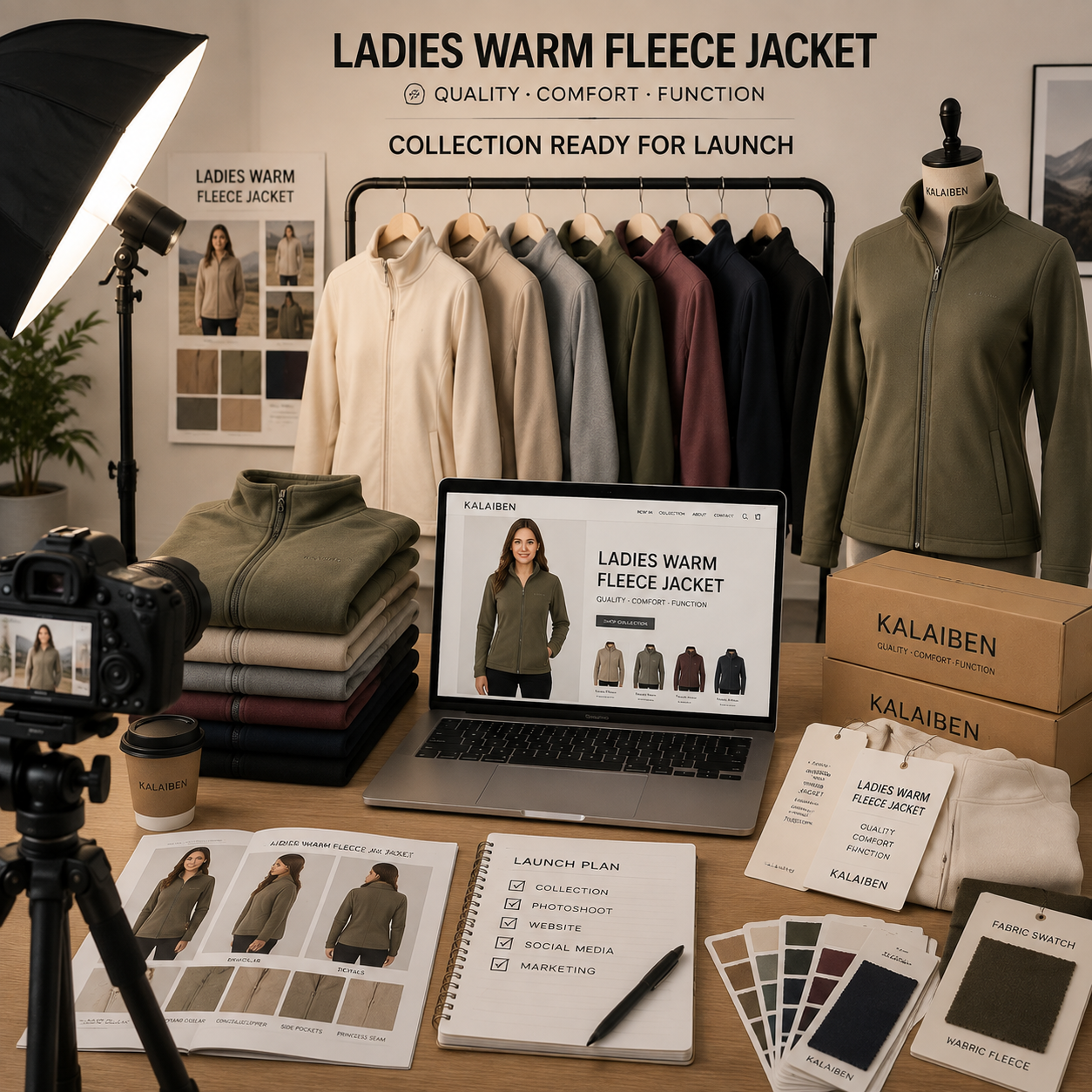
Once production is complete, prepare the collection for customers.
Important launch materials may include:
- Product photography
- Product descriptions
- Size charts
- Website pages
- Pricing
- Balenie
- Social media content
- Marketing materials
Your product presentation should communicate the design, fabric, fit, function, and benefits of each garment.
12. Analyze Customer Feedback
After launch, monitor how customers respond to your collection.
Look at:
- Best-selling products
- Popular colors
- Popular sizes
- Customer reviews
- Returns
- Product complaints
- Website traffic
- Marketing performance
This information can help you decide which products to repeat, improve, or discontinue.
A clothing line can become stronger over time as each collection is informed by real customer feedback.
Záver
Starting a clothing line involves several connected stages, including market research, collection planning, garment design, fabric selection, technical development, sampling, manufacturing, quality control, and launch.
A focused first collection can be easier to manage than a large product range. By starting with a clear concept and carefully developing each garment, brands can reduce unnecessary production risks and build a stronger foundation for future collections.
Choosing an experienced manufacturing partner is another important part of the process. For brands working with knitted or woven casualwear and outdoor sportswear, a manufacturer with textile and garment production capabilities can provide useful support throughout product development and manufacturing.
KALAIBEN operates an integrated textile and apparel business covering knitted fabric production and garment manufacturing. Its product focus includes knitted and woven casual garments and outdoor sportswear, while its own KALAIBEN and BOWTAD brands provide additional experience in apparel product development.
For entrepreneurs starting a new clothing line, the key is to develop products carefully, understand production requirements, work with reliable manufacturing partners, and use customer feedback to improve each collection.











