



Low MOQ Clothing Manufacturer China: A Complete Guide for Startups and Growing Brands
Date: 2026-09-15 Categories: NEWS Views: 532
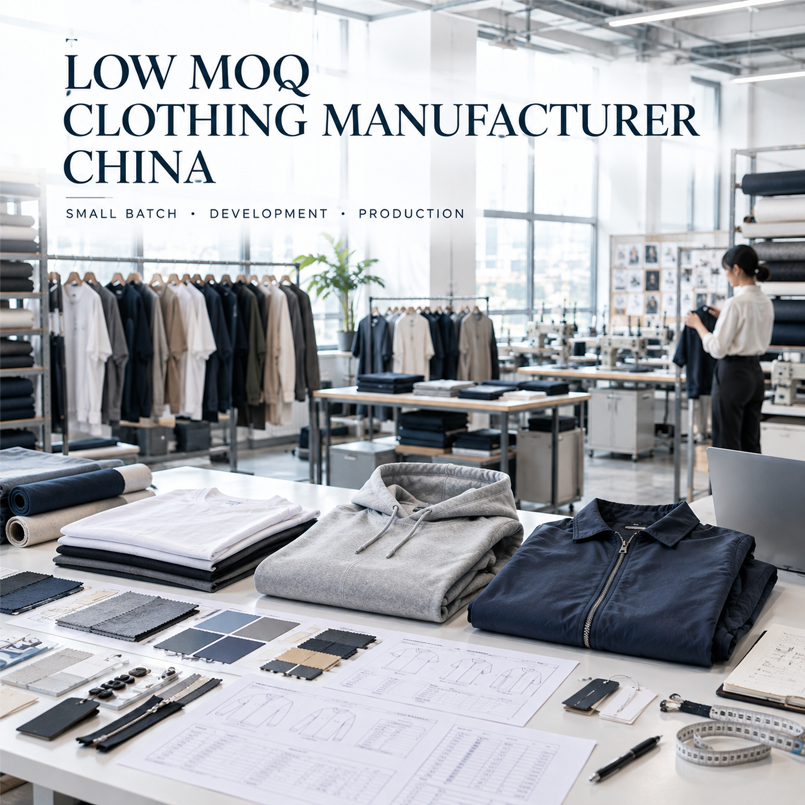
Finding the right low MOQ clothing manufacturer China is a common challenge for startups, independent designers, and growing fashion brands. Many traditional factories require large production quantities, which can create inventory pressure and increase financial risk. Working with a flexible China clothing manufacturer allows brands to test new designs, launch smaller collections, and scale production based on real customer demand.
However, low MOQ is not only about ordering fewer pieces. A reliable manufacturer should also provide product development support, quality control, customization options, and stable production capability.
This guide explains how to choose the right low MOQ clothing manufacturer in China and what brands should check before starting production.
1. What Is a Low MOQ Clothing Manufacturer China?
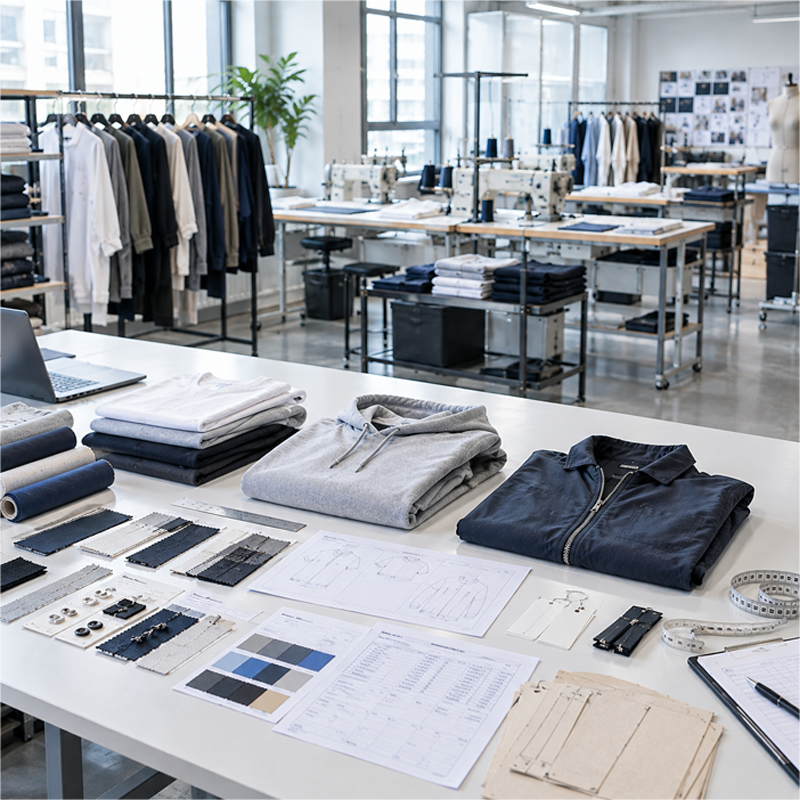
A low MOQ clothing manufacturer China is a garment supplier based in China that supports smaller production quantities compared with traditional large-scale factories.
MOQ means:
Minimum Order Quantity
It refers to the lowest quantity a factory accepts for production.
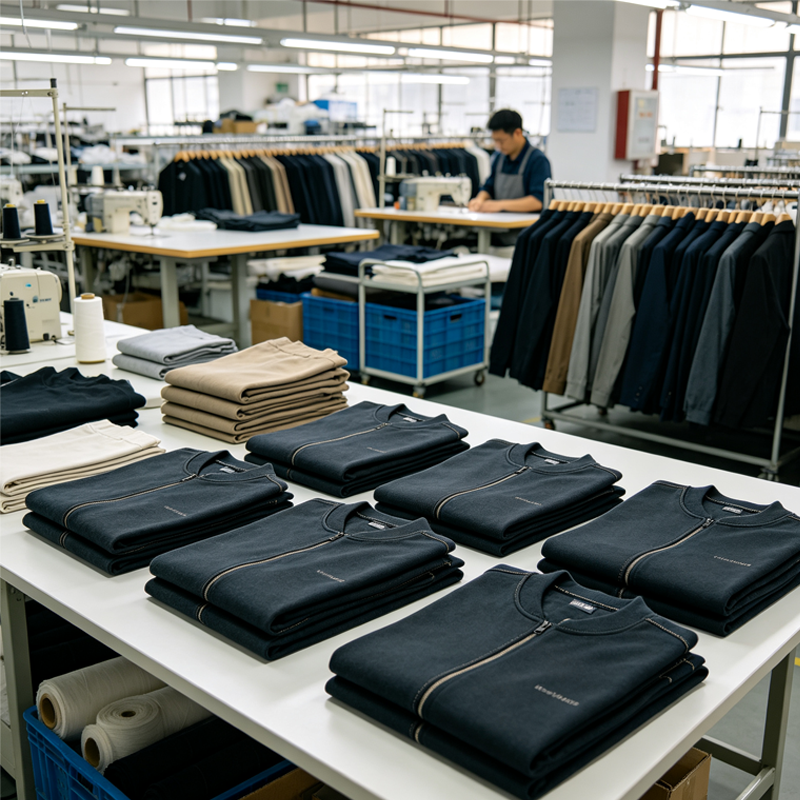
Large factories often focus on high-volume orders because their production systems are optimized for scale. Low MOQ manufacturers create more flexible production models for startups, small brands, and businesses testing new products. Many small-batch suppliers in China position their services around quantities from dozens to a few hundred pieces depending on product type, fabric, and customization requirements.
Common low MOQ production services include:
- Small batch clothing manufacturing
- OEM clothing production
- ODM development
- Private label manufacturing
- Custom apparel production
- Trial orders
- Limited collection production
Example
A new streetwear brand wants to launch its first hoodie collection.
A traditional factory may require:
- 500 pieces per style
- Multiple colors
- Large fabric commitment
A low MOQ clothing manufacturer may support:
- Smaller first production
- Limited color options
- Market testing before scaling
This allows the brand to learn what customers actually want.
2. Why Do Brands Choose Low MOQ Clothing Manufacturers in China?
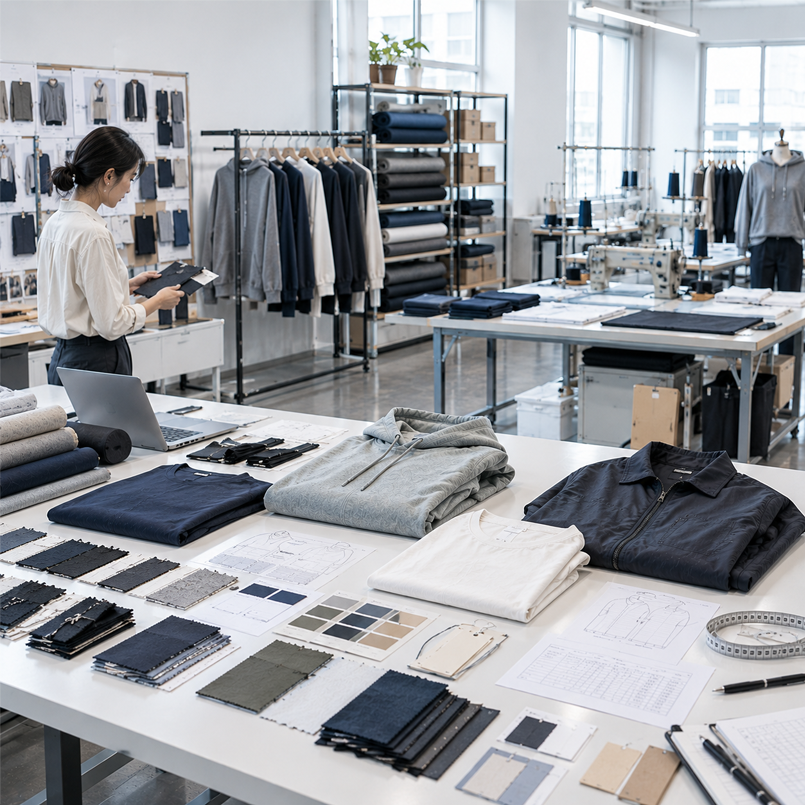
China has a mature apparel supply chain.
Many brands choose Chinese manufacturers because they can access:
- Experienced garment workers
- Wide fabric choices
- Complete production processes
- Competitive manufacturing costs
- OEM and ODM services
- Export experience
For startups, the biggest advantage is flexibility.
Main benefits include:
- Lower initial investment
- Reduced inventory risk
- Faster product testing
- Easier collection launches
- More design flexibility
- Ability to reorder based on demand
Example
A new fitness brand wants to test three activewear designs.
Instead of producing:
- 3,000 pieces immediately
The brand starts with:
- 200 pieces per style
After analyzing sales data, the brand increases production for the best-performing products.
This approach protects cash flow.
3. Low MOQ Clothing Manufacturer China vs Traditional Factory
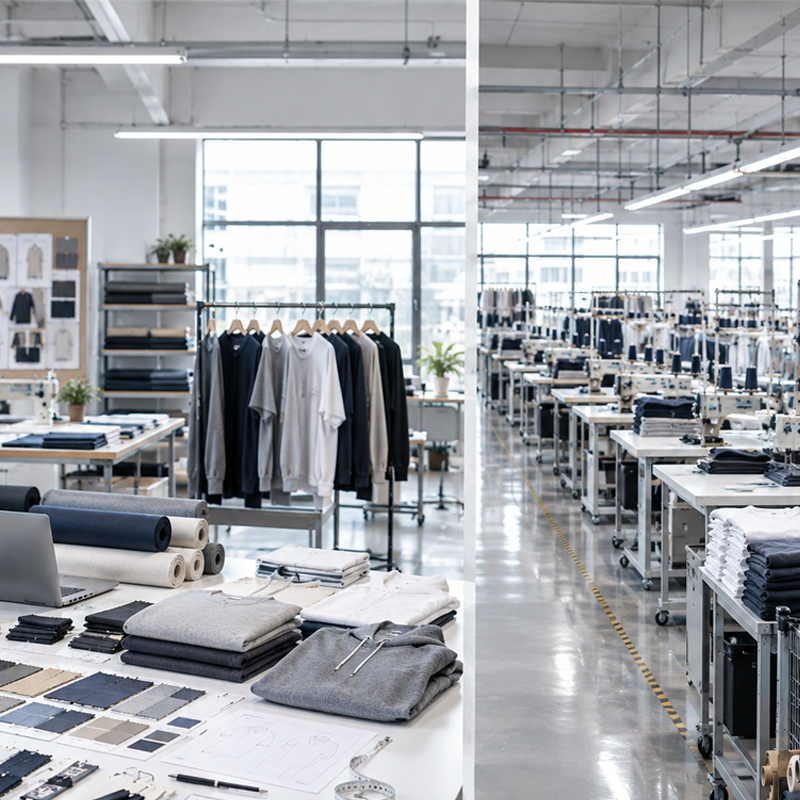
Different factories have different production models.
A high-volume factory may offer lower unit prices but require larger orders.
A low MOQ supplier focuses on flexibility.
| Factor | Traditional Clothing Factory | Low MOQ Clothing Manufacturer China |
|---|---|---|
| Minimum Order Quantity | Higher | Lower |
| Best for | Large brands | Startups and small brands |
| Inventory risk | Higher | Lower |
| Product testing | Limited | Easier |
| Custom development | Depends | Usually available |
| Production flexibility | Lower | Higher |
| Order frequency | Large seasonal orders | Smaller repeat orders |
The right choice depends on your business stage.
A global retailer may need volume.
A new brand may need flexibility first.
4. Small Batch Clothing Manufacturer China: How Does Production Work?
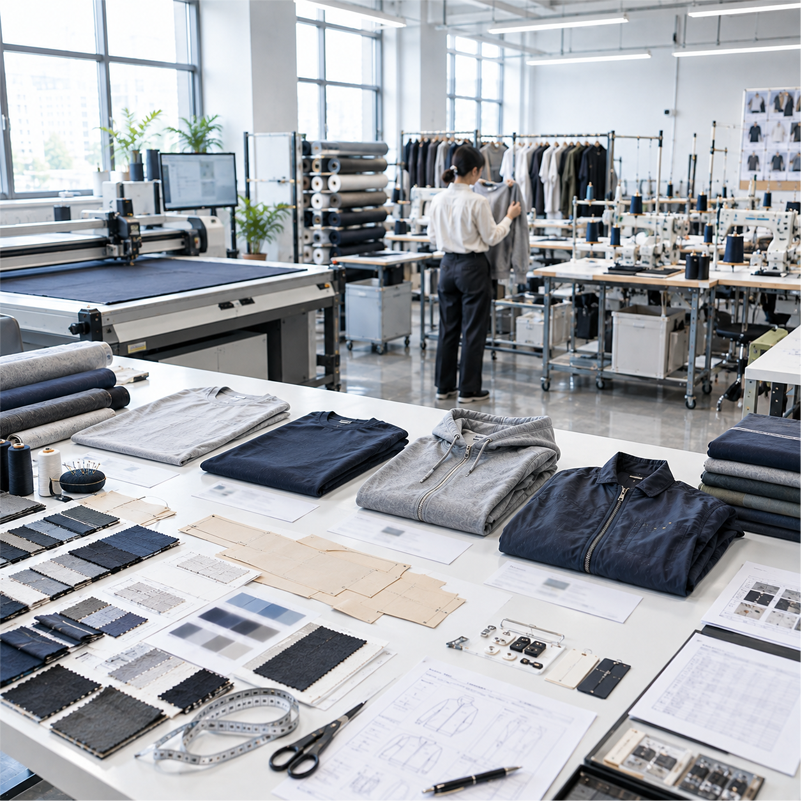
A small batch clothing manufacturer China usually follows a structured development process.
The workflow normally includes:
4.1 Product Discussion
The brand provides:
- Product ideas
- Reference images
- Tech packs
- Fabric requirements
- Target quantity
The manufacturer reviews production feasibility.
4.2 Sample Development
Before bulk production, the factory creates samples.
The brand checks:
- Fabric quality
- Fit
- Measurements
- Construction
- Appearance
4.3 Small Batch Manufacturing
After approval:
- Fabric preparation
- Pattern making
- Cutting
- Sewing
- Quality inspection
- Packaging
Example
A startup creates a premium sweatshirt collection.
The first order includes:
- One hoodie style
- Two colors
- Limited quantity
The brand evaluates customer feedback before creating more products.
Small batch production creates a safer launch path.
5. Clothing Manufacturer China for Startups: What Should You Check?
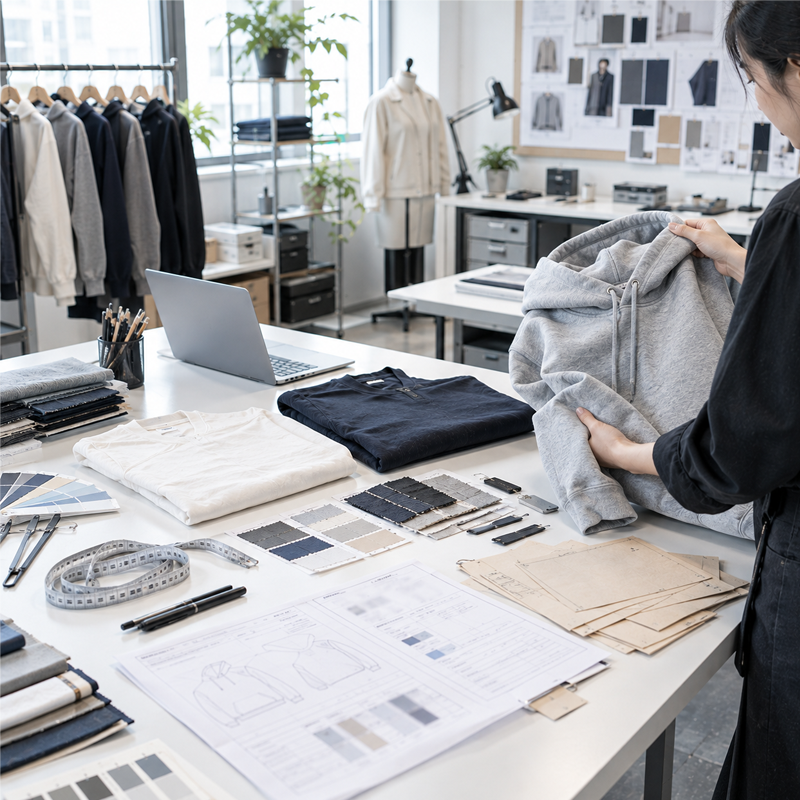
A clothing manufacturer China for startups should provide more than production.
New brands often need support with product decisions.
Important factors include:
- Product development experience
- Flexible MOQ
- Sample capability
- Fabric sourcing
- Customization options
- Quality inspection
- Communication
- Reorder support
Example
A founder has a hoodie design but does not know which fabric to choose.
A professional manufacturer should explain:
- Cotton vs polyester blends
- Different fabric weights
- Cost impact
- Production limitations
- Suitable construction methods
The manufacturer becomes a development partner.
6. How Low MOQ Manufacturing Reduces Inventory Risk
Inventory management is one of the biggest challenges for fashion startups.
Large orders can create:
- Unsold stock
- Storage costs
- Cash flow problems
- Product waste
Low MOQ production helps brands test demand first.
Example
Brand A produces:
5,000 jackets before launch.
Sales are slower than expected.
The brand holds excess inventory.
Brand B produces:
300 jackets first.
The product performs well.
The brand increases production later.
Brand B reduces financial risk.
7. Custom Clothing Manufacturer China With Low MOQ
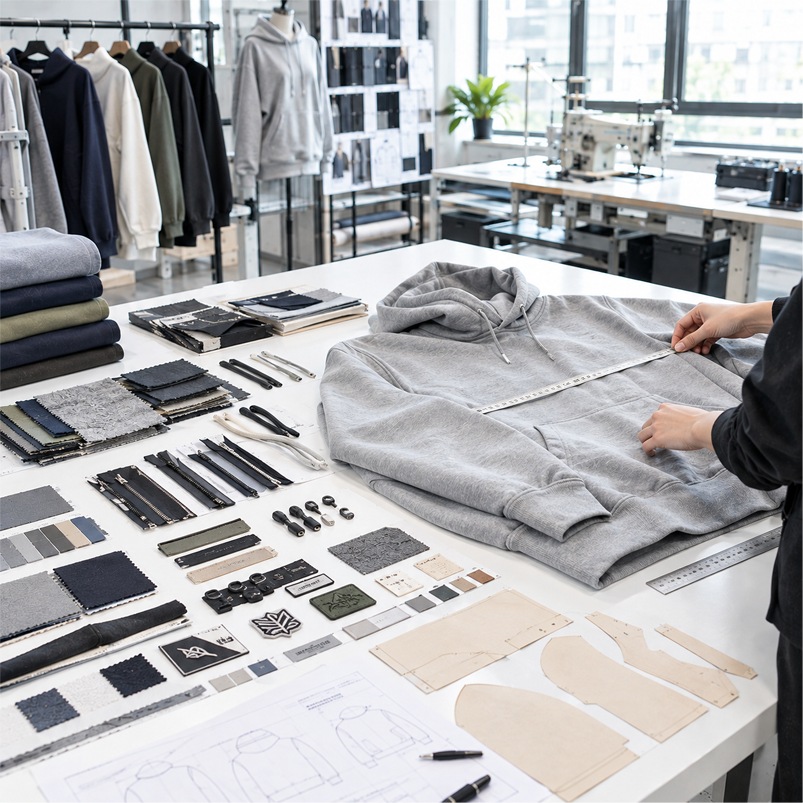
A custom clothing manufacturer China should support product customization even for smaller orders.
Common customization options include:
- Fabric selection
- Colors
- Garment fit
- Labels
- Hang tags
- Packaging
- Printing
- Embroidery
- Special details
Low MOQ does not mean limited creativity.
Example
A streetwear brand wants:
- Oversized hoodie
- Heavyweight fabric
- Custom embroidery
- Private labels
A capable manufacturer should review every detail and create a production plan.
The goal is not only making fewer pieces.
The goal is making the correct product.
8. Private Label Clothing Manufacturer China: Building Your Brand
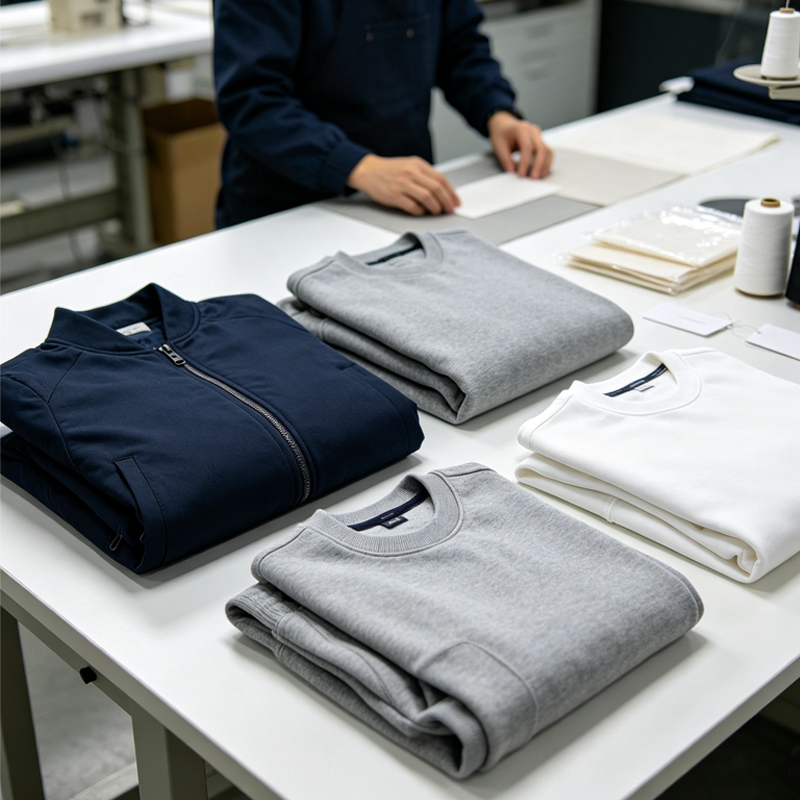
Many startups use private label manufacturing to create unique products.
A private label clothing manufacturer China can support:
- Custom labels
- Packaging
- Brand details
- Product modifications
- Custom colors
However, branding alone does not create a premium product.
Customers notice:
- Fabric quality
- Comfort
- Fit
- Durability
- Finishing
Example
A brand creates beautiful packaging.
But the garment loses shape after washing.
Customers will remember the product problem, not the packaging.
A strong manufacturer must control both branding and garment quality.
9. How to Choose a Low MOQ Clothing Manufacturer China
Do not select a supplier only because they offer a low minimum order.
Evaluate the complete manufacturing ability.
Check these areas:
Product Experience
Ask:
- What products do you specialize in?
- Have you produced similar garments?
- Can you support custom designs?
Sampling Process
Check:
- Sample timeline
- Revision process
- Fit approval
- Production sample
Quality Control
Review:
- Fabric inspection
- Sewing inspection
- Measurement checks
- Final inspection
Production Ability
Confirm:
- MOQ
- Lead time
- Production capacity
- Repeat order support
10. Questions to Ask a China Low MOQ Clothing Manufacturer
Before starting cooperation, prepare clear questions.
Production Questions
- What is your MOQ per style?
- Can MOQ be divided by colors?
- Which products do you produce?
- Do you support small batch orders?
Development Questions
- Can you make samples?
- Can you work from sketches?
- Can you source fabrics?
- Can you develop custom patterns?
Quality Questions
- How do you control production quality?
- Do you inspect garments before shipment?
- How do you handle defects?
Export Questions
- Do you work with overseas brands?
- Can you support international shipping?
- What export documents can you provide?
Clear communication reduces production mistakes.
11. Low MOQ Clothing Manufacturer China Cost Factors
Small production runs usually have different pricing compared with mass production.
The final cost depends on:
- Fabric
- Quantity
- Product complexity
- Custom details
- Printing
- Embroidery
- Labels
- Packaging
- Sampling
| Factor | Low MOQ Production | Large Production |
|---|---|---|
| Unit cost | Usually higher | Usually lower |
| Investment | Lower | Higher |
| Inventory risk | Lower | Higher |
| Testing ability | Better | Limited |
| Flexibility | Higher | Lower |
Example
A startup may pay more per piece for a 200-piece order.
However, avoiding thousands of unsold garments may save more money overall.
Business cost matters more than unit price alone.
12. OEM Clothing Manufacturer China Comparison Checklist
Before choosing a supplier, compare:
| Evaluation Area | Supplier A | Supplier B | Supplier C |
|---|---|---|---|
| MOQ flexibility | |||
| Product experience | |||
| Sampling | |||
| Fabric sourcing | |||
| Quality control | |||
| Communication | |||
| Export experience | |||
| Reorder support |
A supplier comparison helps brands make decisions based on value instead of price.
13. How Startups Scale After Their First Order
Low MOQ is usually the beginning of a brand's production journey.
A common growth path:
- Develop samples
- Produce a small test order
- Collect customer feedback
- Improve products
- Increase production quantity
- Build repeat orders
Example
A clothing brand starts with:
300 T-shirts.
The product receives strong feedback.
The next production increases to:
1,500 pieces.
The manufacturer continues using the same specifications.
This creates consistency as the brand grows.
14. Low MOQ Clothing Manufacturer China Checklist
Before placing your first order:
Product
- Product specifications confirmed
- Fabric selected
- Size chart completed
- Design details approved
Development
- Sample approved
- Fit checked
- Production details confirmed
Manufacturing
- MOQ confirmed
- Lead time confirmed
- Quality process reviewed
- Packaging confirmed
Business
- Target customers researched
- Inventory plan prepared
- Reorder strategy considered
15. Finding the Right Low MOQ Clothing Manufacturer China
The right low MOQ clothing manufacturer China helps brands reduce risk and build products step by step.
A good supplier should provide:
- Flexible production
- Reliable quality
- Product development support
- Clear communication
- Stable future production
For startups, the first order is not only about quantity.
It is a test of the supplier relationship.
Choose a manufacturer that can support your first sample, first small batch, and future growth.
The best partner is not simply the factory with the lowest MOQ.
It is the manufacturer that helps your brand move from idea to product and from small launch to long-term success.











